A rugged valley famous for its cacti in southern Mexico and a mountainous area of northern South Africa have become the latest cultural sites to be added to the UNESCO List of World Heritage.
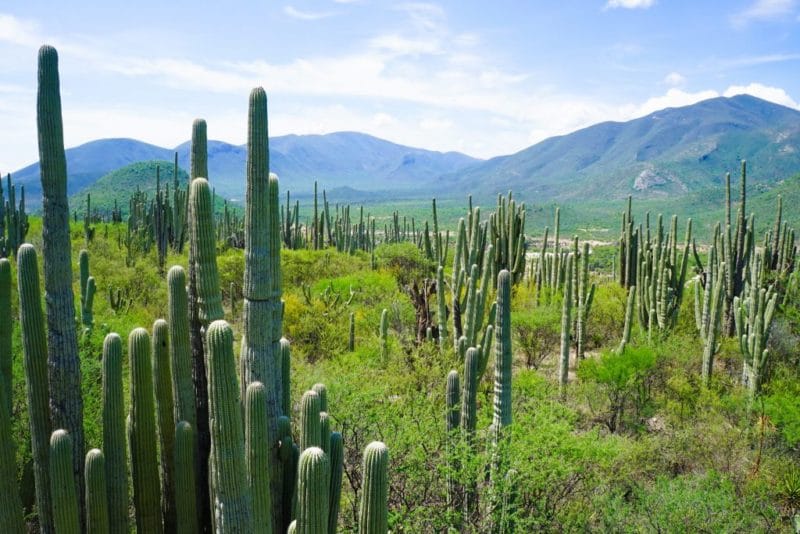
The Tehuacan-Cuicatlan Valley in Mexico
At a meeting in the Bahraini capital Manama on Monday, July 2, 2018, the UNESCO World Heritage Committee inscribed Mexico’s Tehuacan-Cuicatlan Valley and South Africa’s Barberton Makhonjwa Mountains to its renowned list.
The Paris-based organisation has been meeting in Manama since June 24 to discuss some 30 worldwide sites nominated for inclusion on the list.
The Tehuacan-Cuicatlan Valley, a mountainous area around the Papaloapan River famous for its desert landscapes and giant cacti, becomes Mexico’s 35th World Heritage List site.
It is the second so-called “mixed” site on the country’s list containing important elements of both cultural and natural heritage along with the Ancient Maya City and Protected Tropical Forests of Calakmul, Campeche, inscribed in 2002.
The Tehuacan-Cuicatlan Valley is located in central-southern Mexico, covering part of the southeastern of the State of Puebla and the southern State of Oaxaca, with a surface area of 145,255 hectares.
It is inside the Tehuacan-Cuicatlan Biosphere Reserve (TCBR), a natural protected area established in 1998.
South Africa’s Barberton Makhonjwa Mountains, known for containing some of the oldest exposed rocks on earth, become the country’s 10th World Heritage List site.
South Africa’s nine existing sites include five cultural, three natural and one mixed site. The new addition is a natural site.
The Borehole Drillers Association of Nigeria on Monday, July 2, 2018 urged the National Assembly to pass the Water Resources Management Bill into law to stimulate effective management of the country’s water resources.
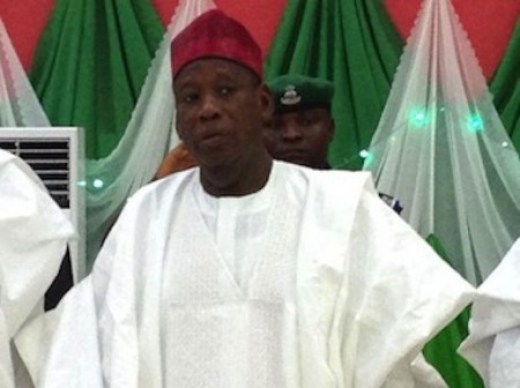
Suleiman Adamu Kazaure, Water Resources Minister
President of association, Mr Francis Uzoma, made the call in an interview with News Agency of Nigeria (NAN) in Abuja.
He said that the bill, when passed and assented to by President Mohammadu Buhari, would facilitate efforts to prioritise issues in the water resources sector via sound policies and programmes.
He said that media reports appeared to have neglected the salient provisions of the bill which was particularly aimed at fast-tracking the development, management and efficient use of the nation’s water resources, in line with global best practices.
Uzoma, however, appealed to all stakeholders and Nigerians in general to have faith in the bill, saying that was for the good of the nation.
He said that the attention of the association had been drawn to the erroneous and distorted analyses of the National Water Resources Bill, which was currently before the Senate, as it had been passed by the House of Representatives.
“The bill will create room for the private sector to come on board; it will also create employment opportunities for the people.
“The National Water Resources Bill is consistent with the Constitution of the Federal Republic of Nigeria and the Land Use Act, and it should not be politicised.
“We are appealing to all Nigerians to have faith in the bill, as it was for the good of the nation,’’ he added.
NAN recalls that the Minister of Water Resources, Mr Suleiman Adamu, once urged Nigerians and lawmakers to stop politicising the water resources bill, saying its benefits were enormous and for the public good.
He said that the overall objective of the bill was geared toward the efficient management of the water resources sector for the economic development of Nigeria and the wellbeing of its citizens.
“The existing laws in the sector include the Water Resources Act, Cap W2 LFN 2004, the River Basin Development Authority Act, Cap R9 LFN 2004, the Nigeria Hydrological Services Agency (Establishment) Act, Cap N1100A.LFN, 2004 and National Water Resources Institute Act, Cap N83 LFN 2004.
“However, these laws are being re-enacted with necessary modifications in the new bill so as to actualise current global trends and best practices in Integrated Water Resources Management (IWRM),’’ he said.
Adamu noted that the National Water Resources Bill, which was drafted in 2006, had passed through series of consultations among stakeholders up to 2008, adding, however, that since that time, successive administrations had failed to give it priority attention until now.
NAN reports that the bill provides for professional and efficient management of all surface water and groundwater for the use of all the citizens.
The Federal Government intends to ensure, through the provisions of the proposed law, that “the water resources of the nation are protected, used, developed, conserved, managed and controlled in a sustainable manner for the benefit of all persons, in accordance with its constitutional mandate’’.
NAN notes that the bill provides for the creation of an enabling environment for public and private sector investment.
It also provides for capacity building processes to foster good governance, while establishing a water use and licensing framework to ensure sustainable finance for the water sector.
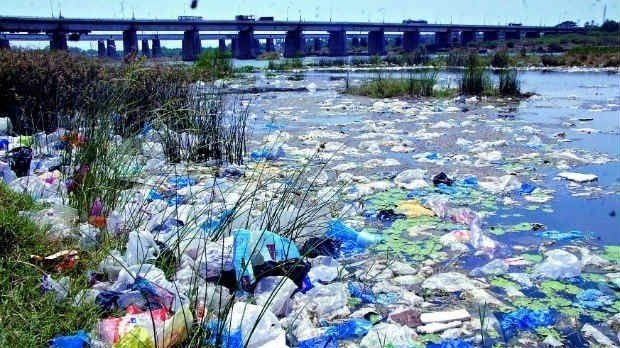
Australia’s biggest supermarket chains are scrambling to combat “bag rage” as frustrated shoppers vent their anger over the removal of single-use plastic bags.
Plastic bags pollution
One man put his hands around a supermarket worker’s throat, the West Australian newspaper reported, while grocery stores are putting on more staff to help customers get used to the change.
The removal of single-use plastics is part of a national push to reduce waste.
As of July 1, major retailers in all but two Australian states will be fined if they supply single-use plastic bags.
National supermarket chain Coles, owned by Wesfarmers , on Sunday, July 1, 2018 removed single-use plastic bags from its stores, shortly after rival Woolworths banned the bags on June 20.
Consumer complaints forced Woolworths to backflip on charging customers 15 Australian cents (11 U.S. cents) for a reusable plastic bag, with the retailer now offering them free until July 8.
“They just want a little extra help from us to get through the transition,” said Claire Peters, Woolworths managing director, in an emailed statement.
After seeing the backlash at its rival, Coles said it would open every checkout lane to reduce queue lengths as staffers explain the changes to customers.
“We are taking a proactive step,” a Coles spokesperson said in an emailed statement.
The union that represents Australian shop assistants has launched a public awareness campaign on the issue.
“While we understand that some customers may be frustrated by this change, there is absolutely no excuse for abusive or violent behaviour towards retail staff,” said Gerard Dwyer.
Dwyer is the national secretary of the Shop, distributive and Allied Employees’ Association, in a statement on the union website.
The union conducted a survey earlier this week and of 132 members who responded, 57 said they suffered abuse due to the plastic bag ban.
More than eight million tonnes of plastic ends up in the world’s oceans each year, according to United Nations Environment Programme figures.
The U.N. wants to eliminate single-use plastic by 2022 and says more than 60 countries have so far taken steps to ban or reduce plastic consumption.
Despite adopting the Seventh Replenishment of the GEF Trust Fund (GEF-7) in the amount of $4.1 billion at its recently held 54th meeting in Da Nang, Viet Nam, the Global Environment Facility (GEF) Council will maintain the GEF-6 funding level for its Small Grants Programme (SGP). The sum of $4.43 billion was earmarked to GEF-6.
Participants during the closing plenary at the GEF Assembly
This decision was reached in Da Nang, against the backdrop of dwindling funds available for the SGP which, despite its numerous high points, appears to raise some questions.
Following a proposal by GEF CEO and Chairperson, Naoko Ishii, members agreed to maintain the GEF-6 ceilings and seek closer alignment of projects with the overall GEF-7 targets.
While taking note of the implementation arrangements, GEF approved the proposed financing structure for the GEF-7 SGP.
It also requested the Secretariat and the United Nations Development Programme (UNDP) to keep under review the criteria for eligibility to core funds and propose any changes with a view to ensuring an equitable deployment of SGP support over time.
The UNDP was also asked to prepare a paper for the 55th Council meeting describing the approach and criteria for the retained allocation of core funds to countries, and the results framework for the GEF-7 SGP and associated targets for global environmental benefits aligned with the overall GEF-7 results architecture.
The UNDP is one of the 18 agencies through which the GEF channels funds to recipient countries.
Earlier, a Council Member queried the double-payments when accessing funds through the SGP via an Implementing Agency, while others questioned SGP’s reporting requirements. Another Member requested clarification on the link between UNDP’s Equator Prize and the SGP.
Several others expressed concern over the 10% ceiling to System for Transparent Allocation of Resources (STAR) country allocations to participate in the SGP, with the Secretariat proposing to remove the percentage cap (of 10%) and keep the absolute cap (of $2 million).
Nonetheless, several Council Members lauded the SGP for enabling activities at the local level, even as they lamented the decrease in funds available for the SGP.
The 25-year-old SGP provides small grants of up to $50,000 and has funded more than 21,000 projects since 1992.
Adriana Dinu, Executive Coordinator, UNDP Global Environmental Finance Unit, described the SGP as an incubator of innovation that provides thousands of examples of local solutions to global challenges that can be scaled up.
Trần Hồng Hà, Minister of Natural Resources and Environment, Viet Nam, thanked the SGP for effectively funding programmes that support civil society in implementing activities related to environmental protection and sustainable livelihoods. He expressed hope for continued cooperation between the SGP and Viet Nam.
While urging the SGP to create systemic change, Andrew Steer, President, World Resources Institute (WRI), praised the SGP for being transformative and hugely successful at the project level and looked forward to the next 25 years.
Lucy Mulenkei, Chair, Indigenous Peoples Advisory Group of the GEF, said that largest number of beneficiaries of the SGP are Indigenous Peoples and Local Communities (IPLCs), and that the SGP should be scaled up to ensure additional project funding.
Lyonpo Damcho Dorji, Minister of Foreign Affairs, Bhutan, said that the SGP demonstrates there can be a balance between human needs and environmental imperatives.
Ishii said that the GEF Council strongly supports the SGP, highlighting the importance of recognising the power of the local commons to transform the global commons.
The Nigerian Bottling Company (NBC) has restated its commitment to environmental sustainability through various initiatives to stop waste pollution in the country.
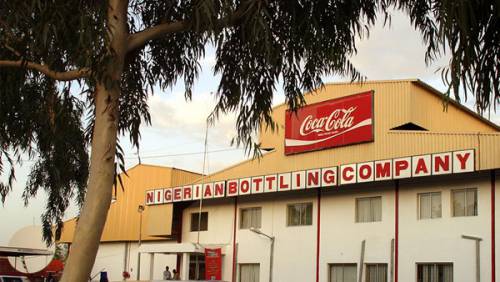
The Nigerian Bottling Company Plc is the sole franchise bottler of The Coca-Cola Company in Nigeria
Mrs Sade Morgan, Legal, Public Affairs and Communications Director, NBC, made the pledge at a media parley on Saturday, June 30, 2018 in Lagos.
According to her, NBC is developing new initiatives to drive sustainability in its operations to reduce its environmental impact to advance sustainable development.
She noted that the world was confronted with packaging challenge and NBC had a responsibility help to proffer solutions to the problem.
“As a responsible corporate organisation, we are aware of the dangers plastic pose to our environment, so we have put in place measures to ensure we protect the environment from pollution,” she said.
According to her, NBC with its partner, Coca Cola Nigeria Limited, would collaborate with other social enterprises, for collection and recovery of post-consumer packaging materials (PET bottles), as part of its extended producer responsibility initiative.
Ms Ifeoma Okoye, Public Affairs Manager (Lagos & West), NBC, said the company entered into partnership with Wecyclers, a company that promotes environmental sustainability and community health through convenient recycling services.
“The company will not only collect and recycle our used PET bottles but also other ones to ensure that they do not clog our drainage and environment,” she said.
Okoye said Coca-Cola in 2005 established a recovery and buyback scheme for PET bottles with a private investor, Alkem Nigeria Limited, and the bottles were recycled into synthetic fibre.
She also said the company in 2012, reached out to other leading beverage companies to form a voluntary group comprising Coca-Cola, NBC, Nestle, Nigerian Breweries and Seven-Up Bottling Company.
According to her, the group became the nucleus of the Food & Beverage Recycling Alliance (FBRA) that served as the Producer Responsibility Organisation (PRO) for the food and beverage sector.
Okoye said through FBRA’s mission, the industry has been able to recover and recycle food and beverage packaging waste, created a sustainable recycling economy, employment, innovation and wealth creation.
She said NBC would continue to partner with various state governments to evolve programmes and actions that would assist to reduce plastic pollution in the country.
The Kano State Government says it will demolish buildings that are erected on waterways across the metropolis to avoid flooding.
Dr. Ali Makoda, Kano State Commissioner of Environment
Dr Ali Makoda, the state Commissioner for Environment, stated this on Saturday, June 30, 2018 after monitoring the monthly environmental sanitation exercise in Kano, the state capital.
Represented by the Permanent Secretary of the ministry, Alhaji Halilu Dantiye, Makoda expressed concern about the situation of some houses built on waterways, saying that it posed a lot of risk to lives and property.
“We can’t sit back and watch our environment get ruined by some people’s negligence and selfishness,’’ he said.
He explained that the state government would keep an eye on such structures and take the necessary measures.
He said that Kano had been suffering a lot from flood whenever it rained due to many reasons, including building on water ways, which needed to be addressed.
The Global Environment Facility (GEF) Council has approved the Seventh Replenishment of the GEF Trust Fund (GEF-7) in the amount of $4.1 billion. This represents a slight drop from the $4.43 billion earmarked to GEF-6, and $4.34 billion to GEF-5.
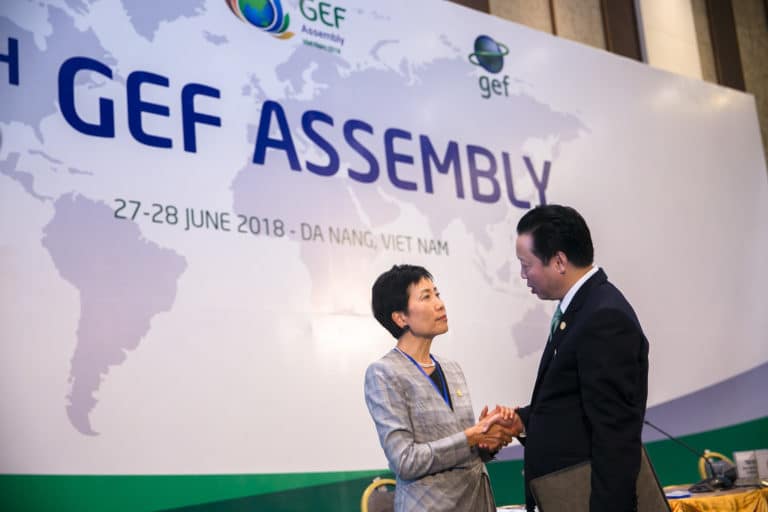
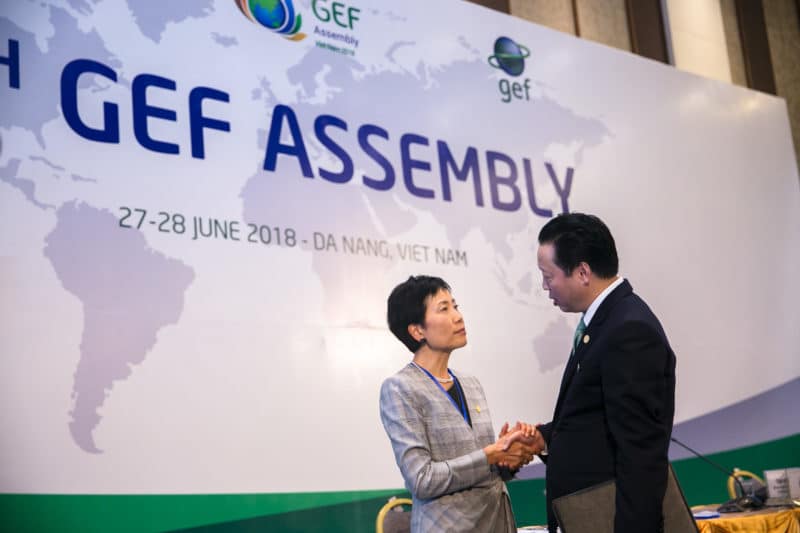
GEF Chief Executive Officer (CEO) and Chairperson Naoko Ishii congratulating Trần Hồng Hà, Minister of Natural Resources and Environment, Viet Nam, on the close of the sixth GEF Assembly
The approval formed one of the major fallouts from the 54th meeting of the GEF Council convened in Da Nang, Viet Nam, from June 24 to 26, 2018. The three-day meeting brought together over 500 representatives of governments, international organisations and civil society organisations (CSOs).
The meeting also adopted several decisions, some of which are on:
the GEF Gender Implementation Strategy, which aims to mainstream gender in the design, implementation, and evaluation of GEF programmes and projects;
the updated Co-Financing Policy, with a new overall co-financing ratio of 7:1;
the GEF Partnership;
updating the System for Transparent Allocation of Resources (STAR); and
the 2019 GEF Business Plan and Corporate Budget.
Following the Council meeting, the sixth meeting of the GEF Assembly was held on Wednesday and Thursday June 27 to 28 2018, with the Assembly taking note of the Report on the GEF-7 Replenishment; Sixth Overall Performance Study of the GEF; and Report of the Scientific and Technical Advisory Panel. During the two days, over 1,100 participants met in parallel roundtable sessions to discuss how to accelerate action on issues such as, amongst others: food, land-use and restoration; sustainable cities; blue economy; partnerships for implementing the 2030 Agenda; science-based targets for the Earth; circular economy; and marine plastics.
In her comments on the GEF-7 replenishment, Naoko Ishii, GEF CEO and Chairperson, characterised the replenishment as being the “best possible outcome of long and difficult negotiations,” and stressed that the resources allocated to the various focal areas must be maximised to yield the highest quality results over the next four years.
The GEF is funded by donor nations, which commit money every four years through a process called the GEF replenishment. Since its creation in 1991, the GEF Trust Fund has been replenished by $2.75 billion (GEF-1), $3 billion (GEF-2), $3.13 billion (GEF-3), $3.13 billion (GEF-4), $4.34 billion (GEF-5), and $4.43 billion (GEF-6).
The GEF Assembly has convened six times: April 1 to 3, 1998 in New Delhi, India; October 16 to 18, 2002 in Beijing, China; August 29 to 30, 2006 in Cape Town, South Africa; May 25 to 26, 2010 in Punta del Este, Uruguay; May 28 to 29, 2014 in Cancún, Mexico; and June 27 to 28, 2018 in Da Nang, Viet Nam.
The GEF was created in 1991 to formulate financing responses to the mounting concern in the preceding decade over global environmental problems. The GEF operated in a pilot phase until mid-1994. Negotiations to restructure the organisation were concluded at a GEF participants’ meeting in Geneva in March 1994, where representatives of 73 countries agreed to adopt the GEF Instrument.
Funding from the Facility has been channelled to recipient countries through 18 “GEF Agencies” also known as Accredited Entities: the UN Development Programme (UNDP); UN Environment (UNEP); World Bank; Food and Agriculture Organisation of the UN (FAO); UN Industrial Development Organisation (UNIDO); African Development Bank; Asian Development Bank (ADB); European Bank for Reconstruction and Development (EBRD); Inter-American Development Bank; International Fund for Agricultural Development; World Wildlife Fund, Inc.; Conservation International; International Union for Conservation of Nature (IUCN); Development Bank of Southern Africa; Brazilian Biodiversity Fund; Chinese Foreign Economic Cooperation Office; Development Bank of Latin America; and West African Development Bank.
The GEF also serves as the financial mechanism for several multilateral environmental agreements (MEAs), including the:
Convention on Biological Diversity (CBD);
UNFCCC;
UN Convention to Combat Desertification (UNCCD);
Stockholm Convention on Persistent Organic Pollutants; and
The Shoprite Group has concluded plans to stage what looks like Africa’s biggest clean-up at which over 6,000 people in nine countries are expected to participate in almost 500 events from July 14 to 18, 2018 to remove waste from communities.
A Shoprite outlet in Lagos
In Nigeria, the retail giant, which is of South African origin, is partnering with indigenous recycling outfit, Wecyclers, to execute the initiative.
Head, Business Development of Wecyclers, Ms. Omobolanle Olowu, an environmentalist and recycling champion, explains: “The hope is to launch a movement of active citizens who act for change by cleaning and keeping clean public areas. Plastic waste is putting the environment under considerable pressure with the equivalent of a garbage truck of plastic being dumped into our oceans every minute.”
She further adds, “Recycling is central to this initiative, hence Wecyclers’ decision to partner with Shoprite Nigeria on some of the 45 clean-ups planned in the country. Those organising clean-ups are encouraged to partner with local recyclers to ensure that most of what is collected gets recycled.”
With this focus Shoprite says it aims to highlight the business opportunities available through the recycling of paper, glass, plastic and other material.
The retailer also launched a mobile community in which people can join via a dedicated website. The site was developed in partnership with volunteerism organisation, Brownie Points. The digital platform enables users to create their own clean-ups or join an existing one in their area. It also contains information about the nearest recycler or waste management company.
On the platform, clean-up organisers are given guidelines on what their duties are as hosts, how to market their event and what to do on the day and after the clean-up. Participants are to share their experience on social media.
In the words of former UN secretary-general, Kofi Annan: “All of us have to share the earth’s fragile ecosystems and precious resources, and each of us has a role to play in preserving them. If we are to go on living together on this earth, we must all be responsible for it.”
At the launch of the “Just Energy Transition in Nigeria” in Abuja on Thursday, June 29, 2018, Dr Godwin Uyi Ojo, Executive Director, Environmental Rights Action/Friends of the Earth Nigeria (ERA/FoEN), says that the initiative is aimed at pursuing efforts to provide a legislative backing by an Act of Parliament for improved renewable energy access to all
Dr Godwin Uyi Ojo (right) during the launch
Because of carbon emissions released into the atmosphere, there is rising earth’s temperature leading to extreme weather conditions that is resulting in catastrophic events. This initiative is a call to action to all for a just energy transition in Nigeria that is in line with meeting also the Millennium Development Goal 7 on energy access for all.
A global response to climate change culminated in the Paris Agreement in 2015 to reduce carbon and situate development to 1.5 degrees and well below 2 degrees development pathway to reduce and avoid catastrophic events. Africa’s response to climate change has been a robust African Renewable Energy Initiative (AREI) to leapfrog the continent away from fossil fuel carbon economy to renewable energy sources.
Given the level of support from the industrialised countries, AREI plans to generate 10GW of renewable energy by 2020 and 30GW by 2030 if the finance and technology that is required is provided by the rich countries. At least, on paper, Nigeria has shown some ambitions to reduce its carbon emissions by 20% unconditionally and 45% conditionally by 2030 given the needed finance and technology by rich countries. However, one fundamental challenge facing the country is its oil-dependency hence the country lacks a blueprint to transit from fossil fuel driven economy to renewable energy alternatives.
Therefore, it must start by recognising that oil economy needs to end and to orient the economy by envisioning a post petroleum economy in its natural resource management. This manifesto launches Nigeria forward on the pathway to Just Energy Transition.
This understanding is currently lacking in government operations and citizen sensitisation in this regard has been lacking. The future we want is energy access that is clean, reliable and affordable, a healthy environment and decent green jobs. Hence, there is need for divestment from fossil fuel development to pave the way for decentralised energy systems in mini-grids, off-grids and non-grid systems in ways that individuals and communities participate as Prosumers (producers and consumers) in the energy production, and supply chain as well as share in the benefits.
A Just Energy Transition in which climate and energy solutions become available to everyone, in which climate costs and benefits are shared in a fair way, between rich and poor, citizens and firms. For Nigeria, some thousands of jobs to be affected should be replaced by at least two green jobs generated. Nigerians need to engage and discuss issues such as who will pay for the just transition and how will it be paid for? This manifesto innovatively kick-starts the debate towards the elements of the transition as a process and the need to engage with citizens on the subject.
Just Energy Transition Principles
The Nigeria government needs to urgently:
Put in place a renewable energy policy framework backed by an Act of Parliament that recognises the state and non-state actors’ roles and responsibilities in renewable energy development.
Divest investment from fossil fuels such as public finance, loans and subsidies and invest in renewable energy development to immediately prioritise efforts and financing to scale and accelerate clean energy solutions for energy access to all.
Set policy targets for national energy access and decentralised renewable energy and task the federal, state, and local governments with responsibility and annual budgetary allocations.
Proactively engage stakeholders from government, private sector and civil society organisations in decentralised renewable energy policy design.
Provide zero percent tariffs and VAT on a full range of decentralised renewable energy products and components.
Strategies:
Stop any new fossil fuel extraction and reducing current activities at the rates required to meet the Paris climate targets.
Democratise energy solutions by the use of people power, citizens and villagers, to shape local renewable energy solutions.
Support local communities and workers in the transition from fossil fuels to green economy using grants, loans and subsidies beyond the enterprise models.
Conclusion
It is time to leave the oil in the soil. It is time to envisage a post petroleum economy. Nigeria can transit to become the hub of renewable energy development for Africa, but it cannot do this unless urgent concerted actions are taken. We call on civil society groups, policy makers, academics, state and non-state actors to embrace renewable energy. A just energy transition is expedient: the need for climate solutions, equality and decent jobs for all in Now. What do you want? Climate Justice. When do you want it? Now!
Communicating climate change using social media is very key to save the planet. Relationship between social media use and its relationship to climate change opinion, knowledge, and behavior suggests several positive impacts.
Popular social media platforms
Social media encourages greater knowledge of climate change, mobilisation of climate change activists, space for discussing the issue with others, and online discussions that frame climate change as a negative for society. Social media, however, does provide space for framing climate change skeptically and activating those with a skeptical perspective of climate change.
Social media use is an important area within climate change communication. An early and popular definition of social media states that it is an online structure where individuals use their own profiles to connect with other individuals by creating lists of friends’ profiles. Scholars recognise that climate change is an abstract topic for most, and public opinion about it forms more readily in the presence of making it psychologically closer to the individual. Information filtered through social media may be one of these personalising and concretising experiences that bring climate change closer to individuals.
Social media is another (non-elite) cue that can be added to elite cues that impact climate change opinions. It is worth noting that social media cues can also be from elite sources, such as government organisations, and can be an effective avenue for building credibility for the organisation and disseminating risk-based messages.
Climate Change Knowledge and Social Media
Within science communication, several scholars have examined the idea that Internet use reduces the knowledge gap, or the different rate that certain individuals are disadvantaged regarding learning about scientific issues due to aspects of their background, such as socioeconomic status. There is also evidence that Internet use can provide space for cognitive processing that is more reflective and based on reason. While this advanced cognitive processing is not a direct measure of knowledge, it is a component of more critical thinking about the issue.
Climate Change Behavior and Social Media
Generally, relatively few studies have examined the relationship between Internet use or social media use and climate change activism or engagement, even though several studies on a range of political issues have shown a relationship between social media use and political action. Social media discussions by both professional environmental organisations and by regular Internet users encourage different forms of online action on the issue of climate change. This perspective does not acknowledge, however, that online activism of the information sharing nature may not necessarily account for much tangible change on the issue – otherwise known as slacktivism.
There is a wide range of possible roles social media can play in encouraging different attitudes and behaviors around climate change. While there is reason to be optimistic about the ability of social media to positively influence opinion, knowledge, and behavior around climate change, some caution that social media use may simply encourage more reinforcement of existing perceptions of climate change rather than reaching new individuals or changing opinions.
Social media, however, does provide space for framing climate change skeptically and activating those with a skeptical perspective of climate change.
By Olumide Idowu (Co-Founder of International Climate Change Development Initiative (ICCDI); @OlumideIDOWU)