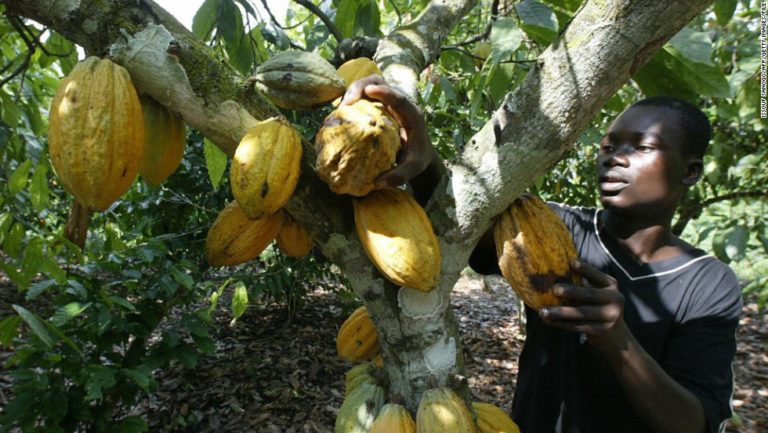
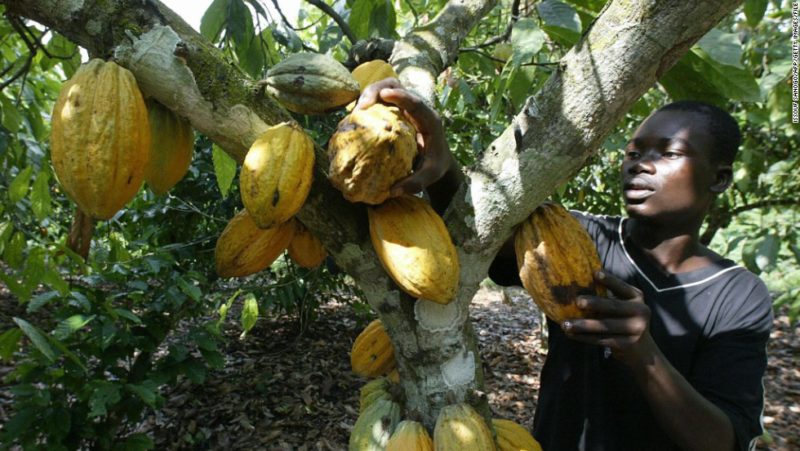
The world’s top cocoa producer, Cote d’Ivoire, plans to build a 60 to 70 Megawatts (MW) capacity biomass power generation plant running on waste from cocoa pods.
Cote d’Ivoire is the world’s top cocoa producer
It also plans to extend its grid to Liberia, Guinea and Sierra Leone this year, according to media reports on Tuesday, July 3, 2018.
This is part of its aim to develop 424 MW of biomass power generation capacity by 2030.
The plant, which will enable Cote d’Ivoire to diversify its electricity generation sources, was among five projects to receive grants from the United States agency for trade and development (USTDA), the U.S. Embassy in Abidjan said in a statement on Monday.
Others included a hydropower project in Kokumbo and two smart grid power projects.
The statement said the biomass power station, the first in Cote d’Ivoire would be based in the southern cocoa region of Divo. The USTDA has earmarked 996,238 million dollars for feasibility studies.
Although Cote d’Ivoire produces about two million tonnes of cocoa annually, thousands of tonnes of pods are discarded after the beans are removed. They are left to rot or burned after the harvest.
Unlike many countries in sub-Saharan Africa, Cote d’Ivoire has a reliable power supply.
It exports electricity to neighbouring Ghana, Burkina Faso, Benin, Togo and Mali.
But with domestic consumption rising by about 10 per cent a year, the government is under pressure to boost supply at home and aims to increase installed capacity to 4,000 MW by 2020, from the current 2,275 MW.
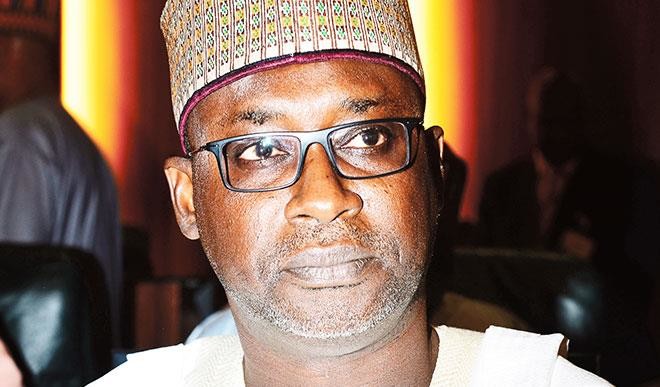
The National Environmental Standards and Regulations Enforcement Agency (NESREA) says lack of public awareness is responsible for the growing environmental abuse in the country.
Dr. Lawrence Anukam, Director-General, National Environmental Standards and Regulations Agency (NESREA)
Mr Wuave Daniel, the Gombe State Coordinator of NESREA, said this on Tuesday, July 3, 2018 in an interview with News Agency of Nigeria (NAN) in Gombe, the state capital.
Daniel said that the residents of Gombe State, for instance, were not aware of the dangers of environmental pollution, adding that the ignorance was largely responsible for their abuse of the environment.
“It is not the sole responsibility of government to maintain the environment. Everyone, especially consumers, has specific roles to play in efforts to have an environment that is free of plastics and water sachets.
“Most people are not aware of the consequences of dumping plastics and waste in drainage channels and on streets; probably, if they know these, they would act differently. This is because the effect of the pollution is suffered by all.
“Today our environment is crying. Trees are felled indiscriminately; plastics and water sachets are dumped in our drainages, while many people throw their waste into gutters. All these indicate the level of ignorance on the part of the citizens.
“People still think it is the sole responsibility of government to ensure a clean and safe environment for all. In spite of the government’s waste management efforts, citizens continue to dump their garbage in drainages.
“The effect of their actions goes beyond the unhygienic state of our environment. It has led to increased flooding and contamination of our streams and rivers,’’ he said.
Daniel said that NESREA had been sensitising the citizens to the consequences of all forms of environmental abuse.
He urged Nigerians to pay more attention to their environment so as to minimise the risks of flooding and contamination of streams and rivers.
The Western Indian state of Maharashtra has eased ban on single-use-plastic, just over a week after it was imposed, following what sources said was intense lobbying.
Mumbai (formerly Bombay), the capital of Maharashtra State
The lobbying was by multinational companies and plastic industry bodies for softer rules and extensions.
Maharashtra, home to India’s financial capital of Mumbai, has allowed e-commerce companies to use plastic packaging for three more months, according to a government order dated June 30, published on Tuesday, July 3, 2018.
During these three months, e-commerce firms will have to come up with a buyback plan to collect used plastic packaging material, ensure its recycling and disposal as well as source alternative packaging material.
The ban, which came into effect on June 23, had threatened a sharp rise in costs for retailers, beverage makers and sellers of bottled water, among other companies that rely on plastic for packaging.
Representatives of companies including Amazon, H&M , Pepsi and Coca-Cola, as well as plastic lobby groups, met Maharashtra government officials days before the ban.
They urged them to implement the rule in phases and relax some norms, the Media quoted four sources as saying on Friday.
A senior government official who was involved in the talks and did not wish to be identified due to government rules, said changes to the ban had been made after considering the industry demands.
Maharashtra’s top environment official Anil Diggikar did not answer calls or texts seeking comment.
In its latest order, the government banned the sale of plastic bottles containing drinking water less under 200 millilitres.
It also did not specify a buyback price for empty bottles used for selling beverages other than water, a move that could potentially help soft drink makers.
Amazon, Pepsi and Coca-Cola declined to comment on the modifications to the ban. H&M did not immediately respond to a request for comment.
The latest rules also exempt the use of plastic packaging of medical equipment and drugs.
Plastic could be used for wrapping products by manufacturers, if the material used was thicker than 50 microns, comprised at least 20 per cent recyclable material.
It must have had the manufacturer’s details and buyback price printed on it, the order said.
Maharashtra’s move to ban plastic, the first such broad action against the material by an Indian state, comes as Prime Minister Narendra Modi pushes a plan to completely end the use of single-use-plastic in India by 2022.
Plastic packaging accounts for nearly half of all plastic waste globally, and much of it is thrown away within just a few minutes of its first use, according to the United Nations.
Bauchi, Cross River, Delta, Enugu, Kaduna, Lagos and Taraba states have received the “Waterman Award’’ for their efforts to improve service delivery in the water sector.
Suleiman Adamu, Minister of Water Resources
The states received the awards at the opening of the International Conference of the Nigerian Water Supply Association (NWSA) in Abuja on Tuesday, July 3, 2018 for their efforts to expand the citizens’ access to potable water.
Mr Olusola Suulola, the Chairman of the Local Organising Committee of the conference, said that there could never be any meaningful development in the society without quality service delivery.
He, however, said that it was saddening to note that the water sector in the country had been facing some crises.
He underscored the need for state governments to exhibit political commitment in encouraging reform processes in the states’ water agencies.
Suulola said that poor data, dilapidated water infrastructure and inadequate funding were some of the challenges which ought to be tackled in efforts to improve Nigerians’ access to water supply.
Deputy Governor of Taraba, Alhaji Haruna Manu, who responded on behalf of the seven states that received awards, commended NWSA for the award, saying that it would spur them to do more.
Manu said that one of the critical areas of intervention of Gov. Darius Ishaku’s administration in Taraba.
He said that the state had invested a lot of resources on water supply projects, adding that efforts were underway to provide water for over 200 communities across the state.
Minister of Water Resources, Mr Suleiman Adamu, said that the critical challenges facing urban areas across the country included the dearth of sustainable basic services such as water supply and sanitation services.
“Available statistics in Nigeria indicate regression in the urban water services, as access to pipe-borne water regressed from 32 per cent in 1990 to 7 per cent in 2015.
“This is due to high rate of urbanisation, failing infrastructure, institutional weaknesses and far more importantly, low level of investment,’’ he added.
Adamu said that part of the Federal Government’s mission was the transformation of all water utilities into financially viable entities, as part of renewed efforts to tackle urban development problems and improve the socio-economic conditions of the country.
The minister said that the ministry had been supporting urban water supply and sanitation sector reforms since 2004.
He added that the support was through the approval of a National Action Plan on Water, Sanitation and Hygiene and the declaration of a state of emergency in the water and sanitation sector.
Adamu, nonetheless, expressed the hope that the conference would produce workable strategies that would strengthen stakeholders’ collaboration for the sustainable development of the nation’s water sector.
The News Agency of Nigeria reports that the Nigerian Water Supply Association is an umbrella body of all operators in the country’s water supply sector.
The group makes contributions to policy negotiations at national, regional and international levels for institutional reforms in the water sector.
The theme of the conference was: “Transforming Urban Water Supply and Sanitation Utilities into Financially Viable Entities”.
The decision by the government of the Democratic Republic of Congo to allow drilling of oil in the Virunga and Salonga National Parks has attracted condemnation by ecologists, who claim that the venture will negatively impact the flora and fauna.
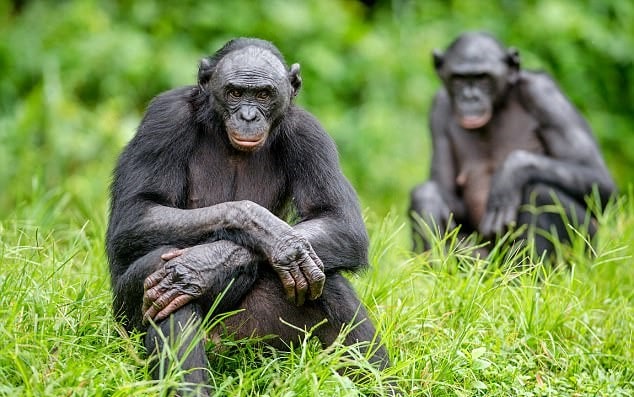
Bonobos
Declared World Heritage Sites in 1979 and 1984 by UNESCO, the Virunga and Salonga National Parks are said to be home to some of the planet’s last mountain gorillas who roam the forests there.
Salonga National Park, for example, is a key habitat for the bonobo, an endangered great ape. The park is home to around 40 percent of the remaining population, it was gathered.
Reinhard Behrend of the Rainforest Rescue, a German conservation advocacy group, says: “What’s the point of having protected areas if politicians can simply hand them over to the fossil fuel industry?
“For wildlife lovers, the name Virunga has a magical ring. The national park in the Democratic Republic of Congo is a refuge for some of the planet’s last mountain gorillas, guarded by rangers who risk their lives to protect the great apes. Salonga National Park is a key habitat for bonobos, home to around 40 percent of the remaining population.
“It’s not surprising that UNESCO declared the areas World Heritage Sites in 1979 and 1984.
“Now, Congolese President Kabila wants to delist thousands of square kilometers of the parks. The government feels that it has a right to exploit mineral wealth anywhere within its borders – and it is not about to let a World Heritage Site or two stand in its way. If the plan is realised, it would make a mockery of the whole concept of protected areas.”
The controversy, Behrend adds, centres around drilling for oil, adding that a total of nearly 4,500 square kilometres are to be opened out of the roughly 16,700 square kilometres.
“The threat to the environment that this would entail is alarming,” he stressed, adding that exploring and drilling would:
destroy the habitat of bonobos and gorillas, as well as many other species
trash forests that are crucial to protecting our climate
endanger nesting sites of migratory birds
pollute the Congo and Nile river systems
“In May, a total of 19 environmental organisations from the province of North Kivu published an open letter (in French) to warn of the impact of shrinking the national parks. They now want to mobilise the people of the region to step up the pressure on the government in Kinshasa. Their goal is to collect 100,000 signatures on a national petition,” said Behrend, adding that Rainforest Rescue has also launched a parallel, worldwide campaign to protect Virunga and Salonga.
Members of the Climate Change Network of the Democratic Republic of Congo (RCCRDC) are expressing disapproval over the project.
“We take the option of disavowing this project, whose ins and outs are not under the control of the Congolese people, especially during this period. where all our thoughts are turned to the choice of leaders to overcome national selfishness by integrating the notions of international community and humanity,” said Appolinaire Zag Abe Kamanyula, executive director of the RCCRDC.
Kamanyula adds: “The wrath of this coalition lies in the fact that these two reserves, moreover, heritage of UNESCO, are strategic areas and real shields against global warming. The RCCRDC is protesting against this mining operation as it could lead to the expropriation of arable land in many local communities and have negative economic impacts on the activities of fishermen on Lake Edward. The region generates approximately $90 million annually. The value of the deposit is estimated at $6.758 billion barrels against $1 billion that the operator proposes to exploit the area.”
The State Programme Coordinator (SPC), International Food for Agricultural Development (IFAD) in Benue State, Mr Emmanuel Igbaukum, has warned farmers against diversion of farm inputs given to them by IFAD and other supporting agencies.
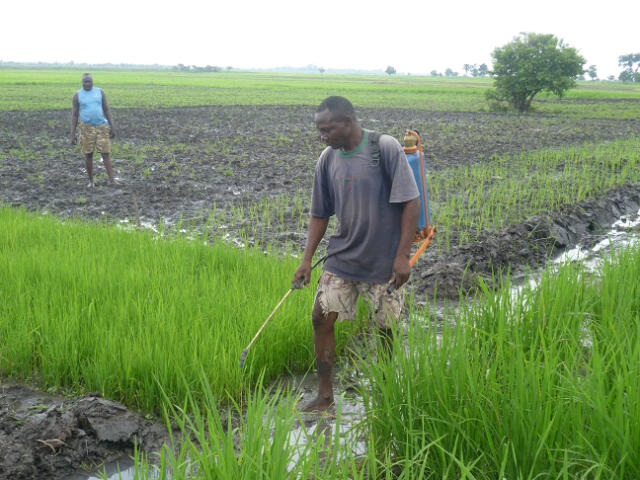
Farmers at a project site in Agatu Local Government Area of Benue State
Igbaukum gave the warning on Monday July 2, 2018 in Taraku, Gwer Local Government Area of the state during the flag-off of the 2018 distribution of agro inputs.
He decried the situation where people collect inputs with the sole aim of selling them and not to apply them to their crops, stressing that such an ugly behaviour was counterproductive.
He further said that such behaviour would make organisations that support farmers with various items to be discouraged to render assistance to them subsequently.
The programme coordinator said that the inputs were given to them to enable them step up their farming activities and realise bountiful harvest during harvest period and not to be sold.
He pointed out that it was no longer going to be business as usual because the organisation would intensify its monitoring processes, adding that security agencies too would be involved so as to prevent some people from selling the inputs.
He disclosed that OLAM had recovered 95 per cent of the loans it gave to Benue farmers and he sued for sustenance of the spirit.
The Commissioner for Agriculture and Natural Resources in Benue, Mr James Anbua, commended Benue farmers for changing the narrative that Benue farmers do not pay back loans by paying 95 per cent of the loans they collected from OLAM.
The National Programme Coordinator (NPC) of IFAD, Mr Ameh Onoja, said that OLAM bought 25 metric tonnes of rice from Benue farmers which amounted to N2.7 billion.
Representative of International Fertiliser Distribution Centre (IFDC), Miss Dorathy Arinze, stated that the organisation would ensure equitable distribution of the inputs which was its core mandate and urged farmers to make maximum use of them.
The third class chief of Ngenev, Chief Augustine Tali, encouraged people to venture into massive agriculture in order to better their livelihood.
Two and half years after the foundation of large herbivores reserve in a former military area in Milovice, not far from the capital city of the Czech Republic, Prague, the number of wisents stood at about 20.
A wisent calf. Photo credit: Michal Köpping
However, on Friday, June 29, 2018, another two young animals were observed in the reserve for the first time. Consequently, the number of the wisents in the reserve has risen slightly.
The wisent is the European version of the bison, a large, wild animal, similar to a cow but having a larger head and hairy shoulders.
The number of wisents is said to have almost tripled since the reserve’s foundation. At the end of 2015, animal conservationists brought seven females and one male into the reserve. In 2016 the first young animal was born in the herd. So far, eight wisents have been born in the reserve, out of which four were born this year. Last autumn another five adult females from Białowieża in Poland were added to the herd.
“It has been proven that newly founded wisent populations are considerably more viable and they grow faster when they are formed with a bigger number of founders. In the past, new populations were usually founded with five animals. With those groups it often took a number of years before they stabilised and their numbers almost did not grow for several years,” points out Miloslav Jirků of the Biology Centre of the Czech Academy of Sciences.
He adds that that is why the group in the former military area was founded with eight animals and some others were later added.
“The project has been working in close cooperation with scientists since the beginning. Therefore, we have access to the latest findings and do not have to repeat the processes which did not prove successful in other countries in the past,” says Dalibor Dostal, the Director of European Wildlife conservation organisation, appreciating the interconnection with academics and university specialists.
In the former military area, where the armies of the Austro-Hungarian Empire, Czechoslovakia, Nazi Germany, and the Soviet Union trained, large herbivores have the task of grazing about 120 hectares of steppe to protect it against becoming overgrown by aggressive grasses and shrubs. Together with the wisents, there are also wild horses and back-bred aurochs in the reserve. The former training area has thus become the very first location in the world where all three original species of European large herbivores appear within one reserve.
After the First World War, man exterminated wisents in the wild and only a few animals remained in captivity – in zoological gardens and game reserves. More precious is the Białowieża line, which is also kept in the reserve in the former Milovice military area, which comes from only five founders. Thanks to international efforts, wisent reproduction has reportedly been successful in captivity, so since the 1950s conservationists have begun to return them back to the wild.
Over the next two weeks, the Convention on Biological Diversity’s (CBD) bodies on science and implementation will meet to provide further guidance on accelerated efforts to achieve the Aichi Biodiversity Targets by the end of the year 2020, and to lay the groundwork for negotiations to achieve an ambitious and effective post-2020 global biodiversity framework.
Cristiana Paşca Palmer, Executive Secretary of the Convention on Biological Diversity (CBD)
More than 1,000 delegates from around the world will participate in the 22nd meeting of the Subsidiary Body on Scientific, Technical and Technological Advice (SBSTTA-22) and the second meeting of the Subsidiary Body on Implementation (SBI-2), both being held in Montreal, Canada from July 2 to 7 and July 9 to 13, 2018 respectively. The two meetings lead up to the UN Biodiversity Conference being held in Sharm El Sheikh, Egypt in November.
Dr. Cristiana Paşca Palmer, CBD Executive Secretary, said: “These two meetings are essential stepping stones on our journey to reaching the Convention’s 2050 vision of living in harmony with nature, whereby biodiversity is valued, conserved, restored and wisely used, maintaining ecosystem services, sustaining a healthy planet and delivering benefits essential for all people.
“We know we can achieve this vision, provided we deliver transformational change. To this end, biodiversity must be placed at the centre of economic, social and political decision-making as the essential foundation that supports life on Earth, human development and well-being. Our collective efforts must shift to embrace new means of production and consumption; reorienting economic development pathways towards sustainability.”
The SBSTTA-22 represents the first time that the science body will consider items from the Convention’s two protocols – the Nagoya Protocol on Access to Genetic Resources and the Fair and Equitable Sharing of Benefits Arising from their Utilization and the Cartagena Protocol on Biosafety. Ten substantive agenda items are up for consideration at SBSTTA-22, including:
Digital sequence information on genetic resources. A cross-cutting issue under the CBD and the Nagoya Protocol, digital sequence information will have major implications for the conservation and sustainable use of biodiversity as well as the equitable sharing of benefits from the use of genetic resources.
Risk assessment and synthetic biology. Risk assessment under the Cartagena Protocol has a particular scope based on the identification of potential adverse effects for biodiversity and human health posed by living modified organisms. Delegates will discuss a way forward towards addressing the needs, priorities and gaps identified by Parties such as modified fish and organisms containing engineered gene drives. The meeting will also draw upon an expert report to look at the extent to which synthetic biology may have implications for all three objectives of the CBD and for the Cartagena Protocol. The meeting will look at the potential benefits and potential adverse effects of synthetic biology applications.
Scientific and technical advice on the definition and identification of Other Effective Area based Conservation Measures (OECMs). Delegates will review voluntary guidance developed on integrating protected areas into wider land and seascapes, governance and equity. These deliberations will have profound implications for the development of post-2020 targets.
Invasive alien species. Delegates will consider guidance for avoiding unintentional introductions of invasive alien species associated with trade in live alien species. Invasive species pose a growing threat to biodiversity due to rapidly expanding global supply chains in food and energy sectors. Guidance on globally harmonized measures to ensure safe and responsible international trade is important as such measures are necessary for achieving the Sustainable Development Goals, maintaining ecosystem integrity, and preventing the spread of pests and diseases in agriculture, forestry and fisheries.
SBI-2 provides the last opportunity for the body to prepare guidance to Parties and relevant stakeholders on the additional urgent efforts required to achieve the Aichi Biodiversity Targets within the remaining two years of the Strategic Plan for Biodiversity 2011-2020. To that end,
Delegates will review progress in implementing the Convention and the Strategic Plan for Biodiversity 2011-2020, including achievement of the Aichi Biodiversity Targets.
The meeting will make recommendations to the CBD’s Conference of the Parties on the process for the preparation of a new and effective post-2020 global biodiversity framework.
Delegates will consider possible actions related to mainstreaming attention to biodiversity into development planning, effective measures and institutional mechanisms for implementing the CBD at the national level, synergies with other biodiversity-related conventions as well as options to enhance the review mechanisms with a view to strengthening implementation of the Convention. New sectors will be considered for mainstreaming efforts from the energy and mining sectors, infrastructure, manufacturing and processing and health sectors.
After almost four years following the entry into force of the Nagoya Protocol, delegates will have the first opportunity to assess and review its effectiveness. Delegates will also discuss the draft framework of indicators and consider information on reference points to establish a baseline against which future progress will be measured.
Some 79 side events are also being held in the margins of the meeting. Canadian astronaut Roberta Bondar, recently inducted into the Order of Canada, will address the delegates at the opening of the SBI meeting on July 9.
The meeting takes place in the context of the 25th anniversary of the entry into force of the Convention on Biological Diversity and efforts by governments to conserve and sustainably use biodiversity. As indicated in recent global assessments on biodiversity, such as the regional assessments of the Intergovernmental Science-Policy Platform on Biodiversity and Ecosystem Services (IPBES), the risks posed by biodiversity loss should be considered on the same scale as those of climate change.
The “Global Risks Report” prepared by the World Economic Forum has listed ecological collapse and biodiversity loss among the top 10 global risks in terms of impact. Effective and urgent action is needed to halt biodiversity loss. If left unchecked, such loss will affect the ability of nature to support both people and planet.
Monday, July 2, 2018 marked the launch of “Zero Malaria Starts with Me”, a continent-wide campaign co-led by the African Union Commission and the RBM Partnership to End Malaria, and supported by African leaders. The initiative aims at getting more people involved in the fight against the disease that reportedly kills over 400,000 Africans every year.
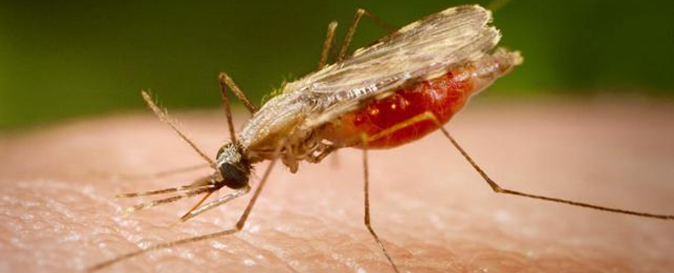
The malaria-causing anopheles mosquito feeding on a victim
Following reports that malaria cases have increased for the first time in more than a decade, Zero Malaria Starts with Me seeks to reignite a society-wide movement to get back on track efforts that contributed to a 60% decline in cases and saved an estimated seven million lives since 2000, and to help meet the goal of eliminating malaria across Africa by 2030.
The campaign, unveiled on Sunday during the AIDS Watch Africa Meeting at the 31st African Union Summit by President Macky Sall of Senegal and King Mswati III of Eswatini and endorsed by 55 (TBC) African Heads of State and Government on Monday, empowers communities to take greater ownership of malaria prevention and care, and to mobilise additional resources for the effort.
President Paul Kagame of Rwanda, Chair of the African Union, says: “The African continent accounts for over 90% of the global malaria burden. It is in this context that we have launched the ‘Zero Malaria Starts with Me’ campaign, a continent-wide public-facing campaign for a malaria-free Africa. The campaign will reignite grassroot movements in which individuals, families, communities, religious leaders, private sector, political leaders, and other members of society pledge to take responsibility in the fight against malaria.”
Inspired by Senegal’s nationwide campaign of the same name launched in 2014, Zero Malaria Starts with Me is now being rolled out across the African continent to encourage all citizens – political, business, community and religious leaders, as well as individuals, families and communities – to make a personal commitment to ending malaria for good.
To date, over 20 African nations have committed to join in supporting the campaign, with presidents of Uganda, Zambia and Mozambique already launching nationwide campaigns that include large-scale bed net distribution drives to establishing high-level national End Malaria Councils and parliamentary groups on malaria. Others, including the First Ladies of Ghana and Niger, have pledged to do more to engage leaders and communities to fight malaria in their countries.
President Macky Sall of Senegal comments: “In my country, malaria has long been a major public health concern threatening the socio-economic development and structural transformation trajectory that has put our country on a firm path to sustainable development. It is through national ownership, shared responsibility and global solidarity that we can defeat malaria for good.”
HM King Mswati III of the Kingdom of Eswatini, Chair of the African Leaders’ Malaria Alliance, says: “This campaign further reinvigorates our commitment to eliminate malaria in Africa as we now call upon all our people at all levels to work with us in ridding our continent of this scourge. I urge all governments to invest more in fighting the disease, however the success of this campaign will depend on partnerships and on collaboration across sectors and amongst our population, for as government, we cannot win this fight against malaria alone.”
The campaign offers simple tools to increase community participation in malaria elimination efforts, keep pressure up on leaders to stay committed to ending the disease, and forge new partnerships that can contribute additional funding that will increase access to treatment, improve diagnosis and prevention against the deadly disease.
Campaign resources are provided via a Zero Malaria Starts with Me toolkit available at www.zeromalaria.africa.
The Federal Government of Nigeria said on Monday, July 2, 2018 that it initiated and completed 73 Ecological Projects across the country in the last three years.
Hajiya Aisha Abubakar
Minister of State, Industries, Trades and Investments, Hajiya Aisha Abubakar, made the disclosure in Bauchi during a visit to Gov. Mohammed Abubakar of the state.
“I wish to also inform Your Excellency that about 73 projects were initiated and completed during the administration of Mr President and, as we speak, we have commissioned 43 out of the 73 projects.
“Just on Thursday, the Minister of State for Foreign Affairs, Hajiya Kadijat Abba Bukar commissioned a similar project in Azare Town of Bauchi State,” she said.
Aisha, accompanied by Hajiya Habiba Lawal, from the Federal Ecological Funds Office, said that she was in the state to commission one of the projects.
“We are here on behalf of His Excellency, President Muhammadu Buhari, to commission an ecological project, as some projects have been commissioned nationwide.
“We are here in Bauchi to commission the channelization of the flood waters within the premises of Abubakar Tafawa Balewa University Teaching Hospital (ATBUTH), Bauchi,” she said.
“It has been a problem for over five years, we found it on the database bank of the Ecological Fund Office.
“After looking at the importance and significant of having a good teaching hospital and providing quality service to human lives and good environment for the people, we sort the approval of Mr President and in February 2017, he assented to the request,” she explained.
The minister explained that about five more projects would be commissioned in Bauchi state before the end of the tenure of the present administration.
Responding, Gov. Abubakar commended President Muhammadu Buhari for the gesture including the erosion control project in Zaki Local Government where communities face erosion threats and destruction yearly.
The governor called for similar intervention at the Tambari Housing Estate and Abubakar Tatari Ali Polytechnic, Bauchi, also being threatened by erosion.
Abubakar assured that the state government would support President Buhari in every way possible to enable him excel.