Home Blog Page 1853

Waste recycling, efficient way to make society green, says planner

0

President, Association of Town Planning Consultants of Nigeria (ATOPCON), Mr Olaide Afolabi, says waste recycling is an efficient source of revenue generation and means to make the society green.
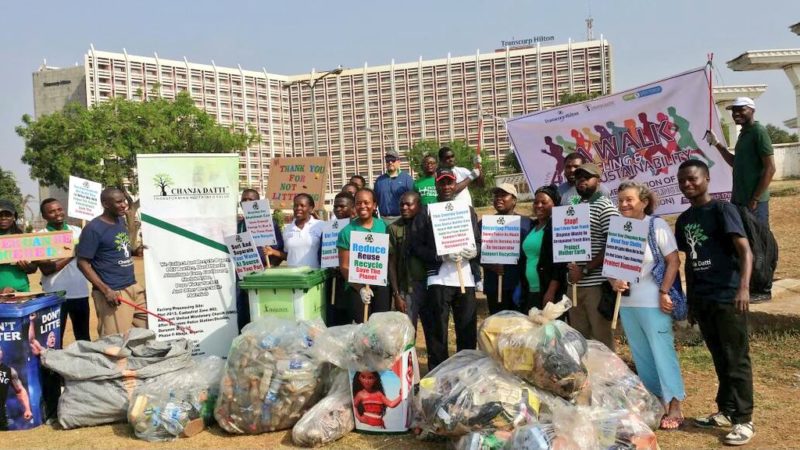
Global Recycling Day
Participants at the Global Recycling Day event in Abuja

Afolabi made the submission in an interview with the News Agency of Nigeria (NAN) in Lagos on Friday, July 13, 2018.

He said that most of the materials and waste products that cause flooding in the country could be recycled.

According to him, some the waste materials that could not be recycled constitute hazards to the environment and should be banned from usage in the country.

He said that some countries had prohibited the usage of nylon and other materials that constitute hazards to the environment.

“Such decision should be taken in Nigeria because nylon constitutes about 70 per cent of residues that block the water canals, thereby causing flood.

“All drainage channels in the state have been blocked with recyclable residues.

Flood is a human-caused disaster which could be controlled if people become conscious of their environment,” he said.

Afolabi said that people would generate income if they could start sorting their wastes, especially the “PET bottles” papers, nylons, cans, among others, saying there were many resource merchants to buy them.

He said that most of the recycled items were exported by the resource merchants because many industries had not tapped from the use of recycled items.

“There are many ways recycled items can be used; they can be reused in the same industry that produced them and be used in the construction of buildings.

“For instance, somebody constructed three bedrooms using ‘PET bottles’ in Kaduna State, while another used the same PET bottles for the construction of school library,” he said.

Afolabi said these materials were available locally, wondering why people still lived in shanty buildings without proper planning, with poor indoor air quality and lack of network of drains.

“Even, where these facilities are available, how many people can afford to buy or rent such accommodation due to the high cost of construction?

“We have to be most conscious about the environment, especially as regards construction.

“For instance, how many of the so-called estates coming up in Lagos or even the Eko Atlantic are Green enough?

“Is there any estate in Nigeria today that runs solely on solar, inverter or wind turbine without a single generator? How many households in Nigeria today sort their wastes?’’ he asked.

The ATOPCON President urged government to encourage recycling of all kinds of waste products, saying that was a source of income and a major way to check the causative factors of flooding in the country.

By Lilian Okoro

Government promises to complete all abandoned water projects

0

The Director, Irrigation and Drainage, Federal Ministry of Water Resources, Dr Elijah Aderibigbe, has assured that the Federal Government will complete all abandoned water projects in the country.

suleiman adamu kazaure
Suleiman Adamu Kazaure, Water Resources Minister

Aderibigbe told the News Agency of Nigeria (NAN) in Abuja on Friday, July 13, 2018 that the step was necessary to see that previous investments in the sector would not be a waste.

According to him, huge sums of money have been invested in some projects, as their completion would be beneficial to all Nigerians.

He, however, noted that some projects had been phased out, as completing them would amount to economic waste, saying the present hectares in the country stood at 70,000.

‘‘The present administration is continuing from where the previous administration stopped, this means that we are not embarking on any new project for now.

‘‘We are looking at those projects that are near completion, we are looking at those ones that were abandoned and had reached advanced stages.

‘‘We are revisiting them; the Federal Government is providing money.

‘‘We have called the contractors back to site, so that the benefits will be enjoyed by all Nigerians, especially where the projects are sited.’’

The director said schemes such as the Mamu-Akwa in Anambra State and Sabke Irrigation project in Katsina State had been completed and handed over to the primary users through the river basins.

He said efforts were ongoing to convert the schemes in two sources of energy and to also see that issues of sustainability when it comes to operation and maintenance were settled.

According to Aderibigbe, the Shagari Irrigation project in Sokoto State is almost completed.

He said that some projects that were abandoned since the time of Petroleum Trust Fund (PTF) were being resuscitated to see that Nigerians benefit from the water infrastructure.

He commended the Federal Executive Council (FEC) for giving its blessings toward meeting the Revised Estimated Total Cost need for some abandoned projects through priority of attention.

He said irrigated agriculture practice was fast becoming an important sector in the economy.

According to him, this is not surprising because most of the populace rely on agriculture and agro-related activities for their livelihoods.

He, however, added that other benefits of irrigated agriculture include the value chain addition through marketing and transportation in food production.

‘‘The benefits are enormous, even under a farmer, many would be employed when irrigated agriculture works,’’ he added.

He urged Nigerians to take ownership of all water utilities, saying participatory irrigation concept would help to promote sustainability of projects.

He director advised the Water Users Association to play a huge role in maintaining water facilities.

By Tosin Kolade

Uncontrolled desertification can affect food security – Environmentalist

0

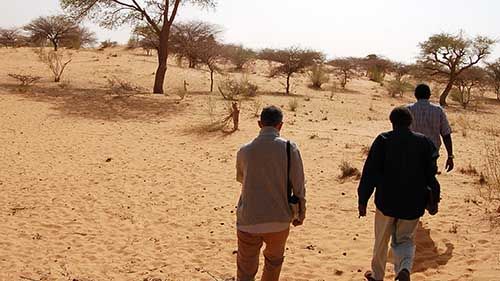
An Environmentalist, Mr Gafar Odubote, has said that desertification, if not controlled, can negatively impact Nigeria’s food security.

Desertification in Nigeria

Odubote, the Public Relations Manager of Let’s Do It Nigeria, made this known in an interview with the News Agency of Nigeria (NAN) in Lagos on Friday, July 13, 2018.

The expert said the impact of desertification was multifaceted but bordered more on the nation’s food security status.

“Desertification affects our ecosystem; from plants, animals and even humans. It will plague food security and result into famine if not checked,’’ he said.

Odubote also attributed other causes of the growing desertification in the country to deforestation and drought.

“Desertification is an offshoot of deforestation, which is most times human-induced with incessant felling of trees without replanting.

“Deforestation and incessant burning of bushes impact our environment negatively and leads to desertification.

“The issue of drought is also closely linked to the encroachment of desertification on the environment.

“The government must also come up with adequate irrigation system to help fight the spread of desertification,’’ Odubote said.

He appealed to the government to engage stakeholders and come up with strategies to curtail further encroachment of desertification.

“The government needs to come up with a plan and engage stakeholders across the country and mostly in the affected Northern region.

“The government must come up with a legal framework that advocates planting of trees across the country to curtail the spread of desertification.

“The legal framework is very important. If there is no legal framework, deforestation will gradually lead to a full-blown desertification encroachment in Nigeria.

“This legal framework must also be enforced to curtail the spread of desertification,’’ he said.

By Mercy Okhiade

Landmark varsity, FIIRO collaborate to accelerate agro-industrial revolution

0

The Landmark University, Omu-Aran in Kwara State, says its Memorandum of Understanding (MOU) with the Federal Institute of Industrial Research, Oshodi (FIIRO) is to upscale agrarian and industrial revolution toward revamping Nigeria’s economy.

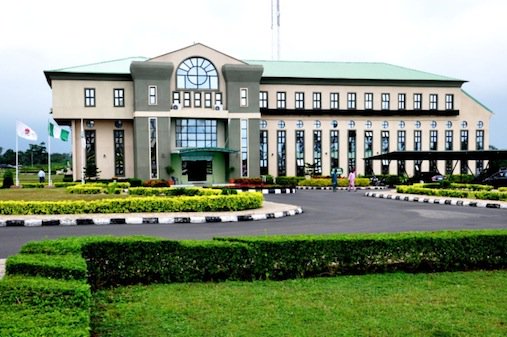
Landmark University
Landmark University
Landmark University
Landmark University

Prof. Adeniyi Olayanju, the Vice-Chancellor of the university, made the remarks on Friday, July 13, 2018 in Omu-Aran at the signing of the MOU, commemorating the institution’s 5th convocation.

Olayanju said that the MOU, which had been formally ratified, was saddled with the responsibility of accelerating industrial revolution in Nigeria using agriculture as a veritable tool.

He expressed optimism that the MoU would serve as one of the springboards for the actualisation of the university’s visionary path toward the nation’s growth and development.

The vice-chancellor described FIIRO as a professional body with the broad mandate of accelerating industrialisation in Nigeria.

He said that the institute has over the years developed technologies that promote the ideals of entrepreneurship development, adding that the Landmark would benefit immensely from such laudable breakthrough.

Olayanju, who likened the MoU to a marriage of agricultural and industrial revolution, said that it remained the panacea for revitalising the nation’s economy.

According to him, the only way to remain relevant is to be committed to continuous improvement.

“Having FIIRO, as we have entered the 8th year as a university, marks a new beginning for us,” he said.

Commenting, Prof. (Mrs) Gloria Eelemo, the Director-General of FIIRO, said that signing of the MoU was very symbolic and a unifying factor for both institutions.

Eelemo expressed the hope that the Mou would give birth to products that would be of benefit to mankind, particularly in Nigeria.

“There are some MoUs you sign and are left on the shelf, but with the calibre of energetic workers that you have here, I am quite sure this will not be the case.

“FIIRO is very proud of the vice-chancellor because he is one of our own and that is why we are here to support him,” she said.

By Yinusa Ishola

Japan struggles to restore water to flood-hit towns

0

Municipal Workers in Western Japan struggled on Friday, July 13, 2018 to restore water supplies, a week after floods caused by a record downpour killed more than 200 people in the worst such disaster in 36 years.

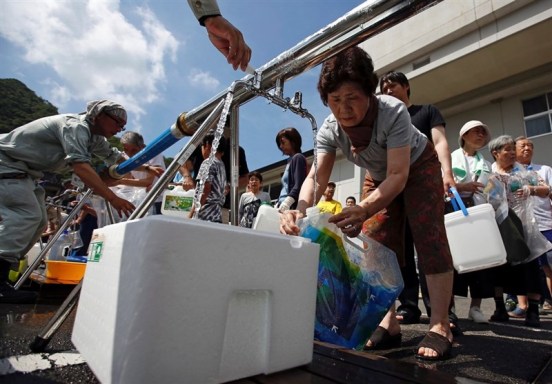
Japan
Japan is fixing water supply related challenges issues after the flooding

Communities that grappled with rising floodwaters now find themselves battling scorching summer temperatures, well above 30 degrees Celsius (86°F), as foul-smelling garbage piles up in mud-splattered streets.

“We need the water supply back,’’ said Hiroshi Oka, 40, a resident helping to clean up the Mabi district in one of the hardest-hit areas, the city of Kurashiki, where more than 200,000 households have gone without water for a week.

“What we are getting is a thin stream of water and we can’t flush toilets or wash our hands,” he added, standing over a 20-litre (4.4-gallon) plastic tank that was only partly filled after almost four hours of waiting.

Water has been restored to some parts of the district, a city official told Reuters, but he did not know when normal operations would resume, as engineers were trying to locate pipeline ruptures.

More than 70,000 military, police and firefighters have fanned out to tackle the aftermath of the floods.

There have been 204 deaths, the government said, with dozens missing.

Large piles of tatami straw mats, chairs and bookcases could be seen all over Mabi.

The smell of leaded gasoline, mixed with a sour smell of mud and debris, filled the air.

The weather has fuelled concerns that residents, many still in temporary evacuation centres, may suffer heat stroke or illness as hygiene levels deteriorate.

Shizuo Yoshimoto, a doctor making the rounds at evacuation centres, said an urgent challenge was to bring necessary drugs to patients with diabetes and high blood pressure, who were forced from their homes or whose clinics are closed.

“There are quite a few cases where patients are unable to get drugs.

“So, one issue is how to maintain treatment for those with chronic illness. Another is acute illness, as heatstroke is on the rise,’’ he said.

Public broadcasters, NHK, has spread advice on coping with high temperatures and maintain hygiene, such as a video tutorial on how to make a diaper from a towel and plastic shopping bag.

Chief Cabinet Secretary, Yoshihide Suga, urged people in flood-hit areas to guard against thunderstorms.

“People still need to be aware of the possibility of further landslides,’’ he told reporters.

Severe weather has increasingly battered Japan in recent years, including similar floods last year that killed dozens of people, raising questions about the impact of global warming.

Prime Minister Shinzo Abe, who cancelled a scheduled overseas trip to deal with the rescue effort, visited Kurashiki on Thursday and said he aimed to visit other flood-damaged areas on Friday and over the weekend.

WFP provides $126m food aid to 16 Nigerian states

0

The World Food Programme (WFP) says it has spent $126 million to provide food aid in various forms to 1.2 million people in 16 northern Nigerian states since 2017.

Ertharin Cousin
Ertharin Cousin, executive director of the World Food Programme. Photo credit: thedailybeast.com

Ms. Ingermarie Vennize, the World Food Programme’s Head of Communication in Nigeria, said this on Friday, July 13, 2018 when she paid a courtesy call on the Managing Director of the News Agency of Nigeria (NAN), Mr Bayo Onanuga in Abuja.

She identified the sates as Katsina, Kaduna, Taraba, Zamfara, Sokoto, Kano, Yobe, Borno, Adamawa, and Bauchi.

Others are Benue, Gombe, Jigawa, Kebbi, Plateau and Niger.

She added that the programme planned to meet its target of providing food assistance to 1.5 million of the most food insecure and vulnerable people in northeast Nigeria.

“As at this moment, WFP is providing food and cash assistance to more than 1.2 million people,’’ she said.

According to Vennize, the number of people affected by insurgency has increased as more than 20,000 have returned to the area from neighbouring countries.

She said that the programme’s activities in the affected states had increased, especially from June to September, when stored food would have dwindled.

She said that owing to the development, WFP required 49 million dollars to sustain its life-saving support until the end of 2018.

“WFP is able to carry out the exercise by mopping up assistance from the government of countries that are friendly to Nigeria.

“We also provide nutritional support to pregnant women to prevent unnecessary mother and child death,’’ she added.

The official said further that WFP also provided support to mostly the vulnerable in the society and in the areas ravaged by the Boko Haram insurgency for the people to engage in agricultural activities wherever they could or engage in income-generating activities wherever possible.

The head of communication further said that the programme was providing preventative nutrition assistance to children of six to 23 months old, and to children with moderate or acute malnutrition that were of between 24 and 59 months old.

She said that pregnant and lactating women also received preventative nutrition assistance integrated with cash or in-kind food support.

Vennize, however, said that in areas where people returned en masse, livelihood support interventions were made to contribute to early recovery and help reduce reliance on food assistance.

She pledged that the programme would not relent in its efforts at providing food assistance to people affected by terrorism.

“WFP started its presence in Nigeria in 2016 upon the request of the Federal Government to assist in the crisis in Borno, Yobe and Adamawa states, as a result of insurgency,” she said.

Vennize, however, said she was pleased with the Federal Government’s efforts at ensuring that some affected families returned to their homes.

She expressed confidence that once internally displaced persons were returned to their homes, agricultural activities would be revived, and food production enhanced.

Responding, Onanuga expressed appreciation for the programme’s efforts in Nigeria, which he said, dated back to the pre-insurgency period.

He said, “WFP is not a new programme in Nigeria.

“I appreciate the efforts of your programme for providing for Nigerians, who are frustrated as a result of the activities of the insurgents,” he said.

In his response, NAN’s Edtor-in-Chief, Mr Yusuf Zango, assured the WFP official of the agency’s readiness to collaborate with WFP in its efforts to better the lives of Nigerians.

By Okon Okon

Why government suspended land allocations in Abuja

0

Land and landed properties are one of the most valuable assets to possess. They are among the few assets with the probability to increase significantly in value with little time. The fact that land appreciates faster in the cities is the main reason we have a steady increase in the number of landowners registering their land in Abuja.

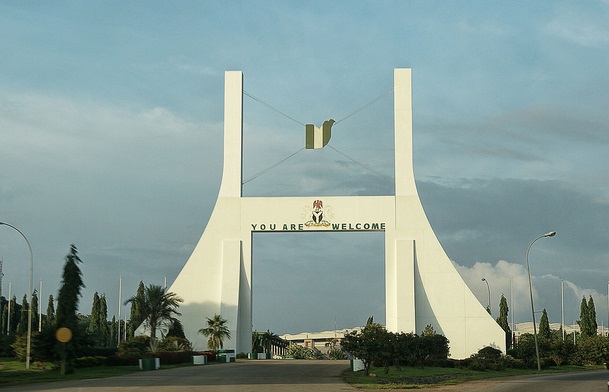
Abuja
The Abuja city gate

Abuja, being the capital of Nigeria, is a very strategic place to acquire landed property. The opportunities associated with it can’t be overestimated as properties appreciate quickly in this part of Nigeria. This fact alone is evident in the number of new buildings springing up in areas that were hitherto labelled as Abuja suburb.

Evidently, lots of Nigerians are aware that owning a property in Abuja is one of the most certain ways to increase wealth. As a result, Abuja witnessed a surge in the purchase of lands both in the city and suburbs.

The uncontrollable surge in the acquisition of land especially in its suburb birthed some social issues like: double allocation, court cases involving land, no supporting infrastructures in place, compensation issues, and revocation by the government.

These and many other reasons led to the indefinite suspension of land allocation in the city of Abuja. Each of the reasons will be highlighted sequentially in the following sections.


Double allocations

While it is a standard practice for any land acquisition and development firms ensure that the first person who makes payment get the proper document acknowledging the change of ownership, greedy land agents with the help of their associate took advantage of buyer’s naivety to sell the same land to multiple people. This, in turn, leads to disagreement among multiple owners and unavoidable court cases.


Court cases

The aforementioned and many other reasons are why we have so many land-related cases in Abuja court. This problem is compounded by the bureaucratic delays common to Nigerian courts.

In order to accelerate the speed at which court cases are solved, the present minister of FCT, Abuja established the Land Use Allocation Committee (LAUAC). The bulkiness of the cases also overwhelmed this new body.


Compensation issues

The exploding number of court cases involving land issues undoubtedly resulted in compensation and outside the court settlement for some parties. Yet, some were adamant to abide by the terms.


Revocations carried by past governments

While this is a general practice in most parts of the country, the government also failed to hold up to its end of the bargain in most situations involving compensation of the parties whose ancestral land were taken for state development or any other purpose.


No supporting infrastructures in place

As stated earlier, land acquisition was higher in the suburbs. Lots of people were acquiring land in places where basic infrastructures have not been provided for by the state. Majority of those places have no accessible roads, provision for electricity and sewer lines. To curb haphazard growth veering from the city’s footprint they had to stop allocation of land.

By Editorial Staff at Rural Homes Ltd (Karmo Market Developer)

Young African geologists seek to unlock potential of groundwater

0

Five African early career research scientists took to stage at the 41st Water Engineering and Development Centre’s (WEDC) International Conference at the Egerton University in Kenya to showcase ongoing research achievements so far under a project to unlock the potential of groundwater for the poor.

Egerton University Nakuru
The Egerton University, Nakuru, Kenya hosted the 41st Water Engineering and Development Centre’s (WEDC) International Conference

Drawn from Kenya, Uganda, Malawi and Ethiopia, the young researchers discussed some of the complex social science, physical science and practical issues, given their experience in two research areas namely: “Gro for GooD”, through which scientists are developing a ground water risk management in Kenya, and the “Hidden Crisis”, which is unravelling current failures for future success in rural groundwater supply.

“Am not shy to say that it is my first time to participate in a research of this magnitude,” said Willy Sasaka, Assistant Hydrogeologist from the Rural Focus Company, which is coordinating the Gro4GooD research in Kenya.

Guided by scientists from the University of Nairobi, Oxford University, the Jomo Kenyatta University of Agriculture and Technology, and the University of Barcelona, the research project has led to discovery of two paleochannels in Kenya’s Kwale County, which is the main source of groundwater that drives the tourism industry along Diani beach, serves residents of Ukunda, and supports a large scale irrigated sugarcane farming initiative in Kwale among others.

Sasaka made his presentation alongside his colleague, Suleiman Mwakuria, who explained how the scientists have been able to involve the local community in the research, including students who help in reading rain gauges, among other things.

Patrick Makuluni, a geologist from Malawi, talked about functionality and failures of boreholes in his country, showcasing slides to show how scientists have been able to identify reasons why boreholes fail soon after they have been sunk.

“Millions of pounds of investment by water users, charities and tax-payers are wasted each year by water points failing soon after construction,” he told delegates at an event organised by the Rural Water Supply Network (RWSN) on the sidelines of the WEDC conference. “Getting a more complete understanding of how to keep water flowing from boreholes will reduce waste and improve water services for Africa’s poorest communities,” said Makuluni.

So far, the Malawi study, through which the scientists dismantled 50 functioning and dead boreholes to examine the underlying causes of failure, has already come up with preliminary findings.

“We found out that one of the causes of borehole failure was vandalism,” said Makuluni. Other boreholes were abandoned due to poor water quality, some due to poor maintenance; others were silted, while in some cases there were governance problems.

However, the young scientist noted that the researchers are yet to do data analysis, compile results, make reports and disseminate the findings.

Yehualaeshet Tadesse, young female scientists from Ethiopia presented a similar case, but focusing on social causes for poorly functioning water pumps in her country.

In Ethiopia, 170 water pumps in nine districts were surveyed in the first phase of the research project, where it was found that lack of village level operation and maintenance skilled manpower was one of the contributing factors for water pump failure.

“We also found out that water pumps located in areas with alternative water sources such as springs, streams, private water scheme were poorly maintained,” said Tadesse.

She pointed out that pumps on non-communal land were often neglected, and as well, communities with limited finance and savings did not manage their boreholes well.

In Uganda, Joseph Okullo from Makerere University talked about rainfall variability, and how it affected groundwater in his country.

“Rainfall chloride concentration was interestingly found to be higher during drier season,” he told the WEDC delegates.

The 41st WEDC International Conference is co-hosted with Egerton University, on Egerton main campus (near Nakuru) in Kenya between July 9 and 13, 2018. The conference is a valued and respected platform for reflection, debate and exchange of knowledge and ideas that are rooted in practice.

Courtesy: PAMACC News Agency

Communities urged to engage in organic farming to minimise soil erosion

0

The Oyo State Commissioner for Agriculture, Natural Resources and Rural Development, Mr Oyewole Oyewumi, has called on erosion-prone communities to engage in organic farming to minimise soil erosion.

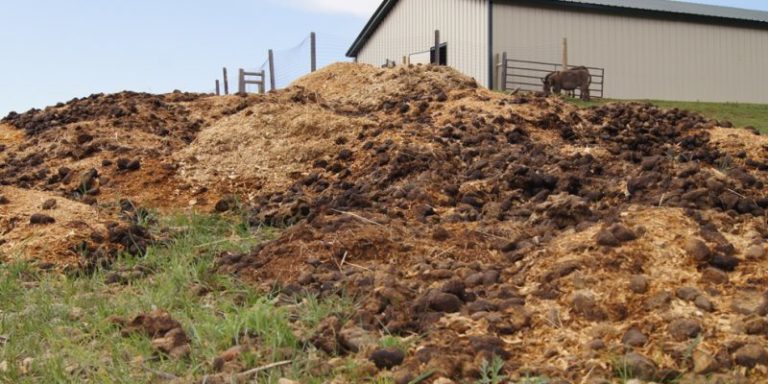
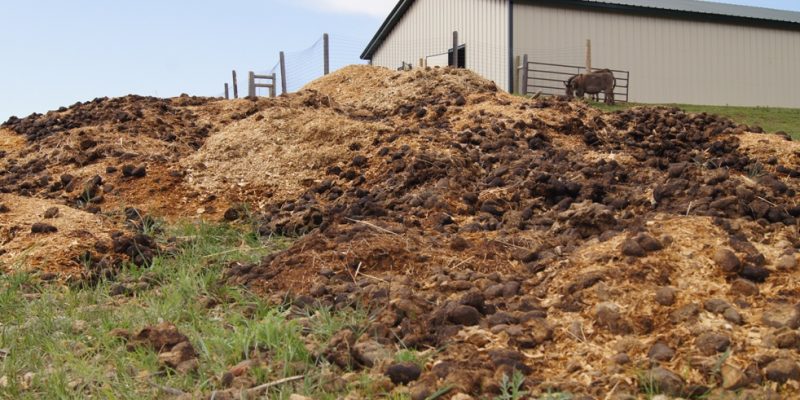
organic fertiliser
Organic fertiliser

Oyewumi gave the advice at the ongoing National Organic Agriculture Business Summit (NOABS) 2018 on Thursday, July 12, 2018 in Lagos.

The summit is themed: “Organic Agriculture: Abundant Opportunities for Health and Hospitality Businesses”.

Organic farming is a method of crop and livestock production that involves much more than choosing not to use pesticides, inorganic fertilisers, genetically modified organisms, antibiotics and growth hormones.

It however provides an alternative care that promotes the health and meets the behavioural needs of livestock.

The commissioner said that organic agriculture can reduce soil erosion by 50 per cent. Besides, he said organic agriculture was of great importance to human, animal, agro-production ecosystems, the environment, the farming community and society because of its ability to keep the soil intact.

Oyewumi, who was represented by Mrs Fadekemi Akande, the Programme Manager, Oyo State Agriculture Development Authority (ADP), said the primary goal of organic agriculture was to optimise the health and productivity of interdependent communities of soil life.

According to Oyewumi, organic farming promotes healthy soil, which is rich in micro nutrients used for decades to grow crops.

He added that it had been found to support a substantial level of wildlife interaction by preserving the ecosystem and ground water.

“Organic grown foods are tastier, healthier and free from harmful chemical, artificial flavours and preservatives which pose risk to diseases linked to cancers, foetal abnormalities, among others.

“Ultimately, organic agriculture helps combat global warming by capturing atmospheric carbon dioxide (CO2) and incorporating (sequestering) it into the soil,” he said.

Oyewumi said that switching to organic farming could reduce production cost by over 25 per cent when compared with the cost of conventional farming.

By Itohan Abara-Laserian

Oil industry activities threaten 6.5m fishermen, says Bassey

0

Oil industry activities are threatening the livelihood of over 6.5 million people engaged in fishing-related activities in the Niger Delta, according to an environmentalist, Nnimmo Bassey.

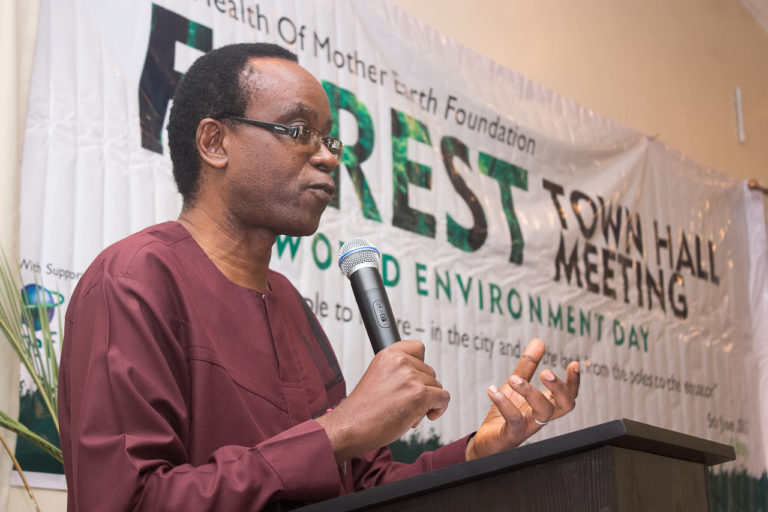
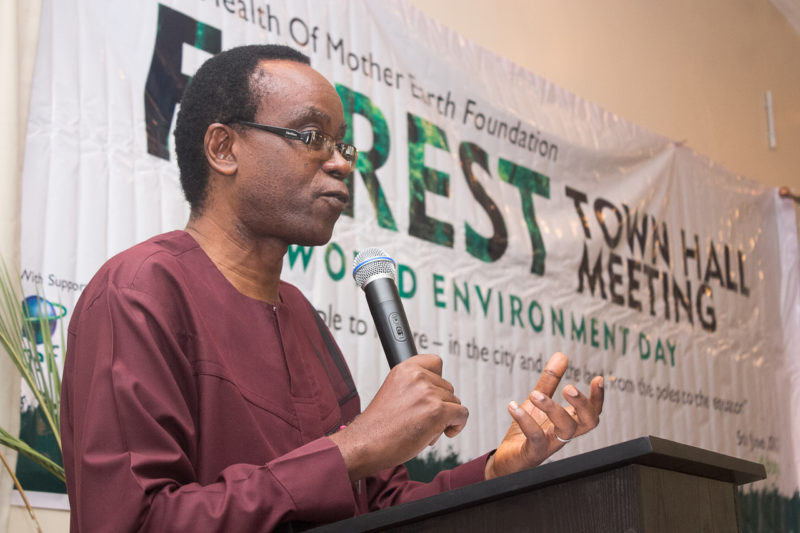
Nnimmo Bassey- Forest Town Hall
Nnimmo Bassey

Bassey said this at a conference with the theme: “Key Indices for Visionary Leadership, Good Governance and Sustainable Development in Bayelsa State” on Thursday, July 12, 2018 in Yenagoa, the state capital.

The conference was organised by G24 Embasara Foundation, a pan-Ijaw group committed to new leadership and governance initiative in Bayelsa and Ijaw land.

Delivering a paper on theme, the environmentalist said the debilitating impact of oil and gas exploration and production had distorted the biodiversity of the region.

He noted that the environment of the region had suffered adverse degradation due to the weakness of regulatory institutions among other factors.

Bassey stressed the need for the re-ordering of priorities and the adoption of new approaches to environmental sustainability by the political leadership.

“Oil production depletes environmental resources. For every barrel of oil, there is over 13 barrels of toxic effluents that come from the oil wells and nobody gives account of these wastes, which the oil firms discharge into the environment.

“How has the 13 per cent derivation accruing to the oil-producing states been utilised? What we see is that the resources are used to develop the urban centres, while the rural areas are left behind to wallow in abject poverty.

“The attitude of our leaders in the Niger Delta region has made the environmental component of the Petroleum Industry Bill to be at the background, rather than in the forefront.

“We have about 6.5 million people involved in fishing-related activities threatened by the oil industry, which employs some 5,000 people.

“Our leaders should think of the jobs of the majority and channel resources to developing renewable energy.”

According to him, there is no future for fossil fuels since the world has developed cars that run without oil.

Bassey, therefore, urged the Niger Delta people to change their attitude and refrain from pipeline vandalism, oil theft and illegal oil refining which further pollute and degrade their environment.

In their comments, some stakeholders at the conference expressed concern over poor leadership by public office holders in the state over the years.

They underscored the need for a review of the process of appointment into leadership positions to make public office holders answerable and accountable to the people.

In a remark, a former state Commissioner for Environment, Mr. Iniruo Wills, called for the development of an Ijaw nation code of ethics, leadership and governance which prospective political office holders must subscribe to.

Wills also advocated for building leadership capacity to prepare Ijaw people for leadership positions.

In his remark, the Chairman of the occasion, Amba Ambaiowei, said that members of the group were worried about the under-development in Ijawland, noting that the people lacked basic amenities.

He described the G24 Embasara Foundation as non-partisan, adding that the group was determined to ensure that persons who had shown poor leadership qualities were imposed on the people.

Ambaiowei, a former Commissioner for Education and Labour in the old Rivers State, said the group would scrutinise the competences of Ijaw people seeking public offices.

By Nathan Nwakamma