An ecologist, Mr Dennis Ugwuja, has urged shopping malls to establish plastics recycling plants to support the efforts to reduce plastic pollution in the country.
A Shoprite outlet
Ugwuja, who is the Executive Director, Climate Change Mitigation and Adaptation Initiative, an NGO, gave the advice in an interview with News Agency of Nigeria (NAN) in Abuja on Monday, June 25, 2018.
“All big shopping malls such as Next, Shoprite and other super malls should establish recycling centres, while encouraging customers and waste pickers to bring used packaging items to the malls for recycling.
“Used plastics, including plastic wrappers and containers, should be returned to these super malls for recycling, instead of taking them to the waste dumpsite.
“These malls should plough back part of their profits to set up community development projects such as plastics recycling plants and encourage people to bring nylons and plastic materials for recycling,’’ he said.
Ugwuja said that the recycled plastics could be used to produce new packaging materials, adding that would be a sustainable solution to the menace of plastics pollution in the country.
“There should be sustained public enlightenment about the planned policy so that people will be able to also know their specific roles in the proposed arrangement.
“Government should have a law that will regulate the activities of these big shopping malls to facilitate the implementation of their corporate social responsibility,’’ he said.
The ecologist, who described women as major generators of waste, urged them to be in the vanguard of the campaign to have a clean environment that would support healthy living.
“Women are supposed to lead the keep-the-environment-clean campaign because they are the major contributors of domestic waste.
“Women are the ones that cook in the kitchen and all these waste are generated from the kitchen.
“Apart from the kitchen, women are those who handle babies’ pampers and household items; men are just there to provide money,’’ he added.
Ugwuja urged the government and other relevant stakeholders in the environment sector to sensitise the women to topical waste management issues.
The Food and Agriculture Organisation (FAO) says it plans to assist more than one million people in the northeast to grow between six and eight months’ worth of food in the 2018 rainy season.
Suffyan Koroma, FAO Representative in Nigeria
Mr Suffyan Koroma, the FAO representative in Nigeria said this on Wednesday, June 27, 2018 in Maiduguri, Borno State, in his message at the launch of the organisation’s rainy season programme.
Koroma said an estimated 149,730 households are expected to benefit from the programme whose overall objective is to ensure restoration of livelihood, particularly in agriculture for a full recovery in the sub-region.
He said the launch had become imperative because the long-awaited seasonal rains are making their way across the northeast where millions of farmers eagerly anticipate the chance to break ground.
Koroma said the rainy season, occurring once a year, typically stretches from May to September and it is the main planting season for smallholder farmers, the majority of whom depend on rain-fed agriculture.
“In the 2018 rainy season, FAO and its partners have targeted about 149, 730 farming households for crucial distributions of seed and fertiliser in Adamawa, Borno and Yobe states.
“In total, FAO estimates that more than one million people in these states will have enough food to last between six and eight months with the inputs provided, given normal seasonal conditions,’’ he said.
Koroma noted that FAO is using a kit system comprising crop seed varieties appropriate for the agro-ecological zones of the northeast.
He said in the kit one, farmers can choose between millet, maize or sorghum seed, given with a 25 kilogramme bag of fertiliser.
“In kit two, women farmers are being offered seed for nutritionally beneficial vegetables like amaranthus and okra high in micronutrients like iron, potassium and Vitamin C.
“Kit three includes seed for groundnut or sesame and will be distributed only to women.
“With a high market value, groundnut and sesame will bring in much-needed income for crisis-affected women-headed households in the three states,’’ he said.
The FAO representative explained that to receive agricultural inputs in the 2018 rainy season, farmers were selected based on their safe access to land for agriculture, ability to farm in the season and the scale of their need or vulnerability.
He said that FAO is working jointly with the World Food Programme (WFP) to distribute agricultural inputs alongside food aid, thereby reducing the risk of households employing negative coping practices such as consuming or selling the seeds and fertiliser received.
Koroma analysed that in the worst-affected Borno, households would receive inputs provided through funding from the European Commission, the Office of U.S. Foreign Disaster Assistance (OFDA), Directorate-General for European Civil Protection and Humanitarian Aid Operations (ECHO), the Governments of Belgium and Norway and the Swedish International Development Cooperation Agency (SIDA).
Also in Adamawa, FAO’s major resource partners include ECHO, Norway and Belgium.
While in Yobe, FAO has collaborated with SIDA, ECHO, Norway, Ireland and the United States’ Food for Peace Programme to support households in the 2018 rainy season.
“For farmers who are able to farm this season, FAO’s programme will reinforce access to quality inputs which will boost yields and household’s food and nutrition status.
Koroma disclosed that due to the alarming humanitarian needs faced by agriculture-based households in Northeast an estimated 2.9 million people would face heightened food insecurity between May and September.
He said as a result of this FAO requested 31.5 million dollars in its 2018 appeal for the country and so far, 13.2 million has been mobilised, of which some funding is a carryover from 2017.
Koroma, however, said that under the multi-agency 2018 Humanitarian Resource Plan for Nigeria, the country needs an estimated 1.05 billion dollars to reach 6.1 million people in need.
Two UN agencies, the United Nations Development Programme (UNDP) and UN Environment, have commended Nigeria’s efforts at adopting global solutions towards creating a safe, secured and sustainable environment. They, however, urged government to put in more efforts, given the enormity of environmental problems and attendant consequences facing different parts of the country.
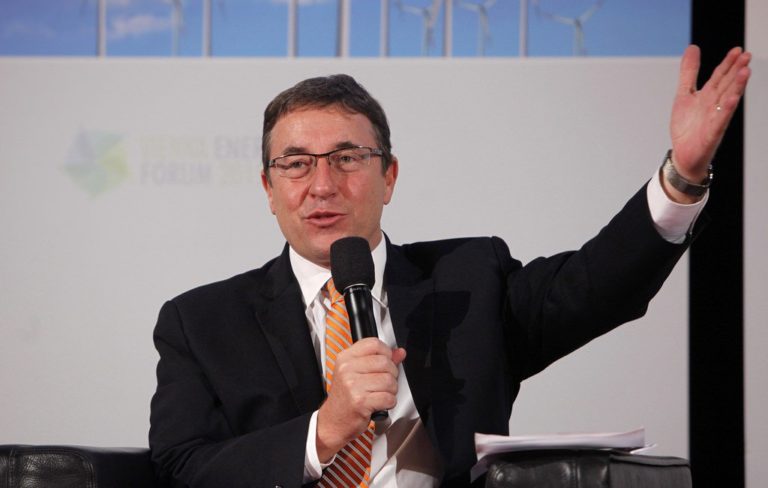
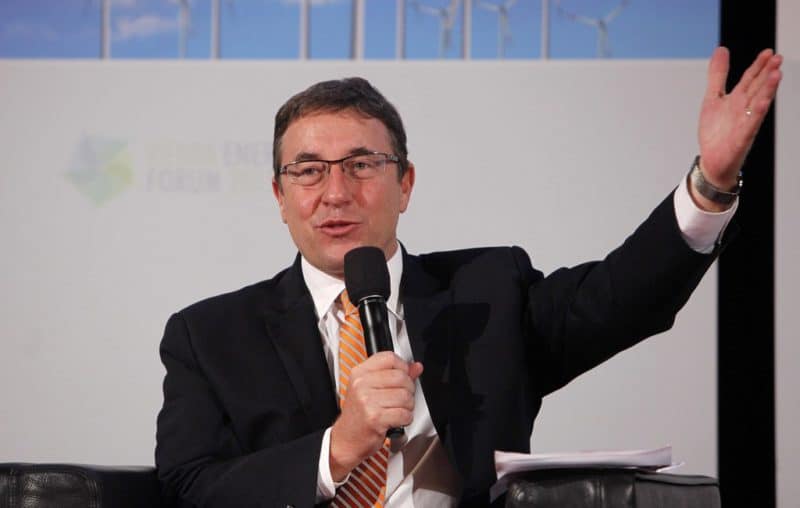
UNDP Administrator, Mr. Achim Steiner
Speaking at different side events during the ongoing 6th Assembly of the Global Environment Facility (GEF) in Vietnam, the organisations specifically called on Nigerian government to speedily clean up the Niger Delta region of oil spills as well as restore the vegetation of the desert-prone northern region, believing that those efforts would accelerate economic opportunities in the two regions, thus enabling lasting peace.
The side events came shortly after a plenary of the GEF Assembly, on Wednesday, June 27, 2018 chaired by the Natural Resources and Environment Minister of Vietnam, Tran Hong Ha , during which heads of delegations agreed on the urgency of governments across the globe to unite and scale up funding, innovations and ideas to save a deteriorating planet.
Briefing journalists, the UNDP Administrator, Mr. Achim Steiner, who stressed the need for different governments to work more strategically and ambitiously in creating economies that are ecologically healthy, submitted that many countries in Africa, particularly Nigeria, were making great efforts to entrench green economy, even though there were still lots of work to be done.
“Having spent 10 years living in Nairobi, Kenya and heading one of your programmes in Africa, I have never had any reason to complain about leadership from Africa.
“For there is green economy, for there is biodiversity population Africa has already invested. There is a great deal of leadership coming. There is also a great deal of transformation happening on the environment of natural resources of wildlife across the continent.
“I think our greatest focus right now is how to engage government and the economic players on the African continent to allow that transition towards green economy and sustainable economy to form African development planning,” said Steiner, while answering questions on the level of cooperation needed from African countries.
Steiner went ahead to list some commendable efforts by the government of Nigeria to include the launching the first green bond in Africa and investing massively in renewable energy.
He, however, expressed displeasure over the inability of the government to conclude the clean-up of Ogoniland, saying the Nigerian government should also extend its good leadership to the important project by collaborating with oil companies to put in place the remedial action necessary to restore what he described as one of the greatest catastrophes on the environment.
His worlds: “I think in Nigeria we have seen the first green bond on the continent being raised. A couple of years ago, I think we have seen enormous investment in renewable energy and we have also seen a significant amount of financial leveraging green environment into the treasuries and into the financial institutions.
“The other aspect has to do with some of the painful abuses of nature. Nigeria as you know has been struggling to clean up the oil spill in the Niger Delta and it continues to be my deepest hope that the commitment of the government and the oil companies will finally put in place the remedial action necessary to restore one of the greatest catastrophes on the environment on the continent in the near future. As has been tested, I think we have seen good development. So I hope this is another example of a government of the African continent taking leadership role in also addressing that problem in the development legacy”.
Vice-President Yemi Osinbajo, on behalf of President Muhammadu Buhari, on August 7, 2017 set in motion a $1 billion clean-up and restoration programme of the Ogoniland region in the Niger Delta, the implementation of which was based on the recommendations from a 2011 UN Environment report, commissioned by the Nigerian government, on the impact of oil extraction in Ogoniland.
The report found severe and widespread contamination of soil and ground water across Ogoniland, which is severely threatening public health.
The UNDP Administrator further observed that, without putting in place practical measures to achieve sound environmental remediation, all efforts my governments in the country to develop the tourism industry would continue to be futile, because tourists would naturally not like to come to regions where the environment is filthy.
“If you look at African story, without the environment, without nature without conserving it, that tourism will never be achieved,” he concluded.
Also addressing journalists during another side event, Executive Director of UN Environment, Mr. Erik Solheim, sounded it loud and clear that until the desert-prone northern Nigeria is made economically sustainable for residents through restoration of lands degraded by desert encroachment, no meaningful progress would be achieved in ending restiveness in the region.
Solheim also advised on the need to harnessed the huge opportunity in solar energy to ensure adequate and sustainable power to drive small scale businesses in the region that create wealth for the people, thereby reducing occasions that lead to violence.
He shed light on the strong desire of the Assembly to see transformative changes in the quest to restore the environment to support human lives.
Some of the transformative changes that Solheim said the world should expect include the massive use of bicycles and electric cars which produce no destructive emissions.
Another is the total ban of smoking at UN conference areas and hotels, which he observed was achieved in Da Nang City, venue of the 6th GEF Assembly.
Solheim said the change would be achieved under four broad categories of action, namely: tackling the menace of plastic, safety mobility, efficient energy and effective agricultural practices, where chemicals that are injurious to the environment are phased out while adopting organic substitutes.
Vice Chancellor of the University of Port Harcourt, Professor Ndowa Lale, will deliver the 9th Public Lecture and Environmental Awards ceremony of the Environmental Outreach Magazine scheduled for the 3rd of July 3, 2018 in Owerri, Imo State.
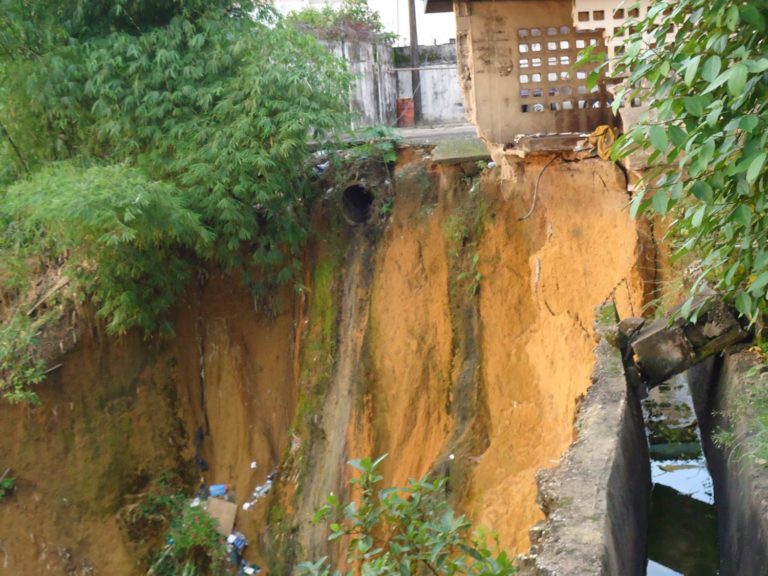
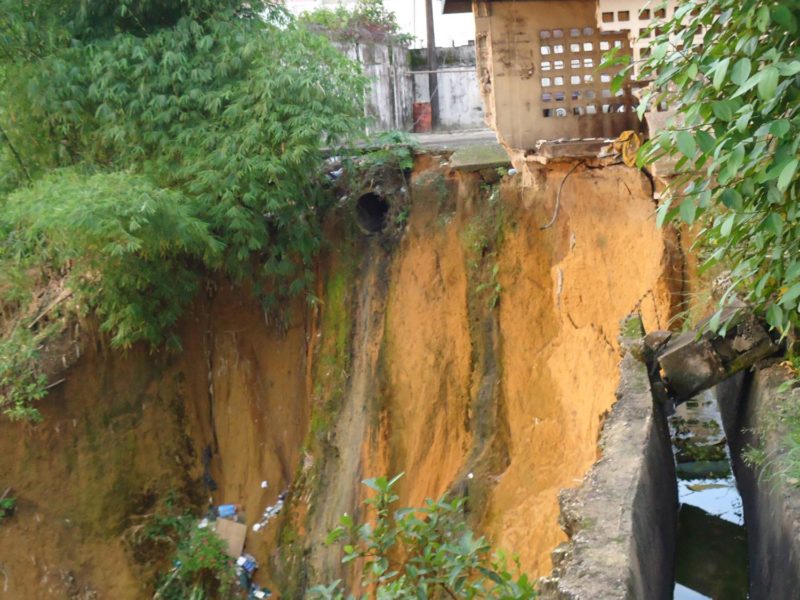
A gully erosion site being attended to by NEWMAP
The Lecture with the theme: “Climate change and gully erosion in Nigeria: Problems and prospects” will be chaired by Professor A. Chidi Ibe, a Fellow of the Nigerian Academy of Science and former Pro-Chancellor and Chairman of Council of the Imo State University, Owerri.
According to a statement by the Chairman of the Organising Committee, Mr. Martins Mbagwu, Governor Rochas Okorocha of Imo State is the Special Guest of Honour while the Publisher of the Magazine, Chief Noble Akenge, is Host of the event.
Their Majesties, King Alfred Diete-Spiff, Amanyanabo of Twon-Brass and Chairman, Bayelsa State Council of Traditional Rulers and Eze Imo, Eze Samuel Agunwa Ohiri, the Obi of Obi-Orodo and Chairman of the Imo State Council of Traditional Rulers are Royal Fathers of the Day.
The National President of Nigerian Environmental Society, Prof. Lawrence Ezemonye, and the Pro-Chancellor/Chairman of Council of the Niger Delta University, Professor Steve Azaiki, will deliver goodwill messages at the event.
There will also be a special presentation on the activities of the Nigerian Erosion and Watershed Management Project (NEWMAP) by the National Coordinator, Mallam Salisu Dahiru.
Like in the previous Lectures, the event will be attended by environmentalists from around the country, the Organised Private Sector, top government functionaries, traditional rulers, Civil Society Organisations, school children and members of the public.
Some corporate obdies and individuals who have distinguished themselves in the field of Environment and Development in Nigeria will also be honoured with various categories of Environmental Awards.
It is easy to get disheartened or fearful about climate change. Climate change in Nigeria is principally a major problem caused by the increase of human activities. If you like, call it human mismanagement of the earth leading to several direct and indirect impacts on health. These climatic changes have wide-range harmful effects including increase in heat-related mortality, dehydration, spread of infectious diseases, malnutrition, and damage to public health infrastructure. If we continue at this rate, the effects of global warming around the world could be catastrophic.
Olumide Idowu
Some aspects of climate change may already be irreversible. Yet many scientists believe that, by taking positive action now, it is possible to slow the pace of climate change and reduce further global warming. Changing our lifestyle and our behaviour will help reduce the human impact on the environment.
We can all make a difference to climate change. Here are some suggestions for a healthier, more sustainable approach to living in our environment in Nigeria.
Reduce Car Emissions
Leave the car in the garage and walk or cycle for short trips; use public transport; keep your car tyres inflated to the recommended pressure; drive slowly and smoothly; and car-pool with workmates.
Reduce Energy Expenditure in your Home
Turn off lights and appliances when not in use; replace regular light bulbs with compact fluorescent bulbs; insulate your home and reduce your heating and cooling bills; install a water-saving showerhead and take shorter showers; dry your clothes outside on the line rather than in the clothes dryer; switch to “green energy” for your electricity needs.
Reduce your ‘Carbon Footprint’ When you Shop
Buy local and seasonal food produce to reduce energy use in transport and storage; buy items with minimal packaging whenever possible; if you buy new items, make sure they are made from sustainable, low-impact materials; buy secondhand rather than new – from op shops, garage sales or over the Internet.
Recycle Waste and Reuse Pre-Loved Items
Recycle as much of your rubbish as you can; compost vegetable scraps; “Detox your home” – dispose of unwanted chemicals safely rather than pouring them down the sink or putting them in the rubbish bin; be creative in finding new uses for “found” or pre-loved objects.
Longer term choices that help the Environment
Buy energy efficient household appliances; install a solar-powered hot water system; install rainwater tanks; buy a more fuel-efficient car or think about not owning a car – perhaps you can share one; move to an area where your workplace, shops and schools are within walking distance.
Talk with your Children
Even young children can be affected by uncertainty or despair. It is important to talk about issues such as climate change with your child and help them find ways to deal with their fears.
Listen to your child and take their concerns and feelings seriously. Explain the issues in a way that is appropriate to the child’s level of understanding, without too much graphic detail. Use language they understand; check that your child hasn’t jumped to any wrong conclusions. If you try to protect them by keeping information from them, they may fill in the blanks using their imagination; provide positive, realistic information sources for them learn about climate change – for example, a children’s book, video or educational website; talk about the issue as a family and plan simple, positive actions that you can take together to make a difference.
Build strong Communities
Join a group or get together with friends and neighbours to establish local, sustainable community-building networks.
Establish a community garden and educate yourselves and others about sustainable food practices; start a “share network” to pool resources such as lawn-mowers, garden or shed tools, bottling kits, bikes and so on; recycle unwanted goods through a local “swap meet” or invite your neighbours to hold a joint garage sale; get together with parents from your children’s school to start a Walking School Bus; organise with others to hold community tree-planting days; get involved in your local council activities or join a group to help design people and environment friendly public spaces; create a sustainable “transition town” to plan for and limit the effects of climate change on your local neighbourhood.
We can all make a difference to climate change; start simply with things you can change in your everyday environment – with a bit of practice, it’s possible for everyone to live a more sustainable lifestyle; get children involved and provide ways for them to take positive action. It is important to talk about climate change with your child and listen to their ideas; take action as a family or as a community. It’s fun and it also builds strong relationships and resilience for the future.
By Olumide Idowu (Co-Founder of International Climate Change Development Initiative (ICCDI); @OlumideIDOWU)
An emerging body of research on the non-carbon impacts of deforestation reveals that destroying tropical forests significantly alters the Earth’s delicate energy balance, rainfall, and wind systems, leading to warmer and drier conditions near cleared forests and out-of-whack weather patterns across the globe, according to a new report by leading forest experts released at a major global forest gathering on Wednesday, June 27, 2018.
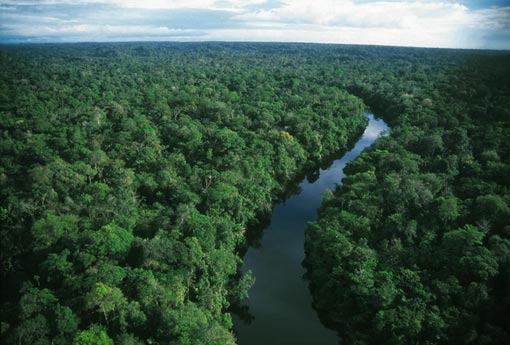
The Amazon rainforest
The research suggests these “new” impacts of deforestation, rooted in the flow of solar energy through forests across the upper atmosphere, disruptions to the atmosphere’s chemical cocktail, and dramatic declines in water cycling are just as damaging to the climate as the carbon released into the atmosphere when trees are cut down.
“We’ve known for a long time that chopping down tropical forests spews dangerous amounts of carbon into the atmosphere,” said Nancy Harris, Research Manager of the Forests programme at the World Resources Institute and working paper co-author. “Now we are learning that removing trees from the earth’s surface also throws off the energy, water and chemical balances that make it possible for us to grow food and live our lives in predictable and productive ways. If we continue to cut down trees, we’ll have to rewrite what we know about the weather – and we can forget about global goals to keep temperature rise below 1.5 degrees Celsius.”
The working paper, “Tropical Forests and Climate Change: The Latest Science,” is one of nine studies released on Wednesday at the opening of the two-day Oslo Tropical Forest Forum, an event hosted by the Norwegian government to celebrate results and identify remaining challenges 10 years after reducing emissions from deforestation and forest degradation (REDD+) was included in the climate change negotiations, and to advance strategies for mobilising forests to help achieve the ambitions of the Paris Agreement and the Sustainable Development Goals (SDGs).
The working paper synthesises findings from a slew of recent studies that, when they come together, conclude that large-scale forest loss in any of the three major tropical forest zones – Latin America, Southeast Asia and Central Africa – would lead to a rise in local temperatures, and disruptions to the water cycle locally and half a world away. These studies use sophisticated modelling to determine the physical, chemical and reflective impacts of removing forests from the surface of the earth enmasse, and satellites to measure the changes that have already happened. “When you add up these impacts of forest loss, one thing is clear: people living closest to deforested areas face a hotter, drier reality,” said Harris. “These changes won’t hit Brazilians, Indonesians, or Congolese sometime in the future – they are hitting them now, and they’ll only get worse as more forests disappear.”
Areas in the tropics that experienced deforestation in the last decade have seen significant and long-lasting increases in local air surface temperatures. “Observed local temperature impacts of deforestation are in one direction: hotter,” said Michael Wolosin, Forest Climate Analytics’ President and working paper co-author. “Daily average temperatures went up by a degree and maximum temperatures by 2 degrees C, in just a decade. Over the same period, the global carbon and GHG impact was less than one fifth as much – 0.2 degrees C. Deforestation is wreaking havoc on local climates across the tropics.”
The Amazon region of South America, home of the world’s largest rainforest, would feel the most heat and drought from forest loss. Complete deforestation would lead to regional warming of about two degrees Celsius and a roughly 15 percent drop in annual rainfall. Researchers have already linked the 2015 drought that hit Brazil, impacting people, crops and industry, to forest loss in the Amazon.
“In its focus on ending greenhouse gas emissions, the Paris Agreement only takes the first step in addressing the drastic consequences of deforestation on the climate,” said Wolosin. “If global and national policymakers fail to come up with an action plan for staving off the immediate and debilitating impact of deforestation on local and global weather patterns, they could put the lives of millions in peril. The question is, what’s more important – the short-term income generated from fields after fields of soy or palm oil, or a stable, predictable weather patterns for generations to come?”
Tropical forests drive the global movement of air, water, and heat in diverse ways, leading to profound impacts on the climate. Through the process of evapotranspiration, trees pump water from their roots through their leaves as water vapour, humidifying the air and causing surface cooling. Because forests have more leaf surface area and deeper roots than grasslands or croplands, they cycle more water. The water pumped through a single tree can cause local surface cooling equivalent to 70 kWh for every 100 litres, enough energy to power two household central air-conditioners per day. Removing these trees can lead to local flooding, soil erosion and droughts.
Impacts from these tropical forest cover changes on water and heat cycling extend well beyond the tropical regions themselves through “teleconnections”, associated with the mass movement of air and conditions in the upper atmosphere. An increase in temperature in the tropics due to deforestation generates large upward-moving air masses. When these hit the upper atmosphere they cause ripples, or teleconnections, that flow outward in various directions, similar to the way an underwater earthquake can create a tsunami.
According to one landmark study about this phenomenon, complete deforestation could put the climate in some of the world’s most important agriculture regions off kilter. These variations in rainfall and spikes in temperature could occur across the world. For example, complete deforestation of the Amazon Basin would likely reduce rainfall in the US Midwest, Northwest and parts of the south during the agricultural season. The complete deforestation of Central Africa would likely cause declines in rainfall in the Gulf of Mexico and parts of the US Midwest and Northwest and increase it on the Arabian Peninsula. There could also be precipitation declines in Ukraine and Southern Europe.
“Halting deforestation, allowing damaged forests to grow back, and keeping undisturbed forests intact, are necessary to ensure the stability of the climate,” said Frances Seymour, Program Chair of the Oslo Tropical Forests Forum and lead author of “Why Forests? Why Now?” “Fortunately, we know a lot about ways to stop deforestation, but developing countries can’t do this alone. Donor countries should ramp up funding of efforts by tropical forest nations to halt deforestation, and address the global consumption, trade and investment patterns that drive forest loss.”
A “golden age” of technology – from satellites and remote sensing to cloud computing, drones and innovative ground data collection – have enabled the tracking and monitoring of the world’s tropical forests, providing an unprecedented opportunity to maximise the role forests play is soaking up and storing carbon and providing many goods and services for sustainable development, reveals a working paper released on Wednesday, June 27, 2018 at a major global gathering focused on efforts to save the world’s rainforests.
High tech has enabled the tracking and monitoring of the world’s tropical forests. Photo credit: UNDP Cambodia/Chansok Lay/Oddar Meanchey
“If we have hope of protecting the world’s forests, everyone involved – from policymakers and law enforcement to investors and indigenous peoples – must embrace the full power of the information age,” said Rachael Petersen, Deputy Director of Global Forest Watch. “Though forests have been here for millennia, only in the last 10 years, thanks to these new tools and data sources, have we gained a detailed understanding of how forest cover is changing worldwide.”
The working paper, tilled: “Tropical Forest Monitoring” and written by a team of researchers from World Resources Institute and Wageningen University, is one of nine studies released on Wednesday at the opening of the two-day Oslo Tropical Forest Forum, an event hosted by the Norwegian government to celebrate results and identify remaining challenges 10 years after reducing emissions from deforestation and forest degradation (REDD+) was included in the climate change negotiations, and to advance strategies for mobilising forests to help achieve the ambitions of the Paris Agreement and the Sustainable Development Goals (SDGs).
“We’re losing forests across the tropics too quickly, mostly due the production of beef, palm oil, soy and wood products – not to mention forest fires,” said Crystal Davis, Director of Global Forest Watch. “But now, we have an arsenal of cutting-edge technologies that help identify where and when forests are being destroyed. Illegal loggers chopping down protected trees, agriculture companies breaking zero-deforestation commitments, palm oil producers setting fire to peatlands and other players behind forest destruction can no longer hide.”
Advances in satellite-based remote sensing and other technologies that have emerged in recent years provide speedy, low-cost methods to map and monitor forests. The researchers point to several key technical improvements: satellite data has become more detailed, enabling the tracking of more subtle changes – such as the sudden appearance of roads or farm plots in protected forests. Some of the satellites can even “see” through cloud cover, smoke and haze, enabling forest monitoring in the midst of forest fires or other weather events. Cheaper computing costs and innovations in artificial intelligence mean researchers can process satellite imagery over large areas automatically using advanced algorithms – including estimating forest loss for the entire world.
“In the past, countries compiled statistics on forests from expensive and time-consuming field missions,” said Petersen. “While it’s still important to have ‘boots on the ground,’ in the battle to save forests, we increasingly rely on ‘eyes in the sky’ to give us a comprehensive picture of where forests are located and how they are changing.”
For example, it is often too dangerous or expensive to track illegal activity on the ground. These new technologies are helping governments and NGOs crack down on forest crimes, sometimes for the first time. Satellite images, when combined with additional data like national park boundaries or logging permits, are especially useful in providing “early warnings” of ongoing illegal activity, such as the building of a road, enabling law enforcement to swoop in investigate before activity spreads.
In 2004, Brazil developed the first national early warning system, called DETER, to target illegal logging and the illegal clearing of land for agriculture. The national environmental enforcement agency (IBAMA) uses DETER to determine which field investigations they should undertake and how best to implement national laws and policies. Peru and Colombia are developing similar systems for cracking down on illegal deforestation.
The Peruvian Ministry of Environment (MINAM) distributes weekly forest disturbance alerts via their online portal Geobosques to over 800 subscribers from government, civil society and the private sector. The alerts help Peruvian authorities to identify, halt, and prosecute cases of illegal logging and mining.
In Uganda, the Jane Goodall Institute trained monitors at Uganda’s National Forest Authority (NFA) and park rangers with Uganda Wildlife Authority (UWA) to use weekly forest disturbance alerts to monitor national parks and forests. NFA and UWA staff now use those alerts and other data to prioritise patrols, find and document illegal forest clearing. These data have led to prosecutions, fines, and investigations within several critical habitats, including Kibale National Park.
Satellite data, the paper says, is also critical for consistently measuring progress on the protection of forests and quantifying how much carbon is stored in trees, a prerequisite for programs like REDD+ that reward forest nations for keeping trees standing. These forest monitoring technologies also offer a cheap, consistent, and reliable way to track progress on commitments by governments and companies to protect forests.
To meet Paris Agreement goals, for example, countries must “inventory” their greenhouse gas emissions, which would require the calculation of forest loss (which emits carbon) and forest gain (which absorbs carbon).
Measuring the success of such pledges as the New York Declaration on forests, which aims to halve deforestation by 2020, end it completely by 2030, and restore hundreds of millions of acres of degraded land together with the Bonn Challenge) necessitates the close monitoring of forest re-growth.
To be eligible for REDD+ payments, countries must devise national forest monitoring systems to track progress in reducing deforestation and forest degradation against an agreed baseline.
Finally, the more than 400 companies that have made pledges to get deforestation out of their commodity supply chains can’t be held accountable for implementing their commitments without accurate forest data.
Thanks to REDD+ readiness funding, many countries have improved their ability to monitor their forests, how much carbon they store, and how they are changing. However, the paper suggests that despite this skyrocketing demand for better forest data, there is a gap between what new technologies make possible and what is still practiced by national officials monitoring forests. Despite significant investments by international donors, tropical forest government agencies often do not have the staff, financial resources, or computing infrastructure to take advantage of rapidly advancing technology.
“Forest nations are increasingly attuned to the importance of saving tropical forests, which not only store carbon, but also provide clean air, fresh water, food, medicines, incomes, and a wealth of plant and animal life,” said Martin Herold, professor of Geo-Information Science and Remote Sensing at Wageningen University. “In the hands of the officials who need them most, these forest monitoring tools could make or break the global fight to save our forests. We should focus our efforts not just on improving the technology, but more importantly, on supporting government institutions to adopt it and apply it to their biggest challenges moving forward.”
“We will soon be able to detect deforestation every day in high resolution from space. But it won’t do any good if the knowledge stays in research labs or academic publications. Park rangers, law enforcement officers, and indigenous peoples need to act on this information. While technology continues to improve, we should invest greater resources on building the capacity to own this information and incentives to support data-based decision making,” Petersen added.
At the same time, forest monitoring efforts carried out by non-government organisations and posted online, can help citizens access forest data when national governments don’t share their numbers. Indigenous people, for example, seeking to claim rights to their forests to protect them from destruction, increasingly complement their forest monitoring efforts at the local level – using drones, GPS and mobile phones – with satellite data.
The paper cautions, however, that that the rapidly expanding options for monitoring forests poses a new set of challenges. As forest-measuring tools proliferate, varying factors, such as the definition of a forest, the time frame measured or the quality of the data, can lead to conflicting estimates of the deforestation rates and a lack of comparability across countries. The authors call for a more systematic understanding of how and why country-reported data differ from independent estimates, and suggest that greater guidance is needed for countries to take advantage of recent technological developments and minimise confusion.
“Forest monitoring technology alone won’t save forests,” said Frances Seymour, Programme Chair of the Oslo Tropical Forests Forum and lead author of “Why Forests? Why Now?” “But increased transparency is a critical enabling tool for many of the most promising strategies for stopping deforestation, including enhanced law enforcement, REDD+ financial incentives, and efforts to get deforestation out of commodity supply chains.”
New findings released on Wednesday, June 27, 2018 in Oslo suggest Indigenous Peoples and local communities dramatically outperform other managers, conserving lands and forests for a quarter the cost of public and private investments to conserve protected areas.
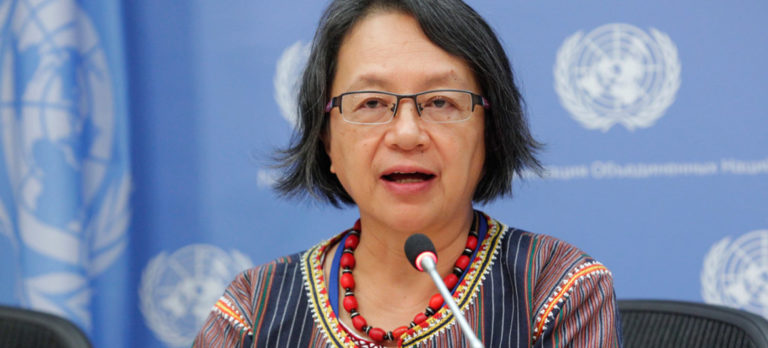
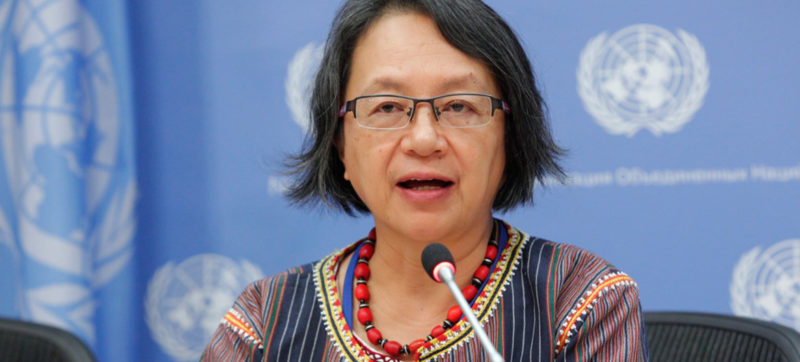
UN Special Rapporteur on the Rights of Indigenous Peoples, Victoria Tauli-Corpuz
The new report, “Cornered by Protected Areas,” co-authored by Special Rapporteur on the Rights of Indigenous Peoples, Victoria Tauli-Corpuz, and the Rights and Resources Initiative (RRI) was released as forest researchers revealed a spike in deforestation that threatens efforts to reach global climate goals.
“If we are to save the world’s forests and prevent a climate crisis, Indigenous Peoples and local communities must be part of the solution,” Tauli-Corpuz reminded participants from government, civil society, and the scientific community at the world’s largest gathering on tropical forests and their role in achieving global climate and development goals. “Based on a growing body of evidence, they make tremendous contributions, conserving some of the most biodiverse lands on Earth.”
Separately, but also in Oslo, a new analysis from the University of Maryland on Global Forest Watch was released on Wednesday, reporting the loss of a record-high 15.8 million hectares of tropical forest cover in 2017. The findings suggest that efforts of Indigenous Peoples to conserve the world’s forests and forest carbon are more urgent than ever before, said Tauli-Corpuz.
“This conservation research underscores the cost of ignoring communities and their immense contributions to conservation,” said Alain Frechette, Director of Strategic Analysis and Global Engagement at RRI. “Investments in forest protection would be more efficient and more just if allocated to the people who have kept the forests standing up until now.”
Indigenous Peoples and local communities have customary rights to at least half of the world’s land, but legal ownership over just 10 percent. Research has shown that legally recognized indigenous and community forests store more carbon and experience lower rates of deforestation than forests under other tenure regimes – including protected areas.
Despite protecting their lands – often for generations – Indigenous Peoples and local communities are confronting a growing trend in the designation of their lands across the Global South as “protected areas,” creating a crisis of criminalisation and human rights violations, according to the findings presented today by Tauli-Corpuz.
“Instead of partnering with the people who live in and depend on forests, conservation initiatives continue to drive communities from their ancestral lands, part of a larger trend of criminalisation worldwide,” said Tauli-Corpuz. “In some cases, they are declared squatters in their own territories. In my capacity as Special Rapporteur, I have seen a disturbing uptick of harassment, criminalisation, and even extrajudicial killings targeting communities.”
The new report examined the impacts of protected areas on Indigenous People and local communities in 28 countries, and estimated the conservation investments of communities in 14 countries. It concluded that:
Indigenous Peoples and local communities have only limited recognition of their community land rights in protected areas;
In spite of this legal insecurity, indigenous and local communities worldwide invest up to $4.57 billion per year in conservation, including up to $1.71 billion per year in forest conservation – as much as 23 percent of the amount spent on land and forest conservation by the formal environmental community;
Communities achieved equal or better conservation results with lower levels of investment – showing that they are not only the most effective, but also the most cost effective stewards of their lands.
In Peru, for instance, legal recognition of community forest rights reduced deforestation and disturbance by as much as 81 percent in the year following titling, and by 56 percent the year after; in other words, securing land rights can lead to immediate environmental benefits.
In Brazil, community forests store 36 percent more carbon per hectare than other forests. And given that indigenous and local community lands hold at least one quarter of the world’s aboveground tropical forest carbon – and likely much more – ensuring that communities have secure rights to these lands is critical to larger efforts to protect forests and the carbon they contain.
Governments and environmental organisations have made numerous commitments and pledged to adhere to international standards, yet the communities responsible for maintaining the world’s lands and forests face increasing threats.
The trend of “militarisation of conservation” – arming park rangers and organising them as a military unit – began as a way to help rangers defend themselves against poachers and organised terrorists, but the report notes that violence by armed rangers against unarmed Indigenous Peoples and local communities has been documented in the Central African Republic, the Democratic Republic of the Congo, Guatemala, South Africa, and elsewhere.
India’s Kaziranga National Park alone has seen 106 extrajudicial killings in the last 20 years. Elsewhere, communities face criminalisation and violence for practicing their traditional livelihoods.
The findings come as the Special Rapporteur herself faces charges of terrorism in her native Philippines by President Rodrigo Duterte’s government, which Tauli-Corpuz believes were filed in retaliation for her advocacy on behalf of displaced Indigenous Peoples in the Mindanao region of the Philippines.
“The science is clear: forests are the best tool we have to combat climate change, and to conserve our forests we need to recognise the rights of the Indigenous Peoples and local communities who invest in protecting them,” said Frechette. “Global conservation schemes such as REDD+ and the Aichi Biodiversity Targets reference the need to consult Indigenous Peoples and local communities. But this is clearly not enough. In order to fully respect the rights of the world’s Indigenous Peoples, we urgently need to move toward rights-based conservation models that can secure human well-being and global progress on climate and development priorities.”
An environmentalist, Dr Abdulganiyu Adelopo, has said that effective waste management will require accurate data generation and collaboration with the academia.
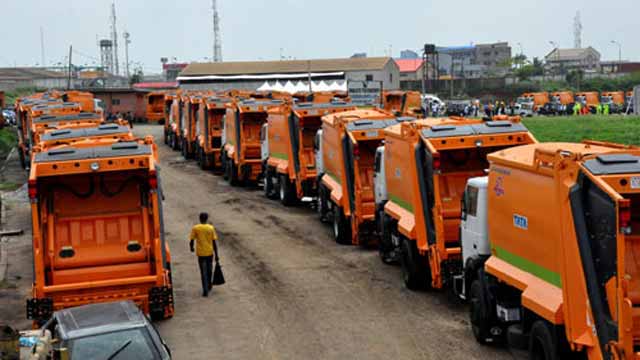
Waste management: waste compactors in Lagos
Adelopo, Quality Control Officer, Works and Physical Department, University of Lagos, made the assertion in an interview with the News Agency of Nigeria (NAN) in Lagos on Wednesday, June 27, 2018.
“For the government to plan sustainable waste management solutions to any community, reliable data on waste generation is mandatory.
“If you do not have adequate information, you can proffer a solution that will work today and fail tomorrow. “We lack adequate statistics to manage waste in Lagos, and accurate data for waste generated in the country.
“For example, Lagos State Government may not be able to have adequate waste planning in Alimosho LGA because it does not have precise data of waste generated there.
“We have to manage what is on ground and prevent excessive generation of waste to salvage the situation,” he told NAN.
Adelopo said that lack of precise data in waste generation contributed much to waste management problems in Nigeria.
“Appropriate data generation would help to solve our waste problem because it will help us to address the issues effectively,” he said.
Adelopo said that the government would need accurate data to provide necessary waste management infrastructure.
“Accurate data is also necessary in the allocation of plastic waste bins to households and communities.
“Emphasis on precise data generation for waste management is the source of the solution.
“You cannot allocate properly when you do not have the data, you cannot allocate one bin for a house that produces waste that can fill five bins.’’
The environmentalist called for collaboration between governments and the academia in proffering effective solutions to waste management in the country.
“There are a lot of researches going on in the academia to resolve issues of waste generation and management in the country.
“However the issue at hand is the adaptation of researches into government policies on waste management.
“In the last administration, Lagos State Government had an opportunity to win a World Bank grant in solving environmental pollution due to its collaboration with the academia.
“If there is sincere, unbiased integration and collaboration between the academia and the government, we will be able to solve waste management problems in the country,” he said.
On the eve of its address to the Oslo Tropical Forest Forum (OTFF), Peru’s national indigenous organisation, AIDESEP, has launched a joint report with the Forest Peoples Programme (FPP) which highlights the Peruvian government’s seeming inability to meet its progressive commitments to recognise indigenous peoples’ land rights. On a positive note, it documents rapid progress in the registration of indigenous lands thanks to decentralised funding programmes implemented and overseen by indigenous organisations.
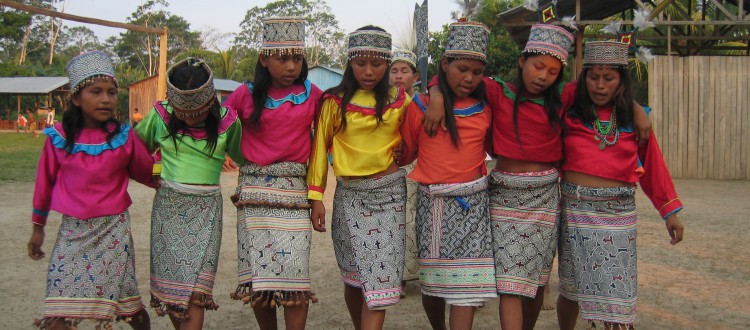
Members of the Shipibo Konibo Indian community in the Peuvian Amazon
In the words of Lizardo Cauper Pezo, President of AIDESEP, “Peru is one of the only countries in the world where, thanks to the struggle of indigenous organisations, climate funds are being invested directly in the recognition of indigenous territories. In practice however, change is slow and contradictory and these initiatives risk being undermined by bureaucratic obstacles. While the process of titling new territories is not fast enough, deforestation continues to advance.”
The report, titled: “A marathon not a sprint: The role of international climate finance in securing indigenous land rights in Peru”, tracks the status of commitments made by the Peruvian government since 2011 as part of its national climate mitigation strategy. These promises included reform of its outdated laws on indigenous land rights to align them with international human rights laws and to accelerate progress on the titling and demarcation of approximately 20 million hectares of indigenous lands and over 1300 communities whose recognition remained pending. In concrete terms the government committed to titling at least 5 million hectares of indigenous lands and earmarked at least $20 million worth of funding from international donors for the purpose. Donors include the Norwegian government, the UN Development Programme (UNDP) and the World Bank’s Forest Investment Programme (FIP).
The commitments responded to a welcome recognition from the Peruvian government that, and in line with increasing evidence from around the world, efforts to protect forests will only be equitable and effective if the land rights of indigenous and forest dependent communities are respected and recognised.
Despite this, the vast majority of these funds and projects have remained unimplemented in an apparent quagmire of red tape. The only real progress has been made by indigenous organisations themselves as direct recipients of the Forest Investment Programme’s Dedicated Grant Mechanism (FIP-DGM) for indigenous peoples which by the end of 2017 had resulted in the legal registration of 124 indigenous communities and the titling of 10 after just one year. To date, the sum total of indigenous peoples’ climate finance advocacy has resulted in the recognition of over 150 communities and the titling of 50.
Roberto Espinoza, co-author of the report, highlighted that “the experience of AIDESEP in Peru, having managed to ensure that the territorial rights of indigenous peoples were on the climate agenda and having redirected the investment of funds to that end, demonstrates that it is both possible and feasible to advance the objectives of territoriality and autonomy of indigenous peoples through participating in and influencing national and global climate processes. Nevertheless, progress is slow, with steps forward and backward and is in permanent conflict with the resistance and contradictions in the state and multilateral bureaucracies. That is why it continues to be a race of endurance, tenacity and persistence and one whose results take time to show. These results have now materialised and will continue to materialise. It is not a race of “speed” in which there are immediate results not is it neither ideal nor sufficient, because the “accumulation of lands through dispossession” is advancing rapidly. The important thing is the lessons that AIDESEP has left and its contribution to the international indigenous movement about how to reorient climate processes”.
Meanwhile, as the report outlines, the Peruvian government continues to favour a conservation model based on the creation of exclusive protected areas and the application of discriminatory and arbitrary criteria even when they do title indigenous peoples’ lands. These include the failure to recognise the full extent of indigenous peoples’ traditional lands while those “titles” that are issued are done so in the form of a “leasehold contract” which are not only precarious but extremely restrictive. To make matters worse, legal initiatives by indigenous organisations in the San Martin region to rectify these laws have been responded to with threats from the Peruvian government to cancel or suspend the land titling programme being implemented by the UNDP.
Worse still, despite the commitments made by the Peruvian government in 2008 to reduce net deforestation from an average of 123,000ha per year to zero by 2020 annual rates of deforestation have continued to increase year after year to over 160,000ha per year in 2016. In 2014 another joint report by AIDESEP and FPP highlighted how deforestation in the Peruvian amazon was spiralling out of control as a result of contradictory government policies favouring extractive industries and infrastructure projects aggravated by weak enforcement and environmental regulation alongside the existence of legal loopholes and perverse incentives that promoted deforestation.
Finally the report calls on the Peruvian government and the backers of its national climate strategy to significantly ramp up efforts to secure indigenous peoples’ lands and fulfil its legal obligations.
Dr Conrad Feather, co-author of the report explained: “The Inter American Court of Human rights has repeatedly established that States must safeguard indigenous lands and create no concessions or private holdings until the land rights of indigenous peoples in the area have been resolved. The Peruvian government claims it is too expensive and complicated to title indigenous peoples’ lands but they are the ones designing the onerous and complex procedures.
“If they really wanted to comply with the law and safeguard indigenous lands they could even do this without millions of dollars’ worth of funds. They could simply register indigenous land claims that have been filed and prevent any land allocations in the vicinity until the titling of that community had been resolved. They do this with the protected areas they create so why can’t they do this with indigenous territories?”