The Federal Ministry of Agriculture and Rural Development (FMARD) has warned members of the public to desist from indiscriminate felling of trees.
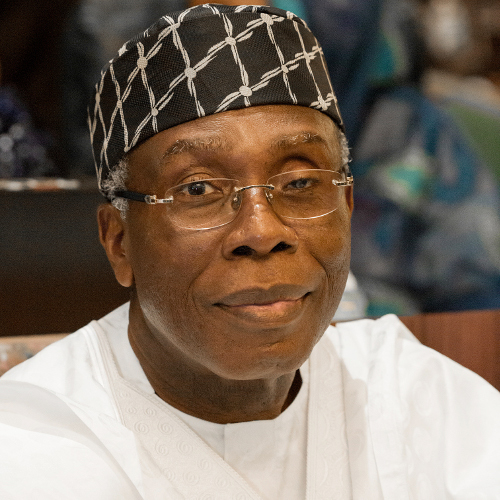
Minister of Agriculture and Rural Development, Chief Audu Ogbeh
Mrs Heather Akanni, the Technical Adviser, Quality Control and Standardisation, Office of the Minister of Agriculture, gave the warning on Thursday, July 5, 2018 in Makurdi, Benue State, while speaking with newsmen.
Akanni said that indiscriminate felling of trees (deforestation) was causing more harm than good to the society because it destroyed valuable plants such as medicinal and stimulant plants.
She said that planting of more trees should rather be encouraged rather than indiscriminate cutting of trees.
Akanni said that even when it became necessary for some trees to be cut, arrangements should be made immediately to replace them.
The Executive Director, Forestry Research Institute of Nigeria, Mr Adesola Adepoju, said that the institute would assist the Federal Government to achieve its quest for diversification from oil to other areas.
He mentioned exploitation of medicinal and stimulant plants.
Represented by the Deputy Head of Station, Mr David Bayo, Adepoju said that the essence was to reduce overdependence on oil.
The executive director said that Nigeria was blessed with a lot of medicinal and stimulant plants, saying that people should rise and make adequate use of the opportunity.
He said that medicinal and stimulant plants helped a lot in reducing the cost of health care and created employment because value was usually added to it.
Adepoju said that about 60 per cent of the Chinese population depended on medicinal and stimulant plants for health care in order to reduce cost.
Mr James Anbua, the Commissioner for Agriculture and Natural Resources in Benue, said that investing in the plants would create value chain and attract foreign investments.
Anbua stated that investing in the plants would drive exports and boost the economy through agriculture as well as trade promotion.
“It is our desire that the medicinal plants sector is given due attention so as to attract international markets,’’ he said.
The North South Power Station (NSP) in Niger State has warned host communities of an impending risk of flood in communities living in the upstream and downstream of the hydro-electric power station plant.
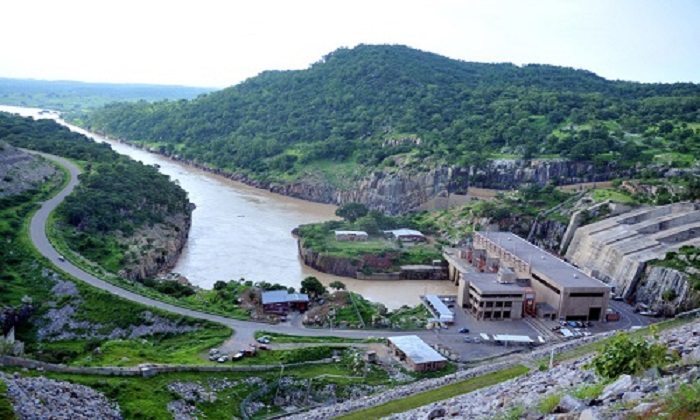
Shiroro Hydro Power Station
Mr Ugochukwu Chioke, Chief Operating Officer, North South Power Station, gave the warning during the Annual Stakeholder Flood Awareness and Sensitation Forum on Thursday, July 5, 2018 in Shiroro Local Government Area of the state.
Chioke was represented by Malama Sule Abubakar, General Manager, Plant Services, North South Power Station.
He said that the sensitation became necessary based on the forecast by the National Hydrological Services Agency (NHISA) and Nigeria Neurological Agency ( NiMET).
“Communities within the upstream and downstream of the hydro power station are prone to flooding when the state begins to experience increased rainfall between July and August, which would mandate the station to spill water.
“Once there is an over flow of water from the River Kaduna as a result of increased rainfall, the dam will overflow.
“It will spill, of which in the process, may affect communities within the upstream and downstream of the station.
“That is the reason why we called stakeholders to discuss and deliberate on possible ways to mitigate against the impending flood,’’ he said.
Chioke appealed to members of host communities to be law abiding and ensure peaceful co-existence.
Also, Mr Joseph Alozie, General Manager, Climate of NiMET, disclosed that the state would experience normal rainfall which would eventually increase in July and August.
“Rainfall will cease late September into December; there will be normal amount of rainfall in Niger and there will be normal cessation.
“There will be dry spell in the state but Minna will be excluded.
“More rainfall from river Kaduna will flow into Shiroro,’’ he said.
He advised the communities to keep their environment clear from water and avoid building structures and farming on waterways.
The Imo State Branch of the Nigerian Society of Engineers has criticised the state government’s Urban Renewal Programme over what it described as “unrestrained” destruction of property.
Governor Rochas Okorocha of Imo State
The society’s Chairman, Mr Emeka Ugoanyanwu, said in a statement issued in Owerri, the state capital, on Thursday, July 5, 2018 that public and private property valued at N58 billion had been destroyed under the programme.
Ugoanyanwu stated that telecommunications and pipe borne water facilities destroyed were worth N25 billion.
According to him, Urban Renewal Programme does not entail the demolition of public and private property but a well-planned process that is strategically implemented with designs and modern inputs to attract investors.
“The indiscriminate destruction of trees meant to protect the environment and ecosystem and planting concrete as a replacement, will have adverse effect on the environment.
“The execution of the programme with non-professionals is an embarrassment to registered and practicing engineers in the state.
“The society has communicated its position on the issue to the state government through the Ministry of Works.”
Ugoanyanwu wondered why the state government would not engage the professionals in its employ to execute the programme, to spare residents the untold hardship associated with the destruction of their businesses and residences.
He suggested that the programme should be carried out in phases following a 50-year master plan, in order to engender sustainability.
He, therefore, urged the state government to halt the contractor handling the programme and re-evaluate the project with a view to redressing the anomalies.
The Director, Water Supply, Federal Ministry of Water Resources, Mr Benson Ajisegiri, has called for political will from all tiers of Government to reverse the trend of poor water supply across the country.
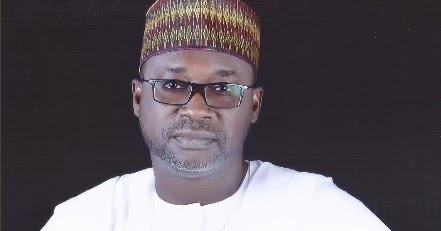
Suleiman Adamu Kazaure, Water Resources Minister
Ajisegiri made this call at the ongoing International Conference of the Nigerian Water Supply Association (NWSA) in Abuja on Wednesday, July 4, 2018.
According to him, political will and commitment should be from top to bottom approach to ensure that leadership supports policy implementation for the overall goal of improving access to water.
He said since early 90s, Nigeria has benefited over $1 billion from development partners such as the World Bank among others, saying this ought to translate to efficient service delivery in all state water agencies.
He said it was saddening to note that policy reversals, lack of political reform processes made such investments lost without workable evidences for better system.
He, however, commended Kaduna State Water Corporation for improving water supply and ensuring that cost recovery was attained, saying all state water agencies should follow suit.
“There is the need to promote the commercial viability of all state water agencies; we must begin to think about holistic institutional reform and capacity building, rejigging the governance structure will also make the sector work.”
Ajisegiri also added that political leaders should begin to understand that access to water is a right not a privilege, saying it ought not to be part of campaign promises during electioneering.
He added that the Federal Ministry of Water Resources had realised that with the current situation of water supply and sanitation services, the country would not meet its target in the Sustainable Development Goals by 2030, hence the declaration of a state of emergency.
The director also added that National Action Plan to improve the Water governance structure, and the development of Water Sanitation and Hygiene fund to strengthen the three-tier collaboration was underway.
Mr Benson Attah, National Coordinator, Society for Water and Sanitation (NEWSAN), noted that poor water supply and Sanitation services in the country were the leading cause of hospitalisation and poor health indices.
He noted that the effects of poor sanitation was costing Nigeria economically, saying the Nigerian Water and Sanitation Programme estimates that poor sanitation costs the country at least $3 billion annually is loss in productivity and health care expenditures.
“Even if investments were to sufficiently rise, the lack of a single government entity with complete responsibility for sanitation within the government, as well as widespread corruption and a lack of community support would likely hamper efforts.
According to him, improving the disposal of human excreta and stopping open defecation can drastically reduce the disease burden caused by sanitation related diseases and contribute to economic transformation of the country.
“Poor sanitation contributes to diarrheal diseases and malnutrition through fecal contamination of food and water.
“Diarrheal diseases kill approximately 121,800 Nigerians, including 87,100 children under the age of five each year. Eighty-eight per cent of those deaths are attributed to poor sanitation,” he said,
The News Agency of Nigeria (NAN) reports that the Association is an umbrella body of all operators in the potable water supply sector.
The group concerns itself with contributions to policy negotiations at the National, regional and international levels for institutional reforms in the sector.
The Conference theme is “Transforming Urban Water Supply and Sanitation Utilities into Financially Viable Entities”.
United Nations biodiversity negotiations are underway in Montreal, but a key African expert is missing from the fray. Ali Tapsoba, President of the organisation Terre à Vie in Burkina Faso, was planning to speak at two events on behalf of Burkinabé civil society, who oppose the release of gene drive mosquitoes, a controversial new biotechnology, in their communities.
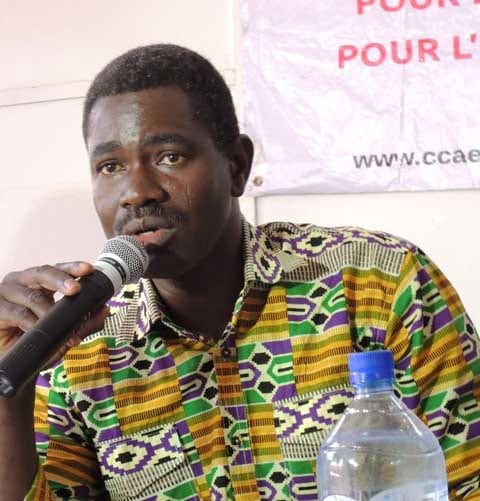
Ali Tapsoba
His visa application was denied without explanation by the Canadian embassy in Dakar on Friday, June 29, 2018.
“Tapsoba is probably the preeminent voice in Burkina Faso against the Target Malaria Consortium, which is leading the project towards release of Gene Drive mosquitoes in the wild,” said Mariann Bassey of Friends of the Earth Nigeria and Chair of the Alliance for Food Sovereignty in Africa (AFSA).
“I am very disappointed that I have been prevented from attending these important negotiations addressing issues of biotechnology at a time when Africa is plagued by multinationals that want to impose GMOs and destroy the beautiful biodiversity of the continent,” said Tapsoba in a written statement. “Don’t Africans have the right to meet other nationalities from around the world in Canada to discuss the future of humanity?”
Canada’s denial of Tapsoba’s visa comes at a moment when biotech industry backers are spending millions of dollars to promote gene drives, a powerful technology that could be used to render species extinct, or create new kinds of corporate control of agriculture and the environment.
Freedom of Information requests recently showed that the US military poured up to $100 million into Gene Drive research and promotion. The Gene Drive promotional push has been linked to high-level Canadian officials as well. At the UN Convention on Biodiversity negotiations, Canada has threatened to derail these important international negotiations on gene drives using a procedural question as a blocking tactic.
“It is alarming that the same Canadian negotiators that have been named as coordinating with the biotech lobby are now threatening other delegates to waste their negotiating time and prevent real rules on gene drives,” said ETC Group Co-executive Director Jim Thomas.
Gene drive developers at the CBD are touting “participation” and “transparency” as they lobby governments for lax regulations on gene drives; this rings hollow when those directly affected by a proposed gene drive release are blocked from attending decision-making processes.
“We strongly hope the Canadian government will respect its obligations and support moves to ensure the free prior and informed consent of indigenous people and local communities on the issue of gene drives,” said Geneviève Lalumière of Union Paysanne, member of La Via Campesina, the international peasant movement with a membership of 200 million.
Gene drives are a controversial and powerful new technology that uses CRISPR-Cas9 gene editing techniques to spread a specific genetic trait through an entire species or population – in some cases with the purpose of driving species to extinction. Current gene drives experiments have been conducted on insects, rodents and plants. If the inserted genetic trait results in only male offspring, as is being attempted for rodents and mosquitoes, a full wild population or even a species could go extinct. As far as is known, gene drives have never been released into the environment anywhere in the world.
“Gene drives organisms pose unique threats to nature and livelihoods”, says Silvia Ribeiro, Latin America Director for ETC Group. “It is the first time that the biotech industry has intentionally designed GMOs to spread aggressively in the natural environment and contaminate wild species.”
A non-governmental organisation (NGO), the Lagos State Accountability for Maternal and Newborn Health (LASAM), appears to have gone beyond its call of duty to rescuing and bringing hope to a physically-challenged woman, abandoned by her husband on the last week of pregnancy.
Standing are Chief Mrs. Oroja and another MNH activist. Sitting is Kudirat with her baby and flanked by her parents
LASAM, which is visibly known for aggressively championing adequate budgetary allocation to the health sector with particularly interest in tackling high maternal mortality rate in Lagos State, put it upon itself to not only ensure that Kudirat Salami had a safe delivery, but also empowered her to earn regular income to care for her two children and old parents, among other acts of goodwill.
Kudirat Salami who was not registered for anti-natal service in hospital , nor had access to any form of healthcare due to lack fund, had luck shining on her when a Maternal and Newborn activist (MNH ) of LASAM in her area, Chief Mrs Oroja-Giwa, feeling pity for her delicate condition, brought her to the NGO’s forum in Ikeja area of Lagos.
Although, her presence was not noticed by many participants because of the high momentum of activities that marked the event which saw the launch of the hash tag, “#fundNaijaHealth”, Kudirat’s case and a call for her assistance were later brought to the official Whatsapp platform of LASAM by the NGO’s Programme Director, Adenike Badiora, and the rest became history.
“Dear all, a heavily pregnant, physically challenged woman was brought to the venue of the Lagos Health Financing Dialogue on Thursday by Chief Mrs Oroja-Giwa, a MNH activist and MamaYe champion. Please, she is due soon, but she is in need of financial help for the registration and delivery. If you are willing to help, kindly send your contributions to these accounts details. Please, let’s do this between now and Friday, 25th. Thank You,” posted Adenike on May 19, 2018.
About three hours later, Adenike posted again, breaking the good news of Kudirat being delivered of a bouncing baby girl weighing 4.8kg at birth, while calling for immediate donations by LASAM members to assist the helpless mother.
“The lady brought to Ikeja on Thursday delivered a baby girl now. Dear all, I just received this message from Mes Oroja. The woman needs money to pay hospital bills,” posted Adenike.
That call for help by Adenike was like the biblical seed that fell on fertile ground, as members who were strongly determined in their mandate of saving lives of pregnant women and their newborns became very much concerned and ready to contribute from their pockets.
Members did not only express interest to donate, they also made suggestions on best strategies to realise the objective in good time.
The acceptable suggestion came from Esther, the Consultant on Health Budget for MamaYe Evidence for Action, which is the parent organisation and sponsor of LASAM.
“To make fund raising easy, if we have a target say One Hundred Thousand Naira, we can ask each member to give at least, N1,000, then our target is met in no time,” suggested Esther.
In a matter of hours, members had made substantial contributions, with a particular person donating fifty thousand naira to the course.
With the support of LASAM, Kudirat was able to regain her confidence and hope, up to the level of hosting the naming ceremony for her new baby on the eight day of delivery, which is a grade one traditional rite of the Yoruba tribe, in southwestern region of Nigeria.
The occasion attended by close family members, friends and neighbours, also had in attendance a LASAM delegation comprising Adenike, Chief Oroja and another MNH activist, who had made a handsome monetary donation to Kudirat on behalf of the NGO.
Interestingly, that visit by the LASAM team was an eye opener to even the greater problem that Kudirat was in, which necessitated even greater help to save her, the new baby, her first child aged 14 and jobless old parents.
Adenike narrated their findings: “Kudirat got married to her husband 10 years ago. She had a girl of 10 years old who is currently in primary 4. But the girl did not go to school for some time now because of school fees.
“She lost the second pregnancy before this new baby. According to her, her husband usually assaulted her, but few weeks ago, the man sent her packing, that he would not marry her again. She was sent out without letting her pick any of her things.
“We were told that her husband chased her out from Owode in Otta area and she came back to her parents in Egbeda area of Alimosho. So we decided to follow Kudirat Salami home to meet her parents.
“A borrowed shawl was used to carry the baby and she has no clothes.
“She said she has learnt hairdressing which is what she has been using to sustain herself and the girl she had before. She said she is ready to work as soon as she recovers from this delivery.
“So in the long term, she needs help to establish her hair business to take care of herself and her two girls and her parents.”
The narration by Adenike about the difficult situation that Kudirat was into elicited streams of reactions from LASAM members, who did not only made more donations but also showed more commitments towards protecting the future of the young physically challenged mother and her dependent family members.
In that spirit, members resolved to empower her with hair dressing equipment including hair drier, mirrors and cash to procure other essential materials.
Going forward, the Co-Chair of the NGO, Ayo Adebusoye, who is a lawyer, said that Kudirat’s run-away husband must be made to face the consequences of his actions, using legal provisions in Lagos State to compel him to fulfill the necessary obligations to the woman and her children.
His words: “The next is to trace the abusive husband. Lagos has zero tolerance for such domestic abuse and abandonment. There is even a recent enacted law provision in the criminal law of Lagos State section 279 against desertion of pregnant woman of girl. Any person who impregnates a woman and fails , refuses or neglects to contribute to maternity related costs , commits an offence and liable on conviction to a fine of N45,000 without prejudice to the recovery of any cost that any other person may have reasonably incurred in relation to the upkeep of the woman or girl.
“In addition section 128 desertion of children, any person who being the parent of a child under the age of 12 years, wilfully and without law or reasonable cause deserts the child, commits a misdemeanour and is liable on conviction to a fine of N100,000 without prejudice to the recovery of any cost that any other person may have reasonably incurred with respect to the upkeep of the child.
“So Kudirat and the countless other abandoned mothers in our communities should be sensitised that they have options open to them to ensure upkeep from their spouses/partners. Unfortunately we have to clear our cultural baggage of not reporting such cases to the appropriate authorities,” he concluded.
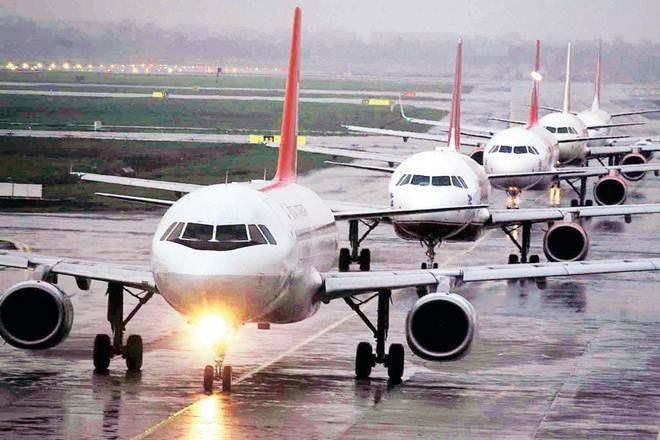
China has turned back on deal to curb emissions from international flights, with the country no longer listed as a participant in the agreement’s first phase, according to United Nations Aviation Agency’s website.
China has turned back on deal to curb emissions from international flights
China does not appear on a June 29 list of participants in the voluntary phase of the deal brokered by the International Civil Aviation Organisation in 2016, according to ICAO’s website.
Aviation powerhouse China was included in previous lists seen by the Media. It is not clear why China now objects to the deal. The first or pilot phase begins in 2021.
Environmentalists say China’s participation is vital for the 2016 Carbon Offsetting and Reduction Scheme for International Aviation (CORSIA) deal.
This deal requires airlines to limit their emissions or offset them by buying carbon credits from designated environmental projects around the world.
Europe will press China to remain, after the country recently argued it never agreed to join the first phase, according to sources who spoke on condition of anonymity about the private talks.
“In the months to come, Europe together with its ICAO partners, will work with China to find ways to address China’s concerns without undermining (the deal’s) environmental integrity.
They will investigate this in order to keep this important aviation country on board,” a European Union source said on Tuesday.
The Civil Aviation Administration of China and ICAO did not respond to requests for comment.
In 2016, China and the United States pledged support for the deal, with both countries saying they expect “to be early participants.”
A second source said China is likely distancing itself as a negotiating tactic.
Talks are expected this fall over which environmental projects will be available to airlines for purchase as offset credits.
China wants its domestic projects to be eligible, the source said.
The United States, which last year announced plans to withdraw from the Paris climate pact, is still in the aviation deal.
The Federal Aviation Administration said it would continue to work “on the implementation of CORSIA.”
Airlines support the agreement as a cheaper alternative to a patchwork of regional deals.
Citing ICAO figures, the Air Transport Action Group estimates CORSIA will cost airlines between $1.5 billion and $6.2 billion in 2025, depending on future carbon prices.
“We are disappointed that the Chinese government has decided not to participate in the pilot phase of CORSIA,” said ATAG executive director Michael Gill in a statement.
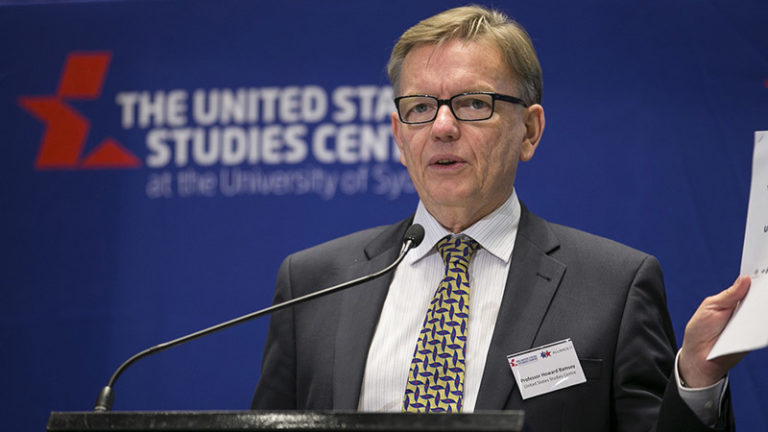
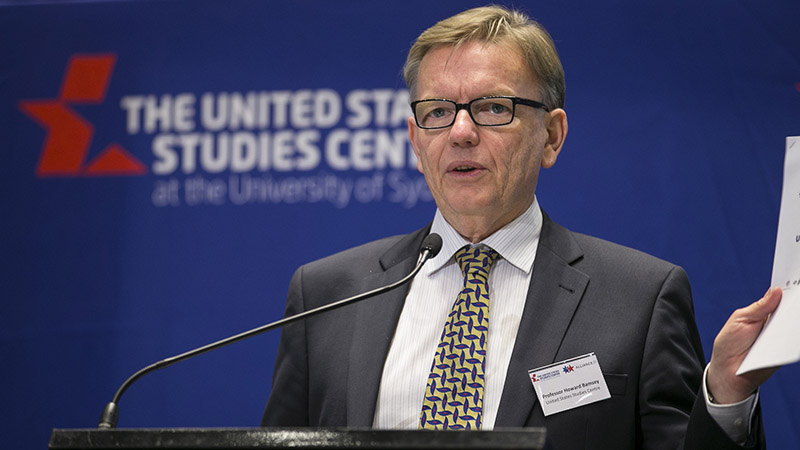
Howard Bamsey resigned as executive director of the Green Climate Fund (GCF) with immediate effect on Wednesday, July 4, 2018 in a bombshell finish to a fraught board meeting.
Howard Bamsey
The Australian cited “pressing personal reasons” in his resignation letter, adding that it was best he leave before the next round of fundraising started.
It came as the four-day meeting in Songdo, South Korea collapsed with no decisions on 11 funding bids worth nearly $1 billion, or on how to top up the flagship climate finance initiative’s dwindling resources.
Sweden’s Lennart Båge, who led the session single-handed while Nicaraguan co-chair Paul Oquist stayed home to deal with a political crisis, said: “This has been a very difficult and disappointing board meeting for all of us, but most importantly for those people who are most vulnerable to climate change impacts, and who depend on the activities of the fund.”
Board members expressed frustration and disappointment at their inability to make progress, as relations between donor and recipient country representatives hit an all-time low.
“We were hoodwinked by developed countries,” South Africa’s Zaheer Fakir, a former chair of the board, told Climate Home News. “It’s a mess.”
The meeting was beset by procedural problems, with the co-chairs accused of failing to adequately consult before the meeting. It took nearly half of the four-day session to agree the agenda, leaving little time for substantive discussion.
One of the major areas of contention is control of the replenishment process. US representative Geoffrey Okamoto said it should be “donor-driven”, to the chagrin of development campaigners. President Donald Trump is refusing to honour an outstanding $2 billion US pledge to the fund.
“The gall of the Trump guy to say #GCFund replenishment process should be donor driven. Guess he’ll just sit down and shut up then,” tweeted Action Aid’s Brandon Wu. He noted that one of the founding principles of the fund was to give developing countries an equal say.
Money is running low, with just $2.8 billion left to allocate. But Finland’s board member Satu Santala tweeted that was not the reason talks failed. “Governance of GCF needs urgent fixing,” she said.
Amid the political gridlock, observers were broadly positive about Bamsey’s record at the fund and concerned by his sudden exit.
“(His resignation) is understandable on a personal level, but a gigantic loss for the fund and its employees at a time they need stability and reassurance,” said Liane Schalatek of the Heinrich Böll Foundation.
Båge said Bamsey had done an “exceptional job”, leading a period of growth and speeding up implementation of climate projects.
The GCF is designed to be the major conduit for billions of dollars in public climate finance promised to the poor world. Since taking over the struggling fund in 2016, Bamsey has overseen a period of steady progress and the first tranche of major projects receiving cash. A reluctant appointee, he told Climate Home News in March that he took the job because the fund “really had to succeed”.
While this week’s meeting failed to continue recent progress, advocates for the fund said it could survive.
“It was a frustrating meeting, but sometimes things need to get worse before they get better. It is a wake-up call to the board,” said Jasmine Hyman, lead consultant at E Co. “I actually am optimistic that they will come to an agreement about the replenishment process.”
Ian Callaghan of climate finance network NDCI Global, who has been tracking the progress of the fund remotely, said it needed to be to be “de-politicised and professionalised”.
“Let’s hope one outcome of this very public meltdown at the GCF is a proper debate about how such an overhaul could be undertaken, because without it climate finance will remain a backwater rather than the mainstream asset class it needs to become if the trillions are to be mobilised, especially for developing countries,” said Callaghan.
The next board meeting will be in October in Bahrain.
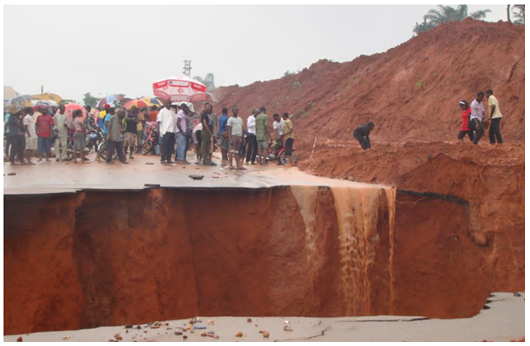
The World Igbo Environmental Foundation (WIEF) says there are over 2,800 active erosion sites threatening to sack most communities in the southeast of Nigeria from their ancestral lands.
Gully erosion in southeast Nigeria
Dr Odili Ojukwu, Chairman of the foundation, made this assertion in an interview with newsmen in Awka, capital of Anambra State, on Wednesday, July 4, 2018.
Ojukwu, an engineer, advocated for community participation in the management and protection of the environment from erosion.
He blamed the prevalence of gully erosion on faulty road construction and drainage systems, adding that people must ensure that development activities in their areas do not result to erosion.
According to him, there are over 1,000 active erosion sites in Anambra, 300 in Imo, 500 in Abia, 500 in Enugu and 500 in Ebonyi states.
“We tried to establish the causes of erosion and gully issues within the South-East and South-South Region; these are the areas most exposed to erosion.
“As we speak, in Anambra alone, there are over 1,000 active erosion sites, in Imo there are about 300, Abia 500, Enugu 500 and Ebonyi 500.
“So, if you aggregate it, you will discover that the entire region is at risk of losing its ancestral land.
“WIEF is saying that every community has the right to protect their environment; nobody should come into your land to destroy it unless you allow them.
“Communities need to take ownership of their environment; that is what will enable them see potential erosion and check it to prevent them from becoming gullies.
“Climate change is also a factor but that is after all the anthropogenic issues have been taken care of, that is; all human effect on vegetation must be limited,” he said.
Ojukwu, an Environmental Consultant, underscored need for a holistic approach to addressing the erosion menace.
He said government at various levels had not done enough to check erosion as the institutions and policies that guarantee sustainable environment were non-functional or lacking.
“Historically, governments have not been able to do much to ensure environmental sustainability; this is also made worse by the I-don’t-care attitude of the people.
“Our institutions do not work, that is why there no technocrats who act on issues of environment on constant basis
“Gullies do not begin overnight, there are processes leading to them and they can be stopped with minimal effort at the community level,” Ojukwu said.
Prof. Babatunde Alo of the University of Lagos on Wednesday, July 4, 2018 urged the Federal Government to make concerted efforts to check the high amount of microplastics found in the food chain and cosmetic products.
Prof. Babajide Alo
Alo, a lecturer in the Department of Chemistry of the university, gave the advice in an interview with News Agency of Nigeria (NAN) in Lagos.
He stressed that plastic products were not degradable, adding that they were eventually broken down by sunlight into smaller pieces, thereby becoming microplastics.
“The major raw materials for plastics production include cellulose, coal, natural gas and crude oil.
“However, petrochemicals from oil remain the main the main ingredient in plastics production.
“The components of plastics found in the environment, biota and humans are of primary concern due to their potential to interfere with the physiology of living organisms.
“Unfortunately, microplastics have been found to be present in food, water, cosmetics and other products packaged in plastic containers,’’ he said.
Alo said that the government should strictly regulate production processes in the country so as to eliminate microplastics from food and packaged water.
He also underscored the need to phase out products that contained microbeads, adding that such products included cosmetics, soaps and personal care products, among others.
Alo, who is also a Fellow of Nigerian Environmental Society (NES), said that government should provide incentives that would attract investments in the production of biodegradable packaging materials.
He also said that tax breaks and other financial incentives should be given to manufacturing companies which had been able to successfully substitute plastics with biodegradable substances.
He said that plastic bottles, cups, wrapping materials, carrier bags and straws, which accounted for a substantial percentage of plastics waste, should be substituted with reusable alternatives.