Home Blog Page 1825

Biosafety agency urges seed companies to comply with import guidelines

0

The National Biosafety Management Agency (NBMA) has told grain importers to ensure that their activities follow the agency’s import guidelines.

NBMA
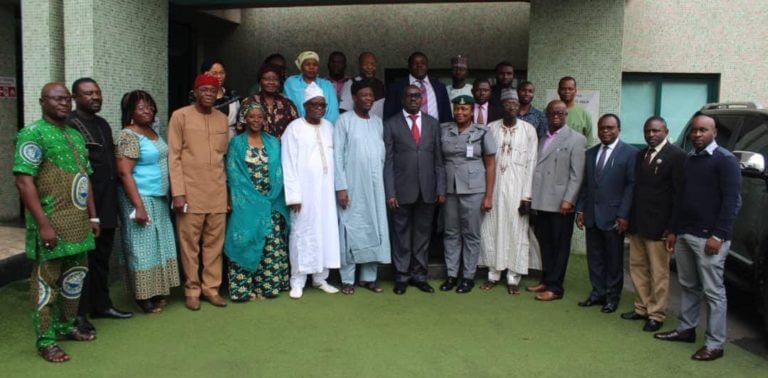
Participants at the interactive session

Dr. Rufus Ebegba, Director General/CEO NBMA, made the appeal during an interactive session with grain importers on Wednesday, July 25, 2018 in Abuja.

Dr Ebegba noted that, over the years, most seed companies imported grains from countries where most grains are genetically modified.

“Some companies still feign ignorance about where GM grains are produced across the globe and continue to import from such countries, this meeting is to enlighten the companies and ensure that everybody keys into the biosafety system.”

“Companies have been importing GMOs for years even before the establishment of NBMA. Now that a regulatory agency is in place, the need to abide by the NBMA Act 2015 is necessary,” he said.

He said that the federal government is interested in providing a conducive environment for businesses to thrive, but it is the responsibility of the business community to comply with the necessary laws and guidelines provided by the government.

He informed the companies that border agencies of the federal government would not allow any bulk importation of genetically modified seeds or grains into the country without a biosafety permit.

The Director General who noted that some companies have already been granted Biosafety permits by the agency said that the agency would not compromise its stand in ensuring that the health of Nigerians and the environment are not threatened by any potential risk posed by GMOs.

In a message, Dr. Mathew Dore, Country Coordinator, Programme for Biosafety Systems (PBS), urged the companies to work together and cooperate with NBMA for the successful execution of the import guidelines.

The participants at the meeting, which attracted over 50 grain importing companies and representatives of ministries and agencies, agreed to work with NBMA for the formation of a strong and viable seed/grains importer’s network that will allow for effective monitoring and supervision.


Concern as oceans face fresh threat from deep-sea mining

0

International waters – known as the “common heritage of (human)kind” – are said to be under a new and supposedly deadly threat from the deep-sea mining industry.

Deep-sea mining
Deep-sea mining

The International Seabed Authority (ISA), a UN agency which has reportedly not received much public scrutiny until now, meets in Kingston, Jamaica this week to discuss how to open up the deep-sea bed to mining. Scientists, academics, and non-governmental organisations have however united in a joint letter to raise alarm over “this ultimate threat to our oceans”.

Nnimmo Bassey, Director, Health of Mother Earth Foundation (HOMEF) and Alternative Nobel Prize recipient, stated, “Oceans play a critical role in maintaining life on the planet. However, the ISA continues to ignore the profound lack of scientific understanding of the immediate and long-term ecological costs of digging up the sea floor.

“It is evident that large private and state-owned conglomerates have succeeded in shifting the ISA’s regulatory discussions toward outcomes favourable to corporate-directed industrial development. Our joint letter is a call from civil society globally to protect our common heritage.”

Renowned marine biologists, including Cindy Van Dover and colleagues, have recently pointed out that deep-sea mining would impact both the seabed and the water column, such that biodiversity loss would be both “unavoidable” and “likely to last forever on human timescales.”

“The world’s seas are already on the brink of catastrophe from overfishing, pollution, such as from plastics and chemicals, destruction of critical habitat such as mangroves and coral reefs, global warming and acidification,” said Catherine Coumans of MiningWatch Canada.

“The oceans cannot survive wide scale destruction of the sea bed by the same irresponsible industry that mines on land.”

The signers of the joint letter noted: “This is not the time to move forward with an extractive regime; there are far too many uncertainties. International leadership at the ISA is required to prevent recklessly proceeding with deep-sea mining.”

The ISA has already issued numerous exploration contracts in international waters to mining interests supported by member states of the ISA. As these exploration contracts come to an end, the ISA is considering implementing a regime to allow extraction.

Raj Patel, Activist, New York Times best-selling author and Research Professor, University of Texas claimed, “When the Law of the Sea was written and the idea of ‘common inheritance’ first framed, I’m certain that corporations weren’t intended to inherit the seabed. There’s little evidence that corporate stewardship is compatible with the continued, sustained health of these under-studied ecosystems.

“The seabed is everyone’s common inheritance, and we need broad, transnational and formal public consultation to learn and then decide how best to ensure its survival for those who will inherit it from us.”

Rather than permitting deep sea mining the ISA must declare a moratorium on deep sea mining before irreparable damage is done to the health of the world’s oceans, declared the activists.

Chemicals are vital determinants for sustainable development – Suwareh

0

Executive Director of the National Environment Agency in the Gambia has disclosed that chemicals are important determinants for sustainable development, sound environmental health and quality of life, as we use them in all human activities including agriculture, health, energy production, manufacturing, services and residential that contributes to improving the quality of life. But he also raised concerns about its harmful effects on workers, consumers, the environment and society at large through exposure.

Momodou Jaama Suwareh

Momodou Jama Suwareh made these statements during a consultative meeting for National Assembly Select Committee on the Environment on Institutional Capacity Building for the Implementation of the Multi-lateral Environment Agreements (MEAs) such as the Stockholm, Rotterdam, Basel, Minamata Conventions and the Strategic Approach to International Chemicals Management (SAICM), held recently. Further lamenting on, he noted that accidental releases from the distribution, consumption and disposal of chemicals may permanently damage soil, water and air.

According to the NEA Executive Director, the purpose of this cross-learning convergence is to thoroughly scrutinise and discuss the project activities and the roles and responsibilities of National Assembly Members during implementation.

“The Stockholm Convention is a legally binding international instrument, designed to lead to gradual decrease of the presence of persistent organic pollutants in the environment. The Gambia is a party to the Stockholm Convention. Persistent organic pollutants (POPs) are toxic chemicals that adversely affect human health and the environment around the world. Because they can be transported by wind and water, most POPs generated in one country can and do affect people and wildlife far from where they are used and released. They persist for long periods of time in the environment and can accumulate and pass from one species to the next through the food chain,” Suwareh pointed out.

The Gambia government in partnership with United Nations Environment Programme (UNEP), Suwareh revealed that Special Programme Secretariat is implementing this important project as part of the implementation of the Stockholm Convention on Persistent Organic Pollutants (POPs), Basel Convention on control of trans-boundary movement of hazardous wastes and their disposal, Rotterdam Convention on the Prior Informed Consent Procedure, Minamata Convention on Mercury, and Strategic Approach to International Chemicals Management (SAICM).

He said The Gambia has ratified all the aforementioned conventions with the ultimate aim to protect human health and the environment and has also recognised the need towards the development of an institutional framework for the sound management of chemicals and waste to enhance implementation at national level. To meet her obligations under these Conventions, he said The Gambia had to prepare a project proposal and submitted it to the Special Programme Secretariat for funding, that led to the present programme with the NAMs.

According to the NEA boss, the objective of the Special Programme is to support country-driven institutional strengthening at the national level, in the context of an integrated approach to address the financing of the sound management of chemicals and wastes, taking into account the national development strategies, plans and priorities of each country, to increase sustainable public institutional capacity for the sound management of chemicals and wastes throughout their life cycle. In addition, he sighted Institutional strengthening under the Special Programme will facilitate and enable the implementation of the chemical convention to which The Gambia is a State Party.

To enlighten the people living in The Gambia on sound chemical management, Suwareh induced that his institution in collaboration with relevant NAMs Select Committees, organised the meeting which aimed at raising public awareness about chemicals and their related issues.

Some of the expected outcomes of institutional strengthening through the special project are to develop and monitor the implementation of national policies, strategies, programmes and legislation for the sound management of chemicals and wastes; promote the adoption, monitoring and enforcement of legislation and regulatory frameworks for the sound management of chemicals and wastes; promote the mainstreaming of the sound management of chemicals and wastes into national development plans, national budgets, policies, legislation and implementation frameworks at all levels, including addressing gaps and avoiding duplication.

He therefore recognised the importance of the participation of NAMs in realising the above outcomes in the consultative forum to gain deeper understanding of the chemical conventions since they impact on many sectors, including policy-making, law-making, environmental protection, and public health, industry and the private sector and various interest groups.

He therefore called on the NAMs to influence and clout to play pro-active roles in achieving our desired goals in environmental preservation. “I challenge all of us both individually and collectively to demonstrate our commitments towards meeting our national obligations in the implementation of the MEAs,” he concluded.

The Chairman of the NAMs Select Committee on the Environment, Sainey Touray, commended the NEA for organising such educative gathering for them at this crucial time of the year when many including farmers are busy dealing with the chemicals with a second thought of its negative impact on both the environment and people.

By Sheikh Alkinky Sanyang

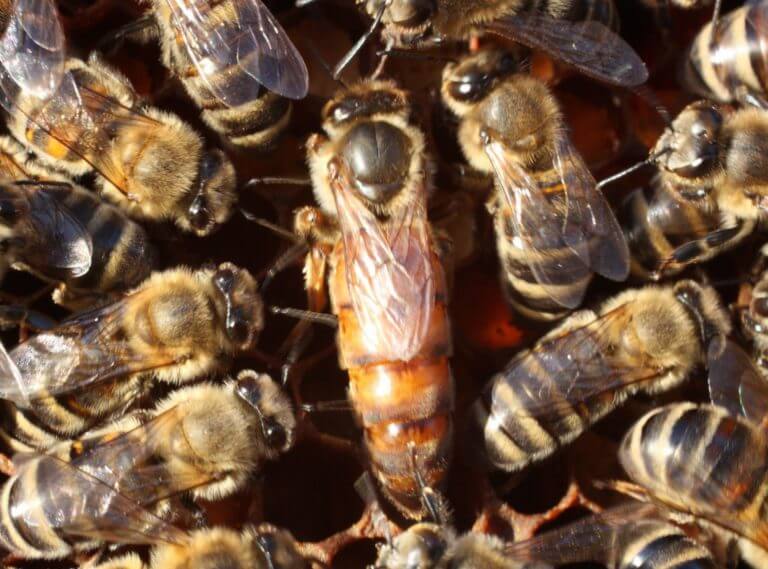
Queen bees have exceptional memory, say researchers

0

Chinese researchers have found that honey bee queens have exceptional memory and learning abilities.

Queen bee
Queen bee

Ken Tan, a researcher at Xishuangbanna Tropical Botanical Garden under the Chinese Academy of Sciences, said different foods eaten by bee larvae lead to differences in DNA methylation, mechanisms used by cells to control gene expression, between queens and workers.

He said queens exclusively feed royal jelly, while workers only eat the jelly for the first three
days and then mainly feed on pollen and honey.

Tan used olfactory learning experiments to test queens and workers and found queens showed excellent learning and memory abilities.

He said, at five days old, queens have a memory and learning level that is equivalent to workers at 20 to 25 days of age.

The proportion of queens that exhibited learning was five-fold that of workers at every tested age.

Tan said bee’s exceptional memories are closely connected to DNA methylation.

The research findings were published in the Journal of Experimental Biology.

Wildfire kills 50 near Athens, families flee to beaches

0

A wildfire killed at least 50 people and injured scores more as it swept through a small resort town near Athens, Nikos Economopoulos, Head of Greece’s Red Cross, said on Tuesday, July 24, 2018.

Athens wildfire
Deadly wildfire consumes Athens

He told Skai TV that the wildfire trapped families with children behind walls of smoke and flames as they tried to flee to the beach.

The fire in Mati was by far Greece’s worst since flames devastated the southern Peloponnese peninsula in August 2007, killing dozens.

It broke out late on Monday afternoon and was still burning in some areas on Tuesday morning.

People scrambled to the sea as the blaze closed in near the shore while hundreds were rescued by passing boats, but the fire moved too fast for others.

“I was briefed by a rescuer that he saw the shocking picture of 26 people tightly huddled in a field some 30 meters from the beach.

“They had tried to find an escape route but unfortunately these people and their kids didn’t make it in time,” Economopoulos said.

A Reuters photographer saw at least four dead on a narrow road clogged with cars heading to a nearby beach and heard reports of several more casualties.

“Residents and visitors in the area did not escape in time even though they were a few meters from the sea or in their homes,” fire brigade spokeswoman Stavroula Maliri said.

Mati is in the eastern Rafina region, a popular spot for Greek holiday-makers, particularly pensioners and children at camps, 29 km (18 miles) east of the capital.

The 26 deaths came on top of more than 20 reported by government spokesman Dimitris Tzanakopoulos on Tuesday.

“One of the youngest victims was thought to be a six-month-old baby who died of smoke inhalation.

“Out of the 156 people injured, 11 were in intensive care, officials said.

The coastguard said four more bodies were retrieved from the sea.

In total, coastguard and other vessels rescued 696 people who had fled to beaches. Boats plucked another 19 people alive from the water.

Greece’s fire brigade said the intensity and spread of the wildfire at Mati had slowed on Tuesday as winds died down, but it was still not fully under control.

The service urged residents to report missing relatives and friends.

White smoke rose from smoldering fires in parts of Mati early on Tuesday. Burned-out cars were scattered outside gated compounds where three- and four-storey buildings bore signs of fire damage.

“It is a difficult night for Greece,” Prime Minister Alexis Tsipras said.

Greece issued an urgent appeal for help to tackle fires that raged out of control in several places across the country, destroying homes and disrupting major transport links.

Cyprus and Spain offered assistance after Greece said it needed air and land assets from European Union partners.

Newspaper printed banner headlines including “killer fire” and “hell” and reported fears the death toll would climb.

Authorities said they would use an unmanned drone from the United States to monitor and track any suspicious activity.

Tsipras and Greek officials have expressed misgivings at the fact that several major fires broke out at the same time.

Wildfires are not uncommon in Greece, and a relatively dry winter helped create the current tinder-box conditions. It was not immediately clear what ignited the fires.

A hillside of homes was gutted by flames east of Athens. A mayor said he saw at least 100 homes and 200 vehicles burning.

Earlier on Monday, Greek authorities urged residents of a coastal region west of Athens to abandon their homes as another wildfire burned ferociously, closing one of Greece’s busiest motorways, halting train links and sending plumes of smoke over the capital.

The main Athens-Corinth motorway, one of two road routes to the Peloponnese peninsula, was closed and train services were canceled.

More people die as heat wave continues to scorch Japan

0

More people died of heat-related illnesses as heat wave continued to scorch wide swathes of Japan on Tuesday, July 24, 2018.

Japan heatwave
Children play in a fountain in a Nagoya park as the heat wave continued

According to public broadcaster NHK, no fewer than eight people across Japan died of suspected heatstroke and 1,830 people were sent to hospitals on Tuesday.

According to the Japan Meteorological Agency (JMA), 630 of its 927 observation points across Japan logged temperatures over 30 degrees Celsius, and 211 registered readings surpassing 35 degrees Celsius.

The agency warned of heat-related illnesses, such as heatstroke and dehydration and asked the public to take preventative measures.

A protracted heat wave over the past two weeks has caused dozens of deaths and tens of thousands hospitalised in Japan.

Japan logged its highest ever temperature on Monday, as the temperature in Kumagaya, a city in Saitama prefecture near Tokyo, hit a record high of 41.1 degrees Celsius.

Group clamours tree planting to address climate change

0

A non-for-profit group, Foundation for the Protection of Women and Children in Nigeria, has urged Nigerians to plant trees this year to protect the environment from climate change and desertification.

Tree-Planter
Tree planting

Ramatu Tijjani, Founder of the NGO, made the call while speaking to newsman on Tuesday, July 24, 2018 in Kaduna.

Tijjani said that the NGO had embarked on a tree planting campaign to rise awareness on the dangers associated with global warming.

She said the aim of the campaign was to bring to the attention of citizens the importance of planting more trees in their communities.

Nigeria’s forestry sector is in great danger due to the increasing demand of forest trees for domestic uses, hence the need to raise awareness for citizens to contribute to the daily battle against felling trees without planting new ones to replace them.

According to him, trees provide woodland habitats for a wide array of plants, flowers, birds, mammals and insects.

He said that without these vital habitats and the means to propagate and pollinate, many more valuable plants and wildlife would suffer as a direct consequence.

“By planting trees, you can make a real contribution to the environment and take a positive step toward offsetting company’s carbon footprint”.

She appealed to government at all levels, stakeholders, Ministry of Agriculture and Environment and all Nigerians to scale up awareness creation efforts to boost tree planting.

She said this move would help mitigate the adverse impact of global warming, desertification and deforestation.

According to her, all living creatures need oxygen to survive and because the trees play an impressive role of availing oxygen, it is imperative to plant a tree today for a sustainable future.

Additionally, she said, traditional title holders and religious leaders had a big role to play in helping activists convey the massage, adding that that both religious encourage tree planting.

Meanwhile, Musa Sani, one of the youth leaders in Kawo, Kaduna, who attended one of the campaigns in his community, thanked the organisers for availing his community of the knowledge.

He then urged NGOs and CSOs working on environmental issues to organise more enlightenment campaigns in both rural and urban cities across the 36s states of the federation.

By Ezra Musa

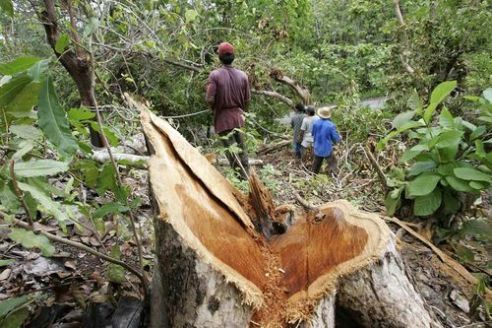
Tree felling: DPR wants Nigerians to embrace gas for domestic energy needs

0

Worried by the threat to environment posed by massive tree felling, the Department of Petroleum Resources (DPR) has urged Nigerians to embrace the use of gas for domestic energy, rather than charcoal.

Deforestation
Deforestation

“More trees are being cut down everyday; such deforestation is degrading the environment. The media should educate Nigerians to resort to gas for their domestic energy needs,” DPR operational controller in Niger State, Abdullahi Isah, said on Tuesday, July 24, 2018 in Minna, the state capital.

Isah made the appeal when Malam Bawa Mokwa, Zonal Coordinator in Charge of North Central Federal Information Centres, paid him a courtesy visit.

He said that deforestation had become a major challenge, declaring that the use of gas was the best measure toward minimising the menace.

“We need to let people know that this gas that they are so afraid to use is the cheapest form of domestic energy.

“We must also encourage them to understand that gas is safe via massive education on safety measures,” he said.

Isah warned that the indiscriminate resort to tree felling would make society vulnerable to natural hazards and urged media houses to dedicate time and spaces to educate the public on such hazards.

He advised members of the public to always report illegal activities by marketers to the DPR, saying that such information was crucial to effective service delivery.

Earlier, Mokwa had expressed readiness to partner with the DPR to check the diversion of petroleum products from Mokwa, Babana and Izom areas to major cities of the state.

He appealed to DPR to intensify its monitoring effort on boarder areas, saying that the federal information department was ready to assist in the dissemination of information in that respect.

Mokwa commended the DPR for stabilising the supply of petroleum products and reducing sharp practices among marketers, noting that hoarding had been drastically reduced.

By Rita Iliya

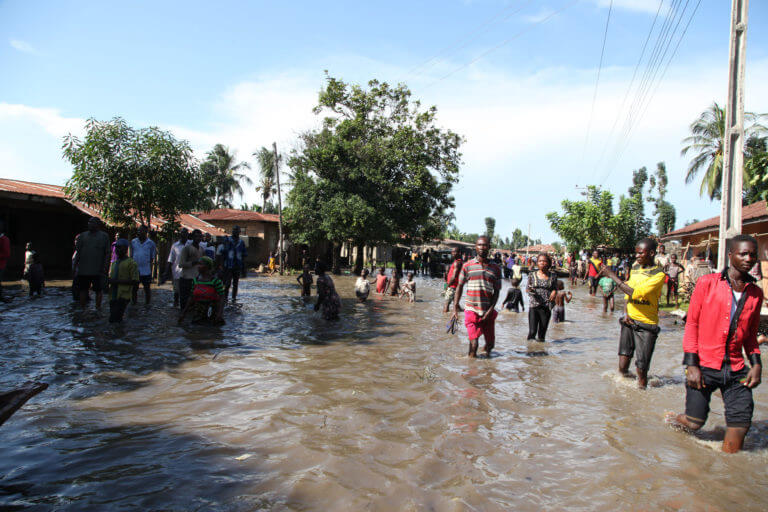
Flood displaces hundreds of Damaturu residents

0

Flood has displaced hundreds of residents of Damaturu in Yobe State on Tuesday, July 24, 2018 following a downpour which lasted many hours.

Flooding
Flooding

The rains destroyed houses and shops in places such as Nayi Nawa, Shago Tara, fulatari, Pompomari and Bulabulin.

Alhaji Musa Jidawa, Permanent Secretary, State Emergency Management Agency (SEMA),  who toured the affected areas, described the flooding as ““unprecedented” even  though it did not claim lives.

“The agency, in collaboration with Damaturu local government council, is assessing the damage and ascertaining people involved to provide them with the needed assistance.

“Damaturu has not seen anything close to this flood in the last 20 years, we have gone around for first-hand information to determine areas of immediate needs and intervention.” he said.

The permanent secretary said government would provide victims with food and building materials for them to reconstruct their buildings.

Meanwhile, some of the victims said they had relocated to their relations’ homes pending when they are able to rebuild their houses.

The victims, who spoke to the News Agency of Nigeria (NAN), said they were lucky that it rained in the morning and destroyed only their property.

Abubakar Mustapha, a victim who spoke on behalf of others in Nayi Nawa, pleaded with the state government to expedite action and provide them some succour in view of their predicament.

He also called on the government to construct more drains to channel excessive water in the event of rainfall in the area.

By Mohammed Mamman

WHO declares DRC Ebola-free

0

The Ebola virus outbreak in Democratic Republic of the Congo (DRC) has been declared over by the World Health Organisation (WHO).

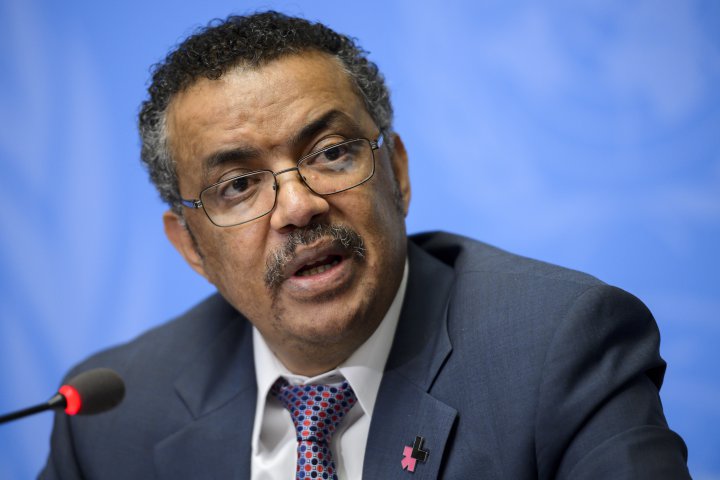
Dr Tedros Adhanom Ghebreyesus
Dr Tedros Adhanom Ghebreyesus, Director General of the World Health Organisation (WHO). Photo credit: FABRICE COFFRINI/AFP/Getty Images

Speaking from the country’s capital, Kinshasa, Dr Tedros Ghebreyesus, Director-General of WHO, hailed the “tireless efforts” of local teams in combating the deadly disease, which claimed 29 lives, and infected dozens more.

The WHO chief also commended the concerted national and international effort to contain the threat.

The countdown to the announcement began on June 12, when the last patient was released from care after testing negative a second time for the virus, whose symptoms include major bleeding and high fever.

Ghebreyesus, particularly congratulated health partners, donors and the DRC Ministry of Health for working together so effectively, to end the outbreak.

Unlike eight previous Ebola outbreaks in DRC in the past four decades, this latest episode was complicated by the fact that it involved a major urban centre of more than one million people.

This is made up of Mbandaka city, with a direct connection via the Congo River to the capital and to neighbouring countries, as well as extremely remote rainforest villages.

There were concerns that the disease could spread from Equateur province to other parts of DRC and neighbouring countries, Ghebreyesus said, adding, however, the threat was minimised due to the release of emergency WHO funding within hours of the outbreak being declared on May 8.

WHO and partners appealed for $57 million to stop the spread of Ebola while the total funds received by all partners amounted to $63 million .

Fighting the DRC outbreak was also made easier by the existence of a vaccine, following a major trial in Guinea in 2016, one of three countries in West Africa where Ebola claimed more than 11,300 lives between 2013 and 2016.

The absence of a cure for the disease was in part responsible for the continued reliance on traditional burial methods, WHO has said, which in some cases involved bathing in the water used to clean those who had died from the virus.

In an appeal to the authorities and health partners to transfer the momentum of fighting Ebola to other diseases in DRC, Ghebreyesus said that they could be “confident” about tackling cholera and polio, too.

“We must continue to work together, investing in strengthened preparedness and access to health care for the most vulnerable,” he said.

Looking ahead, WHO Regional Director for Africa, Dr Matshidiso Moeti, said that DRC was in a better position to address future public health emergencies, since “more than three quarters of the 360 people deployed to respond (to the Ebola outbreak) came from within the region”.

DRC’s health professionals had also gained valuable knowledge and insight from those involved in the West Africa Ebola vaccination campaign, involving nearly 12,000 people, Moeti added.

By Prudence Arobani