Home Blog Page 1817

Small-scale horticulture project transforming lives in Kenya

0

Kenya is said to have one of the most dynamic and innovative economies in sub-Saharan Africa. A decade after going through a food crisis and in the aftermath of the drought in 2016-2017, the country aims to achieve self-sufficiency in food products such as maize, tomato, cabbage, rice, beans, milk and meat. This clearly stated ambition of the Kenyan government has received support from the African Development Bank (AfDB), which sees food security as a catalyst for the growth and development of the country’s productive sectors.
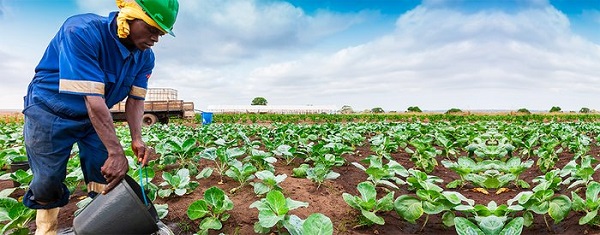
Horticulture Kenya
Flourishing fruit and vegetable businesses are transforming lives in Kenya

With a flourishing fruit and vegetable business and the ability to employ her own farm workers, Lucy is changing stereotypes about what Kenyan women can accomplish given the right support.

It’s been eight years since Lucy, a widow and mother of four, joined the Mbogoni irrigation programme, in the Tharaka Nithi County to start a small farm to grow maize, green beans and coffee.

Now, she is able to make a good income from her one-hectare plot. Despite the sudden loss of her husband following a road accident in 2016, she is confident about the future for her children, two of whom are at university, one in secondary school and the other in primary.

“I want to thank the small-scale horticulture development programme financed by the African Development Bank. The irrigation programme has meant that I could extend my irrigated land to three hectares and I now grow eight different crops – tomatoes, onions, hazelnuts, green beans, maize, cabbages, peppers and chillies – and have two cows and one banana and one mango grove,” Lucy told a visiting team from the bank in an interview last November.

Lucy employs two men to help her in her fields. She says that her tomato crop which she harvests twice a year, generates a net annual income of approximately KSH 600,000, about $5,800. At nearly KSH 1.2 million per annum, or $11,600, her mango crop, harvested once a year, is her main source of income. Green beans come third, with two harvests per year adding some KSH 150,000 ($1400) to her income.

Lucy’s story reflects the positive impact of the project on women’s lives. In all, 1,164 women-led households have benefited from this project. The women said that 29% of their agricultural incomes were spent on school fees (children in boarding or private schools), 20% on food, 17% on clothing, 14% on investment, 14% on home renovations and 6% on miscellaneous expenses.

Florence Mbeluha has a similar story. The 30-year-old mother recounted how the project transformed her life. She also farms a hectare of land which she rents in the area of the Kabaa irrigation programme in Machakos County, south-east of Nairobi, where her maize and green beans crops give her a net annual income of KSH 720,000 about $6,900. She uses part of this to pay for her child’s school fees.

Kenya has one of the most dynamic economies in sub-Saharan Africa. Ten years after a food crisis and in the aftermath of the severe drought of 2016-17, the country is aiming to achieve self-sufficiency in food products such as maize, tomato, cabbage, rice, beans, milk and meat. This ambition of the Kenyan Government found willing ears at the AfDB, which views food security as a direct catalyst of the growth and development of the country’s productive sectors.

Since launching its “Vision 2030” long-term development strategy in June 2008, which places special emphasis on agricultural development, the Kenyan Government has been working assiduously with the African Development Bank Group to combat food insecurity, especially in rural communities.

Today, more than 10 million Kenyans suffer food insecurity, mainly in the arid and semi-arid areas of the north of the country, and most of these people depend on food aid.

But, Kenya has immense areas of arable land with relatively abundant rainfall and a dense river system. Agriculture accounts for more than 35% of GDP and employs over 60% of the country’s active population. To escape the threat of famine or unemployment, though, large numbers of those living in rural areas move to the cities. The response of the African Development Bank has helped to improve life for more than two million Kenyans, especially in rural communities.


AfDB’s interventions combat poverty and improve the quality of life for local populations

Over the last 15 years, the African Development Bank has supported 10 operations and invested approximately $194 million in Kenya. One of these projects is a small-scale horticulture development project with a total cost of $27 million. The bank supported this project in order to contribute to reducing poverty and improving food security.

Through this project, 3,173 hectares of land have been irrigated, more than the 2886 hectares originally planned. A total of 100 women’s groups have received training and equipment to process agricultural products. And large numbers of farmers have been mobilised, organised and trained in a range of areas including crop production, livestock, marketing and the management of irrigation systems.

Two field visits have taken place per year in relation to this project which, as Gabriel Negatu, Director General of the AfDB’s Eastern Africa Regional Hub says, helped ensure its successful implementation: “Thanks to effective management of the resources allocated, the project achieved most of its objectives on schedule. Close co-operation with key ministries and other stakeholders enabled rapid and appropriate implementation of the project’s components and activities.”

Irrigation and infrastructure development have enabled the refurbishment of nine existing irrigation systems for small farmers over an area of more than 2886 hectares and benefited more than 5812 households – 40% of which are headed by women. Eight livestock watering points were built; eight water-consumers’ associations were established and registered, office buildings were constructed in rural areas with water and sanitation facilities and the programme’s access roads were repaired and environmental management was facilitated.

With support to farmers in production and marketing of their produce and financial services support, more than 100 farmers’ groups became engaged in horticultural production and marketing activities. Over 100 women’s groups were helped to successfully conduct various food processing activities and nine storage sheds and market sheds were built. In addition, many farmers received training in the production and marketing of horticultural crops. Farmers were also put in contact with different financial institutions in order to access credit facilities and purchase inputs.


Results beyond expectations, especially on women

Productivity of some of the crop varieties selected have exceeded expectations, ranging from 100% to 500%, depending on variety. This increase has been entirely due to the irrigation system, improved varieties, increased production capacity and the continuous training of farmers.

Average annual incomes of farmers have grown by more than 195% compared to the original target and continues to increase as new systems come into production.

In some areas, the benefits have spilled over into school enrolment rates, which have seen a considerable increase, as project beneficiaries have been able to afford children’s school fees, thanks to their increased earning power. Some beneficiaries have been able to build modern houses and create non-agricultural income-generating activities using agricultural produce.

But the most compelling impact of these changes has been their benefit to women.

Like Lucy and Florence, women of the Kathiga Gacheru irrigation programme, in Embu County, some 120 km north-east of Nairobi, owe their improved incomes and standard of living to the irrigation systems, training and support received as a result of the project.

Before the project, agriculture was highly dependent on rainfall. Those farmers surveyed admitted that in times of drought, they used to rely on the government and aid agencies for food aid. Now, thanks to the irrigation systems, the training they have received and other project inputs, this agricultural community has become self-sufficient in food. The programme has a total of 161 members from households in Embu County, including 23 families headed by women. Beatrice Njeru is one of these.

Njeru used to pump water from a nearby river to irrigate her farm. She could only grow tomatoes on one eighth of her land because of her difficulties in accessing water. Thanks to the project, she has extended her fields to two hectares and now has two cows and grows cabbages, papayas and tomatoes, as well as having mango, orange and banana groves. She also plants sugar cane for soil conservation and grass to feed the cows. In this way, she now earns KSH 1.5 million ($15,000) per year.
Latin American & Caribbean Climate Week closes with calls for increased climate finance

0

The Latin American & Caribbean Climate Week, which ended on Thursday, August 23, 2018, showcased groundbreaking action underway in the region to dramatically reduce greenhouse gas emissions and build resilience to the unavoidable impacts of climate change.

Climate week
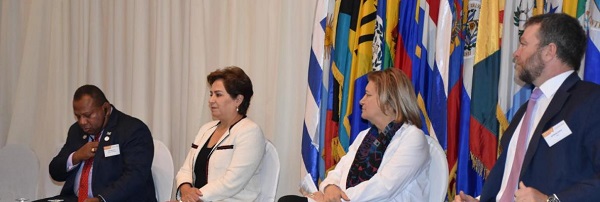
Delegates at the Latin American & Caribbean Climate Week in Montevideo, Uruguay

The event reached its apex with the high-level segment on Wednesday, which was opened by UN Climate Change Executive Secretary, Patricia Espinosa; Brazil’s Minister of Environment, Edson Duarte; and the country’s host, Uruguay’s Minister of Housing, Territorial Planning and Environment, Eneida de León.

Delegates attending the Climate Week in the old town of Montevideo, raised concerns that the funding levels announced in 2015 are not being achieved in line with the successful implementation of the Paris Climate Change Agreement.

The effects of this funding gap, the stated, would be felt acutely in a region that has so much to lose from the impacts of climate change. Brazil alone holds 20% of the known biodiversity species on the planet and has more than 50% of its area covered with native forests.

Uruguay’s Minister of Housing, Territorial Planning and Environment, Eneida de León used her keynote speech to underline this point further: “Our region is particularly vulnerable to the adverse effects of climate change, where the vast majority of loss and damage that we suffer is directly related to extreme weather events. Future projections are not encouraging. Paradoxically, developing countries are the ones that contribute least to climate change, and yet we suffer the greatest impacts.”

Yet despite this sobering reality check, there was still cause for optimism at the Climate Week. Brazil’s Minister of Environment, Edson Duarte, reported that his country has already achieved substantial reductions in greenhouse gas emissions. Specifically – statistics obtained by REDD+ – demonstrate that actions in the Brazilian Amazon now surpass six billion tons of CO2, equivalent to the emissions of a year and a half of the entire European Union.

Afterwards, Duarte hailed this year’s Talanoa Dialogue as the world’s main chance to generate the ambition necessary to secure a low-carbon future, saying, “The Brazilian government has initiated the Talanoa Brazil Dialogue, which, by strengthening trust among national actors and identifying where we are and where we want to go, aims to organize the country’s messages for the Talanoa Global Dialogue, which will take place at the Climate Conference in Poland later this year. We urge our brothers from Latin America and the Caribbean to make the same move, so that we can arrive in Poland with clear objectives.”

Effectively serving as a bold call to action ahead of the Ministerial Talanoa taking place at COP24 this December, such remarks show how the regional Climate Weeks have a vital role to play in bringing local actors together to shore-up climate action.  As such, the Climate Weeks must become a mainstay of the climate action calendar – a point which was not lost on UN Climate Change Executive Secretary, Patricia Espinosa: “By tackling climate change we can tackle more than just the weather. We can address more than just numbers and statistics. We can create a better world. That’s why this Climate Week is so important. It’s a chance for us to hear about the challenges actors face and the specific work being done here to address them; solutions that might be applicable elsewhere.”

The Climate Week culminated in a regional edition of the Talanoa Dialogue, which was led by the Government of Uruguay and featured high-level Climate Champion, Inia Seruiratu, Fiji’s Minister for Agriculture, Rural & Maritime Development.

The event was orchestrated by the members of the Nairobi Framework Partnership: UN Climate Change, United Nations Development Programme, World Bank, African Development Bank Group, United Nations Environment, UNEP DTU Partnership, International Emissions Trading Association (IETA).

Scientists confirm water ice on moon’s surface for first time

0

For the first time, scientists have directly observed definitive evidence of water ice on the moon’s surface, U.S. space agency NASA has said.

Moon surface
Moon surface

Most of the newly found water ice lies in the shadows of craters near the moon’s polar regions, where sunlight never reaches, and the warmest temperatures never reach above minus 250 degrees Fahrenheit (about minus 157 degrees Celsius), NASA said in a statement.

“These ice deposits are patchily distributed and could possibly be ancient,” the NASA said.

“At the southern pole, most of the ice is concentrated at lunar craters, while the northern pole’s ice is more widely, but sparsely spread,” NASA added.

Previous observations found possible signs of surface ice at the lunar south pole, but these could have been explained by other phenomena, such as unusually reflective lunar soil.

In the latest study, scientists used data from NASA’s Moon Mineralogy Mapper (M3) instrument to confirm the presence of solid ice on the moon.

M3 collected data that not only picked up the reflective properties of ice but was able to directly measure the distinctive way its molecules absorb infrared light, so as to differentiate between liquid water or vapor and solid ice.

“With enough ice sitting at the surface — within the top few millimetres — water would possibly be accessible as a resource for future expeditions to explore and even stay on the Moon, and potentially easier to access than the water detected beneath the Moon’s surface,” NASA said.

“Learning more about this ice, how it got there, and how it interacts with the larger lunar environment will be a key mission focus for NASA and commercial partners, as we endeavor to return to and explore our closest neighbor, the Moon,” NASA added.

The findings were published in the Proceedings of the National Academy of Sciences on Monday.

Congolese doctor infected with Ebola in high insecurity zone

0

A doctor has become the first probable Ebola case in one of the eastern Democratic Republic of Congo’s “high insecurity zones” which are dogged by militia violence and hard to access, the World Health Organisation (WHO) said on Friday, August 24, 2018.

Peter Salama
Peter Salama, WHO’s Deputy Director-General of Emergency Preparedness and Response

Since the outbreak erupted on Aug. 1, 103 confirmed and probable cases of Ebola have been identified in North Kivu and Ituri provinces, including 63 deaths, the health ministry said in an overnight update.

The doctor living in Oicha town in North Kivu has been re-hospitalised with Ebola symptoms after his wife was confirmed as having the disease when she traveled to the nearby city of Beni, Dr. Peter Salama, the World Health Organisation’s head of emergency operations, said.

Oicha is almost entirely surrounded by Allied Democratic Forces (ADF) Ugandan Islamist militia, there are “extremely serious security concerns”, he said. Aid workers, priests and government officials are held hostage in the area, he said.

The doctor’s initial test for Ebola – which causes vomiting, fever and diarrhoea – had been negative, but fresh results are awaited, Salama told Reuters.

So far 97 of the doctor’s contacts who may have been exposed to the virus have been identified, and vaccination has begun in the town, he added.

“So, for the first time really we have a confirmed case and contacts in an area of very high insecurity.

“It really was the problem we were anticipating and the problem at same time that we were dreading,” Salama told a news conference.

WHO and health experts reached Oicha with armed escort by MONUSCO troops this week, he said, adding: “We know from that incident now in Oicha we are going to have to operate in some very complex environments due to security and access concerns.”

In a further worrying development, angry youth burned down a health centre in another village, where vaccinations were under way, after learning of a death from Ebola, Salama said.

More than 2,900 people have been vaccinated against Ebola since the outbreak began, he said.

“We are at quite a pivotal moment in this outbreak in terms of the evolution of the outbreak epidemiologically and in terms of the response,” he said.

NAN reports it is the 10th outbreak to strike the DRC since 1976, when Ebola was first identified and named after a river in the north of the country.

The health ministry added that “four additional experimental therapeutic molecules” had been approved by its ethics committee for treating infected patients.

Their laboratory names are ZMapp; Remdesivir; Favipiravir; and Regn3450 – 3471 – 3479.

The drugs — which have not been licensed but undergone safety trials — add to a prototype treatment called mAb114, whose use was announced on Aug. 14.

The first therapeutic drug against the virus to be used in an active Ebola epidemic in the DRC, mAB114, has so far been given to 10 patients “who are responding positively,” the ministry said.

Developed in the United States, the prototype drug is a so-called single monoclonal antibody — a protein that binds on to a specific target of the virus and triggers the body’s immune system to destroy the invader.

The experimental treatments are being used alongside an unlicensed vaccine called rVSV-ZEBOV, which was shown to be safe and effective in previous trials in an Ebola epidemic in West Africa.

Immunisation with rVSV-ZEBOV has been given to 2,179 front-line health workers, the ministry said.

The WHO has expressed concern that the violence in the province Kivu — entailing militias who often fight for control of resources, including a notorious Ugandan rebel force called the ADF, — could hamper the fight against rolling back the disease.

The outbreak in eastern DRC was declared a week after WHO and the government hailed the end of a flareup in northwestern Equateur province, at the other end of the vast country, which killed 33 people.

The government has earmarked 43 million dollars to fight the latest scare.

Ebola is a highly contagious haemorrhagic fever caused by a virus which is believed to have a natural home in species of tropical bats.

It causes serious illness including vomiting, diarrhoea and in some cases internal and external bleeding. It is often fatal.

In the worst Ebola epidemic, the disease struck the West African states of Guinea, Liberia and Sierra Leone from 2013 to 2015, killing more than 11,300 people.

Burning fossil fuels contribute most to global oxygen drop – Scientists

0

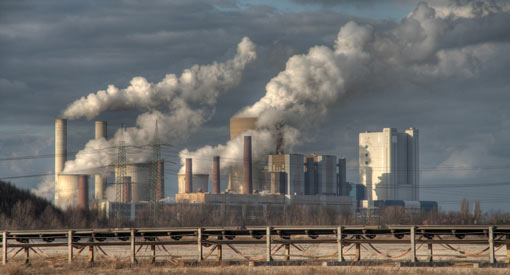
Burning fossil fuels is the largest contributor to the declining level of oxygen in the atmosphere, according to the latest research by Chinese scientists.

Coal-Fired-Power-Plant
Fossil fuel combustion: A coal-fired power plant

Scientists from Lanzhou University in northwest China’s Gansu Province studied fossil fuel oxygen consumption, human and livestock respiration, and fire.

They found fossil fuel combustion comprised 60 to 80 per cent of total oxygen consumption over the past century.

It is estimated that the world’s oxygen concentration will drop from its current level of 20.946 per cent to 20.825 per cent as the annual atmospheric oxygen consumption increases sharply to 100 billion tonnes by 2100.

Huang Jianping, Director of the Research Team, appealed for focusing more on atmospheric oxygen changes as well as immediate and cooperative actions against the declining trend.

According to Jianping, although the oxygen deficit has not yet posed a clear threat to human health, it is foreseeable that the environment will significantly change if the trend continues.

“We must do more to promote the output of oxygen and reduce its consumption, such as by using more green energy.

“It is also pivotal to reverse this trend through the combined efforts and cooperation of all countries,” Jianping said.

The research findings have been published in the latest issue of Science Bulletin.

How access to clean water changed our lives, by Kaduna community

0

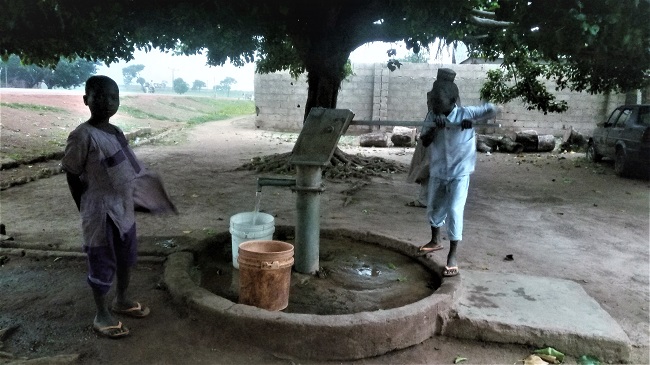
Members of Unguwan Gandu Zuntu, Kubau Local Government Area of Kaduna State said on Friday, August 24, 2018 that access to clean water in the community had significantly changed their lives for good.

Kaduna community
Children of Unguwan Gandu Zuntu, Kubau Local Government Area of Kaduna State fetching water from a handpump borehole provided by SHAWN II Project in the community

They stated this while interacting with a correspondent of the News Agency of Nigeria (NAN) who was in the community to assess the impact of Phase II of Sanitation, Hygiene and Water in Nigeria (SHAWN) project on the people.

One of them, Mrs Matina Tanko, recalled that families in the area had suffered water borne diseases and other related ailments due to unsafe water and poor sanitation conditions, stressing that life had been tough for both the young and the old in the community.

“We had to walk more than two kilometres from our house to River Lakarbu to get drinking water whenever our only source of water, a well became dry.

“The most disturbing problem was that people washed their clothes and bathed in the river. Not only that, cattle also drank, defecated and urinated in the water.

“Yet, we walked for about two kilometres to get these bacteria and germs infected water for drinking, cooking, and other domestic uses, because we had no alternative,” she said.

The Ward Head of the Community, Mr Yohana Tahum, also said that the people preferred to go to the river, early, to avoid the long queue and hours of waiting to get water from the only well in the community.

“People go to the well as early as 3 a.m. to be able to get water between 7 a.m. and 8 a.m. because of the long queue, with our women and school girls suffering the most,” Tahum said.

Mrs Saraya Ibrahim, a house wife, however, expressed joy that the community now had access to clean water through a hand pump borehole provided by the SHAWN II project.

According to her, the project, jointly funded by UNICEF, DFID and the Kaduna State Government has changed the lives of the community, away the pains of having to walk long distance to get water.

“Not only that, good sanitation and hygiene practices that become our new way of life, courtesy of the project, has also saved us from constant vomits and diarrhea due to unhealthy living environment.

“We had no idea what it means to live in a hygienic environment until the SHAWN project; and now we live in clean environment, practice good hygiene and built toilets to properly dispose excretes,” Ibrahim said.

At Unguwan Masama, also in the local government, Malam Umaru Mukaila, the Water, Sanitation and Hygiene Committee Chairman in the community said every household now had a toilet, to discourage open defecation.

Mukaila also said that the community was also provided with motorised borehole supplying clean water to its 2,500 inhabitants.

Members of Unguwan Masama, Kubau Local Government Area of Kaduna State, were provided drinking water from a motorise borehole provided by SHAWN II Project in the Community.

He thanked UNICEF, the state government and DFID for improving the quality of life in the community through the SHAWN II projects, saying, “We never had it this good.”

SHAWN II project is aimed at improving access to sanitation, hygiene and water supply to all citizens through eradication of open defecation, hand washing promotion, sanitation and provision of water facility.

It is being funded by United Kingdom’s Department for International Development (DFID) and UNICEF with counterpart funding from the state governments of Kaduna, Katsina, Zamfara, Benue, Bauchi and Jigawa.

By Philip Yatai

Hundreds evacuated as forest fire sends smoke over Berlin

0

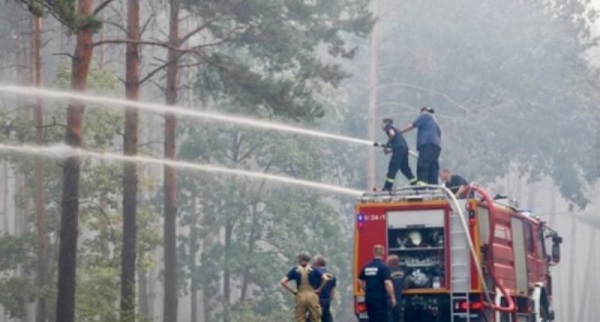
Hundreds of people were on Friday, August 24, 2018 evacuated from their homes as about 600 firefighters battled a blaze in a forest strewn with unexploded ammunition south of Berlin. A pall of acrid smoke hung over the city.

Germany
Firefighters help to put out a forest fire near Treuenbrietzen, Germany

Attempts to fight the fire were complicated by the presence of the ammunition thought to date from the Soviet Army’s activities in former East Germany.

The blaze, about 50km (30 miles) southeast of Berlin, spread rapidly overnight to cover an area as big as the size of 500 football fields, aided by the parched conditions after one of Europe’s hottest summers.

“I have huge respect for the firefighters, who are out there right now, risking their lives.

“We know there is ammunition lying around in the forest,” said a local politician, Guenther Baaske, who added that some explosions had been heard.

The summer has seen forest fires across much of eastern Germany, but this blaze, so close to its largest city, led authorities to activate emergency alert systems in the early hours of Friday telling Berliners to shut their windows.

Helicopters dropped water on flames near the village of Treuenbrietzen and firefighters were spraying water in a blackened landscape thick with smoke.

Flames came within 100 meters of houses in some places.

Authorities said that 540 people had to leave their homes, with many forced into emergency accommodation.

In many places, flames reached as high as the forest canopy in the ordinarily swampy, heavily-wooded region that surrounds Berlin.

Traditional ruler tasks Nasarawa residents on clean environment

0

A first-class traditional ruler in Nasarawa State, Alhaji Halilu Bala-Usman, on Friday, August 24, 2018 urged residents in the state to always keep their environment clean to enhance healthy living and the overall development of the state.

tanko Al-Makura
Governor of Nasarawa State, Umaru Tanko Al-makura

Bala-Usman, the Osu Ajiri of Udege chiefdom, spoke while receiving Mr Ifiora Kevin, the newly posted Medical Superintendent of General Hospital, Mararaba, in Udege Development Area of the state.

According to the royal father, a clean environment is good for human health and prevents the outbreak of diseases.

He assured the new medical official of adequate support, urging him and other health officers in the area to continue to adhere strictly to their professional ethics, to save human lives.

Bala-Usman wished the officer and other management members of the hospital well in their new assignment.

“I want to use this medium to advise the people of my domain, the state and Nigeria at large on the need to maintain personal and environmental hygiene in the interest of lives and for the overall development of the society.

“Let us complement government efforts by keeping our environment clean, because it is often said that a healthy nation is a wealthy nation,” he said.

The traditional ruler urged people of the area to be their brother’s keeper by living in peace and to tolerate one another, irrespective of their affiliation.

He lauded Gov. Tanko Al-Makura of Nasarawa State for his development strides, calling for their sustenance.

Earlier, Kevin said that the visit to the royal father was aimed at seeking for his support, to enable him and other members of staff to succeed.

Kevin, who pledged the dedication of staff of the hospital to their duties, solicited the support of people of the area, to enable him and his colleagues to excel.

By Awayi Kuje

Why fish is more valuable than oil, by Bassey

0

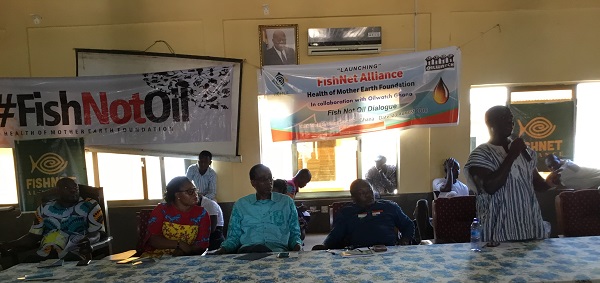
Nnimmo Bassey, Director, Health of Mother Earth Foundation (HOMEF), at the FishNet Dialogue held at Keta, Volta Region, Ghana on Thursday, August 23, 2018, describes oil drilling as a threat to the natural heritage of coastal communities, adding that the venture is a tragedy to marine life forms, as it kills and injures them

FishNet Dialogue
Nnimmo Bassey (in blue) seated with other delegates at the FishNet Dialogue held at Keta, Volta Region, Ghana

When we say that fish is more valuable than oil, we are staying a plain fact. Fish are living organisms whereas crude oil comes from fossils or long dead matter. Fish support our life with necessary protein. It is estimated that about 63.2 percent of Ghanaians depend on fish for animal protein. Marine resources provide the backbone of the economy and social life of many coastal communities.

They employ millions of peoples across the coast lines of Africa and in both Great and small lakes on the continent. The economic value of artisanal and small-scale fishing includes the big population of processors and sellers that are mostly women. To these must be added the families that depend on them and the income from the sector. With these considerations and in comparison, to the negative impacts of oil exploration and extraction in our waters, the fishing sector is more valuable and needs to be consciously protected.

Before the arrival of oil and gas rigs in our territories we enjoyed pristine waters and we could fish freely in the deep offshore and on the inland shores. Our people could literally pick sea foods from the shallow waters and from the creeks. Oil activities in our waters have raised serious security concerns, with large areas around oil installations becoming off limits to fishers. Sadly, oil fields have notoriously been found in areas with endemic fish species. Besides oil spills from offshore oil operations, they also pollute the oceans with drilling muds, pipeline leaks, produced water and deck runoff water. These have considerable impacts on the fish, coral reefs and water birds in the short and long terms.

When the seismic ships arrive, trouble knocks. Oil companies invest a lot in their search for oil reserves. Governments readily back these searches because both corporations and governments benefit from huge reserves as the market value of an oil company rises as their reserves rise. Governments that belong to a cartel like the Organisation of Petroleum Exporting Countries (OPEC) can press for higher production quotas depending on how much reserves they can show that they have. While their reserves rise, so do the pains and poverty of the fishers.

Seismic testing is often carried using multiple air guns that emit thousands of high-decibel explosive impulses to map the seafloor. The engineers repeat the blasts from the seismic air-guns every ten seconds and all through the day and these go on for days and weeks at a time.

These activities are known to disorientate marine mammals such as whales and other marine life. This happens when the sensory organs of these aquatic animals are affected causing them to lose their sense of orientation as well as ability to track food sources.

You are witnesses to the many whales that have died off the Ghanaian coasts in recent years. Right here in Keta, a dead whale washed onshore at the Tettekope beach on Tuesday, September 19, 2017. A total of 24 whales died on the coasts of Ghana between 2009 and 2013. While the government and oil companies keep insisting that the deaths of the whales have nothing to do with oil and gas exploration and extraction, what cannot be denied is that the alignment of the incidents and oil exploration and exploitation are too close to be ignored.

In South Africa, as exploratory activities intensify off the coast of Durban, concerns have risen over the fate of the highly valuable marine ecosystem there. Just this week a dead whale washed onshore. Before the beaching of the whale, scientists were worried that a particular fish species that has survived millions of years including the ice age, without much change, may not be equipped to withstand oil pollution. Last week a baby whale washed onshore on the coast of Delta State, Nigeria. These incidents have become more regular in recent times.

Oil drilling is a resounding tragedy to marine life forms, killing and injuring them. It is a threat to the natural heritage of our coastal communities. It is time for our nations to ban extractive activities and reckless fish exploitation by local and foreign fleets in our waters, create marine parks and protect them. Our fishers are getting tired of going all night in search of fish and returning home only with polluted nets.

Our FishNet Dialogues provide spaces for us to interrogate changes in the state of our marine environment and to map actors negatively impacting our marine ecosystems, and to proffer actions that must be taken to halt the harms. During our conversations today, we will ask ourselves some questions. Such questions will include whether crude oil is in anyway more valuable to us than fish. We will compare how many persons work in the oil sector to the number that work in fisheries. We will also ask which of these supports our local livelihoods, natural heritage and socio-cultural activities.

As you will see, we are not here to give or receive lectures. We are here to have a dialogue, listen to ourselves, ask questions and collectively seek answers. We are here to seek ways we can work together and extend the webs of solidarity to other fishers who could not join with us today.

Health of Mother Earth Foundation is pleased to collaborate with Oilwatch Ghana and our fishers here in Keta to make this gathering happen. We also welcome FishNet Alliance members form Togo to the gathering.

NEMA expresses worry over erosion menace in southeast

0

The National Emergency Management Agency (NEMA) has expressed worry over the level of erosion menace in the southeast of Nigeria.

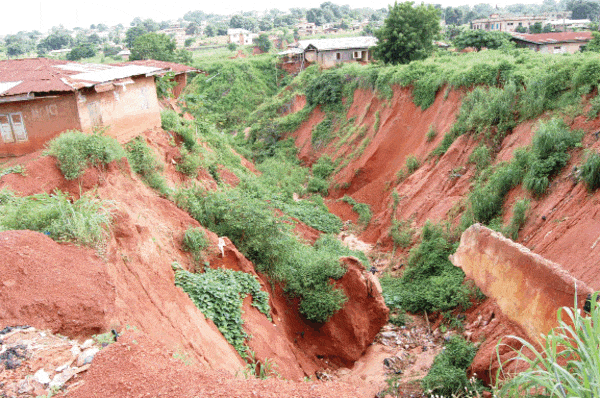
Erosion Anambra State
A erosion site in Idemili, Anambra State

Mr Walson Ibarakumo, the Enugu Regional Coordinator of the agency, expressed the sentiments in an interview with the News agency of Nigeria (NAN) in Awka, the Anambra State capital, on Thursday, August 23, 2018.

Ibarakumo said among other emergency issues such as flooding and fire, erosion ranked topmost in the threat facing the people of the southeast and their livelihood.

He said Abia, Anambra, Enugu and Imo states are seriously affected by erosion menace, adding that only Ebonyi had been enjoying relative stability in the area.

The coordinator said that NEMA was redirecting its attention to healthy environmental management and increasing awareness on erosion.

“Erosion is very serious; the impact is much here in the southeast. They are majorly hit.

“We have been to places where electric installations were destroyed and major infrastructure damaged.

“In our next stakeholders’ meeting, we are going to focus on erosion; if I may classify southeast, erosion is number one ahead of flooding and fire because of the impact.

“Though I have not seen much of it in Ebonyi, all other states in the region are under serious threat of erosion or the other.

“That is why we are moving attention to erosion and better management of the environment,” he said.

Ibarakumo said though flooding has not been massive this year, the chances are not entirely over.

He said that 20 communities in five council areas in Anambra were badly affected by rain-induced flooding between June and August.

He listed them as: Anambra East, Anambra West, Anyamelum, Awka North and Onitsha South.

He said that on-the-spot- assessment in theses council areas showed that many people were temporarily displaced, and large expanse of farmlands and machinery destroyed.

He said the displaced families had gone back to their homes but added that the camps for IDPs were still being kept ready because the peak of flooding was being anticipated in September.

“The flooding that came was as a result of the heavy rains, but after about three days the affected people returned to their houses.

“Because of the forecast we are looking forward to taking them to IDP camps which we have created. The outlook is still cloudy going by the forecast.

“We expect flooding in September, so the danger is not entirely averted because September is when river flooding is expected to be at its peak.’’

He said that many livelihoods were  also affected, especially, farms and farming equipment.

“We are working on their resettlement, I am hopeful that very soon assistance will come their way based on the impact of damage,” he said.

By Chimezie Anaso