Some bee keepers and farmers have said that beekeeping and pollination activities could improve agricultural yields by 90 per cent and contribute to food security in Nigeria.
Bee pollination
The farmers, who gave the advice at a media engagement with Api-Exposition Africa 2018 Organising Committee in Abuja on Saturday, September 1, 2018 said that beekeeping could also provide employment opportunities for youths.
The media engagement was to avail journalists the opportunity to create awareness on the need for bee stakeholders to participate in the upcoming “ApiExpo 2018” slated for Abuja in September.
Mrs Obianuju Okpo, the National President, Women in Beekeeping, said that practicing and promoting bee-keeping was necessary to ensure food security and achievement of the Sustainable Development Goals (SDGs) in Nigeria.
She said that the world beekeeping trade value, according to the Food and Agriculture Organisation (FAO), stood at $450 billion (N162 trillion) annually, while the pollination services were valued at $250 billion (N90 trillion).
Okpo said that Ethiopia had a market share of 40,000 tonnes worth $255.3 million in the world annual production of bee products especially honey.
She noted that the economic, health benefits of bees and its derivatives were enormous, adding that herbs produced across the world contained about 45 per cent of bee-products.
“Cashew can increase its yields by 212 per cent due to bee pollination,’’ she said.
Mr Oluwaseun Johnson, the Leader, Mobilisation Team, said that pollinators such as bees, birds and bats affect 35 per cent of worlds’ crops production.
He noted that bees pollinate apples, almonds, oranges, avocados, pumpkin and cucumber by 90 per cent, saying that fruits will be non-existent without the bees.
Dr Dooshima Kwange, the Chairman of the ApiExpo Organising Committee, said that Nigeria would host the 6th Edition of the ApiExpo Africa.
Kwange said that ApiExpo was a continental exposition organised by ApiTrade Africa to bring together every allied industry around the global beekeeping industry.
She expressed optimism that the exposition would help bring together bee stakeholders across the world with a view to promoting the potentials of the sub-sector.
“This meeting is to acquaint the media with information about apiculture sub-sector and its potentials for wealth creation, economic diversification and sustainable development, to reach bee farmers and stakeholders in the rural areas,’’ Kwange said.
Mrs Ngozi Ibe, an official of the Nigeria Export Promotion Council, noted that beekeeping would encourage ecological awareness and generate income without destroying the environmental habitat.
The News Agency of Nigeria (NAN) reports that ApiExpo bee-stakeholders from all African countries, Europe and Asia have indicated interest to participate in Nigeria’s Expo from Sept. 24 through Sept. 29.
The event is targeted at creating international trade opportunities and foreign markets access for the beekeeping industry and attract national and international investments into the industry.
The Federal Government says it has developed a N6.7 billion robust plan of action for the reconstruction, rehabilitation and resettlement of northeast devastated by Boko Haram activities.
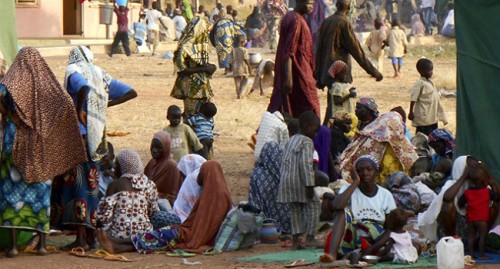
Women and children in a IDPs camp. The displacement was informed by the Boko Haram insurgency. Photo credit: channelstv.com
Nigeria’s Ambassador/Permanent Representative to the UN, Prof. Tijjani Bande, said this at a side event tagged “Strengthening the Humanitarian and Development Partnership in the Lake Chad Region” at the UN headquarters in New York.
The Nigerian envoy said that the comprehensive socio-economic plan, known as “Buhari Plan”, aims to advance the humanitarian and development nexus in the country.
Bande said Nigeria was spearheading the event based on the need to promote across board collaboration and cooperation among countries of the Lake Chad region, the donors and a whole range of humanitarian and development partners.
“At our national level, the $6.7 billion Buhari Plan of Action for the comprehensive Reconstruction, Rehabilitation and Resettlement of the North Eastern Nigeria and the Lake Chad represents an ambitious humanitarian cum development initiative on the part of a national government.
“It is to demonstrate its total and unshakable commitment to the socio-economic development of the entire area.
“It is unmistakably true that beyond the current challenges lie numerous prospects for harnessing the capacity of the people and natural endowment of the area to facilitate integrated regional socio-economic development.
“Therefore, the occasion of this side event and its subsequent follow up actions would present opportunity for enhancing the objectives of several initiatives on the Lake Chad such as the All Lake Chad Governors Forum which held its inaugural meeting in Maiduguri, Nigeria in May.
“Also, the Berlin Conference on the Lake Chad has been slated for the first week of September 2018 and would build substantially on the outcomes of the February 2017 Oslo Donors Conference on the Lake Chad.
“I would like to take this opportunity to call on all stakeholders to redouble efforts and commitment towards making the coming Berlin Conference on the Lake Chad of Sept. 3 to 4, 2018 a watershed.
“This is in our collective resolve to further mobilise resources and demonstrate implicit commitment to plans that will ensure moving quickly beyond the immediate humanitarian need to concrete sustainable developmental projects capable of substantially elevating the lives of the majority of people in the region.”
The Nigerian envoy stressed the need for collaboration and cooperation among countries of the Lake Chad, the donors as well as humanitarian and development partners.
According to him, collaboration between the humanitarian and development agencies has gained traction at the UN in recent times such that the involvement of national governments is needed to make it work.
He said the protracted humanitarian and development challenges in the Lake Chad region had place enormous responsibilities on all to remain engaged in discussion aimed at scaling up national, regional and global responses to the crisis.
These responses need to be bolstered by strengthened coordination at the UN level to ensure a more synergised delivery of assistance, the Nigerian envoy emphasised.
“Let me emphasise that the recharge of the Lake Chad Basin, capacity building, and restoration of livelihood, through facilitation of occupational opportunities, job creation, skill acquisition and others are central to finding lasting solution to the problem in the region.
“To realise all these would entail our collective commitment to a broad range of actions, facilitated by strong international cooperation and partnership, involving the UN agencies and development partners, like the World Bank and African Development Bank among others,” Bande said.
Magagi Louan, Minister of Humanitarian Action and Disaster Management of the Republic of Niger, said the political leadership from the region were working together to ensure comprehensive response to the crisis in the Lake Chad.
Louan said several mechanisms to address the problem included the institutionalisation of joint security architecture such as the Multinational Joint Task Force and promotion of collaborative social-economic projects under the auspices of the Lake Chad Basin Commission.
Also commenting, Alifei Moustapha, Permanent Representative of Chad to the UN, disclosed that Chadian Government had set up a new coordination mechanism across the ministries to identify local requirements and develop flexible coherent responses to address the Lake Chad problem.
On his part, Michel Monthe, the Permanent Representative of Cameroon to the UN, stated that his country would finance resilience and socio-economic projects and called for response to humanitarian needs while simultaneously reducing risk and vulnerability.
The event, sponsored by Nigeria, Cameroon, Niger, Chad, UN Development Programme and UN Office for the Coordination of Humanitarian Affairs, also featured presentations by UN Humanitarian Coordinators for the four countries.
Organised by the Stockholm International Water Institute (SIWI), the World Water Week, believed to be the world’s leading annual water event, attracted over 3,600 participants from 133 countries who attended nearly 300 sessions. Known for its diverse participation from different sectors and countries, participants under 35 were more vocal than ever this year.
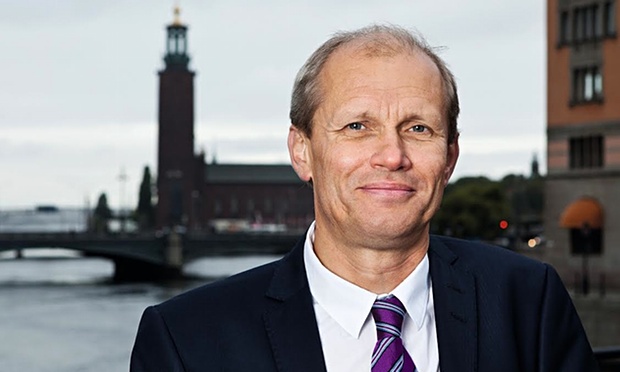
The importance of this was underlined by SIWI’s Executive Director Torgny Holmgren. “We are on the right track!” he said, adding: “There are many great things going on.”
Antonella Vagliente from Young Water Solutions stressed how young people from indigenous backgrounds are turning traditional knowledge into new businesses: “They have adapted their lifestyles and their communities to nature and we have a lot to learn from that,” she said.
This year’s theme “Water, ecosystems and human development”, focused on nature-based solutions and how they can be combined with conventional practices. The message was clear – a combination of green and grey approaches is the only way forward.
“Our take-away is that nature-based solutions do work,” commented Andrea Erickson of The Nature Conservancy, after experiencing showcases from around the world.
Viktoria Granström, Water Initiative Leader at IKEA Industry, described how she, after starting her job in 2008, looked for good examples of corporate water strategies: “I thought that maybe some other industry group has done the same. Unfortunately, I did not find any group water strategy including all types of water.”
She urged companies to take action on water: “Set your own rules for what is accepted by you! And many of these solutions have very short payback time!”
During the Week, H.R.H. Crown Princess Victoria of Sweden presented the Stockholm Water Prize to Professors Bruce Rittmann, USA, and Mark van Loosdrecht, The Netherlands, and awarded the Stockholm Junior Water Prize to Caleb Liow Jia Le and Johnny Xiao Hong Yu, Singapore.
The 2019 World Water Week will be held 25-30 August on the theme “Water for society – including all”. It will move to a new venue: the multi-purpose, Tele2 Arena in central Stockholm.
The National Emergency Management Agency (NEMA) has called for stronger synergy among disaster stakeholders for easy coordination of activities during emergencies.
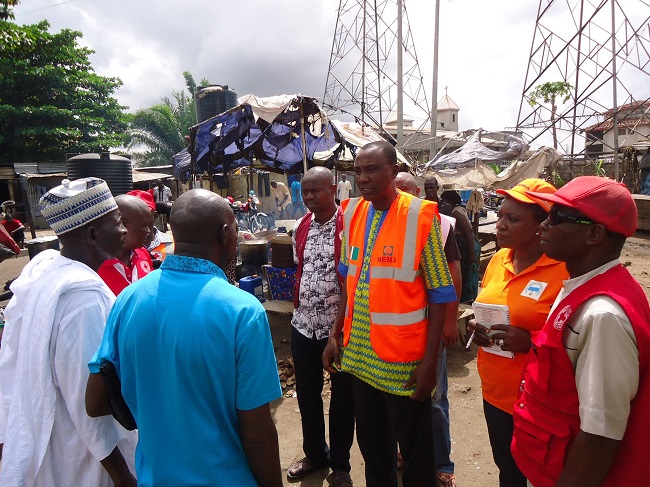
NEMA officials on duty
The NEMA Coordinator, Imo/Abia Operation Office, Mr Evans Ugoh, made the call in Owerri, Imo State, on Saturday, September 1, 2018 during a meeting of disaster management stakeholders.
The meeting was organised by NEMA in collaboration with Imo State Emergency Management Agency (ISEMA).
Ugoh said the meeting was aimed at ascertaining the level of readiness of other disaster management agencies for effective service delivery.
He said collaboration among the agencies would a long way to ensure effective disaster management.
In his contribution, the Commissioner of Police in Imo, Mr Dasuki Galadanchi, gave the assurance that the police would continue to collaborate with NEMA to ensure effective disaster management.
Galadanchi said that effective communication would be a stronger tool for the synergy.
He also said effective decentralisation of NEMA would improve its activities in local government areas.
“We must begin to carry activities to villages,’’ he said.
The Executive Director of ISEMA, Mrs Uche Ezeonyeasi, said that the agency was on the verge of opening annexes in local government areas.
The police, Federal Road Safety Corps, Nigerian Security and Civil Defence Corps and Fire Service were represented at the meeting.
Kenya plans to partner with the World Bank to increase supply of affordable houses, Charles Mwaura, the Principal Secretary, Ministry of Transport, Infrastructure, Housing and Urban Development, said on Friday, August 31, 2018.
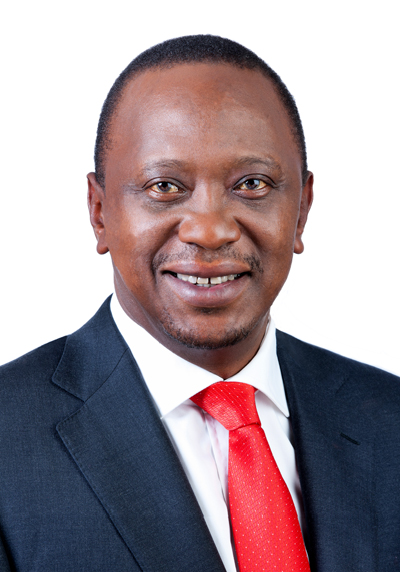
Uhuru Kenyatta, the President of Kenya
Mwaura said the Kenya government would provide $20 million while the World Bank will provide $160 million as seed capital for the Kenya Mortgage Refinance Company (KMRC).
“The KMRC will provide concessional loans to banks and other financial institutions to provide mortgages at low interest rates.
“This will help the government to facilitate the provision of 500,000 affordable and social housing units by end of 2022,” Mwaura said.
He said most poor households in urban centres were locked out of homeownership as they cannot afford monthly repayment of home loans.
“By providing subsided loans, we hope to increase the supply of affordable houses in the market,’’ Mwaura said.
He noted that there were currently about 25,000 mortgages in the country against a population estimated at 45 million people due to the high cost of finance.
He said that with the operationalisation of the KMRC, more people will be able to purchase their own homes.
He added that most of the houses constructed by the real estate sector were designed for middle- and high-income earners forcing the low-income segment to live in informal settlements.
Mwaura said the demand for housing units in urban areas had been estimated at 250,000 units against a supply of 50,000 housing units annually.
“This means that there is a deficit of about 200,000 housing units per year and a cumulative backlog of 1.85 million housing units,” he added.
“We would further seek to achieve levels of affordability where Kenyan households should be able to own a house by paying monthly installments equivalent to what they are currently paying as rent,” he observed.
Mwaura said the government had formulated a development framework which will be key in the implementation of affordable housing agenda.
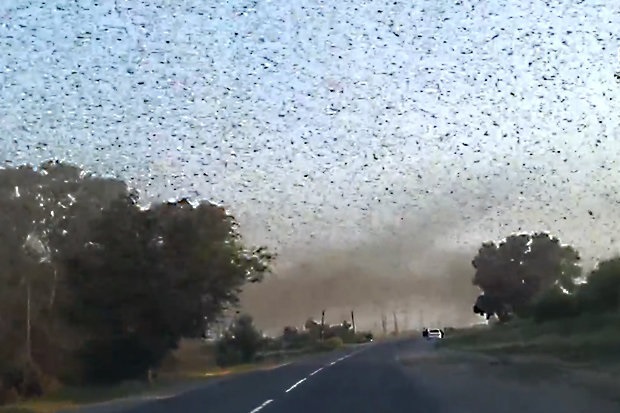
Wheat, maize, and rice yields, particularly in northern climates, are projected to fall as insects in temperate regions thrive in a warmer climate, a new research has shown.
Swarm of locusts in the sky above Russia. Photo credit: Daily Star
The study, which was published on Friday, August 31, 2018 in the journal Science, models increases in insect populations and their metabolic rates in a warmer world, and projects a 50 to 100 percent increase in pest-induced crop losses in European wheat, and 30 to 40 percent increases in north American maize, even if countries meet their existing commitments to reduce greenhouse gas emissions.
“In some temperate countries, insect pest damage to crops is projected to rise sharply as temperatures continue to climb, putting serious pressure on grain producers,” said Joshua Tewksbury, co-lead author of the research and a director of Future Earth, an international research network for global sustainability.
Insect pestilence already reduces net yields of wheat, maize and rice, three staple grains – these grains provide 42 percent of total calorie consumption worldwide. However, models assessing the agricultural effects of climate change rarely consider losses due to insects.
Future bugs, however, in a warmer climate are expected to be even hungrier and more numerous. Warmer temperatures have been shown to accelerate an individual insect’s metabolic rate, leading it to consume more food during its lifespan. And while pest populations may decline in some hotter tropical areas, they are expected to increase elsewhere as temperatures rise and additional ecosystems become favorable to the insects.
The researchers calculated the potential for crop damage through 2050 by combining robust climate projection data, crop yield statistics, insect metabolic rates and other demographic information.
The study finds that Europe’s bread basket could be among the hardest hit. Currently the most productive wheat producing region in the world, pest impacts on European wheat could create a total annual pest-induced yield loss that could top 16 million tons. Eleven European countries are predicted to see 75 percent or higher increases in insect-induced wheat losses, including the U.K., Denmark, Sweden and Ireland.
Insects could also create major impacts on maize and rice yields in North America and Asia, respectively. The U.S., the world largest maize producer, could see an almost 40 percent increase in insect-induced maize losses under current climate warming trajectories, a reduction of over 20 million tons annually. Meanwhile, one-third of the world’s rice production comes from China, where future insect-induced losses could top 27 million tons annually.
“On average, the impacts on insects adds up to about a 2.5 percent reduction in crop yield for every degree C increase in temperature – for context, this is about half the estimated direct impact of temperature change on crop yields, but in north temperate areas, the impact of increases insect damage will likely be greater than the direct impact of climate on crop yields,” said Tewksbury, who is also a research professor at CU Boulder.
The study recommends changes to global agricultural practices, including increased selection for heat- and pest-resistant crops and new crop rotation patterns to reduce vulnerability to insects. In some extreme cases, greater pesticide use may become necessary to secure regional food supplies, even at the cost of possible associated health and environmental damage.
Additional co-authors of the study include Michelle Tigchelaar, David Battisti and Raymond Huey of the University of Washington; Scott Merrill of the University of Vermont; and Rosamond Naylor of Stanford University.
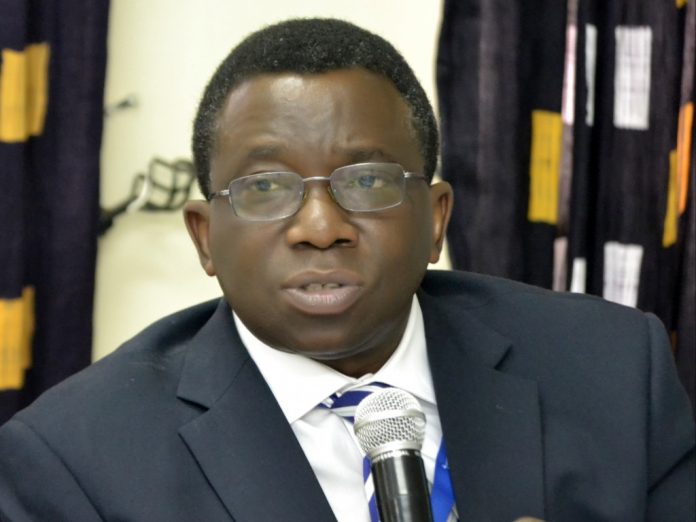
A National Summit on Public-Private Partnership for Tuberculosis (TB) Control in Nigeria will kick off on Monday, August 3, 2018 to discuss how to effectively engage the private sector in efforts to end the menace of Tuberculosis (TB), which kills 18 Nigerians every hour. Some 47 Nigerians are said to develop active TB, seven of which are children, every hour.
Minister of Health, Isaac Adewole
The summit, organised by the World Health Organisation (WHO), the Federal Ministry of Health, Lagos State Ministry of Health, Stop TB Partnership Nigeria and other stakeholders, holds at the Sheraton Hotel in Lagos from September 3 to and 4 to provide a platform for governments, private sector, corporate organisations, and private health provider umbrella bodies to discuss and agree on strategies for engagement in TB control in Lagos State.
The stakeholders will also discuss way forward as well as develop road map for private sector engagement in tuberculosis control with a view to finding the missing TB cases. It is expected that the private sector will support government efforts in TB Control in Lagos State and Nigeria at large.
TB, a disease that is preventable and curable, but the burden of the disease in Nigeria is further fuelled by the huge number of undetected TB cases which serves as pool of reservoir for the continuous transmission of the disease. Each undetected TB case has the potential of infecting 10-15 persons in a year, say the summit organisers.
The event will be declared open by the Lagos State Commissioner of Health, Dr. Jide Idris, while the Minister of Health, Professor Isaac Adewole, will deliver the keynote address. Participants expected at the meeting include Heads and Corporate Social Responsibility Units of various companies from different sectors including Oil and Gas, Banking, Telecommunications, Pharmaceutical companies, Foods and Beverages, Entertainment industries, as well as Associations of the Private Health Sector. International and Development Partners from different organisations will also be attending the event.
TB is considered a top infectious killer disease that continues to be a global threat with 11 million people developing the disease yearly. Nigeria is among the 10 countries that accounted for 64 percent of the global gap in “missing TB cases” that have not been reported hence very low TB case finding. Nigeria, India and Indonesia account for almost half the total gap, according to the WHO Global TB Report of 2017.
Nigeria is said to be one of the countries with the high burden of the disease globally. According to the 2017 Global TB Report, Nigeria is among the 14 high burden countries for TB, TB/HIV and MDR-TB. It ranked 7th among the 30 high TB burden countries and 2nd in Africa.
One of the major challenges of TB response in Nigeria is attributed to low TB case findings both in adult and children. This is attributed partly to low TB treatment coverage and poor knowledge about TB that influence the health seeking behaviour of people. Nigeria is said to contribute 8% of missing TB cases globally which is about 310,000 TB cases in 2016.
The Global Environment Facility (GEF) has started the process of removing the risks that may stand in the way of sustainable off-grid lighting solutions in Nigeria, with the country getting a $2.64 million grant.
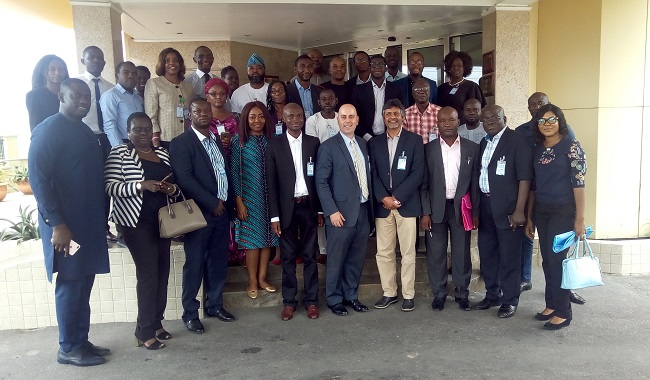
Participants at the GEF de-risking off-grid lighting forum in Lagos
In collaboration with the United Nations Development Programme (UNDP) and the Federal Ministry of Environment, GEF gathered stakeholders from the private and public sectors in Lagos on Thursday, August 30, to peruse the project document, which has a very short timeline.
A similar forum was held in Abuja earlier in the week, according to Faris Khader, Technical Advisor of UNDP, and Sanju Deenapanray, climate change specialist, who facilitated the Lagos event.
Khader, in his opening remarks, stressed the importance of preserving the environment.
He noted that GEF is the world’s largest public funder of projects and programmes that benefit the environment, and that Nigeria has been allotted a $2.64 million grant for clean energy.
GEF was established on the eve of the 1992 Rio Earth Summit to help tackle the planet’s most pressing environmental problems.
The $2.64 million grant is a form of support to the $10.6 million co-financing by government, multilateral institutions, the private sector and UNDP for the project, he added.
From the grant, policy de-risking gets $614,024 million while financial de-risking gets $1.5 million. Knowledge management and scale-up strategy gets $400,000.
It is noteworthy that about half of the budget is for technical assistance, as investment in financial de-risking corners a whopping $1.3 million, leaving $200,000 for investment.
The project seeks to promote private sector investment in sustainable off-grid lighting technologies by establishing a sound policy environment that facilitates the creation of a self-functioning and sustainable market in Nigeria.
While UNDP is the implementing agency for the project, the executing agencies include Energy Commission of Nigeria (ECN), Rural Electrification Agency (REA), Standards Organisation of Nigeria (SON), Ministry of Environment and Ministry of Energy.
Deenapanray admitted that the timeline from the inception workshop on August 30 to submission of the document to GEF secretariat in January “is tight” but noted that “the next two months is the window for us to do whatever we want.”
On the issue of co-financing, which he would rather describe as “parallel financing”, the climate change specialist said, “giving people things free is not a sustainable solution.”
He added that GEF deploys incremental reasoning, demanding beneficiaries of its grants to prove that something is already on the ground for it to support with about 16 per cent, hence the ratio is averagely 6:1.
Similarly, the letter of co-financing addresses collaboration, absence of duplication and gap closure.
The stakeholders’ engagement, Khader said, is continuous, as Mr. Etiosa Uyigue, the coordinator, GEF/UNDP Energy Efficiency Programme in Nigeria, is expected to hold the fort till the next meeting in October.
From the Abuja meeting, several new ideas emanated from the stakeholders, and issue from the Lagos meeting will be married with it and sent to GEF.
At the Lagos forum, the stakeholders were expected to critique the project, whether it is clear and achievable. They were also expected to look at the budget and the January 2019 target.
Some of the issues that stemmed therefrom include: kerosene subsidy not getting to the target beneficiaries because of poor political will to follow up policies, the competition between clean energy and cheaper rivals, and the lack of confidence in facilities because of rampant substandard goods.
There was also the suggestion of reproducing knowledge through tertiary institutions and research centres.
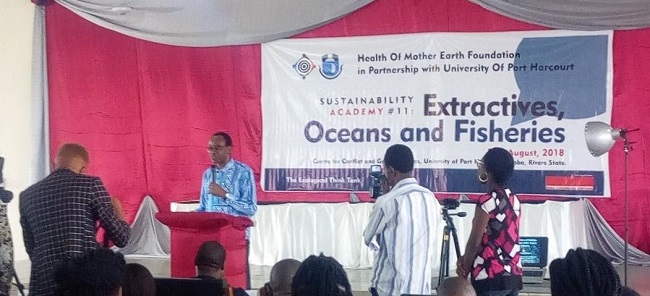
Nnimmo Bassey, Director of the ecological think tank, Health of Mother Earth Foundation (HOMEF), speaking at the Sustainability Academy (with the theme “Extractives, Oceans and Fisheries”) on Friday, August 31, 2018 at the Centre for Conflict and Gender Studies, University of Port Harcourt, Nigeria, laments the spate at which oceans are being polluted
Nnimmo Bassey making a presentation at the Sustainability Academy
It has become common knowledge that by 2050 there will be more plastic in the oceans than fish. That is quite alarming. More alarming, however, should be the fact that we are already consuming a lot of plastic through the fish that still swim in our waters. Besides health impacts, the economy of fishers and their dependents is receiving crushing blows from this trend as our oceans literally get turned into dumpsites.
The oceans present pictures of limitless resources begging to be dragged out into the markets and kitchens of this world. This sense of the ocean as an inexhaustible storehouse has empowered some unscrupulous persons to throw caution to the winds as they trawl the seas, oceans and lakes catching everything from the fingerlings to mature fish. Sadly, some of these rogue fishers do not respect national boundaries and behave no better than sea bandits.
Besides the stealing of sea resources, there is the alarming harvesting of fish on the West African coastline for the production of fish meal for use in industrial aquaculture production in Europe and Asia. This harvesting of fish for fish meal has raised the price of fish beyond the reach of the people who depend on them as a key source protein.
The oceans and our lakes have also become zones of interest for the extractive industries – miners and oil companies. Their activities present special dangers to the health of our creeks, rivers, lakes and oceans. The efforts to keep up profits has triggered a rush to mine the seabed in ways that should attract serious attention.
Dead Whales, Red Flags
Our coast lines are dotted with oil rigs, oil platforms and armadas of seismic vessels. Lakes Chad, Albert, Victoria, Kivu, Tanganyika, Malawi and Turkana have all attracted the claws of the oil and gas industry. These activities if not checked portend grave dangers for national security and, more urgently, for fishers and the health of our peoples.
The epidemic of dead whales washing onshore is just one indicator that all is not well. In recent months we have had reports of dead whales off the coasts of South Africa, Nigeria, Australia, Ireland, Germany and the United States of America, to mention just a few. In the case of the eight Cuvier’s beaked whales that washed up on the west coast of Ireland, scientists believe that they died of impacts of British military sonar. Of course, the British Navy denied any link between their maneuvers and the dead whales. However, naval sonars are known to have deadly impacts on whales.
Some navies use these low frequency active sonar (LFA) systems in scouring the sea bed for obstructions, mines and other elements. They use a number of underwater speakers to pulse low-frequency sounds at about 215 decibels for roughly 60 seconds a pop. The sounds travel over hundreds of kilometres and can interrupt the lives and activities of marine mammals, breaking up their communications, causing disorientation and other problems. These sonars are found in approximately 70 per cent of the world’s oceans.
The seismic exploratory activities of oil, gas and mining companies are carried out using techniques that are comparable to the naval sonars. These seismic surveys use sound energy (at decibels higher than levels that normally occur in the oceans) to map geological structures deep beneath the seabed.
Some apologists of the extractive sector continue to argue that having dead sea mammals wash up onshore is normal and is to be expected. What they do not say is that the carcasses that we see are only of those that washed to inhabited shorelines. How many dead whales and other large aquatic species die and are buried in the deep or are simply out of sight?
Threats to Our Common Heritage
In a recent letter to the International Seabed Authority (ISA), global citizens demanded that the seabed should be off limits to mining. They stated, “Moreover, a global public knowledge that deep sea extraction is under discussion is still extremely limited, as is public understanding of the implications of such a move. As deep-sea mining would impact the common heritage of (human)kind in ways that are not yet scientifically well-understood, time should be taken to initiate a wider public discussion and to carry out additional scientific research.”
The letter further stated, “The common heritage of (human)kind is a significant equity principle in international law. This principle was formally applied to the deep seabed through a 1970 UN resolution declaring that the ocean floor in international waters – called the ‘Area’ in international law – be employed for peaceful purposes.” It added that, “It is our view that this must not proceed without a more transparent and thorough global assessment of the ecological risks associated with deep-sea mining, as well as a more rigorous consideration of a benefit-sharing mechanism via which the common heritage principle will be upheld.”
Water Grab Through Pollution
Water pollution from oil spills and mine tailings are sources for great concern about the quality of our waters and the overall health of the marine ecosystem. The same can be said of factories and industrial installations along our coastlines, including oil refineries that use the ocean as their rubbish dump, pumping toxic loads into them and deeply compromising the health of the aquatic lives in the process.
Researchers believe that by 2035 some 40 per cent of the world population will live in areas having water scarcity. It is also said that industries account for a fifth of global water use compared with 5 per cent for humans while agriculture uses the rest. We believe that industry uses much more water than estimated because these estimates do not include the waters that industry have polluted and rendered useless for other purposes.
The creeks, rivers and swamps of the Niger delta, for example, have all be privatised by the oil companies through pollution. Our continental shelf and deep waters have been partitioned and are effectively owned by the oil companies because of the security zone (often up to 5 km radius) around their installations that are cordoned and closed to fishers, including areas with endemic fish species. So, our waters are also privatised through security cordons for unhindered extractive activities. This is a clearly objectionable privatising of the commons.
Fishers Unite!
The double jeopardy for our fishers is that with polluted coastlines, the option they have to secure good catches is to go into the deep offshore, but most of them do not have boats that can venture far off the coastlines. This is the tragic economic predicament of our fishers: disrupted by pollution, stopped by the military and blocked by economics. These will remain and self-reinforce until, and unless, fishers unite and declare that fish is more valuable than oil, coal or gold. The FishNet Alliance presents a strong platform to push for water bodies devoid of extractives.
It is time to challenge activities to pose danger to our marine resources. Citizens can win when we stand together and build webs of resistance. Resolute activists in New Zealand just won an inspiring case rejecting the mining of 50 million tonnes of ironsand from a 66 square kilometres area off the South Taranaki Bight that was to be done over a period of 35 years. More victories are possible.
Rocky Dawuni, a Grammy-nominated singer-songwriter, was on Thursday, August 30, 2018 designated as the Regional UN Goodwill Ambassador at an evening of celebrations at the end of the Global Landscapes Forum (GLF) African Landscape Restoration event at UN Environment headquarters, Nairobi, Kenya.
Rocky Dawuni
A celebrated global performer with a decade-long career, Rocky is an avid humanitarian and environmentalist, lending his voice to amplify issues of poverty, environmental degradation, water and sanitation issues and women’s rights.
“There is so much positive energy in Africa and many opportunities to protect and restore the environment across the continent,” Dawuni said. “And music is a powerful force that brings people together and inspires action. I want to work with communities and help them share their successes and encourage them to keep moving forward to make the future brighter for generations to come.”
As a Regional UN Goodwill Ambassador, Rocky is uniquely positioned to generate considerable support and publicity amongst his audience for UN Environment’s messages and goals through engaging, organizing, and leading activities specifically targeted to his audience.
“Dawuni’s eloquence, cultural diplomacy and successful melding of music and activism have led him to become a passionate spokesperson for various global causes,” said Erik Solheim, UN Environment Executive Director. “We are delighted to share the stage with another Goodwill Ambassador, Suzanna Awiyo, who, like Rocky, is a passionate humanitarian and environmentalist,” he added.
Rocky’s infectious grooves and dance-inducing anthems have consistently excited fans across the globe. A galvanising performer, Dawuni has shared the stage with Stevie Wonder, Peter Gabriel, Bono, Jason Mraz, Janelle Monae and John Legend, among many others. Named one of Africa’s Top 10 global stars by CNN, he has showcased his talent at prestigious venues such as The Kennedy Center in Washington, D.C. and The Hollywood Bowl in Los Angeles.
United Nations Goodwill ambassadors volunteer their time, talent and passion to raise awareness of United Nations efforts to improve the lives of billions of people everywhere. Rocky Dawuni joins an illustrious line-up of UN Environment Goodwill Ambassadors including Don Cheadle, Gisele Bundchen and Ellie Goulding.
GLF Nairobi 2018 bought together almost 1,000 policymakers, practitioners, scientists and others to highlight successful approaches to landscape restoration in Africa. Community engagement and partnerships emerged as key elements in promoting more sustainable landscapes across the continent. The event was webcast globally with thousands participating in the digital edition and on social media.
To help support landscape restoration in Africa, Dawuni also announced a crowdfunding initiative by the Global Landscape Forum to support communities whose efforts to repair degraded mangroves, farms and other land were highlighted in the Voices of the Landscape series during the conference.