Home Blog Page 1817

Clean Development Mechanism passes new milestone

0

The Clean Development Mechanism (CDM), which has incentivised billions of dollars’ worth of investment in climate action and has registered thousands of projects throughout the developing world, has passed another milestone.
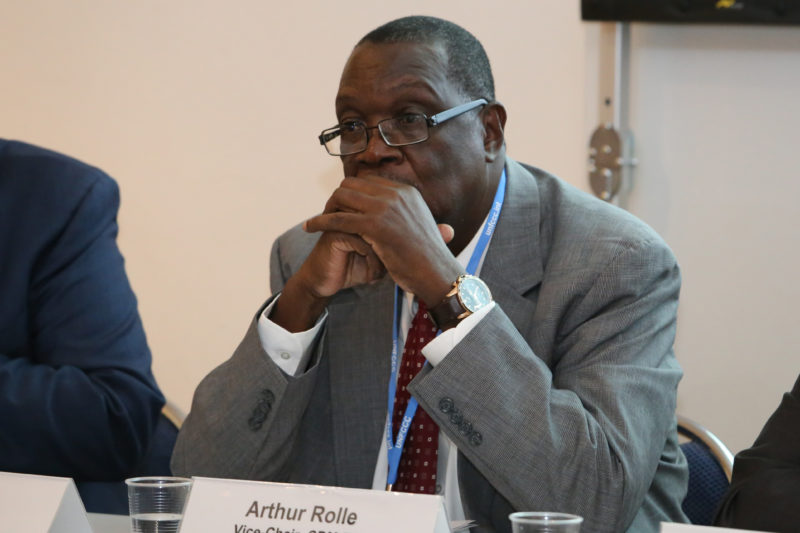
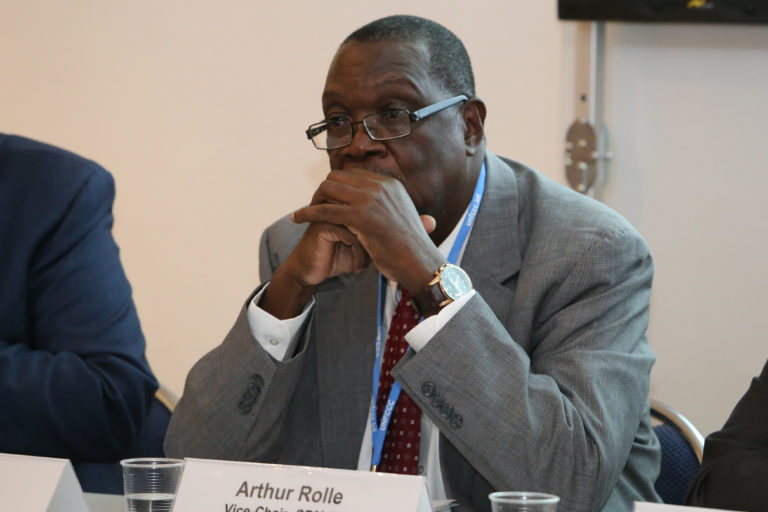
Arthur Rolle
Arthur Rolle, Chair of the CDM Executive Board

As global negotiators were arriving in Bangkok for an important round of talks, the CDM Executive Board was wrapping up its 100th meeting, five days considering technical and oversight matters related to rewarding projects for emission reductions. At the close of the meeting, the Board took time to reflect on the achievements of the CDM since its inception two decades ago as a tool of the Kyoto Protocol.

“The CDM is harnessing the entrepreneurial power of markets and the private sector to meet goals on sustainable development and climate change,” said CDM Executive Board Chair, Arthur Rolle. “Today, the CDM toolbox is an unparalleled resource, accessible to all, and considered in the design of new regional and domestic market-based approaches and mitigation actions around the world.”

CDM projects earn a saleable certified emission reduction (CER) credit for each tonne of greenhouse gas they reduce or avoid, measured in carbon dioxide equivalents. The price paid for CERs has been a magnet for project developers looking to harness wind power, distribute clean cookstoves, or pursue a wide range of other projects. Before a project can be considered for registration, the host country must attest to its potential contribution to sustainable development.

“Work under the CDM shows that actions to mitigate climate change bring many co-benefits in human health, green jobs, poverty reduction and other aspects of development,” said Patricia Espinosa, Executive Secretary of UN Climate Change, in congratulating the Board. “As we look towards establishing a new sustainable development mechanism under Article 6 of the Paris Agreement, we should bear these successes in mind.”

The CDM gives countries and companies with an emission reduction commitment stemming from the Kyoto Protocol some flexibility in how they meet their commitments, allowing them to use CERs to cover a part. The European Union Emissions Trading System, for example, was the largest demand source for CERs in the Protocol’s first five-year commitment period, which ended in 2012.

The incentive provided by the CDM has led to registration of more than 8,100 climate projects and programmes in 111 developing countries, investment of $303 billion, and reduction or avoidance of two billion tonnes of carbon dioxide.

In Paris in 2015, countries agreed to limit average global temperature rise to 2 degrees Celsius compared to pre-industrial levels and aim for the safer target of 1.5 degrees, to avoid the worst effects of climate change.

In addition to launching a report on the achievements of the CDM, working on its annual report to Parties, considering matters related to emissions baseline and monitoring methodologies, plus other matters, the Board at its 100th meeting adopted a revised standard and procedure for the development, revision and update of standardised baselines. The revision clarifies the data requirements and streamlines the process.
Pictorials of National Tobacco Control Act unveiled

0

As part of efforts to sensitise Nigerians on the National Tobacco Control Act, the Federal Ministry of Health and the Environmental Rights Action/Friends of the Earth Nigeria (ERA/FoEN) have unveiled pictorial representations of provisions of the Act.

Tobacco ERA
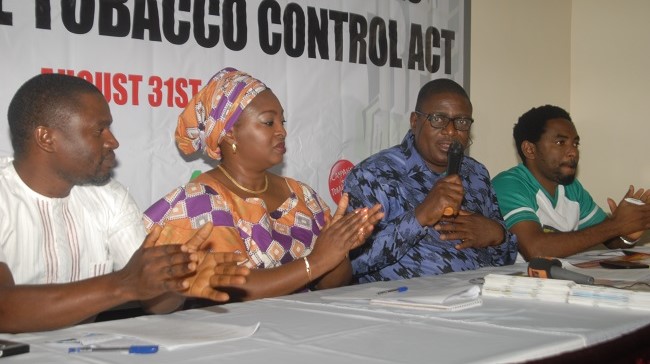
L-R: Dr Malau Toma of the Federal Ministry of Health; Hilda Ochefu, Subregional Coordinator of the Campaign for Tobacco-free Kids; Akinbode Oluwafemi, deptuty executive director, Environmental Rights Action/Friends of the Earth Nigeria (ERA/FoEN); and Oluseun Esan of the Nigeria Tobacco Control Alliance (NTCA)

The provisions include “Ban on smoking in public places, Ban on Sale of cigarette to minors, and Ban on Sale of Cigarettes in single sticks”. It also pictures the sanctions for defaulters.

At a press briefing held in Abuja, ERA/FoEN said that the information materials were created to deepen awareness on the nine provisions of the NTC Act that Health Minister, Professor Isaac Adewole, announced would be enforced without any regulations

The provisions are:

  • Prohibition of sale of tobacco products to and by anyone below 18;
  • Ban on sale of cigarettes in single sticks. Cigarettes must be sold in packs of 20 sticks only;
  • Smokeless tobacco shall be sold in a minimum of a pack of 30 grams;
  • Ban of sale or offer for sale or distribution of tobacco or tobacco products through mail, internet or other online devices;
  • Prohibition of interference of tobacco industry in public health and related issues;
  • Prohibition of smoking in anywhere on the premises of a child care facility; educational facility; and health care facility, among others;
  • Prohibition of tobacco advertising, promotion and sponsorship of any kind;
  • Compliance with specified standard for content as set out by Standards Organisation of Nigeria (SON).

The ERA/FoEN deputy executive director, Akinbode Oluwafemi, said that, as partners in progress with the Federal Ministry of Health, it identified the need to further deepen tobacco control messages through public awareness materials that answer the critical need for ordinary Nigerians to know, through visual images, the letters of the NTC Act.

“Ignorance of the law is no excuse. We believe that all Nigerians, including those who cannot read and write should be able to understand the law,” Oluwafemi said.

Representative of the Ministry of Health, Dr. Malau Toma, explained that the Ministry felt that the public awareness materials would reach all classes of Nigerians and that discussions were already on in concert with civil society groups to further produce the public awareness materials in the three major languages – Hausa, Yoruba and Igbo.

Malau said that the partnership between the ministry and civil society on tobacco control had been very productive and that security agencies were already primed to enforce the ban on smoking in public places and other provisions of the NTC Act,

Earlier, Hilda Ochefu, the sub-regional coordinator of the Campaign for Tobacco-Free Kids (CTFK), said that the unveiling of the public awareness messages was indicative of the fact that the tobacco control message in Nigeria had come to stay and would go to grassroots people who are critical to citizen enforcement of the Act.

In addition to the public awareness materials, ERA/FoEN also demanded for commencement of enforcement of the nine provisions of the NTC Act by relevant government agencies and states across the federation. It also asked for expedited action by members of the National Assembly to see the National Tobacco Control Regulations Bill passed so that enforcement of the other provisions of the NTC Act will commence without delay.

Enugu sensitises residents on use of plastics

0

The Enugu State Government says it has begun public sensitisation on ways to minimise the use of plastics to reduce environmental problems in the state.

Ifeanyi Ugwuanyi
Governor Ifeanyi Ugwuanyi of Enugu State

Mr Nnamdi Arum, the Head of Climate Change Department, Enugu Ministry of Environment, made this disclosure to the New Agency of Nigeria (NAN) in Enugu on Friday, August 31, 2018.

Arum said that plastics and cellophanes were non-degradable waste, stressing that they could cause problems in the environment as well as to agricultural produce.

According to him, the lifespan of plastic material is more than 300 years.

He added that plastic materials were not degradable as other wastes such as papers, cartons and leaves.

“Because plastics and other cellophanes like water sachets are generating problems in our environment and to our farmland, the ministry decided sensitise the people on the dangers associated with the use of plastics.

“As I speak, I have students, who are undergoing some programmes, they are gathering waste water sachets around their areas because no waste is a waste and waste sachets can be turned to useful items,” he said.

“Plastics themselves are chemical components, they are fossil because petroleum product is part of the component used in producing them,” he said.

He explained that a practicable way to reduce the use of plastics in the state is for the public to use plastic for storing drinking water, cooking oil among others instead of using them anyhow.

Arum noted, that by using a particular plastic for a long period of time, the number of plastics would reduce in the society.

He advised the public to always keep their waste sachets and bring them to the ministry instead of allowing them to liter the environment or farmlands.

By Maureen Ojinaka

Africa records high health improvement in new WHO report

0

A new report by the World Health Organisation (WHO) Regional Office for Africa has shown a high improvement in health in the region.

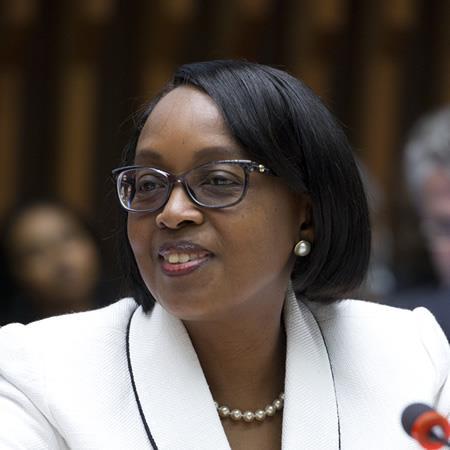
Dr. Matshidiso Moeti
Dr. Matshidiso Moeti, the World Health Organisation (WHO) Regional Director for Africa. Photo credit: pbs.twimg.com

WHO, at the study, launched during the 68th session of the WHO Regional Committee in Dakar, provided a snapshot of the state of health in the African region.

The report said life expectancy across Africa had improved significantly, but national health systems must be improved to ensure that services get to the people who need them most.

Emerging data shows a continued improvement, with the continent seeing the biggest jump in healthy life expectancy – time spent in full health – anywhere in the world.

The life expectancy jumped from 50.9 years in 2012, to 53.8 years in 2015, according to the report.

Deaths resulting from the 10 biggest health risks in Africa – such as lower respiratory infections, HIV and diarrhoeal diseases – dropped by half between 2000 and 2015, partly as a result of specialised health programmes.

Speaking at the launch of the report, Dr Matshidiso Moeti, WHO’s Regional Director for Africa, said: “I’m proud that Africans are now living longer and healthier lives.

“Nearly three years of extra health is a gift that makes us all proud. Of course, we hope that these gains will continue and the region will reach global standards”.

At the same time, the report warned that this achievement could only be sustained and expanded if health services are significantly improved.

It stated that the performance of health systems in the region – measured by access to services, quality of care, community demand for services and resilience to outbreaks – was low.

Chronic diseases like heart disease and cancer need to be tackled, with a person aged 30 to 70 in the region having a one in five chance of dying from a non-communicable disease.

Two critical age groups – adolescents and the elderly – are being under-served, with surveys indicating a complete lack of elder care in a third of African countries.

Moeti said: “Health services must keep up with the evolving health trends in the region. In the past we focused on specific diseases as these were causing a disproportionately high number of deaths.

“We have been highly successful at stopping these threats, and people’s health is now being challenged by a broad range of conditions. We need to develop a new and more holistic approach to health.”

This approach involves increasing spending on health, but also targeting funds in more effective ways, according to the report.

The report suggested that health systems that perform well invest up to 40 per cent of their budgets on their workforce, and a third on infrastructure.

WHO said, however, that the report, which made specific recommendations for each of the countries of the region, and identifies areas where nations are demonstrating good practice, was not a scorecard.

Algeria demonstrated good practice with its good coverage of available health service, Kenya has a good range of available essential services, and Mauritius has good access to services.

By improving performance, the countries have a better chance of meeting their commitment to achieve health-related targets set by the Sustainable Development Goals, the report stated.

By Prudence Arobani

Nigeria vows to explore all avenues to benefit from Green Climate Fund

0

The Federal Government said on Thursday, August 30, 2018 that it would explore all possible avenues to ensure that Nigeria benefitted immensely from the Green Climate Fund (GCF).

Ibrahim Usman Jibril
Environment Minister of State, Ibrahim Usman Jibril

Minister of State for Environment, Mallam Ibrahim Jibril, stated this at a Gala Dinner and Certificates Award Night organised by the African Union’s (AU) Scientific, Technical and Research Commission in Abuja, to mark the end of a three-day Capacity Building Consultative Workshop for AU member states.

The consultative workshop was an avenue to train representatives of African states on how to access the GCF.

According to the minister, accessing the fund would go a long way towards addressing climate change-related issues in the country.

He said that towards that end, the environment ministry was working closely with the Federal Ministry of Power, Works and Housing to generate renewable energy as a way of mitigating the effect of climate change.

He added that it was in a bid to address climate-related issues that Nigeria became the first African country to raise the Sovereign Green Bond in line with the objectives of the Paris Agreement of 2015 to which it is a signatory.

The minister stated that the government would encourage the 36 states of the federation to put beautiful proposals that would stand the test of time, to benefit from the GCF.

He then urged participants and other stakeholders that participated in the consultative workshop to return to their various countries and apply the knowledge and lessons learned during the interactive sessions to help grow the various agencies, parastatals, organisations and academic institutions in their countries to grow.

Highpoint of the evening was the award of certificates of participation to all the key stakeholders, participants and resource persons that were at the workshop.

No fewer than 20 African nations were represented at the workshop.

Eko Atlantic City hosts Top 50 Brands

0

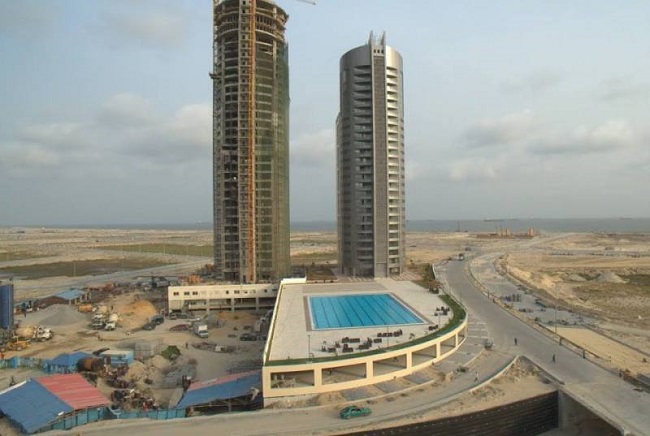
Eko Atlantic City, which is being constructed adjacent Victoria Island in Lagos, has played host to the top 50 brands in Nigeria 2018 as the companies were hosted at an unveiling ceremony at the Eko Atlantic City Sales Office.

Eko Atlantic City
Eko Atlantic City

Host, Mr. Ronald Chagoury Jr., Vice Chairman, South Energyx Nigeria Limited, said, “We are happy to be hosting the top 50 brands in Nigeria at Eko Atlantic City. The City is the first of its kind in sub-Saharan Africa, providing modern and efficient facilities to Africans and the global community for business, entertainment and leisure activities.

“Eko Atlantic City is being built to become the Financial Hub of Africa and as such we are keen to showcase the business, social, recreational and tourist potential of Eko Atlantic to these top brands.”

On his part, Chief Executive Officer, Top 50 Brands Nigeria, Taiwo Oluboyede, said, “We are glad to have Eko Atlantic host this year’s event, not only because Eko Atlantic is a top Nigerian brand but because it exemplifies the kind of innovative, resilient and forward-thinking brand that this initiative promotes. We were also confident that the brands will have a good experience touring the beauty that is Eko Atlantic City.”

Top 50 Brands Nigeria is a concept that recognises brands that have weathered economic storms to continue living up to their brand promise to consumers. This year’s qualifying brands were determined through a tool known as “Brand Strength Measurement” which evaluates a brand’s assets from the consumer point of view, the brand’s strength, weakness and its ability to deliver on promise to customers.

JOB ADVERTISEMENT: Finance and Grants Manager – Nigeria

0

Job Location: Abuja

Women Environmental Programme (WEP), a Non-Governmental Organisation (NGO), working extensively on governance, environment, Climate Change, peace and security in Nigeria and African Region. Women Environmental Programme is recruiting for a Finance and Grants Manager to lead her Finance Team in Nigeria. The Finance and Grants Manager will be based in Abuja, Nigeria. The Finance and Grants Manager will report to the Executive Director and will be responsible for overall financial management of the organization and her field offices.  The candidate must have high-level finance, accounting and/or auditing experience on large budget funded programs.  The candidate must also be familiar with Nigeria and its government and must be willing to have strong demonstrated mastery of WEP policies and procedures.  Background check is required.

RESPONSIBILITIES INCLUDE:

Manage the accounting function. In particular:

  • Ensure accounting transactions are recorded in a timely and accurate manner
  • Ensure that the documentation, coding and approval of transactions complies with organisational policies and donor requirements
  • Ensure in particular that transactions carried out by partner organisations are properly recorded by WEP and duly documented
  • Organise periodic closings (quarterly at a minimum)
  • Ensure account balances are analysed and reconciled and take or recommend action as needed
  • Ensure the safety of accounting data and the proper archiving of accounting documents


Coordinate Budget-related processes

  • Coordinate the preparation of project budgets ensuring they properly fund proposed activities and the required management and support activities
  • Assist in the negotiation of project budget with donors
  • Coordinate the preparation of WEP’s annual budget and of the necessary updates
  • Produce regular budget implementation report and recommend corrective action


Manage payroll

  • Coordinate the timely preparation of payroll
  • Ensure that time reports are prepared in accordance with WEP’s policy
  • Ensure that statutory deductions and contributions are made and paid in a timely manner

Oversee Treasury

  • Ensure the organisation has sufficient cash balances to operate as per plan
  • Request cash from donors as per grant agreement
  • Manage banking to ensure that cash assets are safeguarded while receiving cost-effective services


Coordinate Financial reporting and financial audits

  • Ensure timely and accurate reporting to Management, the Board, donors and other stakeholders (e.g. tax authorities)
  • Ensure timely and accurate reporting to donors
  • Coordinate with statutory and other auditors


Ensure accounting policies and systems are sound, relevant and up to date

  • Develop or improve accounting policies and procedures
  • Continuously analyse financial risks and take or recommend actions as needed
  • Contribute to the development or improvement of organisational, programme or administrative policies as far as they relate to financial management
  • Ensure the financial system responds to the needs of the organisation and is well-maintained


Carry out other tasks related to financial management

  • Review proposed donor contracts to minimise financial and compliance risks
  • Provide support and training as necessary to ensure that project managers and other stakeholders understand their role and duties related to financial management
  • Coordinate insurance arrangements for the organisation
  • Coordinate regular asset counts and reconcile asset register with accounting records
  • Take all actions necessary to minimise financial risks to the organisation
  • Experience with managing successful grants programs for local organizations and governments
  • Knowledge of donor planning and reporting systems
  • Must be a team player and ready to travel from time to time


QUALIFICATIONS

Preferred Candidate: Female

  1. A holder of Bachelors Degree in Accounting and Masters Degree in Accounting and Finance
  2. A Chartered Accountant (ACA, ACCA, CIMA)
  • Have a minimum of 10 years’ experience post qualification as a Chartered Accountant. At least 5 years in a

Non – Governmental Organisation, private Sector in accounting and or experience with International accounting systems will be an added advantage

  1. Experienced in accounting software like Quick Books, Peachtree etc.
  2. A sufficiently fast learner to be able to do a good job

Interested and qualified candidates who have met all the above criteria should send their detailed Curriculum Vitae and suitability statement to recruitment@wepnigeria.net not later than two weeks from the date of this publication (latest by 15th September 2018). No hard copy of the application will be received. Selected applicants will undergo written and oral test on a date selected by the interview Committee. The qualified candidate should be ready to resume as soon as possible.


Women Environmental Programme (WEP) is an equal opportunity employer

What Nigeria will achieve from national Talanoa Dialogue

0

The Department of Climate Change (DCC) in the Federal Ministry of Environment has unveiled details of Nigeria’s version of the Talanoa Dialogue, a process designed to help countries implement and enhance their Nationally Determined Contributions (NDCs) by 2020.

Peter Tarfa
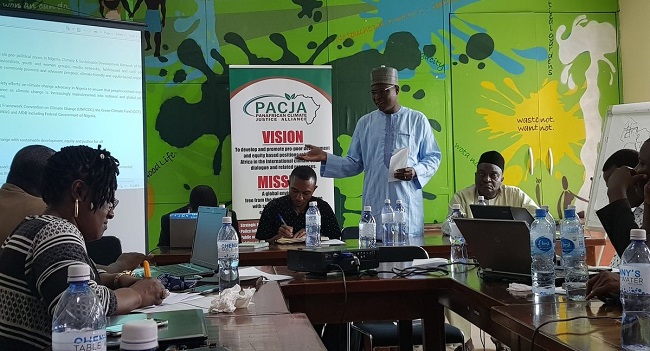
Dr Peter Tarfa speaking during the National Consultative Workshop in Abuja

One of the key outcomes of the UN Climate Change Conference COP23 in Bonn in November 2017, the Dialogue will run throughout 2018.

Director, Department of Climate Change (DCC), Dr Peter Tarfa, speaking on Tuesday, August 28, 2018 in Abuja during the National Consultative Workshop on Nationally Determined Contributions and Talanoa Dialogue organised by the Pan-African Climate Justice Alliance (PACJA) and Climate and Sustainable Development Network (CSDevNet), disclosed that the Dialogue would hold in two stages.

His words: “First is by way of on online survey that will be in the public domain and aimed at harvesting input from all stakeholders. The second is by way of stakeholders’ discussions, wherein we are targeting representations. We will come together after analysing the survey result around September ending or early October this year.

“During the dialogue, we want to know: Where are we on the issues? Where do you wish us to be in 2030, for example? How do we intend to achieve that?”

According to him, the DCC intends to harvest three things from the National Talanoa Dialogue.

“First is Presidential Statement to be presented at the COP24; secondly, to create a Roadmap for National Action for Climate Change; while the the third is to harvest national input that can be distributed into group discussions to guide the operation and implementation of the Nationally Determined Contribution at local levels,” he said.

Dr. Tarfa stressed the imperious role of Civil Society Organisations (CSOs) to assist the Federal Government of Nigeria through the Federal Ministry of Environment to achieve the aforementioned. The NDCs seek to reduce greenhouse gas emission by 20% unconditionally and 45% with international support across the key priority sectors like Energy, Oil & Gas, Agriculture & Land use, Power, and Transport.

Since 1992, when Nigeria became a Party to the United Nations Framework Convention on Climate (UNFCCC), the government through the Federal Ministry of Environment saw the need to set up a Department of Climate Change which has continued to address climate change in Nigeria at all levels.

Over the years, the country has continually joined the global community to adopt and identify with various agreements, parties, treaties, and dialogues focused on addressing the many consequences and adverse impacts of climate change in Nigeria. The most recent is the Paris Agreement (PA) which Nigeria ratified in March 2017, which was approved by the UNFCCC on the May 16, 2017 and entered into force on June 15, 2017.

In attendance at the workshop was the PACJA Secretary-General, Mithika Mwenda from Kenya; Priscila Achakpa, Executive Director of Women Environmental Programme (WEP); Huzi Mshelia of Mshelia and Co.; Atayi Babs, National Coordinator of CSDevNet; and Michael Simire, environmentalist and publisher of EnviroNews, among other prominent civil society operatives and stakeholders across the country.

By ‘Seyifunmi Adebote, Abuja

The climate fight’s next turning point

0

Scientists agree that global carbon dioxide emissions must reach a turning point in 2020 if we are to achieve carbon neutrality (emissions low enough to be safely absorbed by forests, soils, and other natural systems) by mid-century. But while nearly 50 countries have or may have reached their emissions peaks, progress must be accelerated. In this piece posted on Tuesday, August 28, 2018 on Project Syndicate, UN Climate Change Executive Secretary Patricia Espinosa and Anne Hidalgo, the Mayor of Paris and Chair of C40 Cities, describe the forthcoming Global Climate Action Summit in San Francisco as a golden opportunity to make progress in the effort to combat global warming

Espinosa - Hildago
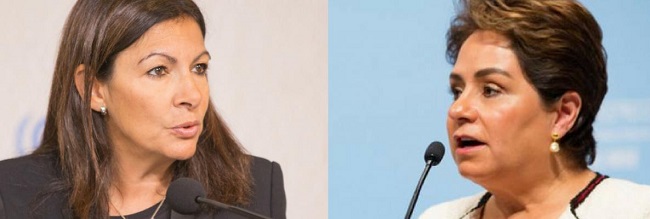
Patricia Espinosa and Anne Hidalgo. Photo credit: UNFCCC

Next month, the Global Climate Action Summit – one of the largest international gatherings on climate change the world has seen – will be held in San Francisco. The event, whose theme is “Take Ambition to the Next Level,” aims to serve as a launchpad for accelerated action that will enable the world to meet the goals set by the 2015 Paris climate agreement. It is a golden opportunity to make progress in the effort to combat global warming, but it can be seized only with the involvement of all stakeholders.

With the Paris climate agreement, the international community agreed to limit the rise in average global temperature to 2° Celsius – and ideally 1.5°C – above pre-industrial levels. To that end, national governments were tasked with developing their own climate-action plans, called Nationally Determined Contributions (NDCs).

But national governments cannot do it alone. Everyone – including those at all levels of government, as well as business leaders, investors, and civil society – must contribute. This calls for a new form of inclusive multilateralism – one that can also be applied to achieving the Sustainable Development Goals, which complement the Paris agreement’s commitments.

It is a tall order, but there is plenty of reason for optimism. There is unprecedented global momentum to build a low-carbon, climate-secure future, characterized by a dynamic green economy, a thriving society, and a healthy environment.

Globally, renewable power accounted for 70% of net additions to power-generating capacity in 2017, according to the Renewables 2018 Global Status Report. Moreover, as part of the Under2 Coalition, over 200 states, regions, and local authorities have committed to cut their greenhouse-gas emissions by at least 80% below 1990 levels by 2050.

Urban centers are also proving their capacity for climate innovation and leadership. New York City has mandated the retrofitting of 14,500 of the city’s most polluting buildings. Shenzhen has become the first city in the world with a fully electric bus fleet. Curitiba, Brazil, has introduced a new model of urban food production. And Oslo has created a climate budget to guide financial decision-making.

At the business level, more than 700 companies with a total market capitalization of over $16 trillion have made far-reaching climate commitments, according to the We Mean Business Coalition. And 289 investors, holding nearly $30 trillion in assets, have signed on to Climate 100+, a five-year initiative to engage with the world’s largest corporate greenhouse-gas emitters to improve governance on climate change, curb emissions, and strengthen climate-related financial disclosures. As a result, global green bond issuance could reach $300 billion this year.

Yet we are far from being in the clear. Scientists agree that global carbon dioxide emissions must reach a turning point in 2020 if we are to achieve carbon neutrality (with emissions low enough to be safely absorbed by forests, soils, and other natural systems) by mid-century. So far, nearly 50 countries have or may have reached their emissions peaks, and more may soon join their ranks. This is progress, but it is not enough.

In fact, greenhouse gases in the atmosphere are still accumulating at a rate that will soon take us well above the 1.5°C threshold, beyond which some of the worst effects of climate change cannot be staved off. Extreme weather already is becoming more common, as exemplified by record-high temperatures worldwide this year. On current trends, average global temperatures could well rise by 3°C, imperiling vital natural systems like coral reefs, rainforests, and the polar regions.

All relevant stakeholders need to strengthen their climate commitments. To kick-start that process, the Global Climate Action Summit and its partners have issued a wide array of new challenges, including zero-waste goals in cities, a target of 500 companies adopting science-based targets, and initiatives to accelerate uptake of zero-emission vehicles.

Such efforts would not just protect our environment; they would also boost our economies. A recent report by the New Climate Economy suggests that, in transportation alone, a low-carbon transition would create 23 million jobs worldwide annually.

Perhaps more important, a show of climate-action ambition from leaders across sectors would likely inspire national governments to increase their own NDCs ahead of this December’s United Nations Climate Change Conference in Poland, where governments will finalize the implementation guidelines of the Paris agreement.

Acting alone can be difficult. Acting in concert can inspire and enable all participants to do more. And if we are to leave a healthy planet to future generations, more is what we need.

Water transportation to ease growing transport needs in Lagos

0

Governor of Lagos State, Akinwunmi Ambode, has said that water transportation remains the only visible option for the ever-growing local transportation demand in the state.

Fiki Express
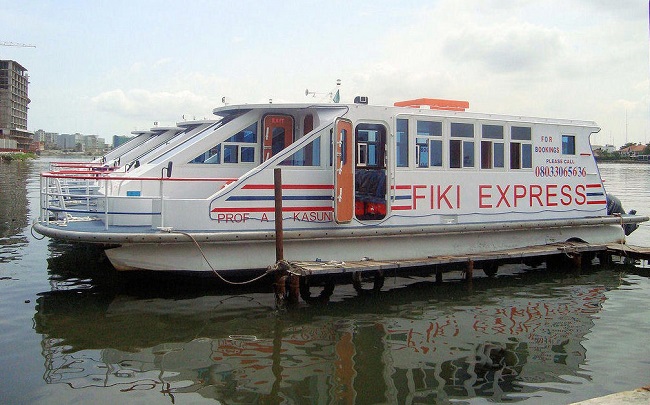
Fiki Express, one of the operators on the Lagos waterway

Ambode made the assertion on Thursday, August 30, 2018 at the inauguration of the Ferry/Lagos State Waterways Authority (LASWA) Head Office and Multi-Level Car Park AT Falomo-Ikoyi, Lagos.

Ambode, represented by Mr Kazeem Adeniji, the Attorney General of Lagos State, said the ferry terminal was a mileage into the policy of government to make movement of persons and goods less cumbersome.

The governor said the measure was also a symbol of the appreciation of the state government towards the overall development of water transport sector in the state.

“We are here today to inaugurate this Ultra-Modern Ferry terminal and the Multi-Storey Car Park.

“Both projects were conceived way back in 2011; it’s the result of the collaboration between the Lagos State Development & Property Corporation, the Lagos State Waterways Authority (LASWA) and the concessionaire, MTN Nigeria.

“The car park is a six-storey building over a land area of 31,454 square metres.

“It comprises 139 car park slots and 42 slots for the physically challenged users,’’ Ambode said.

According to him, the government remains committed to providing the entire residents of Lagos with quality, affordable water transport services, while ensuring the waterways were safe.

Ambode said that ferry operation had proven worldwide to be an effective and efficient tool in relieving road transport as had seen in advanced cities of the world.

“Water transport is an integral component of the development of Lagos multi-modal transport system.

“We have no doubt that our waterways will offer further solution for the ever-growing transport demand in the state,’’ he said.

The governor said it was for this reason the state government was massively investing in water transportation.

He said the development had witnessed the rehabilitation and construction of new jetties, free distribution of life jackets, clearing of debris, removal of wrecks and constant patrol of the waterways.

He added that the state had recently purchased two water hyacinth clearing machines with navigational equipment to tackle the challenges posed by water hyacinth and other such water threats.

He explained that there was an ongoing installation of safety signs with marker buoys for route demarcation along the five cowries creeks.

“The newly constructed ferry terminals at Ebute-Ojo, Badore in Ajah and Ipakodo Ikorodu have been given out in concession to competent investors.

“This step will ensure effective management while 10 ferry licenses have been issued to new operators in recent time.

“Our administration has completed all arrangements for the procurement of seven high capacity passenger ferries to complement the existing ones, while we also plan to assist commercial ferry operators in acquiring new standard boats.

“We have developed a comprehensive masterplan detailing our renewed focus for effective water transportation in Lagos State and this shall be made public soonest,” he said.

“This building we are unveiling today epitomises the importance of Public Private Partnership to governance.

“The PPP initiative complements government’s budget and reduces deficit in expenditures. It also allows government funds to be re-directed to other important socio-economic areas.

“We therefore, call on all stakeholders to take a cue from MTN Nigeria by investing in water transport, water tourism, sports and recreation as government is always ready to provide an enabling environment.

“Water transport opportunities in Lagos remain largely untapped, having less than one per cent of overall traffic of the state, therefore more needs to be done, especially by the private sector to maximise maritime potential of Lagos State.

“Our government shall continue to protect the interest of those navigating and using the waterways with increased compliance checking and regular patrol while enhancing the bio-diversity, heritage and landscape values of the waterways.’’

Mr Oluwadamilare Emmanuel, the LASWA Managing Director, expressed delight for the actualisation of the ultra-modern Ferry Terminal project.

Emmanuel said it was a watershed in the history of transportation in the state, adding that the state was beginning to show flashes of converting the huge water resource into revenue generating machine.

“Our profound gratitude goes to His Excellency, the Executive Governor of Lagos State, Mr Akinwunmi Ambode, for his unparalleled commitment toward upgrading, re-constructing and equipping all waterways infrastructure across the state.

“MTN Nigeria has actually created an acceptable standard in the water transport sector of Lagos state and indeed set a benchmark in Corporate Social Responsibility (CSR), to build such an imposing edifice for public use’’, he said.

According to him, the terminal is expected to attract new investors, boost ridership and reduce vehicular traffic on Lagos roads.

He also said the terminal would complement the efforts of the government in promoting the inter-modal transport system, adding that it would increase the efficiency of government intervention in the sector.

“LASWA remains committed to delivering, an enabling environment to all waterways users.

“The agency is working effectively to deepen and broaden the capacity in this sector to surpass all expectations in this regard.

“LASWA has also put in place various structures and processes to enable them achieve their objectives.

“We therefore, solicit a conscious cooperation of all waterways users as we ask for strict compliance with all existing rules and regulations of water transportation,’’ he said.

Mr Ferdi Moolman, the MTN Chief Operating Officer, said MTN was working in conjunction with the state government for the best way to modernise water transport in the state.

“MTN and Lagos State are working to improve quality of life of Lagos residents.

“We enjoin all other private sector to join in similar gesture because Lagos deserves it, and this is just the beginning of great thing to come,’’ he said.

By Kazeem Akande