Home Blog Page 1815

West Africa moves to tackle vector-borne diseases

0

Bothered by the threat posed by vector-borne diseases to the socio-economic development of the region, West African countries have adopted a campaign by which to address the worrisome trend.

Aedes aegypti
The mosquito, a malaria vector

Vector-borne diseases, especially malaria, have continued to pose a health threat to the West African region, which is home to about 365 million people. High morbidity from malaria is said to be contributing to loss of productivity, which officials say has negatively impacted the region’s economy.

In an apparent recognition of this threat, the region has commenced moves towards establishing a West Africa Integrated Vector Management (WA-IVM) Programme which, according to the promoters, will strengthen vector control through increased inter-sectoral collaboration, capacity building and improved surveillance.

To kick off the process of establishing the WA-IVM Programme, a regional meeting of key stakeholders from Economic Community of West Africa States (ECOWAS) Member States was convened in Accra, Ghana from August 15 to 17, 2018 to discuss the modalities for the successful take-off of the programme.

Delegations comprised heads of health and environmental regulatory agencies, communicable disease managers and members of national ethics committees from Benin, Burkina Faso, Cabo Verde, Côte d’Ivoire, The Gambia, Ghana, Guinea Conakry, Liberia, Mali, Niger, Nigeria, Senegal, Sierra Leone and Togo. Representatives from NEPAD Agency, WAHO, Bill and Melinda Gates Foundation also graced the occasion.

Besides agreeing on the scope and approach for rolling out the WA-IVM Programme using malaria as a pathfinder disease and gene drive as pathfinder technology, participants likewise sought to identify needs and requirements of regulators and other stakeholders that will facilitate operationalisation of an IVM Programme in the ECOWAS region.

They also attempted to determine governance structure for the WA-IVMP, as well as consider for adoption a five-year workplan for the WA-IVM Programme.

At the close of discussions, delegated resolved that the WA-IVM programme be established with the aim of bringing together regulators from health and environment, and members of ethics committees to regulate vector management approaches on a collaborative platform.

While acknowledging that high level decisions have been made at the African Union and ECOWAS level on the need for the development and regulation of existing and emerging vector management approaches, the meeting agreed that the WA-IVM programme should develop necessary tools that can be used for regulating vector control approaches using gene drive as a pathfinder technology.

Considering the variation in technical expertise and capacity levels among Member States in the region, the gathering agreed that the WA-IVM programme will have a strong component of capacity strengthening as part of its activities. This will include training programmes and development of SOPs and guidelines.

The meeting also agreed on the overall governance structure which will in principle comprise of ECOWAS Ministerial Council on Health, WA-IVM Steering Committee, Technical Working Groups (TWGs) and a Secretariat.  The WAHO, on its part, will serve as the Secretariat of the WA-IVMP and NEPAD will support WAHO to fulfil this role.

Participants also considered and endorsed the WA-IVMP workplan for the period of 2018-2023, even as they called on WAHO and NEPAD Agency to support the operationalisation of the workplan.

The meeting further emphasised the importance of operationalising the regional platform and encouraged countries to strengthen their national IVM programmes which will serve as a foundation for the regional platform.

While noting the commendable progress that has been made in developing a regional platform for Medicines Regulatory Harmonisation (MRH), it was recommended that the WA-IVM process should play a catalytic role of strengthening the environmental and agricultural regulatory agencies at regional and continental level.

Participants also called for the preparation of a communication plan and messaging about the WA-IVM Programme and technologies, while incorporating public awareness programme activities in the work plan.
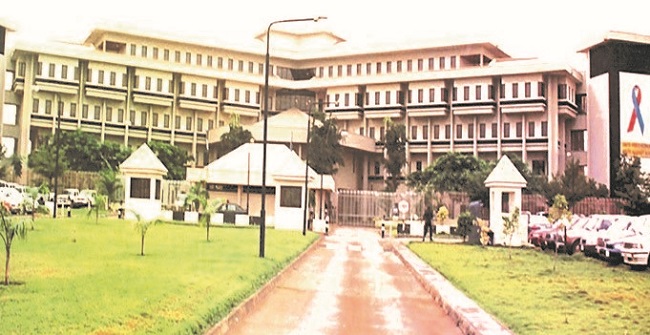

Seven years after attack, Abuja UN building yet to resurrect

0

Seven years after the UN building in Abuja was hit by insurgents in which 21 persons died, the reconstruction of the building has been shrouded in controversy.

UN House Abuja
The UN House in Abuja before the attack

The building, located in the Central Business District of the Federal Capital Territory, Abuja, is home to all the UN agencies in Nigeria, many of which are still operating from different locations since the Aug. 26, 2011 attack.

On that day, at about 11 a.m., a car loaded with explosives broke through two security barriers and a driver detonated the bomb after crashing it into the UN reception area.

The bomb caused devastation to the building’s lower floors which is the headquarters for about 400 UN employees.

The then Minister of State for Foreign Affairs Viola Onwuliri, described the attack as “not attack on Nigeria but on the global community; an attack on the world.’’

Also, the then UN Secretary-General, Ban Ki-moon, described the attack as an “assault on those who devote themselves to helping others.”

Shortly after the attack, the Federal Government promised that it would renovate and reconstruct the building within the period of six months after the incident.

Similarly, four years after the bombing, the Federal Capital Territory Administration (FCTA), reassured Ki-moon, who was on a visit to Nigeria that the Federal Government would hand over the renovated UN building as promised.

Corroborating the Federal Government’s promise, Mr John Chukwu, the Permanent Secretary, FCTA, said that the UN had sorted out all grey areas at meetings with UN experts.

Further to this, in 2017, while signing FCTA/UN 2017 Annual Work Plan, FCT Minister, Muhammad Bello, also promised to complete the reconstruction and hand over the building before the next anniversary of the UN.

Bello, who described the signing ceremony as a very important milestone in the relationship between the FCTA and the UN, said that speedy reconstruction of the building would be recognition of the UN commitment to doing good works in the FCT.

He promised that adequate budgetary provisions would be made in the 2017 budget to accelerate the realisation of set targets and bridge the deficiency gaps in performance in the previous years.

He said that the Federal Government also approved N6, 972, 986, 898 billion for the contract for the provision of security equipment and associated infrastructure, including furnishing for UN building.

“The UN building was bombed in August 2011 by terrorists that almost destroyed the entire building as well as led to the loss of lives.

“At that time, as part of Nigeria’s commitment to the ideals of UN and the support and also as reciprocation of what the UN has done for this country over the years, the government decided to reconstruct the UN building,’’ he said.

He said that the contract was awarded to the main contractor that constructed the building – Julius Berger Nigeria Plc.

According to him, the scope of the contract is to provide the latest level of security parameter fencing that is capable of withstanding bomb blast as well as fortifying gates to the highest international standards.

He explained that it would also include the creation of three police posts including the installations of body scanners, baggage scanners as well as the installation of close circuit television across the internal and external portions of the building.

“So, all these will be done within a period of 13 months, hopefully by which time the UN will move to its office, the agencies in it will be able to operate from one location under fortified security that is up to the standard that the UN is used to,’’ he stated.

However, on June 20, President Muhammadu Buhari while signing the 2018 budget noted that lawmakers made cuts amounting to N347 billion in the allocations to 4,700 projects he submitted for consideration.

He observed that additional security measures for the UN building; the provision for rehabilitation and additional security measures for the UN building by the FCT was affected by the cut.

Buhari who expressed his displeasure said that the cut would make it impossible for the Federal Government to fulfill its commitment to the UN on the project.

But Mr Tony Odigie, Director, Public Building, Federal Capital Development Authority, said that what remained in the building was installation of security apparatus.

He said the contractor – Julius Berger Nigeria Plc. – had already moved into the site for the contract for the provision of security equipment and associated infrastructure, including furnishing for the building.

Odigie promised that FCDA was going “compress’’ the work, in order to meet the deadline.

Observers note that for almost seven years after the killing of some people and destruction of the building, the staff members of the UN have been operating in rented buildings Abuja.

They, therefore, call for urgent attention on the speedy completion of the building.

By Sadiya Hamza

Germany pledges up to €340m in farm aid after drought

0

The German Government will launch a special aid programme worth up to €340 million euros to help farmers after this summer’s drought massively damaged harvests, Agriculture Minister, Julia Kloeckner, said on Wednesday, August 22, 2018.

Julia Kloeckner
German Agriculture Minister, Julia Kloeckner

Kloeckner said she had agreed special federal government drought aid of between €150 million and €170 million ($172 million and $194 million) with German Finance Minister, Olaf Scholz.

Along with additional aid from German regional state governments, farms should receive a total of about €340 million in aid, Kloeckner said in a statement.

The association of German farmers DBV has called for around one billion euros in special aid to help farmers after huge crop losses this summer.

German crops wilted under the highest summer temperatures since 1881 and prolonged dryness.

EU wheat prices hit five-year highs in August on concern about supplies.

Germany’s 2018 grains harvest is likely to fall by about 22 per cent this year after the heatwave and drought, the DBV said on Wednesday.

Dairy farmers were especially suffering from reduced crops of feed grains, straw and hay, the DBV said.

Dairy farmers were being forced to reduce their herds because of high feed costs, sending more cattle to slaughter.

I declare this year’s period of dryness to be a weather event with a national impact,” Kloeckner said.

If the existence of farms is threatened, they will qualify for special aid, Kloeckner said. It was believed that the existence of about 10,000 farms was under threat, or about one in every 25 in Germany.

It is vital that farms facing closure receive aid as fast as possible, she added. Farms must have suffered a loss of earnings of at least 30 per cent.

Lagos opens new transfer loading stations to address waste disposal challenges

0

The Lagos State Government says it has opened two more Transfer Loading Stations (TLS) for effective waste management.

Babatunde Durosimi-Etti
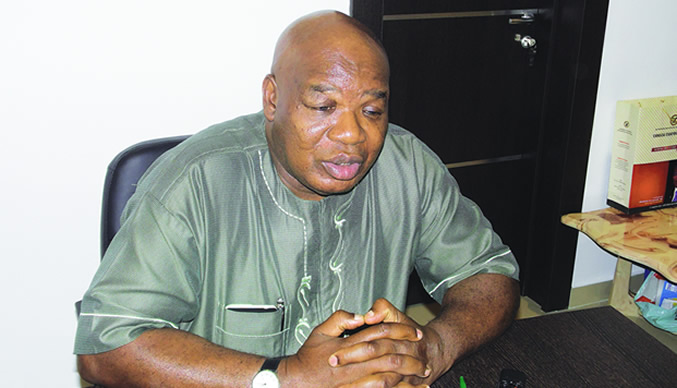
The Lagos State Commissioner for Environment, Mr Babatunde Durosimi-Etti

Mr Adebola Shabi, the Special Adviser on Cleaner Lagos Initiative (CLI), told the News Agency of Nigeria (NAN) on Wednesday, August 22, 2018 that the two loading stations are located at Odaleke and Agunlejika areas of the state.

TLS is a building or processing site for waste before they are taken to the engineered landfills where waste materials are buried.

It is an integral part of the waste management treatment infrastructure chain.

Shabi said the recently created stations has increased the number of functional loading stations in the state to five.

According to him, TLS will hasten the turn-around time for waste collectors, thereby ensuring a cleaner Lagos.

“The government has reopened the landfill at Abule-Egba to enhance waste management.

“So, in the last two weeks, we have opened two loading stations and a landfill, and we are still looking for sites to open for more landfills in Igando and Isheri-Olofin areas.

“We are working to ensure that the environment is clean. If these five TLS are working efficiently, there will be no waste on the streets,” Shabi said.

Waste management, he said, was usually a population growth challenge, particularly with the tonnes of waste generated daily in Lagos State.

The special adviser disclosed that Lagos with a population of about 24 million, generates over 20,000 tonnes of waste on a daily basis.

“In the past, only Epe and Ewu Elepe landfills are functioning, and the distance from Lagos metropolis down to these landfills is far.

“When you talk about waste management law, you do not have to travel far because of the environmental and health impacts.

“By the time you allow trucks to travel far, leachate (liquid) from the waste drips on the roads which affect the asphalt and damage the roads.

“Also, the stench or odour that comes from the waste is not good for human health and so the transfer loading stations help to process the waste before being taken to the landfills,” Shabi said.

By Florence Onuegbu

Government tasked on water hygiene, sanitation

0

A medical researcher, Dr Bamidele Iwalokun, has urged government at all levels to provide and enforce compliance with enabling acts on water hygiene and sanitation to prevent water borne diseases in the country.

WHO IDP camp
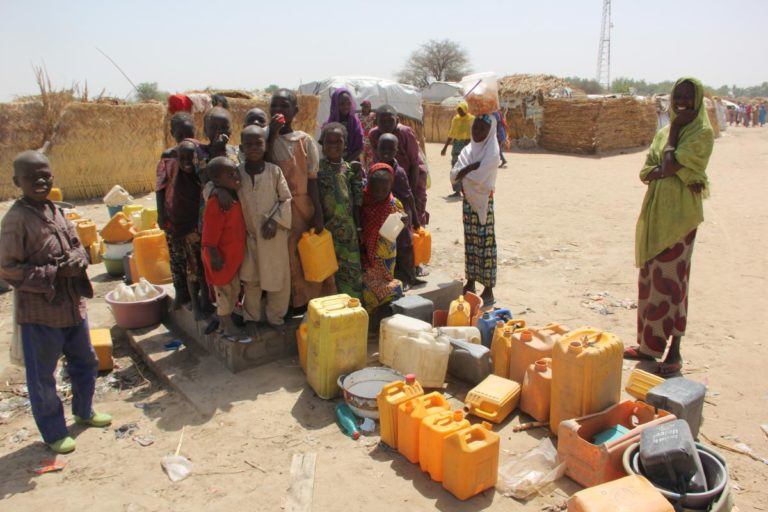
Internally Displaced Persons queuing up for water at Muna IDPs camp. Photo credit: WHO/CE.Onuekwe

Iwalokun, who is also the Head, Immunology and Vaccinology Research Department, Nigerian Institute of Medical Research (NIMR), Yaba, made the call in an interview with the News Agency of Nigeria (NAN), on Wednesday, August 22, 2018 in Lagos.

He said the enforcement of water hygiene and sanitation laws would go a long way in protecting people living in residential areas whose wells and boreholes were close to cemeteries and latrines.

“Policy on assessment of the water quality of wells and boreholes should be enacted but not at prohibited fee.

“Water borne disease which comes from contaminated water or food made from contaminated water consumed by man or through body contact.

“Water borne diseases are caused by germs such as bacteria, protozoans, viruses and worms,” Iwalokun said.

The expert said other causes of water borne disease were chemicals in water such as lead, arsenic, fluoride, nitrates and other dissolved solids.

He also said water borne diseases were in different categories such as cholera, typhoid fever, shigella dysentery, coli diarrhea, hepatitis A and E and schistosomiasis.

He said another category of the disease was lead poisoning, which was of great public health importance, especially in mining areas such was experienced in Zamfara in 2011.

According to the researcher, the impact of these diseases is huge in Nigeria in terms of the number of people infected every year and the number of people disabled and killed by these diseases.

“To be specific, according to the World Health Organisation (WHO) diarrhea and cholera kills 150,000 Nigerian children yearly.

“It occurs with a prevalence of 18.8 per cent and accounts for 16 per cent of total child death in the country.

“We should also know diarrhea and cholera are linked to malnutrition and about 30 per cent of Nigerian children are underweight and about 32 per cent are stunted.

“Also, schistosomiasis currently affects 26 million Nigerians. It causes passing of blood in the urine and damage to the bladder in both males and female children.

“The infection can affect between nine and 70 per cent of a Nigerian riverine or water irrigation project affiliated community,” said Iwalokun.

He said the two principal factors responsible for water borne diseases in Nigeria were lack of access to see water and poor sanitation.

“About 90 million Nigerians lack access to safe water, given our current population of 181 million, this translates to 50 per cent.

“Good sanitation coverage is also very low in Nigeria. It ranges from 15 to 80 per cent depending on the area.

“The major contaminants of our underground water now come from latrines built close to these boreholes, runoffs from landfill areas and well near cemeteries.

“Rapid urbanisation due to mass rural to urban migration to unplanned settlements in the cities called slums has added to water hygiene and sanitation problem in the country.

“In the slums, people defecate and urinate on open space or makeshift toilets and latrines uncontrollably which results to poor sanitation,” Iwalokun said.

He called on governments to provide less expensive water treatment technology to be used at homes for treatment of contaminated water.

“Water borne diseases can be prevented by provision of good technology, prevention and protection.

“Cholera vaccine and rotavirus vaccines are urgently needed in Nigeria to be able to control the yearly cholera and rotavirus diarrhea outbreaks in the country.

“Sites for clinical trials for these vaccines should be provided with efforts from all relevant agencies in the country.

“Hand washing as a hand hygiene should be promoted through awareness creation and provision of hand sanitisers in public toilet facilities in the country,” Iwalokun said.

By Oluwakemi Oladipo and Omowunmi Alake

NEMA partners with insurers on safety, disaster mitigation

0

The National Emergency Management Agency (NEMA) says it is partnering with insurance companies to sensitise residents on safety measures and insurance policies meant to mitigate disasters in the South-East.

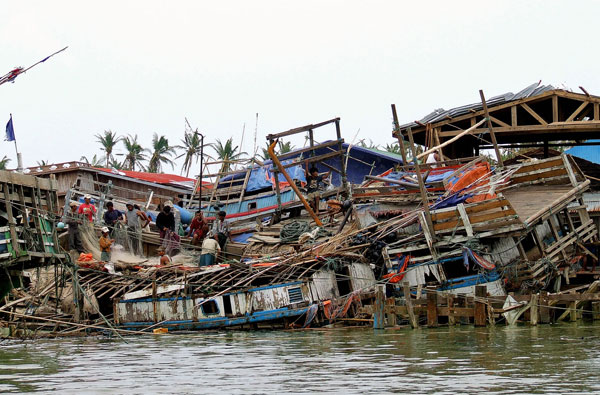
cyclone-nargis
The insurance policies are meant to mitigate natural disasters

NEMA’s South-East Director, Walson Ibarakumo, told the News Agency of Nigeria (NAN) in Enugu on Wednesday, August 22, 2018 that the main business of risk management was for insurance companies.

“What NEMA actually does is to provide succour to victims of disaster.

“Although, insurance companies have not been forthcoming but NEMA is going to them to educate them that disaster management falls under their mandate as a business.

“Just recently, NEMA had a meeting with the insurance companies in Ebonyi, where we pointed out the need for them to collaborate with us and that their services are necessary in disaster management.

“At the meeting, the companies say that they will key in and be part of our sensitisation so that they can enlighten the general public on the vital role insurance have to play in disaster management.

“If individual or groups get to know and understand the role of insurance, I quite believe that they will subscribe to insurance companies’ policy or policies cover for their overall benefit when disasters occur,’’ he said.

According to him, if people take up insurance policy cover, when disaster occur, the insurance company or companies will come and do their own assessment and pay compensation to the victims.

“This indemnity or compensation is far above the succour NEMA brings to them,’’ the director said.

Ibarakumo said that NEMA would be taking the sensitisation to various markets in the zone on the need for traders to take-up group insurance policy against disasters.

He noted that the disaster like flooding and fire disasters were yearly routine in some markets, adding that traders had to take up insurance policy or policies against these developments, if not individually, it could be done in a group form.

“The agency believes that insurance companies will be of tremendous help to the traders in markets in Onitsha and other trading cities in the South-East at this point,’’ Ibarakumo added.

By Stanley Nwanosike

Plastic pollution: Firms urged to switch to biodegradable polymers

0

A retired don, Prof. Oladele Osibanjo, has said that the ultimate solution to curbing plastic waste is for firms generating them to switch from non-biodegradable polymers to biodegradable polymers.

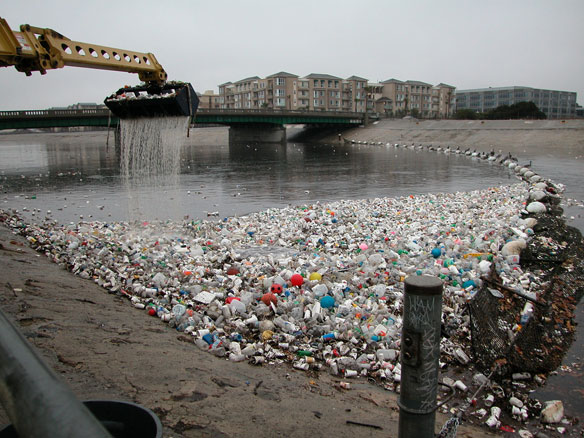
Plastic pollution
Plastic pollution

Osibanjo, a retired Professor of Chemistry, said this in an interview with the News Agency of Nigeria (NAN) on Wednesday, August 22, 2018 in Lagos.

He noted that food and beverages companies as well as packaging firms were the greatest culprits generating single-use non-biodegradable polymers.

The don said that because switching to biodegradable polymers would take time, the firms could, in the interim, put in place a “take-back or collection system” for the waste generated by their products.

“Water sachets are the cheapest and handiest non-biodegradable waste. Every minute daily about one million water sachets are thrown away to the environment.

“Companies should transit from use of non-biodegradable polymers to biodegradable polymers.

“However, because they need to source for these polymers, they should put in place a take-back or collection system for the waste of their products rather than people throwing them anywhere.

“The plastic waste collected can now be re-used in making new products; that way, you are turning it over for recycling and re-using.

“That is one effective way of reducing nuisance and environmental pollution caused by plastic wastes practiced all over the world.’’

Osibanjo said that if plastic wastes were taken away from the environment, they would not cause harm anymore.

He, however, stressed that the ultimate solution was for packaging companies and manufacturing firms to change to bio-degradable polymers.

According to him, this is because over a period, there will still be some that cannot be recycled anymore, and one will have to look for other uses for those.

By Chidinma Agu

Kaduna State warns residents of imminent flooding

0

The Kaduna State Government has urged communities along riversides to maintain vigilance over imminent flood on night of Tuesday, August 21, 2018 and the next couple of days as rainstorms are highly probable.

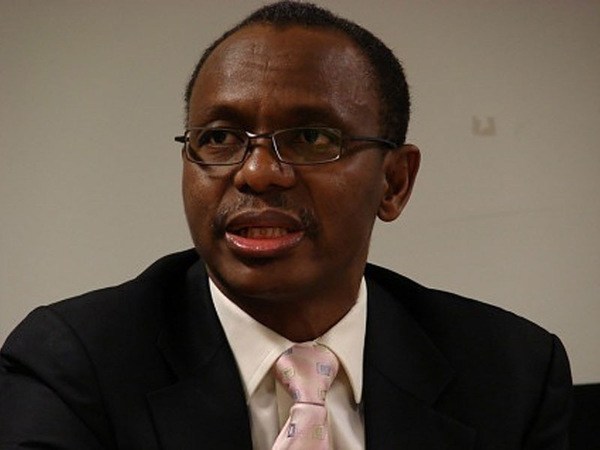
Nasir el Rufai
Nasir el Rufai, Governor of Kaduna State

Malam Abdullahi Rigasa, the General Manager, Kaduna Environmental Protection Authority (KEPA), made the fact known on Tuesday in Kaduna.

According to him, it is no longer safe for residents living along the river, as the river is already overflowing its banks. KEPA had earlier warned of imminent flood in five local government areas of the state.

Rigasa listed Igabi, Kaduna North, Kaduna South, Soba and Kaura local government areas as the places likely to be affected.

He urged residents of the five flood-prone areas to be on alert.

Rigasa said the mandate of KEPA was to prevent the occurrence of flood and ensure that residents were well prepared for any imminent floods.

“Last year, flooding was recorded in 14 local councils namely; in Kaduna South, Kaduna North, Kaura and Chikun local government areas with no casualties.”

He advised residents of the area to take proactive measures such as clearing water channels and avoid activities that could block the free flow of water.

He further advised relevant agencies to perfect their emergency evacuation plans and activate them as quickly as possible.

By Ezra Musa

African youth decry poor access to agri-business loans

0

African young agricultural entrepreneurs on Tuesday, August 21, 2018 decried poor access to soft agricultural loans which is hampering growth of their agri-businesses.

farming-can-be-fun
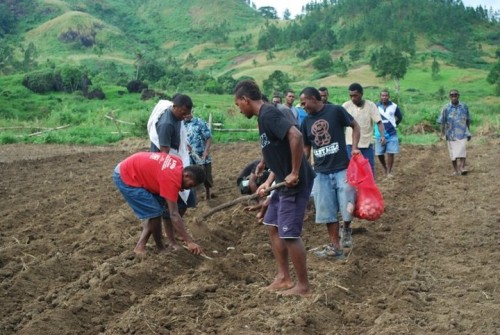
Youths involved in farming. Photo credit: smeonline.biz

They said this while speaking at a session panel on the sidelines of the Africa youth event in the Rwandan capital Kigali dubbed “Youth employment in agriculture as a solid solution to ending hunger and poverty in Africa.”

Rwanda hosts the conference on August 20-21 with much emphasis on engaging African youth to take part in agriculture transformation on the continent through Information and Communication Technologies and Entrepreneurship.

“Poor access to agricultural loans has become a big challenge to our agricultural businesses due to high interest bank rates and demands for collaterals from financial institutions,” said Dieudonne Twahirwa, founder of Rwanda-based Gashora Farm Ltd, a chilli pepper processing company.

He called on African governments to allocate funds to support young people in agri-business in order to address challenges associated with access to bank loans.

The two-day conference brought together participants from across Africa and beyond including representatives from governments, development partners, the private sector, youth and women organisations, civil society organisations, research and academia.

The high-level youth event also aimed to foster exchange among stakeholders on knowledge and best practices regarding the interfaces between agriculture, youth employment, entrepreneurship and ICT innovations, according to organisers.

According to Ruramiso Mashumba, chairperson of the youth wing of Zimbabwe farmers union, African youth are looking forward to starting agri-business ventures but are let down by financial institutions that are reluctant to release money to finance farming ventures.

“African governments should put in place a youth entrepreneurship policy to tackle challenges affecting young people who are creating jobs through agri-business enterprises,” he said.

According to him, young entrepreneurs have limited capacity and quite often run short of money to improve their small businesses either in agriculture sector or other sectors resulting into business closure.

According to the African Development Bank’s 2018 African Economic Outlook, in 2015, Africa was home to 226 million youth and the number is projected to increase by 42 per cent in 2030.

Olawale Rotimi Opeyemi, founder of JR Farms Limited, Nigeria, an agri-business coffee processing firm said that inability to access agricultural loans has made it impossible for youth in agriculture to access improved seeds, tractors and modern farm inputs.

“African young entrepreneurs in agriculture are advocating for an improved enabling environment, better access to training, finance and resources, and for their governments to believe in them,” he noted.

The conference discussed solutions that offer new opportunities for youth entrepreneurship, including on-farm and beyond, along the agricultural value chains.

Tanzania on high risk of Ebola outbreak

0

A Tanzanian government senior official said on Tuesday, August 21, 2018 that Tanzania was on high risk of Ebola outbreak.

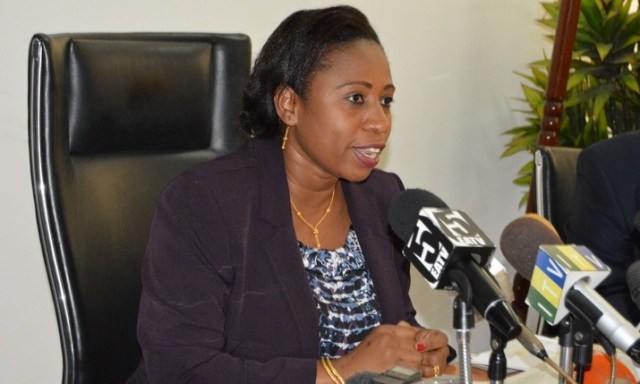
Ummy Mwalimu
Ummy Mwalimu, Tanzania’s Health Minister

The Ebola Virus Disease killed 50 out of 91 patients in neighbouring Democratic Republic of Congo (DRC).

Ummy Mwalimu, the east African nation’s Minister for Health, said the high-risk categorization followed the World Health Organisation (WHO)’s new statistics showing that the new outbreaks in the DRC have occurred in regions closest to Tanzania than previous cases, including North Kivu and Ituri.

“Analysis by WHO has shown that countries neighboring the DRC including Tanzania are now at high risk of outbreak because North Kivu shares a common border with Uganda and there are many visitors and refugees fleeing from the region to Uganda and Rwanda,” she told a news conference in the commercial capital Dar es Salaam.

Mwalimu said both North Kivu and Ituri provinces are hotspots for the humanitarian crisis in the DRC due to civilian unrest which has complicated efforts by local DRC authorities and the international community to contain the spread of the viral disease.

The new cases, the 10th in the DRC’s Ebola outbreaks, have been reported in health zones in North Kivu and Ituri provinces, coming just one week after the neighbouring country declared victory against an earlier outbreak that occurred in May.

“As of Aug. 1, WHO figures showed that there were only 26 confirmed new cases and 10 deaths that accounted for a fatality rate of 38.5 per cent but the spread of the disease persisted and by Aug. 18, there were 91 cases and 50 deaths which are equal to 54.9 percent fatality rate,” said the minister.

Along with the WHO figures, the minister said a total of 10 health workers in the DRC have also contracted Ebola and one of them died.

She added: “And there is cause for alarm because the workers caught the virus in normal health centers and not the designated Ebola treatment centers.”

So far, the minister said there was no Ebola case in Tanzania but noted that there was need to put in place control measures to ensure that the virus does not wreak havoc in the country as it has in the DRC.

“I call upon all citizens and residents of Tanzanian including health workers to understand and adhere to Ebola infection prevention and control measures,” she said.

Authorities are on high alert in the regions with high interaction with DRC, including Mwanza, Kagera, Kigoma, Katavi, Rukwa and Songwe to ensure that all visitors from the neighbouring country were properly screened, said Mwalimu.

She added that that the country’s international airports, including Julius Nyerere, Kilimajaro and Songwe were on full alert.

Mwalimu added that her ministry will be working with WHO round the clock to put in place Ebola surveillance and control mechanism.

Operational readiness assessment has already been conducted in Rukwa, Katavi, Songwe, Mbeya, Kigoma, Kagera, Arusha and Kilimanjaro regions, said Mwalimu.

She said the ministry has employed 33 additional staff in the Ebola control team and WHO has provided the ministry with $2.5 million worth of equipment that has already been distributed to key centers, including personal protective equipment for health workers.