The National Biosafety Management Agency (NBMA) has commenced the review and validation of some of its guidelines to strengthen the nation’s biosafety system.
Participants at the meeting
Dr. Rufus Ebegba, Director General/CEO, NBMA, said at the opening of the review and validation meeting in Abuja on Wednesday, August 8, 2018 that the guidelines were in the process of development over the past two years and had undergone intensive in-house assessment and critical review by stakeholders and needed final validation before being release to the general public.
Dr. Ebegba said that the guidelines for review and validation include the NBMA Risk Analysis Framework which details risk assessment – a precondition for the release of any Genetically Modified Organism (GMO).
“The guideline encompasses risk management plans and strategies to be employed if any potential risk arises from the practice of modern biotechnology. The guideline aims to strengthen the enforcement system for proper regulation,” he said.
Other guidelines reviewed at the workshop are NBMA Administrative Manual, NBMA Communication Strategy, National Biosafety Emergency Response, Biosafety Information Manual, Institutional Biosafety Committee Guidelines, Biosafety Laboratory Manual and NBMA Inspection Guidelines.
He added that the Biosafety Laboratory Manual ensures the accurate analysis of GMOs and the guaranteed safety of personnel working in the laboratory.
Dr. Ebegba thanked all the stakeholders present especially the media for accurate dissemination of information on issues of biosafety in the country. He noted that the media still have a lot to learn in terms of relating issues of biosafety to the general public.
The review and validation meeting was attended by stakeholders from different Ministries, Departments and Agencies (MDAs) who are involved in the National Biosafety Framework.
People of Umon Island, a small riverine community on the coast of Cross River, have been cut off from civilisation for 200 years. Located in Biase local government area of the state, this village has never tasted electricity and all the sweetness it brings:
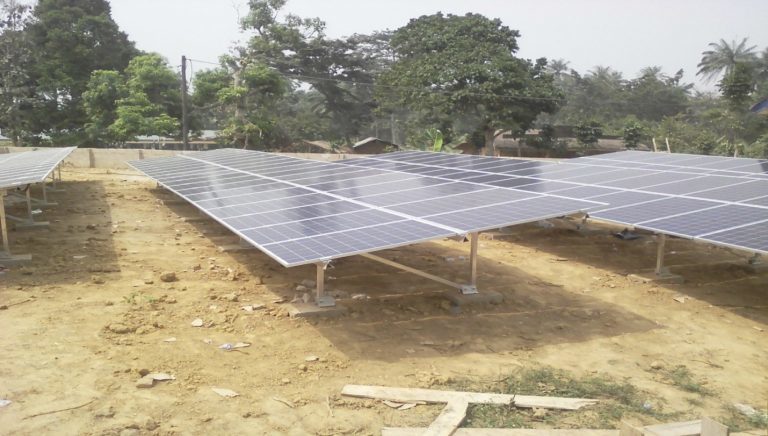
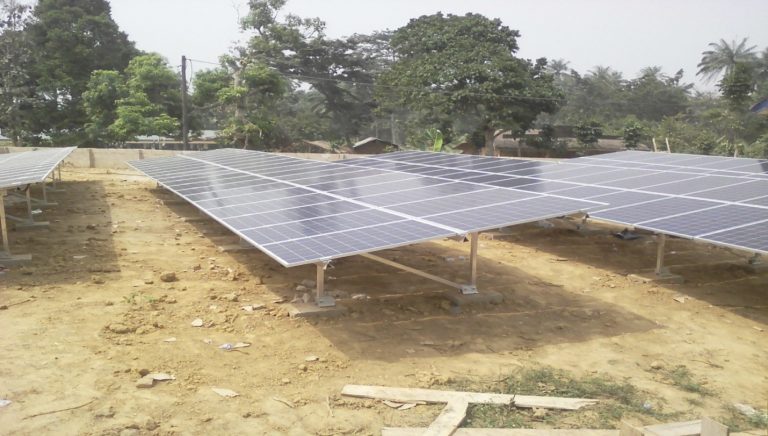
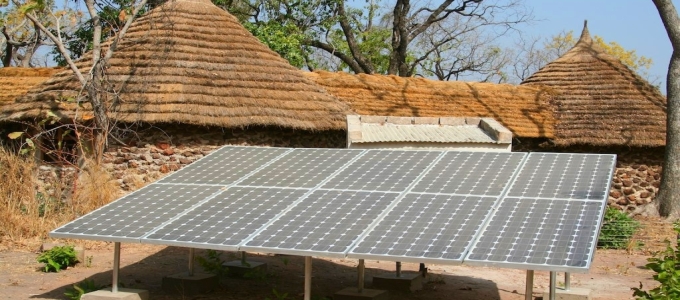
Array of solar panels in Umon Island
Villagers have no safe drinking water as inhabitants drink directly from the murky water drawn from the large river surrounding them. There is also no functional primary health centre. The only one found was under lock and key. The primary and secondary school on the Island had no light to power computers, charge phone batteries, switch on the fans and power some laboratory apparatus. Thus, most students attend boarding school at Calabar, the state capital.
Let there be light
But, today, there is light. And where there is light, there is joy, progress, economic development, less crime and improved qualiy of life. They owe their thanks to the German government which, through its arm of international cooperation, GIZ (Deutsche Gesellschaft fur Internationale Zusammenarbeit), introduced the solar mini-grid idea to bring electricity to the village. In this village, the implementing partner is the Community Research and Development Centre – which introduced the solar 50 kilowatts mini-grid system in March 2018.
The GIZ, in a bid to bring economic development, promote the use of renewable energy and reduce reliance of the national grid system, signed a memorandum of understanding with five states namely Ogun, Niger, Plateau, Sokoto and Cross River to provide solar with the aim of promoting economic development in such communities which could have otherwise never seen the light of day.
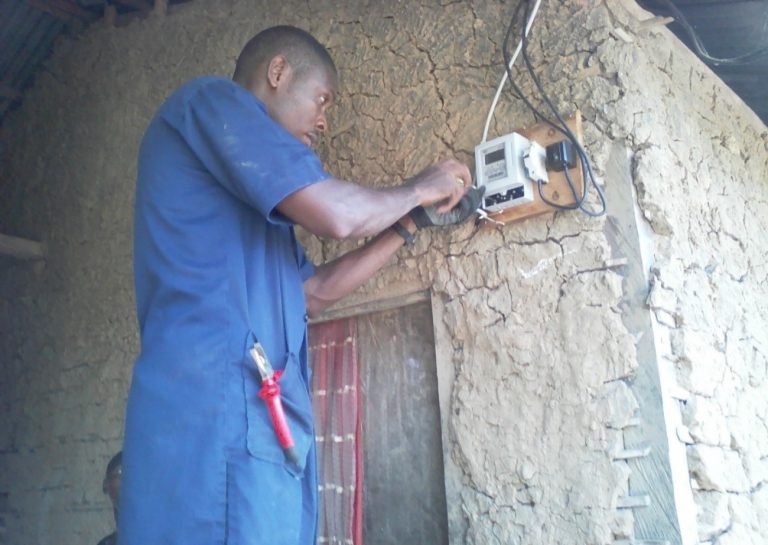
Installation of pre-paid meters in Umon Island
How it works
Abrahma Asuquo, the field electrical engineer managing the project at Umon Island, showed EnviroNews the solar system, which is housed in a room containing 48 batteries, with each carrying two volts and six battery inverters to generate 50 kilowatts. Also, outside the CREDC office, there are 18 photovoltaic cells (solar panels) which receive sunlight. The sunlight is converted to direct current that passes through the grid.
The power stored in the grid is ultimately fed into homes that are connected. The executive director of CREDC, Etiosa Uyigue, said if the government can adopt such models, it would reduce reliance on the national grid system, which is now not meeting the country’s electricity demand.
A census conducted by CREDC found that there are about 200 homes in the community and a sister community. Uyigue said letters were sent to the homes heads to sign an end-user agreement before their homes can be connected to the grid.
Meeting country’s power needs
“What we are trying to show the government by this project is that if we have pockets of small, small, power generation like this in communities, we will not need to depend on the national grid alone, Uyigue said.
Though the country’s transmission capacity has increased from 5000 MW to 7000 MW, it is still besieged with problems of weak transmission lines, obsolete cables and poor management. If national grid should collapse, the whole country will be plunged in darkness. The minigrid can only generate 50 kilowatts which is equivalent to 0.05 megawatts, a fraction of the country’s power generation capacity of 7000megawatts. According to him, the project, which costs N80 million is small, but it is achievable and sustainable, it is meeting the needs of communities which may never get connected.
“Our recommendation to the government is to decentralise the national grid. We are not relying on the national grid. This and with the private sector participation, we will do the maintenance. Let the government have the political will to even begin going to the communities,” he says.
At the time of visit, this reporter who slept in the village for two days observed that there was light for about 18 hours at a stretch every day.
“It could be more consistent, but we have a little hitch in the solar system, which is being fixed,” Asuquo, who took this reporter around, says. Community members told this reporter that their businesses are moving.
James Akpan, who sells soft drink on the Island, says, “I can sell my drink now. Before no one wants to buy it because it is not cold, but now, it is moving well.”
It was concluded that the project has improved the quality of lives of up to 5,000 inhabitants of the island, whose preoccupation are fishing, farming, boat construction, retailing and petty trading.
Climate change implication
According to environmentalists, renewable energy is the way to go to reduce the effect of climate change. It is free, clean energy from the sun, which does involve cutting down trees or burning of fossil fuels. By adopting this, the country is not only meeting its power demand and promoting economic development, it is also leaving zero carbon footprint and contributing to the reduction of the global climate change.
The National Emergency Management Agency (NEMA) says it is ready to work with emergency response agencies and organisations to tackle flooding in Onitsha and its environs.
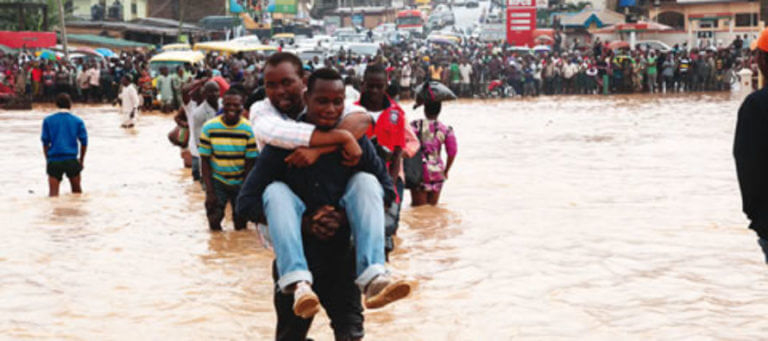
Flooding in Onitsha. Photo credit: aljazirahnews
The South-East Director of the Agency, Mr Walson Ibarakumo, told the News Agency of Nigeria (NAN) in Enugu, the Enugu State capital, on Tuesday, August 7, 2018.
According to him, synergy with NEMA and other organisations with similar mandate is critical in ensuring that imminent flooding in the area do not cause colossal damage to lives and property.
Ibarakumo said that the agency had written to most of the agencies and organisations in Anambra State for their help in a case of emergency evacuation.
NAN reports that the emergency response agencies and organisations include the Anambra SEMA, Red Cross, Ocha Brigade of Anambra, Boys Scout, Marine Police, Nigerian Navy, and Nigerian Army Engineers all in Onitsha.
According to him, the essence of involving all first line emergency response agencies is to get them ready, adding that there are signs of massive flooding in Onitsha and its environs.
“We are meeting with the state government officials and later with all emergency first response agencies and organisations.
“The meeting will be for us to understand each other in terms of what each agency/organisation can bring on the table and their areas of strength as well as exchange ideas on how to move when the time comes.
“This will afford us the opportunity to work in unison and co-ordination as well as achieve our target of serving our people.
“I mean the people affected by the imminent flood, on time,’’ he said.
The zonal director urged the locals in Anambra to work closely with their leaders, chiefs and local emergency management committees.
“The local emergency committees should quickly alert the State Emergency Management Agency (SEMA) that will contact NEMA.
“NEMA in turn will inform our emergency response partners for us to move on time.’’
A Munich-based start-up has taken advantage of the strong Bavarian sun this summer to test the final development of the charging system of its Sion car, an all-electric solar vehicle that lets you charge as you drive.
The Sion solar car
Germany will likely miss its target of putting one million electric cars on the road by 2020 but the government said in April it was ready to offer support to companies that make batteries for electric vehicles.
Sono Motors, founded in 2016, is developing the Sion, a fully-electric vehicle that has solar cells integrated into its bodywork.
It can be charged via solar power, from conventional power outlets or other electric cars.
Production will start in the second half of 2019 at one of its German plants and the company has around 5,000 orders which it aims to start selling at €16,000 ($18,540) in 2019.
Sion will have 330 solar cells attached to the vehicle’s roof, bonnet and sides and its battery system will offer a range of around 250 km before it needs recharging.
“We have a seat heater, there is air conditioning, there is a large infotainment system where I can also connect my phone interactively, which means I really have a full vehicle which is very simple, has no frills,” Laurin Hahn, Co-founder and Chief Executive of the startup said.
FBNQuest Asset Management, a part of the FBN Holdings Plc Group, has called on Nigerians in the Diaspora to take advantage of the numerous investment opportunities available in Nigeria.
Managing Director, FBNQuest Asset Management, Ike Onyia
This call was made at the just-concluded Nigerians in Diaspora Global Development Conference in London.
The conference presented a rare opportunity for Nigerians in the diaspora to engage in constructive and interactive sessions, with key decision makers across different industries in Nigeria encouraging stakeholders to partner and collaborate on investment schemes.
A major highlight of the event was the unveiling of the NIDO-led $20 million Diaspora Housing Investment Fund, a closed end investment fund to be privately placed and constituted under a Trust Deed with a suitable Commercial Trustees to be selected.
The fund will be established through the issuance of the similitude of a real estate investment trust scheme which will provide opportunities for individual and institutional investors to participate in the Nigerian real estate sector.
The conference yielded fruitful discourse and exchange of ideas that examined the intersections between investment in human capital, natural resources, entrepreneurship, innovation and technology in Nigeria.
As one of the major sponsors of the conference, FBNQuest Asset Management called on Nigerians in the Diaspora to offer strategic expertise in their various endeavours to impact the country with knowledge and financial capacity, especially by way of investment.
Speaking during the conference, Managing Director, FBNQuest Asset Management, Ike Onyia, said: “We want to partner with the Diaspora community through NIDO and its members. As a member of one of the leading financial services groups in Africa, we are well-positioned to serve the diaspora community professionally and to ensure their aspirations in the area of maximising investment returns are fulfilled.
“FBNQuest Asset Management is open to partnerships that will unlock the potential of the Nigerian diaspora community as a source of economic development. We provide bespoke solutions to organisations and individual investors looking to set up structures that can help them achieve their investment goals. As a trusted advisor and credible partner with sound local knowledge and a rich pedigree, we will help them navigate through opportunities in the homeland.”
FBNQuest Asset Management is a leading asset manager in Nigeria for individual and institutional investors, guiding clients through Africa’s dynamic markets, while identifying the best opportunities to shape portfolios in line with specific investment goals.
The firm was recognised as the “Best Asset Manager in Nigeria” in the prestigious Euromoney Private Banking and Wealth Management Survey 2017, which is the industry’s leading barometer of the world’s best service and product providers.
The survey covers 15 different product and client categories and has ranking results in 70 countries in which FBNQuest Asset Management emerged number one in Nigeria.
The Ondo State Government (ODSG) says that farmers operating in its forest reserves across the state must embrace the self-identity cards it introduced which is aimed at creating a data base for them.
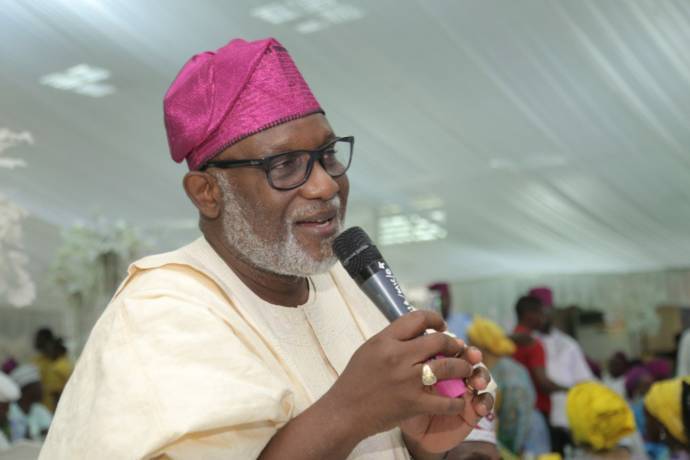
Gov. Oluwarotimi Akeredolu of Ondo State
Commissioner for Natural Resources, Mr Rasheed Badmus, stated this during a visit to cocoa farmers in Odigbo Local Government area of the state on Tuesday, August 7, 2018.
Badmus said that the Ministries of Natural Resources and Agriculture thought it fit to organise the data capturing for farmers operating in government forest reserves to have a data of original farmers allotted the land in the state.
“It is mandatory for the Ondo State Government to have a data base of farmers operating in government forest reserves across. This is to prevent the encroachment of such forest reserves which is capable of jeopardising government’s efforts toward rejuvenating the forest reserves,“ he said.
The commissioner noted that the two ministries were the rightful owners of the reserves where the farmers were carrying out their activities.
He, therefore, implored them to continue to protect trees planted by the agencies of government, which he said were the major sources of revenue to the state.
Badmus admonished them to continue to support the state governor, while charging them to live in peace with each other.
Keeping global warming to within 1.5-2°C may be more difficult than previously assessed. An international team of scientists has published a study in Proceedings of the National Academy of Sciences (PNAS) showing that even if the carbon emission reductions called for in the Paris Agreement are met, there is a risk of the planet entering what the scientists call “Hothouse Earth” conditions.
Greenhouse gas increases are leading to a faster rate of global warming. Photo credit: earthtimes.org
A “Hothouse Earth” climate will in the long term stabilise at a global average of 4-5°C higher than pre-industrial temperatures with sea level 10-60 m higher than today, the paper says. The authors conclude it is now urgent to greatly accelerate the transition towards an emission-free world economy.
“Human emissions of greenhouse gas are not the sole determinant of temperature on Earth. Our study suggests that human-induced global warming of 2°C may trigger other Earth system processes, often called ‘feedbacks’, that can drive further warming – even if we stop emitting greenhouse gases,” says lead author Will Steffen from the Australian National University and Stockholm Resilience Centre. “Avoiding this scenario requires a redirection of human actions from exploitation to stewardship of the Earth system.”
Currently, global average temperatures are just over 1°C above pre-industrial and rising at 0.17°C per decade.
The authors of the study consider 10 natural feedback processes, some of which are “tipping elements” that lead to abrupt change if a critical threshold is crossed. These feedbacks could turn from being a “friend” that stores carbon to a “foe” that emits it uncontrollably in a warmer world.
These feedbacks are: permafrost thaw, loss of methane hydrates from the ocean floor, weakening land and ocean carbon sinks, increasing bacterial respiration in the oceans, Amazon rainforest dieback, boreal forest dieback, reduction of northern hemisphere snow cover, loss of Arctic summer sea ice, and reduction of Antarctic sea ice and polar ice sheets.
“These tipping elements can potentially act like a row of dominoes. Once one is pushed over, it pushes Earth towards another. It may be very difficult or impossible to stop the whole row of dominoes from tumbling over. Places on Earth will become uninhabitable if “Hothouse Earth” becomes the reality,” adds co-author Johan Rockström, Executive Director of the Stockholm Resilience Centre and incoming co-Director of the Potsdam Institute for Climate Impact Research.
Cascade of events may tip the entire Earth system into a new mode of operation
Co-author Hans Joachim Schellnhuber, Director of the Potsdam Institute for Climate Impact Research, says, “We show how industrial-age greenhouse gas emissions force our climate, and ultimately the Earth system, out of balance. In particular, we address tipping elements in the planetary machinery that might, once a certain stress level has been passed, one by one change fundamentally, rapidly, and perhaps irreversibly. This cascade of events may tip the entire Earth system into a new mode of operation.”
“What we do not know yet is whether the climate system can be safely ‘parked’ near 2°C above preindustrial levels, as the Paris Agreement envisages. Or if it will, once pushed so far, slip down the slope towards a hothouse planet. Research must assess this risk as soon as possible.”
Cutting greenhouse gases is not enough
Maximising the chances of avoiding a “Hothouse Earth” requires not only reduction of carbon dioxide and other greenhouse gas emissions but also enhancement and/or creation of new biological carbon stores, for example, through improved forest, agricultural and soil management; biodiversity conservation; and technologies that remove carbon dioxide from the atmosphere and store it underground, the paper says. Critically, the study emphasizes that these measures must be underpinned by fundamental societal changes that are required to maintain a “Stabilised Earth” where temperatures are ~2°C warmer that the pre-industrial.
“Climate and other global changes show us that we humans are impacting the Earth system at the global level. This means that we as a global community can also manage our relationship with the system to influence future planetary conditions. This study identifies some of the levers that can be used to do so,” concludes co-author, Katherine Richardson from the University of Copenhagen in Denmark.
Platform connecting private mini-grid developers and investors, Odyssey Energy Solutions, announced on Tuesday, August 7, 2018 that its pipeline had surpassed 550 projects, requiring a total estimated investment of more than $500 million.
Off-grid lighting in Africa. Photo credit: unep.org
Decentralised renewable energy solutions like mini-grids are said to be the least-cost option for bringing electricity to over 70 percent of the world’s one billion people currently living without access to basic power, most of whom live in rural areas in sub-Saharan Africa and Asia. It is estimated that up to 200,000 mini-grids will be needed to lift these people out of energy poverty.
The mini-grid projects on the Odyssey platform represent an expected 275,000 connections, with a generation capacity of about 150 MW of installed solar PV. The 550 projects being developed on the platform come from 21 countries, including Cameroon, Cape Verde, Democratic Republic of Congo, Ethiopia, Ghana, Haiti, India, Kenya, Lesotho, Myanmar, Niger, Nigeria, Philippines, Rwanda, Sierra Leone, Somalia, South Africa, Tanzania, Uganda, Zambia, and Zimbabwe. Project ticket sizes range from $40,000 to $3 million.
Odyssey platform users currently comprise a network of over 100 developers, investors, vendors, and government institutions, with recent month-on-month user growth of 30-40%.
“With no outbound marketing, we’re seeing incredible uptake of the Odyssey platform,” said company co-founder and CEO Emily McAteer. “Odyssey is proving just how quickly the mini-grid sector is taking off around the globe. By using software and data analytics to streamline and standardise mini-grid project development and financing, we’re able to aggregate projects into bankable portfolios that meet investors’ ticket sizes and diligence requirements, paving the way for more capital to come into the sector.”
“With Odyssey there is finally a one-stop shop for mini-grid development,” said Havenhill Synergy CEO, Olusegun Odunaiya. “Odyssey has allowed us to quickly conduct rigorous technical and economic analyses for mini-grid projects in our pipeline and then create portfolios suitable for financing.”
Odyssey is a web-based platform that streamlines the development and financing of mini-grid projects.
Robert Nasi, Director General of the Centre for International Forestry Research (CIFOR)
Launched in 2013, ID-RECCO highlights 467 subnational REDD+ initiatives from around the world. It includes 110 variables, such as carbon certification, sources of funding, and expected socio-economic and environmental impacts, in a format that can be used for research purposes and analysis. ID-RECCO is said to be the first tool to gather such a large amount of information on subnational REDD+ initiatives in a comprehensive way, and it continues to evolve.
“CIFOR is very pleased to host the ID-RECCO database given our priority for understanding the progress and performance of REDD+ on the ground. We are committed to keeping the database updated and ensuring that it stays relevant for the broader tropical forests and climate community,” said Amy Duchelle, Senior Scientist, CIFOR.
According to her, the next big change to ID-RECCO will allow users to easily distinguish between local REDD+ projects and subnational jurisdictional programmes. For REDD+ projects, CIFOR will validate the data through a survey with project implementers that will be conducted in upcoming months.
To expand the database to include subnational jurisdictional REDD+ programmes, CIFOR will draw on new collaborative research with Earth Innovation Institute (EII) and the Governors’ Climate and Forests (GCF) Task Force.
ID-RECCO was created by Gabriela Simonet when she was based at the French Agricultural Research Centre for International Development (CIRAD) and Climate Economics Chair (CEC) with founding partner the International Forestry Resources and Institutions (IFRI).
“ID-RECCO was born in the hands of Gabriela in CIRAD, pushed by her motivation to understand if REDD+ was going to fulfill the on-the-ground socio-economic and ecological impacts that stakeholders were advocating for. In that sense is a ground-breaking initiative and a unique dataset to reach such an understanding. It allows, for example, to extract simple statistics, like the number of hectares covered by REDD+, and understand the trends and types of REDD+ projects and initiatives,” stated Driss Ezzine-de-Blas, Researcher, CIRAD.
Ezzine-de-Blas notes that while the data can be used by researchers to match their expectations to the reality of REDD+, other stakeholders will also benefit by taking REDD+ more seriously and will have data-based evidence in hand to continue their work.
“ID-RECCO is the first comprehensive database on REDD+ projects worldwide. It has the great advantage to allow international comparison of very diverse types of projects, in various locations. Being frequently updated and open access, it then constitutes a unique tool that makes possible monitoring and impact evaluation of those initiatives, which will provide a better understanding of the conditions of success of REDD+ implementation,” submitted Philippe Delacote, Researcher, Climate Economics Chair.
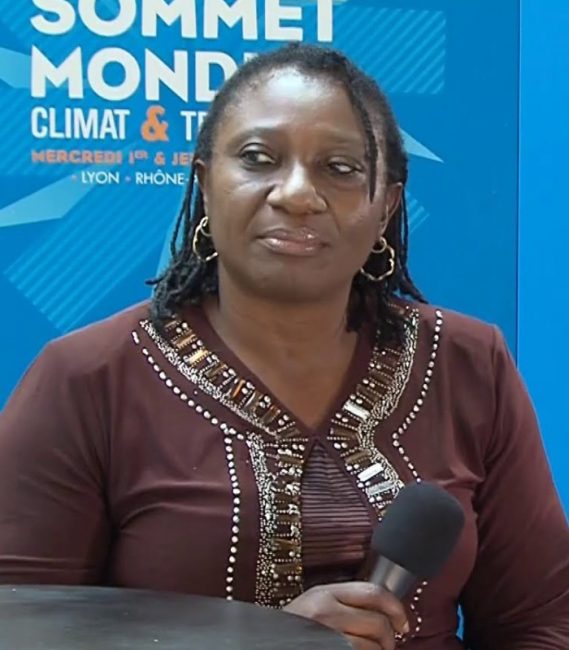
The Executive Director of Women Environmental Programme (WEP), Dr Priscilla Achakpa, has been elected as one of the Co-Facilitators of the Women’s Major Group (WMG) to the United Nations Environment Programme (UNEP).
Priscilla Achakpa, Executive Director of the Women Environmental Programme (WEP). Photo credit: http://i.ytimg.com/
The election results confirming her emergence as one of the Co-Facilitators were announced through the listserve of WMG to UNEP on August 4, 2018.
“Going by the votes, the new Co-Facilitators are: 1. Priscilla Achakpa – Women Environmental Programme, 2. Mrinalini Rai – Global Forest Coalition,” announced Caroline Usikpedo-Omoniye and Isis Alvarez, on behalf of the Steering Committee members who oversaw the conduct of the elections.
The process of electing new Co-Facilitators of WMG to UNEP who will serve for a term of two years started since May 28, 2018 when the WMG called for Steering Committee members to oversee the process. This was followed by nominations and elections throughout the month of June 2018.
The responsibilities of the Co-Facilitators include:
Consult with national/regional women’s networks working on environmental issues to prepare written inputs for UNEP policy processes;
Ensure that the principles and values of the WMG are respected in all publications, statements and other communication given on behalf of the WMG;
Organise, manage and disseminate data and information on the WMG and UNEP;
Identify participants and consult with the Women’s Major Group members and allied networks for United Nations Environment Assembly (UNEA)-related global and/or regional events;
Facilitate the participation of Women’s Major Group members and organise side events in UNEA and other related global and/or regional processes;
Work in collaboration with other Major Group representatives to ensure continued space for civil society engagement in the UN Environment Assembly and other related processes, as necessary;
Serve on UN Environment’s Major Groups Facilitating Committee;
Fundraise on behalf of the Women’s Major Group; and
Provide strategic direction and guidance to the Women’s Major Group through an inclusive, consultative and transparent process, of decisions surrounding WMG positions on all UN Environment Assembly decisions.
The Women’s Major Group (WMG) to the United Nations Environment Programme (UNEP) is the focal point for UN environmental policies. The WMG-UNEP’s responsibility covers the UN Environment Assembly and related meetings, Regional Consultative Meetings (RCM), and the environmental interlinkages to the 2030 Agenda and the High-Level Political Forum. In addition, the WMG-UNEP aims to cooperate closely with other Women’s Major Groups and Women’s constituencies linked to other UN policy processes.