Home Blog Page 1813

Buildings, land in custody of government – LASPPPA

0

The Lagos State Physical Planning Permit Authority (LASPPPA) on Thursday, August 9, 2018 said all landed property and housing developments within the jurisdiction of the state are in the custody of the state government.

Funmi Osifuye
Mr Funmi Osifuye

LASPPPA’s General Manager, Mr Funmi Osifuye, made the clarification in an interview with the News Agency of Nigeria (NAN) in Lagos.

Osifuye said that every private building (residential or commercial purposes) and the Federal Government acquisitions within the state fall under the purview of the Lagos State Government.

According to him, every developer or property owner in the state must comply with the specifications of the state government’s Ministry of Physical Planning and Urban Development.

“LASPPPA, in conjunction with the Lagos State Building Control Agency (LASBCA), have statutory right over all Federal Government property acquisitions within the state.

“The issue was taken to court during the administration of the former governor, Babatunde Fashola and Lagos State Government won.

“In line with the Lagos State Urban and Regional Planning and Development Law 2010, it was then established that every property certification issued by the Federal Government before 2003 remains valid, while subsequent certification, validation and regularisation will be done through the state government.

“It stands that Lagos State Government has the responsibility to safeguard lives and property in the state, irrespective of private or Federal Government acquisition, and also collects revenues therein,” he said.

Osifuye noted that the Land Use Act of 1978 stated that every land in a state solely belongs to the governor.

“For instance, if there is incidence of fire outbreak, natural disaster or building collapse in a Federal Government Estate within a state, will the government at the centre deploy fire officers from the Federal Capital Territory to calm the situation?

“Is it not the state government that will immediately send the responsible authorities to save lives and property and equally restore peace to the estate?” he demanded.

Osifuye urged Lagos residents to contact either the agency’s district office or head office whenever notices for auditing of buildings, contraventions such as illegal conversion or non-compliance with approved permit is served.

“This is necessary to avert loss of fund through payments to the wrong person, quacks and impersonators.

“The agency’s monitoring officials in the field are not supposed to collect payments of any kind from the developers or owners of property.

“Every transaction is done through the banks, in connection with the Head or District offices, where it will be duly receipted.

“The monitoring officials can be redeployed at any time, and anybody can pose as a member of staff of LASBCA or LASPPPA,” Osifuye said.

By Lilian Okoro

22 dead, thousands evacuated in India’s rain-hit Kerala

0

Incessant rains in the Southern Indian State of Kerala have left 22 people dead and thousands marooned, officials said on Thursday, August 9, 2018.

Kerala rain
Heavy rain lashes Kerala in India

“At least 22 deaths were reported over the last 24 hours from Idukki, Malappuram, Kozhikode and Wayanad districts,’’ Shibu Rautel, an officer at the state’s disaster management control room, said.

The deaths were largely due to landslides and drowning.

Teams from the National Disaster Response Force (NDRF) and the Indian Army were helping local administrations in the rescue operations.

More than 5,000 people have been rescued from villages in low-lying areas and housed in relief camps across the state.

Water had to be released from 22 dams due to rising water levels and this was causing flooding downstream, officials said.

This included the Cheruthoni dam on Periyar River, the gates of which were last opened in 1992.

Kerala Chief Minister, Pinarayi Vijayan, described the situation as “very grim’’ at a press briefing in the state capital, Thiruvananthapuram.

“We have sought help from the Army, Navy, Coastguard and NDRF,’’ Vijayan said.

The Nehru Trophy Boat Race, an annual event in Alappuzha, which draws large crowds including tourists and which was to have been held on Aug. 4, has been postponed.

Schools in several areas remained closed, trains were delayed and the airport at Kozhikode city briefly closed.

India’s monsoon season between June and September often sees heavy rains that are vital for agriculture but can cause immense destruction.

DRC begins vaccination against latest Ebola outbreak

0

The Democratic Republic of the Congo (DRC) has started vaccination against the latest Ebola outbreak in the northeaster North Kivu province, the World Health Organisation (WHO) said on Thursday, August 9, 2018.

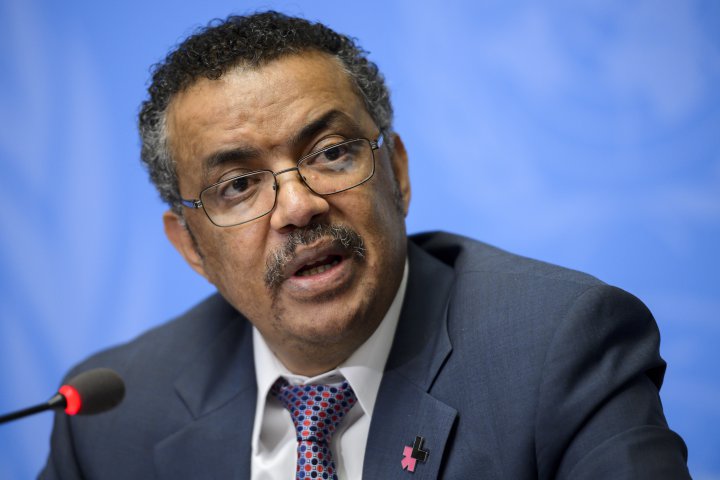
Dr Tedros Adhanom Ghebreyesus
Dr Tedros Adhanom Ghebreyesus, Director General of the World Health Organisation (WHO). Photo credit: FABRICE COFFRINI/AFP/Getty Images

The vaccination has targeted high risk populations in North Kivu, in which the provincial health minister and the provincial coordinator of the Expanded Programme on Immunisation were the first to be vaccinated.

They were followed by first line health workers from the Mangina health center, 30 km from the town of Beni, who had been in contact with people who were confirmed cases of Ebola.

“Vaccines are an important tool in the fight against Ebola. This is why it has been a priority to move them rapidly into place to begin protecting our health workers and the affected population,” said DRC Health Minister Dr. Oly Ilunga.

A total of 3,220 doses of rVSV-ZEBOV Ebola vaccine are currently available in the country, while supplementary doses have been requested.

While the vaccine goes through the licensing process, an agreement between Gavi, the Vaccine Alliance, and Merck, the developer of the vaccine, ensures that additional investigational doses of the vaccine are available.

The vaccination operation was launched just one week after the announcement of a second outbreak of Ebola this year in the country, in which a total of 44 cases have been reported so far as of Wednesday, including 17 confirmed and 27 probable.

The death toll has risen to 36.

Earlier on Tuesday, Peter Salama, deputy director-general of emergency preparedness and response at the WHO, said on Twitter that results of genetic analysis had confirmed Ebola Zaire strain was the cause of the latest outbreak in the DRC.

The WHO, he said, is providing logistical support for the establishment of the cold chain and sending supplies needed for the vaccinations, in addition to supporting the negotiation of protocols with the manufacturer and national authorities.

He said that the WHO was also supporting the deployment of vaccination experts from Guinea to work alongside national staff, who began the vaccination.

However, North Kivu province and eastern areas of the adjacent Ituri province are among the most populated in the DRC, with many major cities, which brings heightened risks and new challenges in the fight against Ebola, according to Dr. Salama, who has called for fighting the outbreak with all tools, old and new.

Ghana takes steps to phase out mercury containing products

0

Authorities in Ghana have taken steps to phase out items and chemicals that contain mercury in line with the Minamata Convention on Mercury, an official has said.

Sam Adu-Kumi
Sam Adu-Kumi

Sam Adu-Kumi, Director for Chemicals Control and Management Centre and Registrar of Pesticides of the Environmental Protection Agency (EPA), stressed the need for some level of urgency in public education and sensitisation of decision makers to achieve this goal.

This, he said, was important considering the harmful effects of mercury on the environment and human life.

“Mercury discharged into the atmosphere and in the environment contaminates the food chain for plants, animals and finally affects humans who consume them,” he told the media in Accra on Tuesday, August 7, 2018 at a workshop themed: “Minamata Convention: Roles and responsibilities of Ghana’s health sector”.

The Minamata Convention on Mercury, a global treaty to protect human health and the environment from the adverse effects of mercury, was adopted by the Conference of Plenipotentiaries held in Minamata and Kumamoto, Japan, in 2013.

“We were given up to 2020 to complete the phasing out or phasing down process, but looking at the magnitude of work involved, we have requested for extension, so we are now expected to complete the process by 2025,” the official said.

The workshop was organised by the United Nations Development Programme – Global Environment Facility (UNDP-GEF) in collaboration with the Ministry of Health, Ghana Health Service, and in partnership with Ecological Restorations. It was aimed at raising awareness among relevant stakeholders on the Minamata Convention.

The United Nations Environment Programme (UNEP) categorises mercury as a “global threat to human and environmental health” because of its harmful effects to human health and environmental ecosystems.

Environmentalist clamours federal legislation on forest reserves

0

An environmentalist, Mr Sylvester Okonofua, has called on the Federal Government to provide legal instruments and review its policy on forest reserves in the country.

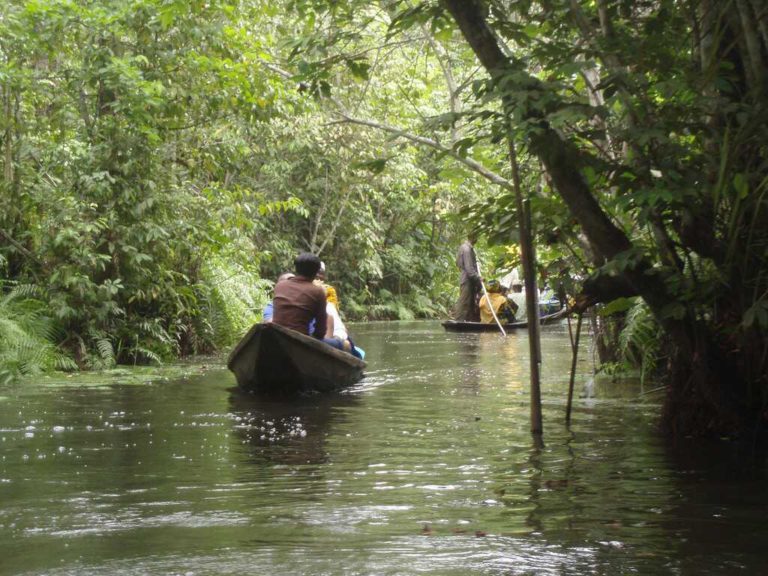
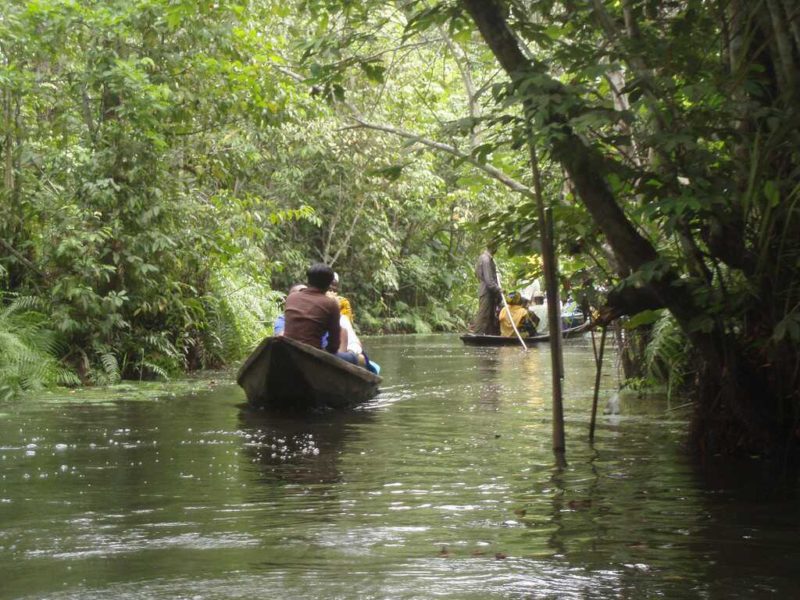
Omo-Forest-Reserve
Canoeing in the Omo Forest Reserve, Ogun State

Okonofua, who made the call in a statement made available to News Agency of Nigeria (NAN), on Wednesday, August 8, 2018 in Abuja, stressed the need for the provision of policy on forest reserves.

The Food and Agriculture Organisation of the United Nations (FAO) record indicates that the total land area of Nigeria is 923,786 km and 7.7 per cent of the total land area is classified as forest and 2.9 per cent of the total land areas are other wood land with a total growing stock of 936 million meters.

According to the record, Nigeria has a diverse and complex vegetation types with contiguous ecological zones, which includes Sahel Savannah, Sudan Savannah, Guinea Savannah, Deride Savannah, low land rain forest, freshwater swamp forest, mangrove swamp forest and coastal vegetation.

He said in the document titled: “Nigeria final draft country report on National forest investment programme,’’ that there are presently no updated legal instruments on forests as the last one in use was produced by the Federal Ministry of Environment in 2003.

Okonofua noted that most of the provisions of the bill are now obsolete and need to be revised and represented to the appropriate authorities of government.

“Each state has its own forestry law on administration, management and control of forest estates, it also regulates control of licenses and permits to primary forest industries like saw mills and timber markets.

“The law also empowers the state governors to de-reserve a constituted forest reserve on ground of public interest.

The environmentalist said the review has become imperative because such power has been used in all the states of the federation to convert some thousands of hectares of land in the forest reserves to other uses.

Okonofua said that the main strategic framework of the country is contained in the vision 20 20: 20, which recognised the need for sustainable management of forest for economic and social development benefits for the present and future generations.

He said that specifically the forestry objective is to ensure that 25 per cent of the total land area of Nigeria is brought under sustainably managed forest aimed at producing forest resources in fostering environmental sustainability.

“This is in line with the FAO’s recommendation for the minimum forest cover and environmental objectives of the MDGs goal 7 of ensuring environmental sustainability.

“The forestry of vision 20 20: 20 is also in consonance with the Sustainable Development Goals (SDGs), particularly goal 15 which is regarded as the most relevant for the forest related issues,’’ he said.

He, however, noted that the National forest policy of 2006 is the main blueprint instrument for forestry development in Nigeria.

Okonofua said it guided the actions of the Federal Government in forest sector while the states were expected to use it as a model to enact state specific forest policies.

He lamented that to date no state has domesticated the policy 10 years after, while some of the provisions in the policy are now obsolete and need urgent revision.

Okonofua noted that there are so many challenges militating against the sustainable development of the forestry sectors in Nigeria.

He said they include deforestation and degradation, unsustainable management of the forests, pastorialism, mining, and oil exploration.

Others are bush burning, human settlement, infrastructural development and agricultural practices.

Okonofua added that the indirect causes include policy failure, obsolete forest laws, lack of implementation of existing laws and population pressure, poverty and insecure land tenure.

Okonofua also observed that the National Council on Environment (NCE) the highest policy making body in environment sector also lacks adequate funds to function maximally.

An official of the Ministry of Environment told NAN on condition of anonymity that the forest sector has been hindered by lack of funds and frequent policy changes.

He noted that delays are often experienced in the overall budgeting process and the funds released are often short of budgetary allocations, thereby distorting implementation schedules.

“For example, capital releases were not made for all the national budget items in 2015 and the late releases was witnessed in 2016.

“This is a great concern in time bound activities, such as afforestation and reforestation development projects and programmes,’’ he said

The source told NAN that some projects and programmes were inserted into the annual budget outside the forestry projects resulting in redistribution of funds.

Quelea birds invade 17 Jigawa communities

0

Quelea birds have invaded farmlands in 17 communities in Auyo Local Government Council of Jigawa State.

Quelea birds
Quelea birds

A News Agency of Nigeria (NAN) investigation reveals that the communities are: Ayama, Furawa, Auyo, Mado, Adaha Gamsarku, Tsidir, Hadiyo, Gatafa, Marina, Anauya, Tagir, Zumoni, Muran, Fige, kateje and Hakudau.

The red-billed quelea, also known as the red-billed weaver or red-billed dioch, is a small migratory, sparrow-like bird of the weaver family. It is native to sub-Saharan Africa.

Malam Tukur Dauda, a farmer at Auyo, told NAN that his rice farm was destroyed by the birds on Monday night.

“Our farms were attacked by these birds. Within two hours, they ate everything in the farm which is about one hectare,” he said.

Also speaking, another farmer in Furawa, Malam Yahaya Suleiman, said: “These birds have established a permanent base in this area and unfortunately, government’s response to these attacks usually comes late.”

Bello Mohammed, who grows wheat in Ayama, however, said the net he used in covering his farm was what saved it from the disaster.

He said: “The length of the net we use to distract the birds is 100 m and its width is between 20 and 30m. If you go around, you will find the net covering between two to three kilometers of farmlands.

“But the problem is that we still don’t feel safe when we see the birds flying in the sky.”

When contacted, a source at the Hadejia Zonal Office of the Jigawa Agricultural Development Agency (JADA) said the agency had received a report from the communities on the quelea birds’ invasion.

“We are aware of the current invasion in about 17 communities in Auyo.

“Preparations for the fumigation in these communities have been concluded. We are only waiting for the pilots to inform us about their arrival,” he said.

NAN reports that, on Jan. 24, Minister of Agriculture, Audu Ogbeh, announced that locusts and quella birds from neighbouring Niger Republic have invaded farms in parts of Borno and Adamawa states.

He revealed, however, that efforts of his ministry to curb the destruction by aerial spraying of insecticides on affected farms and areas had been hampered by warnings from the Nigerian military about security concerns.

According to the World Food Programme, subsistence farmers in sub-Saharan Africa have been at the mercy of the voracious Red-billed Quelea bird and tiny “feathered locust” still decimate fields across the continent.

By Nabilu Balarabe

Niger to check tree felling by penalising charcoal merchants

0

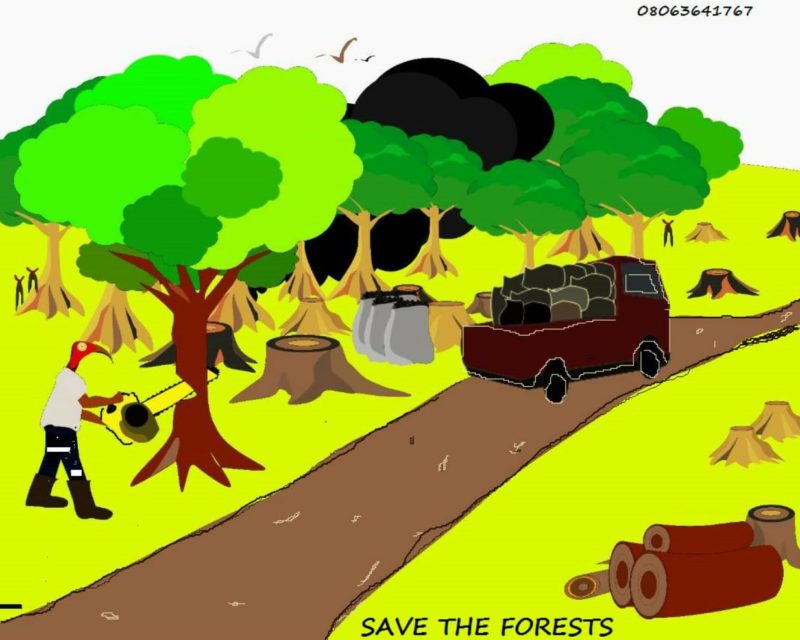
The Niger State Government on Wednesday, August 8, 2018 said it would strengthen its environmental laws to curb tree felling and penalise anyone engaged in sale of charcoal in the state.

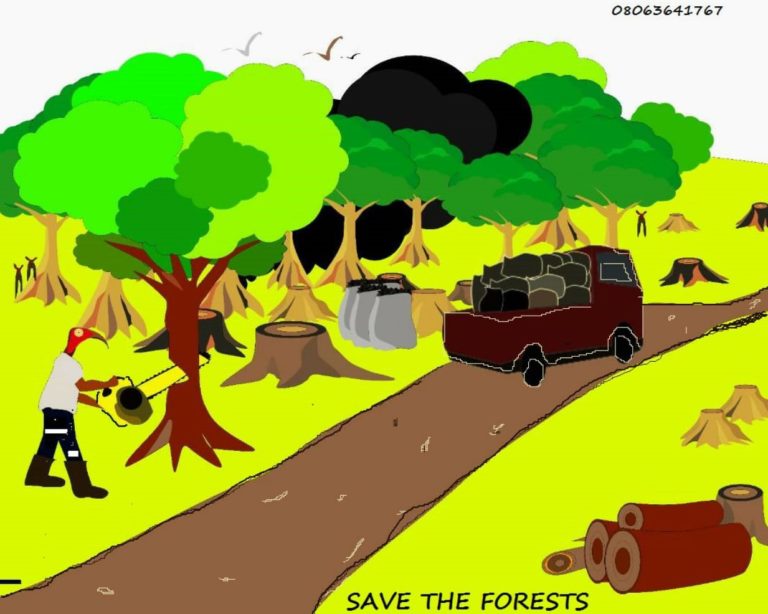
Forest
Saving the forests from charcoal merchants

Governor Abubakar Bello said this at the flag-off ceremony to promote cultivation of cashew by the state government in collaboration with National Cashew Association (NCAN) in Bida Local Government Area of the state.

He said that an expanded security meeting would be held to strengthen the law, to discourage felling of economic trees by some undisciplined and unpatriotic persons.

“We must take this seriously to penalise whoever is caught selling charcoal.

“A report reaching me is that in the next five to 10 years, there won’t be any Shea nut tree in the state as a result of activities of some undisciplined persons.

“This charcoal is not being used by the people in the state, but it’s being transported and exported to other countries,” he said.

Bello disclosed that the state government had resolved to plant 10,000 cashew trees, and directed each Local Government to provide 50 hectares of land for the plantation.

He solicited the support of traditional rulers and political appointees to sensitise their people to desist from felling of economic trees for charcoal.

In his address, Alhaji Ibrahim Jibril, Minister of State for Environment, said Niger State, with over 76,000 square kilometers of land mass which is the biggest in the country, needs to adequately harness the resource for agriculture purposes to feed the nation.

He said that there was more than 400,000 hectares of land for cashew cultivation across the country which could be turned into wealth, if properly harnessed.

The minister said that statistics showed that cashew could earn N24 billion in terms of foreign exchange and could be turned to juice just as its shell could be used in paint making.

Jibril disclosed that the ministry was partnering with state government and Nigeria Erosion and Watershed Management Project (NEWMAP) to use additional funding of $400 million from the World Bank to address gully erosion in the state.

In his remarks, the Etsu Nupe, Alhaji Yahaya Abubakar, said that the choice of Edu-Soko Farm Nigeria Limited, as one of the sites for the project was a welcome development.

He said that the farm was established to promote and protect green environment for economic purpose as well as the empowerment of youth and women.

Abubakar said that about 2,500 youths from the local government areas of the state would be trained on leadership skills, while 250,000 cashew seedlings would be distributed for planting before the year ends.

By Rita Iliya

Government, NIRSAL, CIAT seek to curb emissions through climate smart agric

0

The Federal Government and the Nigeria Incentive Based Risk Sharing System for Agricultural Lending (NIRSAL) are working with the International Centre for Tropical Agriculture (CIAT) to reduce greenhouse gas emissions.

Ibrahim Usman Jibril
Environment Minister of State, Ibrahim Usman Jibril

They also signed an agreement in Abuja on Wednesday, August 8, 2018 to profile climate risks for agricultural commodities.

The risks facing agricultural commodities include flooding, drought, and desertification among others.

Speaking at the event, Mr Aliyu Abdulhameed, the Managing Director of NIRSAL, said the agreement was aimed at achieving the country’s Nationally Determined Contribution (NDC) signed at the UN Climate Change Conference of Parties (COP 22) in Paris.

Abdulhameed explained that the partnership was also geared toward protecting investments, providing an overview of climate risk issues and vulnerabilities to potentially impact agricultural production.

He said the move would have a direct impact on smallholder farmers across the country to increase their production and income.

He said the partnership would strengthen existing support systems in agriculture, build capacity and facilitate the development of robust response plans and programmes for a climate-resilient agriculture sector.

According to him, this provides a policy directive for the pursuit of climate compatible development in Nigeria.

“We understand that our efforts in growing the agricultural sector must be sustainable and at the same time, not detrimental to the environment.

“In our analysis, close to 30 per cent of the Nationally Determined Contribution (NDC) Goals for Nigeria are achievable via sectoral focus on agriculture alone,’’ he said.

The Minister of state for Environment, Alhaji Ibrahim Jibril, said the country had signed the Paris agreement and had committed itself to reducing green-house emission by 20 per cent.

Jibril, represented by Dr Peter Tarfa, Director, Climate Change, said the agriculture sector was a major emitter of green-house gases.

“The Federal Government has signed the Paris agreement and while doing the NDC, we realise that the agriculture sector is the major emitter of green-house gases.

“This becomes very central that in tackling climate change in this country, we have to reduce emissions from this sector bearing in mind that that agriculture sector is the major employer of labour.

“Priority of Nigeria and other developing countries is in the area of adaptation to the impact of climate change.

“It is for this reason that we are creating a platform through a policy direction for participation by NIRSAL and CIAT to bring benefits to the end user, who are the farmers,” Jibril said.

The African Director of CIAT, Dr Debisi Araba, said the centre would exchange knowledge and expertise with NIRSAL with a view to improving access to finance to farmers.

Araba said the centre would work with farmers to understand how climate change impact their practices, how they are coping and build a work-plan to get alternative options to improve agricultural production.

The CIAT is a non-for-profit research and development organisation; it is dedicated to reducing poverty, hunger and protecting natural resources in developing countries.

On Nov. 26, 2015, President Muhammadu Buhari approved Nigeria’s NDC to ensure adaptation to the Paris agreement.

By Ginika Okoye

Bridges, crops suffer as heavy rains drench Turkey

0

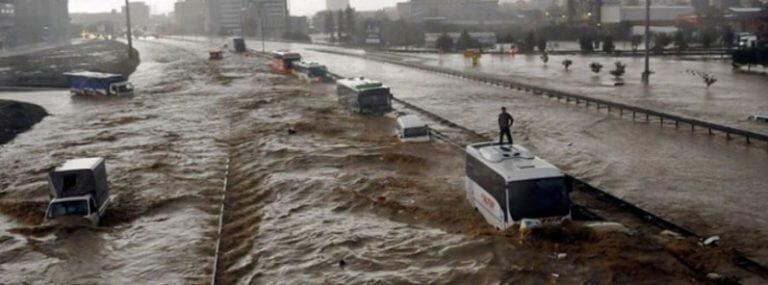
Bridges collapsed, hundreds of workers were evacuated from factories, and tonnes of hazelnut crops were swept away on Wednesday, August 8, 2018 as torrential rains lashed Turkey’s Black Sea coast.

Turkey flooding
Flooding in Turkey

The coastal province of Ordu was badly hit.

A statement from the governor’s office said heavy rains caused landslides and more than 100 flash floods.

A total of 715 workers, at a hazelnut farm and a textile factory, had to be moved to safety, the governor’s office said.

The coastguard joined rescue efforts. Helicopters, ambulances and bulldozers were dispatched to several neighbourhoods in Ordu, one of 18 provinces along the 1,700-kilometre Black Sea coast.

Broadcast footage showed people scrambling to higher ground.

One elderly man was rescued from the balcony of his two-storey home in the bucket of a bulldozer.

Cars and houses were underwater.

“We are having a serious disaster in seven of our districts. As many as eight bridges were destroyed,’’ Ordu Mayor Enver Yilmaz told private DHA news agency.

There were no casualties so far, five people were injured.

Haberturk daily reported that 30,000 tonnes of hazelnut crops were washed away in the floodwaters.

Turkey produces nearly 70 per cent of the world’s hazelnuts, according to the Customs and Trade Ministry.

The weather bureau warned that heavy rains will continue overnight through Thursday.

Ahead global action summit, world prepares to ‘rise for climate’

0

On Saturday, September 8, 2018, people around the world will take part in hundreds of actions under the banner of “Rise for Climate” to highlight increasing climate impacts and the need for real climate leadership.

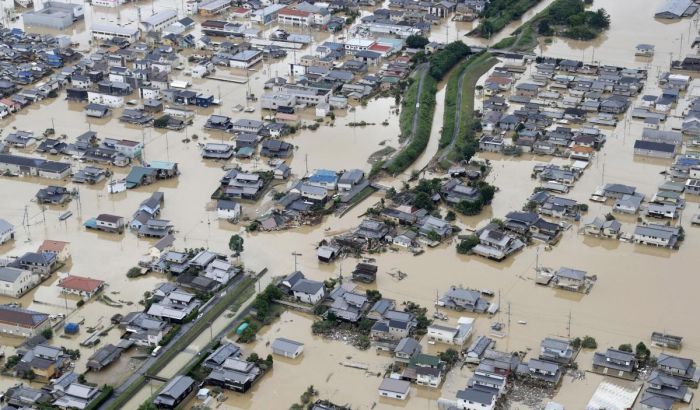
Flood in Japan
Flooding in Japan

Persons across five continents will be showcasing community-led solutions to the climate crisis and demanding that political leaders and decision makers step up their climate action ahead of the Global Climate Action Summit taking place on September 12 in San Francisco, California.

The communities most impacted by the fossil fuel industry and climate change will be participating thus:

  • In Africa there will be climate summits where local leaders will call for an acceleration of the just transition to fair and equitable energy systems;
  • Pacific Island nations will petition their local institutions to commit to 100% renewable energy;
  • Affected communities in Thailand will be marching outside the UN climate change conference in Bangkok to ensure negotiators hear the message of the people joining Rise for Climate around the world;
  • In Latin America groups will rise to challenge dangerous fossil fuel extraction methods like fracking; and
  • In Europe, communities will challenge their local municipalities to ditch dangerous fossil fuels and transition to 100% renewable energy.

So far in 2018, the world has witnessed a range of severe impacts related to climate change including: numerous floods in Kenya, Ghana, Cote d’Ivoire and Sudan and in sub-Saharan Africa, Cape Town became the first major city in the world to suffer and come back from the brink of Day Zero brought on by extreme droughts.

With 19 countries on the African continent going to the polls in a few months, including South Africa, Senegal, Ghana and Benin, Rise for Climate will presumably set the tone for a series of upcoming political moments and challenge decision-makers to act. The reality of the climate crisis should be the pressure that necessitates actions to tackle it.

The launch of the IPCC’s special report on the consequences of global warming surpassing 1.5C degrees should galvanise governments in their efforts to prevent the worst impacts of climate change, while the Climate Vulnerable Forum being held by the governments in-line to suffer the worst consequences of unchecked global warming is a chance to learn from the leadership of those on the frontlines. The Global Climate Action Summit convening non-state actors, and the UN Climate Negotiations bringing governments to the table, are opportunities for decision-makers at all levels to provide deeper commitments and accelerate their responses.

Lerato Ngakane of 350Africa.org said in a statement: “The actions of the Rise for Climate mobilisation will be highly visual, creative and unique with renowned artists located in Brazil, Canada, Samoa, New Zealand, Ukraine, Portugal, Netherlands, Uganda, and Indonesia as well as community groups across the planet taking part to help bridge language, culture and geographic gaps and find the common core to build a groundswell of support for real climate leadership, increase the pressure on national leaders that are falling short of their commitments, and create the right momentum to secure a fast and just transition to an equitable world.”

“Climate impacts are hitting communities right now with heat waves, wildfires, droughts, and flooding making headlines in the last few weeks alone. This September thousands of people around the world are going to draw a line in the sand and say no more to the root cause of these tragedies, no more to fossil fuels. We have all the solutions we need at hand; the time is now to accelerate a just and swift transition to 100% renewable energy for all. Communities all around the world will expressively and artistically demonstrate why it is time for governments to take example from local leaders,” May Boeve, Executive Director, 350.org, stated.

“For people of faith and spirit, the choice couldn’t be clearer: mass climate-induced humanitarian and ecological devastation, or an all-we’ve-got commitment to life in the form of 100% renewable energy for all and a just transition for affected workers and communities. We choose life. And, we want our leaders to show us by their commitments that they are making the same choice,” Rev. Fletcher Harper, Executive Director, GreenFaith, stressed.

“In exactly one month, people around the world will rise to challenge leaders participating in the Global Climate Action Summit in California and in other key meetings beyond to say 100% renewable energy is what we want, and we want it now because it is good for our health, pockets, securing jobs and robust economies. The age of fossil fuels is closing. It is a dying industry. If renewable energy technology and cost continue on their current path of exponential improvement, a fossil fuel smoke stack will become a relic of the past in no time,” Wael Hmaidan, Executive Director, Climate Action Network, noted.

“This October hundreds of scientists from top institutes will report to our governments, describing exactly how much devastation will be wrought on our communities if they do not take urgent, transformative action to limit global warming to 1.5°C degrees. In the Pacific region, we don’t need scientists to tell us this, in my home country the Philippines we are already managing the horrendous consequences of massive storms like Typhoon Yolanda. It is the imminent threat to our nations and cultures combined with the tenacity of communities in the region that drives us to lead the way in mobilisations like Rise for Climate and show the rest of the world what true climate action looks like,” said Lidy Nacpil, Coordinator of the Asian Peoples Movement on Debt and Development.

“The decisions we make now will define our ability to secure a more prosperous future and keep warming to levels that will avoid catastrophic climate change impacts. It will take everyone doing everything to change climate change. That’s why we are joining local leaders, frontline communities, and individuals and calling on our political leaders to step up and lead the momentum for strong climate action. The voice of ordinary people matters and can make a difference,” said Manuel Pulgar-Vidal, WWF’s global climate and energy programme leader.