Executive Secretary, Anambra State Emergency Management Agency (SEMA), Chief Paul Odenigbo, said the state government has created 28 emergency shelter centres in flood prone areas in case of flooding.
Chief Willie Obiano, Governor of Anambra State
Odenigbo disclosed this in an interview with News Agency of Nigeria (NAN) on Monday, September 10, 2018 in Awka, the state capital.
The 28 emergency shelter centres include six in Anambra West, six in Anambra East, four in Awka North, four in Ogbaru, three in Ihiala, three in Awka South and two in Ekwusigo.
According to Odenigbo, the emergency shelter centres were set up in flood prone Local Government Areas’ secretariats or headquarters.
He, however, urged residents to get prepared for emergency evacuation or relocation, in case of flood disaster.
Odenigbo added that residents have also been urged to have a small box, where they should put relevant and vital documents, as well as be ready for evacuation anytime the need arises.
He noted that with the forecast of Nigeria Hydrological Services Agency (NIHSA) and Nigerian Meteorological Agency (NiMet) on flooding in 2018, it might likely be in the same magnitude of 2012, so SEMA had planned ahead.
The Executive Secretary said that massive awareness on how to mitigate the natural disaster had been on, saying that the agency would continue to create the required awareness.
He also listed likely flood prone areas, Awka North, Ihiala, Idemili South , Ayamelum, Ogbarua, Anambra West, Anambra East and Ekwusiego .
According to him, SEMA is prepared to evacuate residents of the affected areas to the centres.
He stressed that arrangements had been concluded by the state government on relief materials to be used across the State.
Odenigbo said the agency had held crucial meetings with the Military and relevant para-military organisations in the state to respond promptly to distress calls in case of flooding in any of the listed communities.
He reiterated his call on residents of riverine areas to get ready to relocate to higher grounds as soon as the water levels of their rivers, streams and creeks rise to dangerous proportions.
Odenigbo also disclosed that the agency is in regular touch with the National Emergency Management Agency, to jointly tackle the challenges of the impending surge.
He, however, added that the agency is also contending effectively with flash floods in urban areas of the state, adding that residents must avoid building on water channels or throwing refuse in drains.
The Government of the Netherlands and the Global Centre on Adaptation on Monday, September 10, 2018 unveiled plans for the formation of a forthcoming Global Commission on Adaptation, featuring the Netherlands as a key convener, which will be overseen by the 8th Secretary-General of the United Nations Ban Ki-moon, Co-chair of the Bill & Melinda Gates Foundation Bill Gates, and World Bank CEO Kristalina Georgieva.
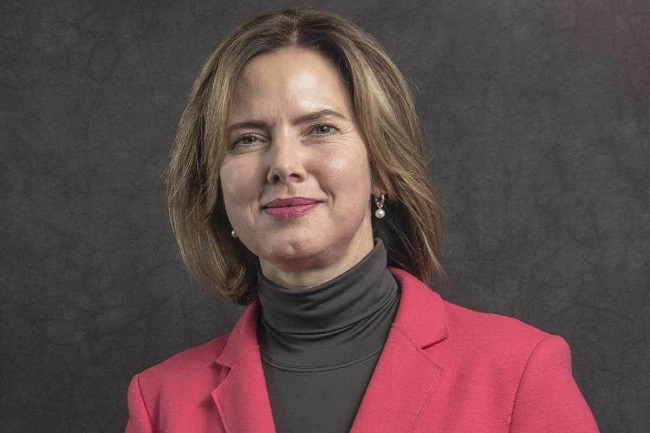
Dutch Minister, Van Nieuwenhuizen
The new Commission will be co-hosted by the Global Centre on Adaptation, an international organisation hosted by the Netherlands, in partnership with World Resources Institute. It will formally be launched on October 16 in The Hague, at which time the names of some 20 leading global Commissioners and 10 convening countries will be announced.
The announcement was made during an event marking the new construction of an innovative climate-adaptive floating office in Rotterdam by Dutch Minister Van Nieuwenhuizen (Infrastructure and Water Management), the initiating Commissioner. Van Nieuwenhuizen noted that the Commission will elevate the political visibility of adaptation and will focus on solutions, catalyzing a global adaptation movement and accelerating action.
“For the Netherlands, looking for solutions to water issues is part of everyday life. This is not yet the case in other areas and countries that also increasingly are faced with extreme weather,” the Minister stated. “Climate change is making itself felt almost on a daily basis. Take, for example, the prolonged drought that currently is affecting large parts of Europe. By launching this Commission, we aim to press the need for worldwide climate adaptation,” she added.
Secretary-General Ban Ki-moon said, “Today’s announcements by the Government of the Netherlands is a critical step forward to set in motion more vigorous attention to and action around climate adaptation. I congratulate Minister van Nieuwenhuizen for her role as an initiator of the Global Commission on Adaptation and look forward to collaborating with her and other global leaders as we embark on our worldwide mission to accelerate adaptation.”
The floating office to be constructed in Rotterdam will be home to the Global Centre on Adaptation, which has expanded its mission under new leadership. In addition to its office in Rotterdam, the Global Centre will have an office in Groningen, which will be inaugurated by Mr. Ban on October 17. Patrick Verkooijen, the newly appointed Chief Executive Office of the Global Centre, said his goal is to inspire clarity behind the adaptation agenda and pursue pragmatic steps that can help address policies, investments, financing, and governance needed for more adaptation action globally.
“We act as a solutions broker,” Verkooijen said, “bringing together governments, the private sector, civil society, intergovernmental bodies, and knowledge institutions that can address the obstacles slowing down adaptation action.”
Of the Global Centre, Mr. Ban noted that “the role of Global Center on Adaptation will be significant because we need all societies to learn from one another. Under the exemplary and bold leadership of Patrick Verkooijen, the Center will help accelerate transformation at scale and at speed.”
The World Health Organisation (WHO) says no fewer than 800,000 people commit suicide annually, the second leading cause of death among people between the ages of 15 and 29, in 2016.
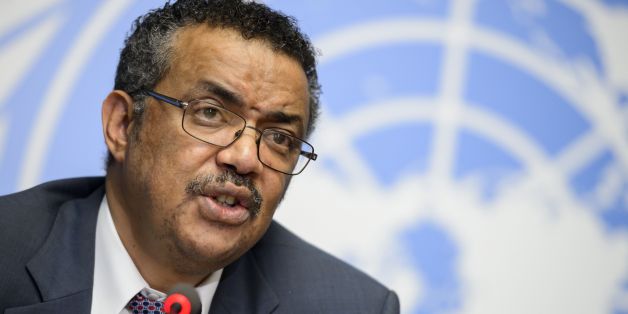
Dr Tedros Adhanom Ghebreyesus, Director-General of the World Health Organisation (WHO). Photo credit: AFP / FABRICE COFFRINI / Getty Images
WHO made this known on Monday, September 10, 2018 in a statement to commemorate the World Suicide Prevention Day.
The global health agency said the common methods of suicide were hanging and firearms occurring in all countries and regions, whether rich or poor.
It added, however, that most occurred in low and middle-income countries, which accounted almost four-fifths of global suicides in 2016.
“In high-income countries, there is a well-established link between suicide and mental health issues such as depression and alcohol use disorders.
“But many suicides take place on an impulse during moments of crisis,” it said.
The UN health agencies estimated that a person died every 40 seconds by suicide and up to 25 times as many make a suicide attempt.
To help communities to prevent suicides, WHO and the Mental Health Commission of Canada released a toolkit.
The toolkit outlined ways to prevent this serious public health problem, one of which is knowledge of the most commonly used methods, and restrictions of access to these methods.
Other examples included policies to limit alcohol and drug abuse, effective mental health care, and follow-up care for attempted suicide cases.
It estimated that the method used for 20 per cent of global suicides was pesticide self-poisoning, most of which occurred in rural agricultural areas in low- and middle-income countries.
WHO explained that as well as the health sector, many sectors of society needed to be involved in preventing suicide, including education, labour, agriculture and the media.
“These actors all need to work together if they are to have an impact on this complex issue.
“People commit suicide at all times of their lives, and each one is a tragedy that affects families, communities and entire countries, and leaves behind long-lasting effects.”
In many countries, suicide remained a taboo subject, WHO said adding that this could prevent those who had attempted suicide from getting the help they needed.
To date, only a few countries had included suicide prevention among their health priorities and only 38 countries have a national suicide prevention strategy, WHO said.
World Suicide Prevention Day is an awareness day observed on Sept. 10 every year to provide worldwide commitment and action to prevent suicides with various activities around the world since 2003.
In anticipation of flooding in some states in the southeast, the National Emergency Management Agency (NEMA) in the zone has begun to reposition itself in the bid to ensure improved disaster management.
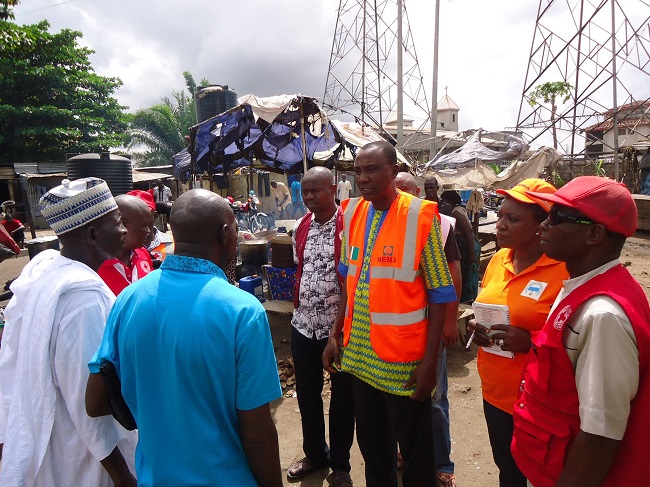
NEMA officials on duty
Mr Walson Ibarakumo, the Coordinator, NEMA, Enugu zonal office, said this in Awka, the Anambra State capital, on Monday, September 10, 2018 during a workshop organised for all the staff of the agency.
The workshop had ‘‘Repositioning, Strengthening and Reorientation of the Agency’s Operations” as its theme.
Ibarikumo said there was the need to acquaint the agency’s personnel with the modern response strategies which the new management had introduced.
The coordinator emphasised that the aim was to make the services of the agency meet world highest standard.
He said that the Search and Rescue Department of the agency had been changed to Response and Recovery Department as part of the re-strategising process.
‘‘This workshop is to share understanding of the identified gaps in order to reinforce and reposition the agency for better service delivery.
‘‘It has become necessary for staff to come together especially in this flood season to brainstorm so that we can operate more efficiently and effectively and gear ourselves up towards a world class agency.
‘‘Every staff should realise the enormity of the task ahead and brace up for it; therefore, you are expected to apply the information gathered here to make your service delivery better,’’ he said.
Ibarikumo said further that NEMA had started delivering food, non-food and livelihood relief materials to the state in readiness for the anticipated flooding.
He said the agency was working with the Anambra Emergency Management Agency to ensure that the Internally Displaced Persons (IDPs) camps in the state were in good shape.
The coordinator called on those living in the disaster-prone areas and other disaster-exposed persons to contact the agency for quick response and rescue in case of any eventuality.
The world will struggle to curb global warming unless nuclear power takes a more prominent role, head of the International Atomic Energy Agency (IAEA), Yukiya Amano, has warned.
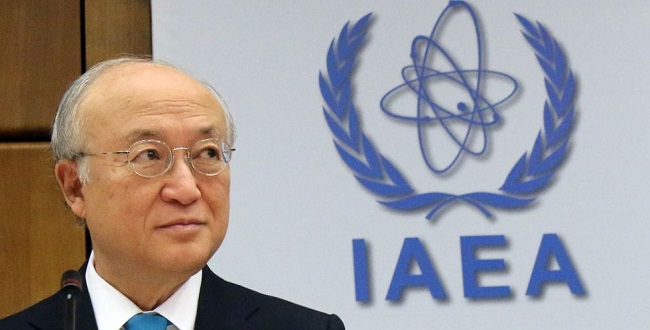
Director General of the International Atomic Energy Agency (IAEA), Yukiya Amano
On Monday, September 10, 2018, the Vienna, Austria-based agency published its annual energy projections, in which the global capacity to produce nuclear power would fall by 2050.
The IAEA said that nuclear energy had grown less competitive due to low natural gas prices, subsidised renewable energy sources, and countries’ decisions to phase out reactors in the wake of the 2011 Fukushima disaster in Japan.
In addition, many ageing reactors are expected to be shut down around 2030.
The nuclear agency also drew up an optimistic projection, in which atomic power capacity would nearly double by the middle of the century, assuming that global energy policies shift towards nuclear reactors and Asia’s electricity demand continues to grow.
“The declining trend in our low projection for installed capacity up to 2050 suggests that, without significant progress on using the full potential of nuclear power, it will be difficult for the world to secure sufficient energy to achieve sustainable development and to mitigate climate change,” IAEA chief said.
The world’s 455 operating reactors accounted for a tenth of the world’s power generation in 2017, and for a third of low-carbon electricity.
The National Emergency Management Agency (NEMA) on Monday, September 10, 2018 held an emergency meeting with the Kebbi State Emergency Management Agency (KSEMA) to gather data on flood victims in the state.
Alhaji Atiku Bagudu, Governor of Kebbi State
Dr Onimode Bandele, Deputy Director, Research and Rescue Department of NEMA, said the agency would soon hold an emergency meeting with stakeholders affected by flooding in the state, to enable the agency to gather data on the victims.
“The data we are looking for is the number of houses and farmlands destroyed, as well as the number of deaths recorded in the incidents across the state.
Bandele also said that they were in Kebbi to commiserate with the Government and people of the state over the loss of lives recorded in the incidents.
“Let me use this opportunity, on behalf of the Director-General (NEMA), Mr Mustapha Maihaja, to condole with the government of Kebbi and the families of victims who lost their lives in the flood disasters,’’ he said.
He also apologised for the delay in donating relief materials to the victims, stressing that it was as a result of some restructuring in NEMA, which would enhance the agency’s operations.
Bandele assured that NEMA has been repositioned to enable it to effectively address its challenges.
Alhaji Sani Dododo, the Chairman, Kebbi State Emergency Management Agency (KSEMA), commended the NEMA Director for the visit.
Dododo said the disaster, which occurred in Danko, Wasagu and Fakai local government areas of the state, led to the deaths of nine persons, including an Army Officer, who died while trying to rescue a woman following the collapse of a bridge.
Governor of North Bank Region (NBR) in The Gambia, Ebrima Dampha, has reiterated his government’s call for the restoration of the disappearing vegetation cover of the region through the planting of indigenous and utility trees as a token of heritage for the coming generation.
Governor Ebrima Dampha of NBR
With the reality of the fast approaching of the Sahara Desert, he said restoration of the cover has become a compelling demand for an integrated approach.
Dampha make this call during the fourth annual tree planting and cleansing exercise organised by the National Environment Agency (NEA) and Kani-Kunda Tenda Youth and Social Development Association (KTYSDA) held in that Sanjally village, North Bank Region.
The Governor planted the first mahogany seedling, followed by the village Alkalo marking the beginning of the planting party. All other institutions present were given the opportunity to plant a tree on behalf of their institutional heads officially marking the beginning of the massive planting with technical support from staffers of Forestry Department. The exercise was graced with melodious traditional drum beat and dancing by the visiting traditional group from Jarra Pakalinding.
The Governor urged the community to jealously safeguard the forest for the benefits of the entire region and the country at large and gave assurance to support the association to improve the region’s tree population. Dampha added that government cannot do it all and theirs is an example of complementing government`s effort, while urging other communities to emulate them.
The Governor further called on the community to take ownership of their own development and bear in mind that peace has no substitution on Earth. He finally declared the session open and wished them a very fruitful ceremony and many more in advance in peace, progress and prosperity.
According to the village Alkalo, Lamin Naban, their local institutional by-laws helped them a lot in their conservation scheme, and that thanks to the understanding of the habitants, an integrated approach has been devised to curb some of the local menaces. He thanked the youths for their giant steps that they have taken to date and also thanked the NEA for their continuous support and collaboration.
NEA`s Programme Officer for Environmental Education & Communication, Sheikh Alkinky Sanyang, advised that all the transplanted seedlings must be protected from both human and animal intrusion, and further called for a higher survival rate of the newly planted seedlings by protecting them from both human and animal intrusion.
He spoke on the importance of tree planting and its essence to human life and the environment. He stressed that felling of trees for charcoal production, forest fires and other unsustainable utilisation of forest resources greatly contributed to the effects of climatic change which affects human livelihood, the eco system and the environment in general.
He warned that “No tree, No Life”, signaling that the felling of a single big tree results in the death of many other smaller ones as it falls on them. Trees trap carbon dioxide released from human and carbon monoxide by vehicles serving as a carbon sink, he pointed out.
He finally warned the community that the ban on plastic bags still holds and soon there will be a massive campaign and enforcement and those found wanting will be dealt accordingly. He informed the gathering that plastics cause a lot of harm to human health, marine lives, environment, and agriculture, animals.
This he attributed to two toxic chemicals (dioxin and furan) that are used in the production of plastic bags and that the two chemicals are among the 12 chemicals called Persistent Organic Pollutants (POPs) which were banned globally due to their impact on human health and the environment.
In his farewell speech, the Association`s outgoing President, Lamin Saidy, said the main aim of the activities is to foster more collaboration and corporation amongst community members and bring development to their village. In this edition, he said over 3,000 seedlings were transplanted within the community forest and further promised that they will jealously protect them from bushfires.
He concluded by informing the gathering that the essence of the annual tree planting is to mitigate climate change by increasing the carbon print contribution.
Every year the youth association organises a tree planting and cleansing exercise where many utility and food trees are planted in the community woodlot and forest, while the protection schemes for the newly transplanted seedling are strategised.
The Ronald Lynch Dean of the College of Agriculture and Life Sciences (CALS) at Cornell University, Dr. Kathryn Boor, has spurred the 2018 Cornell Alliance for Science Global Leadership Fellows to think of how to contribute towards addressing the challenges bedeviling food security and extreme poverty around the globe.
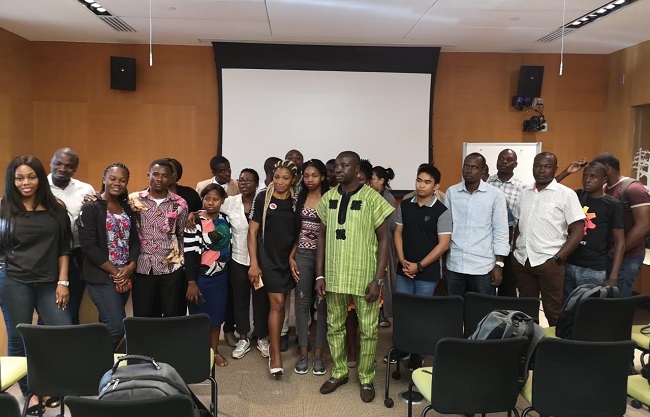
2018 Cornell Alliance for Science Global Leadership Fellows
Dr. Boor urged the 29 new cohort representing nine different countries at a reception held in the University’s main campus in Ithaca, New York while welcoming them into the Cornell community.
She told the team that CALS is established with the clear objective of helping to transform and making the world more habitable and sustainable.
“Our mission here in CALS is to leave the world a better place than we found it,” she said. “And we pour our hearts in trying to achieve this.”
This goal, according to her, has become more important particularly now that the world’s population is projected to surpass over nine billion people by the middle of this century.
She hinted that CALS is working closely with communities across the State of New York and around the world through life changing research, teaching as well as extension service to improve agriculture, food security, health and general well-being as part of efforts to tackle some of the aforementioned predicaments.
The Dean added that researchers in her College are also collaborating across disciplines and multiple areas to mitigate challenges and explore opportunities of relevance to solve some of these complicated and complex problems affecting not just New York as a city but the entire global community.
Part of this research efforts, she explained, includes finding solutions to global challenges such as reducing the consequences of climate change, enabling food security, providing sustainable energy options and understanding how to harness new tools of social media to improve science communication.
Dr. Boor disclosed that CALS international programmes, which include the Alliance for Science, are building more than 100 years of partnerships to improve food systems around the globe.
Looking into the future and predicting the next decade or two, the Cornell CALS’ chief asserts that food security and development related issues are going to increasingly dominate and shape global communities and business leaders.
She expressed concern that only few institutions in the world are better equipped than Cornell CALS to address many of the scientific and technical problems that threaten food security across the world.
The Dean submitted that agricultural transformation must be taken seriously if the global dialogue about ending extreme hunger and poverty is to be achieved.
Okon Unung from Nigeria, a Plant Breeding specialist and a 2018 Global Fellow of Cornell Alliance for Science, said that he is passionate about improving the quality of lives globally by contributing significantly to making sure that everyone around the world has equal access to sufficient, nutritious and safe food at all times to meet their dietary needs.
“As a plant breeder, one of the hallmarks of agriculture is making the right crop varieties that are commensurate with the emerging agricultural dynamics available to farmers because agricultural production system is challenged with numerous factors such as pest and diseases, the incidences of climate change reflected in drought condition and flooding, as well as other biotic and abiotic stresses that has become major challenges,” Unung said at a sideline of the reception.
The target and responsibility of every plant specialist, according to him, is to see how to develop appropriate crop varieties that can suit and meet with the emerging dynamics of agricultural production systems.
Unung disclosed that he was motivated to join the Global Leadership Fellows of Cornell Alliance for Science to boost his capacity as a scientist to demystify the complex science of biotechnology to the knowledge level of farmers to enable them access agricultural innovations and novel research outcomes of agricultural biotechnology to improve their productivity.
“This fellowship will put me in a better pedestal for effective extension service delivery considering that I have worked with farmers through extension programs for many years,” he said. “It will also help me to strategically communicate scientific innovations to the knowledge level of farmers and intended beneficiaries through effective extension programming and science communication.”
The Cornell Alliance for Science seeks to promote access to scientific innovation as a means to ensure global access to life-improving agricultural innovations that can shrink farming’s footprint, deliver food security, reduce the drudgery of field work that often falls on women and children, provide rural families with sufficient income to educate their children, and inspire young people to pursue a career in agriculture and science.
The GFLP welcomed its first cohort in 2015. With 25 graduated fellows in 2015 and 28 graduated fellows in 2016, GFLP fellows represent a total of 20 countries across South and Southeast Asia, Latin America and sub-Saharan Africa, as well as the United States.
The fellows, who are currently undergoing training in strategic planning, grassroots organising, the science of crop biotechnology and effective communications, are expected to return back to their respective countries upon completion of the programme and become advocates of “evidence-based” decisions on global sustainability and agricultural affairs.
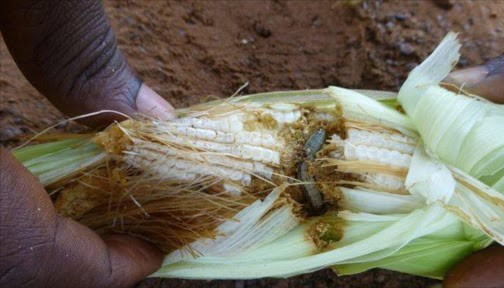
Farmers across Africa are reeling under huge losses linked to the devastation by an invasive specie called Fall Armyworm, also known as Spodoptera frugiperda.
Armyworm invasion
With origins in Eastern, and Central North America and in South America, the caterpillar has since 2016, found its way into 44 African countries, causing significant damage to maize crops with great potential for further spread and economic damage.
In sub-Saharan Africa, fall armyworm has instigated heavy losses to staple cereals, especially maize and sorghum, affecting food security and trade, thus upsetting the continent’s plan to feed itself.
The extent of the destructive influence the invasive pest wrecks on maize alone is estimated to be between $2.5 and 6.2 billion per year, destabilising the livelihoods of around 300 million people.
These and many more reasons spurred experts attending the 2018 African Green Revolution Forum (AGRF2018) which began today in Kigali, Rwanda, to deliberate and explore ways of preventing or mitigating the next outbreak in Africa.
Fall armyworm as a global issue
Setting the scene at a session on building the resilience of Africa’s agriculture against invasive species, Dr. Dennis Rangi, Director General of the Centre for Agriculture and Biosciences International (CABI) identified continuing globalisation through increasing trade, travel, and transport of goods across borders as one of the factors facilitating the spread of invasive species, with increasing negative impacts.
The problem, according to him, “is global in scope and requires international cooperation to supplement the actions of governments; the private sector and organisations at national and local levels.”
The recent arrival of fall armyworm in India is a case in point. The caterpillar’s leap from Africa to India confirms the global nature of invasive species and the need for partnerships to tackle the pest.
Chief Scientist at the USAID Bureau for Food Security, Dr. Rob Bertram sees it in a different light.
To him, fall armyworm is a reminder that we live in a small world that is increasingly becoming smaller and we are more connected than ever. The answer therefore, “is more global connectedness through south-south and north-south learning; strengthening research networks; national level leadership; and a coherent regional approach to invasive species,” Dr. Bertram said.
Is Africa ready for the next outbreak?
Dr Rangi believes “a straightforward, three-pronged, internationally recognised approach to addressing the problem of invasive species, namely prevention, early detection & rapid response, and lastly control will help a great deal.”
However, transforming this approach into a reality in policy and practice remains a huge challenge in Africa as African famers usually find themselves trying to address the latest invasion, when the previous invasion is yet to be cleared.
They also lack adequate information and knowledge about preventing and detecting an invasion early enough.
To overcome these challenges, the CABI DG urged African countries to create a policy and regulatory environment that promote sustainable approaches in tackling invasive species; put in place a national invasive species strategy and action plan; and a sustainable investment plan.
Dr. May-Guri Saethre, Deputy Director General, Research for Development at International Institute for Tropical Agriculture (IITA), bemoaned the fact that the burden of handling and combating invasive species on a day-to-day manner is to a large extent left to the individual smallholders in Africa.
The way forward, according to her, lies in “working together, farmers, government, researchers and the private sector as current outbreaks are wake-up calls for firm action to protect Africa’s agriculture from the destructive impact of pest outbreaks.”
To prevent the next outbreak, technologies capable of stopping pest and disease entry into Africa by pre-emptive biological controls, horizon scanning and effective early warning systems are available and must be deployed to prevent establishment of new pest through coordinated response and eradication programmes,” Dr Saethre added.
Integrated Pest Management to the rescue?
Despite advances in technology, food production in Africa still largely lies in the hands of smallholder farmers. In the event of an outbreak of fall armyworm, their immediate and predictable response is the use of pesticides which they believe can suppress the invasive specie.
Meanwhile, environmentalists believe pesticides can be harmful, particularly to the environment as they affect non-targeted organisms like bees.
Could effective Integrated Pest Management (IPM) help Africa against fall armyworm?
The answer according to Dr. Dennis Kyetere, Executive Director of African Agricultural Technology Foundation (AATF). is a resounding yes!
A well-defined IPM programme, according to him, usually based on prevention, monitoring, and control, offers the opportunity to eliminate or drastically reduce the use of pesticides, as well as minimise the toxicity of and exposure to any products which are used. An Africa-focused IPM will therefore utilise a variety of methods and techniques, including cultural, biological and structural strategies to control a multitude of pest problems including fall armyworm,” Dr. Kyetere said.
IPM is a broad-based approach that integrates practices for economic control of pests while aiming to suppress pest populations below the economic injury level (EIL).
The UN’s Food and Agriculture Organisation (FAO) defines IPM as “the careful consideration of all available pest control techniques and subsequent integration of appropriate measures that discourage the development of pest populations and keep pesticides and other interventions to levels that are economically justified and reduce or minimize risks to human health and the environment.”
IPM emphasises the growth of a healthy crop with the least possible disruption to agro-ecosystems and encourages natural pest control mechanisms.
Fall armyworm as an opportunity for Africa
In all, the experts were of the view that tackling fall armyworm in Africa requires a cocktail of solutions which does not exclude any of the aforementioned ideas but comprises enabling policy environment, science and evidence-based framework, research and development that encourages private sector investment, local knowledge sharing, information dissemination and surveillance.
The forum also agreed substantially with the Director General of the Rwandan Agriculture Board, Dr. Patrick Karangwa in his assertion that for Africa to feed itself, “agriculture must now be knowledge-intensive and technology-intensive.”
Indeed, the the presence of fall armyworm in Africa is both a crisis and an opportunity as a crisis is a terrible thing to waste – will Africa seize the opportunity?
The United Nations Climate Change negotiations ended in Bangkok, Thailand on Sunday, September 9, 2018. The meeting was the final gathering of countries before they meet to agree the implementation guidelines for the Paris Agreement in Katowice, Poland this December.
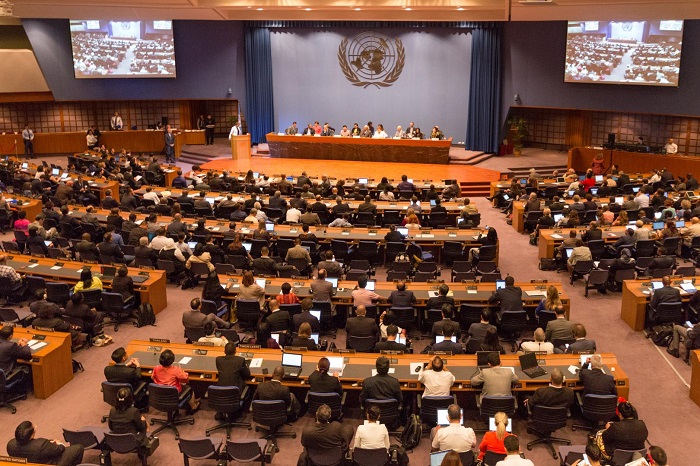
A view of delegates at the opening of the Bangkok climate change conference
Civil society organisations acknowledge that while there has been progress on the negotiating text for the Paris Rulebook it has been uneven. Substantive issues on finance and differentiation, among others, still hang in the balance, they say.
To reach an ambitious deal in Katowice, which includes a strong rulebook, finance and stronger commitments to ambition, they insist that political leaders must talk to each in the next few months to infuse trust into climate discussions.
Thousands of people in over 90 countries on every continent came out on the streets at the weekend to demand that governments tackle climate change.
On Monday, the UN Secretary General António Guterres will make a plea to act on the climate crisis that is ravaging entire communities and hundreds of mayors, CEOs and citizens will pledge their commitment to the cause at the Global Climate Action Summit in California this week.
The IPCC Report on 1.5C, which will feed into the Talanoa Dialogue, will heighten the drumbeat for action. This, observers feel, must be loud enough to spur the Polish Presidency to lead diplomatic efforts on all fronts as hosts in Katowice.
On progress made in Bangkok, Chair of the Least Developed Countries (LDC) Group, Gebru Jember Endalew, says: “While there was a greater sense of urgency from countries coming into Bangkok, progress has been slow. There remains an immense amount of work to be done and only five negotiating days in Katowice before the Paris Agreement rulebook needs to be delivered. The effectiveness of the Paris Agreement depends on the delivery of a robust set of implementation guidelines. Nearly 300 pages of text need to be refined so that textual negotiations can begin on day one in Katowice.”
A key issue in Bangkok has been climate finance.
Endalew adds: “The Paris Agreement cannot be implemented without climate finance. Clear rules need to be agreed in Katowice to support developing countries taking climate action. The failure of rich countries to deliver adequate resources has severe ramifications for people and communities in the Least Developed Countries and around the world that are already bearing the brunt of climate change on a daily basis.”
On loss and damage, Endalew notes: “Loss and damage must be taken seriously by the international community. Extreme weather events continue to increase in frequency and severity, while slow-onset events are growing in impact. The LDCs and other developing countries lack the tools and resources to cope with the devastating impacts of climate change. Addressing loss and damage is integral to an effective global response to climate change and the rulebook must reflect this to achieve the goals of the Paris Agreement.”
Secretary-General of the Pan African Climate Justice Alliance (PACJA), Mithika Mwenda, opines that “it is becoming thicker and thicker as we head to Katowice”, pointing out that the hardline position on the evolving negative force around the US is worrying.
According to him, without quantified global goal on finance then the Paris rulebook will be immaterial.
His words: “We urge African countries and developing nations counterparts to remain steadfast on their stand regarding the Paris rulebook. Evidently, the North is not interested in any action to combat climate change. While the South is doing it’s fair share on emission reduction, rich countries want to reverse the modest gains achieved since COP21 in Paris, perhaps motivated by the US which has announced its withdrawal from the Paris Agreement.”
Members of the Climate Action Network (CAN), a global network of over 1,200 NGOs working to promote government and individual action to limit human-induced climate change to ecologically sustainable levels, also add their voices to the discussion.
Tracy Carty, Climate Policy Lead, Oxfam: “The planet’s alarm bells are ringing; just this year we’ve endured deadly heatwaves and floods, devastating wildfires, and record high temperatures. Unfortunately, climate negotiations are still taking baby steps when they should be sprinting towards solutions.
“Finance to developing countries – to both help them cut their greenhouse gas emissions and to support poor communities vulnerable to extreme climate shocks – remains a critical, unresolved issue. If developed country governments don’t step up by the time COP24 kicks off in December, they risk putting the Paris Agreement in jeopardy.”
Mohamed Adow, International Climate Lead, Christian Aid: “We have fortunately avoided going off the cliff edge. Governments have empowered the co-chairs to turn the progress made so far into a more solid basis for negotiations in Poland. It is now vital for the co-chairs to change the course of the negotiations from diplomatic doldrums towards a win-win approach and craft middle ground options that the whole world can get behind at COP24.”
Harjeet Singh, Global Lead on Climate, ActionAid International: “The Paris Agreement is on the brink. Developed countries are going back on their word and refusing to agree clear rules governing climate finance. If they remain stuck in their positions and fail to loosen their purse strings, this treaty may collapse. We have a mountain to climb before the next climate summit this December. Finance ministers must now step in and deliver on the promises made in Paris.”
Rixa Schwarz, Team Leader International Climate Policy, Germanwatch: “A lot of work remains as we leave Bangkok tonight. All countries will need to do their bits to lead us towards a successful COP24. German Chancellor Angela Merkel must explain by COP24 how she will materialize her promise of doubling the German climate finance and announce a contribution to the Green Climate Fund. The coal commission must deliver first results to prove that Germany is serious about mitigation action. Also, the EU must send the strong signal of enhancing the current 2030 climate target.
Gilles Dufrasne, Policy Researcher, Carbon Pricing, Carbon Market Watch: “Market negotiations have suddenly jumped forwards in Bangkok, but countries are heading into a heavy fight at COP24. Some seem to have accepted the fact that markets as they exist today cannot continue, but we’re still navigating in very risky territory. The threat of agreeing on catastrophic rules for post-2020 markets is still very real and frightening.”
John Nordbo, Head of Climate Advocacy, CARE Denmark: “The negotiation text is not exactly a piece of art, but at least we now have a basis for making much needed compromises at COP24. When ministers arrive at the COP in Katowice they must do their part of the job: increase mitigation, ambition, and make sure more finance is provided to poor people who suffer from the harmful impacts of the climate crisis.
“It is however very disappointing that no country seems to take on a leadership role and try to forge the compromises. The EU should seriously consider stepping in as the union has previously been able to play a bridge-building role. At present they don’t play this role and it creates a vacuum.”
Taehyun Park, Greenpeace East Asia Global Climate Political Advisor: “These talks have been beset with tension and parties have wrestled with reaching a balanced proposal on the Paris rulebook. Progress has slowed, leaving the heavy lifting for COP24. A leadership deficit is the root cause of this slow pace and needs to be immediately addressed. The upcoming California Climate Summit, New York UN Climate Week and Pre-COP must now be leveraged to unlock contentious issues like finance and differentiation.”
Sanjay Vashist, Director, Climate Action Network South Asia (CANSA): “South Asian countries are keen to lead the revolution towards renewable energy, but the region is being repeatedly hit by disasters. With our public resources constantly diverted to coping with impacts, climate talks must provide the climate finance needed to make the transition to renewables a reality.”
Nithi Nesadurai, Regional Coordinator, Climate Action Network South-East Asia: “While this meeting in Bangkok has experienced uneven progress and challenges, it has given Co-Chairs the mandate to prepare a joint reflection note proposing text and the way forward. COP24 is a significant conference to finalise the Rulebook of the Paris Agreement and raise climate ambition. The Co-Chairs’ outputs, supported by multiple forthcoming events, including the release of the IPCC 1.5C report, must facilitate the convergence towards achieving an effective and productive outcome at COP24. This includes the provision of adequate climate finance to enable developing countries to make a greater shift to clean energy investments. There is no time to lose!”
Erika Lennon, Senior Attorney, Center for International Environmental Law (CIEL): “Progress in Bangkok has been slow and significant work remains between now and Katowice. During COP24 the world will celebrate the 70th anniversary of the UN Declaration on Human Rights. Parties must take this opportunity to deliver on the vision of the Paris Agreement, that of people-centered climate action by adopting a robust set of Implementation Guidelines that integrates human rights, the rights of indigenous peoples, and gender equality.”
Alden Meyer, Director of Strategy and Policy, Union of Concerned Scientists: “The outcome of the Bangkok climate talks was uneven and leaves much work to be done over the next three months to assure a successful summit in Katowice, Poland this December. On the core issues of forward-looking climate finance and the degree of flexibility developing countries should be given on the information and reporting requirements for national commitments under the Paris Agreement, negotiators were stalemated in Bangkok. It’s now up to the incoming Polish presidency and officials leading negotiations to find ways to bridge the deep differences on these issues and to secure agreement in Katowice on a robust, comprehensive package of rules to implement the Paris Agreement.
Mark Lutes, Senior Global Climate Policy Advisor, WWF: “We leave Bangkok with agreement on the rules to implement the Paris Agreement within reach. COP24 must achieve a broader package of outcomes, including on more ambitious climate action and commitments, climate finance and addressing loss and damage from climate change. These areas are all essential to implementation of the Paris Agreement, and governments must put the pieces in place to achieve all of them by they time they convene again in Katowice.”
Jennifer Tollmann, Climate Diplomacy Researcher, E3G: “Let’s face it we’re leaving this session still far off from a successful outcome at COP24. Progress on the rulebook will require progressive alliance to step up and build trust and ministers to give guidance that starts bridging the gap on political crunch issues around finance and differentiation.
“If the rulebook is the backbone of the Paris Agreement, then an ambition outcome is its heart and finance its lifeblood – let one fall into disrepair and the whole body is in trouble. To make healthy progress on any, let alone all of these issues will require a significant step up in diplomatic outreach on behalf of the incoming Polish Presidency and traditional bridge builders like the European Union.”