A National Summit on Public-Private Partnership for Tuberculosis (TB) Control in Nigeria will kick off on Monday, August 3, 2018 to discuss how to effectively engage the private sector in efforts to end the menace of Tuberculosis (TB), which kills 18 Nigerians every hour. Some 47 Nigerians are said to develop active TB, seven of which are children, every hour.
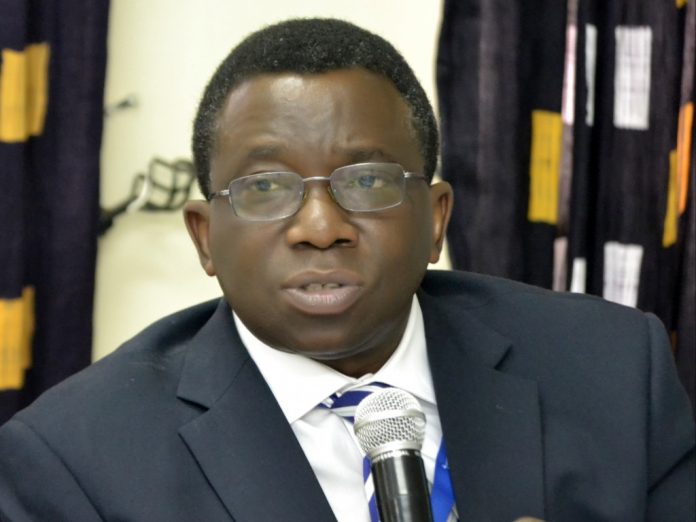
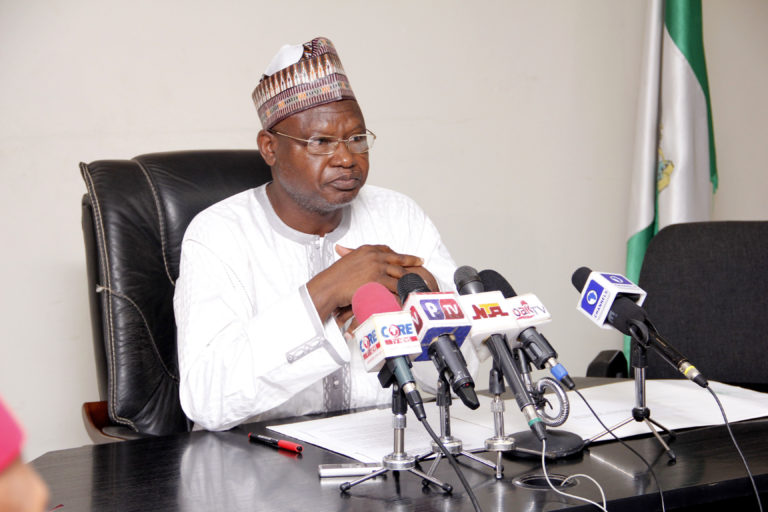
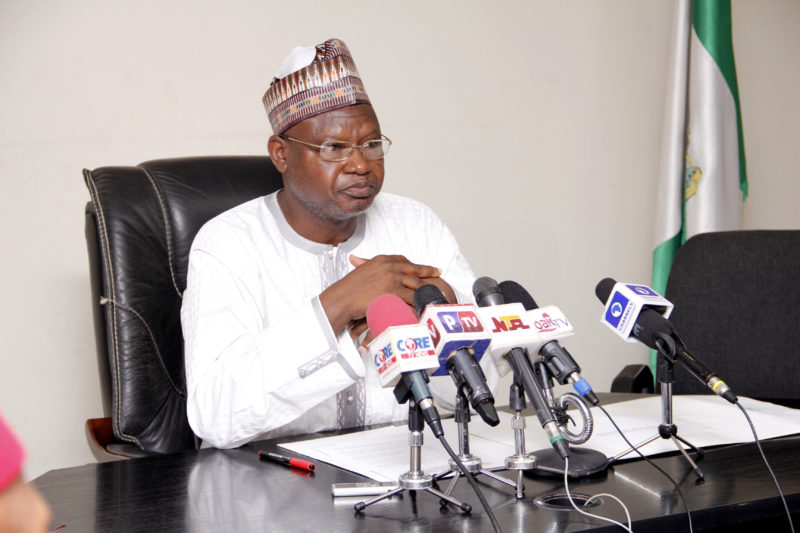
Minister of Health, Isaac Adewole
The summit, organised by the World Health Organisation (WHO), the Federal Ministry of Health, Lagos State Ministry of Health, Stop TB Partnership Nigeria and other stakeholders, holds at the Sheraton Hotel in Lagos from September 3 to and 4 to provide a platform for governments, private sector, corporate organisations, and private health provider umbrella bodies to discuss and agree on strategies for engagement in TB control in Lagos State.
The stakeholders will also discuss way forward as well as develop road map for private sector engagement in tuberculosis control with a view to finding the missing TB cases. It is expected that the private sector will support government efforts in TB Control in Lagos State and Nigeria at large.
TB, a disease that is preventable and curable, but the burden of the disease in Nigeria is further fuelled by the huge number of undetected TB cases which serves as pool of reservoir for the continuous transmission of the disease. Each undetected TB case has the potential of infecting 10-15 persons in a year, say the summit organisers.
The event will be declared open by the Lagos State Commissioner of Health, Dr. Jide Idris, while the Minister of Health, Professor Isaac Adewole, will deliver the keynote address. Participants expected at the meeting include Heads and Corporate Social Responsibility Units of various companies from different sectors including Oil and Gas, Banking, Telecommunications, Pharmaceutical companies, Foods and Beverages, Entertainment industries, as well as Associations of the Private Health Sector. International and Development Partners from different organisations will also be attending the event.
TB is considered a top infectious killer disease that continues to be a global threat with 11 million people developing the disease yearly. Nigeria is among the 10 countries that accounted for 64 percent of the global gap in “missing TB cases” that have not been reported hence very low TB case finding. Nigeria, India and Indonesia account for almost half the total gap, according to the WHO Global TB Report of 2017.
Nigeria is said to be one of the countries with the high burden of the disease globally. According to the 2017 Global TB Report, Nigeria is among the 14 high burden countries for TB, TB/HIV and MDR-TB. It ranked 7th among the 30 high TB burden countries and 2nd in Africa.
One of the major challenges of TB response in Nigeria is attributed to low TB case findings both in adult and children. This is attributed partly to low TB treatment coverage and poor knowledge about TB that influence the health seeking behaviour of people. Nigeria is said to contribute 8% of missing TB cases globally which is about 310,000 TB cases in 2016.
The Global Environment Facility (GEF) has started the process of removing the risks that may stand in the way of sustainable off-grid lighting solutions in Nigeria, with the country getting a $2.64 million grant.
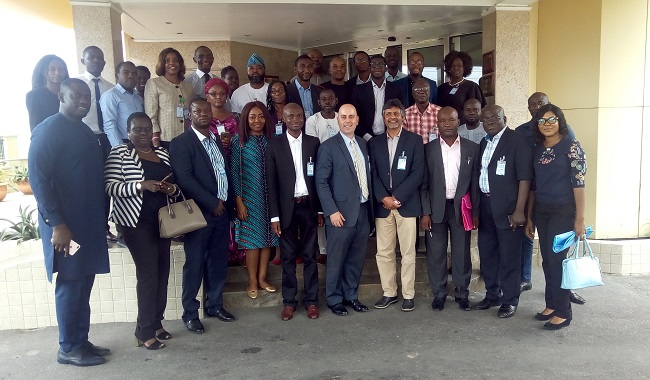
Participants at the GEF de-risking off-grid lighting forum in Lagos
In collaboration with the United Nations Development Programme (UNDP) and the Federal Ministry of Environment, GEF gathered stakeholders from the private and public sectors in Lagos on Thursday, August 30, to peruse the project document, which has a very short timeline.
A similar forum was held in Abuja earlier in the week, according to Faris Khader, Technical Advisor of UNDP, and Sanju Deenapanray, climate change specialist, who facilitated the Lagos event.
Khader, in his opening remarks, stressed the importance of preserving the environment.
He noted that GEF is the world’s largest public funder of projects and programmes that benefit the environment, and that Nigeria has been allotted a $2.64 million grant for clean energy.
GEF was established on the eve of the 1992 Rio Earth Summit to help tackle the planet’s most pressing environmental problems.
The $2.64 million grant is a form of support to the $10.6 million co-financing by government, multilateral institutions, the private sector and UNDP for the project, he added.
From the grant, policy de-risking gets $614,024 million while financial de-risking gets $1.5 million. Knowledge management and scale-up strategy gets $400,000.
It is noteworthy that about half of the budget is for technical assistance, as investment in financial de-risking corners a whopping $1.3 million, leaving $200,000 for investment.
The project seeks to promote private sector investment in sustainable off-grid lighting technologies by establishing a sound policy environment that facilitates the creation of a self-functioning and sustainable market in Nigeria.
While UNDP is the implementing agency for the project, the executing agencies include Energy Commission of Nigeria (ECN), Rural Electrification Agency (REA), Standards Organisation of Nigeria (SON), Ministry of Environment and Ministry of Energy.
Deenapanray admitted that the timeline from the inception workshop on August 30 to submission of the document to GEF secretariat in January “is tight” but noted that “the next two months is the window for us to do whatever we want.”
On the issue of co-financing, which he would rather describe as “parallel financing”, the climate change specialist said, “giving people things free is not a sustainable solution.”
He added that GEF deploys incremental reasoning, demanding beneficiaries of its grants to prove that something is already on the ground for it to support with about 16 per cent, hence the ratio is averagely 6:1.
Similarly, the letter of co-financing addresses collaboration, absence of duplication and gap closure.
The stakeholders’ engagement, Khader said, is continuous, as Mr. Etiosa Uyigue, the coordinator, GEF/UNDP Energy Efficiency Programme in Nigeria, is expected to hold the fort till the next meeting in October.
From the Abuja meeting, several new ideas emanated from the stakeholders, and issue from the Lagos meeting will be married with it and sent to GEF.
At the Lagos forum, the stakeholders were expected to critique the project, whether it is clear and achievable. They were also expected to look at the budget and the January 2019 target.
Some of the issues that stemmed therefrom include: kerosene subsidy not getting to the target beneficiaries because of poor political will to follow up policies, the competition between clean energy and cheaper rivals, and the lack of confidence in facilities because of rampant substandard goods.
There was also the suggestion of reproducing knowledge through tertiary institutions and research centres.
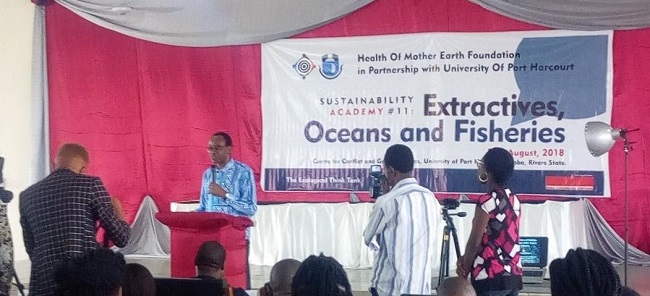
Nnimmo Bassey, Director of the ecological think tank, Health of Mother Earth Foundation (HOMEF), speaking at the Sustainability Academy (with the theme “Extractives, Oceans and Fisheries”) on Friday, August 31, 2018 at the Centre for Conflict and Gender Studies, University of Port Harcourt, Nigeria, laments the spate at which oceans are being polluted
Nnimmo Bassey making a presentation at the Sustainability Academy
It has become common knowledge that by 2050 there will be more plastic in the oceans than fish. That is quite alarming. More alarming, however, should be the fact that we are already consuming a lot of plastic through the fish that still swim in our waters. Besides health impacts, the economy of fishers and their dependents is receiving crushing blows from this trend as our oceans literally get turned into dumpsites.
The oceans present pictures of limitless resources begging to be dragged out into the markets and kitchens of this world. This sense of the ocean as an inexhaustible storehouse has empowered some unscrupulous persons to throw caution to the winds as they trawl the seas, oceans and lakes catching everything from the fingerlings to mature fish. Sadly, some of these rogue fishers do not respect national boundaries and behave no better than sea bandits.
Besides the stealing of sea resources, there is the alarming harvesting of fish on the West African coastline for the production of fish meal for use in industrial aquaculture production in Europe and Asia. This harvesting of fish for fish meal has raised the price of fish beyond the reach of the people who depend on them as a key source protein.
The oceans and our lakes have also become zones of interest for the extractive industries – miners and oil companies. Their activities present special dangers to the health of our creeks, rivers, lakes and oceans. The efforts to keep up profits has triggered a rush to mine the seabed in ways that should attract serious attention.
Dead Whales, Red Flags
Our coast lines are dotted with oil rigs, oil platforms and armadas of seismic vessels. Lakes Chad, Albert, Victoria, Kivu, Tanganyika, Malawi and Turkana have all attracted the claws of the oil and gas industry. These activities if not checked portend grave dangers for national security and, more urgently, for fishers and the health of our peoples.
The epidemic of dead whales washing onshore is just one indicator that all is not well. In recent months we have had reports of dead whales off the coasts of South Africa, Nigeria, Australia, Ireland, Germany and the United States of America, to mention just a few. In the case of the eight Cuvier’s beaked whales that washed up on the west coast of Ireland, scientists believe that they died of impacts of British military sonar. Of course, the British Navy denied any link between their maneuvers and the dead whales. However, naval sonars are known to have deadly impacts on whales.
Some navies use these low frequency active sonar (LFA) systems in scouring the sea bed for obstructions, mines and other elements. They use a number of underwater speakers to pulse low-frequency sounds at about 215 decibels for roughly 60 seconds a pop. The sounds travel over hundreds of kilometres and can interrupt the lives and activities of marine mammals, breaking up their communications, causing disorientation and other problems. These sonars are found in approximately 70 per cent of the world’s oceans.
The seismic exploratory activities of oil, gas and mining companies are carried out using techniques that are comparable to the naval sonars. These seismic surveys use sound energy (at decibels higher than levels that normally occur in the oceans) to map geological structures deep beneath the seabed.
Some apologists of the extractive sector continue to argue that having dead sea mammals wash up onshore is normal and is to be expected. What they do not say is that the carcasses that we see are only of those that washed to inhabited shorelines. How many dead whales and other large aquatic species die and are buried in the deep or are simply out of sight?
Threats to Our Common Heritage
In a recent letter to the International Seabed Authority (ISA), global citizens demanded that the seabed should be off limits to mining. They stated, “Moreover, a global public knowledge that deep sea extraction is under discussion is still extremely limited, as is public understanding of the implications of such a move. As deep-sea mining would impact the common heritage of (human)kind in ways that are not yet scientifically well-understood, time should be taken to initiate a wider public discussion and to carry out additional scientific research.”
The letter further stated, “The common heritage of (human)kind is a significant equity principle in international law. This principle was formally applied to the deep seabed through a 1970 UN resolution declaring that the ocean floor in international waters – called the ‘Area’ in international law – be employed for peaceful purposes.” It added that, “It is our view that this must not proceed without a more transparent and thorough global assessment of the ecological risks associated with deep-sea mining, as well as a more rigorous consideration of a benefit-sharing mechanism via which the common heritage principle will be upheld.”
Water Grab Through Pollution
Water pollution from oil spills and mine tailings are sources for great concern about the quality of our waters and the overall health of the marine ecosystem. The same can be said of factories and industrial installations along our coastlines, including oil refineries that use the ocean as their rubbish dump, pumping toxic loads into them and deeply compromising the health of the aquatic lives in the process.
Researchers believe that by 2035 some 40 per cent of the world population will live in areas having water scarcity. It is also said that industries account for a fifth of global water use compared with 5 per cent for humans while agriculture uses the rest. We believe that industry uses much more water than estimated because these estimates do not include the waters that industry have polluted and rendered useless for other purposes.
The creeks, rivers and swamps of the Niger delta, for example, have all be privatised by the oil companies through pollution. Our continental shelf and deep waters have been partitioned and are effectively owned by the oil companies because of the security zone (often up to 5 km radius) around their installations that are cordoned and closed to fishers, including areas with endemic fish species. So, our waters are also privatised through security cordons for unhindered extractive activities. This is a clearly objectionable privatising of the commons.
Fishers Unite!
The double jeopardy for our fishers is that with polluted coastlines, the option they have to secure good catches is to go into the deep offshore, but most of them do not have boats that can venture far off the coastlines. This is the tragic economic predicament of our fishers: disrupted by pollution, stopped by the military and blocked by economics. These will remain and self-reinforce until, and unless, fishers unite and declare that fish is more valuable than oil, coal or gold. The FishNet Alliance presents a strong platform to push for water bodies devoid of extractives.
It is time to challenge activities to pose danger to our marine resources. Citizens can win when we stand together and build webs of resistance. Resolute activists in New Zealand just won an inspiring case rejecting the mining of 50 million tonnes of ironsand from a 66 square kilometres area off the South Taranaki Bight that was to be done over a period of 35 years. More victories are possible.
Rocky Dawuni, a Grammy-nominated singer-songwriter, was on Thursday, August 30, 2018 designated as the Regional UN Goodwill Ambassador at an evening of celebrations at the end of the Global Landscapes Forum (GLF) African Landscape Restoration event at UN Environment headquarters, Nairobi, Kenya.
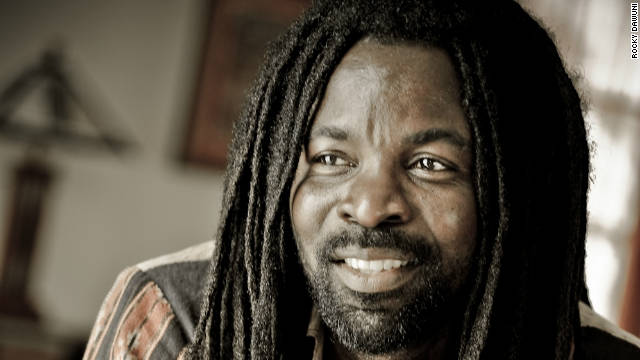
Rocky Dawuni
A celebrated global performer with a decade-long career, Rocky is an avid humanitarian and environmentalist, lending his voice to amplify issues of poverty, environmental degradation, water and sanitation issues and women’s rights.
“There is so much positive energy in Africa and many opportunities to protect and restore the environment across the continent,” Dawuni said. “And music is a powerful force that brings people together and inspires action. I want to work with communities and help them share their successes and encourage them to keep moving forward to make the future brighter for generations to come.”
As a Regional UN Goodwill Ambassador, Rocky is uniquely positioned to generate considerable support and publicity amongst his audience for UN Environment’s messages and goals through engaging, organizing, and leading activities specifically targeted to his audience.
“Dawuni’s eloquence, cultural diplomacy and successful melding of music and activism have led him to become a passionate spokesperson for various global causes,” said Erik Solheim, UN Environment Executive Director. “We are delighted to share the stage with another Goodwill Ambassador, Suzanna Awiyo, who, like Rocky, is a passionate humanitarian and environmentalist,” he added.
Rocky’s infectious grooves and dance-inducing anthems have consistently excited fans across the globe. A galvanising performer, Dawuni has shared the stage with Stevie Wonder, Peter Gabriel, Bono, Jason Mraz, Janelle Monae and John Legend, among many others. Named one of Africa’s Top 10 global stars by CNN, he has showcased his talent at prestigious venues such as The Kennedy Center in Washington, D.C. and The Hollywood Bowl in Los Angeles.
United Nations Goodwill ambassadors volunteer their time, talent and passion to raise awareness of United Nations efforts to improve the lives of billions of people everywhere. Rocky Dawuni joins an illustrious line-up of UN Environment Goodwill Ambassadors including Don Cheadle, Gisele Bundchen and Ellie Goulding.
GLF Nairobi 2018 bought together almost 1,000 policymakers, practitioners, scientists and others to highlight successful approaches to landscape restoration in Africa. Community engagement and partnerships emerged as key elements in promoting more sustainable landscapes across the continent. The event was webcast globally with thousands participating in the digital edition and on social media.
To help support landscape restoration in Africa, Dawuni also announced a crowdfunding initiative by the Global Landscape Forum to support communities whose efforts to repair degraded mangroves, farms and other land were highlighted in the Voices of the Landscape series during the conference.
The Clean Development Mechanism (CDM), which has incentivised billions of dollars’ worth of investment in climate action and has registered thousands of projects throughout the developing world, has passed another milestone.
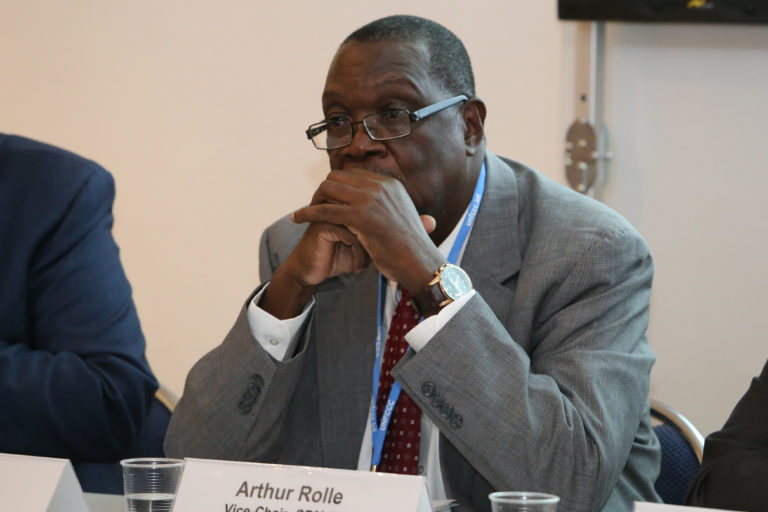
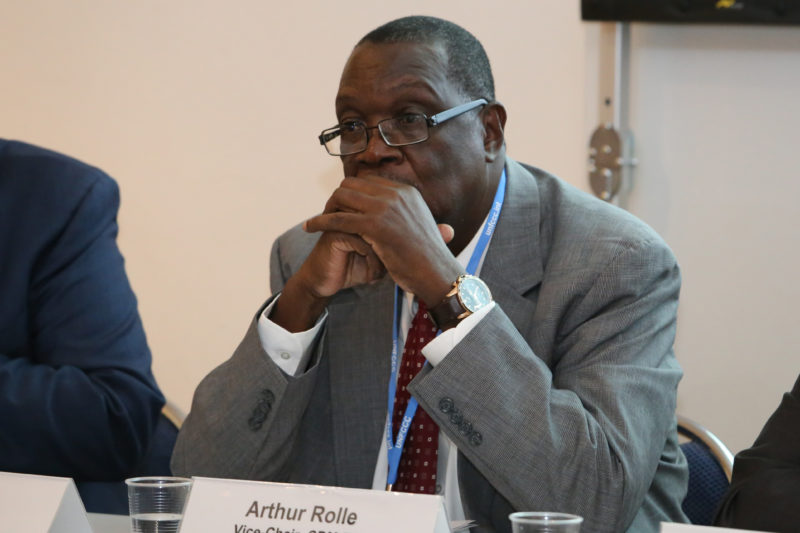
Arthur Rolle, Chair of the CDM Executive Board
As global negotiators were arriving in Bangkok for an important round of talks, the CDM Executive Board was wrapping up its 100th meeting, five days considering technical and oversight matters related to rewarding projects for emission reductions. At the close of the meeting, the Board took time to reflect on the achievements of the CDM since its inception two decades ago as a tool of the Kyoto Protocol.
“The CDM is harnessing the entrepreneurial power of markets and the private sector to meet goals on sustainable development and climate change,” said CDM Executive Board Chair, Arthur Rolle. “Today, the CDM toolbox is an unparalleled resource, accessible to all, and considered in the design of new regional and domestic market-based approaches and mitigation actions around the world.”
CDM projects earn a saleable certified emission reduction (CER) credit for each tonne of greenhouse gas they reduce or avoid, measured in carbon dioxide equivalents. The price paid for CERs has been a magnet for project developers looking to harness wind power, distribute clean cookstoves, or pursue a wide range of other projects. Before a project can be considered for registration, the host country must attest to its potential contribution to sustainable development.
“Work under the CDM shows that actions to mitigate climate change bring many co-benefits in human health, green jobs, poverty reduction and other aspects of development,” said Patricia Espinosa, Executive Secretary of UN Climate Change, in congratulating the Board. “As we look towards establishing a new sustainable development mechanism under Article 6 of the Paris Agreement, we should bear these successes in mind.”
The CDM gives countries and companies with an emission reduction commitment stemming from the Kyoto Protocol some flexibility in how they meet their commitments, allowing them to use CERs to cover a part. The European Union Emissions Trading System, for example, was the largest demand source for CERs in the Protocol’s first five-year commitment period, which ended in 2012.
The incentive provided by the CDM has led to registration of more than 8,100 climate projects and programmes in 111 developing countries, investment of $303 billion, and reduction or avoidance of two billion tonnes of carbon dioxide.
In Paris in 2015, countries agreed to limit average global temperature rise to 2 degrees Celsius compared to pre-industrial levels and aim for the safer target of 1.5 degrees, to avoid the worst effects of climate change.
In addition to launching a report on the achievements of the CDM, working on its annual report to Parties, considering matters related to emissions baseline and monitoring methodologies, plus other matters, the Board at its 100th meeting adopted a revised standard and procedure for the development, revision and update of standardised baselines. The revision clarifies the data requirements and streamlines the process.
As part of efforts to sensitise Nigerians on the National Tobacco Control Act, the Federal Ministry of Health and the Environmental Rights Action/Friends of the Earth Nigeria (ERA/FoEN) have unveiled pictorial representations of provisions of the Act.
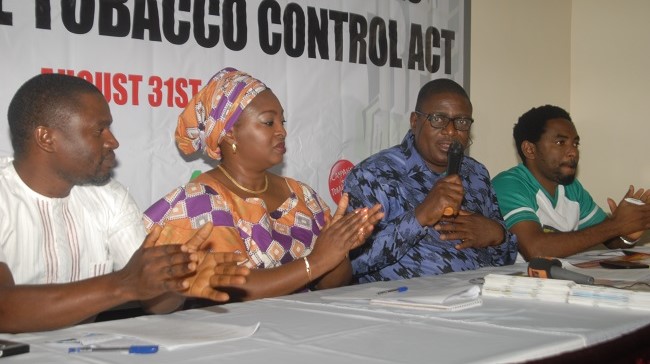
L-R: Dr Malau Toma of the Federal Ministry of Health; Hilda Ochefu, Subregional Coordinator of the Campaign for Tobacco-free Kids; Akinbode Oluwafemi, deptuty executive director, Environmental Rights Action/Friends of the Earth Nigeria (ERA/FoEN); and Oluseun Esan of the Nigeria Tobacco Control Alliance (NTCA)
The provisions include “Ban on smoking in public places, Ban on Sale of cigarette to minors, and Ban on Sale of Cigarettes in single sticks”. It also pictures the sanctions for defaulters.
At a press briefing held in Abuja, ERA/FoEN said that the information materials were created to deepen awareness on the nine provisions of the NTC Act that Health Minister, Professor Isaac Adewole, announced would be enforced without any regulations
The provisions are:
Prohibition of sale of tobacco products to and by anyone below 18;
Ban on sale of cigarettes in single sticks. Cigarettes must be sold in packs of 20 sticks only;
Smokeless tobacco shall be sold in a minimum of a pack of 30 grams;
Ban of sale or offer for sale or distribution of tobacco or tobacco products through mail, internet or other online devices;
Prohibition of interference of tobacco industry in public health and related issues;
Prohibition of smoking in anywhere on the premises of a child care facility; educational facility; and health care facility, among others;
Prohibition of tobacco advertising, promotion and sponsorship of any kind;
Compliance with specified standard for content as set out by Standards Organisation of Nigeria (SON).
The ERA/FoEN deputy executive director, Akinbode Oluwafemi, said that, as partners in progress with the Federal Ministry of Health, it identified the need to further deepen tobacco control messages through public awareness materials that answer the critical need for ordinary Nigerians to know, through visual images, the letters of the NTC Act.
“Ignorance of the law is no excuse. We believe that all Nigerians, including those who cannot read and write should be able to understand the law,” Oluwafemi said.
Representative of the Ministry of Health, Dr. Malau Toma, explained that the Ministry felt that the public awareness materials would reach all classes of Nigerians and that discussions were already on in concert with civil society groups to further produce the public awareness materials in the three major languages – Hausa, Yoruba and Igbo.
Malau said that the partnership between the ministry and civil society on tobacco control had been very productive and that security agencies were already primed to enforce the ban on smoking in public places and other provisions of the NTC Act,
Earlier, Hilda Ochefu, the sub-regional coordinator of the Campaign for Tobacco-Free Kids (CTFK), said that the unveiling of the public awareness messages was indicative of the fact that the tobacco control message in Nigeria had come to stay and would go to grassroots people who are critical to citizen enforcement of the Act.
In addition to the public awareness materials, ERA/FoEN also demanded for commencement of enforcement of the nine provisions of the NTC Act by relevant government agencies and states across the federation. It also asked for expedited action by members of the National Assembly to see the National Tobacco Control Regulations Bill passed so that enforcement of the other provisions of the NTC Act will commence without delay.
The Enugu State Government says it has begun public sensitisation on ways to minimise the use of plastics to reduce environmental problems in the state.
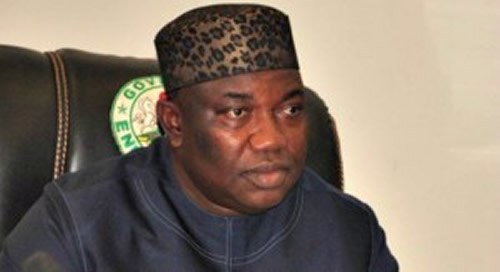
Governor Ifeanyi Ugwuanyi of Enugu State
Mr Nnamdi Arum, the Head of Climate Change Department, Enugu Ministry of Environment, made this disclosure to the New Agency of Nigeria (NAN) in Enugu on Friday, August 31, 2018.
Arum said that plastics and cellophanes were non-degradable waste, stressing that they could cause problems in the environment as well as to agricultural produce.
According to him, the lifespan of plastic material is more than 300 years.
He added that plastic materials were not degradable as other wastes such as papers, cartons and leaves.
“Because plastics and other cellophanes like water sachets are generating problems in our environment and to our farmland, the ministry decided sensitise the people on the dangers associated with the use of plastics.
“As I speak, I have students, who are undergoing some programmes, they are gathering waste water sachets around their areas because no waste is a waste and waste sachets can be turned to useful items,” he said.
“Plastics themselves are chemical components, they are fossil because petroleum product is part of the component used in producing them,” he said.
He explained that a practicable way to reduce the use of plastics in the state is for the public to use plastic for storing drinking water, cooking oil among others instead of using them anyhow.
Arum noted, that by using a particular plastic for a long period of time, the number of plastics would reduce in the society.
He advised the public to always keep their waste sachets and bring them to the ministry instead of allowing them to liter the environment or farmlands.
A new report by the World Health Organisation (WHO) Regional Office for Africa has shown a high improvement in health in the region.
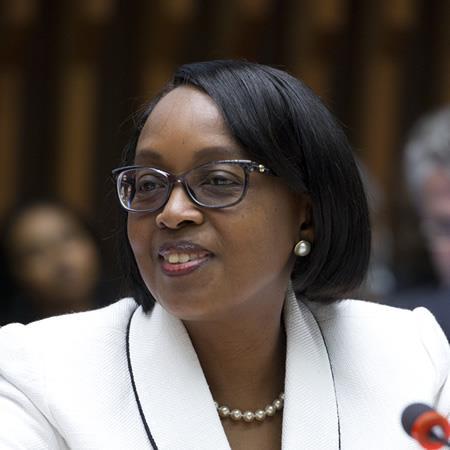
Dr. Matshidiso Moeti, the World Health Organisation (WHO) Regional Director for Africa. Photo credit: pbs.twimg.com
WHO, at the study, launched during the 68th session of the WHO Regional Committee in Dakar, provided a snapshot of the state of health in the African region.
The report said life expectancy across Africa had improved significantly, but national health systems must be improved to ensure that services get to the people who need them most.
Emerging data shows a continued improvement, with the continent seeing the biggest jump in healthy life expectancy – time spent in full health – anywhere in the world.
The life expectancy jumped from 50.9 years in 2012, to 53.8 years in 2015, according to the report.
Deaths resulting from the 10 biggest health risks in Africa – such as lower respiratory infections, HIV and diarrhoeal diseases – dropped by half between 2000 and 2015, partly as a result of specialised health programmes.
Speaking at the launch of the report, Dr Matshidiso Moeti, WHO’s Regional Director for Africa, said: “I’m proud that Africans are now living longer and healthier lives.
“Nearly three years of extra health is a gift that makes us all proud. Of course, we hope that these gains will continue and the region will reach global standards”.
At the same time, the report warned that this achievement could only be sustained and expanded if health services are significantly improved.
It stated that the performance of health systems in the region – measured by access to services, quality of care, community demand for services and resilience to outbreaks – was low.
Chronic diseases like heart disease and cancer need to be tackled, with a person aged 30 to 70 in the region having a one in five chance of dying from a non-communicable disease.
Two critical age groups – adolescents and the elderly – are being under-served, with surveys indicating a complete lack of elder care in a third of African countries.
Moeti said: “Health services must keep up with the evolving health trends in the region. In the past we focused on specific diseases as these were causing a disproportionately high number of deaths.
“We have been highly successful at stopping these threats, and people’s health is now being challenged by a broad range of conditions. We need to develop a new and more holistic approach to health.”
This approach involves increasing spending on health, but also targeting funds in more effective ways, according to the report.
The report suggested that health systems that perform well invest up to 40 per cent of their budgets on their workforce, and a third on infrastructure.
WHO said, however, that the report, which made specific recommendations for each of the countries of the region, and identifies areas where nations are demonstrating good practice, was not a scorecard.
Algeria demonstrated good practice with its good coverage of available health service, Kenya has a good range of available essential services, and Mauritius has good access to services.
By improving performance, the countries have a better chance of meeting their commitment to achieve health-related targets set by the Sustainable Development Goals, the report stated.
The Federal Government said on Thursday, August 30, 2018 that it would explore all possible avenues to ensure that Nigeria benefitted immensely from the Green Climate Fund (GCF).
Environment Minister of State, Ibrahim Usman Jibril
Minister of State for Environment, Mallam Ibrahim Jibril, stated this at a Gala Dinner and Certificates Award Night organised by the African Union’s (AU) Scientific, Technical and Research Commission in Abuja, to mark the end of a three-day Capacity Building Consultative Workshop for AU member states.
The consultative workshop was an avenue to train representatives of African states on how to access the GCF.
According to the minister, accessing the fund would go a long way towards addressing climate change-related issues in the country.
He said that towards that end, the environment ministry was working closely with the Federal Ministry of Power, Works and Housing to generate renewable energy as a way of mitigating the effect of climate change.
He added that it was in a bid to address climate-related issues that Nigeria became the first African country to raise the Sovereign Green Bond in line with the objectives of the Paris Agreement of 2015 to which it is a signatory.
The minister stated that the government would encourage the 36 states of the federation to put beautiful proposals that would stand the test of time, to benefit from the GCF.
He then urged participants and other stakeholders that participated in the consultative workshop to return to their various countries and apply the knowledge and lessons learned during the interactive sessions to help grow the various agencies, parastatals, organisations and academic institutions in their countries to grow.
Highpoint of the evening was the award of certificates of participation to all the key stakeholders, participants and resource persons that were at the workshop.
No fewer than 20 African nations were represented at the workshop.
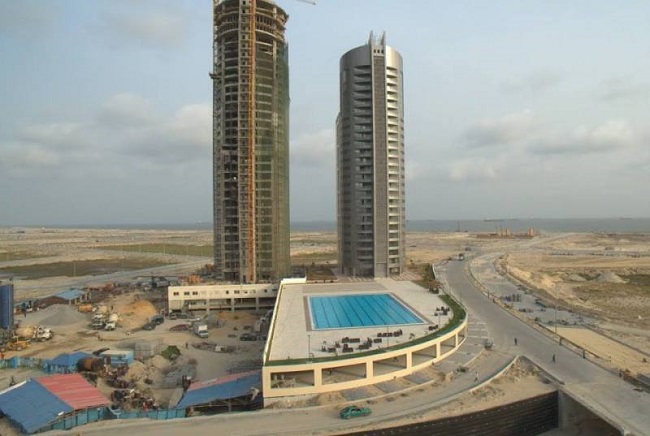
Eko Atlantic City, which is being constructed adjacent Victoria Island in Lagos, has played host to the top 50 brands in Nigeria 2018 as the companies were hosted at an unveiling ceremony at the Eko Atlantic City Sales Office.
Eko Atlantic City
Host, Mr. Ronald Chagoury Jr., Vice Chairman, South Energyx Nigeria Limited, said, “We are happy to be hosting the top 50 brands in Nigeria at Eko Atlantic City. The City is the first of its kind in sub-Saharan Africa, providing modern and efficient facilities to Africans and the global community for business, entertainment and leisure activities.
“Eko Atlantic City is being built to become the Financial Hub of Africa and as such we are keen to showcase the business, social, recreational and tourist potential of Eko Atlantic to these top brands.”
On his part, Chief Executive Officer, Top 50 Brands Nigeria, Taiwo Oluboyede, said, “We are glad to have Eko Atlantic host this year’s event, not only because Eko Atlantic is a top Nigerian brand but because it exemplifies the kind of innovative, resilient and forward-thinking brand that this initiative promotes. We were also confident that the brands will have a good experience touring the beauty that is Eko Atlantic City.”
Top 50 Brands Nigeria is a concept that recognises brands that have weathered economic storms to continue living up to their brand promise to consumers. This year’s qualifying brands were determined through a tool known as “Brand Strength Measurement” which evaluates a brand’s assets from the consumer point of view, the brand’s strength, weakness and its ability to deliver on promise to customers.