Senior officials from Beijing, Fuzhou, Qingdao and Shanghai have pledged to remove greenhouse gas emissions from their buildings.
Qingdao, China
The initiative, led by C40 cities, will develop a range of innovative policies to reduce emissions from existing buildings. This will ensure that they meet ultra-low energy consumption levels and promote the use of buildings as a source of low carbon energy by 2020.
Yong Wu, President of the China Association of Building Energy Efficiency, said: “The China Association of Building Energy Efficiency is looking forward to cooperating with C40 on the China Buildings Programme.”
China is rapidly urbanising with a further 280 million greenhouse gas emissions expected to be added by Chinese citizens.
China continues to build an average of two billion square metres of new buildings each year. As a result, buildings contribute to 20 per cent of china’s emissions and measures need to be implemented to reduce this growing air pollution.
The Chinese Government hope to ensure that global leaders can follow in their footsteps.
Mark Watts, Executive Director of C40 Cities, said: “The C40 China Buildings Programme will not only help accelerate and strengthen such policies in Chinese cities, but the lessons learnt in Beijing, Fuzhou, Qingdao, and Shanghai will inspire mayors around the world to step up their ambition and help deliver on the Paris Climate Agreement.”
Other cities across the world have also taken to reducing their buildings emissions. Notably, New York has pledged to cut energy in the biggest buildings by 20 per cent by 2030 to keep on track with their ultimate goal of 80 per cent by 2050.
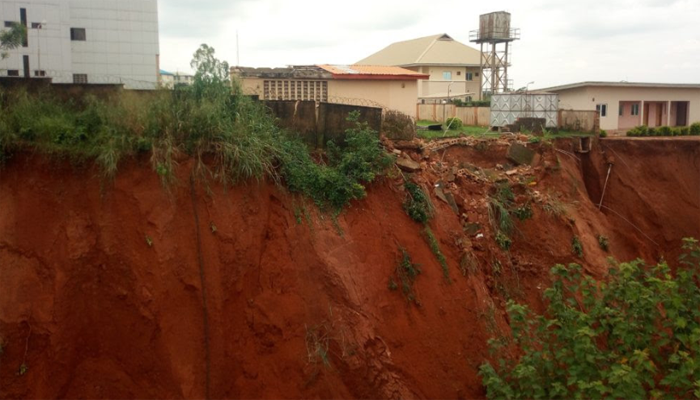
The World Bank has visited the Alex Ekwueme gully erosion site which is threatening the Federal High Courts, Awka and other properties in the Awka Central Business District area, promising speeding intervention.
The Federal High Court, Awka is under serious gully erosion threat and at the verge of imminent collapse
Mr Rachid Benmessoud, Country Director of the World Bank, led a team of the bank’s officials to inspect the site on Sunday, September 30, 2018 for an on the spot assessment of the devastation the erosion had done to the area.
The World Bank has marked the site for rescue works through the Nigerian Erosion and Watershed Management Project (NEWMAP) in conjunction with the Anambra State Government.
The World Bank team was in Anambra for its Country Programme Portfolio Review in the South-East and South-South geopolitical zones.
The programme review is done annually in collaboration with the Federal Ministry of Finance to appraise the success of its interventions in the country.
Benmessoud said that work at the Federal High Court in Awka would commence between the end of October and early November after the formal process of documentation.
“This is the first time of our visiting Anambra State and we have seen the site, hopefully we will see to the process very shortly.
“This is an emergency case and we are concerned about what we have seen; we are not talking about starting this work in a matter of years, it is a matter of months to start work,” he said.
Prof. Solo Chukwudobelu, Secretary to the Anambra State Government, who led the state’s team, described the site at the Federal High Court as critical and needed urgent intervention.
According to him, we took the opportunity of the World Bank’s visit to the state to show them the site and others, it is a critical intervention they are going to do for us.
“They are trying to fast track the process,” he said.
Chukwudobelu said the gully erosion at the Federal High Court was developing daily, noting that the state government was pleased that the World Bank would fast-track the process.
He said that by end of October or early November, the contractor would move to site to commence work.
Justice Iniekenimi Oweibo of the Federal High Court commended the World Bank and Anambra Government for the intervention to save the court from imminent cut off.
“You can see for yourself that it is a threatening. We are about to be cut off. All along we have been praying for this intervention.
“Sometime ago, we met with the officials of the state government and they promised to come to our rescue. We thanked them for bringing this promise to pass,” he said.
The visiting team also included officials of NEWMAP, State Environment and Economic Planning/Budget Ministries.
Kenya and her East African neighbours have been identified as the epicentre of Quelea birds’ attack on key staples hence putting their food security initiatives in jeopardy.
Quelea birds
Scientists affiliated with Desert Locust Organisation for Eastern Africa (DLCO) on Tuesday, October 2, 2018 said that the East and Horn of Africa states affected by invasion of Quelea birds on farms could face widespread hunger.
Stephen Njoka, the director of DLCO, revealed that the birds had invaded thousands of acres in the region while ravaging crops ready for harvest.
He said it was becoming a challenge for experts to contain Quelea birds and other pests due to budget constraints and hence the need for member countries to offer support.
Njoka said in the last one year alone, an estimated 191 million birds invaded the farms with Kenya and Tanzania being the most affected.
He said despite the hiccups, they were determined to control the birds just like other migratory pests.
He noted they were working with farmers across the member nations to ensure the pests were controlled and ensure high yields for their produce.
“These cases were well controlled by the farmers using cultural and chemical control methods and we will continue even with other areas where the prevalence is high,’’ he said.
During the meeting, Njoka noted that the fall army worm had continued to cause massive destruction of crops mainly maize with no solution in site.
The chairman of the organisation, Heruy Asghedom from Eritrea, admitted that the fall army was a concern to them and called for exchange of information and technology to address it.
With Nigeria anticipating a major smart home rollout to the tune of $50 billion by 2025, the opportunities from an economic perspective are endless. This is because the concept will be implemented as a whole, providing a training opportunity for Nigerians and allowing them to caretake and oversee the project. The business that is introducing the models to the country will collaborate with locals in order to provide guidance as to the project management. Africa is on the cusp of a major technological breakthrough, and smart technology is at the heart of it.
Smart City
South Africa Set to Implement IoT in Smart Cities
Telecoms company MTN was part of a recent dialogue at the ITU Telecom World Conference 2018 where the subject of smart cities was a major topic. For South Africans, the reality of a smart city hinges largely on access to broadband data which is at the moment still very unstable and costly. The design of the smart city is not just important due to the obvious benefits to infrastructure, but also the effect these cities have in minimizing the effect on the environment. Smart cities focus on renewable energy sources to power up the grid, as well as reducing the environmental impact of their creation cities.
Mauritius The Unlikely Frontrunner
Thanks to massive streams of foreign investments, Mauritius is leading the race in terms of smart technology in the home and in the city’s infrastructure. The Smart City Scheme is becoming a reality as more investors are coming on board, allowing the island nation to be a catchment area of sorts for urban developers from across the world. The scheme is said to focus on ten cities and since its implementation in 2015 has garnered investments of around $3.5 billion.
Sustainability is at the heart of these cities as it not only needs to be a model that the locals can uphold, but it also needs to be environmentally friendly and a boon for future generations. Part of the sustainability index of the project is using local labor as far as possible and renewable resources as part of the build.
North Africa Part of Smart City Project
North Africa and the Middle East are earmarked for a $2.6 million global Smart City investment. The northern African countries have close ties with the Middle East and seem a good target for proposals to start coming through. While North Africa has battled tough terrain and climate for centuries, the Smart City development is proven to improve energy efficiency. This helps cities do more with less and effortlessly connects households to basic amenities previously unheard of.
Smart cities in Africa will allow smart developments in the home as well. The integration from a household as a part of the community, and the community as part of the nation lies at the heart of the smart city ethos.
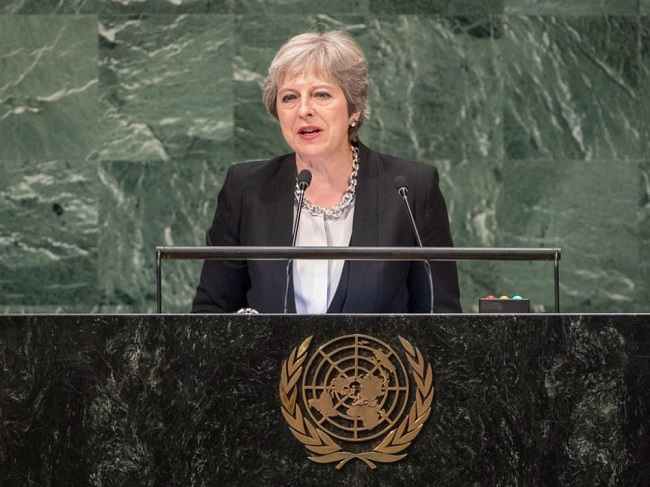
Prime Minister of the United Kingdom, Theresa May, announced on Thursday, September 27, 2018 at the UN General Assembly in New York that the UK would provide £160 million of funding for greener energy systems in developing countries.
Prime Minister of the United Kingdom, Theresa May. Photo credit: United Nations
The UK Government has committed to sharing its expertise and help developing countries tackle the global problem of climate change.
At the General Assembly, the Prime Minister set out to provide £60 million to share the UK’s technical expertise for green energy.
Claire Perry, Energy and Clean Growth Minister, said: “This £60 million programme could provide the boost they need to begin their own clean growth movements, building economies fit for the future.”
The Prime Minister also pledged £94.5 million to focus on the effects of climate change such as providing support to families most affected by droughts in Northern Kenya.
Lastly, £15 million would go towards making it more profitable for companies to buy from smallholder farmers in sub-Saharan Africa, helping to build resilience against rising food demand and climate shocks.
The UK will also join the Carbon Neutrality Coalition to support ambitious action in support of the Paris Agreement’s collective goals of net zero global emissions.
Penny Mordaunt, International Development Secretary, said: “When drought strikes in the developing world, it is the most vulnerable communities which are hit the hardest by damage to livestock and crops. I witnessed earlier this year in northern Kenya how the swift support of UK aid and our partners helped households, which would otherwise be at risk of sliding deeper into poverty.”
This news follow the World Bank announcing an investment of $1 billion into battery storage for renewable energy in developing countries.
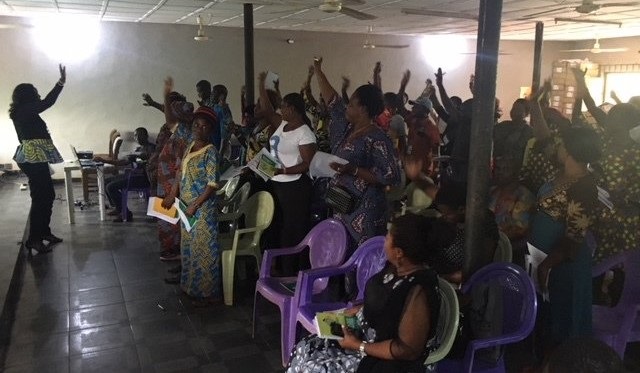
About 100 farmers from various communities in Edo State on Friday, September 21, 2018 gathered in the conference hall of Girls Power Initiative (GPI), Ugbiyoko Community in Benin City for a one-day dialogue on food and farming systems organised by Health of Mother Earth Foundation (HOMEF).
Participants at the HOMEF dialogue with farmers
The dialogue provided a platform for examining the challenges facing agricultural production and the special threats posed by opening of the flood gates to Genetically Modified Organisms (GMOs) into Nigeria and also discussion on the way forward for improved agricultural productivity with emphasis on agroecology and support for small scale farmers.
In his opening words, Nnimmo Bassey, Director of HOMEF, stated that dialogues such as this are vital for sharing ideas, best farming practices and ways of preserving seed and our overall biodiversity.
He recounted that small-scale farmers are the main food providers to more than 70% of the world’s people and they produce the food with less than 30% of the resources – including land, water and other inputs. The industrial food system under which agricultural modern biotechnology thrives, however, uses at least 75% of the world’s agricultural resources, is a major source of Green House Gas emissions yet provides food to less than 30% of the world’s population.
Mariann Bassey-Orovwuje, Chairperson of the Alliance for Food Sovereignty in Africa, in one of the presentations that preceeded the dialogue, stated that although attempts to overcome agricultural challenges have led to many innovations and have resulted in production of improved natural crop and livestock varieties, corporate industrial systems attempt to control food production and displace small scale farmers through the push for genetically modified crops.
Her presentation made it clear that a majority of small-scale farmers have no idea what GMOs are about and what threats they pose to their health, environment or livelihoods. This was obvious as about 98% of the farmers gathered had not heard of GMOs.
The food sovereignty activist pointed out the risks agricultural biotechnology poses to small scale farmers and consumers at large, included diseases resulting from the use of toxic chemicals, soil degradation, and the loss of farmers‘ right to save and reuse seeds.
Adeoluwa Olugbenga, senior lecturer of agronomy at the University of Ibadan, speaking on “Agroecology, Securing Farmers‘ Income and Agricultural Productivity in Nigeria”, noted that, to improve productivity, there is need for proper understanding of agroecology management and practices. This also ensures the sustainability of their agro ecosystem and increase in their income levels.
This session enlightened the farmers on natural indigenous practices that can be used to combat pests and diseases, improve productivity in minimal land space and replenish the soil health in the process.
During the dialogue session, the farmers discussed in groups among other things the major challenges facing agriculture today. They lamented that, in addition to shortage of capital, they had challenges with availability of land as it is being taken up for development projects. They also complained of bad roads and high transportation costs, unavailability of seeds, lack of processing facilities and invasions by pests and diseases. The farmers also discussed the solutions to these challenges.
The farmers, which included crop and livestock producers, expressed gratitude to HOMEF for the enlightenment and acknowledged that they needed more of these dialogues and training. They rejected GMOs and with one voice and called on the government to provide them with more support to improve productivity with local/indigenous varieties.
Gloria Okon, one of the participating farmers from Katsina State, acknowledged that the Community Dialogue was very useful.
She said: “It helped me as a farmer know how to farm without using chemicals and also to know the difference between GM seeds and natural seeds.”
According to her, she saw the use of accessible language, especially pidgin English, as key to making the meeting successful. She added that she would organise similar dialogues for other farmers in her state.
The following resolutions were reached by the participants at the end of the dialogue:
The government through its Ministries of Agriculture should devise strategies to combat the use of harmful chemicals and pesticides by farmers. Focus should instead, be on promoting safe natural/traditional means of pest and weed control.
Extension officers should be trained and stationed in farming communities to share knowledge on agroecological methods of agriculture that build on practices developed over the millennia.
The government should make provisions for rural infrastructure, storage and processing facilities and financial loans to assist farmers.
There should be land access to farmers and gender equity should be enforced.
Farmers should form cooperatives within and across communities to facilitate exchange of both ideas and inputs.
Children and youths should be carried along in agricultural practices to ensure continuity of indigenous knowledge.
Civil Society groups should intensify enlightenment programmes and continue to amplify the farmers’ voices.
GMOs are harmful and not needed. The government should place a ban on GMOs and urgently carry out a radical revision of the National Biosafety Management Agency (NBMA) Act 2015 and install a neutral Biosafety Regulatory Agency that will put the interest of the people first.
Some of the communities represented who signed on to the resolutions include: Ugbiyokho, Utagban, Evbuodia and Uholor Communities in Edo State.
Organisations represented were: The Alliance for Food Sovereignty in Africa, Association of Organic Agriculture Practitioners of Nigeria, Health Promotion Education and Community Development Initiative, Nigerian Women Agro Allied Farmers Association, Idama Coorperative Farm, Ibaji, Women & Children Life Advancement Initiative and Health of Mother Earth Foundation.
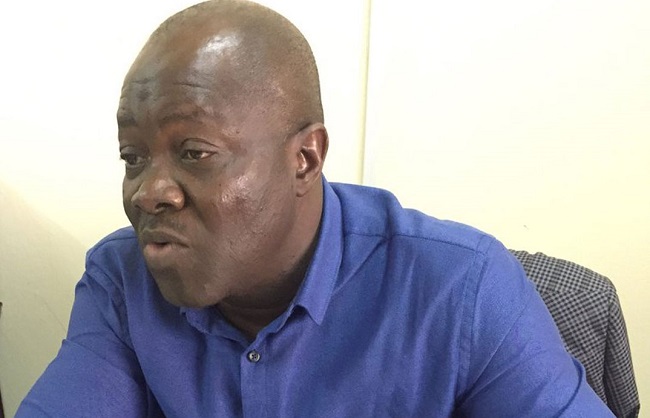
The General Manager, Lagos State Physical Planning Permit Authority (LASPPPA), Mr Funmi Osifuye, has faulted town planners for the excision of some villages in the state’s urban development plan.
Funmi Osifuye
Osifuye expressed his view in an interview with the News Agency of Nigeria (NAN) on Tuesday, October 2, 2018 in Lagos.
He spoke on the backdrop of a Draft Report on Geo-Referenced Infrastructural Mapping of Kosofe and Mainland Local Councils and Development Plans for Lakowe and Itoikin Excised villages.
The report was recently submitted by the District and Local Plans Department (DLPD) to LASPPPA.
According to him, town planners must assist by extending urban and infrastructure development programmes to the villages to ensure a comprehensive development of the state.
He noted that although planning a city was tough, all stakeholders must be involved to achieve the desired result.
“The planning of towns, districts, local government and others must be done by all professionals and not left to officers in the DLPD alone.
“All stakeholders must be engaged in the development of plans and the implementation of priority projects,’’ Osifuye said.
According to him, proper planning brings good urbanisation, economic growth, job opportunities and reduces rural-urban migration.
The Director, DLPD, Mr Abubakre Ogunneye, said that the draft report was necessary to show the location and the spread of infrastructure in the districts.
Ogunneye said that the report also showed other details such as urban design, pedestrian bridges, parks, canal setbacks, road improvement and sewage control, among others.
Tobacco not only damages human health but also threatens the planet’s wellbeing, according to a World Health Organisation (WHO) report published on Tuesday, October 2, 2018 in Geneva, Switzerland.
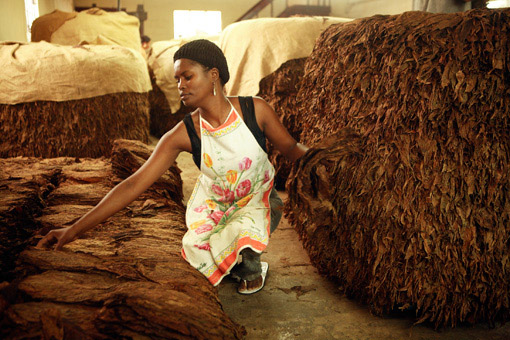
A tobacco factory worker
“The damage to the environment occurs across the entire life cycle of tobacco products due to deforestation, water pollution from pesticide use, and cigarette littering,’’ Vera Luiza da Costa e Silva, who manages the secretariat of the WHO tobacco control treaty (FCTC), said.
According to the study, tobacco production uses over 22 billion tonnes of water each year, which the treaty secretariat commissioned from Imperial College London.
Almost 84 million tonnes of carbon dioxide end up in the atmosphere annually because of tobacco agriculture, accounting for 0.2 per cent of global carbon dioxide (CO2) emissions.
In addition, the study said that tobacco farming hampers economic development.
“Tobacco has a lower yield and requires more input by farmers than many other agricultural crops,’’ the authors said.
They cited the example of Zimbabwe, where one hectare of land yields only one tonne of tobacco, compared to 19 tonnes of potatoes.
Almost all the world’s tobacco originates in developing countries.
The top 10 producers include low-income countries that are net importers of food, such as Zimbabwe and Malawi.
The report was made public during a meeting by the 181 countries that have signed the WHO tobacco control treaty, formally known as the Framework Convention on Tobacco Control.
An environmentalist, Mrs Gloria Bulus, has called for the application of evidence-based research and data to mitigate the effects of climate change in the country.
Gloria Bulus
Bulus, who is the Founder of Bridge-that-Gap initiative, a Kaduna-based non-governmental organisation, made the call in an interview with News Agency of Nigeria (NAN) on Tuesday, October 2, 2018 in Lagos.
She said that her call was in reaction to President Muhammadu Buhari’s statement on climate change concerns in his independence speech on Oct. 1.
NAN reports that President Buhari, in his address, said that Nigeria was one of the countries in the world mostly affected by environmental degradation because of climate change.
“We are signatories to almost all conventions and agreements aimed at slowing down the effects of climate change and mitigating its now-evident consequences.
“The consequences of the shrinking of the Lake Chad and pollution caused by oil exploration activities on lives and livelihoods alone have made it mandatory for us to be at the forefront of the struggle for a safer and more sustainable environment.
“We will continue to mobilise international support for our efforts in this regard,” Buhari had said.
However, Bulus stressed that the fact that Nigeria was a signatory to various environmental and climate change accords was not enough to solve the climate change issues.
“Being signatory to various environmental policies across the globe is not enough, as the consequences of climate change are already evident in our country.
“There is the need to strengthen our capacity to plan and respond effectively to climate change impacts through scientific research and evidence-based data.
“What we need now is action to effectively mitigate climate change; we must first understand deeply the impact of climate change and its effects on us now and on the future generation,” she said.
Bulus underscored the need for Nigeria to strengthen its environmental laws, policies and ensure compliance to mitigate the effects of climate change in a pragmatic way.
“We have some environmental laws and policies, but these laws and policies need to be strengthened; we also have to ensure they are implemented.
“We need strategies and a well-formulated action plan to mitigate climate change.
“The action plan should have specific time-frame and periodic evaluation mechanisms to fully implement sustainable climate change solutions,” she said.
Bulus urged the government and other stakeholders to make concerted efforts to overcome the challenges of climate change.
“The Federal Government needs to collaborate with other organisations and stakeholders to address environmental issues both internationally and locally.
“Nigerians at the grassroots level are needed in the fight against climate change; it requires the collective effort of everyone,” she said.
As part of efforts to manage waste properly and forestall flooding incidences, the environmentalist called for sensitisation of Nigerians and concerted efforts to tackle the menace of climate change.
“There is so much to be done. If we can put in a little more effort into flood mitigation, waste management and recycling projects, we will reduce climate change concerns.
“If we recycle our waste, we will not only generate income, but we will also reduce waste and flood.
“Direct engagement with citizens will help Nigerians to better understand what climate change is and its horrible effects.
“Evidence-based data and reports on climate crises should be made available to the public, especially through downloadable soft copies, use of infographics and hard copies from research centres.
“Advocacy on climate change effects should start from households, communities, schools, worship centres and markets,’’ Bulus added.
United Nations Children’s Fund (UNICEF) health specialist, Mr Hilary Ozoh, has decried the low-level public awareness of the deadly Maternal Neonatal Tetanus disease (MNT) ahead of the Oct. 18, commencement 2018 MNT elimination campaign.
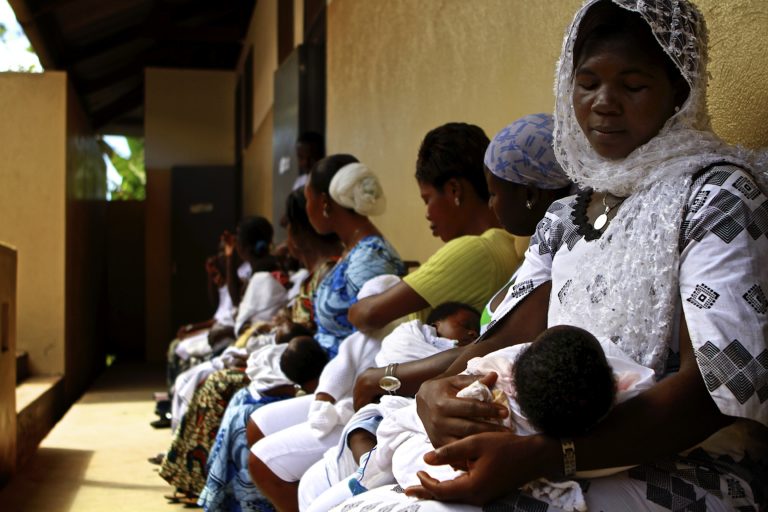
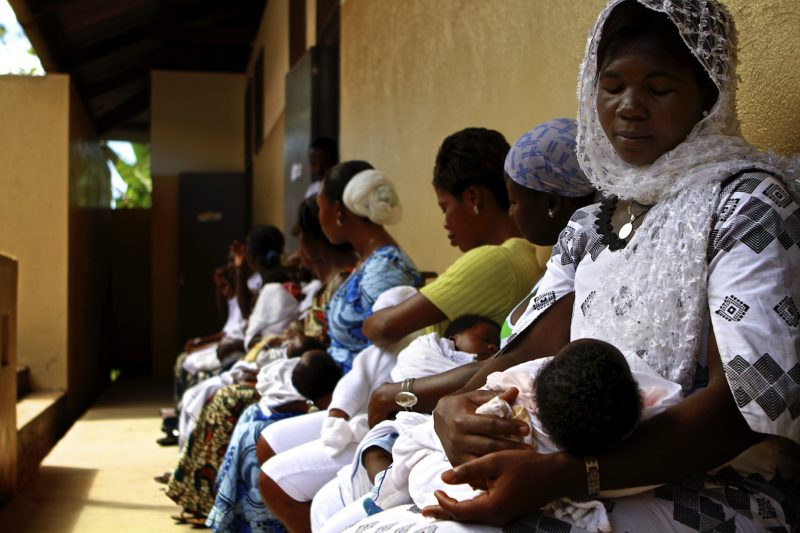
The MNT kills new born and sometimes the mother
Ozoh made the assertion at the opening of a one-day media orientation forum for 2018 MNTE campaign holding in Benin City, Edo State.
MNT is a swift and painful killer disease that kills new born and sometimes the mother.
According to UNICEF’s report, MNT killed no fewer than 34,000 newborns in 2015 alone while a significant number of women also die to due to maternal tetanus every year.
Ozoh said that MNT represented a very high proportion of the tetanus disease burden due mainly to inadequate immunisation services, limited or absent clean delivery services and improper post-partum cord care.
He however, expressed worry that not much had been done in terms of media enlightenment of the public with the Oct. 18, 2018 commencement day.
Speaking on the “Role of the media in the 2018 MNTE’’, Ozoh said the level of the campaign awareness was abysmal where the South-South zone had been identified as one of the high-risk states.
He noted that the campaign would not yield the desired result if the media was not involved.
Earlier, Dr. Eugene Orvihi-Ivase, Director, National Primary Health Care Development Agency (NPHCDA) in his welcome address, identified the media as a veritable vehicle for the effective implementation of all health programs.
Orvihi-Ivase, who heads NPHCDA’s Advocacy and communication department, said that the aim of the forum was to sensitise the media on the 2018 MNTE campaign, and identify the roles and responsibilities of the media, among others.
He expressed the hope that the forum would provide participants the platform for better understanding of the MNT health menace particularly in the South South zone.
Dr. Kizito Obi of the NPHCDA, in his presentation on the overview of 2018 MNTE campaign, said majority of mothers and newborns dying of tetanus live in Africa and Southern and East Asia.
Obi identified the major causes of the disease as poverty, little access to health care, and lack of information about safe delivery practices.
He said that Nigeria was among the 16 countries yet to eliminate MNT adding that the states in the South-South had been identified to be high risk zone.
The health expert noted that vigorous campaigns and follow ups on MNT needed to be sustained ahead of the 2020 total elimination date by the World Health Organisation (WHO).
According to him, once the disease is contracted, the fatality rate can be as high as 100 per cent without hospital care and between 10 per cent and 60 per cent with hospital care.
“The true extent of the tetanus death toll is not known as many newborns and mothers die at home and neither the birth nor the death is reported,’’ he said.
Obi, however, said that MNT was easily preventable through immunization of women with TT vaccine for protection against Tetanus.
“A child born to a woman protected against tetanus is also protected from the disease in the first few months of its life.
“Practice of hygienic birth practices to ensure infection is not contracted by mother or newborn during the birth process.
“Also, proper cord care to ensure that contamination of cord does not put the newborn at risk,’’ he said.
About 40 participants, drawn from the media, UNICEF and NPHCDA attended the daylong programme.