To mark th 2018 International Day for the Preservation of the Ozone Layer, a group of environmental advocates under the platform of Environmental Communication and Research Group (ECREG) has called on government and the citizenry to increase efforts towards the protection of the ozone layer, saying that such efforts will be presently beneficial to the earth, and helpful to future generations.
Victor Ikem
In a statement released in Lagos, coordinator of ECREG, Victor Ikem, said: “We must live each day with the consciousness that we all have a role to play in the sustainability of our collective environment and the earth. The Ozone Layer remains one of the most important earth’s resources which we must not allow to continue to deplete due to human actions.
“Our call for increased awareness and positive actions towards preservation of the Ozone Layer is for the benefit of the future generations and even this generation, so that we can bequeath a better and safer earth to our unborn children.”
The international Day for the Preservation of the Ozone Layer is a day set aside by the United Nations for attention of governments and citizens around the world towards the issue of Ozone Layer depletion. Precisely, in 1994, the General Assembly of the UN proclaimed, in its resolution 49/114, that September 16 every year would be recognised as the International Day for the Preservation of the Ozone Layer and, in commemoration of the day in 1987, the protocol of substances that deplete the ozone layer was signed in Montreal, Canada.
Gases that contain Chlorofluorocarbons (CFCs), Halons and Freons are known to be responsible for ozone layer depletion. This has brought about untold consequences on humans, animals and plants, responsible for non-melanoma skin cancer in human as well as other harmful effects on the environment.
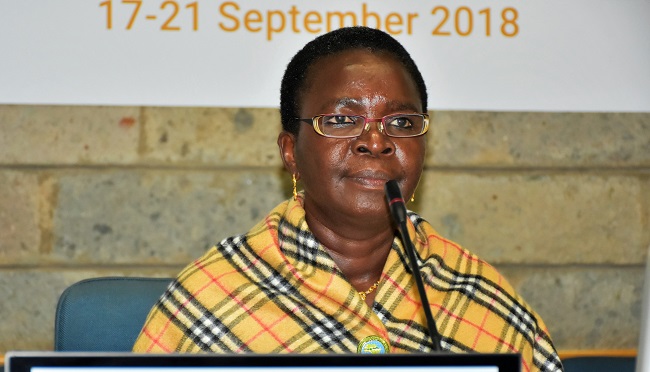
It is imperative for African Civil Society Organisations (CSOs) to advocate for innovative solutions to overcome environmental challenges facing Africa, UN Environment regional director for Africa, Juliette Biao Koudenoukpo, said on Sunday, September 16, 2018.
Juliette Biao Koudenoukpo
“This continent has the capacity and the knowledge to innovatively overcome our environmental challenges. We need to move faster from the ‘business as usual’ approach and devise ways and means to address issues such as rising energy costs, poverty, environmental degradation, pollution and social inequality or changes in legislation,” Koudenoukpo told a cross-section of CSOs in Nairobi during a two-day consultations to prepare for the seventh special session of the African Ministerial Conference on the Environment (AMCEN) and the fourth session of the UN Environment Assembly.
The meeting, co-organised by UN Environment and Pan African Climate Justice Alliance (PACJA), brought together 120 participants from accredited organisations across Africa.
“African countries need, more than any time before, to invest in innovative solutions to unlock its economic and social potential and create inclusive wealth for the wellbeing of their populations,” she emphasised, adding that innovation should happen at the policy, finance, market and partnership levels.
“Remember that people, especially youth, should be at the heart of driving this process. Our youth have so many innovative ideas and initiatives that can make a difference in transforming our societies,” Koudenoukpo said.
The commitment and genuine involvement of all social groups are critical to the effective implementation of the policies and projects in the field of environment and sustainable development, Koudenoukpo stated.
By Arison TAMFU, Nairobi, Kenya (PAMACC News Agency)
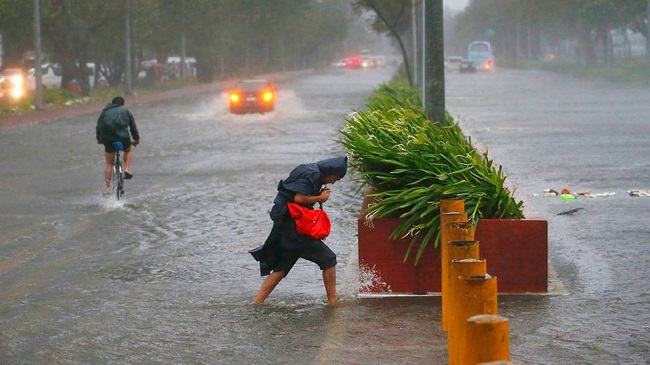
The death toll from super typhoon Mangkhut has climbed to 65 in the Philippines and 43 missing, police said on Monday, September 17, 2018.
Typhoon Mangkhut
The Philippine National Police (PNP) said 54 of the fatalities came from the Cordillera Administrative Region (CAR) in Luzon Island.
The other casualties were also from the northern Philippines, according to the PNP.
Seven people were killed in Cagayan Valley, two in central Luzon, one in Ilocos region and one in Metro Manila.
The PNP added that 43 others are missing while 64 others were wounded.
The super typhoon Mangkhut, which made landfall at 1:40 a.m. local time on Saturday in the northern Philippines, already exited this Southeast Asian country on Saturday night.
Mangkhut, the strongest typhoon in the region so far this year, left a trail of destruction across the Philippines’s main Luzon island.
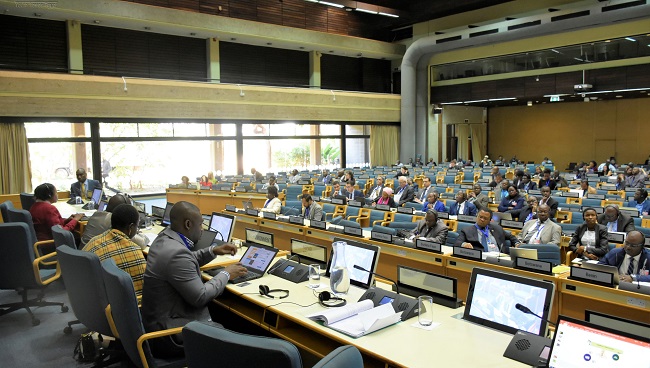
The need to invest in innovative solutions and interventions and promote sustainable consumption and production will top the agenda at the seventh special session of the African Ministerial Conference on the Environment (AMCEN), which takes place from Monday, September 17 to Wednesday, September 19, 2018 in Nairobi, Kenya.
AMCEN Plenary
Under the theme: “Turning Environmental Policies into Action through Innovative Solutions,” ministers are deliberating on key messages for the forthcoming African Biodiversity Ministerial Summit which will be held in Egypt in November this year, prior to the 2018 UN Conference on Biodiversity.
The African continent holds 30 per cent of the world’s mineral reserves, roughly 65 per cent of its arable land and 10 per cent of its internal renewable energy sources. Its fisheries are estimated to be worth $24 billion and the continent hosts the second largest tropical forest in the world. Targeted environmental policies have the potential to provide solutions to sustainable socio-economic development and poverty alleviation across Africa.
At the conference, ministers are particularly looking at how to enhance the political will to address the challenges of environmental degradation and increase investments in innovative solutions to sustainably maximise on the benefit from the continent’s abundant natural resources.
Ecosystem degradation costs Africa $68 billion annually coupled with losses of up to 6.6 million tonnes of potential grain harvest, capable of meeting calorific needs of up to 31 million people. In addition, post-harvest losses are estimated at $48 billion annually.
“Africa should focus on making a paradigm shift through practical innovative actions so that we can benefit at the maximum levels,” said Juliette Biao Koudenoukpo, UN Environment regional director for Africa, “We have made strides through AMCEN by taking policy reform directions to promote and strengthen innovative and environmentally sound actions that can ensure sustainable use of Africa’s natural capital.”
Among other key issues to be discussed is Africa’s preparation for the 24th Conference of the Parties to the United Nations Framework Convention on Climate Change to be held from 3 to 14 December 2018 in Katowice, Poland.
The conference is held back to back with the first meeting of the Africa Environment Partnership Platform which will take place from September 20 to 21. The aim of the Africa Environment Partnership Platform is to promote sustainable environmental management in Africa through enhanced partnership, coordination and harmonisation of activities.
Representatives of the New Partnership for Africa’s Development (NEPAD), sub-regional economic communities, the African Development Bank (AfDB), civil society organisations, United Nations agencies as well as other bilateral and multilateral partners are also participating in the special session.
The conference is expected to adopt a declaration, a set of decisions and key messages, and the outcomes of the seventh special session of AMCEN will feed into the 4th session of the UN Environment Assembly meeting to be held in March 2019 at UN Environment headquarters in Nairobi, Kenya.
Qatar on Monday, September 17, 2018 said that the country had plans to produce first Qatari electric cars by 2023, local media reported.
Sustainable transport: Achieving zero emission from electric cars
The Qatari electric vehicles will be manufactured by the factory which will be established at a cost of nine billion dollars, said Qatar Tribune newspaper.
The project will be the first-of-its-kind in the Middle East as it is a whole new brand, said Ali al-Misnad, Chairman of the Qatar Quality company, which is responsible for this project.
Al-Misnad also said that the new giant project aims to manufacture more than 500,000 cars by 2024 with plans to export the electric vehicles to countries all over the world.
As part of the project, the plan will include establishing of six factories and each will be specialised in different production line.
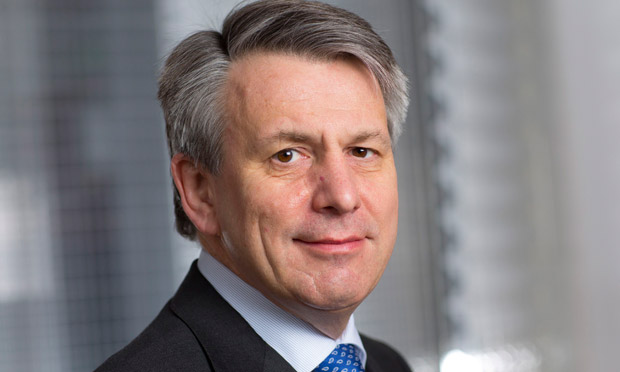
Royal Dutch Shell announced on Monday, September 17, 2018 plans to limit emissions of methane, a potent greenhouse gas, across its oil and gas operations.
Royal Dutch Shell’s Chief Executive Officer, Ben van Beurden
Shell aims to maintain methane emissions intensity below 0.2 per cent by 2025, it said in a statement, joining British rival BP, which last year set a similar goal.
Methane is released into the atmosphere mostly through leaks in gas infrastructure such as pumps and pipelines.
The gas has a bigger impact than carbon dioxide, even though the oil and gas industry produces less methane and the gas also has a shorter lifetime.
The methane target will be measured against a baseline leak rate, which is currently estimated at range from 0.01 per cent to 0.8 per cent across the company’s oil and gas assets, it said.
The Anglo-Dutch company set out last year an ambitious plan to halve its carbon emissions by 2050, far exceeding rivals. Investors have called on the company to set binding targets to reach those goals.
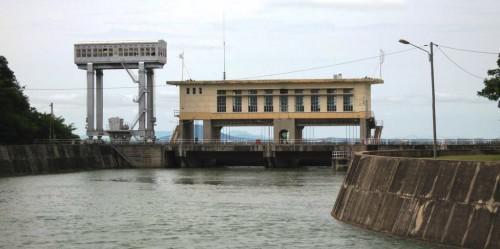
The Acting Director-General of Nigeria Hydrological Services Agency (NIHSA), Ahmed Mabudi, said the rumor making rounds about the release of water from the Lagdo Dam by Camaroonian authorities was untrue.
Lagdo Dam
There have been reports circulating that people living along the water banks of the Rivers Niger and Benue should run for their lives with the release of water by the operators of Lagdo dam in Cameroon.
According to the report, the National Emergency Management Agency (NEMA) and the Nigerian Police are quoted as warning those living along the water banks to run for their lives “between now and Saturday’’ or many houses will be over run.
Mabudi, however, told NAN on Sunday, September 16, 2018 in Abuja that the news was false.
“We’ve have spoken with the operator in charge of the dam in the Southern Cameroon region, Mr Abdullahi, and we are in constant discussion with him.
“There is a Memorandum of Understanding (MoU) between Nigeria and Cameroon that the Cameroonians must give us a long notice in the event that they want to release water from the dam, so we can take precautionary measures to contain any havoc as a result of the release.
“As at Tuesday when we spoke with Abdullahi, he said the water level at the dam was 12.1m, so it has to get to 12.6m before they start any release.
“So, when we alerted him about the stories making the rounds, he was shocked and refuted the claims.
“Yes, we know that there are rising water levels in Adamawa, Taraba and the Benue axis, but this is basically due to the torrential rain fall being currently experienced in the country,” he said.
He urged people living in high level water areas to remain vigilant and calm, adding that the Minister of Water Resources, Suleiman Adams, as well as NIHSA, were in touch with operators of the Lagdo Dam.
As at Sunday, the water level in Lokoja is 11.2m as against 10.66 on Wednesday.
The New Partnership for Africa’s Development (NEPAD) has picked Nigeria youth campaigner and digital media expert, Olumide Idowu, to manage Social Media and Communications during the upcoming 1st Africa Environment Partnership Platform Kenya holding from September 20 to 21, 2018. He will support the Social Media and Communications team of NEPAD.
Olumide Idowu
The coming into force of the Paris Agreement and adoption of the Sustainable Development Goals provides a unique opportunity for Africa to strategically address its environment and sustainable development goals as contained in the African Agenda 2063 and other development priorities of the continent. Therefore, the goal of the Africa Environment Partnership Platform is to promote sustainable environment management through enhanced partnership, coordination and harmonisation of activities on environment and pooling of resources at various levels.
The overall objectives of the platform are to place a premium on partnership to establish synergies and a more vibrant global partnership to drive Africa’s environmental sustainability agenda and strengthen the continental architectures for sustainable environment management.
The platform is expected to enhance synergies and to standardise discussions with other stakeholders such as RECs, civil society, private sector as well as important multilateral and bi-lateral partners that are working on environmental issues in Africa. The work and priorities of the platform will be guided by the Environment Action Plan as well as periodic decisions by the AU System.
The objectives of the Africa Environment Partnership Platform, under the theme, “50 years of Environmental Governance and Sustainability in Africa”, are:
To enhance coordination of environmental management among stakeholders at all levels on the continent.
To mobilise enough resources for the implementation of Africa’s priority environmental programmes/projects in Africa.
To enhance linkages between Africa’s environment and key productive socio-economic sectors such as trade, infrastructure and the extractive industry.
To harmonise and synchronise AUC/NPCA and RECs programmes/projects for effective and efficient implementation as well as development partner coordination.
To raise the profile of environment by building a collision of partners across the continent.
To engage governments and partners to prioritise environment in their development strategies and mainstream the EAP national environmental planning processes.
To enhance knowledge sharing and capacity development initiatives on the environment.
To facilitate the monitoring and evaluation of environmental priority programmes/ projects at regional and continental levels.
Companies representing around one-eighth of total global market capitalisation are now using climate science to define their future direction of travel.
Businesses are embracing science-based targets to reduce their emissions in line with the levels required to prevent global warming
Nearly three years on from the landmark Paris Agreement and with time running out before greenhouse gas emissions must peak, 2018 has seen an unprecedented rise in the number of companies committing to reduce their emissions in line with the levels required to prevent dangerous global warming.
Between January and August 2018, over 130 new companies joined the Science Based Targets initiative (SBTi), a collaboration between CDP, the United Nations Global Compact, World Resources Institute (WRI) and World Wide Fund for Nature (WWF). The SBTi independently assesses and validates corporate emissions reduction targets against the latest climate science.
The jump represents a more than 39% increase compared to the same period in 2017. Nearly a fifth (17%) of Fortune Global 500 companies have now committed to set science-based targets, with new joiners this year including French tyre manufacturer Michelin, US food producer The Kraft Heinz Company, global brewer AB InBev and Japan’s Yamaha Motor Company.
The combined market capitalisation of all companies that have joined the Science Based Targets initiative is nearly $10 trillion, comparable to the NASDAQ stock exchange.
The news was announced on Thursday, September 13, 2018 at the Global Climate Action Summit in California by summit co-chair Anand Mahindra, CEO of the Mahindra Group.
Mr Mahindra said: “This is a pivotal year for global climate action. Nearly three years after the world came together for the historic Paris Agreement, the race is on to meet its goal of restricting global temperature rise to below 2°C and heading off the worst effects of climate change.
“Targets based on science are the only effective way to meet the challenges we face. Around the world, hundreds of businesses are already showing that this is possible with substantial benefits to brand reputation and the bottom line. I urge all other companies to join this initiative immediately; the time for science-based action is now.”
Over 480 global corporations, from 38 countries, have now committed to set emissions reduction targets in line with climate science and the goals of the Paris Agreement. They include companies from the economy’s highest-emitting sectors, many of which will have to undergo radical transformation in order to meet their low-carbon goals.
Major Indian cement manufacturer Dalmia Cement, whose sector is responsible for more emissions than Japan or Canada, today joins the ranks of leading companies that have committed to set a science-based target.
Dalmia Cement Group CEO Mahendra Singhi said: “The global low-carbon transition is underway, and we are gearing up to unlock innovation and create the sustainable business of the future.
“The Paris Agreement has shown us the direction of travel. Science-based targets provide the roadmap to navigate the transition and ensure we play our part in delivering on the world’s low-carbon goals.”
Meanwhile, companies across the USA are stepping up to fill the void left by their national government. Some 90 American companies have joined the Science Based Targets initiative, more than any other country and ahead of Japan (64), the UK (51), France (35) and India (24).
Nearly a quarter of the US companies (24%) are in the Fortune Global 500, with over half (50) signing up since June 2017, when President Trump announced the US would withdraw from the Paris Agreement. Apparel company PVH, which owns brands such as Tommy Hilfiger and Calvin Klein, engineering firm AECOM and cloud computing company Salesforce are among the latest US companies to commit to set a science-based target.
American apparel company Levi Strauss & Co. has a goal in place to reduce its absolute Scope 1 and Scope 2 GHG emissions 90% by 2025 from a 2016 base year. The company has also committed to reduce absolute Scope 3 emissions from purchased goods and services 40% by 2025 from a 2016 base year.
“Climate change is a serious threat that requires urgent action,” said Liz O’Neill, executive vice president and president of product, innovation, and supply chain at Levi Strauss & Co. “We believe now is the time for the apparel industry to set science-based targets and collaborate on effective emissions reduction programs in our shared suppliers.”
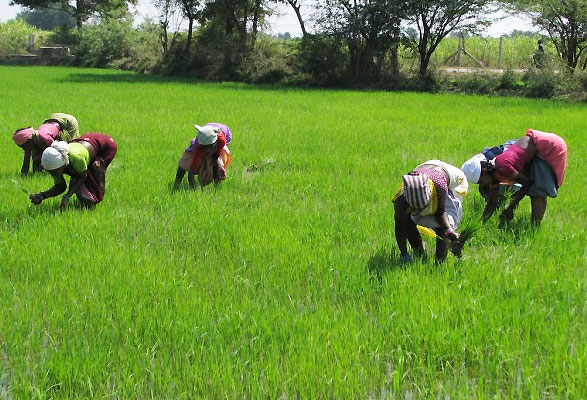
The Rice Famers Association of Nigeria (RIFAN) in Kano State says the recent flood has destroyed over 5,000 hectares of rice farm in some local government areas of the state.
Rice farming
The RIFAN state chairman, Alhaji Abubakar Aliyu, told the News Agency of Nigeria (NAN) in Kano, the state capital, on Thursday, September 13, 2018 that the rice farms were affected in 10 local government areas of the state.
Aliyu, who spoke through his Assistant Secretary, Alhaji Ado Yakasai, listed the affected local government areas as: Warawa, Minjibir, Bunkure, Wudil, Gaya, Garko, Gabasawa, Kabo, Rimin Gado and Ajingi.
He said the disaster, which occurred in August affected most of the rice farms situated in Fadama areas, pointing out that only farms located upland were not hit by the disaster.
“Each hectare of farm was expected to produce between six and seven tonnes of the commodity but with this disaster, the production will be seriously affected.
“You know most of the rice farms are situated at Fadama areas which are water settlements. So when the incident happened many farms were submerged by water,” he said.
Aliyu said that the farmers, who collected loan facility under the Central Bank of Nigeria (CBN) Anchor Borrower Programme, had lost over N5 billion as a result of the flood.
“Each of the farmers collected fertilizer and other inputs worth N210,000 as the total loan package while some of them have even spent additional amount of money on top of the total loan package.
“The association has already reported the incident to the Nigerian Agricultural Insurance Scheme (NAISL) since the farmers are covered by the insurance company,” he said.
He noted that the collapse of an earth dam in Bunkure local government area aggravated the situation.
The chairman, however, called on the Federal and state governments to come to the aid of the affected farmers in view of the huge loss they incurred.
He disclosed that no fewer than 44,800 rice farmers benefited from the Federal Government’s agricultural loan under the Anchor Borrower Programme this wet season.