Home Blog Page 1780

Conflicts, climatic shocks aggravate food insecurity in countries – FAO

0

Persistent conflicts and climate-related shocks are currently driving high levels of severe food insecurity, particularly in Southern African and Near East countries, which continue to require humanitarian assistance, according to a new report published by the UN Food and Agriculture Organisation (FAO) on Thursday, September 20, 2018.
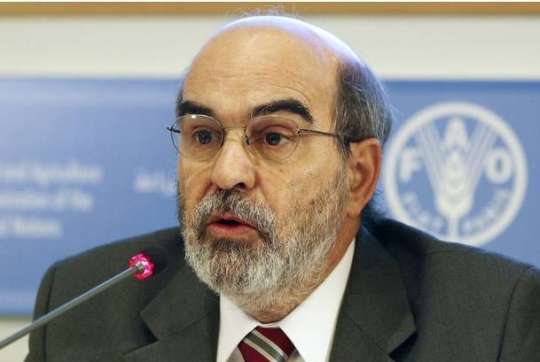
Jose Graziano da Silva
Jose Graziano da Silva, Director General of the FAO

Some 39 countries, 31 of which are in Africa, seven in Asia and one in the Caribbean (Haiti), are in need of external food assistance – unchanged from three months ago, according to the “Crop Prospects and Food Situation” report. FAO stresses that protracted conflicts, extreme weather events and displacement continue hampering food access for millions of vulnerable people.

Civil conflicts and population displacement remain the key drivers of food insecurity in East Africa and the Near East, whereas dry-weather conditions reduced cereal outputs in Southern Africa, according to the report.


Lower global cereal production forecast

FAO’s latest forecast for global cereal production in 2018 is pegged at 2,587 million tonnes, a three-year low and 2.4 percent below last year’s record high level.

Cereal production in the 52 Low-Income Food-Deficit Countries (LIFDCs) is projected this year at around 490 million tonnes, about 19 million above the past five-year average. The unchanged aggregate output reflects weather-reduced outputs in Southern Africa, Central Asia and the Near East that are foreseen to be offset by production gains in Far East Asia and East Africa.


Conflicts and displacement take toll on food security

Civil conflicts, often coupled with climate-related extreme events, have taken their toll on food security of vulnerable populations in Central African Republic, Nigeria, South Sudan, Syria and Yemen, among others.

In Yemen, due to ongoing conflict, an estimated 17,8 million people are food insecure and require urgent humanitarian assistance, a five percent increase from 2017.

In the Central African Republic, about two million people, or 43 percent of the total population, are estimated to be in need of urgent assistance for food due to the civil conflicts, several consecutive years of reduced agricultural production and poorly functioning markets, especially for displaced populations, host families and returnees, fueled by violent clashes and inter-communal tensions.


Dry weather hits cereal production in Southern Africa, Near East and South America  

Poor rains in Southern Africa at key cropping stages curbed this year’s cereal production, with the largest reductions reported in Malawi and Zimbabwe.

In Malawi, with this year’s cereal output estimated to be below average, the number of food insecure people in 2018 could more than double from last year to reach 3.3 million people.

In Zimbabwe, 2.4 million people are estimated to be food insecure in 2018 because of a reduced cereal output and food access constraints stemming from low incomes and liquidity problems of vulnerable households.

The Near East region has also suffered from insufficient rains that have reduced cereal output particularly in Afghanistan and Syria. In Syria, around 6.5 million people are estimated to be food insecure and another four million people are at risk of food insecurity, according to the report.

Dry weather conditions in South America have lowered cereal output in 2018 from last year’s record, particularly for maize. In Central America and the Caribbean, unfavourable rains also curtailed this year’s maize production, except in Mexico.


Cereal harvests rebound in Far East Asia and East Africa

In Far East Asia, cereal production in 2018 is forecast to rise, primarily reflecting gains in Bangladesh and India, with the latter seeing a record wheat output this year due to favourable weather conditions. Similarly, in Bangladesh, beneficial weather supported by prospects of remunerative prices triggered an expansion in paddy plantings that drove up cereal production in 2018, following reduced outputs last year.

Likewise, because of beneficial weather, cereal harvests in East Africa are also forecast to rebound from the reduced levels of 2017; however, torrential rains earlier this year and more recently in August resulted in floods causing localided crop losses.

The 39 countries currently in need of external food assistance are: Afghanistan, Burkina Faso, Burundi, Cabo Verde, Cameroon, Central African Republic, Chad, Congo, Democratic People’s Republic of Korea, Democratic Republic of the Congo, Djibouti, Eritrea, Eswatini (former Swaziland), Ethiopia, Guinea, Haiti, Iraq, Kenya, Lesotho, Liberia, Libya, Madagascar, Malawi, Mali, Mauritania, Mozambique, Myanmar, Niger, Nigeria, Pakistan, Senegal, Sierra Leone, Somalia, South Sudan, Sudan, Syria, Uganda, Yemen and Zimbabwe.


Group organises nationwide cleanup to celebrate Independence Day

0

An environmental group, African Cleanup Initiative (ACI), has launched a cleanup project tagged “Green Independence Cleanup” or GIC to celebrate the Nigeria’s 58th Independence Day.

Clean-up
A cleanup programme by the African Cleanup Initiative

Mr Alex Akhigbe, the Chief Environmental Officer and Co-founder of ACI, made this known in an interview with News Agency of Nigeria (NAN) in Lagos on Thursday, September 20, 2018.

He said that the cleanup project, which is scheduled to take place on Saturday, Oct. 6, would be executed in 58 communities across the country to mark Nigeria’s 58th independence anniversary.

Akhigbe said that the GIC project was aimed at making Nigerians to be conscious of the country’s environmental challenges, while building a sense of responsibility in them with regard to their waste management expectations.

“With this event, ACI is creating a platform for individuals and organisations to be environmentally patriotic and responsible as we celebrate our country’s independence.

“At this year’s Independence Day celebration, ACI will take advantage of the season to instil a national awakening and consciousness of the environmental challenges facing the country,” he said.

The environmentalist said that the project was initiated to foster unity among Nigerians and sensitise them to their expectations in waste recycling, neighbourhood sanitation exercises and public advocacy, among others.

“The GIC project will address issues that border on waste recycling, sanitation exercises, public sensitisation or advocacy on proper waste management strategies and green rallies.

“With our first-ever national clean up and sensitisation project, ACI will rekindle the spirit of unity and team spirit, which is usually witnessed during national football game days.

“The GIC project is going to be an impact and fun-driven scheme and it will encourage Nigerians to take personal responsibility for matters relating to the environment,” he said.

Akhigbe, however, called on the citizens and environmental stakeholders to support the GIC project via volunteer participation.

“For the GIC project, we are raising team leads in 58 communities across the nation; they will organise and lead over 200 volunteers in their respective communities for the cleanup exercise.

“We are currently calling on Nigerians, environmental stakeholders and corporate organisations to sign up for the project as team leads, volunteers and partners in the nascent efforts to foster a greener Nigeria,” he said.

By Mercy Okhiade

Government tasked on renewable energy

0

A renewable energy expert, Mr Yakubu Ikerodah, on Thursday, September 20, 2018 urged the Federal Government to create an enabling environment for the spread of renewable energy.

solar street lighting
Solar street lighting

Ikerodah, who is the Chief Executive Officer of the Abuja-based Joyak Janaiva Energy Solution Ltd, gave the advice during the donation of solar street lighting to Ughiekha community in South-Ibie, Etsako West Local Government Area of Edo State.

He said that it would address lack of electricity in the rural communities.

He said further that it was important to fully exploit the full potential of solar energy as an alternative source of power, adding that the hydro power plants had not been able to bridge the energy needs sufficiently.

“The importance of solar renewable energy could not be over emphasised because of its environmentally friendly nature.

“We must begin to take the immense advantage of sunlight to boost our solar energy needs,” he said.

The expert said that the demand for renewable energy skills were growing globally, adding that experts in the field needed financial backing to grow the sector.

He urged the Federal Government to invest more in renewable energy to fill the gap created in energy supply.

“Government should sponsor more solar energy companies to build off-grid energy for rural dwellers.

“Solar energy can help address climate change and increase standard of living of rural dwellers.

“Nigerian government should also invest more in this energy to bridge the gap in grid energy,” he said.

Ikerodah said the integrated solar street light cost N4 millon adding that it consists of Solar panel, Li-Fe battery, LED controller and human intelligence induction system.

“This project is the corporate social responsibility of Joyak. The concrete street light poles use on this project is the first of its kind in Nigeria and this innovative product will help in reducing cost of street light poles by 50 per cent,” he said.

Earlier, the traditional ruler of South-Ibie, Alhaji Kelvin Danesi, and the Chairmam of the local government, Mr Yakubu Musa, thanked the company for its gesture.

“Giving back to the community is a best service to humanity, we are happy and excited, and i pray we have more of its kind in our communities.

“This is a singular effort by an individual that now the darkness here has gone, there is light, we do not have regular public light, this street is lighted, and criminals are out of the community.

“We will support him and ensure the local government key into this project for our remote villages that have not key into the national grid, we will assist them with this solar system,” they said.

By George Edomwonyi

Russia creates new powder vaccine against Ebola

0

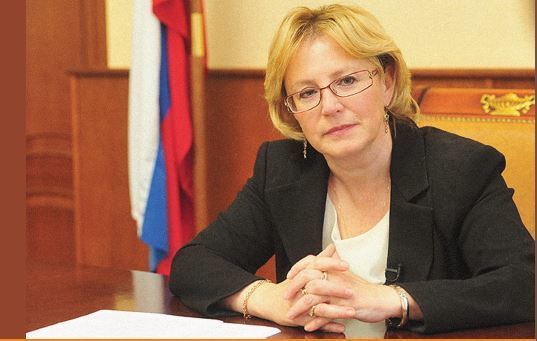
The Russian health care ministry has got a new dry powder vaccine against the deadly Ebola virus disease, Health Minister, Veronika Skvortsova, said on Thursday, September 20, 2018.

Veronika Skvortsova
Russian Health Minister, Veronika Skvortsova

“We have created a new form of Ebola vaccine in powder,’’ Skvortsova said at a meeting with Djene Kaba Conde, the spouse of the president of Guinea, on the sidelines of the Eurasian Women’s Forum in St. Petersburg.

The vaccine is now being tested on volunteers and has shown promising results so far, the Russian minister added.

“I think that is one area our further cooperation could be the creation of the pharmaceutical sector in Guinea, not only to fight Ebola but also other tropical diseases,’’ Skvortsova stressed.

Conde welcomed the proposal and said that Guinea was interested in the production of malaria vaccine on its territory.

In August 2017, Guinea launched the post-registration clinical trials of Russia’s Ebola vaccine Gam Evac Combi, which was developed by the Gamaleya Scientific Research Institute of Epidemiology and Microbiology.

Government urged to allow 100% private sector participation in power sector

0

Some stakeholders on Thursday, September 20, 2018 urged the Federal Government to allow private investors’ full operation of the power sector to boost effectiveness and enhance economic growth.

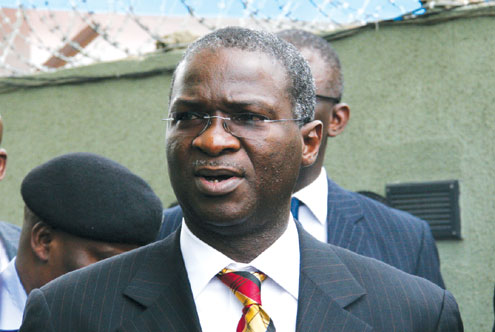
Babatunde-Fashola
Minister of Power, Works and Housing, Babatunde Raji Fashola (SAN)

The stakeholders suggested in separate interviews with the News Agency of Nigeria (NAN) in Lagos against the backdrop of the enormous challenges confronting the country’s power sector.

Mr Adekunle Sofunde, Chairman, Solatek Engineering Ltd, urged government to hands-off the operations of the power sector to private investors for more business competitive drive.

Shofunde said that such would a decision would allow Nigeria’s power sector to compete favourably with other countries.

He said that government should only regulate and not be involved in running power operations, adding that the sector could perform better if solely managed by private sector.

According to him, it is disappointing that an economy of over 190 million generates less than 10,000mw and distributes even less.

“Continuous tinkering with the structure of power supply and distribution and close to 20 billion dollars expended since 1999 has only brought darkness, frustration and misery to Nigerians.

“Nigeria imports over 70 per cent of its petroleum products requirement, while electricity supply is inadequate at just about 4,000mw now.

“Over 20,000mw of power is generated daily from fossil-fired plants to meet up with electricity demand,’’ he said.

The expert urged government to embrace renewable energy to fill the gap created by this deficit, adding that power production and distribution in the country were far less than what was needed.

The Director-General, Textile Manufacturers Association of Nigeria, Mr Kwajaffa Hamma, said business competitiveness could only be driven when the power sector is being 100 per cent managed by private investors.

He urged government to ensure that the power sector tariffs become competitive as obtained in other countries such as Egypt Ethiopia and South Africa.

“That is the only way to move the sector forward; we cannot export our products (energy) outside the countries because it’s not competitive.

“Seventy-five per cent of all generating output in Nigeria does not reach the intended end users.

“While the minimum capacity requirement for Nigeria is put at 50,000mw, we are currently producing less than 5,000mw.

“Eight in 10 Nigerians rely on the alternative source of the power supply as erratic power supply persists.

“Eighty-five per cent of Micro Small and Medium Entrepreneurs (SMEs) rely on power generators for electricity,’’ he said.

Mr Muda Yusf, Director-General, Lagos Chamber of Commerce and Industry (LCCI), said “Power sector is critical to the development of the country.

“Most often, there is often a conflict between development objectives and commercial objectives.

“I believe the government still needs to provide some resource support and generous fiscal incentives for investors in the sector.

“What should be avoided is public sector management of such enterprise. We do not have a record of good corporate governance in most public enterprises.

“A strictly private sector driven power sector, however, poses the risk of exclusion of some segments of the population.

“Many locations and communities may not be served because of the commercial viability of such provision.

“There should, therefore, be a model that would cater for the economically vulnerable segments of the society.

“This is the scenario currently playing out in private sector provision of education and health services.

“Private schools and private hospitals are not affordable by majority of the citizens,’’ NAN quotes Yusuf said.

Mr Biodun Ogunleye, Managing Director, PowerCap Ltd, was, however, opposed to total handing over of the sector to the private sector, saying that such could result to abused of power.

Ogunleye said that government has a vital role to play in the power sector, adding that there is no country in the world that hands-off power sector totally to private investors without regulating and controlling the sector.

He said: “I am not aware of countries that essential services like power is not regulated, am also not aware there is no regulator like NERC within the structure.

“Between NERC and CBN there will also be a bulk buyer so that there would be a bulk market, but government should not involve in retail but plan on how much capacity as a nation would should aspired to have.

“Government should point the direction of what the private sector would go, because if you allow the private sector they will only do certain things that would only favour them.

“On Discos, government had never appointed management for Discos but took board position, and they are civil servant that are basically checking and taken reports, not aggressively involved in their operations,’’ he said.

By Yunus Yusuf

Lagos among world’s dirtiest cities, say waste managers

0

The Association of Waste Managers of Nigeria (AWAM), popularly known as Public Private Participation (PSP), says Lagos State has now become one of the dirtiest cities in the world.

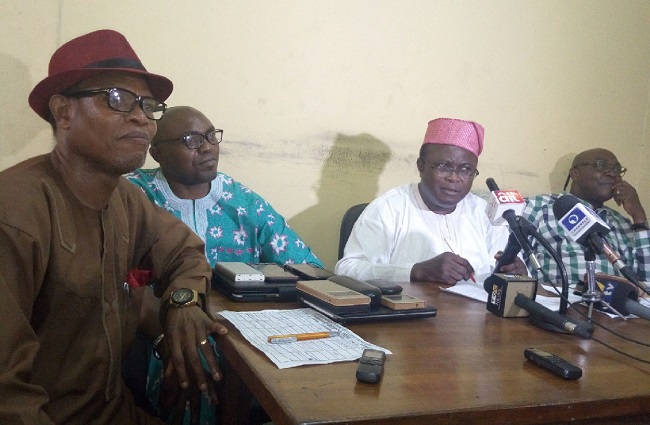
Association of Waste Managers of Nigeria (AWAM)
Members of the Association of Waste Managers of Nigeria (AWAM)

Vice-Chairman of AWAM, Mr David Oriyomi, who made the assertion on Tuesday, September 18, 2018 in Lagos while speaking with newsmen, said the city had become dirty due to deliberate attempts to relieve the waste managers of their job.

Oriyomi said that Gov. Akinwumi Ambode introduction of the Cleaner Lagos Initiative in 2016, with the intention of a single foreign company known as “Visionscape” to take over the residential waste collection from 350 PSP, led to improper waste management.

According to him, this came as a rude shock to the AWAM as there was no consultation.

“The most disturbing is that, if implemented, it would have resulted in massive business closure and majority of our over 25,000 employees would have lost their jobs.

“We made frantic efforts to see and appeal to the governor, but to no avail.

“After various false start dates, the initiative was launched by placing bins indiscriminately across the state with very little provision to evacuate the heaps of waste.

“This was responsible for the increase in the volume of waste on the highways and medians.

“Our city was returned to pre-1999 era and the once celebrated clean city has now become one of the dirtiest cities in the world,” he said.

Oriyomi said that AWAM went to the court to seek redress to protect their investment.

He added that the redress made Visionscape to turn around and offered members of AWAM their job back, as a subcontractor with uneconomically and unsustainable terms.

The vice-chairman said that this was outrightly rejected by the waste managers, as they considered it to be economic slavery.

He said that the PSP continued to make desperate appeals to the government, the House of Assembly, Leaders of the APC party and to the National Leader of the APC, Asiwaju Bola Tinubu.

According to him, government has yet to provide waste managers with the bankable agreement that will enable them to make further necessary investment in waste management.

“The government has continued to play lip-service to the issue of dumpsites which remains the major bottleneck to effective waste evacuation.

“Visionscape continues to monopolise the state assets such as the Transfer Loading Stations.

“Visionscape and its agents continue to encroach in areas being serviced by the PSP, claiming to offer a free service which they don’t have the capacity to render,” he said.

“The net effect of all these is that some operators have been forced to shut down their businesses.

“Those still operating are barely surviving as we continue to service our clients under such harsh and hostile conditions.”

The environmentalist said that such injustice should not be allowed to continue as the health and well-being of residents of Lagos must be paramount to all.

“It is therefore, with great hope that we welcome the emergence of the new governorship aspirants, particularly for Mr Babajide Sanwo-Olu.

“Sanwo-Olu has promised to run a participatory government and resolve the protracted waste crisis facing our beloved state.

“For this reason, we in AWAM have decided to align ourselves with Mr Babajide Sanwo-Olu and pledge our full support to him in the forthcoming elections,” he said.

Oriyomi said that the decision was taken in the best interest of the environment.

He said that AWAM remained committed to servicing the great residents of the centre of excellence.

“It is time to clean up our city, we did it before, we are able and willing to actualise the Lagos of our dreams,” the vice-chairman said.

By Florence Onuegbu

Global goal to end poverty by 2030 unlikely – World Bank

0

People living on less than $1.90 a day have fallen to record low of about 655 million – or nine per cent of the world’s population.

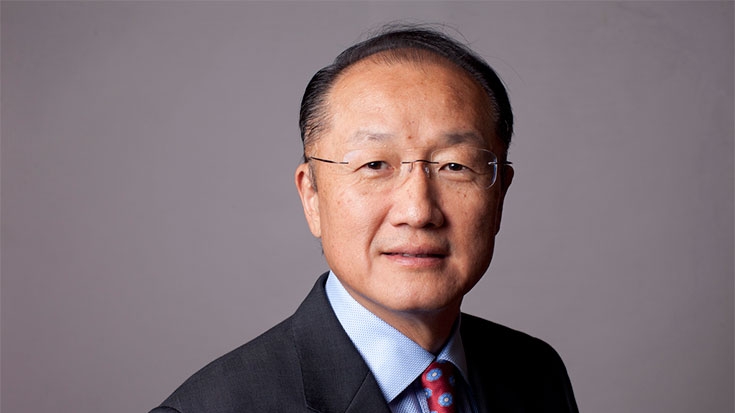
Jim Yong Kim
World Bank Group President, Jim Yong Kim

Meanwhile, a global target of ending extreme poverty by 2030 is unlikely to be met, the World Bank said on Wednesday, September 19, 2018.

Without significant shifts in policy, about 480 million people – some six per cent of the world – would remain in extreme poverty in 2030.

“The global poverty rate is now lower than it has ever been in recorded history.

“But if we are going to end poverty by 2030, we need much more investment, particularly in building human capital, to help promote the inclusive growth it will take to reach the remaining poor,’’ World Bank President, Jim Yong Kim, said.

Ending extreme poverty by 2030 is a key target among 17 ambitious global development goals agreed at the UN in 2015.

But at least 10 per cent of people in sub-Saharan Africa would remain in extreme poverty by 2030 “under all but the most optimistic scenarios,” the bank said.

The world is not giving enough aid – with many countries missing a UN target of spending 0.7 per cent of economic output on aid – or directing it toward those most in need, the London-based Overseas Development Institute think-tank said last week.

“Middle-income countries get 10 times the amount of aid that low-income countries do.

“That clearly isn’t a sensible way to give aid,” the report’s author, Marcus Manuel, told the media.

“We need to flip that”, Selim Jahan, Director of the UN Human Development Report Office – which produces an annual report on key indicators like health, education and income – disagreed with the ODI’s analysis, though he agreed more funding and actions were needed.

“There has been considerable progress in reducing extreme poverty,” he said.

Abu Dhabi named world’s safest city

0

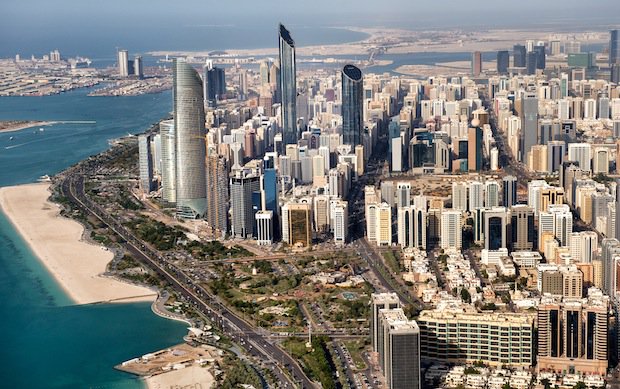
Abu Dhabi, capital of the United Arab Emirates (UAE), has been named the safest city in the world for the second year by Numbeo.

Abu Dhabi
Abu Dhabi, UAE

Numbeo is a website for crowd-sourced global data, Abu Dhabi Department of Culture and Tourism said on Wednesday, September 19, 2018.

Abu Dhabi surpassed more than 300 cities across the world, including Tokyo, Japan, Basel, Munich, and Vienna, to be graded the world’s most secure city, according to Numbeo.

The index ranked 338 cities globally by estimating their overall safety levels.

The safety index of the UAE capital rose from 86.46 points for the first half of 2017 to 88.26 points this year.

“Our capital’s strong reputation for safety and a virtually crime-free society is a testament to the ongoing efforts to establish the emirate as a destination of distinction with international standards of safety,’’ said Saif Saeed Ghobash, undersecretary of the Department of Culture and Tourism, Abu Dhabi.

Established in 2009, Numbeo is a collaborative online database, which enables users to share and compare information about the cost of living between countries and cities.

Countries aren’t pricing carbon high enough to meet climate targets – Report

0

Governments need to raise carbon prices much faster if they are to meet their commitments on cutting emissions and slowing the pace of climate change under the Paris Agreement, according to a new OECD report.

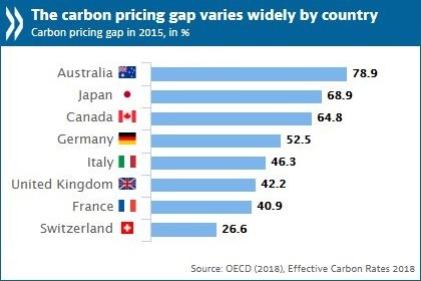
Carbon rates
Carbon rates

The report, titled: “Effective Carbon Rates 2018: Pricing Carbon Emissions through Taxes and Emissions Trading”, presents new data on taxes and tradeable permits for carbon emissions in 42 OECD and G20 countries accounting for around 80% of global emissions. It finds that today’s carbon prices – while slowly rising – are still too low to have a significant impact on curbing climate change.

The report shows that the carbon pricing gap – which compares actual carbon prices and real climate costs, estimated at EUR 30 per tonne of CO2 – was 76.5% in 2018. This compares favourably with the 83% carbon gap reported in 2012 and the 79.5% gap in 2015, but it is still insufficient. At the current pace of decline, carbon prices will only meet real costs in 2095. Much faster action is needed to incentivise companies to innovate and compete to bring about a low-carbon economy and to stimulate households to adopt low-carbon lifestyles.

“The gulf between today’s carbon prices and the actual cost of emissions to our planet is unacceptable,” said OECD Secretary-General, Angel Gurría. “Pricing carbon correctly is a concrete and cost-effective way to slow climate change. We are wasting an opportunity to steer our economies along a low-carbon growth path and losing precious time with every day that passes.”

The report measures carbon prices using the Effective Carbon Rate, which is the sum of three components: specific taxes on fossil fuels, carbon taxes and prices of tradeable emission permits. All three instruments increase the price of high-carbon relative to low- and zero-carbon fuels, encouraging energy users to go for low- or zero-carbon options.

The vast majority of emissions in industry and in the residential and commercial sector are entirely unpriced, the report finds. The carbon pricing gap is lowest for road transport (21% against the EUR 30 benchmark) and highest for industry (91%). The gap is over 80% in the electricity and the residential and commercial sectors.

Country analysis on 2015 carbon prices shows large variations, with carbon pricing gaps ranging from as low as 27% in Switzerland to above 90% in some emerging economies. France, India, Korea, Mexico and the United Kingdom substantially reduced their carbon pricing gaps between 2012 and 2015. Yet, still only 12 of the 42 countries studied had pricing gaps of below 50% in 2015.

New carbon pricing initiatives in some countries, such as China’s emissions trading scheme and renewed efforts in Canada and France to price carbon, could significantly reduce these gaps. The carbon-intensity of GDP is usually lower in countries with lower carbon pricing gaps.

The report rates emission trading as an effective way to price emissions, providing permit prices are stable at realistically high levels. Taxes have the advantage of simple administration, especially if grafted onto existing tax regimes. Revenue-neutral reforms can enable other taxes to be cut or carbon pricing can facilitate domestic revenue mobilisation.

CSOs flay Africa’s poor implementation of environmental policies

0

African Civil society organisations (CSOs) have raised concerns on lack of follow up and implementation of environmental policies by African governments.

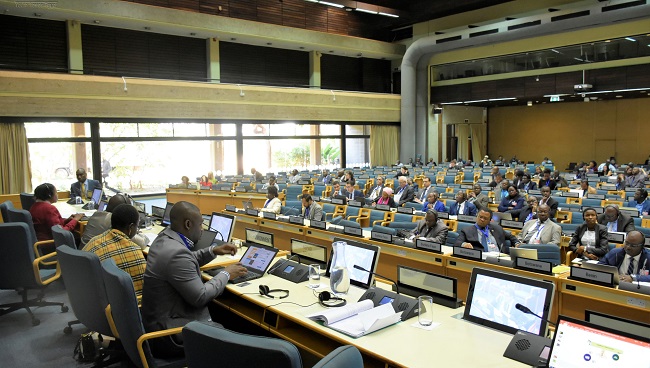
AMCEN Plenary
AMCEN Plenary

In a statement to the 7th special session of the African Ministerial Conference on the Environment (AMCEN), the CSOs observed the need to move away from talk shows where policies are discussed but little or nothing is done in terms of implementation.

With reference to the theme of this year’s AMCEN, “Turning environmental policies into action through innovative solutions”, the CSOs called for coordinated approaches in the implementation of activities, and avoid a stand-alone working culture by government ministries, which they said, was currently the case in most African countries.

They bemoaned most governments’ insistence on the top to bottom approaches and disjointed policy implementation.

“We have been part of this process for a long time and having policies after policies at both local and national levels but what we have had challenges with is how to implement these policies,” said Mithika Mwenda, Secretary General of the Pan African Climate Justice Alliance (PACJA). “It doesn’t matter so much that we meet every year and do a declaration, what we are looking at is how to put these issues into action.”

Citing the food systems sector, the CSOs urged governments to embrace innovations that link agriculture to all related natural resources and environmental management policies.

“We urge governments to link agriculture policies to land tenure systems, farmer cooperatives, extension and advisory services and adopt policies that allow small scale farmers to get easy access to farmland, integrating policies for national security such as export policies, energy policy, water policy, seed policy, post-harvest wastage, health of soils and organic methods such as Agro ecology,” read part of the statement.

And in support of addressing the perennial market access challenge especially among smallholder farmers, the CSOs believe the promotion of public- private partnerships and platforms in marketing of agricultural products among government ministries, could help farmers move up the economic ladder.

Another issue of concern for African CSOs, which formed part of their two-day consultation prior to the AMCEN, is resource and waste management. Under this pillar, they called for life cycle approaches, urging governments to integrate informal sector such as private waste collectors into formal policies and laws, monitoring and promote the principles of extended producer responsibility and encourage take back schemes combined with financial incentives to encourage recycling programmes.

“We further urge the governments to integrate sound waste management practices at school curricula and integrate these into education policies to encourage attitude change,” they said.

And with the realisation that Africa was a net importer of goods and services, the CSOs called for development of a cost-effective way of protecting Africans from chemical hazards in the imported goods.

“To regulate such, we urge African ministers to support the establishment of a new global framework for plastic pollution and nominate African experts to the ad-hoc expert working group on marine litter and micro plastics mandated by UNEA 4,” they proposed.

According to available statistics, air pollution is believed to contribute to over 9 million premature deaths (16% of all deaths globally), especially linked to inefficient waste management such as open burning.

On this score, the CSOs said they would like to see air pollution control as a high priority for African governments through integrated planning, health surveillance, and transparent reporting mechanisms, not only to slow the pace of climate change but also control non-communicable diseases.

The civil society organisations were drawn from across Africa under the umbrella of the Pan African Climate Justice Alliance (PACJA).

By Friday Phiri, PAMACC News, Nairobi, Kenya