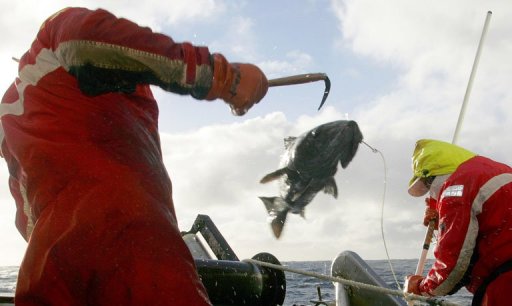
A new landmark global agreement has resulted in a fishing ban in the Arctic Ocean.
Fishing in the Arctic Ocean
The European Union, Canada, the People’s Republic of China, Denmark, Iceland, Japan, the Republic of Korea, Norway, the Russian Federation and the United States on Thursday, October 4, 2018 agreed to the deal. Collectively, they make up 75 per cent of global GDP.
The agreement, signed in Greenland, states that commercial fishing in the high seas portion of the Central Arctic Ocean will be banned, until scientists can confirm that it can be done sustainably.
The agreement will enter into force when all 10 Parties have ratified the agreement.
Karmenu Vella, Commissioner for the Environment, Maritime Affairs and Fisheries, said: “This historic agreement was only possible thanks to the strong commitment and leadership shown by all Parties. It shows what multilateralism can achieve, when there is a strong sense of common purpose.”
The Artic region is warming at almost three times the global average rate, this causes a change in the size and distribution of fish stocks. In turn, the Arctic high seas could become more attractive to commercial fisheries in the medium to long term.
Karmenu Vella added: “Protection of the Arctic was a significant gap in international ocean governance. Today, we have all committed to safeguarding this fragile marine ecosystem for future generations. I call upon all Parties to swiftly proceed to the ratification of this important agreement.”
This agreement is said to be the first step in ensuring that future fishing is carried out sustainably.
In mid-September the United Nations concluded its first session on creating an intergovernmental legally binding treaty to protect marine biodiversity in ocean waters. The second session is scheduled for March 2019.
Recently, the UK government has announced its support to protect 30 per cent of global oceans in a bid to protect marine life.
At the end of the eighth session of the global tobacco treaty (WHO- FCTC) negotiations on Saturday, October 6, 2018, governments unanimously adopted policies that eliminate loopholes Big Tobacco allegedly use to gain access to the talks, redouble defenses against evolving industry tactics, and mandate a study on new tobacco products, which are said to pose a threat to public health – particularly to children.
Cigarettes are said to have a significant impact on the environment, not just health
Big Tobacco allegedly attempted to undermine negotiations by stacking government delegations, commandeering industry front groups, lobbying Parties, posing as the public and employing other means to interfere with policies that would save lives and reduce tobacco consumption.
Parties however adopted a good governance policy that eliminates the loopholes, shutting out the industry and protecting the treaty from interference.
“The tobacco industry is the single largest barrier to tobacco control policies globally – and these negotiations were no exception,” said Michel Legendre, associate campaign director at Corporate Accountability. “We applaud the delegates that stood up to the industry and staunchly rejected their rhetoric. It is thanks to them that governments have now adopted precedent-setting measures that will protect millions of people’s lives.”
Parties were said to have eliminated Big Tobacco’s last entryways into the talks, as well as expanded the treaty’s firewall policies that protect public health policy making from the influence of emerging industry tactics. The adopted policy includes specific language to expose and counteract tactics like the Philip Morris International-funded foundation, and it called on all institutions to reject any proposed partnership, among other measures.
“This industry may claim it’s turning a new leaf, but we aren’t falling for its latest scam,” said Akinbode Oluwafemi, Deputy Executive Director of Environmental Rights Action/Friends of the Earth Nigeria (ERA/FoEN). “Big Tobacco tries to confuse, sow doubt, and derail policy with its PR stunts, but governments around the world are rejecting its attempts.”
“Big Tobacco will stop at nothing to try to undermine the lifesaving measures of the treaty,” said Dr. Nuntavarn Vichit-Vadakan, a delegate for Thailand. “Today, we made great strides to keep the industry where it belongs: outside of the talks and away from public health policy.”
Parties also called on the Secretariat to fulfill its commitment and provide governments with the necessary resources to hold the tobacco industry civilly and criminally liable for its abuses – potentially unveiling a new frontier of tobacco control.
“Soon, Parties will have the tools they need to make Big Tobacco pay,” said Dr. Reina Roa, Panama Ministry of Health. “Liability actions will unlock unlimited potential to transform the way this industry, and other corporations operate globally.”
Casting out the tobacco industry could provide precedent for insulating other policy making spaces, say observers, saying it includes corporations that drive environmental and public health harms.
They believe that decisions adopted by Parties will shape the implementation of the FCTC for the next two years and beyond. The treaty, which entered into force in 2005, contains the world’s most effective tobacco control and corporate accountability measures – estimated to save more than 200 million lives by 2050 if fully implemented.
Key outcomes from the talks included:
Eliminating public badge and delegate loophole exploited by the industry.
Reaffirming Article 5.3 guidelines, safeguarding the treaty from emerging industry tactics and calling for all institutions to reject partnerships with industry-funded groups.
Calling for the advancement of liability in Article 19.
Recommending a study on heat-not-burn products and declaring that the FCTC guidelines apply to these novel and emerging products.
Useful modification of industrial process designs to achieve better efficiency, improved capacity utilisation and sustainable use of natural resources have been identified as major reasons why the government emphasises the need for Environmental Impact Assessment (EIA) reports.
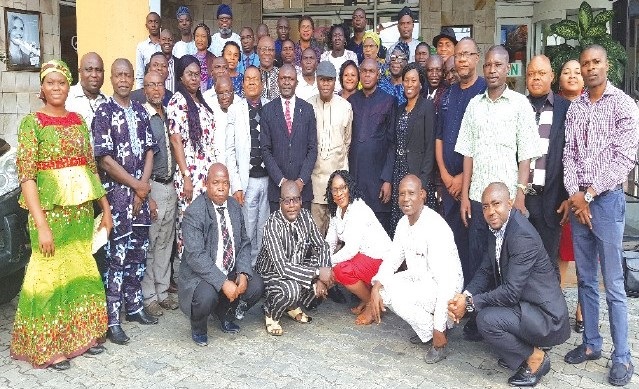
Participants at the Stakeholders’ Interactive Forum on Environmental and Social Impact Assessment (ESIA) For Renewable Energy (RE) Development in Nigeria
Permanent Secretary in the Federal Ministry of Environment, Mr Aliboh Leon Lawrence, made the submission in Port Harcourt, Rivers State on Tuesday, September 25, 2018 during the opening of a three-day “Stakeholders’ Interactive Forum on Environmental and Social Impact Assessment (ESIA) For Renewable Energy (RE) Development in Nigeria”.
The forum held courtesy of the UNDP-GEF (United Nations Development Programme – Global Environment Facility) De-risking Renewable Energy NAMA (Nationally Appropriate Mitigation Action) for the Power Sector Project that aims to ensure effectiveness and sustainability of investment in the RE Sector.
One of the objectives of the initiative, according to the project promoters, is to achieve a transformation in the electricity mix such that at least 20GW of Nigeria’s electricity is generated from solar PV by 2030 – albeit in an environmentally and socially sustainable manner.
Lawrence, who was represented by the Director, Environmental Assessment Department in the ministry, Mr John Alonge, disclosed that the ministry had received and evaluated over 4,000 different categories of EIA reports for projects in various sectors of the economy including renewable energy, oil and gas infrastructure, incineration, ginnery, manufacturing, waste management and agriculture, among others.
The EIA process in Nigeria as in many other countries of the world recognises the importance of the views and concerns of stakeholders in the successful implementation of development projects, added Lawrence, pointing out that public consultation and participation in the EIA process are key components of the EIA law in country.
He stressed that, by providing the affected people with the mechanism for presenting their range of social, economic and political problems, public participation not only helps in enriching EIA process but serves to stem agitation and lack of cooperation from host communities and other interested parties and thus create an enabling environment for projects to be successfully implemented.
His words: “Our experience in stakeholders’ participation in the EIA process for renewable energy projects in the last five years shows increasing understanding by our people of the importance of EIA as a tool for environmental management. However, if the full objectives of EIA are to be met, stakeholders must move from mere criticism of EIA studies and the demand for monetary compensations alone to a more constructive evaluation of EIA reports based on sound knowledge of local environment in which the project is situation.”
Pproject team leader, Okon Ekpenyong, said the overall objective of the forum is to support the implementation of the EIA Act towards enhancing sustainability and ease of access to finance, with the specific objectives being to discuss and sensitise stakeholders on key elements of EIA Act vis-à-vis sustainability principles and requirements of international financiers.
Ekpenyong, an engineer, also listed the objectives to include: carrying out rapid assessment and identifying gaps; reviewing existing accredited environmental assessment of consultants and modalities for feedback and sanctions; establishing appropriate framework for baseline data collection; and identifying challenges and recommending measures for addressing them.
Delivering a paper on “Environmental implications of large-scale renewable energy projects”, the Managing Director, Environmental Accord Limited, Ibrahim Salau, identified two major risks to be addressed in the sector as building local capacity across sectors and de-risking the risk of lengthy and expensive permitting process.
He said: “De-risking the large-scale renewable energy sector is important because we need electricity, and not just because we need electricity, but we need clean electricity which large-scale electricity project will deliver but we also need to address these risks. So, the first risk relates to the quality of the environmental and social impact reports that are prepared in Nigeria. So, that relates to increased cost to investors because they need to bring in foreign experts because most local consultants are not able to deliver the required quality. So, they then need to bring in international consultants who are expensive. This relates to cost. This can be addressed by building the capacity of local consultants, and also of different stakeholders.
“There is also the permitting process, there’s a risk that the permitting process can be lengthy and very costly. So, the duration of the permitting process is determined by the Nigerian EIA process which the federal ministry of environment oversees. So, that’s why the FME needs to be a bit more flexible to see how it can work with developers to make things happen more quickly and reduce cost.
“They can reduce cost if one season baseline studies is approved compared to a two-season, that saves cost for the developer. They can also save cost by looking at the rate, the fees that are charged along the entire permitting process. It can also reduce cost and duration by coming up with an abridged version of the process as it has been doing with other sectors, for instance, the mini-grid sector.”
A participant from Akwa Ibom State Ministry of Environment in Uyo, Emem Umoette, highlighted the importance of renewable energy sector in power generation, saying that, apart from ensuring environmentally-friendly low carbon emission, readily accessible and inexhaustible, they are relatively economical and easier to maintain at the long-run.
Mrs Donna Aimiuwu of the Federal Ministry of Environment underscored the importance of the meeting, saying it sensitised stakeholders of emerging trends in the sector for better knowledge and enhanced regulatory process.
She said: “The private sector and other practitioners are here and along the line every stakeholder will come in and that will help to ensure the goals for this particular programme is achieved. So, this is a step towards the wholesome goal.
“You can see that along the line a lot of us got better educated about the prevailing trends and emergent issues that have come in the line of environmental issues. The issue of environment concerns everybody and we’re talking of large-scale project here and assessing funds from international organisations, hence the concern. The private sector and other practitioners are here and along the line every stakeholder will come in and that will help to ensure the goals for this particular programme is achieved. So, this is a step towards the wholesome goal,” she added.
The United Nations (UN) on Friday, October 5, 2018 called for stronger partnership with stakeholders to address humanitarian crisis caused by Boko Haram insurgency in the North-East region.
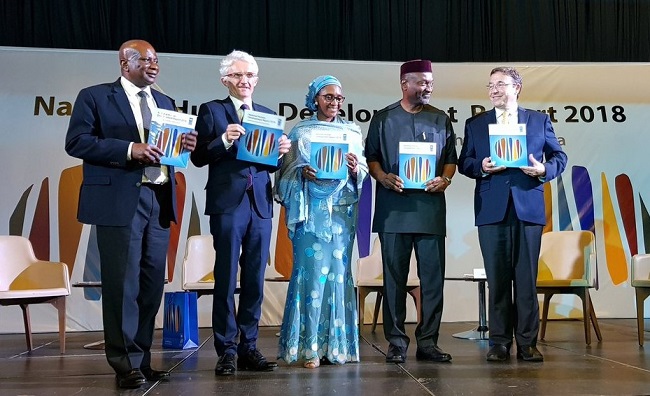
Achim Steiner, the UN Development Administrator (right); Mark Lowcock, UN Emergency Relief Coordinator (second left); Edward Kallon, Resident and Humanitarian Coordinator & UNDP Nigeria Resident Representative (left); and Zainab Ahmed, Finance Minister, launching the National Human Development Report 2018 in Abuja
Achim Steiner, the UN Development Administrator and Mark Lowcock, UN Emergency Relief Coordinator, made the call at a joint press conference in Maiduguri, Borno State.
Steiner stressed the need for national and international partners to reinforce efforts toward addressing dire humanitarian needs in the conflict-ravaged states of Borno, Adamawa and Yobe.
He noted that such partnership between humanitarian and development organisations was imperative to tackle humanitarian needs and root cause of the crisis.
Steiner said: “We have a unique opportunity to make real difference to communities across the North-East.
“Helping communities affected by the crisis requires us to work together; humanitarian and development organisations alike, to tackle immediate humanitarian needs and the root causes of the crisis.
“The government of Nigeria has launched recovery initiatives and efforts in the North-East aimed at rapid stabilisation.
“Early recovery and livelihoods activities implemented by UN agencies, international and local organisations seek to address the underlying causes of the conflict, lay foundation for sustainable development and prevent aid dependency.’’
Steiner expressed satisfaction with rebuilding and resettlement of displaced communities in Borno, adding that proactive activities are necessary to ensure sustainability of the programme.
Also commenting, Lowcock said they were on a two-day official visit to Nigeria to appraise the humanitarian situation in North-East and Lake Chad region.
Lowcock reiterated UN commitments to support Nigeria to address humanitarian crisis, fast track recovery and stabilisation of communities affected by the conflict.
“We are committed to Nigeria and to the people of Nigeria.
“We are here to support the government’s leadership towards solutions in the North-East as humanitarian intervention can only be a temporary solution.
“I am pleased to be here with the UNDP administrator to help join up humanitarian and development efforts to save lives; help stabilise the situation, rebuild lives and communities for the future.
“We must do everything we can to prevent this crisis from continuing for years,” he added.
According to the UN Office for Coordination of Humanitarian Affairs (UN-OCHA), the visit was sequel to an international donor conference held in Berlin in September, during which donors pledged $2.5 billion for humanitarian, stabilisation and recovery projects in Lake Chad region.
The UN agency said over 7.7 million people need humanitarian assistance, while food security and nutrition remained fragile in the war-ravaged region.
Also, an estimated three million people face critical food insecurity and about one million children between the ages of six months and five years face malnourishment while 440,000 others suffers severe acute malnutrition, it said.
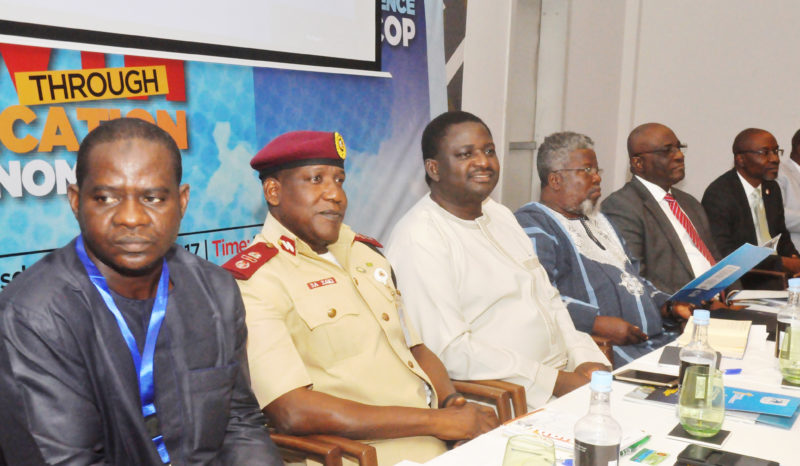
The Second Annual Conference of the Guild of Corporate Online Publishers will hold at Sheraton Hotel, Ikeja, Lagos State on Friday, October 19, 2018, with former Governor of Ogun State, Aremo Olusegun Osoba, as Chairman.
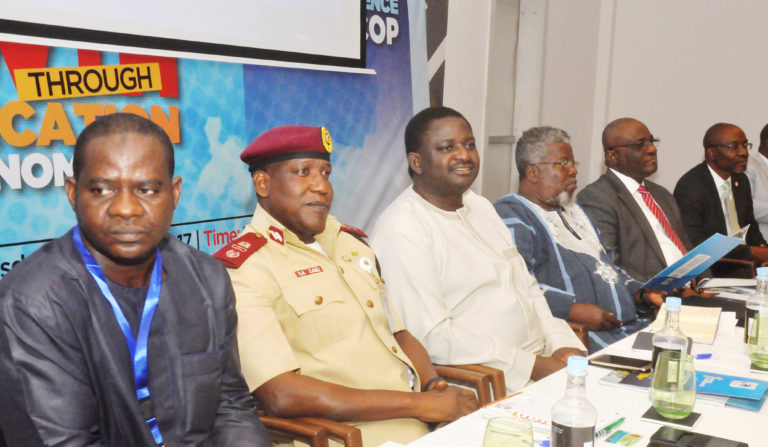
L-R: Then President, Guild of Corporate Online Publishers (GOCOP), Musilikilu Mojeed; Zonal Commanding Officer, Zone 2, Lagos, Federal Road Safety Corps (FRSC), Sheu Zaki; Senior Special Adviser to the President on Media, Femi Adesina; Prof Akin Olugbinde; Managing Director, News Agency of Nigeria (NAN), Bayo Onanuga and Director, Public Officer, EFCC, Osita Nwajeh, during the 1st Guild of Corporate Online Publishers (GOCOP) in Lagos
A statement signed by GOCOP’s Publicity Secretary, Olumide Iyanda, disclosed that the theme of the conference is: “Online Publishers’ Role Towards A Sustainable Economy, Credible Election and Security in Nigeria.”
Former Chairman of the National Human Rights Commission, Prof. Chidi Odinkalu, will be the guest speaker.
The Chairman, Centre of Excellence in Multimedia Technology, Department of Mass Communication, University of Lagos, Prof. Ralph Akinfeleye; and Director, ICT Centre, Federal University, Otuoke, Bayelsa State, Prof. Leonard Shilgba, will be the discussants.
Speaking on the choice of the theme, GOCOP President, Dotun Oladipo, said: “The prevailing economic, political and security realities in Nigeria require keen interest from the media.
“With the 2019 general elections approaching, Nigerians deserve access to authentic news and views, which are best provided through digital platforms upon which GOCOP members operate.
“As an organisation, GOCOP is committed to ensuring that the use of fake news and misinformation do not destroy Nigeria’s political, economic and security progress, hence the need to look at the critical role of online publishers as entrusted to them by the Constitution.”
The Newspapers Proprietors Association of Nigeria (NPAN), Broadcasting Organisations of Nigeria (BON), Nigerian Guild of Editors (NGE), Nigerian Union of Journalists (NUJ) and other stakeholder groups in the media will be represented at the conference.
GOCOP represents media organisations registered in Nigeria with promoters drawn from practitioners who have served at senior levels in the profession.
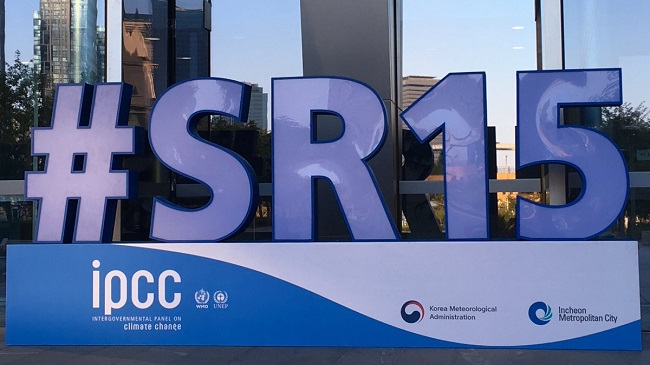
Civil society representatives have been monitoring ongoing talks by the Intergovernmental Panel on Climate Change (IPCC) in South Korea over the its 1.5°C Report, which observers have tagged a “rescue plan for humanity”.
At the 48th Session of the IPCC in Incheon, South Korea, governments are considering the Special Report on Global Warming of I.5ºC
The activists, from Greenpeace, WWF and Oxfam, operating under the aegis of the Climate Action Network, have highlighted the significance of the discussions underway on the most definitive scientific assessment on climate change by the IPCC on the 1.5°C temperature limit as enshrined in the Paris Agreement.
The report will provide detailed signposts that can guide policymakers on pathways to limit global warming to 1.5°C. The summary of policymakers, currently under negotiations, is expected to be released on Monday, October 8, 2018 and will summarise the nearly 1,000-page full report.
The report comes at a time when the world is witnessing extreme weather events that are causing wide-scale destruction with alarming consequences even at 1°C warming. Every half a degree matters and the current collective climate commitments, which put us on a 3°C warming pathway, are nowhere near scaling down to a safe zone of 1.5°C.
The 1.5°C goal is considered a lifeline for those on the frontlines of impacts and is said to be critical for the protection of fragile ecosystems many of which, according to scientists, will be irreversibly lost even at 2°C warming.
Jennifer Morgan, Executive Director, Greenpeace International, said: “We must remember Parties requested this report in 2015 and they must own it. This IPCC report is set to outline a rescue plan for humanity. It will shine a light on what needs to happen and what we’ll suffer if we fail to act quickly enough.
“Those leaders who stand up, listen to the science and take action will be remembered as the moral authorities of their time. Given the evidence from science, countries must raise their national climate targets in line with a 1.5C pathway.
“We need new climate leadership. This report is not about politics, it is a scientific report and we need leaders guided by science. They really will have nowhere to hide with this evidence.”
She added she was hopeful and inspired by people taking action locally and justice groups such as in the Philippines demanding more from their governments.
Chris Weber, Lead Scientist, WWF Climate and Energy Programme, said: “New science shows that in many ways 1.5°C is the new 2°C in terms of impacts we are seeing and can expect. Delivering on the 1.5°C will require massive transformations in our societies which will only get harder and riskier the longer we wait and fail to increase ambition in the near term.
“The IPCC report will provide detailed signposts for governments and the most important underlying message is that to reach the 1.5°C temperature limit we need rapid and deep decarbonisation by 2050 and preferably by 2040 across sectors and specifically in the energy and land use systems. The difference between feasible and not feasible is in many aspects about political will.”
Raijeli Nicole, Regional Director, Oxfam in the Pacific, said: “The countries most vulnerable to climate change are boldly leading and we only have to see the declarations from the Republic of the Marshall Islands and Fiji on the sidelines of the recent One Planet Summit in New York. We ask that other countries step up ambition.”
Speaking from the Solomon Islands, she added that the IPCC report would be a concrete scientific input into the Talanoa Dialogue, which is at its heart about an open and honest conversation and to talk about the barriers.
“This is not aspirational talk, it (the Talanoa Dialogue) must consider the report must serve as a tool that we can all work with collectively.
“Also, it is not just the energy sector we need to focus on but all sectors (maritime, aviation, land) and how they can be managed with interactions on adaptation, mitigation and sustainable development to keep us in the safe zone of limiting warming to 1.5°C,” she added.
While the speakers could not comment on the content of the report under discussions and the political dynamics at play in the negotiations, they all reiterated that politics cannot come in the way of science and every half a degree matters in this race against time with climate change.
Some 110 organisations and social movements, including renowned environmental activists, Friends of the Earth International, La Via Campesina, Indigenous Environmental Network, Third World Network, Health of Mother Earth Foundation (HOMEF), ETC Group, and the Heinrich Böll Foundation on Thursday, October 4, 2018 issued a manifesto, speaking out against “the large-scale manipulation of climate and earth systems with unproven technologies – so-called geoengineering”.
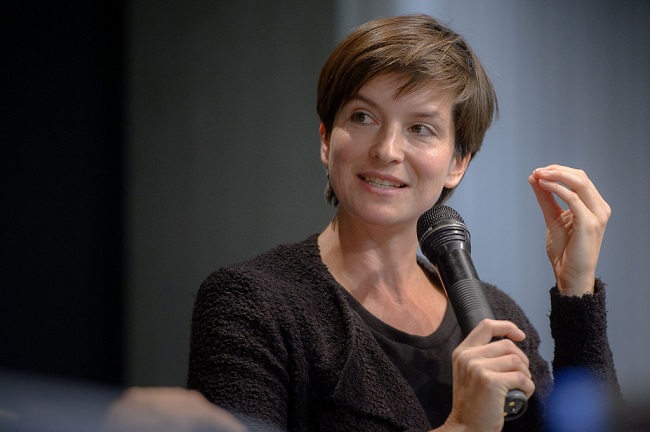
Lili Fuhr of the Heinrich Böll Foundation, coordinator of the Hands Off Mother Earth Campaign
At the World People’s Conference on Climate Change and the Rights of Mother Earth in Cochabamba, Bolivia, in 2010, a broad coalition of popular movements, civil society groups and Indigenous Peoples’ organisations from around the world launched the first global campaign against geoengineering. Hands Off Mother Earth (HOME) became a global campaign to defend communities and the common home and Planet Earth, against the threats of climate manipulation.
The HOME Campaign provided a common platform for organisations around the world to express their opposition to geoengineering. The HOME manifesto 2010 asserted that geoengineering “is a set of dangerous false solutions to climate change, and that the seas, skies and soils of our home planet should not be used as a laboratory for these unjust and risky technological endeavors, that no one can or should be in control of the global thermostat and that we movements and organisations stand united to defend our lands and our rights”.
The groups added in a statement: “We believe that a re-launch of the HOME campaign is more urgent today than before. In the last few years, we have witnessed increasing support for geoengineering proposals. A small but growing group of governments, corporations and scientists, the majority from the most powerful and most climate-polluting countries in the world, have been pushing for research into and political consideration of geoengineering.
“Several outdoor experiments on Solar Radiation Management (SRM) are planned in North America, where an alliance between climate skeptics, fossil fuel interests and techno-solutionists seem to be providing a fertile ground for this new hype. At least two of these experiments are planned on indigenous land. Other open-air, marine and terrestrial field experiments have been announced in Latin America, Asia, Canada and the Artic.
“Carbon Dioxide Removal (CDR) technologies, which are currently being discussed and used in climate models and government plans to implement the Paris Agreement, would imply building gigantic industrial complexes and infrastructures with an excessive demand for land, water, energy and other resources. Impacts on humanrights, vulnerable populations, indigenous peoples, peasant communities, as well as risk of conflict over adverse impacts and unintended side-effects are high and real.
“Until the geoengineering agenda resurfaced in the climate context in the mid-2000s, decades-long research into attempts at manipulating and controlling the weather and regional climates (‘weather modification’) has largely been pursued in government and military quarters. Today, public debates about geoengineering in international fora such as the Convention on Biological Diversity (CBD), the Intergovernmental Panel on Climate Change (IPCC) and the United Nations Framework Convention on Climate Change (UNFCCC), explore whether it is a means to combat climate change rather than combat other nations. But the original interest in geoengineering and its potential as a military tool has not decreased. Quite the opposite: geoengineering remains a potential dual-use technology.
“Withthe onset of the growing climate crisis, the spectrum of geoengineering proposals, the number of research projects and planned outdoor experiments as well as the political appetite to consider it as ‘part of the toolbox’ to address the climate crisis has increased significantly. And since geoengineering technologies have the potential to disrupt our natural ecosystems and global geophysical processes, with large impacts on natural resources, livelihoods and the survival of marginalised communities, they pose a threat with implications as serious as war.
“We call upon you – civil society allies, popular movements, Indigenous People’s movements, ecologists and concerned citizens – to join us in filling the relaunched Hands Off Mother Earth Campaign with renewed vigour.”
New research from C40 Cities, the Global Covenant of Mayors for Climate & Energy and the New Climate Institute shows that climate action, such as doubling bus network coverage and frequency in cities, could prevent the premature deaths of over one million people per year from air pollution and traffic accidents.
Cars cause a lot of air pollution
The report, titled “Climate Opportunity: More Jobs; Better Health; Liveable Cities,” also argues that climate action, which include energy efficiency retrofits in buildings, enhanced bus networks and renewable energy initiatives, could generate 13.7 million jobs in cities and save 40 billion hours of commuters’ time plus billions of dollars in reduced household expenses each year.
Report authors argue that climate policies lead to positive public health and economic outcomes across countries and regions.
Some of the main findings of the study include:
Investments in residential energy efficiency retrofits could result in a net creation of 5.4 million jobs in cities across the globe. Such investments would also result in significant household savings, as well as emissions reductions.
Improved public transport could prevent the premature deaths of nearly one million people per year from air pollution and traffic fatalities worldwide. Improved transport networks could also save 40 billion hours of commuters’ time every year by 2030, while achieving important emissions reductions.
District-scale renewable energy for heating and cooling in buildings could prevent a further 300,000 premature deaths per year by 2030. Renewable energy could contribute to significant emissions reductions and create approximately 8.3 million jobs.
Climate action policies can have proportionally greater outcomes for lower income groups in developing cities, where populations have the most to gain from the introduction of new technologies.
“Cities account for 73 per cent of global greenhouse gas emissions, making large-scale climate action in urban areas an urgent focus of efforts to meet the highest goals of the Paris Agreement,” said Thomas Day, Partner at NewClimate Institute, who led the research.
“While cities are already leading the way in emissions reductions by cutting energy usage in their buildings, transport systems, and industries, Climate Opportunity will give policymakers a compelling justification for climate action by illustrating the deep connection between climate and other urban priorities like public health, poverty alleviation and economic growth.”
“The Climate Opportunity research sends a powerful message that city-level climate action leads to more than addressing an environmental issue; it also has societal benefits. Well-designed measures will mitigate climate change and reduce air pollution, thereby also tackling this public health emergency,” said Martina Otto, Head of UN Environment’s Cities Unit. “Not only can cities prevent unnecessary deaths through climate action, but they also have the opportunity to stimulate economic growth, help alleviate poverty and improve the liveability of our cities.”
Launching at the same time as the research, a new online dashboard hosted on the Global Covenant of Mayors’ website allows cities to use data from the Climate Opportunity report to see how specific climate actions—such as the improvement of transport links, retrofitting buildings, or implementing renewable energy projects—can positively affect their city in the areas of job creation, reducing emissions and increasing savings.
The Minister of Agriculture and Rural Development, Chief Audu Ogbeh, says if appropriate measures are not taken to replant after the recent flood, the country may be in serious trouble with rice production.
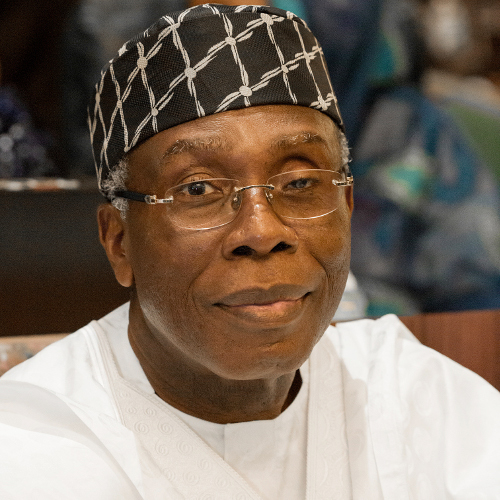
Minister of Agriculture and Rural Development, Chief Audu Ogbeh
Ogbeh disclosed this in Abuja on Thursday, October 4, 2018 at the inauguration of National Agricultural Seed Council (NASC) Molecular Facility and the 2018 seed fair and Farmer’s field day.
He said that the flood had affected some major rice producing states, adding that the country might experience scarcity of rice, if not addressed.
“We have to find out a way to assist farmers, who were affected by the flood; places like Jigawa, Kebbi, Anambra and Kogi states were majorly affected. Farmers lost everything they planted.
“There are different varieties of rice that are being produced at NASC like faro 66 and 67 which are flood tolerant.
“We hope to get them into the field in large quantity for farmers to plant soon.
“We are also hoping that as soon as the rain seized, we are encouraging farmers to replant so that the residual moisture on the soil plus irrigation can give us another crop by the end of December or early January.
“Otherwise, we will be in serious trouble for rice, millet, sorghum and maize next year,” he said.
The Minister expressed his pleasure and honour to be given the opportunity to chair this year’s Seed Fair and Farmers’ Field Day and inaugurate the NASC Molecular Laboratory.
“It is quite heartwarming to note that NASC has over the years kept faith in its drive to ensure the availability of quality seeds to farmers.
“Also, this event is being used as a platform for creating awareness among our great farmers and the farming communities to showcase the different improved crop varieties that can enhance the productivity and increase national food security.
Also peaking, Dr Philip Ojo, the Director-General, NASC, said that the 2018 event was opened with a Road Walk from the Federal Secretariat to the Minister of Agriculture.
“This was followed by a Symposium. All the events were geared towards creating improved seeds awareness among our great farmers and the farming communities, especially in the Federal Capital Territory.
“I wish to state categorically that improved seed use is the most cost-effective means of enhancing agricultural productivity.
“It is important to inform you all that between the 2017 and 2018, a lot of successes have been achieved in the Nigerian Seed industry.
“NASC collaborations with other stakeholders have started yielded positive results such as the NASC Molecular Facility that will soon be inaugurated.
“The facility which is funded by the Bill and Melinda Gates Foundation under the BASICS Programme will help in the development of the Cassava Seed System in the country and enhance productivity,” he said.
The director-general appealed for more support from the state governors in order to step up the agency’s regulatory activities to rid the market of fake and adulterated seeds.
The yearly event has: “Enhancing Improved Seed Adoption towards achieving Food Security and Wealth Creation,” as its theme for 2018.
Fake seeds confiscated by the council were burnt by the Minister, during the event.
The Federal Government on Thursday, October 4, 2018 flagged off a N1.7 billion erosion control work on Nduetong Oku-Ikpa Road, cutting across Uruan and Uyo Local Government Areas of Akwa Ibom State.
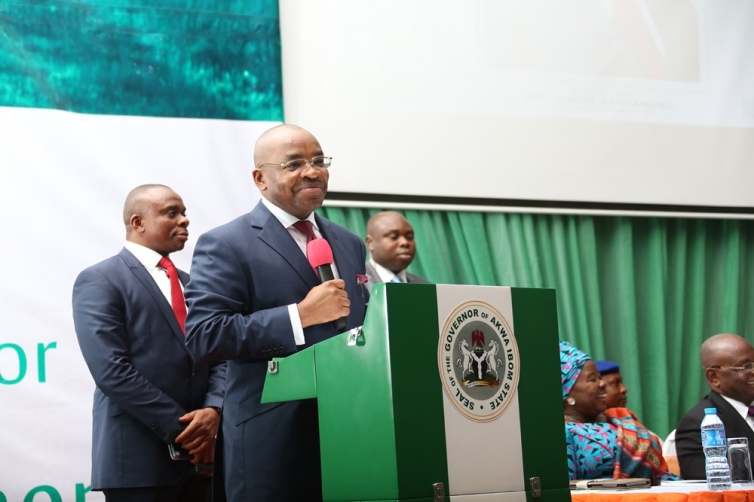
Governor Udom Emmanuel of Akwa Ibom State
Sen. Ita Enang, Senior Special Assistant to President Muhammadu Buhari on National Assembly Matters (Senate), performed the flagging off ceremony.
He said that the project would alleviate the suffering of the people and boost economic activities.
Enang sympathised with the people for the inability to convey their farm produce to the market due to the deplorable condition of the road.
He assured them that the Buhari administration would continue to implement projects to alleviate the suffering of the people.
The presidential aide said that government was committed to improving the living standard of the people by addressing their plight.
“Let me bring greetings from the Presidency to you. President Muhammadu Buhari cares for every life and communities in this country.
“For about seven years this road had been impassable, for some years the children and people of this community had not been able to cross to the other part of the community.
“The Federal Government is committed to improving on the plight of its citizens,” Enang said.
Speaking to newsmen, the Project Manager, Mr Friday Iniobong, said that the project would be completed within the next six months.
He solicited the cooperation of the community to ensure timely completion of the project.
Responding on behalf of the community, the Clan Head of Oku community, Chief Enefiok Ukpong, thanked Buhari for the gesture.
The royal father said that the project when completed would reduce the suffering of the people.