Home Blog Page 1768

Climate action could prevent one million air pollution-related deaths

0

New research from C40 Cities, the Global Covenant of Mayors for Climate & Energy and the New Climate Institute shows that climate action, such as doubling bus network coverage and frequency in cities, could prevent the premature deaths of over one million people per year from air pollution and traffic accidents.

Cars-Pollution
Cars cause a lot of air pollution

The report, titled “Climate Opportunity: More Jobs; Better Health; Liveable Cities,” also argues that climate action, which include energy efficiency retrofits in buildings, enhanced bus networks and renewable energy initiatives, could generate 13.7 million jobs in cities and save 40 billion hours of commuters’ time plus billions of dollars in reduced household expenses each year.

Report authors argue that climate policies lead to positive public health and economic outcomes across countries and regions.

Some of the main findings of the study include:

  • Investments in residential energy efficiency retrofits could result in a net creation of 5.4 million jobs in cities across the globe. Such investments would also result in significant household savings, as well as emissions reductions.
  • Improved public transport could prevent the premature deaths of nearly one million people per year from air pollution and traffic fatalities worldwide. Improved transport networks could also save 40 billion hours of commuters’ time every year by 2030, while achieving important emissions reductions.
  • District-scale renewable energy for heating and cooling in buildings could prevent a further 300,000 premature deaths per year by 2030. Renewable energy could contribute to significant emissions reductions and create approximately 8.3 million jobs.
  • Climate action policies can have proportionally greater outcomes for lower income groups in developing cities, where populations have the most to gain from the introduction of new technologies.

“Cities account for 73 per cent of global greenhouse gas emissions, making large-scale climate action in urban areas an urgent focus of efforts to meet the highest goals of the Paris Agreement,” said Thomas Day, Partner at NewClimate Institute, who led the research.

“While cities are already leading the way in emissions reductions by cutting energy usage in their buildings, transport systems, and industries, Climate Opportunity will give policymakers a compelling justification for climate action by illustrating the deep connection between climate and other urban priorities like public health, poverty alleviation and economic growth.”

The World Health Organisation reports that ambient air pollution alone caused some 4.2 million deaths in 2016 and the transport sector represents the fastest growing source of fossil-fuel CO2 emissions, the largest contributor to climate change.

“The Climate Opportunity research sends a powerful message that city-level climate action leads to more than addressing an environmental issue; it also has societal benefits. Well-designed measures will mitigate climate change and reduce air pollution, thereby also tackling this public health emergency,” said Martina Otto, Head of UN Environment’s Cities Unit. “Not only can cities prevent unnecessary deaths through climate action, but they also have the opportunity to stimulate economic growth, help alleviate poverty and improve the liveability of our cities.”

Launching at the same time as the research, a new online dashboard hosted on the Global Covenant of Mayors’ website allows cities to use data from the Climate Opportunity report to see how specific climate actions—such as the improvement of transport links, retrofitting buildings, or implementing renewable energy projects—can positively affect their city in the areas of job creation, reducing emissions and increasing savings.

Ogbeh warns of flood-induced rice shortage in 2019

0

The Minister of Agriculture and Rural Development, Chief Audu Ogbeh, says if appropriate measures are not taken to replant after the recent flood, the country may be in serious trouble with rice production.

Chief Audu Ogbeh
Minister of Agriculture and Rural Development, Chief Audu Ogbeh

Ogbeh disclosed this in Abuja on Thursday, October 4, 2018 at the inauguration of National Agricultural Seed Council (NASC) Molecular Facility and the 2018 seed fair and Farmer’s field day.

He said that the flood had affected some major rice producing states, adding that the country might experience scarcity of rice, if not addressed.

“We have to find out a way to assist farmers, who were affected by the flood; places like Jigawa, Kebbi, Anambra and Kogi states were majorly affected. Farmers lost everything they planted.

“There are different varieties of rice that are being produced at NASC like faro 66 and 67 which are flood tolerant.

“We hope to get them into the field in large quantity for farmers to plant soon.

“We are also hoping that as soon as the rain seized, we are encouraging farmers to replant so that the residual moisture on the soil plus irrigation can give us another crop by the end of December or early January.

“Otherwise, we will be in serious trouble for rice, millet, sorghum and maize next year,” he said.

The Minister expressed his pleasure and honour to be given the opportunity to chair this year’s Seed Fair and Farmers’ Field Day and inaugurate the NASC Molecular Laboratory.

“It is quite heartwarming to note that NASC has over the years kept faith in its drive to ensure the availability of quality seeds to farmers.

“Also, this event is being used as a platform for creating awareness among our great farmers and the farming communities to showcase the different improved crop varieties that can enhance the productivity and increase national food security.

Also peaking, Dr Philip Ojo, the Director-General, NASC, said that the 2018 event was opened with a Road Walk from the Federal Secretariat to the Minister of Agriculture.

“This was followed by a Symposium. All the events were geared towards creating improved seeds awareness among our great farmers and the farming communities, especially in the Federal Capital Territory.

“I wish to state categorically that improved seed use is the most cost-effective means of enhancing agricultural productivity.

“It is important to inform you all that between the 2017 and 2018, a lot of successes have been achieved in the Nigerian Seed industry.

“NASC collaborations with other stakeholders have started yielded positive results such as the NASC Molecular Facility that will soon be inaugurated.

“The facility which is funded by the Bill and Melinda Gates Foundation under the BASICS Programme will help in the development of the Cassava Seed System in the country and enhance productivity,” he said.

The director-general appealed for more support from the state governors in order to step up the agency’s regulatory activities to rid the market of fake and adulterated seeds.

The yearly event has: “Enhancing Improved Seed Adoption towards achieving Food Security and Wealth Creation,” as its theme for 2018.

Fake seeds confiscated by the council were burnt by the Minister, during the event.

By Philomina Attah

Government commences N1.07b erosion control project in Akwa Ibom

0

The Federal Government on Thursday, October 4, 2018 flagged off a N1.7 billion erosion control work on Nduetong Oku-Ikpa Road, cutting across Uruan and Uyo Local Government Areas of Akwa Ibom State.

Governor Udom Emmanuel
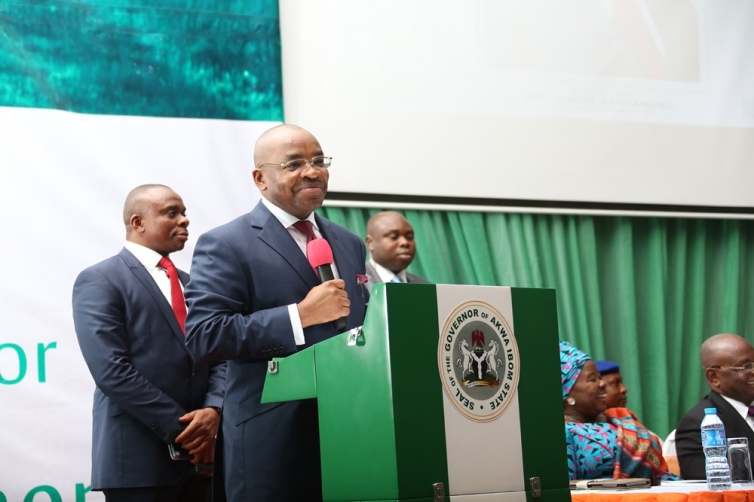
Governor Udom Emmanuel of Akwa Ibom State

Sen. Ita Enang, Senior Special Assistant to President Muhammadu Buhari on National Assembly Matters (Senate), performed the flagging off ceremony.

He said that the project would alleviate the suffering of the people and boost economic activities.

Enang sympathised with the people for the inability to convey their farm produce to the market due to the deplorable condition of the road.

He assured them that the Buhari administration would continue to implement projects to alleviate the suffering of the people.

The presidential aide said that government was committed to improving the living standard of the people by addressing their plight.

“Let me bring greetings from the Presidency to you. President Muhammadu Buhari cares for every life and communities in this country.

“For about seven years this road had been impassable, for some years the children and people of this community had not been able to cross to the other part of the community.

“The Federal Government is committed to improving on the plight of its citizens,” Enang said.

Speaking to newsmen, the Project Manager, Mr Friday Iniobong, said that the project would be completed within the next six months.

He solicited the cooperation of the community to ensure timely completion of the project.

Responding on behalf of the community, the Clan Head of Oku community, Chief Enefiok Ukpong, thanked Buhari for the gesture.

The royal father said that the project when completed would reduce the suffering of the people.

By Isaiah Eka

Nigeria reviews National Environmental Sanitation Policy

0

The Federal Government of Nigeria says it has commenced the review of the National Environmental Sanitation Policy to improve and promote sound environmental sanitation practices in the country.

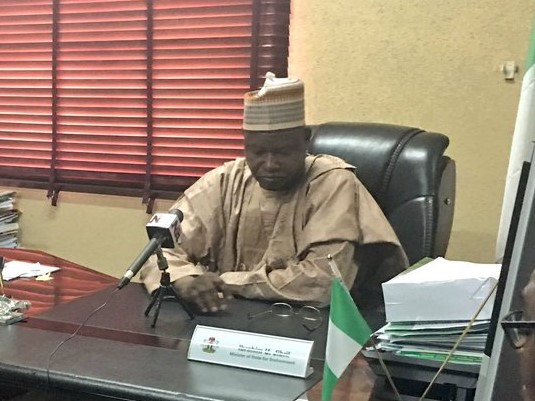
Ibrahim Usman Jibril
Ibrahim Usman Jibril, Minister of State for Environment

Permanent Secretary, Federal Ministry of Environment, Mr Leon Aliboh, said this on Thursday, October 4, 2018 at the National Critique Workshop on the Review and Update of the National Environmental Sanitation Policy, Guidelines and Action Plan in Abuja.

The policy was developed and launched by President Olusegun Obasanjo in 2005.

Aliboh, who was represented by the Director of Pollution Control and Environmental Health, Mr Charles Ikias, added that the ministry, in collaboration with the United Nations Development Programme (UNDP), developed the policy and its supporting documents.

“The policy document is now 13 years old and due for review. No wonder we are gathered here today to critique and update it for validation,’’ the permanent secretary said.

He said that the policy adopted a sectoral approach to addressing the sanitation challenges in the country.

“This policy identifies various settings such as homes, schools, markets, abattoirs and addresses the then sanitation needs of these sectors.

“The needs include excreta disposal, solid waste management, pest and vector control, food sanitation and hygiene education in a holistic manner.

“The National Action Plan provides the operational framework for implementation.

“It enunciates strategies, programmes and time bound activities and assigns roles and responsibilities to the different tiers of government and other relevant stakeholders.’’

According to him, the policy, due to multi-sectoral relevance and multi-disciplinary approach to sanitation, also enunciates an institutional arrangement comprising all tiers of government and public agencies for effective implementation.

“The advent of new sanitation technologies, innovations, emerging sanitation issues and challenges in the implementation of the document called for the review and update of the policy documents.

He said the review became necessary to meet present needs and challenges.

Aliboh said that with an effective and efficient framework to tackle the myriad of environmental sanitation challenges, sustainable development goals would be greatly achieved.

The Director, Abuja Environmental Protection Board (AEPB), Baba Shehu-Lawan, urged relevant stakeholders to implement the policy after its formulation and review.

Shehu-Lawan, who was represented by the Deputy Director of Environmental Health Service, Mr Ajueyitsi Simeon, called for all hands to be on deck to ensure implementation of the policy.

“It has been generally observed that the crucial stage after policy formulation/review is its implementation. Our policies are bedevilled with somersaults,’’ the director said.

By Deji Abdulwahab

UN chiefs to visit Chad, Nigeria to assess humanitarian, development efforts

0

United Nations Development Programme (UNDP) Administrator, Mr Achim Steiner, and Emergency Relief Coordinator, Mr Mark Lowcock, will visit Nigeria and Chad on a mission to highlight and support joint humanitarian and development efforts in these countries.

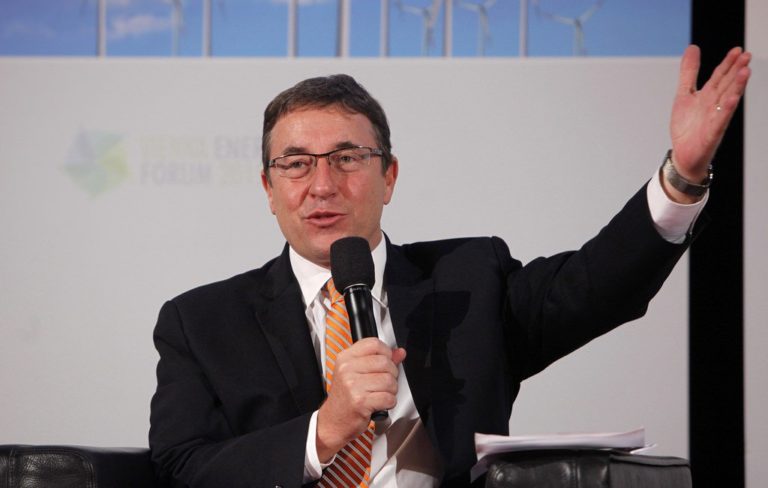
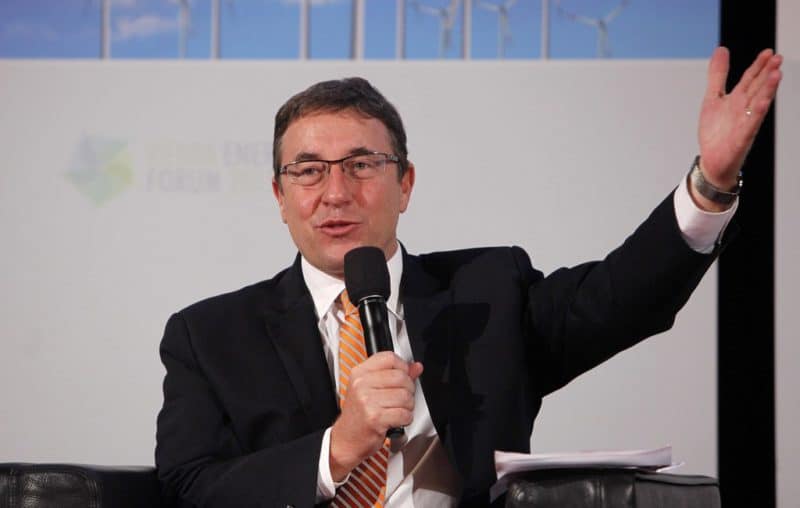
Achim Steiner
UNDP Administrator, Mr. Achim Steiner

Mr Lucky Musonda, UNDP Communications Specialist, said this in a statement on Thursday, October 4, 2018 in Abuja.

He said the UN joint mission would visit Nigeria between Oct. 5 and Oct. 6; and Chad between Oct. 6 and Oct. 7.

“The joint mission comes after the High-Level Conference on the Lake Chad Region held in September in Berlin, Germany.

“Lowcock and Steiner will discuss with partners and governments how to translate commitments made during the conference into practical action on the ground.

“In Nigeria, the duo officials will meet with high-level government officials and representatives of the humanitarian, development and donor communities.

“They will travel to Borno on Oct. 6 and visit a site for Internally Displaced Persons (IDPs), a transition centre and a rebuilt community,” he said.

He said the humanitarian and development partners were linking up efforts to respond to the devastating consequences of the ongoing violence in Northeast Nigeria while seeking to promote durable solutions for affected communities.

He noted that the humanitarian crisis in Northeast Nigeria had spread across the Lake Chad region and remains severe with 7.7 million people in urgent need of assistance.

According to him, UN has stepped up coordination to improve resilience and self-reliance of local communities through the restoration of basic services such as water and electricity.

He said the world body had also embarked on the rehabilitation of schools and hospitals and emergency jobs programmes.

In Chad, the two UN principals according to him are expected to meet President Idris Déby, senior government officials as well as humanitarian and development partners.

“They will visit a nutrition centre in N’Djamena on Oct 7, where international non-governmental organisations (NGOs) and UN agencies are treating children with malnutrition amid one of the worst nutrition crises the country has ever experienced.

“The joint mission will provide a unique opportunity to assess UN coordination on the ground, to mobilise resources to address longer-term needs, and seek further commitments from government and partners,” he said.

By Isaac Aregbesola

World food prices slipped in September – FAO

0

World food prices slipped in September from the month before, with only sugar posting a rise, the UN food agency said on Thursday, October 4, 2018.

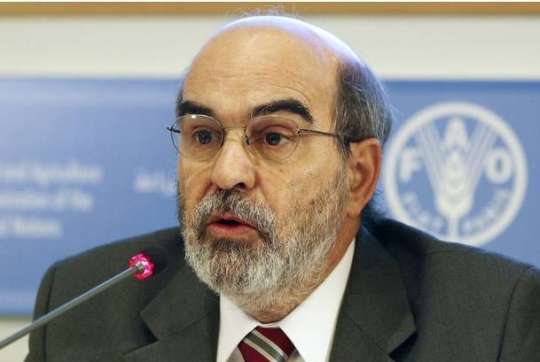
Jose Graziano da Silva
Jose Graziano da Silva, Director General of the FAO

The Food and Agriculture Organisation’s (FAO) food price index, which measures monthly changes for a basket of cereals, oilseeds, dairy products, meat and sugar, averaged 165.4 points last month.

The figure is against a marginally revised 167.7 in August, which was previously given as 167.6.

FAO said global cereals output in 2018 was seen at 2.591 billion tonnes, up three million tonnes on the previous forecast given in September.

However, it is still down 63 million tonnes, or 2.4 per cent, from 2017’s record production level.

FAO’s forecast for world wheat production in 2018 was almost unchanged on 722.4 million tonnes, the smallest since 2013.

Death toll from Indonesia’s quakes rises to 1,424

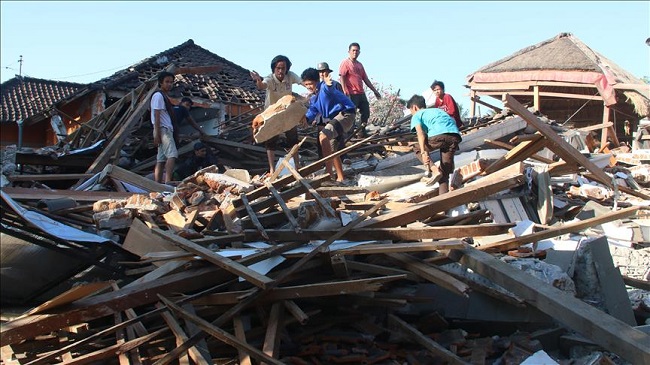
The death toll from multiple quakes and a tsunami in Indonesia’s Central Sulawesi province had risen to 1,424, an official said on Thursday, October 4, 2018.

Indonesia quakes
Residents attempt to rescue belongings from the rubble

Head of the planning department of the National Search and Rescue Office, Abdul Haris, said that the search and rescue operation was hampered by poor access to the hardest-hit areas.

He said that many people are still afraid of being trapped in the ruins in Palu, the provincial capital, and the districts of Donggala and Sigi.

“Many roads leading to the affected-areas have been cut off to prevent heavy machinery equipment from been taken to the sites.

“Although electricity has been restored in some areas, blackout still remains in the hardest-hit areas.

“In some places electricity facilities have resumed function but we still use generators to support our work,’’ he said.

Spokesman of the National Disaster Management Agency, Sutopo Purwo Nugroho, said even as many as 25 heavy machinery equipment have joined the rescue operation by far, 21 others are still on the way to the province.

He said death toll is expected to rise as there are reports that hundreds of locals were feared to be still trapped under the ruins of the houses leveled by the quakes.

Sutopo said the main airport in the province has resumed operation, with communication, electricity and supply of fuels returning nearly to normal.

According to him, that will pave way for distribution of emergency aid as well as the search and rescue mission.

Multiple quakes and a tsunami triggered by the quakes struck the province on Friday with Palu and Donggala district as the hardest-hit.

World Bank tasks 19 NEWMAP participating states on requirements

0

The World Back Chief Operating Officer in Nigeria, Mrs. Joy Agne, has urged the 19 states participating in the Nigeria Erosion and Watershed Management Project (NEWMAP) to speedily meet the bank’s requirements to enable them to access the $400 million loan.

NEWMAP
Salisu Dahiru, National Project Coordinator of NEWMAP

The bank has initially set aside $500 million for erosion control in seven selected states of southern Nigeria, but later included some states to become 19 states.

Agne gave the directive during the opening ceremony of a four-day workshop for 19 states on the commencement of World Bank supervision mission of NEWMAP on Wednesday, October 3, 2018 in Katsina, Katsina State.

“The four-day workshop is organised by World Bank officials to educate the management staff of 19 participating states in Nigeria on how to access the $400 million additional funds.

“The staff of the bank will teach NEWMAP coordinating officers on ways to meet the necessary requirements set by the bank before March 2019 as the World Bank may likely push the money to another sector if the states failed to meet the requirements.

“We are calling on the participating states to hasten and meet the World Bank requirement before March 2019 to benefit from the projects.

“The bank wants the participating states to enact the laws and be ready to sign all the necessary agreements that will make erosion control possible.

“For now, Enugu and Katsina states are the only states that had created enabling environment for the NEWMAP projects to commence,” she said

Earlier, the National Coordinating Officer of NEWMAP, Alhaji Dahiru Salisu, said that the NEWMAP project belongs to Nigeria and is being supported by the World Bank.

“The World Bank is ready to assist Nigeria to control its erosion without waiting for Legislative Budget.

“The World Bank money is most difficult funds to spend as it needs certain requirements to meet before accessing it.

“This workshop is designed by the World Bank to meet, interact and know the commitment of participating states in order to know their area of training needs,” he said

The coordinating officer said that the bank has set aside $900 million but later realised that it would not be enough for the control of erosion in Nigeria.

He added that the European investment Bank had promised to pump $200 million into the project.

By Shehu Danjuma

ANI Foundation commences revitalisation of Gashaka Gumti Park

0

Succour is finally coming the way of the troubled Gashaka Gumti National Park, thanks to an initiative involving a not-for-profit outfit and the government of Nigeria.

ANI Foundation
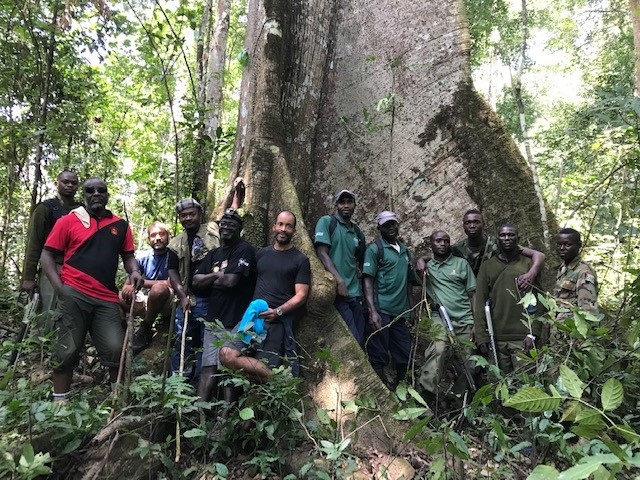
An ANI expedition into the forests in the Gashaka Gumti National Park

The Lagos-based Africa Nature Investors (ANI) Foundation has embarked on the protection and development of the national park, believed to be Nigeria’s largest park, measuring about 6,400 km2, and located on the border with Cameroon in Taraba and Adamawa states.

ANI recently signed a Partnership Agreement with the Nigerian National Park Service, which gives the conservation group the mandate to work closely with the park authorities on all aspects of its management. The organisation has reportedly rehabilitated several defunct park vehicles and established joint patrols between the Nigerian Army and the park rangers.

“Excitingly, we are in the process of signing MoUs with three international conservation NGOs who will bring some of the best technical expertise in Africa to the management of the park,” says Tunde Morakinyo, veteran conservationist and head of ANI.

According to him, ANI has commenced a programme to protect and develop Gashaka Gumti that includes:

  • Re-establishing and strengthening park protection and developing the park’s infrastructure
  • Developing a research programme to inform park management decisions
  • Community collaborative management and development
  • Developing a park business plan focussed on making it self-sustaining financially, generating an income for the local communities, the State and Federal Government
  • Low-impact eco-tourism targeted at the domestic tourism market in Nigeria aiming to provide comfort of a standard commonly found in East and Southern Africa. For this light aircraft access will be essential along with effective security and reasonable wildlife numbers.

Morakinyo’s words: “Our big focus over the coming year will be on restoring effective security control across the park by retraining and equipping the rangers so they can become an effective protection force. Developing a strategy to work with the local communities on job creation initiatives will also be an important focus this year to ensure they have a stake in the protection and development of the park.

“Our aim is to make Gashaka Gumti National Park an internationally famous destination that generates finance for local communities as well as the country; a place that all Nigerians can be proud of as part of their national heritage.”

The southern part of Gashaka Gumti is highly mountainous and thickly forested (with Nigeria’s highest Mountain – Chappal Waddi at 2,400m above sea level), and has exceptionally high levels of endemic plant and animal species. Key animals found in the park include African forest buffalo, West Africa’s largest population of chimpanzees, African elephant, lion and a wide range of antelopes though population numbers are uncertain. The forested mountains are also a critical watershed for the River Benue.

The park is however under increasing threat. It is said to be severely understaffed given its vast size with only 150 poorly equipped park rangers and practically no infrastructure (roads, bridges, airstrips, functioning offices or decent accommodation) making it almost impossible to adequately patrol the park or to accept tourists.

The park, reveals ANI, suffers from annual incursions by nomadic Fulani pastoralists with thousands of cattle, who are increasingly involved in clashes with park rangers. Poaching and logging for rosewood trees, which are being exported to the Far East, are said to be increasing.

“If the park’s forests disappear, the watershed will be affected impacting millions of lives downstream,” stresses Morakinyo.

The ANI Foundation, he adds, was established to engage Africans, particularly the business community, in the discourse around conservation in Africa.

Morakinyo says: “For too long in Africa, the discussions on conservation have been dominated by international NGOs.  However, if we are to have a chance of protecting the wild lands and wild spaces in Africa in a sustainable manner, Africans need to understand how important they are to development and must develop homegrown solutions to protecting these places for the benefit of all. Catalysing this, is the central mission of ANI.

“We also aim to demonstrate that private sector led investments can make nature conservation in Africa profitable, so it can pay its way, provide development benefits, locally and nationally and be a source of pride to Africans.”

NABDA moves to boost bio-energy production

0

National Biotechnology Development Agency (NABDA) on Wednesday, October 3, 2018 said it would intensify effort through biotechnology Research and Development (R&D) to boost bio-energy production.

Prof. Alex Akpa
Prof. Alex Akpa

Prof. Alex Akpa, Acting Director-General, the National Biotechnology Development Agency (NABDA), made this known at a roundtable on Exploring Investment Opportunity in Biotechnology and Bio-energy Development.

He said that such effort was necessary to meet the huge energy need in the country.

Akpa said that the agency was ready to partner with relevant stakeholders to increase bio-energy production in the country to improve Nigeria’s bio- economy.

According to him, NABDA has mandate to promote biotechnology activities in Nigeria.

“The agency has five technical departments: Agricultural Biotechnology, Medical Biotechnology, Environmental Biotechnology and Bio-conservation, Bio-entrepreneurship and Extension Service, Genetics, Genomics and Bioinformatics.

“The agency has its Bio-resources Development Centre across 30 states of the federation,’’ he said.

Mr Talson Bege, the General Manager, Technical, Renewable Energy Development, Nigerian National Petroleum Corporation (NNPC), said that the organisation would partner with NABDA in production of bio-fuel and bio diesel.

He said that the organisation would collaborate with NABDA in mass produce of cassava, sugar cane and palm oil to generate bio-energy.

Bege urged the agency to properly map out the mode of partnership to fast tract the implementation.

Mr Olumide Fatoki, the Senior Advisor, Sustainable Energy Access (Off-Grid), Nigerian Energy Support Programme, a EU partnership programme, said that the organisation would also work with NABDA to promote bio-diesel production.

He said that the organisation was also interested in the new plan of the agency in bio crop mass production.

Prof. Ken Ife, the Lead Consultant, ECOWAS Commission, said the objectives of the meeting included galvanising support for research and development using clean technologies.

He said this would be done through cutting-edge biotechnology, transiting from the traditional use of biotechnology to new technology.

By Agbeja Gabriel