Home Blog Page 1764

Climate finance is about saving lives – Espinosa

0

In the light of the Green Climate Fund (GCF) meeting in Bahrain from October 17 to 20, 2018, Executive Secretary of UN Climate Change, Patricia Espinosa, has stressed the importance of a successful outcome of the meeting and the impact it will have on the UN Climate Change Conference (COP24) holding in December in Katowice, Poland. In an address, Ms. Espinosa highlighted the role that the GCF plays in supporting the shift of developing countries to low-emission and climate-resilient pathways.
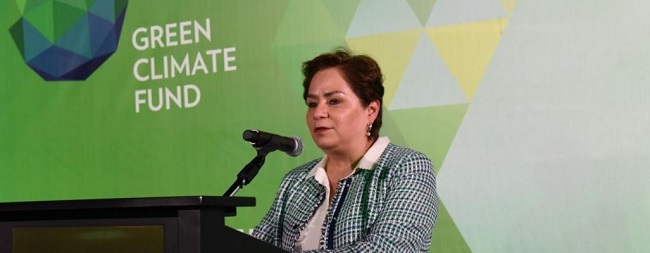
Patricia Espinosa
Patricia Espinosa

The GCF is close to my heart – I was the COP President when it was established at COP16 in Cancun. Much has changed since then: both in the climate change process and throughout the world.

While many accomplishments have moved us forward, such as the signing of the Paris Agreement, the stark reality is that today we’re in a race against time and we’re falling behind.

The recent Special Report from the IPCC emphasizes just how little time remains to limit global temperature rise to 1.5C.

Never have we faced the urgency we do now. Never has the need for solutions been greater. Never has there been more need for multilateral cooperation. And never has finance played a more central role to the overall climate regime itself.

With that urgency as a backdrop, and with the climate regime entering one of its most crucial and defining periods, expectations for the GCF and this meeting are very high.

At COP24 in December, Parties must achieve one clear goal: finalising the Paris Agreement Work Programme.

This is more than a set of rules, it will unleash the power of the Agreement itself.

The outcome of this session of the GCF will impact those negotiations in Katowice.

Success here means sending a clear and unmistakable message of trust to developing countries that they can have confidence in the process going forward.

Replenishing the GCF will allow it to continue playing a critical role in supporting developing countries shift to a low-emission and climate-resilient path.

We recognise that the GCF is a very young institution that has made progress since its inception. We congratulate you on this work as you continue building a stronger and more vibrant institution over the long-term.

At the same time, the GCF, like any other new institution, continues to evolve.

In addition to the launching of the replenishment process, we see three other challenges facing the GCF going forward.

The first challenge is addressing existing policy gaps.

While other gaps exist, one is the lack of a regulatory framework allowing for a proper assessment of projects.

This is an important policy gap – particularly now that the number of projects in the pipeline far exceeds available financial resources.

This must be addressed for the GCF to prioritize projects for funding.

The second challenge is the implementation of GCF projects that have already been approved.

Although the number of projects that have their Funded Activity Agreements signed has increased over the past two years, the number is still too low.

As of April 2018, only 26 projects out of the 76 approved have started implementation and $158 million has been disbursed.

This represents only 13 per cent of total value of the projects under implementation and only 4 per cent of total GCF funding.

The delay in the signing of Funded Activity Agreements for approved projects is slowing down the implementation of projects.

Finally, going forward, the GCF must learn from its experience and anticipate future requirements by assessing:

  1. whether its policies have resulted in the desired outcomes;
  2. and to what extent they are aligned with the scale and pace required for a successful implementation of the Paris Agreement.

These are immediate and significant issues, but the benefits of addressing them are clear.

They will help deliver the much-needed climate financing support for developing countries, particularly the most vulnerable.

And as I said before, they’ll allow the GCF to continue playing a critical role in supporting developing countries shift to low-emission and climate-resilient development paths.

Looking deeper, because climate change is connected to some of humanity’s biggest challenges, proper financing can also help tackle issues such as poverty, migration, equality and more – issues reflected in the Sustainable Development Goals.

Not achieving these goals – addressing climate change is Goal 13 on that list – could lead to great destabilisation throughout the world. If we think it’s bad now, a business-as-usual approach will make things much, much worse.

And let’s remember: when it comes to climate change, finance is about more than money.

It’s about helping people impacted by climate change. It’s about reducing their suffering. And, in some cases, it’s about saving lives.

We face an unprecedented level of urgency to address climate change. I cannot stress this enough. The Special Report by the IPCC made this very clear.

The time has come to put aside differences where they exist and work together to achieve our common climate goals.

Climate change recognises no boundaries – political or otherwise – it is coming all the same. Our approach must be one of unity.

Let us therefore embrace our challenges. Let us exceed expectations. Let us build the trust that is needed. And let these meetings provide the results.
NCF partners Lagos to rally for the environment

0

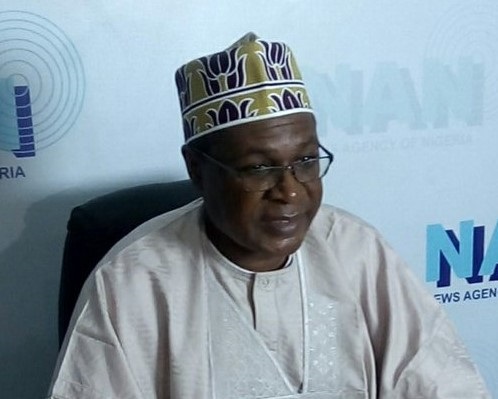
The Nigerian Conservation Foundation (NCF), in partnership with the Lagos State Government through its Ministry of the Environment, is hosting the 11th edition of the annual “Walk for Nature”. The event holds on Saturday, October 20, 2018.

Muhtari Aminu-Kano
Director-General, Nigerian Conservation Foundation (NCF), Dr Muhtari Aminu-Kano

The theme for this year’s edition is ‘Beat Pollution – live a Sustainable Lifestyle’. The choice of this theme is borne out of the dire need to highlight the challenges with pollution being faced by a megacity like Lagos.

The NCF/LASG Walk for Nature is said to be an initiative aimed at raising awareness on a wide variety of contemporary environmental issues confronting everyday living in Nigeria by demonstrating the importance of nature conservation, sustainable use of natural resources and environmental education.

This partnership with the Lagos State Government for the Walk is in its 11th year, supported by corporate organisations (Chevron Nigeria Limited, Fidelity Bank Plc and HIS Towers, Fan Milk Nigeria Plc among others) that reportedly share in the vision of a Nigeria where people prosper while living in harmony with Nature.

The 3km walk takes participants through a designated route of inner and outer Marina, with participants donning sponsors’ branded t-shirts bearing the theme of the event.

Relevant government agencies are present to provide support services – these include the Lagos State Traffic Management Authority (LASTMA), Lagos State Ambulance Service (LASAMBUS), and Lagos State Environmental Sanitation Corps (LAGESC). The Police, supported by the Lagos Neighbourhood Safety Corps will equally be on ground.

The Walk for Nature climaxes with a reception featuring speeches from stakeholders expounding the theme, with keynote addresses from the representatives of the Lagos State Governor, NCF, sponsors and community members.

LDCs urge adoption of Paris guidelines towards speedy climate action

0

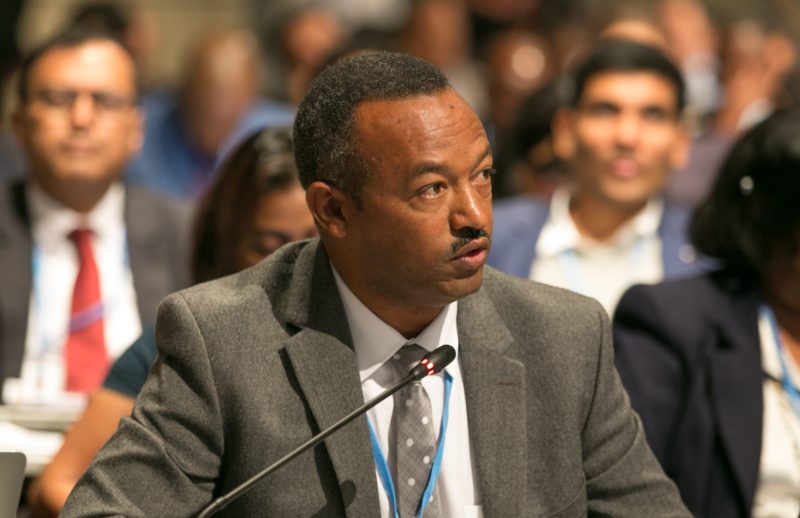
The meeting of Ministers and Heads of Delegation from the Least Developed Countries (LDC) group held recently in Addis Ababa, Ethiopia, has been described as productive. The delegates had gathered from October 15 to 16, 2018 to discuss the priorities of the LDC group in preparation for the international climate negotiations in Katowice, Poland in December.

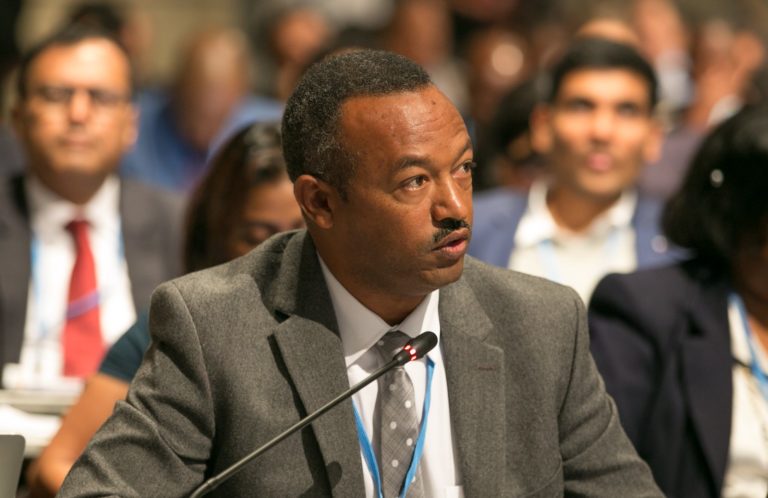
Gebru Jember Endalew
Chair of the Least Developed Countries (LDC) group, Gebru Jember Endalew

Mr. Gebru Jember Endalew, Chair of the LDC Group, said ministers had engaged in productive discussions around key issues in the negotiations and LDC initiatives and had summarised their priorities in an LDC Ministerial Communiqué on Climate Change.

His words: “Ministers from across the world’s 47 least developed countries expressed their dedication to climate action and to collaboration to achieve our shared goals to lift our people out of poverty and achieve low-carbon, climate-resilient sustainable development.

“They emphasised their grave concern at the increasingly severe climate impacts already experienced by LDCs at the current level of warming, and highlighted the disproportionately higher future risks for LDCs, as evidenced in the IPCC Special Report on the impacts of global warming of 1.5°C.

“It is clear that, to address the climate challenge, immediate action is required to implement transformative change across societies. The ministers emphasised the need for the rapid deployment of proven, real climate solutions such as scaling up renewable energy, eradicating energy waste, managing the rapid decline of fossil fuels, and protecting and expanding forests, soils and natural systems. The ministers also recognised that any possibility of future technological solutions cannot excuse delaying action.”

A key issue discussed at the meeting was climate finance.

Endalew commented: “The ministers stressed that the ambitious climate plans LDCs have put forward cannot be achieved without predictable, accessible, adequate and sustained financial, capacity building and technological support from developed countries and international partners.”

On the upcoming climate negotiations in Katowice, he noted: “The LDCs look forward to the adoption of a comprehensive, robust and effective set of guidelines at COP24 that will enable full and ambitious implementation of the Paris Agreement. It will be particularly important that the guidelines facilitate action to address loss and damage and to adapt to climate change.

“The LDCs look forward to a formal political declaration and COP decision on the Talanoa Dialogue at COP24, sending a strong political call for fair and ambitious climate action.

“In Paris the world laid down a blueprint, and now in Katowice we must finalise the structure that will bring the spirit and vision of the Paris Agreement to life – achieving the 1.5°C temperature goal and protecting communities across the world from the devastating impacts of climate change.”

Surveyors seek adoption of modern mapping technologies to end boundary overlap

0

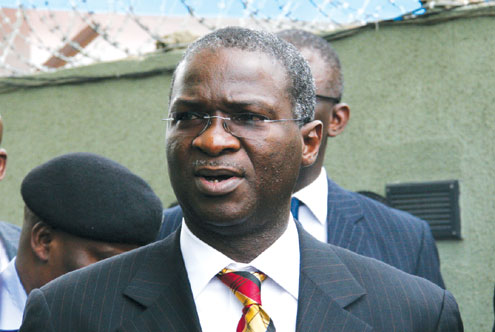
Land surveyors on Wednesday, October 17, 2018 called for the adoption of Continuous Reference Station (CORS) system in surveying to ease land administration system and prevent land boundary overlapping.

Babatunde-Fashola
Minister of Power, Works and Housing, Babatunde Raji Fashola (SAN)

Lagos State Chapter Chairman of the Nigerian Institution of Surveyors (NIS), Mr Adesina Adeleke, made the call at the Mandatory Continuous Professional Development (MCPD) programme of the institution in Lagos. The programme was themed: “Improving Geospatial Deliverables through Modern Mapping Technologies.”

Adeleke described the CORS system as the latest modern application used for land surveying and mapping for efficient and effective service delivery, adding that it was in operation in other developed and developing countries.

According to him, land survey practice is evolving with new trend.

He underlined the need for surveyors to move and keep abreast with the new developments to remain relevant in the profession.

Adeleke said that the essence of the programme was to maintain an up-to-date technical knowledge on modern surveying practices among members of the institution.

“The MCPD is a skill renewal process and a channel for knowledge acquisition through training and retraining.

“The aim of the programme is to encourage the use of modern mapping technologies in improving geosepatial deliverables.

“It also focussed on assisting surveyors for inter and intra professional competitiveness, and also help surveyors to discover new areas of opportunities open to them in this information age,” Adeleke said.

The expert said that there was only one existing and functional CORS system in Lagos, while the state government had embarked on the construction of five other CORS system across the state.

He urged the state government to hasten construction of the CORS system for effective mapping/surveying operation that could put an end to boundary overlapping across the state.

Also, Mr Chika Okorocha, the Principal Consultant, Sacridion Geospatial Engineering, enjoined surveyors to embrace usage of the Global Navigation Satellite System (GNSS) for enhanced services delivery.

Okorocha said that GNSS was a network system/instrument of the CORS that empowers its operation.

According to him, surveyors can form into groups and pull resources together to purchase the GNSS/CORS system.

He said there were low cost instruments, irrespective of the high cost of the GNSS/CORS system.

Okorocha added that all over the world, the surveying and mapping sector had been enjoying the innovative opportunities brought about by the GNSS and CORS technologies and in particular, the precise positioning provided by GNSS satellites constellation.

“The need for the use of modern technology and making it a standard in surveying practice in Lagos State and Nigeria as a whole cannot be overemphasised.

“Modern surveying instrument and data processing software packages play an important role in how surveys are carried out. It also encourages the management of geospatial deliverables.

“Accurate positioning is of great importance to surveyors and with the GNSS in place, more accurate positioning is possible even in challenging environment.

“The discipline of land surveying has changed significantly through the introduction of new technologies and processes such as the GNSS/CORS system.

“These changes have brought about the need to check the opportunities the technology provides and make changes to the traditional processes of data acquisition, processing and presentations,” Okorocha said.

By Lilian Okoro

USADF, All-On partner to promote off-grid energy solutions

0

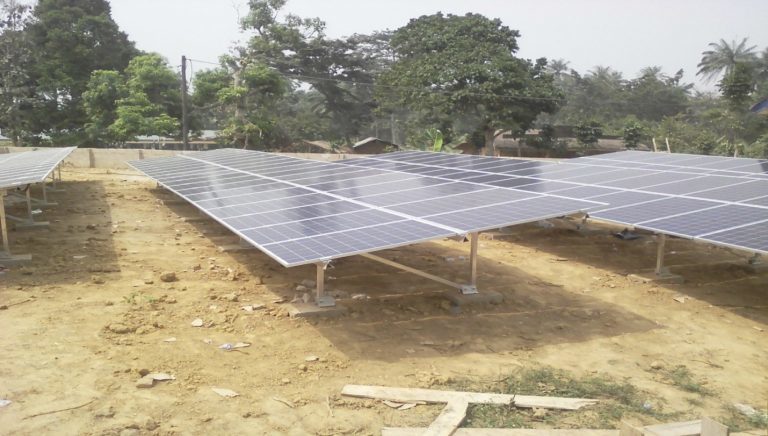
The U.S. African Development Foundation (USADF) and All-On, an indigenous company, are partnering to promote the use of renewable off-grid energy technologies to reach communities not served by existing power grids in Nigeria.

solar panels
Off-grid energy: An array of solar panels

Mr C. D. Glin, the President/CEO of USADF, told journalists in Lagos on Wednesday, October 17, 2018 that the All-On/USADF collaboration would co-finance innovative Nigerian off-grid energy companies to boost renewable energy development in Nigeria communities.

Glin said the three-year partnership would empower up to 30 indigenous companies in the country to champion the project.

According to him, under the partnership, the USADF would provide $50,000 in seed capital while All-On also provides $50,000 in convertible debt to each of the selected energy enterprises in the first year.

“Another set of companies will also enjoy same privileges in the second year and later in the third year,’’ Glin said.

He said the USADF would develop local content in the Nigeria power sector and boost local company’s participation in enhancing the use of renewable energy in the country.

He said that the $50,000 grant would take care of the risk associated with new businesses.

“However, to ensure effective management of resources, the beneficiaries will also receive technical assistance from USADF and governance support from All-On.

“We are proud to partner with All-On to foster the growth of local enterprises to bring power and connectivity to underserved Nigerians.

“This partnership combines grant capital with private sector funding to support the selected Nigerian energy enterprises to grow their businesses, increase access to power and change people’s lives,’’ Glin said.

According to him, USADF is an independent U.S. government agency, established by Congress to support African-owned community and social enterprises which improve lives and livelihoods in underserved communities.

He said the foundation also target utilising a community-led development approach.

Glin added that USADF invests by directly providing seed capital and local project management assistance to early-stage enterprises to address local challenges like food security, energy access and women and youth.

According to him, USADF annually grants assistance for enterprise development and expansion to generate approximately $100 million in new local economic activity throughout Africa’s Sahel, Horn and Great Lakes regions, reducing poverty, creating peace and economic stability and putting millions on a pathway to prosperity.

Dr Wiebe Boer, the Chief Executive Officer of the Nigerian based All-On, an off-grid energy impact investment company backed by Shell, said: “The biggest challenge hindering Nigeria’s economic and social development is access to energy.

“These off-grid energy companies are introducing innovations that will improve household livelihoods and local economies by providing affordable power to unserved and underserved communities.

“We are proud to partner with USADF to provide an innovative blend of financing to these companies to enable them to scale up and meet the increasing demand.’’

Boer said that All-On is an independent impact investing company, seeded with funding from Shell.

It works with partners to increase access to commercial energy products and services for off-grid energy markets in Nigeria, with a special focus on the Niger Delta.

The Managing Director of Rural Electrification Agency (REA), Ms Damilola Ogunbiyi, commended the partners for the innovations they brought to off-grid energy support.

“This is a remarkable initiative that demonstrates what we already know.

“That private sector is taking a solution-driven role, is the only way to provide sustainable power solutions for Nigerians.

“The Federal Government, through the REA is currently replicating this model of private sector driven power projects through the Nigerian off-grid electrification strategy,’’ Ogunbiyi said.

The beneficiary companies include Havenhill, Prado, Solmenz, Darway Coast, de Auxano, Eastwind, Alyx, Creeds and iKabin.

By Yunus Yusuf

Farmers advised to insure crops against flood

0

Managing Director, American International Insurance Company (AIICO), Edwin Igbiti, on Wednesday, October 17, 2018 in Lagos advised Nigerian farmers to insure their crops against flood and other natural disasters.

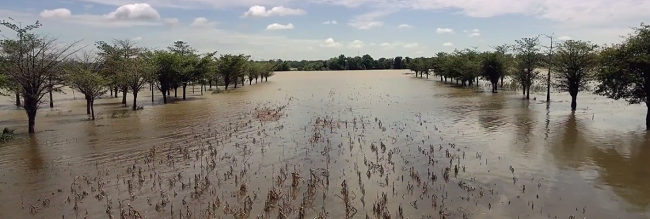
Flooded farmland
A flooded farmland. Photo credit: FAO

Igbiti told the News Agency of Nigeria (NAN) that the recent loss of farm produce to flood called for a rethink, especially knowing that many of the farmers affected did not insure their crops.

The AIICO boss said agricultural insurance products recently rolled out by the company was a response to losses incurred by Nigerian farmers.

“AIICO wishes to sympathise and encourage farmers to take advantage of the agricultural insurance solutions by AIICO,” he said.

Igbiti said that the underwriter was uniquely positioned to offer both indemnity and index based agricultural insurance products to farmers as well agricultural sector investors.

He said that the company had launched “AIICO Integrated Customer-Focused Contact centre” (AIIContact) to enable it deliver positive experience across all touch points and offer superior service to its customers.

“Besides, AIICO also embraced technological innovations to enable it establish direct and unified contact with its customers.

“Living up to its promise of safety and being reliable risk manager of repute, AIICO was able to pay over N44.265 billion claims within a period of 33 months.

“In 2015, gross claims paid for both life and non-life was approximately N13.045 billion.

“In 2016, gross claims paid increased to N14.571 billion and as at third quarter of 2017, AIICO’s gross claims paid stood at N16.649 billion,” he said.

By Bukola Adetoye

All set for GOCOP’s second annual conference

0

The Guild of Corporate Online Publishers (GOCOP) has concluded arrangements for its second annual conference holding on Friday, October 19, 2018 at the Sheraton Hotel, Ikeja, Lagos State.

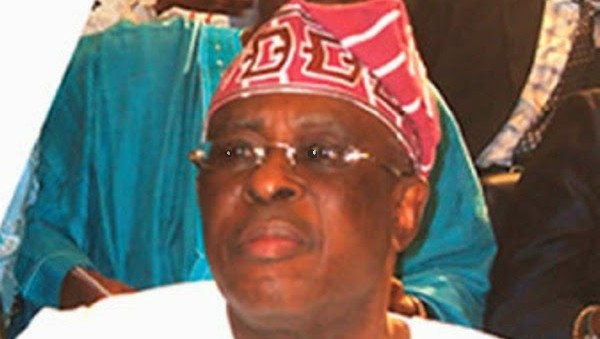
Aremo Olusegun Osoba

A statement released in Lagos on Wednesday, October 17 by GOCOP Publicity Secretary, Olumide Iyanda, confirmed that the theme of the conference is “Online Publishers’ Role Towards a Sustainable Economy, Credible Election and Security in Nigeria.”

Former Governor of Ogun State, Aremo Olusegun Osoba (CON), has confirmed his presence as chairman of the event.

“Aremo Osoba’s choice as chairman is informed by his enviable profile as a journalist, elder statesman and peace advocate.

“He brings in a wealth of experience as former Managing Director of Daily Times Nigeria Limited, Governor of Ogun State and member of the Nigerian Constituent Assembly, among others,” the statement said.

Former Chairman of the National Human Rights Commission (NHRC) and Senior Team Manager for the Africa Programme of the Open Society Justice Initiative, Prof. Chidi Odinkalu, has also confirmed his presence as the guest speaker.

“Recognised globally as an authority in international law, international economic and human rights law, public policy and political economy, Prof Odinkalu’s presentation will provide a clear roadmap for the media and other critical stakeholders in the Nigerian projects,” the statement added.

Chairman, Centre of Excellence in Multimedia Technology, Department of Mass Communication, University of Lagos, Prof. Ralph Akinfeleye; and former Director, ICT Centre, Federal University, Otuoke, Bayelsa State, Prof. Leonard Shilgba, will be the discussants.

The Newspapers Proprietors Association of Nigeria (NPAN), Broadcasting Organisations of Nigeria (BON), Nigerian Guild of Editors (NGE), Nigerian Union of Journalists (NUJ) and other stakeholder groups in the media will be represented at the conference.

GOCOP represents media organisations registered in Nigeria with promoters drawn from practitioners who have served at senior levels in the profession.

Nigeria seeks support for re-election into ITU

0

Nigeria’s belief in multilateralism and readiness to serve as exemplified by its many international commitments makes its bid for re-election into the International Telecommunications Union (ITU) worthy of support from countries within Africa and the globe, the Ambassador/Permanent Representative of the Nigerian Permanent Mission in Switzerland, Ambassador Audu Kadiri, has said.

Permanent Mission Picture
L-R: Dean, African Group of Ambassadors, Geneva, Ambassador Malloum Bamanga Abbas of the Chadian Permanent Mission; Mrs. Hauwa Kadiri; Ambassador Audu Kadiri; and Professor Ibrahim Gambari

Ambassador Kadiri, while hosting heads of permanent missions and international agencies in Geneva to commemorate the 58th anniversary of Nigeria’s nationhood, said that keen observers of Nigeria’s external exertions would easily notice that its two key geo-political underpinnings in foreign policy are Africa’s economy and population size.

He explained that Africa as centre-piece of Nigeria’s foreign policy has been propagated and upheld by successive administrations since Nigeria’s independence in 1960, and that Nigeria’s commitment to advancing the cause of Africa and the black race are seen in a host of areas. They include its contributions to decolonisation of Africa, promotion of peace, security and unity on the continent, the pursuit and facilitation of socio-economic development in Africa, and the initiation and support for sub-regional and regional integration in Africa.

Nigeria is also involved in peace support operations in Africa and globally, as well as dedication to the cause of people of African descent.

The Ambassador noted that President Muhammadu Buhari’s October 1, 2018 speech to the nation where he remarked that Nigeria would continue to support initiatives aimed at addressing current global challenges such as terrorism, trans-border crime, climate change and poverty, among others, underpins Nigeria’s faith in multilateralism in addressing the issues.

He added that Nigeria has served meritoriously in the United Nations Security Council and other governing councils of organisations and agencies in the UN system and is willing to do so given the opportunity again.

“It is for this reason that Nigeria is currently seeking the valued support of fellow African countries for its re-election into the Council of the ITU as well as the election of Nigeria’s candidate Mr. William Ijeh as the Director of the ITU’s Telecommunications Development Bureau (BDT) at the impending Plenipotentiary Conference billed for October 29 to November 16, 2018 in Dubai, the United Arab Emirates.”

The event was graced by the Dean, African Group of Ambassadors, Geneva, Ambassador Malloum Bamanga Abbas of the Chadian Permanent Mission, Geneva and Nigeria’s former Foreign Minister and former Under-Secretary General of the UN, Professor Ibrahim Gambari, as well as Heads of International Organisations and agencies.

Top five sustainable stadiums in the world

0

As you may have read from a previous article on EnviroNews, the first ever climate neutral football club is Forest Green Rovers who play in England. From diet to transportation methods, Forest Green is an example that you can always do more for the environment even with a demanding schedule.

This is exactly what the Fédération Internationale de Football Association (FIFA) is promoting; FIFA is setting higher standards when it comes to the venue and operations behind football tournaments. Stadiums that observe energy and resource conservation, waste management and overall sustainability measures are awarded with a ‘green certification’. However, even prior to FIFA’s initiatives, there were already sustainable stadiums in existence. Here are the top five stadiums that do not only entertain, but also save the world.


Amsterdam ArenA – Netherlands

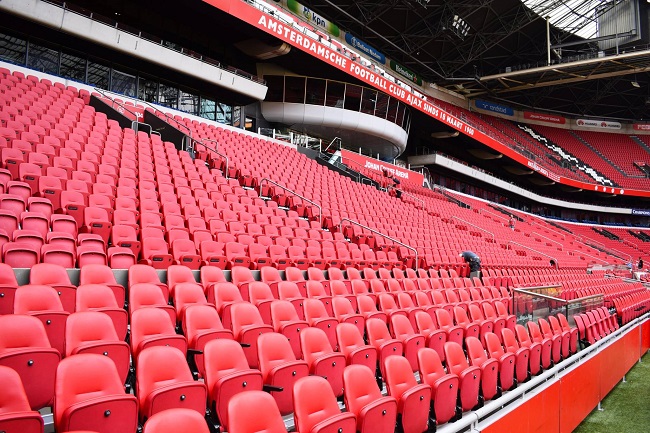
Amsterdam ArenA
The Amsterdam ArenA, Netherlands. Photo credit: Johan Cruijff ArenA Facebook

Stadium seats are typically made of unsustainable materials such as steel and plastic but not those presents in Amsterdam ArenA. The home of the Ajax Football Club found a way to make seats entirely out of sugarcane to deal with the ongoing issues with biodegradability. It also houses 4,200 solar panels that power most of the stadium’s operations, a windmill for renewable energy and recycled rainwater for the field.


National Stadium – Taiwan

Before the 2009 World Games commenced, Taiwan made sure that the National Stadium had high green standards. It was fitted with over 8,800 solar panels that power the 3,300 lights and jumbo screens in the arena. The vegetation that was uprooted for the project was also replanted, the materials were domestically made, and the stadium’s grounds are made of permeable paving to reduce flooding in the area.


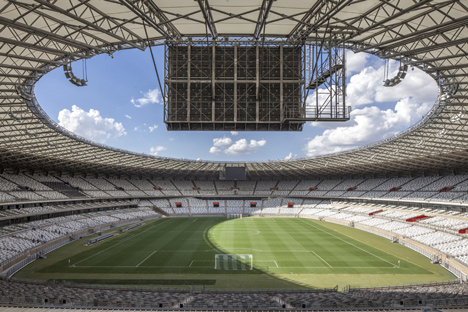
Mineirão Stadium – Brazil

Mineirao Stadium
Mineirão Stadium, Brazil. Photo credit: Dezeen

In preparation for the 2014 FIFA World Cup, the Mineirão Stadium in Brazil underwent major renovations. Aside from adding a new roof, among other changes, Dezeen reported that it was the first stadium to be fully powered by solar energy. Similar to Amsterdam ArenA, it also harvests rainwater for recycling.


Fisht Stadium – Russia

Another Russian venue in the green corner is the Fisht Stadium in Sochi, which hosted the 2014 Winter Olympics. Ladbrokes notes that the 48,000-seater arena was reopened in 2017 for the Confederations Cup and was a venue during the 2018 World Cup. Its most sustainable feature is its unique roof made of ethylene tetrafluoroethylene (ETFE), a material resistant to moisture that lets in natural light to minimise the use of artificial lighting. It is also meant to last for over 100 years and is resistant to harsh elements such as snow and fire.


Khalifa International Stadium – Qatar

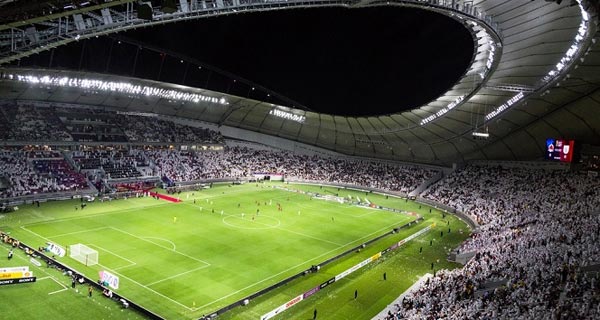
Khalifa International Stadium
Khalifa International Stadium, Qatar. Photo credit: Doha Stadium Plus Qatar

It will be nearly four years until the next World Cup but Qatar, the host country, is already working on ensuring it delivers a sustainable tournament. The Khalifa International Stadium received a four-star rating from the Global Sustainability Assessment System in cooperation with FIFA. Aside from using recycled materials for the renovation, the utilities include a cooling technology that can recover energy and reuse it as well as energy-saving lights and fixtures.

Study clamours reduction in meat consumption to combat climate change

0

Western countries need to reduce their intake of red meat dramatically if they want to truly tackle climate change. That’s according to a new study, published in Nature journal this week, which says beef consumption needs to fall dramatically.

Red meat
Red meat

“The food system is a major driver of climate change, changes in land use, depletion of freshwater resources, and pollution of aquatic and terrestrial ecosystems through excessive nitrogen and phosphorus inputs,” the study read.

Researchers also said that eating less meat would help the planet cope with a rapidly increasing population. It explained that, by 2050, Earth’s population will be 10 billion. The world’s global food system is already unsustainable, the study said, adding that a larger population will only make the problem direr.

“Without concerted action, we found that the environmental impacts of the food system could increase by 50 to 90% by 2050 as a result of population growth and the rise of diets high in fats, sugars and meat,” Dr. Marco Springmann, one of the study’s researchers, told The Telegraph.

The study goes on to recommend that individuals in western countries take dietary changes, relying heavier on plant-based food and protein sources such as beans.

It adds that simply that is not enough. More sustainable methods of agriculture would also benefit the environment, along with a more concerted effort in reducing food waste and improving technology.

“No single measure is enough to keep effects within all planetary boundaries simultaneously,” the study explained.

Several other studies have also found heavy reliance on meat-based diets can hurt the environment.

study published in journal Science in June said that producing feed for livestock, transporting, processing and packaging them all has a sizeable impact on the environment. It said even the “lowest-impact animal products” exceed the impacts of vegetable substitutes.

University of Toronto lecturer Jennifer Sumner, who studies food systems and sustainability, told Global News that curbing meat consumption is a key aspect of combating climate change.

Beyond telling consumers to simply eat less meat, Sumner said governments need to step in.

“They need to step in or put an extra tax on it, a luxury tax almost,” she said, adding that certain benefits could also be given to companies and organizations investing in meat alternatives.

But she noted that food is a personal choice – that’s why limiting it is tricky and bound to upset people.

“Given the kind of reaction that we have in parts of Canada to things like the carbon tax, I think food is a much more intimate commodity than oil. There’s a lot of personal identity tied up in it,” she said.

Overall, Sumner said it’s about changing the way we look at food and the environment.

Ming Fan, University of Guelph professor who studies sustainable animal production, explained that there is definitely room for improvement when it comes to how meat products are produced.

But Fan said he has trouble agreeing completely with environmental studies that recommend cutting or dramatically reducing animal consumption.

“You need to improve efficiency,” he said, explaining that simply getting rid of meat consumption is unrealistic.

Fan also explained that food is a cultural and personal choice, so telling people what to eat or stay away from is a slippery slope.

“I think studies like this sometimes go to the extreme and it gets a little imbalanced,” he explained. “I think people should look at the bigger picture instead.”

He said that means focusing on having a “balanced diet” and taking several things into account — the environment, health and personal preferences.

Courtesy: Global News