Conservation experts have called on African leaders to change the global emphasis for development agendas to water, energy and food sectors.
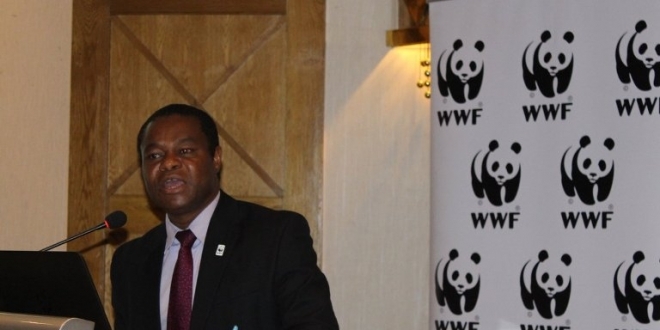
Frederick Kumah, Africa director, World Wide Fund for Nature (WWF)
Frederick Kumah, Africa director, World Wide Fund for Nature (WWF), said that it is time for leaders to look at the deals that benefits people and nature.
“Given the current projections, the continent’s population will double in 2050 hence the need to re-think how to avail food, water and energy for the projected population,” Kumah told delegates attending the UN Biodiversity conference in Sheik El Sheik, Egypt.
Kumah noted that plans on Africa’s food systems, land and cultivation process should top the continent’s agenda in readiness for the forecast population increase.
He said that there is need to know the amount of water that the continent has since it plays a crucial role for food production and wildlife conservation.
“We have to monitor and manage water resources effectively in the continent to benefit the populations,” he added.
Kumah called for use of renewal energy as a replacement for fossil fuel that is unhealthy for the lives of populations.
“We need to decentralize energy production and supply to reach many people who deserve it for their domestic usage,” he added.
Kumah noted that the continent need to embark on massive solar and wind energy given that the continent has plenty of sunshine and wind that could help in generating energy.
James Isiche, East African regional director of international fund for animal welfare (IFAW), said that the regional blocks need to come up with harmonised policies to help save wildlife from threats.
He said that the policies must be geared towards protecting the wildlife that is one of the main foreign exchange earners for the continent.
Isiche noted that wildlife in Africa is threatened by climate change, human encroachment, poachers and drought.
“We have to start looking at wildlife as a valued part of biodiversity unlike the past when they were viewed at peripheral,” he added.
Isiche urged the governments to consider increasing conservancies since the number of wildlife is exceeding the landscape currently due to the pressure on land.
He said that the 160 conservancies and 80 in Namibia is not enough hence the need for countries to increase them for safety of wildlife.
The expert called on governments to allocate budgets for conservation since support from development partners is fast drying out.
African mayors and local authorities, who met at 8th edition of the Africities Summit in Marrakech, Morocco, from November 20 to 24, 2018 have expressed the determination to establish a climate that is conducive to social harmony within the territories and which rejects discrimination of all kinds, stigmatisation and xenophobia.
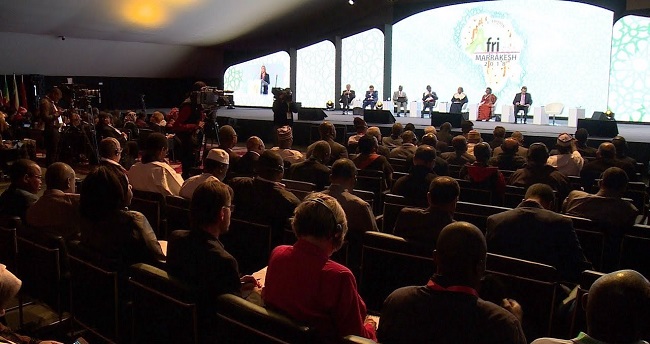
Delegates at the Political Segment of Africities 8
They made the submission in a resolution tagged: “Declaration of Mayors and Local Authorities in Africa” released on Saturday, November 24 at the close of the weeklong conference.
They also expressed concern over issues related to migration and the plight of migrants, the youth, traditional leadership and other groups.
They said: “We are convinced that Africa has a rightful place to occupy in the world of today and of tomorrow, provided that it knows how to rely on its deep cultural values and identities, to invent a new modernity bringing together democracy and sovereignty and as Mayors and local governments of Africa are determined to be part of this momentum, ready to take the responsibility of implementing the transition to Sustainable Cities and Territories, so that the Africa that we want by 2063 will be an Africa that is open to the world and true to itself.”
According to them, in line with its demographic transition, Africa needs to transform itself to meet new challenges.
“To sustain the urbanisation process, the subnational governments will have to plan for the increasing numbers of young people, vulnerable people and the high demand for public services, growing informalisation, exclusion, marginalisation and impoverishment. Without adequate planning by sub-national governments, this may lead to high risks of fragility, explosion of social and spatial disparities,” the mayors and local authority officials declared.
The expressed concern over the fact that the decentralisation processes on the continent are not uniform and that even within the subregions there are variations in the state, forms, and how decentralisation is implemented.
This, the delegates pointed out, is due to the sovereignty and diversity of the countries., adding that the number of subnational structures / governments, the types of structures, and sizes all vary from country to country and that they are not determined by the rate of urbanisation.
They also expressed the fact that the decentralisation processes in Africa takes place in the particular context of globalisation, urbanisation, democratic and political transition, economic and social, geopolitical, cultural and ecological transition and climate change.
On governance, they demanded that effort should be made to make the lower levels of government more democratic as, according to them, it has been noted that there are still elements of control by the centre.
“More than half of the sub-national governments (75%) operate in environments that are hostile or not favourable to decentralisation, leaving the sub-national governments little or no room to manoeuvre,” the delegates lamented.
They emphasised that involving sub-national level governments is key to national planning since they (sub-national governments) are at the forefront of local development planning.
They embraced approaches and strategies stipulated in the numerous global agendas (such as Paris Agreement on climate Change, Sustainable Development Goals, New Urban Agenda and Agenda 2063), pointing out that “development and change takes place at the spatial level and that sudden and total change occurs and then materializes in addressing the main global agendas”.
They affirmed the provisions of the global development agendas that recognise the importance of the territories and the role of cities and local authorities as essential development partners, even as they declared: “Sub-national governments are therefore calling for a responsive institutional and policy framework for the operation and self-organizing initiatives, a new national pact reinforcing their legitimacy and strategies that take into account improved public services and the demands of the populations and the allocative efficiency of the public policies.”
They stressed that the implementation of the recommendations of AfriCities 8 must focus more on the territories and requires transition towards sustainable development.
The summit had “The Transition to Sustainable Cities and Territories: The Role of local and Sub-National Governments of Africa” as its theme.
The eighth International Summit of Cities and Territorial Communities of Africa (Africities) closed on Saturday, November 24, 2018 in the Moroccan city of Marrakech.
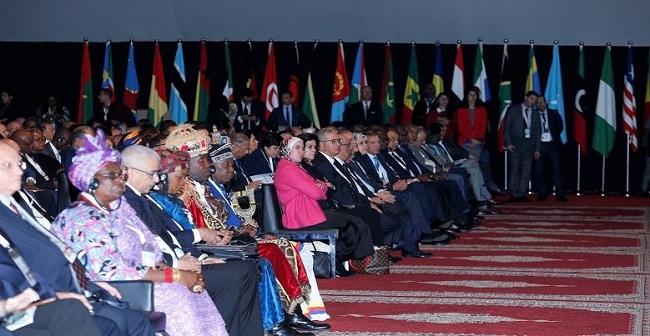
Dignitaries at the closing ceremony of Africities 8
Held since Tuesday, November 20 under the theme “The Transition to Sustainable Cities and Territories, The Role of Local and Sub-National Governments of Africa,” the summit saw a record of nearly 7,000 participants.
The summit gathered ministers, local authorities and local elected officials, officials of local and central administrations, civil society organisations, associations and trade unions, economic operators, researchers and academics, and international cooperation agencies.
It discussed appropriate shared strategies to improve the living conditions of people at the local level and means to contribute to the integration, peace and unity of Africa starting from the grassroots.
The Pan-African meeting was also an opportunity to raise awareness of the new responsibilities of regional leaders to find adequate strategies to ensure transition to sustainable cities and territories in Africa.
Africities Summit is the United Cities and Local Governments of Africa’s flagship Pan-African event that is held every three years in one of the five regions of Africa.
After Marrakech, the 9th edition of Africities will be held in 2021 in Kisumu, Kenya.
Delegates at the UN Biodiversity Conference in Sharm El Sheikh, Egypt, on Thursday, November 22, 2018 at a side event celebrated the 15th anniversary of the Cartagena Protocol on Biosafety to the Convention on Biological Diversity.
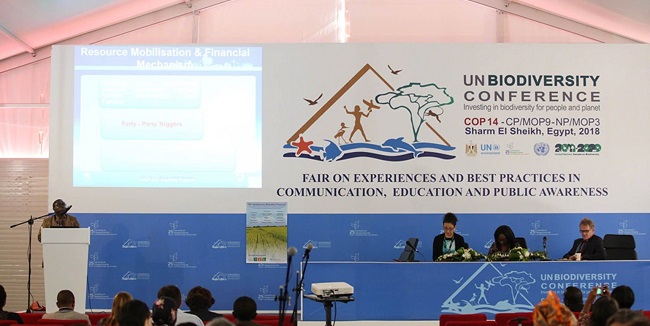
View of the panel during the side event held to celebrate the 15th anniversary of the Cartagena Protocol on Biosafety to the Convention on Biological Diversity
Participants at the gathering, among other functions, explored key successes achieved under the Biosafety Protocol. Ulrika Nilsson of the CBD Secretariat, who opened the celebration and moderated the event, listed these to include: a fully operational Biosafety Clearing-House; the progress made by Parties in the context of public awareness, education, and public participation at the national level; and the entry into force of the Nagoya-Kuala Lumpur Supplementary Protocol on Liability and Redress.
Delegates, in their comments, made noteworthy revelations relating to the impact and progress of the Protocol on their endeavours and countries.
For instance, Alex Owusu-Biney, UNEP-Global Environment Facility (GEF) – Biosafety Projects, underscored that the Protocol sets out a comprehensive framework for international cooperation on the safety of transboundary movements of living modified organisms (LMOs) and noted that the Protocol strikes a balanced approach to meet the needs of consumers, industry and the environment.
He noted that the precautionary principle is an essential component of the Cartagena Protocol, underscoring that risk assessment processes, information sharing, public awareness and participation are key to fulfilling the Protocol’s objective of safe transfer, handling and use of LMOs. He noted that the GEF capacity building projects are divided between thematic and regional, highlighting that it is important for Parties to get well acquainted with their rights and obligations under the Protocol.
He mentioned that capacity building projects aimed at: ensuring a vibrant participation process; provision of technical tools to support national decision making on biosafety; and disseminating recommendations, best practices and feedback for replication.
Georgina M. Catacora-Vargas, Ministry of Environment and Water, Bolivia, showcased biosafety from an integral approach in reviewing the regulation of LMOs in Bolivia. She reported that legislation developed in 2009 forbids genetically modified organisms (GMOs) in her country. She highlighted that the introduction of technological agricultural packages containing genetically modified seeds present a risk to Bolivia’s rich genetic patrimony, to ecosystems and human health. She referred to her country’s law forbidding GMO-based food in schools and legislations that forbid activities related to GM maize, due to the risk of gene flow into native maize varieties.
Ntakadzeni Tshidada of the Department of Environmental Affairs, South Africa, highlighted that 100% of cotton and 95% of soybean in South Africa is genetically modified. She also reported the prevalence of GM-derived medicines in South Africa’s market, including anti-cancer agents and vaccines.
She noted her country’s progress towards facilitating the establishment and further development of an effective biosafety system, stressing that South Africa’s 2005 National Biodiversity Strategies and Action Plan (NBSAP) integrated biosafety activities. She underscored that the GMO Act provides for measures to promote the responsible production, use and application of GMOs.
She further noted that several universities in South Africa have included biosafety into their curriculum, highlighting a study carried out to assess public perception of biotechnology and how this information can inform new biosafety strategies.
Guy van den Eede of the European Commission (EC) introduced a detection training programme launched by the EC’s Joint Research Centre, in 2000, to assist EU Member States and Third Countries to address analytical challenges required to implement the requirements of the EU regulatory framework on GMOs. He also highlighted achievements of the “Global Harmonisation of GMO Analysis Support to Regional Networking” Project, including: the establishment of new networks of GMO laboratories; regional testing projects and capacity-building initiatives; and the mapping of regional technical capacities.
Cristiana Paşca Palmer, CBD Executive Secretary, via video, highlighted the successes of the Convention relating to LMOs, including: experience in detection and identification of LMOs; awareness raising; participation in decision making on socio-economic considerations; and risk assessment on LMOs. She urged everyone to celebrate the 15th anniversary of the Protocol’s entry into force to further enhance its visibility and implementation.
Ho-Min Jang of the Korea Biosafety Clearing House (KBCH), Republic of Korea, via video, said the KBCH has played a catalytic role in the implementation of the Protocol. He noted that the Republic of Korea has approached, through the KBCH, other Asian countries to promote regional collaboration on biosafety issues. He stressed that such collaborative initiatives would enhance the global implementation of the Protocol.
The Summary and Recommendations on the 2018 biennial assessment and overview of climate finance flows of the Standing Committee on Finance shows that, on a comparable basis, global climate finance flows increased by 17% in 2015–2016 from 2013–2014 levels, the United Nations Framework Convention on Climate Change (UNFCCC) has said.
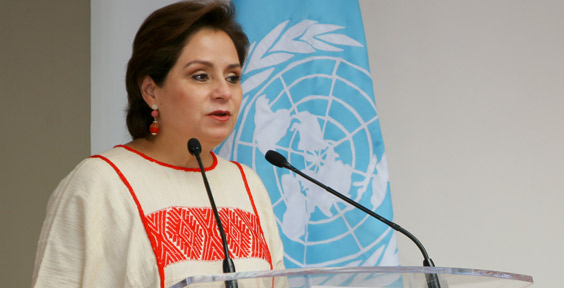
Patricia Espinosa, Executive Secretary of the UNFCCC
The Standing Committee on Finance – the body that supports the Conference of the Parties with respect to climate finance matters – was established by Parties at COP17.
The Summary and Recommendations provide updated information on global climate finance flows for the period 2015-2016 and trends since 2011, their implications and relevance to international climate change efforts.
They highlight the fact that the bulk of climate finance continues to go towards efforts to curb greenhouse gas emissions, and a relatively small proportion of finance goes towards efforts to enable the most vulnerable to adapt, noting measurement differences.
One central conclusion, according to the UN body, is that the growth in global climate finance seen in 2015 was largely driven by high levels of new private investment in renewable energy, the largest segment of the global total. The fall in renewable energy investment in 2016 was offset by an 8% increase in investment in energy efficiency.
However, whilst climate-related finance flows are considerable, they remain relatively small in the context of wider trends in global investment.
For example, while global investment in renewable energy and renewable energy subsides are rising, global investment in fossil fuel and fossil fuel subsidies remain considerably higher.
Another central finding is that climate finance to developing countries as reported in developed countries biennial reports to the UNFCCC increased by 24 per cent in 2015 to $33 billion and, subsequently, by 14 per cent in 2016 to $38 billion.
Other key findings relate to the efforts of Multilateral Development Banks that continue to scale up climate finance flows; flows through UNFCCC funds; and multilateral climate funds that are increasing – although their share of global climate finance flows remains small.
Ownership is a critical factor in the delivery of effective climate finance. Significant data gaps on tracking climate finance flows at domestic level still prevail.
Preliminary insights related to Article 2.1c of the Paris Agreement highlight the importance of considering climate finance flows in the broader context.
Further details can be viewed in the 2018 Summary and Recommendations here.
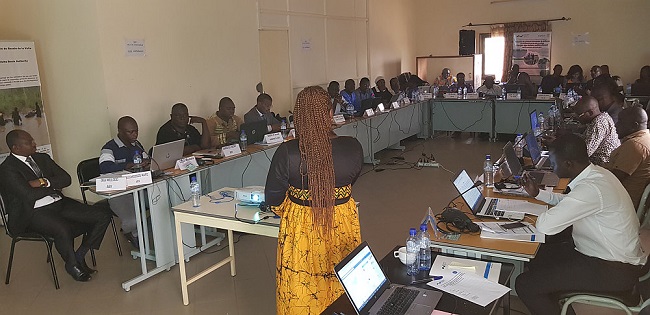
About 20 media women and men from Benin, Burkina Faso, Côte d’Ivoire, Ghana, Mali, Niger and Togo took part in the regional workshop on “Integrated Drought and Flood Management: Contribution of media men/women in advocacy and awareness-raising in West Africa”.
Participants listening to a presentation during the workshop
The meeting, co-organised by Global Water Partnership West Africa (GWP-WA), the Volta Basin Authority (VBA) and the Country Water Partnership (CWP) of Burkina Faso, was held from November 20 to 22, 2018 in Ouagadougou, Burkina Faso, at the premises of the VBA Executive Directorate.
At the end of the workshop, all participants indicated that they had a better understanding of the different concepts of droughts, floods and the issues related to their integrated management. They indicated that they now have a good understanding of the involvement and role of the media in promoting integrated drought and flood management in West Africa in their respective countries for sustainable development.
The participants particularly noted the good organisation of the workshop, which made it possible to clarify the concepts during the presentations and then reinforce the understanding of these concepts in the field by visiting pilot sites. Finally, the knowledge gained, and lessons learned from the visit enabled media actors to produce press articles and produce radio and TV magazines on the spot.
“The field visit is always an enriching initiative that allows us to gather concrete elements of information in addition to connecting with experts,” said one of the participants.
“When I came here, I thought it must be another workshop like the dozens we have attended in the past,” said Aboubakar Sidiki Sylla of the Ivorian Radio and Television (RTI). “But I must admit that the workshop in Ouagadougou is quite different. A very good experience that combines theory, field visit and journalistic production practice”.
Joachim Batao of Burkina Faso’s online newspaper, Burkina Demain, said: “This workshop is undoubtedly the best workshop for journalists I have attended so far”.
Jasmine Arku of the Ghanaian Graphic News Paper added at the same time as her compatriot Samuel Asamoah of Metro TV, that the session was “an eye opener”. Being from the very humid south of the country, the field visit to the Ramitenga site where solar energy is used for drip irrigation and Komki Ipala with the successful experience of restoring degraded soil for agroforestry, allowed them to be confronted with real situations that are replicable in the northern part of their country, Ghana.
“The workshop allowed me to know that floods, if well managed, did not only have negative effects,” concludes Arku.
The contact with media women and men during the workshop made it possible to change the perception that researchers had of journalists.
“I understood that we need as researchers to make an effort to involve journalists in our work from the outset if we want our results to be known and understood by the population and decision-makers,” said Gnenakantanhan Coulibaly, a doctoral student at 2IE, who specialises in flood management.
Mr. Alassane Toure, representative of the consultant in charge of developing the national drought management plan in Burkina Faso, explained that he has “understood all the benefits for a specialist to approach media men and women in order to create mutual trust that can facilitate a good understanding of each other’s functions and work”.
To reinforce the achievements of the Ouagadougou workshop, the participants recommended, among other things, that:
Such practical thematic workshops should be organised at the regional level and, if possible, in the countries to enable journalists to familiarize themselves with the different concepts;
Partner organisations pool their efforts and resources to provide better training for the better involvement of media women and men in the sustainable development of the region;
That participants at the workshop be integrated into the network of journalists already trained by GWP-WA and its partners since 2007 called “ShareInfo”;
The formalisation with VBA of the network of journalists of the Volta Basin to support the communication efforts of the Executive Directorate towards the populations and decision-makers of the member countries of the Volta Basin; this could be achieved through the establishment and regular animation of a media forum like the basin stakeholders’ forum.
At the end of the workshop, all participants committed themselves to making productions to inform, raise awareness and educate populations and decision-makers on the issues and challenges related to droughts and floods from the documentation and with the resource persons available at the workshop. Personal commitments for the post-workshop period range from maintaining collaboration with Country Water Partnerships (CWPs) in countries to creating sections in the media or even creating media (TV, websites or radio) specialising in environmental issues, especially online.
Participants believe that the objectives of the workshop were largely achieved beyond their expectations.
Officials of GWP-WA and VBA said that they are committed to supporting the media in their efforts to inform and educate the population on all issues related to integrated natural resources management. Both organisations called on participants and media women and men in general to get closer to the CWPs (for GWP) and national focal points (for VBA) for a better understanding of the issues discussed at the national level.
“We go to the stream, we don’t have water here, even toilets; we usually use the bush. A woman was bitten by a snake while defecating in the bush and another one was bitten when she went to pick firewood for cooking.
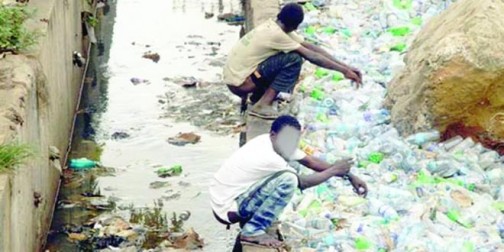
A major outcome of the lack of sanitation facilities is open defection
“We want the government to help us, especially on these toilet and water issues. Some women urinate anywhere and get infected; majority of us are having infections and treating infections in hospitals is quite expensive,” says Hannatu Peter, an internally displaced person residing at the New Gongola IDPs camp in the FCT.
Strange as the testimony may sound, this is a typical scenario in several communities, particularly in the Internally Displaced Persons (IDPs) camps across the country, as poor living conditions and dearth of sanitation facilities are peculiar features of such neighbourhoods.
A major outcome of the lack of sanitation facilities is open defection which, according to sanitation experts, usually provokes the outbreak of waterborne diseases such as cholera and dysentery in such communities, particularly among the children.
According to Nigeria Water, Sanitation and Hygiene (WASH) Poverty Diagnostics Report, the country’s sanitation sector is in a critical condition.
The report shows that the economic growth of Nigeria, which has a population of over 183 million, has not translated into rapid poverty reduction.
Therefore, concerned observers insist that country has been lagging behind in the accumulation of physical and human capital, with poor access to WASH services being a key factor.
The Minister of Water Resources, Mr Suleiman Adamu, warned at the National Council on Water Resources meeting, held in Abuja between Nov. 13 and Nov. 15, that if India was able to exit from its number one position in the list of countries with poor sanitation and open defecation by the middle of 2019, it would be a “national shame’’ for Nigeria.
“I was in India recently; the country has been adequately mobilised on issues of sanitation and open defecation. It is, therefore, a civic responsibility for all of us.
“Three years ago, only 40 per cent of Indians were using toilets but now, 95 per cent of Indians are practising full sanitation practices.
“The Indians have not only stopped to defecate in the open, they are also re-cycling their waste into usable products; they have experienced a lot of transformation within three years.
“In the last three years, the Indians have built 80 million toilets; we need this kind of quantum leap in our country.
“By next year, wherever you go in the world, you would hear that Nigeria is number one in open defecation; that is a national shame which we must not allow to happen,” he said.
The minister, however, said that the Federal Government would soon enter a technical cooperation with India to salvage the Nigerian situation.
Truly, the situation appears somewhat grim, as the 2017 WaterAid Report says that over 122 million Nigerians still lack access to basic sanitation facilities and ranks Nigeria as the third worst country with the poor access of its citizens to essential sanitation facilities in rural and urban areas.
It is quite true that the entire sub-Saharan Africa region has limited access to WASH services but Nigeria’s level of access lags far behind those of other peer countries, with 57 million Nigerians living without access to improved water, while 130 million others use unimproved sanitation facilities.
Alarmingly, a large body of evidence suggests that limited or no access to WASH services has a lot of damaging effects on development outcomes, adversely affecting the people’s health, while limiting their access to educational, economic opportunities and productivity.
At the just-concluded National Council of Water Resources, stakeholders underscore the need for the three tiers of government to exhibit huge political commitment towards the provision of WASH facilities for the citizens so as to change the narratives.
The water resources minister said that President Muhammadu Buhari’s recent launch of the National Action Plan for Revitalisation of WASH Sector marked a new beginning for the country in its efforts to achieve an open defecation-free status.
Adamu said that the launch would bring about purposeful collaboration in the sector to facilitate designed efforts to expand the citizens’ access to potable water, sanitation and hygiene, with a renewed commitment toward the achievement open defecation-free society by 2025.
“If this is not done, we stand the chance of taking the centre-stage of open defecation countries when India would have exited the list by mid-2019,” he said.
Some stakeholders in the WASH sector believe that the World Toilet Day is all about initiating pragmatic plans to ensure that everyone has access to safe toilets by 2030.
They add that this is part of the strategies for meeting Goal Six of the Sustainable Development Goals (SDGs), which aims at scaling up the people’s access to improved sanitation and water.
Mr Rolf Luyendijk, the Executive Director, Water Supply and Sanitation Collaborative Council (WSSCC), said that the celebration of the World Toilet Day on Nov. 19 was a reminder for policymakers to take concrete actions to rid the world of more than 800 million open defecators.
He particularly noted that hundreds of millions of schoolchildren had no access to school toilets; with cholera outbreaks resulting in hundreds of thousands of child deaths every year from poor sanitation and hygiene.
Speaking on the Global Water Radio, Luyendijk said that recently in India’s Prime Minister, Mahendra Modi, made sanitation a top national priority under the “Clean India’’ campaign, known as the Swachh Bharat Mission.
He noted that in neighbouring Nepal, after years of concerted efforts, the country was on the verge of declaring itself the first open defecation-free nation.
“Ethiopia, Ghana, Rwanda, Indonesia have really made fantastic strides in sanitation over the past couple of years,’’ he said.
Luyendijk noted that the reason for monitoring sanitation progress and data collected via the Joint Monitoring Programme (JMP) of World Health Organisation and UNICEF was to trigger action.
“So, most monitoring is used for accountability purposes. We gave you some funding and what have you got to show for it?’ The JMP data are used for tracking progress. Did we reach our targets?
“Are we making enough change? Is the change happening rapidly enough? What proportion of the population still defecates in the open? The JMP data can also be used for planning, for targeting and for budget allocation.
“That is to say once the politicians are already convinced that they need to invest in sanitation, the JMP data can tell you where to invest,’’ he added.
The executive director said that apart from considering the data, the call for action from all tiers of government to accelerate progress on sanitation projects globally and nationally was very imperative.
Luyendijk stressed the need to invest in a common matrix and monitoring system across programmes to absorb more funds.
“Instead of us all chasing the numbers — with scattered and relatively small projects and programmes — I really think that we need to pull together and strengthen the system and absorption capacity to scale up and accelerate programming.
“We need to get behind ending open defecation roadmaps, we need to invest in a common matrix and monitoring system across programmes so that we can absorb more money, but we don’t have our own monitoring frameworks.’’
Corroborating the need for sanitation scale-up, Mr Michael Adegbe, the Business Development Leader, Safe Toilets Nigeria, underscored the need to involve the private sector in efforts to scale up sanitation across the country.
He stressed that access to proper sanitation and clean water was vital for the health and safety of the growing populations of rural and urban neighbourhoods.
He, nonetheless, noted with regret that Nigeria was still among the top three countries with a large section of their populations still defecating in the open.
Adegbe said that his outfit was carrying out sanitation marketing to encourage private sector organisations and toilet business owners to invest in cost-effective toilet hardware so as to encourage people to construct and use their toilets.
All the same, Mrs Priscilla Achakpa, the National Coordinator of WSSCC Nigeria, stressed the need to promote sanitation and hygiene in markets and other public places because such campaigns would facilitate efforts to halt the spread of diseases in communities.
She urged the government to give priority attention to efforts to boost the citizens’ access to water and sanitation, while promoting the culture of hand washing at critical times.
Achakpa also urged the states to begin to take the health and wellbeing of their citizens seriously, as poor access to potable water and sanitation would invariably affect the people’s health, wellbeing and economic development.
Sharing similar sentiments, Mr Benson Attah, National Coordinator, Society for Water and Sanitation, bemoaned the apparent apathy of state governments toward improving the people’s access to water and sanitation across the country.
According to him, there is the need for the states to prioritise the provision of WASH facilities, as open defecation is still common across the country.
Attah, however, commended the efforts of the Federal Government to improve the citizens’ access to water and sanitation, adding that pragmatic efforts should, however, be made to tackle the menace of open defecation in a holistic manner.
“Nigeria is presently being shielded by India; India is the number one country in terms of open defecation; once the country moves out from that unenviable position, Nigeria will be exposed to that embarrassment.
“We hope we are able to overtake India before it moves out of that list; it is saddening that Nigeria, as the giant of Africa, is leading Africa with regard to countries with the largest open defecation statistics.
“Globally, Nigeria is the second behind India, in terms of countries with the highest number of people defecating in the open, while in Africa, it ranks first,’’ he said.
The Multiple Indicator Cluster Survey (MICS) 2017 reports reveal that 28.5 per cent of the Nigerian population practise open defecation, while 110 million citizens lack access to improved sanitation.
All in all, sanitation experts believe that the country should move beyond paying lip service to issues of sanitation and hygiene, calling for deliberate policies and programmes to change the poor sanitation and hygiene indices of the country.
The Global Rights, a non-governmental organisation (NGO), has described lack of access to potable water as “the greatest threat” to Nigeria’s security. It has thus called for a holistic approach to water resource management in the country.
Suleiman Adamu Kazaure, Water Resources Minister
Ms Abiodun Baiyewu, Executive Director of Global Rights, made the assertion at a stakeholders’ engagement dialogue with the theme: “Contextualising Nigeria’s Resource Management in Mining and Energy Policies” held in Abuja.
She said that the call had become necessary because reduction in water levels in the country’s major dams posed a threat to national security.
Baiyewu said: “From all indications, this threat is already tearing at the very fabric of our nationhood with the many conflicts it is facilitating.
“The dramatic shrinking of Lake Chad to one-tenth its size in less than 40 years, shrinking of Goronyo Dam in Sokoto to one-tenth and shrinking of Kaduna River prove this.
“Also, River Niger and even River Benue; the literal overnight disappearance of the Kara market waterfront in Lagos are signs of the fate of this natural resource in Nigeria.”
She expressed concern over the impact of climate change on countries close to the equator including Nigeria, while noting the environmental devastation resulting from mining activities in some communities in Kogi and Gombe states.
The environmental activist identified the effects of climate change on the soil and water bodies in the North to include flooding, erosion and encroachment of the rivers.
She, however, stressed the need for urgent measures to be taken to guard against water pollution.
According to her, if the nation must protect our territorial integrity, she must therefore protect the water bodies.
Also speaking, Mr Musa Ibrahim, the Permanent Secretary, Federal Ministry of Water Resources, assured the participants that the ministry would take appropriate measures to ensure effective management of water resources in the country.
Represented by Mr Peter Nwakpa, an official in the Ministry, Ibrahim emphasised the need to ensure the sustainability of abundant water resources in the country.
According to him, the sustainability is threatened by land degradation, deforestation, rapid population growth, poor investment, as well as climate change.
Ibrahim said: “All of these have placed pressure on water resources of our country.”
According to him, the International Water Management Institute predicts that Nigeria may become water stressed between 2025 and 2050.
“As custodian of this most important national resource of our country, we will continue to ensure that the resources are protected, managed and controlled for the collective benefit of Nigerians.”
Meanwhile, Mr Otayitie Eminefo, Special Adviser on Power and Energy to Kogi State Governor, said that the state government would put measures in place to guard against unlawful mining activities.
According to him, Kogi would continue to do its best to protect water resources within communities of the state.
“We have established a media framework to sensitise mining companies and host communities to understand the dangers of water pollution.
“We will continue to put necessary measures in place to achieve the desired goal,” Eminefo said.
The high-point of the event was the power point presentation on contextualising water resource management in mining and energy policies by Mr Jaye Gaskia.
Global Rights is an international organisation that seeks to promote sustainable justice, human rights capacity-building and also to create awareness on dangers of human rights abuses.
A study released on Friday, November 23, 2018 and titled: “Toxic Soup: Dioxins in Plastic Toys” shows high levels of toxic brominated dioxins in eight toys and one hair clip made of recycled plastic stemming from electronic waste.
Old toys such as Lego blocks are said to contain hazardous materials
Dioxin content in toys from Czechia, Germany, France, Portugal, Argentina, India and Nigeria was comparable to the levels found in previous studies in waste incineration fly ash or other industrial waste.
This information was released to coincide with the meeting of the EU Competent Authorities expert group for Regulation on Persistent Organic Pollutants (POPs), which will discuss rules for recycling and definitions of wastes containing persistent organic pollutants (POPs) such as Polybrominated diphenyl ethers (PBDEs) and dioxins.
“To prevent the presence of highly toxic substances in toys, the EU and its member states have to withdraw their registration for recycling exemptions in the Stockholm Convention and introduce stricter limits for POPs in waste. We also need to get brominated dioxins listed among chemicals regulated under the Stockholm Convention,” explains Jindrich Petrlik, the main author of the study, Executive Director of Arnika – Toxics and Waste Programme, and Co-Chair of IPEN’s Dioxin, PCBs, and Waste Working Group.
Brominated dioxins are highly hazardous chemicals that are known to affect brain development, damage the immune system and unborn children, increase the risk of cancer and risk disruption of thyroid function. They occur as by-products in brominated flame retardants and as a result of incineration of brominated wastes and materials.
“Bioassay analysis of dioxin-like activity has confirmed surprisingly high toxicity of recycled plastics,” said Peter Behnisch, one of the co-authors of the study and the Director of BioDetection Systems, a laboratory based in Amsterdam, Netherlands. “To our knowledge, this is the first publicly available study to show brominated dioxins in children’s products,” added Peter Behnisch.
The consumer products analysed were bought in seven countries on four continents and had been previously analysed for the content of another group of toxic chemicals, PBDEs. The significant contamination of children’s products by dioxins ranged from 56 to 3,800 pg WHO-TEQ/g. In at least one sample from each country, values in the order of hundreds of pg WHO-TEQ/g were found, as is the case with fly ash and bottom ash from waste incinerators. It did not matter whether the toy was obtained in Latin America, South Asia, Africa or the European Union.
Toy samples analysed from Nigeria show two samples with values at 56 and 860 pg TEQ/g of PBDD/Fs.
“None of those samples can be considered safe since brominated dioxins have the similar toxicity as their chlorinated counterparts,” said Dr. Leslie Adogame, Executive Director of SRADev Nigeria. These chemicals are persistent and known to harm the reproductive system and disrupt hormone systems, adversely impacting intelligence, attention, learning and memory.
“Chemicals safety is Human Rights, Children’s Rights. Governments should end this harmful loophole. This problem needs to be addressed globally and nationally,” added Adogame.
“Building a non-toxic environment for children is the absolute health and economic priority of today,” said Genon Jensen, Executive Director of the Health and Environment Alliance (HEAL). “That’s why a circular economy has to contribute to health prevention, meaning hazardous substances have to be taken out of the loop and at the same time no derogation on health standards should be allowed for recycled materials.”
“Chlorinated dioxins released decades ago in the Seveso disaster and Agent Orange have caused severe public health impacts that still continue today. Brominated dioxins are as toxic as their chlorinated cousins and they clearly should not be present in any consumer product, and especially not in children’s products,” said Joe DiGangi, Senior Science and Technical Advisor of IPEN.
Advocates stress that the loophole in the current legislation is not only bad for Europe, it is bad for the developing world as well. Europe now sends 15 to 50% of its e-waste either illegally or as used electronics, with hazardous levels of brominated flame retardants, to less developed countries in Asia and Africa, where it continues to persist and contaminate in the form of recycled plastics.
The research on the “Toxic Soup: Dioxins in Plastic Toys” study was conducted by Arnika, IPEN, BUND and HEAL. Samples were collected in the following UN regions and countries: Czechia, France, Germany, and Portugal (European Union), Argentina (GRULAC), India (Asia Pacific Region) and Nigeria (African region) during the years 2017 and 2018.
A team of experts has underscored the need to revisit urban management strategies of African cities.
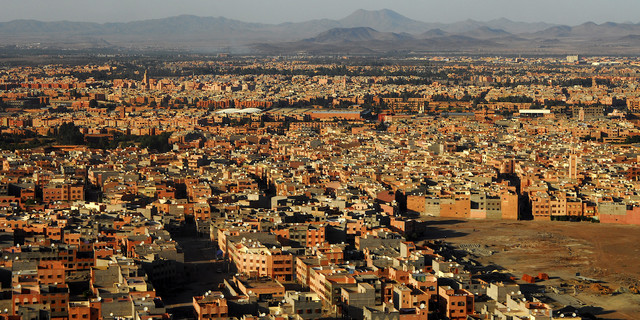
The city of Marrakech in Morocco
At a workshop on “Harmonised Regional Framework for Implementation, Monitoring and Reporting of the New Urban Agenda” on Thursday, November 22, 2018 at the ongoing Africities 8 Summit in Marrakech, Morocco, participants also raised concern about the building the capacity of local communities and of promoting the involvement of all stakeholders in the creation of new integrated and spatially complementary cities.
While recalling the unified African position revealed at the 3rd UN Congress on Housing and Sustainable Urban Development on the implementation of a New Urban Agenda in Africa, they stressed that the implementation of this framework must focus on the management of urban and human development, while considering the expectations of Africans in terms of identity and integration as well as the preservation of the environment.
Participants highlighted the role of local governments in urban management, calling on central governments to provide them with the necessary means and to use the skills of African managers who have a clear vision for Africa’s urban future.
In this context, the president of the Regional Council of Tahoua, Ilo Adamou, laid emphasis on regional planning, urging the regional councils to elaborate a road-map or regional development plans to come up with a clear vision of economic, cultural, social and scientific development.
According to him, these documents make it possible to identify issues relating to urban planning with the aim of implementing the New Urban Agenda.
Lilia Hachem Naass, director of the North Africa office of the United Nations Economic Commission for Africa, said the ECA has developed an implementation framework that helps local officials and mayors to turn the contents of the agenda into reality while focusing on their priorities.
Other speakers discussed themes related to the challenges facing African cities and the importance of improving the living conditions of the population.
Africities 8 has “The Transition to Sustainable Cities and Territories: The Role of Territorial Communities of Africa” as its theme.
The summit is addressing the fundamental issues raised by Africa’s Vision 2063 and takes part in the debate of the African Union Commission for its implementation.
No less than 5,000 participants and 3,000 elected representatives are attending this summit representing cities and local government councils in Africa, as well as their partners from other regions of the world, namely ministers in charge of local government, housing, urban development and civil service.