Home Blog Page 1748

‘Geography, a strong foundation of human environment’

0

The President, Association of Nigerian Geographers (ANG) Prof. Kayode Oyesiku, has urged federal and state governments to pay close attention to geography being a strong foundation of human environment.
Association of Nigerian Geographers
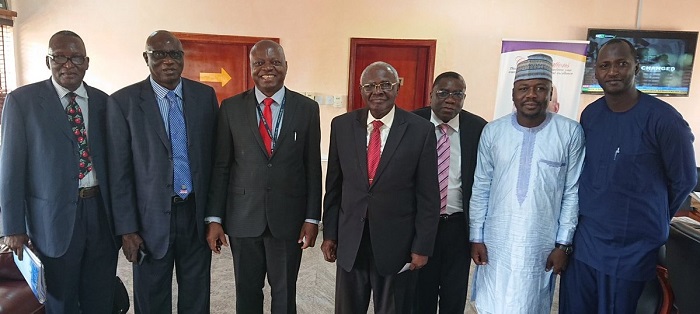
Vice Chancellor of University of Ibadan, Professor Abel Idowu Olayinka; first African President of the International Geographical Union, Prof Akin Mabogunje, and other Council members of the Association of Nigerian Geographers (ANG) during the 59th ANG Annual Conference at the University of Ibadan

Oyesiku made the call on Monday, November 5, 2018 during the opening ceremony of the 59th annual conference of the association at the University of Ibadan, Ibadan, Oyo State.

The conference has “Geography and Sustainable National Development” as its theme.

According to him, lack of understanding of strategic importance of geography has led to its relegation to the background of national discuss.

He said that the association had made significant stride in the development of the country, particularly in population growth and its effect on the spatial spread and development of regions.

“Geographers in this country have significantly been the pioneer of urban development, regional planning and more importantly, supporting the development of the quantitative tools for spatial analysis.

“Also, it has contributed to digital presentation of information for commerce, business, safety, and firefighting and refuse management,’’ he said.

He said that the major challenges were the ability to highlight the extent to which the subject of geography and how geographers could make more meaningful contributions to the development of the country.

“We should not forget to also sustain the drive toward getting back geography as a subject that has been sandwiched within some part of social studies at secondary school level,” he said.

Oyesiku said that while other countries were investing in the development of geography as a course from elementary schools, Nigeria had opted to relegate the discipline as a subject to the background.

“We are becoming a country producing youths and elders without knowledge of basic locations,” he said.

He decried the fact that many youths could not give answers to some of the questions on the exact locations of some states due to poor knowledge of geography during job interviews.

“We cannot go on like this as the development of our youths and future generations are very unsustainable hence geographers must be partners in the sustainable development of the country,” he said.

Malam Kabir Yari of the UN-Habitat said the theme was relevant and appropriate in the light of global and national attention which was currently focusing on the achievement of the Sustainable Development Goals (SDGs) through the Global 2030 Agenda.

Yari, a town planner, said that there was a four-fold increase of the national population within a period of 50 years, according to the National Report on Habitat 111, which led to increased demand and consumption of resources with adverse impacts on the urban environment.

“The SDGs are a universal blueprint to achieve a better and more sustainable future for all.

“They addressed global challenges including those related to poverty, inequality, climate change, environmental degradation, prosperity, peace and justice,’’ he said.

The SDGs emphasises the integrated nature of components of sustainable development namely economic, social and environmental.

Chairman of the occasion, Prof. Akin Mabogunje, said that the relationship between geography and the SDGs was based solely on the economic wellbeing of Nigeria and the world at large.

He urged geographers to acquire knowledge in public administration to achieve sustainable development.

Mabogunje decried that an important subject as geography, which had greatly affected the development process and population growth of the country, should not be removed from the nation’s educational curriculum.

He recommended that the subject be made compulsory both at the primary and secondary levels to build more geographers that would be able to tackle future environmental issues, especially during disasters.

A cash price of N100, 000 was given to Zamani College, Kaduna by the association for producing Miss Awubaka Zenab as the winner of a geography school quiz competition it organised.
About 13.1m people face severe hunger in Congo, says report

0

About 13.1 million people in the Democratic Republic of Congo (DRC) are estimated to face severe food insecurity due to ongoing conflict in the country’s Central and East regions, according to report on Monday, November 5, 2018.

Joseph Kabila
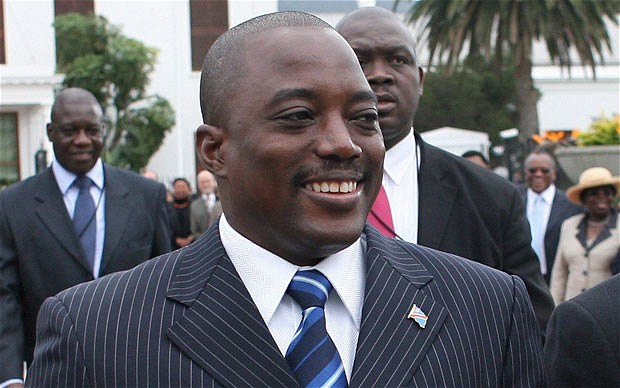
Joseph Kabila, President, Democratic Republic of the Congo

The report was published by the Global Institute for Food Security (GIFS).

The number almost doubled over that of 2017 from 7.7 million food insecure people in the regions, according to the IPC Global Support Unit, which provides data to global organisations such as the United Nations World Food Programme, Oxfam and Care.

Some six million Congolese children are malnourished, according to the IPC report.

Most affected are the Eastern provinces of Ituri and Tanganyika, where militias and rebels are active, as well as the Central region of Kasai, where ethnic conflict has hampered farming activities, the report said.

In March, the UN temporarily declared the situation in Central and Eastern Congo one of the most serious humanitarian crises in the world, an assessment the government of President Joseph Kabila rejected.

Health and environment: Shaping a better future in Africa

0

Aiming to identify emerging environmental threats to people’s health and agree on a strategic action plan for the region, African Ministers of health and environment will meet for the Third Interministerial Conference on Health and Environment from November 6 to 9, 2018 in Libreville, Gabon. The conference, jointly organised by the World Health Organisation (WHO) and UN Environment, will discuss how to turn health and environmental policies into action.

Dr. Matshidiso Moeti
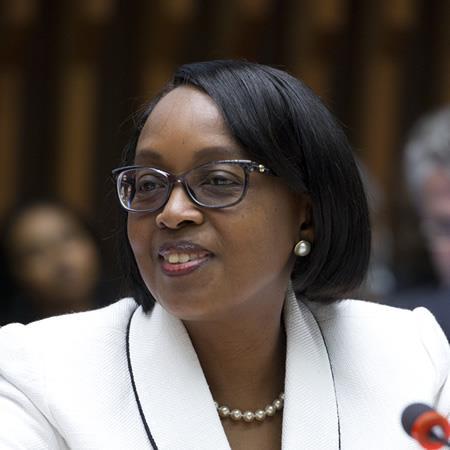
Dr. Matshidiso Moeti, the World Health Organisation (WHO) Regional Director for Africa. Photo credit: pbs.twimg.com

In the African region, 23% of deaths are linked to the environment. This is the highest for any region in the world on a per capita basis (deaths per 100,000). While the continent has long been plagued by problems relating to access to safe drinking water, inadequate sanitation and poor infrastructure, pollution, new environmental threats have emerged, including climate change and rapid and unplanned urbanisation.

“From the air we breathe to the water we drink, to the places we live and work the environment is intimately linked to our health,” said Dr Matshidiso Moeti, WHO’s Regional Director for Africa. “Unfortunately for millions of Africans, the environment can make them sick and even kill them. With climate change this is likely to only get worse. We must urgently turn this situation around.”

Nearly 300 delegates including Health, Environment and Finance Ministers, as well as representatives from regional political and economic organisations, big cities, multilateral agencies and experts from 54 countries in Africa will participate in the conference.

The conference comes a decade after the historic endorsement of the Libreville Declaration by the African Ministers of Health and Environment, which committed governments to take the required measures to stimulate synergies between health, environment and other relevant sectors. It also comes ahead of the 2018 UN Biodiversity Conference to be held on African soil in Egypt this month and will discuss how to mainstream biodiversity into health sector, among other sectors.

“Tackling the interlinkages between environment and human health can provide a common platform and multiplier effect to sustain progress across many of the Sustainable Development Goals and Africa’s Agenda 2063 in a more cost-effective and beneficial manner,” said Dr. Juliette Biao Koudenoukpo, UN Environment, Africa Office.

“By working together, the health and environment sectors have the potential to design mutually reinforcing policies and strategies and turning them into concrete actions,” she added.

The conference consists of an expert meeting from 6November 6 to 7 2018 and a ministerial segment to be held from November 8 to 9.

AU’s endorsement of gene drive mosquitoes tagged ‘misguided’

0

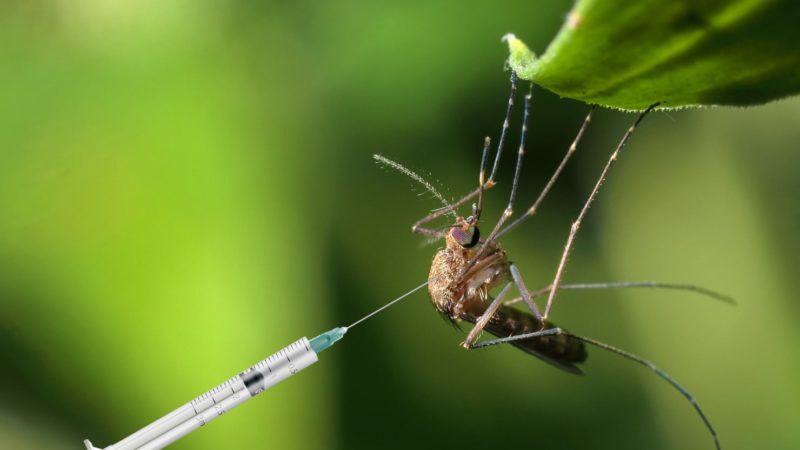
The African Union (AU) is said to be paving the way for the entry of the latest and most controversial form of genetic engineering – gene drive technologies. In July 2018 the AU released a report endorsing the development of the technology as well as “enabling legislation” for their deployment across its member states. The African Centre for Biodiversity (ACB), has released a critique of the AU report, which the ACB says is hopelessly premature and merely repeats unsubstantiated claims made by gene drive developers

GM mosquitoes
The GM mosquitoe

Gene drives are an extreme form of genetic modification (GM), designed to alter the genetics of an entire population, with the potential to eradicate entire mosquito populations. Such a technology has stirred intense public, policy, legal and ethical debates about the potential impacts on the environment and health.

Executive director of the ACB, Mariam Mayet, warns, “This technology is in its infancy; the long-term impacts on the mosquito populations (the disease vectors) and human health, as well as their potential ecological impacts are completely unknown. It is also clear that once released, the technology cannot be recalled due to its aggressive nature, which overrides natural inheritance patterns. Of course, mosquitoes will also not respect borders.”


Gene drives – a technology in its infancy

Their potential for eradicating malaria, a serious health challenge in Africa, remains highly speculative. Current evidence demonstrating their potential as a sound tool for malaria eradication is yet to be demonstrated, with some developers admitting that they are likely to face technical problems that may well hinder their effectivity.

Despite the lack of underlying data demonstrating their potential efficacy, grand claims of gene drives being a “game-changer” are nevertheless being made by developers and supported by AU statements that they present “realistic options for effective disease control” and that “potential benefits for African countries will almost certainly be extensive”.


GM mosquitoes to be released in Burkina Faso

Such claims have already opened the door for gene drive research groups such as the Target Malaria project, funded by the Gates Foundation and the Open Philanthropy project, to release other forms of genetically modified mosquitoes in Burkina Faso, due to be trialled in the very near future – the first ever GM animal on the continent – showing callous disregard for its people, the environment or the concerns of many scientists about potentially harmful impacts. The GM mosquitoes have no public health benefit and are meant to ‘test’ biosafety systems and prepare the way for the future release of gene drive mosquitoes. In the meanwhile, research is already taking place that pays volunteers to expose themselves to wild-type mosquitoes for paltry sums (around $4.20 per night for six hours) increasing risk of malaria exposure to themselves and others.


Colonial medicine and corporate profits

The hype and media pressure surrounding gene drives as the latest techno-fix fails to consider lessons from history. As witnessed with previous malaria eradication programs, while sometimes effective in significantly reducing mosquito populations, they did not always translate to reduced disease burden. Further, numerous African successes in malaria reductions were largely ephemeral, in some cases even resulting in surges of cases amongst vulnerable populations that had lost acquired immunity to the disease.

According to Mayet, “The Target Malaria project represents the latest version of a top-down approach rooted in a bygone era of colonial medicine that laid the foundations for global health policies. It yet again focuses narrowly on technologies, while strategies that focus on wider determinants of health such as investments in national health services are being neglected, despite their critical influence in past global successes.”

It also appears that a public health application is being specifically chosen as the first potential deployment of gene drives despite wider corporate interest in the technology, in attempts to gain public and government support. Sabrina Masinjila, researcher and advocacy officer with the ACB based in Dar es Salaam said, “Gene drives are being targeted for Africa before anywhere else in the world. Despite this being on the face of it, a ‘philanthropic’ venture to combat a serious public health issue, profits from future gene drive applications, especially in agriculture, may well come off the backs of human experiments that first risked the health of the people of Burkina Faso.”


No public debate on irreversible technology

The AU report endorsing gene drive applied research and potential deployment for malaria eradication has emerged in the absence of any agreed international governance standards for the release of the mosquitoes into the environment. The AU has also been deaf to any form of civil society concerns or debate, even though this technology cannot be recalled once it is deployed.

In 2016 over 170 international civil society organisations called for a moratorium on gene drive releases, including applied research such as open field trial releases, until there is further understanding of the potential risks and technical issues. Concerns remain regarding the inability to regulate transboundary movement; the inability to contain gene drive organisms following both field trial and commercial releases; issues surrounding monitoring, assessment and liability; and the need for free, prior and informed consent, particularly with regards to lands and territories of indigenous and local communities as enshrined in the UN Declaration on the Rights of Indigenous Peoples.

The ACB supports this call for a moratorium and strongly urges African governments to do the same at the upcoming 14th meeting of the Conference of the Parties to the Convention on Biological Diversity due to take place in Sharm El-Sheikh, Egypt from November 17 to 29, 2018.

Africa advised to deploy space technology to reduce poverty

0

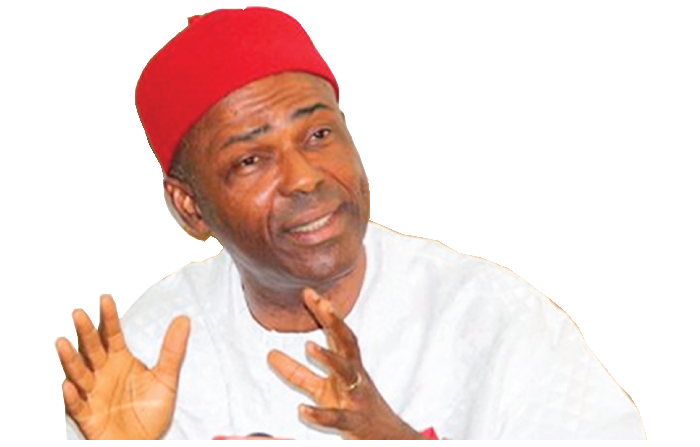
The Minister of Science and Technology, Dr Ogbonnaya Onu, has advised African countries to deploy space technology in reducing poverty to strengthen sustainable development.

Dr. Ogbonnaya Onu
Dr. Ogbonnaya Onu, Minister of Science and Technology

Onu gave the advice at the opening of the 7th African Leadership Conference on Space Science and Technology on Monday, November 5, 2018 in Abuja with the theme “Implementation of the African Space and Strategy.”

Represented by Mr Bitrus Bako, the Permanent Secretary, Ministry of Science and Technology, Onu said that the focus of the conference was on progress of various Africa United Front programme in space science and technology.

He said that such effort would make Africa to improve productivity and self-reliance, noting that space had an increasing role in Africa’s development paradigm “because Africa would be in a strategic position to negotiate better offers.”

He explained that Africa would achieve all by itself, given the level of development and resources at the disposal of each member nation, stressing that “with population of over 1.2 billion based on UN estimate, Africa is 16.6 per cent of the total world population.

“Africa is thus the second largest and second most populated continent on earth.

“Space Science and Technology should therefore be made to contribute significantly to the reduction of poverty and enhancement of her prosperity, especially through communication satellite development.

“Regarding the theme of the conference, Africa should commence implementation of African Space Policy with the necessary support from institutions, industries and academia, to realise the overall objectives.

“I urge participants to come up with robust, quality deliberations and sound recommendations that can lead to the quickest implementation of the African Space Policy and Strategy for our collective benefits.”

Prof. Ajayi Boroffice, the Chairman, Senate Committee on Science and Technology, said Africa ought to deepen efforts toward actualising set goals in space science and technology that would translate into critical development for overall benefits of Africans.

He said “my appeal to everyone of us is to continue to do the best we can for the promotion of Space Science and Technology for growth and sustainable African continent.

“I hope the crop of intellectuals here will do justice to the theme and outline positive drives and well-defined strategies for implementation of a formidable agenda that will transform space programme in Africa.”

Prof. Seidu Muhammed, the Director-General, National Space Research and Development Agency (NASDA), stressed the need for Africa to unite as a continent in application of space technology.

According to him, resolving to cooperate and work as a united Africa is the only way to collectively pursue aspirations to improve the quality of lives of African people.

He said: “We are delighted to note with all sense of humility, the sincere commitment and conspicuous progress made in the application of space science and technology in Africa.

“We are especially delighted over progress in the areas of Remote Sensing, Disaster Management, Security, Tele-medicine and Tele-education, Navigation, Maritime, and Agriculture, among others.

“It is very evident that Africa as a continent is in a strategic direction capable of moving the continent to the next level in the pursuit and application of space science and technology.”

By Gbariel Agbeja

UN, GEF seek to incorporate energy, resource efficiency in industries

0

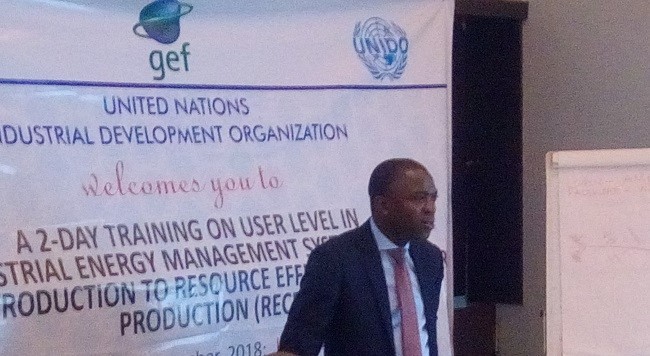
In the light of energy and related variables that are posing challenges to industrial development in the country, the United Nations Industrial Development Organisation (UNIDO) has taken up an initiative to address the unsavoury situation.

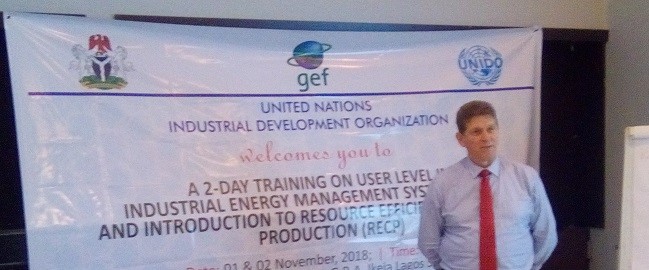
Alf Hartzenburg
Alf Hartzenburg, UNIDO consultant

The project, which will effectively commence next year, entails the development of energy management systems as well as resource efficiency and cleaner production for Nigerian industries.

Prior to project commencement, UNIDO has started building an expert base for the initiative, which the UN body is undertaking in conjunction with the Global Environment Facility (GEF) and the Federal Government.

The project is titled: “Improving Nigeria’s Industrial Energy Performance (IEP) and Resource Efficiency and Cleaner Production (RECP) through programmatic approaches and the promotion of innovative clean technology solutions.”

At a workshop in Lagos from November 1 to 2, 2018, participants were trained on the two major components of the project: “Energy management systems” and “Promoting resource efficiency in small and medium sized enterprises – PRE-SME.”

On the first day, Alf Hartzenburg, a UNIDO consultant, took the audience through the rudiments of energy management systems (EnMS), which he described as ways by which individuals or organisations propose to manage their consumption of energy.

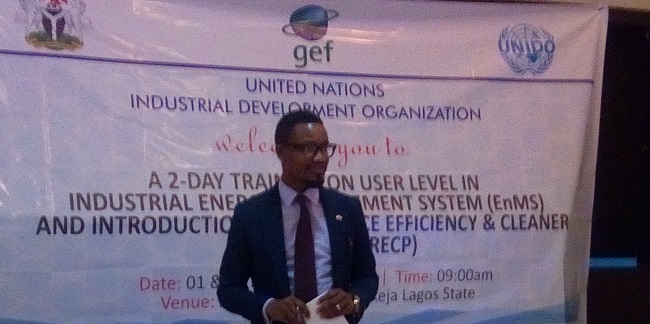
Jesse Ojobor
Jesse Ojobor, UNIDO RECP expert

According to him, EnMS can be achieved by: behaviour change among all employess and management, objective use of data to show performance, technical improvement, as well as low cost operation and maintenance of existing equipment.

On the second day, Jesse Ojobor, UNIDO RECP expert, explored issues related to promoting resource efficiency, which he described as the maximising of the supply of money, materials, staff, and other assets that can be drawn on by a person or organisation to function effectively, with minimum wasted resource expenses.

He describes it as process optimisation to limit consumption of energy, water and materials and output of waste products.

Commenting on the initiative, the UNIDO Regional Office Hub Environment Expert, Oluyomi Banjo, said: “This is a project that we will be implementing, and it will officially start next year. It entails the development of energy management systems for Nigerian industries, which will contain industrial energy efficiency, energy optimisation initiatives; and the project will be looking at issues related to resource efficiency and cleaner productions for Nigerian industries.

Oluyomi Banjo
UNIDO Regional Office Hub Environment Expert, Oluyomi Banjo

“In the course of the project, we will be developing an expert base, wherein we will be training Nigerian individuals and training policymakers. It is very important that Nigeria develops an expert base, and these are the experts that will go into the industries and these experts also have the tendency of developing their own businesses.

“This has been done in many countries and it is time for Nigeria to also benefit from such services, and individuals will also benefit by capacities being built and making an income for themselves.”

On what informed the project, Banjo added: “UNIDO has been implementing industrial energy efficiency projects in over 18 countries and these projects have been effective and very successful. Also, we’ve been implementing resource efficiency and cleaner production projects, and we have established National Cleaner Production Centres in more than 60 countries.

“Some of these countries have recorded savings, which have gone into their operations as profit, some have gone as dividends to shareholders, while some of the savings have been reinvested into the company. So, these industries are in most cases able to prove to their management and to their shareholders that this initiative is not only making their operations better, but is also saving cost, expenses on operations and is also improving the quality of production because, at the end of the day, there are also standards issues associated with this.

“We have been discussing with the Nigerian government about this for quite some time. Now, the government has finally recognised that this is good for the Nigeria, and that the country should also benefit from it.”

Man has within 48 years wiped out 60% of wildlife – WWF

0

The World Wide Fund for Nature (WWF) has found, in a new major report, that wildlife has declined 60 per cent since 1970 due to human causes.

snow leopard
The endangered snow leopard. Photo credit: wikipedia

The Living Planet Report 2018 has highlighted the devastating anthropogenic effects on wildlife and how urgent action needs to be taken to ensure this trend does not continue.

Biodiversity is the foundation of our food and security. Medical treatments to food production, biodiversity is critical to society and people’s well-being.

The world’s economic activity is also reliant on biodiversity, it is estimated that globally nature provides services worth around $125 trillion a year.

Mike Barrett, executive director of science and conservation at WWF, said: “We are sleepwalking towards the edge of a cliff. If there was a 60% decline in the human population, that would be equivalent to emptying North America, South America, Africa, Europe, China and Oceania. That is the scale of what we have done.”

The report also focuses on marine and freshwater ecosystems and the role plastic pollution has had in destroying them. They noted how humans are consuming the world’s resources faster than nature can replenish them, creating more waste than our planet can absorb.

This has resulted in over six billion tonnes of fish and invertebrates being taken from the world’s oceans since 1950. The Living Planet Index also shows that there has been an 83 per cent decline in freshwater species since 1970.

The report looked at the role deforestation has in the decline of biodiversity. A recent study of more than 19,000 species of birds, amphibians and mammals found that deforestation significantly increased the chance of a species being listed as threatened or exhibiting declining populations.

Find the full report here.

Courtesy: Climate Action

Curbing air pollution can address climate change, protect health

0

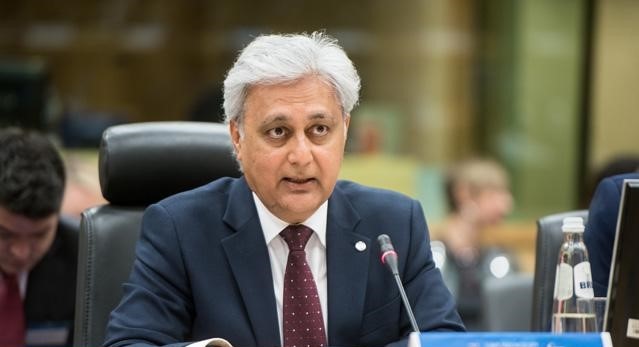
UN Climate Change (UNFCCC) Deputy Executive Secretary, Ovais Sarmad, on Thursday, November 1, 2018  underlined the interlinkages between climate change and air pollution at the First World Health Organisation (WHO) Global Conference on “Air Pollution and Health: Improving Air Quality, Combatting Climate Change – Saving Lives” that held in Geneva, Switzerland. Ovais Sarmad urged participants to impress it upon their respective government to finalise the Paris Agreement Work Programme at the next UN Climate Change Conference in Katowice, Poland, in December.

Ovais Sarmad
Ovais Sarmad

The partnership between the WHO and UN Climate Change is very strong and we are grateful to the Director General for bringing the focus to the linkages between health and climate change and this conference is all about that.

Let me share with you the context: Never has humanity been this mobile, this connected, this socially aware, or had the tools to affect change like we do right now.

This connectivity has helped people around the world address many big, interlinked challenges.

For example, life expectancy has increased more than 20 years in the past half century.

Death rates in children under five have decreased.

And the total number of people living in extreme poverty has fallen by 700 million people over the past 30 years.

While we’ve accomplished so much in many areas, we’re doing less well protecting our environment – much less.

Many have forgotten that the health of humankind is intricately connected to the health of the environment.

Climate change is intricately tied to air quality.

For many years, air pollution was the only tangible connection people had with climate change. They knew climate change had something to do with greenhouse gas emissions, and exhaust from car emissions – which was something they could see – was the first connection they made.

Of course, emissions do lead to air pollution and climate change.

This is a connection that is easy to understand and, thus, to motivate people. Reduce air pollution and we can address climate change, and vice versa, reduce carbon emissions and address the environmental determinants of health.

Of course, it’s more nuanced than that. Air pollution isn’t restricted to emissions from tailpipes, and climate change contributes to several serious health challenges throughout the world, ranging from malnutrition to nutrient-deficient crops to water safety.

UN Climate Change will continue to work in all possible ways with the WHO and other organisations and partners to address air pollution, climate change impacts, and improve human health conditions in all parts of the world and societies.

As many of you know, the COP has become a major UN conference. This year, COP24 is going to be held in Poland.

Last year the Director General of the WHO was at the COP where we signed an MOU. He was asked by the Fijian President of COP23 to produce a report on health and climate change.

I am very pleased to note that the report has been prepared and will be released at this year’s COP and we are very much looking forward to it. I think it will make a very strong contribution to the climate change discussion by informing the Parties.

The 24th Conference of the Parties to the United Nations Framework Convention on Climate Change, COP24 that will be in Katowice, this December. At COP24 we face a significant challenge, and that is to get nations to finalise the Paris Agreement Work Programme. Parties must address several issues, but this is the most important one.

The reason it’s important is because it sets the guidelines for how the Paris Agreement will work. And that is important because it ensures the true potential of Paris can be unleashed – including ramping up climate action so that we limit climate change to 1.5C.

The recent IPCC’s Special Report was yet another reminder why that number is important. But here’s why it’s important to the work all of you are doing and your engagement.

It’s important because climate change is a threat multiplier. It takes almost every single challenge humanity faces and makes it worse. This includes air quality.

On the other hand, address climate change and we can tackle those issues in a much more positive way.

It means involving public and private institutions – we know governments alone cannot solve climate change. We need climate action from all people at all levels in all sectors.

One of the most important goals is to get all governments, people and businesses to make the immediate transition from fossil fuels to more renewable forms of energy.

This contributes to our climate goals and it means boosting the health of our overall environment and the quality of our food and water.

Tthe most important of our tasks – and directly connected to your work – is finalising the Paris Agreement Work Programme.

That’s why today I’m urging you to use all influence at your disposal to send a message to your government representatives or those in your organisation.

Tell them we have an extremely small window of opportunity left to address climate change.

Tell them that it’s time to get the work done that we all committed to do.

Tell them that it’s not just of economic importance, but of human importance. Our health – the health of our families and our children and future generations – depends on it.

Like for all of you, it is unpleasant for me to look out the window at the smog that envelops so many of our great cities in a poisonous grey shroud.

While it’s unpleasant to see, it’s doing worse to our bodies. So many people are suffering because of the negative impact of climate change.

Let’s focus our attention on the things we can do right now. At the top of that list is to accomplish the Paris Agreement Work Programme at COP24.

Success at COP24 means finalising the Paris Agreement Work Programme. That will include transparency of action, measuring, monitoring and reporting on actions.

A completed Work Programme will not only provide guidelines for the Paris Agreement, but unleash its full potential. More than that, it sends a signal of trust that nations are serious about addressing climate change.

We need progress on several other issues as well, including commitments to boost global climate action and ensuring nations fulfill their financial pledges to support the climate regime.

All of this will help us tackle issues such as air pollution and make significant progress on the SDGs. We don’t have much time to lose. Urgent action at all levels is needed.

UNFCCC is a strong and willing partner and we are pleased to be here together with WHO and other partners to provide any support we can – beyond this conference.

Geographers take stock, explore sustainable national development

0

The Association of Nigeria Geographers (ANG) says it is set to host geographers and delegates from around the world at its 2018 annual conference scheduled for Nov. 5 to Nov. 9.

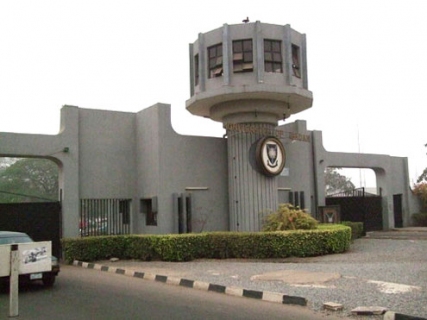
University of Ibadan
University of Ibadan, Ibadan, Oyo State, is hosting the 2018 annual conference of the Association of Nigeria Geographers (ANG)

The event is to hold at the Department of Geography, Faculty of the Social Sciences, University of Ibadan, Oyo State.

A statement issued by the Chairman, Local Organising Committee of the conference and Head of Department of Geography, University of Ibadan, Dr Dickson Ajayi, on Sunday in Abuja, said the theme of the conference is: “Geography and Sustainable National Development”.

Ajayi noted that the conference was unique because, according to him, it coincided with the 70th Anniversary of the establishment of the institution, and the Department of Geography which is the first in Nigeria.

“This is a landmark occasion for the community of geographers to showcase their achievement and contributions to national development,” Ajayi said.

He said that the conference would engage delegates through parallel technical sessions, secondary schools quiz competition, and networking.

The highlight of the event includes presentations by Malam Kabir Yari, UN-Habitat; Prof. Akin Mabogunje, the first African President of the International Geographical Union; and Prof. Sani Mashi, Director-General, Nigerian Meteorological Agency (NIMET).

Others are: Prof. Demola Omojola from UNILAG on Remote Sensing and the Sustainable Development Goals; and Prof Emmanuel Oladipo, on International Development Agencies and the Sustainable Development Goals.

Also to make presentations are: Mr Soji Taiwo, on Sustainable Development Agencies and the Sustainable Development Goals as well as Dr Wale Oduwole.

By Emanuel Oloniruha

Italian storms claim 29 lives, 14m trees

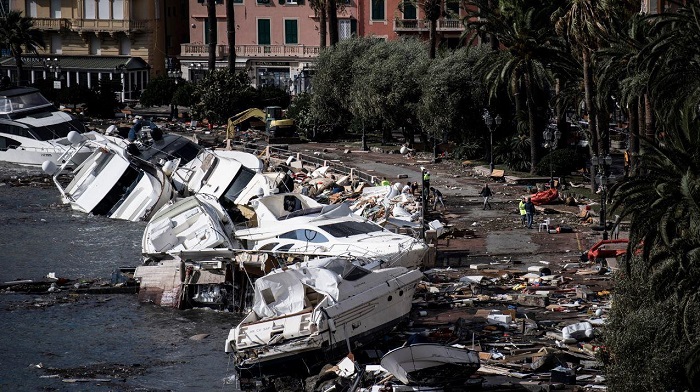
No fewer than 12 people have been killed by severe weather on the island of Sicily, bringing the overall death toll from the storms sweeping Italy to 29, officials said on Sunday, November 4, 2018.

Italy storm
A devastated shoreline after the storm

Torrential rain triggering landslides and flood waters led to the death of 10 people in the region around Palermo, a spokesman for the Sicilian capital’s Prefecture said on Sunday.

“There are still some people missing,” he added.

Two more fatalities occurred in the region around the Sicilian town of Agrigento when the car they were traveling in was hit by a landslide, another official said.

A German tourist died on Friday when hit by lightning on the island of Sardinia while another person struck by lightning several days ago died in hospital, Italy’s Civil Protection Agency said on Saturday.

Many of the victims to date have been killed by falling trees.

Coldiretti, the association of Italian agricultural companies, said in a statement that gales had destroyed around 14 million trees, many in the far north.

“We’ll need at least a century to return to normality,’’ it said.

Areas from the far northeast to Sicily in the southwest have been affected.

The worst damage is in the northern regions of Trentino and Veneto – the region around Venice – where villages and roads have been cut off by landslides.

Many of Venice’s squares and walkways have been submerged in the highest floods the canal city has seen in a decade.

The governor of Veneto, Luca Zaia, said the region’s storm damage amounted to at least €1 billion ($1.1 billion).

Angelo Borrelli, Head of the Civil Protection Agency, said Veneto had seen winds of up to 180 kph (112 mph) and that the situation there was “apocalyptic”.