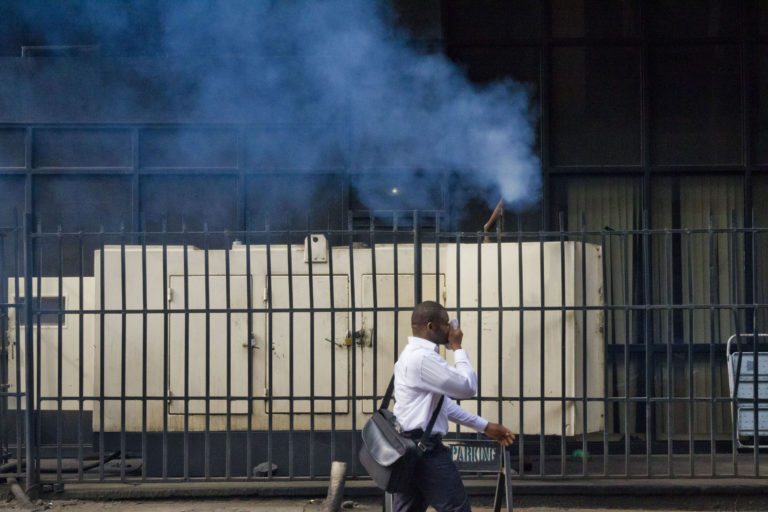
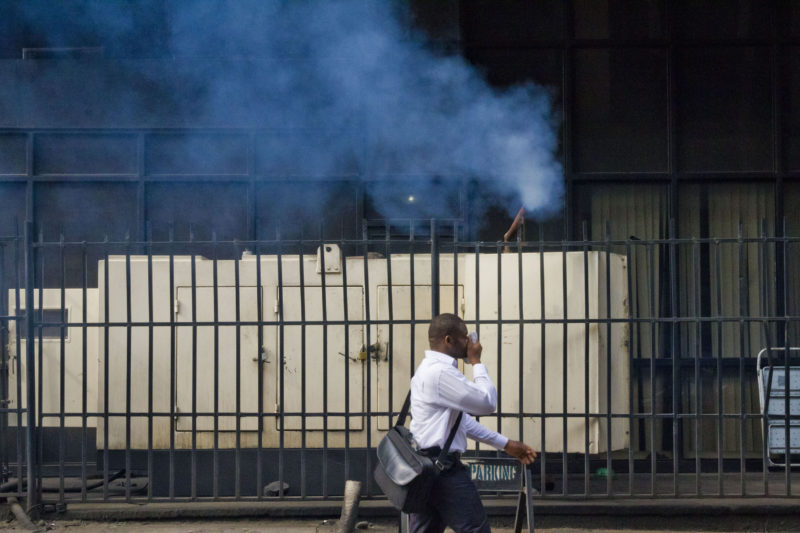
The World Health Organisation (WHO) on Wednesday, December 5, 2018 said the lives of 1 million people around the world could be saved each year by 2050 if the goals for reducing air pollution in the Paris accord were adhered to.
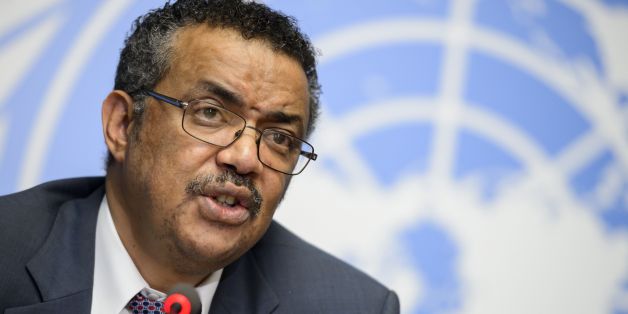
Dr Tedros Adhanom Ghebreyesus, Director-General of the World Health Organisation (WHO). Photo credit: AFP / FABRICE COFFRINI / Getty Images
The report, released at the UN Climate Change Conference (COP24) in Katowice, Poland, underlined the effects that pollution-producing human activities had on human health and offered possible solutions for policy makers around the world to consider.
According to WHO’s Head of Public Health, Maria Neira, the true cost of climate change is felt in our hospitals and in our lungs.
“When health is taken into account, climate change mitigation is an opportunity, not a cost,’’ Neira said
According to the WHO, the main driver of climate change, the burning of fossil fuels, is also a major contributor to air pollution, which causes 7 million deaths around the world annually and costs 5.1 trillion dollars in welfare losses.
“In the 15 countries that emit the most greenhouse gases, the health impact of air pollution costs more than 4 per cent of their GDP,’’ the WHO estimated.
Representatives from just under 200 states have gathered in Katowice to focus on fleshing out the rules for financing and implementing the 2015 Paris Agreement.
Report says the pact provides an outline for countries working together to limit the earth’s warming to between 1.5 and 2 degrees Celsius.
The Lagos State Government has urged residents to halt the destruction of soil in the state, for a better and safer environment.
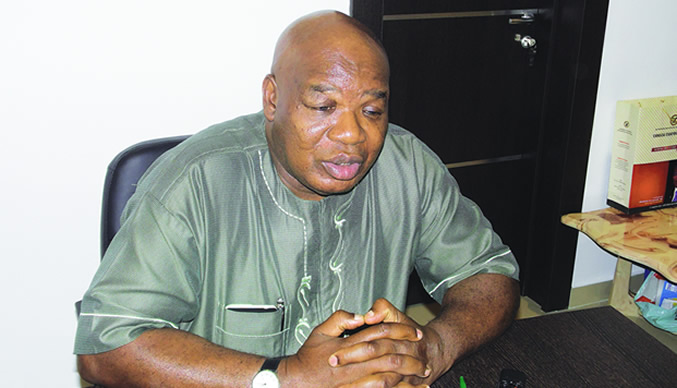
The Lagos State Commissioner for Environment, Mr Babatunde Durosimi-Etti
The Commissioner for the Environment, Mr Babatunde Durosinmi-Etti, said during the commemoration of the 2018 World Soil Day in Ikeja on Wednesday, December 5, 2018 that there was the need to find lasting solution to soil pollution.
Durosinmi-Etti said that pollution was a major soil threat and a serious global concern, hence, Lagosians should be mindful of their impact on the environment.
He said that residents should make the protection of the environment a priority, bearing in mind increasing challenges arising from soil pollution.
According to him, it is important to raise awareness and seek solution to the increasing challenges raised by polluting the soil.
“The State Government could not have found a better opportunity to do this than the World Soil Day with the theme: “Be the Solution to Soil Pollution”.
“Interestingly, this year’s theme is, on one hand, aimed at raising awareness on the need to sustain healthy ecosystems and human well-being by addressing the increasing challenges in soil management.
“On the other hand, it is also intended to raise the profile of healthy soil by encouraging organisations, communities and individuals around the world to give attention to the pressing issues affecting soils.
“As in other spheres, Lagos State has taken the lead by blazing the trail for Nigeria with the maiden celebration of this Day on December 5th, 2016,” he said.
Durosinmi-Etti said that the event marked the 3rd consecutive edition of the World Soil Day observance in Lagos state, which demonstrated the commitment to using global advocacy platforms to encourage friendly behaviour towards the environment.
He said that communities and individuals must be watchful and give the deserved attention to sources of soil pollution.
According to him, such sources include agrochemicals, petroleum-derived products, chemicals used in or produced as byproducts of industrial activities and wastes such as domestic, livestock and municipal wastes (including wastewater).
“These chemicals are released to the environment accidentally through oil spill or leachate from landfills.
“They are sometimes released intentionally as is the case with the use of fertilizers and pesticides, irrigation with untreated wastewater or land application of sewage sludge.
“Soil pollution also results from mining activities, transportation, poor waste disposal, flood and erosion among other activities impacting negatively on soils,” he said.
The Commissioner said that soil pollution, which often could not be visually perceived, was a hidden danger that jeopardised valuable soil ecosystem services.
He said that the valuable soil ecosystem services include climate regulation, nutrient cycling, food production, water purification, food quality and habitat for organisms, among others.
“Soil pollutants directly harm soil microorganisms and larger soil-dwelling organisms, thereby affecting soil biodiversity and the services provided by the affected organisms.
On its impact on humans, Durosinmi-Etti said that soil pollution was capable of directly affecting human health through contamination from heavy metals such as arsenic, lead and cadmium.
He said that food security would be compromised, as crops produced from polluted soils became unsafe for both human and animal consumption.
The commissioner said that to protect the soil, everyone should desist from indiscriminate disposal of spent oil, uncontrolled use of agrochemicals and improper disposal of urban and industrial wastes.
He said that the level of adherence to the advice would determine the quality of the soil, water and many other elements critical to human existence.
December 5 of every year has been designated by the United Nations as the World Soil Day, following the adoption of the 68th UN General Assembly Resolution in 2013.
The National Emergency Management Agency (NEMA) has called on residents of the southeast to imbibe the culture of tree planting to check windstorm and gully erosion in the zone.
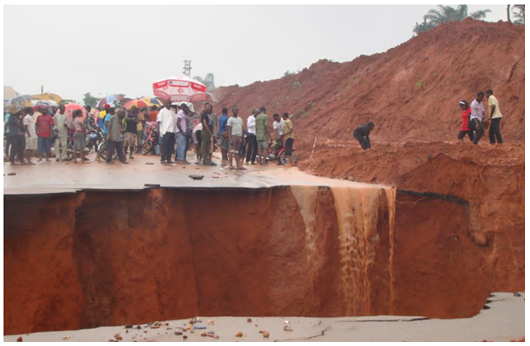
Gully erosion in southeast Nigeria
Mr Walson Ibarakumo, NEMA South-East Zonal Coordinator, gave the advice in an interview with the News Agency of Nigeria (NAN) in Enugu, Enugu State on Wednesday, December 5, 2018.
He advised the residents to plant trees around their homes, public buildings such as hospitals, schools, worship centres and markets.
He said that the measure would help to naturally check impacts of erosion currently ravaging different communities in the zone.
He said that trees played significant roles in balancing the environment and checking other natural and man-made environmental disasters.
According to him, tree planting does not attract so much financial cost and burden to the people, except at the initial stage of grooming.
“NEMA has gone from reactionary emergency response strategy to pro-active emergency response strategy and we want Nigerians to go along with the agency in this direction.
“I have spent time advocating and educating Nigerians, especially southeast residents in each community I had visited, on the tremendous good trees can do to them and their environment.
“Apart from providing us with shade for coolness and relaxation as well as edibles, trees also help to balance activities of nature around us.
“When you plant medium-size trees around your home or public buildings, you are securing such buildings from windstorm and erosion menace.
“The trees will naturally take up and break the force of a windstorm, which will ensure that the deadly wind does not hit at your home or building directly.
“Likewise, the roots of the trees help to hold soil together, especially areas with weak or in-adhesive clay soil type, thus checking erosion,’’ the NEMA boss said.
He however cautioned that huge and very tall trees near buildings posing risks to human lives and properties should be cut down.
Ibarakumo advised that only shrubs and medium-size tress should be planted as erosion-control measures.
NEMA recently distributed some relief materials to 1,280 victims of windstorm at Agbogugu community in Awgu Local Government Area of Enugu State.
The deepest part of the world’s ocean and its hadal bottom waters have been polluted by microplastics, according to a study published in Geochemical Perspectives Letters on Wednesday, December 5, 2018.
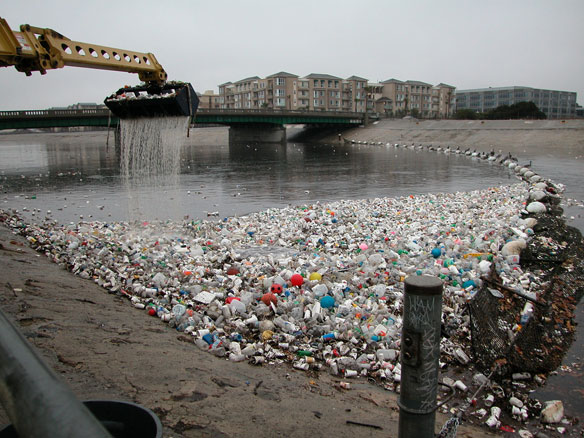
Plastic pollution
Millions of metric tonnes of plastics are produced annually and transported from land to the oceans.
Finding the fate of the plastic debris will help define the impacts of plastic pollution in the ocean.
The researchers from the Institute of Deep-sea Science and Engineering of Chinese Academy of Sciences, collected bottom water and sediment samples at depths of 2,500-11,000 metres and 5,500-11,000 metres respectively, from the southern Mariana Trench.
The researchers reported on the abundance of microplastics in the deepest part of the world’s ocean and found that microplastics at the bottom waters range from 2.06 to 13.51 pieces per liter, several times higher than those in open ocean subsurface water.
Moreover, microplastic abundance in hadal sediments of the Mariana Trench varies from 200 to 2,200 pieces per liter, distinctly higher than those in most deep-sea sediments.
At 10,903 metres in depth, the microplastic abundance reaches 11.43 pieces per liter.
The microplastics are fibrous, rod-like and roundish in shape, and mostly blue, red, white, green and purple.
Plastic microfibers dominate in all the microplastics and are commonly one to three millimeters in length in seawater samples and mostly 0.1 to 0.5 millimeters in sediment samples.
The results suggested that plastics have contaminated the most remote and deepest places on the planet.
The hadal zone is likely one of the largest sinks for microplastic debris on Earth, with unknown but potentially damaging impacts on this fragile ecosystem, according to the study.
The United Nations has launched a global humanitarian appeal of $25 billion to provide support to no less than 93 million people in need of humanitarian assistance in Nigeria and other countries in 2019.
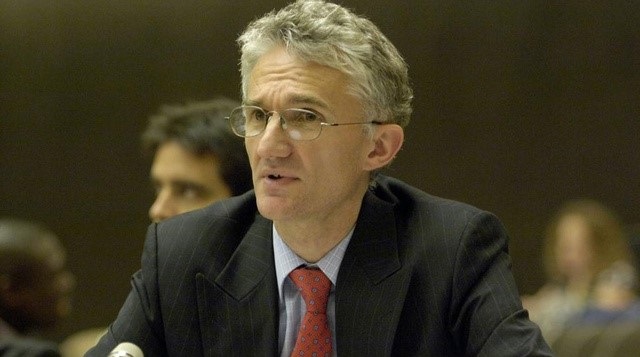
Mark Lowcock
Speaking at the launch of a major annual analysis of global humanitarian needs in Geneva, Emergency Relief Coordinator Mark Lowcock said that 132 million people would need assistance next year.
He said conflict had pushed tens of millions of people into a situation where they were in urgent need of help, adding the appeal for funds could top $25 billion to support life-saving aid projects in over 40 countries next year.
Of that number, the UN and its partner organisations aim to support 93.6 million, noting while conflict was the main cause, climate-related risks such as drought and tropical storms were also significant contributors to the number of people in crisis.
Lowcock said: “Something like one person in 70 around the world is caught up in crisis and urgently needs humanitarian help or protection.
“We have a larger number of people displaced, mostly by conflict than we have seen in the world before, nearly 70 million.”
The UN’s Global Humanitarian Appeal for 2019 amounts to $21.9 billion; it is expected to increase to $25 billion, once Syria’s financial needs have been calculated.
As of mid-November, donors have provided a record $13.9 billion in funding, which is about 10 per cent more than at the same time last year, according to the UN Office for the Coordination of Humanitarian Affairs (OCHA).
“The country with the biggest problem in 2019 is going to be Yemen,” he said, before insisting that the UN’s coordinated response plans helped the humanitarian community “to deliver, more and better” to millions of people.
Beyond Yemen, needs will remain “exceptionally high” in Syria, the Democratic Republic of the Congo (DRC), Ethiopia, Nigeria and South Sudan, Lowcock said.
Every month in 2018, humanitarians have reached eight million Yemenis with food assistance and 5.4 million Syrians with supplies, medical assistance and protection, Lowcock explained.
“This is happening even as threats to the safety of aid workers are on the rise,” the UN relief chief noted.
People’s insecurity has also worsened significantly in Afghanistan because of drought, political instability and an influx of returning refugees, according to the Global Humanitarian Overview 2019, Republic (CAR).
In another finding, the OCHA report showed that the average UN humanitarian response now lasted more than nine years; in 2014, the norm was 5.2 years.
In 2018, moreover, nearly three-quarters of people receiving assistance are in countries that have been affected by humanitarian crises for seven years or more.
In other finding, the OCHA report also highlighted that food insecurity had increased in recent years after a long period in which it had improved.
An increasing number of crises had also translated into gender inequality, the report noted, with girls in conflict settings more than 2.5 times more likely than boys to be out of school.
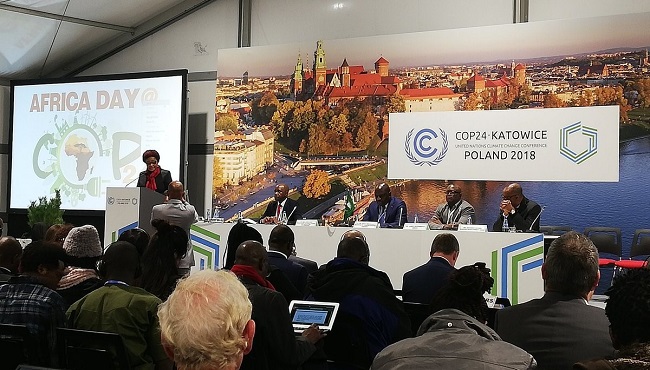
Climate change focused continental coalition of civil society organisations, the Pan African Climate Justice Alliance (PACJA), said on Tuesday, December 4, 2018 in Katowice, Poland, that African countries should remain focused at the global summit as any position that contradicts the real climate change implications to Africa would shift the burden of climate change to them
Participants at a Africa Day session at COP24
We join the African Governments and experts in underscoring the vital importance of ambitious outcomes from this COP. A comprehensive and balanced Paris Agreement Work Programme should be delivered here in COP24 and uphold equity, justice and act as an anchor in the Paris Agreement’s implementation. Also, pre-2020 ambition remains vital to stay within the closing window as indicated by the recently released IPCC 1.5c report and the Paris Agreement implementation.
We reiterate that means of implementation remain critical and should be tied to both pre-2020 and Paris Agreement regime.
We therefore expect:
Climate Finance
We expect climate finance to continue to be a critical issue of negotiations for this COP as it has been in previous ones. We expect a clear roadmap for fulfilment of climate finance commitment of $100 billion per year by 2020 should be agreed, the commitment should include towards an ambitious Green Climate Fund (GCF) replenishment. Parties should also agree to discuss a new post-2025 quantified climate finance goal from the floor of $100 billion. Also, Parties should agree on accounting rules for climate finance which are robust and provide full transparency on actual assistance provided and to be provided to the developing countries.
Another climate finance area is on the discussion of how Adaptation Fund will serve the Paris Agreement. Parties should agree on maintaining the current balance of the Fund’s board membership, operational policies and guidelines for developing countries to access the funds when it serves the Paris Agreement.
Nationally Determined Contributions (NDCs)
Parties will also negotiate on the Nationally Determined Contributions timeframe and features with link to the Paris Agreement. A single five-year common timeframe for NDC implementation should be agreed at COP24 in order to enhance consistency and comparability of NDCs. Also, this should be linked with the Global Stocktake for periodic review on the implementation of action and support.
The 2018 facilitative dialogue – Talanoa dialogue: We would like to thank the Fijian COP23 Presidency for taking ownership of the 2018 Facilitative Dialogue (now known as the Talanoa Dialogue 2018) and for attempting to raise its political relevance. Leadership from developing countries benefits the process and goes some way towards distributing influence in the negotiations in a more representative manner. We therefore recommend that the Talanoa Dialogue must assess the actions of countries against both their historical responsibility and the remaining carbon budget available for 1.5°C. The Talanoa Dialogue must also assess the provision of support from donor countries and bear this assessment in mind when assessing the actions of developing countries. Finally, the Talanoa Dialogue must privilege the perspectives of affected communities while safeguarding against potential conflicts of interest.
Loss and Damage: Africa continues to suffer enormous economic losses in billions of dollars as a result of climate change impacts. Coupled with un-costed social losses due to climate induced displacement of persons thus triggering conflicts. It is worrying to keep hearing the answer for loss and damage as insurance, this might be possible in developed countries but NOT in developing countries especially in Africa, this is a far-fetched dream. We call for the commitment in the implementation of the Warsaw International Mechanism on Loss and Damage and need a predictable a financing approach for Loss and Damage in Africa.
Capacity Building: We emphasise that there is need to build long-term capacity among developing countries which includes strengthening capacity of climate change institutions.; capacity building should at all times be focused on the needs of countries and driven by countries. Further, capacity building should adopt a multi-stakeholder approach, including all stakeholders and supportive legislation to facilitate this. We call for provision of support to the Capacity Building Initiative for Transparency (CBIT), setting aside of additional resources and meeting of existing voluntary contributions pledges. We further call for provision of financial resources to support country driven capacity building initiatives.
Gender: We note the importance of gender considerations in policies that supports activities on adaptation, mitigation, finance, technology development and transfer, including capacity building, and we acknowledge the progress made in implementing decisions on gender under the Convention. We call for Parties to increase their efforts in ensuring that women are represented in all aspects of the Convention process, and gender mainstreaming is achieved in all processes, and activities of the Convention.
We are calling on parties here in Katowice, Poland to fresh energy and push the negotiations towards concrete outcomes that will address this grave concern to Africa. The world is watching and the outcome from this COP24 as it will determine whether the Paris Agreement will be a reality or a mere rhetoric.
We strongly urge our African governments to rethink critically on the progress of climate talks as any position that contradicts that real climate change implications to Africa then will shift the burden of climate change to African countries.
Ghana’s forestry sector is noted for several things, key among which is the different kinds of debates it generates from time to time. For instance, in the 1990s to the early 2000, the debate revolved around the timber industry’s seemingly hijack of the sector. From 2000 on, the debate dwelt on the lack of transparency, representation and consultation in the decision-making process.
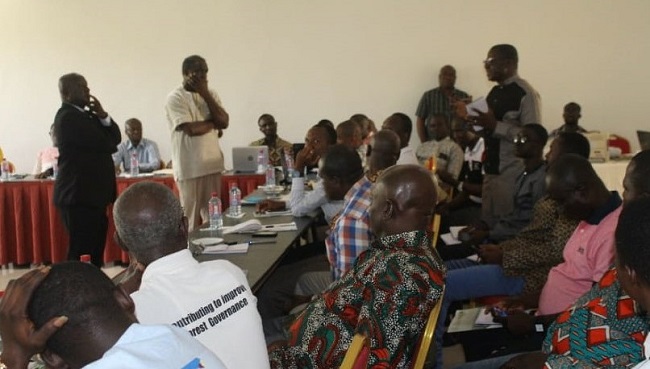
A cross section of participants at the brainstorming session on Guidelines for utilisation of Timber Royalties by Assemblies (local government authorities) during Forest Watch Ghana‘s last general meeting for the year
Subsequently, the focus of the debate shifted to the abuse of the sector by officialdom, and then to what has been described by some, especially civil society groups, as unfair sharing of benefits of revenue accruing from timber exploitations.
The current debate is on the utilisation of forest royalties by Assemblies or local authorities, which the coalition of civil society organisations working on forest related issues – Forest Watch Ghana – says “are being misapplied. According to the group, “the Assemblies are using the funds for recurrent expenditure, rather than for ensuring positive socio-economic development of the area from where the timber is exploited.”
It was one of the key issues discussed at length during Forest Watch’s last general meeting for the year in Accra in November 2018. And, for the first time in its history, Metropolitan Municipal and District (MMDAs) Coordinating Directors and selected officials of Assemblies in Forest Districts across the country were invited to participate in the session. The purpose was to generate an objective dialogue to help streamline the process of appropriate utilisation of timber royalties by the Assemblies.
The discussion was facilitated by representatives of KABSTREK Consult Ghana Limited, commissioned by Forest Watch to develop “Guidelines for Utilisation of Timber Royalties by District Assemblies in Ghana.” The assignment was necessitated by realisation of the absence of a constitutional provision, legal instrument or guidelines on the specific use of timber royalties. A situation that has resulted in the non-utilisation of the funds for their intended purposes, and which, according to the draft document, “has invariably resulted in inequity in benefit sharing in the forest sector that contributes to poverty and a lack of sustainable development.”
When finalised and operationalised, the Guidelines will, among other things, ensure that royalties are used to provide socio-economic and infrastructural development of forest fringe and timber producing areas. The Guidelines will additionally assist Assemblies to properly manage the selection and execution of tangible development projects in line with their Development and Annual Plans, and in fulfilment of their obligations under the Public Financial Management Act, 2016 (Act 921).
The document acknowledges that timber royalties have the “potential to significantly impact positively on local development.” But it also admits that the authenticity of the Guidelines will depend on their being backed “by the necessary Legislative Instrument.”
The development of a legislative instrument to support the Guidelines is a crucial step without which they cannot be implemented, according to Raphael Yeboah, a Forestry Sector Legal Consultant. In an interview, he proposed the development of an omnibus legal instrument on royalties from the extractive industry.
“Such a legislative instrument should make it mandatory for Assemblies to use all natural resources related royalties be it timber, minerals, oil or gas for the purpose of developing the areas from where they were extracted,” Yeboah said, adding, “this will stop the ad hoc or arbitrary use of royalties by the Assemblies.”
He called for a consultative process involving major stakeholders including beneficiary communities, in the development of the omnibus legislative instrument to back the implementation of the Guidelines.
This was also the thinking that eventually dominated the discussions at the general meeting, with participants conceding that “the current mindset of the Assemblies is not geared towards using royalties to further sustainable forest management activities.” In addition to the lack of a framework to guide the utilisation of royalties that has perpetrated the situation, it was also blamed on dire financial constraints Assemblies often face and which led to the arbitrary use of any available funds.
The meeting also discussed the issue of Assemblies establishing separate bank accounts for timber royalties and who should be on the fund’s management committee but could not reach a consensus on them. But participants welcomed the draft Guidelines document as a good development, which when finalised and implemented, will enable Assemblies to spearhead community development as well as reduce illegal activities carried out or supported by community members.
The occasion was used to remind Assemblies in areas that do not have timber resources that they do not have a share in such royalties and therefore should not make a demand for it.
Ibrahim Kwaku Acheampong is the Sefwi Wiawso Municipal Coordinating Director and was one of the participants. He described the session on the royalties “as a very useful brainstorming interaction on ways of sustainably managing and preserving our forest resources.”
Mr. Acheampong said the development of the Guidelines has come at the right time and “will minimise some discrepancies and discretionary utilisation of timber royalties.” He added that the guidelines “will make Fund users more accountable to the people because the processes will now be transparent, and users will be careful not to misapply funds.”
Civil society organisations have mostly championed debates in the forestry sector with the backing of international NGOs. Some of the debates were generated alongside the evolvement of global forest management trends such as the Forest, Law, Enforcement, Trade and Governance (FLETG) initiative and the Voluntary Partnership Agreement (VPA) between Ghana and the European Union.
It is worthy of note that Forest Watch Ghana was formed as a result of a movement sparked following one of the debates in the early 2000s. The debates have resulted in major changes in the sector including institutionalising a transparent decision-making process that involves civil society, traditional authorities and local communities. This has led to the review of key policy documents like the Forest and Wildlife Policy and the passage of the Timber Resource Management and Legality Licensing Regulations, 2017, LI 2254, that was championed by the Legal Working Group to which Forest Watch Ghana is affiliated.
Some key debates like that on the benefit sharing of revenue accruing from timber exploitation, which civil society see as unfair and inappropriate, is on-going. The distribution plan is constitutionally provided for in Clause 6 of Article 267 of the Constitution, which apportions 50% to the Forestry Commission.
The remaining 50%, is taken as 100% and split among four main stakeholders namely: Office of the Administrator of Stool Lands, which takes 10%, while Stool lands, the Traditional Authority and District Assembly within the catchment area of the resource takes 25%, 20% and 55% respectively.
A global effort by National Designated Entities, technology experts and funders, coordinated by the Climate Technology Centre and Network (CTCN), now appears to be showing some impact.
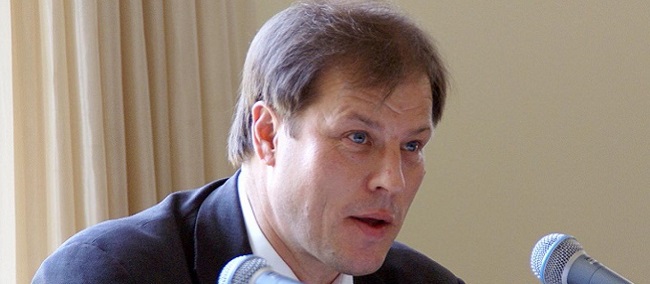
CTCN Director, Jukka Uosukainen
In its Five-Year Progress Report launched on Tuesday, December 4, 2018, the CTCN announced that 137 technology solutions have been delivered or are under way in 79 countries. It adds that some 2,500 people have been trained and over 10 million tonnes of CO₂eq are expected to be reduced per year with completion of the mitigation-related projects.
With an original investment of $40 million, the CTCN’s technical assistance has leveraged $670 million in anticipated funding for developing countries’ technology implementation, it was gathered.
“Accelerating the deployment of clean and green technologies is crucial for realising the aims of the Paris Agreement and the Sustainable Development Goals. Over the past five years, the CTCN has served as a powerful example of a UNFCCC mechanism connecting developing countries to the innovative and relevant technologies they seek,” says Patricia Espinosa, Executive Secretary, UN Framework Convention on Climate Change (UNFCCC).
The country-driven nature of the CTCN, with 160 National Designated Entities identifying climate technology needs based upon goals set forth in Nationally Determined Contributions and National Adaptation Plans, is closely aligned with the Paris Agreement.
“Our interventions identify the best possible technology options for climate action, and support policy development and resource mobilisation to enhance their uptake. Experience from the last five years has taught us that pairing technology expertise with local knowledge is essential, scalability is important and that relationships matter,” emphasises Jukka Uosukainen, the Director of the CTCN.
The CTCN promotes the accelerated development and transfer of climate technologies for energy-efficient, low-carbon and climate-resilient development. It is the implementation arm of the UNFCCC Technology Mechanism and is hosted and managed by UN Environment (UNEP) and the United Nations Industrial Development Organisation (UNIDO).
With a variety of environmental problems plaguing Nigeria, along with the rest of the world, consumers and executives alike are looking to multinational companies in search of direction regarding sustainable business practices. Following reports that air pollution in Nigeria causes more deaths than both malaria and AIDS combined, companies are beginning to understand the importance of engaging in sustainable business practices in order to reduce their impact on environmental issues such as air pollution, water pollution and oil spills.
Companies are now adopting sustainable business practices in order to reduce their impact on the environment
Ongoing Investigation into the Benefits of Sustainability
One study released in March of 2018 looked to explore the impact of economic, institutional and ethical factors as a means to determine and make sense of corporate attitudes towards environmental strategies in Nigerian multinational companies. What the study revealed was that, while the cultural‐based Ubuntu philosophy did play a large role in the decision to engage in sustainable business practices, it was found that peer pressure among the business world is what drives these companies to go green.
Following the likes of Fortune 500 companies all around the world when it comes to earning respect and reputability, businesses in Nigeria are focusing more on sustainability in order to reduce their environmental impact and increase their bottom line, but they’re doing so because, in a sense, they feel obligated to in order to compete. At the heart of these sustainable goals lie the interests of the country, as it has been shown that countries who participate in environmentally-friendly practices are more competitive on a global scale as we move further into an age where climate change continues to affect more than simply the way we live.
Economic Drivers for Sustainable Businesses
As Nigeria continues to experience an economic boom that sets the country apart from their African counterparts, executives in these large multinational companies are trying to strike a balance between implementing sustainable practices in order to keep up with stringent social responsibilities while also enjoying certain economic incentives. These drivers are all concerned with how to turn green, sustainable business practices into a way to increase profit while also increasing the market competitiveness of their business. This type of competitiveness is compounded by studies that show that corporations that voluntarily adopt sustainable business practices generally have better organisational processes. This, which is highly beneficial to Nigerian multinational corporations, allows them to perform better across the board and increase their profit while reducing their waste and expenditures.
A Call for Deeper Understanding of Nigerian Environmental Issues
Investors and decision makers in Nigeria seem to lack a clear understanding of the environmental and economic benefits of sustainable practices as they slowly emerge all throughout Africa. As more research is conducted on the impacts of large factories, oil spills and agriculture continue to reveal pending environmental issues, more companies will feel the pressure to adopt greener business practices. However, this pressure isn’t such a bad thing. It continues to lead more and more companies across the country, and the world, to craft sustainable companies that are driving economic growth without hurting the environment.
The Seventh Session of the Meeting of the Parties to the African-Eurasian Migratory Waterbird Agreement (AEWA MOP7) opened on Tuesday, December 4, 2018 in Durban, Kwazulu Natal, South Africa.
Durban, South Africa is hosting the AEWA MOP7
The inter-governmental meeting is set to be the most important international conference on the conservation of migratory waterbirds this year, bringing together close to 300 participants from 81 countries, including 67 national delegations and the European Union, a range of non-governmental organisations and renowned experts from across the African-Eurasian region.
The five-day meeting, according to the organisers, will be an opportunity for governments to agree on actions to improve the conservation status of many species of waterbirds covered by AEWA such as pelicans, cranes, storks, ducks and waders, which face a wide range of threats, including habitat loss and degradation, illegal killing and poisoning, especially by lead gunshot, pollution, climate change, bycatch, as well as collision with powerlines and wind turbines.
The MOP7 is being held under the theme: “Beyond 2020: shaping flyway conservation for the future” and will cover a plethora of topics related to the future conservation and sustainable use of the 254 species of migratory waterbirds covered by the treaty.
AEWA Executive Secretary, Jacques Trouvilliez, said: “AEWA MOP7 is set to be a milestone for waterbird conservation, as Parties will decide on the new course of conservation action under the treaty for the next decade. For the last 20 years internationally agreed actions under AEWA, have made the difference in conservation efforts for many well-known, as well as lesser-known species such as Bald Ibis or White-winged Flufftail which connect habitats over political boundaries.”
AEWA, it was gathered, lays the legal foundation for international coordinated conservation measures and their implementation is guided by means of a Strategic Plan and a targeted Plan of Action for Africa. Both a new Strategic Plan and a new Plan of Action for Africa for the period 2019 to 2027 will be presented to Parties for adoption at the conference. Both plans are designed so that their implementation will contribute to achieving the UN Biodiversity Targets and the Sustainable Development Goals.
At MOP7, delegates will also address, for the first time, priority actions for seabird conservation. Seabirds are said to be one of the most threatened groups of birds worldwide. To address threats to seabirds such as plastic pollution, oil spills, mining, illegal killing, human disturbance, wind turbines, overfishing, bycatch, invasive predators and climate change, priority actions for seabirds under AEWA will be recommended, it was gathered.
A total of 14 resolutions will be considered for adoption by AEWA Parties at MOP7, including on the topic of Single Species Action Plans, Climate Resilient Flyways or Monitoring of Waterbirds. The delegates will also consider a number of new reports such as the “7th Conservation Status Report (CSR)” and “Plastics and Waterbirds: Incidence and Impacts” will be presented.
During the opening ceremony on Tuesday, the AEWA Waterbird Conservation Awards were presented to the Egyptian Environmental Affairs Agency and to Mr. Ohad Hatzofe, an Avian Ecologist of the Israel Nature and Parks Authority. The award, say the awardees, recognises both institutions and individuals who have made a significant contribution towards long-term conservation and sustainable use of waterbirds in the African-Eurasian region.
At the closure of the opening ceremony, David Alan Stroud (Great Britain) was declared Honorary Patron of AEWA for the life-long dedication to international waterbird and wetlands conservation and for his significant contribution towards the development, growth and strong scientific underpinning of the Agreement.
During a special event, Norway and the European Commission were recognised as Migratory Species Champions for their long-term support for initiatives that benefit migratory birds’ conservation.
To date 77 countries and the European Union have signed the environmental treaty, which has a geographic range covering a total of 119 countries across Africa, Europe, the Middle East, Central Asia, Greenland and the Canadian Archipelago.