Astronomy and astrophysics researchers at the University of Nigeria, Nsukka (UNN) in Enugu State said on Saturday, January 19, 2019 that there was nothing to fear over the expected total lunar eclipse on Monday.
Lunar eclipse
The researchers said eclipse is a natural occurrence that
helps scientists understand the celestial body.
The scientists made the remarks in separate telephone
interviews with the News Agency of Nigeria (NAN) in Abuja.
One of them, Dr Bonaventure Okere, while reacting to the
lunar eclipse expected to take place on Monday, said some people still
misunderstood the natural occurrence.
Okere, who is also the Acting Director, Centre for Basic
Space Science (CBSS) Nsukka, said some people still attach spiritual meanings
to eclipse which should not be so.
Lunar eclipse occurs when the moon appears darkened as it
passes into the earth’s shadow and occurs only when the sun, earth and moon
were exactly aligned with the earth between the two.
It can occur only on the night of a full moon. The type and
length of a lunar eclipse depend on the moon’s proximity to either node of its
orbit.
The National Space Research and Development Agency (NASRDA)
predicted that Nigeria would experience total lunar eclipse on Monday.
Okere said: “For the scientists, eclipse helps them to study
and understand the shape of the celestial bodies but for the lay man, it is
just to demystify some myths.
“Some people attach some spiritual meanings to it which is
not meant to be.
“Some people may see it and think that the world is coming
to an end. We create the awareness to sensitise people that it is not something
to be frightened about.
“People should understand that a lot of things happen naturally,
and it is the scientist who is left to inform people about such occurrence”.
He said that the total lunar eclipse would be the last
eclipse to be experienced until 2021.
Prof. Augustine Ubachukwu, leader of the researchers, said
unlike solar eclipse, which occurs when the moon completely covers the sun’s
disk, lunar eclipse was safe to view.
Ubachukwu said: “People can view the lunar eclipse without
any eye protection or special precautions, as they are dimmer than the full
moon.”
According to him, the total phase of this total lunar
eclipse will be visible from North and South America, and Western parts of
Europe and Africa.
“Central and Eastern Africa, Europe, and Asia will see a
partial eclipse of the Moon.
“The lunar eclipse begins at 3:36 a.m. early Monday and last
until 8:48 a.m., starting and ending as the moon passes through the penumbra
(the lighter part) of the earth’s shadow”.
The team leader said the whole duration of the
eclipse would be one hour, one minute and 58 seconds.
He further said the whole process would include partial
eclipse initially, full eclipse, maximum eclipse, full eclipse again, moon set
and ending with a partial eclipse.
Ubachukwu also said people should not be scared, as the
eclipse was one of creation’s mysteries.
The Nigerian Institution of Civil Engineers (NICE), in
conjunction with Lagos State Safety Commission (LSSC), has called for strict
adherence to safety measures in civil engineering infrastructure and facilities
management.
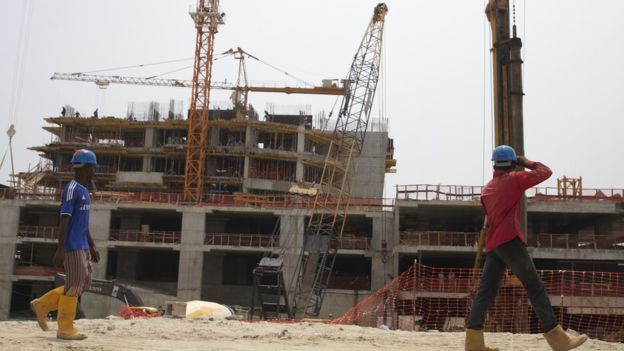
A construction site in Lagos
Chairman, Lagos Chapter of NICE, Mrs Omolola Adetona, made
the call at a seminar organised in collaboration with the commission in Lagos
on Saturday, January 19, 2019.
The seminar had “Safety Consideration in Civil Engineering
Infrastructure and Facilities Management” as its theme.
Adetona said that many people had lost their lives due to
carelessness and negligence in adhering to construction site safety.
She enjoined construction operators, particularly civil
engineers, to be more conscious of safety measures.
According to her, rarely do professionals like architects or
surveyors die on site, but the artisans and civil engineers are most vulnerable
to site accidents.
“Many operators in the built environment still pay deaf ears
to safety tips like wearing helmets, boots and safety jackets in the course
delivering their services.
“Safety is the basis of every engineering designs.
“When safety is given adequate consideration, the money that
could have been spent on remedies, repairs and hospitals due to accidents will
be saved and the economy becomes better,” she said.
Also, Mr James Akanmu, a civil engineer, urged the
government and the civil engineers to ensure adequate maintenance and control
of the infrastructure facilities to enhance their safety conditions.
Akanmu said the roads, market, electricity stations,
railways, among others, are always all civil engineering infrastructure that
needed to be in safe conditions.
“Let the civil engineers and the governments take a critical
look at the infrastructure with the view to ensuring their safety conditions
and sustenance.
“Governments have the responsibility of ensuring quality
control, maintenance and assurance of the infrastructure facilities in the
environment.
“Let the LSSC live up to its mandates by providing safety
best practices and ensure strict compliance in all sectors of the economy,”
Akanmu said.
In his remarks, Mr Hakeem Dickson, the Director-General of
LSSC, reiterated the commitment of the state government to attend a zero per
cent tolerance of all forms of accidents in the environment.
Dickson said that the rate of building collapse had reduced
to a great extent, stressing that more efforts need to be put in place until a
zero per cent building collapsed was attended.
According to him, it is not until a building collapses,
before provision will be made for remedies, preventive measures and solutions.
“It is not until a building collapses, we start shedding
tears. We need to sit up and continuously push for proactive measures to ensure
zero cent per building collapse,” he said.
Dickson said it was observed that some operators in the
built environment rarely obey the rules, codes and conducts governing the
profession.
“Some professionals are obviously cutting corners with the
use of substandard products. This is highly unacceptable and must be nipped in
the bud.
“In adherence to construction codes and conducts, attention
should be given to construction safety measures at sites,” Dickson said.
A new study has found that wild coffee species are now under
threat from climate change.
Coffee
Scientists at the Royal Botanic Gardens have found that 60
per cent of wild coffee species are at risk of extinction. This includes
Arabica, the world’s most widely traded coffee.
The report states how despite the success of Arabica and
Robusta coffee in the industry, they now face new threats of climate change,
including the increasing incidence and duration of drought.
Dr Justin Moat, Head of Spatial Analysis at Kew and one of
the authors of the paper, said: “Our initial evaluation of Arabica coffee
suggested that it was not threatened with extinction in the wild.
“However, after factoring in climate change, it moved
upwards by two categories to become an endangered species. These findings are
so important as they indicate that the extinction risk to many other coffee
species could be much worse if we consider climate change.”
The coffee industry currently relies on Arabica and Robusta
coffee. However, as climate change worsens, it could result in having to rely
on different coffee species for coffee crop plant development.
Ethiopia is the natural birthplace of wild Arabica coffee
with an annual export value of $1 billion. It is an important source of seed
stock for coffee farming, but it could be in serious jeopardy if conservation
action is not taken to protect the plant form a changing climate and
deforestation, says experts.
Dr Aaron Davis, Head of Coffee Research at Kew and lead
author of the Science Advances paper, said: “Among the coffee species
threatened with extinction are those that have potential to be used to breed
and develop the coffees of the future, including those resistant to disease and
capable of withstanding worsening climatic conditions. The use and development
of wild coffee resources could be key to the long-term sustainability of the
coffee sector. Targeted action is urgently required in specific tropical
countries, particularly in Africa, to protect the future of coffee.”
The African Academy of Sciences (The AAS), the United
Kindgoms’ Department for International Development (DFID) Weather and
Climate information SERvices for Africa (WISER) programme and the Africa
Climate Policy Centre (ACPC) of the United Nations Economic Commission for
Africa on Friday, January 18, 2019 announced the implementation of a multi-million-dollar
initiative to support Africa-led climate science research through the
Climate Research for Development (CR4D) in Africa initiative.
Executive Director of The AAS, Prof. Nelson Torto
CR4D will award one-year research grants to 15 African
climate researchers of up to $130,000. Through The AAS Rising Research Leaders
programme, grantees will be supported to develop as independent research
leaders through training, mentoring, and networking opportunities that will
enable international collaborations.
According to the CR4D, candidates must be hosted by or
affiliated with a university, research institute or other eligible institution
of higher education in Africa. They must and hold a PhD in climate or related
sciences and/or have a proven track record of high-quality, impactful research
in a relevant field. Applicants must have a clearly defined scientific
research proposal and all African nationals are eligible to apply.
The CR4D initiative was conceptualised at the Africa Climate
Conference in 2013 as a mechanism to strengthen links between climate science
research and climate information needs to support development planning in
Africa. The initiative addresses climate research priority areas that have been
identified in Africa by African researchers.
Over the next year, CR4D will support research into
identified priority areas for climate change and development linkages. The
research will cover foundational climate science, impacts, information and
research translation and engagement with policy and decision-making
communities. The goal will be to produce research outputs that inform policy in
climate sensitive sectors to better prepare Africa to deal with the impacts of
climate change.
Dr James Murombedzi of the ACPC noted: “While Africa is
responsible for only 4% of global greenhouse-gas emissions, 65% of the African
population is directly impacted by climate change. It is therefore imperative
that climate action must be stepped up to deliver high impact outcomes for
African populations, and to ensure the resilience of economies, ecosystems and
infrastructure on the continent. The framework for scaling up climate action
was put in place in the 2015 Paris Agreement.
“The realisation of the ideals of this agreement will be
determined by the national frameworks, strategies and policies that are put in
place to implement national and sub-national climate actions. The CR4D
initiative will enhance support for improved climate information and
services to contribute to climate sensitive planning. This, in turn, will
contribute towards ensuring human and environmental security, improved
investment policies, as well as institutional developments to manage potential
threats from climate change.”
The Executive Director of The AAS, Prof. Nelson Torto, says, “With smallholder farms, most being rainfed, forming about 80% of farmed land in sub-Saharan Africa and given that most of sub-Saharan Africa’s population draws its livelihood from smallholder farming, the CR4D initiative will be a huge addition to Africa’s quest to transform itself through science.
“Tackling climate change in Africa requires that African researchers are supported to ensure they have the best understanding of the problems to be better prepared to provide and amplify solutions. The AAS is particularly proud to be part of this noble initiative and we look forward to celebrating its impact in all climate sensitive sectors including agriculture, health, water resources, tourism and other areas of socio-economic development.”
The National Space Research and Development Agency (NASRDA) on Friday, January 18, 2019 says Nigeria will join other countries of the world to experience total lunar eclipse on Monday, January 21.
Lunar eclipse
The information is in a statement by Dr Felix Alle, the
Head, Media and Public Communications of the agency in Abuja.
According to Alle, lunar eclipse is one in which the moon
appears darkened as it passes into the earth’s shadow.
He stated that “lunar eclipse occurs only when the sun,
earth and moon are exactly aligned with the earth between the two.
“There will be a lunar eclipse over Nigeria on Monday, Jan.
21, 2019.
“The eclipse, expected to be total, will begin in the
evening of Sunday and end on Monday.
“The eclipse will start across Nigeria in the early hours of
Monday at approximately 3.36 a.m. to reach its maximum at 6.12 a.m. and end at
about 6.51 a.m.
“The total duration of the occurrence over Nigeria will be
three hours and 15 minutes.”
The media head said that the lunar eclipse would by 4.33
a.m. become partial eclipse, where the moon would start getting red.
He added that “at exactly 5.41 a.m., a maximum eclipse of
the moon which may be visible to human sight will be witnessed, while the moon
eclipse is expected to end at 6.43 a.m.”
The communications officer stated that the eclipse was
expected to take place across North, South America, Western Europe, North and
West Africa and Asia.
He said that the year’s total lunar eclipse would be the
last eclipse to be experienced until 2021.
World Agroforestry (ICRAF) Cameroon’s Participatory
Domestication of Indigenous Tree Programme has been declared
an Outstanding Practice in Agroecology 2019 by the World Future Council in collaboration with
the start-up Technology for Agroecology in the Global South (TAGS).
Ann Degrande, country representative for World Agroforestry Cameroon
At the International Green Week and the Global Forum for
Food and Agriculture 2019, the World Future Council hosted a panel discussion
on Friday, January 18, 2019 at the Heinrich Böll Foundation in Berlin. The aim was
to promote the strengthening of agroecology in politics and practice in Germany
and beyond.
Fifteen Outstanding Practices in Agroecology were presented,
including Cameroon’s, highlighting practices that protect the lives and
livelihoods of smallholders, empower small-scale food producers, nurture
sustainable food production systems, promote resilient agricultural practices
that help maintain ecosystems, strengthen capacity for adaptation to climate
change and progressively improve land and soil quality.
Participatory Domestication of Indigenous Trees for the
Delivery of Multifunctional Agriculture by Agroforestry, the name of World
Agroforestry Cameroon’s outstanding practice, helped resolve food insecurity,
lower extreme poverty, decrease malnutrition and social inequity through
building the capacity of smallholding and subsistence farming communities in
using affordable and appropriate farming practices with low-end, agroecological
technologies, particularly, agroforestry.
From 1994 to 2009, 10,000 farmers were trained and over 1.6
million trees were planted to improve soil fertility and initiate an
agroecological succession that raises above and below-ground biodiversity that
is important for ecosystem functions.
“Inclusion in the Top 15 worldwide is a great honour and
acknowledgement that will contribute to the momentum of World Agroforestry in
Cameroon and other countries where we work,” said Ann Degrande, country
representative for World Agroforestry Cameroon.
Through participatory tree domestication, World Agroforestry
has helped farmers gain access to high-quality planting material, increase
productivity, diversify farming systems, and improve their livelihoods through
high-value indigenous fruit trees.
“World Agroforestry in Cameroon is a pioneer of this practice which is receiving some well-deserved recognition of the great work done over 30 years of our presence in the country,” said Tony Simons, director general of ICRAF. “The communities the team worked with saw the evidence, adopted the technologies and have improved their lives and the environment at the same time. Global recognition for research work remains essential if we are to continue to test new technologies. Cameroon is an example of world-class research in development getting world attention.”
World Agroforestry’s Participatory Domestication of Indigenous Tree Programme was developed under the leadership of Prof Roger Leakey, a past director of research for World Agroforestry, and Dr Zac Tchoundjeu, former regional coordinator for World Agroforestry West and Central Africa.
The Kano State Government has approved N34.6 million for the
expansion of Bichi Township Water Supply Scheme to boost water supply in the
town.
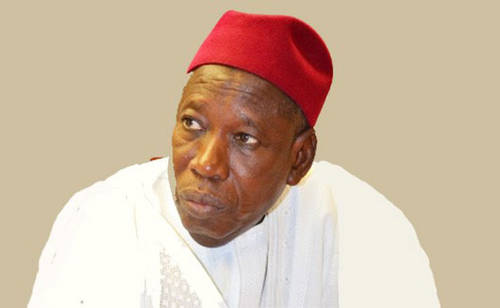
Gov. Abdullahi Ganduje of Kano State
Commissioner for Information, Mallam Mohammed Garba, said
this in a statement issued to newsmen in Kano, the state capital, on Friday,
January 18, 2019.
According to the commissioner, the State Executive Council
gave the approval during its weekly meeting held on Thursday at the Government
House, Kano.
He said the expansion of the scheme in the town would check
the persistent water shortage and alleviate the suffering of the residents in
getting safe drinking water.
Garba said the council also approved N19. 9 million for
conducting 2018/2019 mass livestock vaccination.
He said the vaccination would be against Rabies in dogs,
Contagious Bovine Pleuro-Pneumonia (CBPP) in cattle and Paste Des Petit
Ruminant (PPR) in sheep and goats.
He said N15.1 million was approved for the conduct of IJMB
examination, affiliation and marking fees for 2018/2019 session at Rabi’u Musa
Kwankwaso College of Art and Remedial Studies (CARS), Tudun Wada.
The commissioner further stated that N20 million was also approved
for the conduct of the 2019 IJMB examination scheduled between Jan. 29 and Feb.
19 at the state College of Education and Preliminary Studies.
Stakeholders have called on religious leaders to use
conservation teachings embedded in the Holy Books for the people to save the
environment and the world.
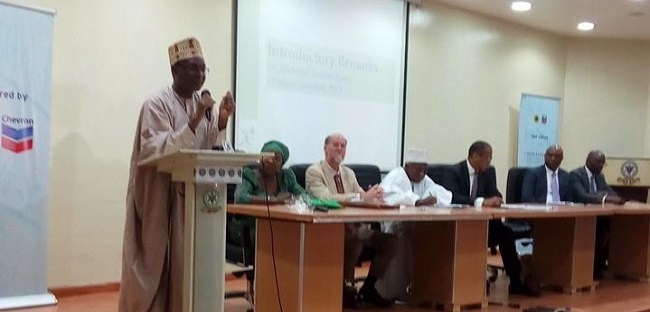
Director General of the NCF, Dr Muhtari Aminu-Kano, delivering introductory remarks during the event
The stakeholders made the call at the 17th Chief S.L. Edu
Memorial Lecture of the Nigerian Conservation Foundation (NCF) in Lagos on
Thursday, January 17, 2019.
Various religious leaders and environmental experts took
turns to explain how nature was interdependent on each other and the need to
adhere to religious teachings of mutual benefit and interdependence.
They emphasised the need to also adhere to the teachings of
restoration and conservation to save the environment and the world.
The guest lecturer, Mr Martin Palmer, Secretary General, Alliance
of Religions and Conservation (ARC), United Kingdom, called on religious
leaders to appeal to the conscience of worshipers to correct ills destroying
the environment.
Speaking on the topic “A Quiet Revolution – Faith and the
Environment,” Palmer said that sacred places were the only places in the world
that had biodiversity because of protection of the natural forests there.
He said consistent lamentation would not solve problems of
environmental degradation and appealed to the hearts of the people through
religion to make impact to save the environment.
“If we want to pass the truth, don’t pass it through data,”
he said.
He advised the NCF to explore ways of changing attitudes
towards the environment through the faith-based organisations which held the
highest influence towards value reorientation.
He urged the Foundation to recognise the fact that religious
bodies ran many education systems which could reorient the young towards
environmental restoration.
He explained that the covenant of rainbow God gave to Noah
recorded in the Islamic and Christian holy books was one way God brought to
bare the need for conversation.
“We have allowed humancentric view to take over, it is time
to stop being apart from nature and be a part of nature,” he said.
He stressed the need to be united on the diversity of the
nation through religion to save the environment.
He said that in most parts of the world, only sacred places
are usually protected, adding that monks, budists and other religions preserved
original forests covers of their areas.
He added that “fusion of the religions and traditions” were
reasons why some countries had original forest covers preserved in some sacred
areas.
He said that, for over 2,000 years, religion has preserved
nature, citing examples of teachings of Prophet Muhammad (swt) that forbids
cutting of trees during wars and supports protection of springs.
Palmer also said Pope Benedict’s teachings that corrected
degradation caused by the Roman Empire 1,400 years ago through a study that
salvaged the situation through re-greening through agriculture.
He said in 1982, Islam preached against wildlife trade and
burning of bush in Indonesia which led to revolutionary change that protected
the environment.
He also gave example of the Methodist Church which, in 2017,
issued a report on handing over forests to the church which made positive
impact.
The Director General of NCF, Dr Muhtari Aminu-Kano, said the
Foundation identified the huge problem and saw the need to bring in faith
organisations to appeal to hearts of Nigerians towards saving the environment.
Aminu-Kano said Nigerians were very religious and positive
changes towards the environment could be achieved through their beliefs.
“We have been browning Nigeria and we need to re-green,” he
said.
Chief Philip Asiodu, NCF’s President, said Chief S.L. Edu
founded NCF about 38 years ago and the Foundation had been pursuing an agenda
to recover the nation’s forest cover since 1988.
“The rate of consumption without restoration will bring a
consequence that we will need more of four earth planets to survive,” he said.
A representative of Chevron said that the multinational has
continued to award scholarships to doctoral degree candidates in environment
since 2016.
Variuos perceptives were shared by the Christian, Islam and
Buddhist groups present who took turns to espouse the virtues of how their
religions supported the protection and preservation of the environment.
Two doctoral candidates received awards for their
contributions to preservation of the environment.
They were Soberekon Afiesimama of the Department of
Geography and Environment Management, University of Port Harcourt and Adeola
Jude of the University of Ibadan.
The World Bank Group has said that it will ramp up direct
adaptation climate finance to reach $50 billion between 2021 and 2025. This is
contained in the organisation’s “Action Plan on Climate Change Adaptation and
Resilience”, which was launched on Tuesday, January 15, 2019.
World Bank Chief Executive Officer, Kristalina Georgieva
The planed financing level, representing an average of $10
billion a year, is said to be more than double what was achieved during 2015-2018.
The World Bank Group will also pilot new approaches to increasing private
finance for adaptation and resilience.
“Our new plan will put climate resilience on an equal
footing with our investment in a low carbon future for the first time. We do
this because, simply put, the climate is changing so we must mitigate and adapt
at the same time,” said World Bank Chief Executive Officer, Kristalina
Georgieva. “We will ramp up our funding to help people build a more resilient
future, especially the poorest and most vulnerable who are most affected.”
The increase in adaptation financing will support activities
that include:
Delivering higher quality forecasts, early
warning systems and climate information services to better prepare 250 million
people in at least 30 countries for climate risks;
Supporting 100 river basins with
climate-informed management plans and/or improved river basin management
governance;
Building more climate-responsive social
protection systems; and
Supporting efforts in at least 20 countries to
respond early to, and recover faster from, climate and disaster shocks through
additional financial protection instruments.
In addition to boosting finance, the Plan will also support
countries to mainstream approaches to systematically manage climate risks at
every phase of policy planning, investment design, and implementation.
“This Action Plan is a welcome step from the World Bank,”
said Ban Ki-moon, former Secretary-General of the United Nations and
co-chair of the Global Commission on Adaptation. “The world’s poorest and most
climate vulnerable countries stand to benefit from its increased finance and
support for longer term policy change.”
The Action Plan builds on the link between adaptation and
development by promoting effective and early actions that also provide positive
development outcomes. For example, investing in mangrove replanting may protect
a local community against sea level rise and storm surges, while also creating
new opportunities for eco-tourism and fisheries. Early and proactive adaptation
and resilience-building actions are more cost-effective than addressing impacts
after they occur.
The Action Plan also includes the development of a new
rating system to create incentives for, and improve the tracking of, global
progress on adaptation and resilience. The new system will be piloted by the
World Bank in FY19-20 and rolled out to projects in relevant sectors by FY21.
The Action Plan on Climate Change Adaptation and
Resilience forms part of the World Bank Group’s 2025 Targets to Step Up Climate Action which were
launched in December 2018, during the UN’s COP24 in Poland.
The Action Plan on Climate Change Adaptation and Resilience
will be implemented starting June 30, 2021 through July 1, 2025.
South Africa was the world’s leading exporter of South
American parrots between 2000 and 2013 after Amazon countries “abandoned the
possibility of legally and competitively producing and exporting their
wildlife,” finds a new study into bird trade in Latin America.
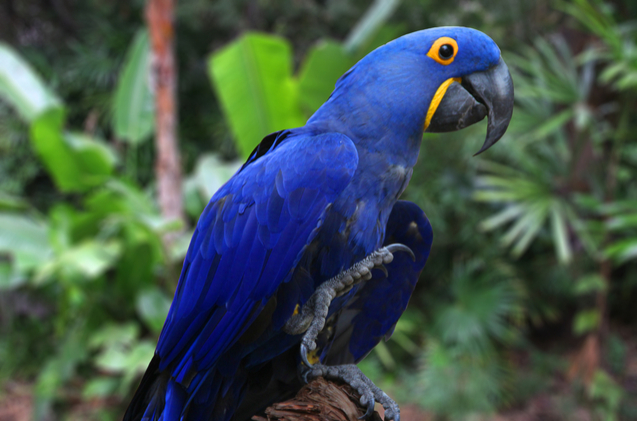
Hyacinth Macaw
The findings are published in Bird’s-eye view: Lessons from 50 years of bird trade regulation & conservation in Amazon countries, which provides a comprehensive overview of bird trade in Brazil, Colombia, Ecuador, Guyana, Peru, and Suriname, including regulations and the bird trade’s impact as a conservation tool on species and habitats. The study was funded by WWF US.
The trade of birds and their products from the region has a
long history: since the mid-19th Century, many tonnes of feathers and bird
skins – mainly hummingbirds and tanagers, were exported to fashion markets in
Europe and North America. This demand led to the killing of millions of birds
over many decades.
For example, in a brief period before World War I, one
London merchant imported 400,000 hummingbirds and 360,000 other birds from
Brazil, while in 1932, some 25,000 hummingbirds were hunted in Pará State and
sent to Italy to adorn chocolate boxes. Hundreds of thousands of live birds
were later exported as pets from across South America after the mid-1950s when
commercial airline connections, mainly through Miami, became routinely
available.
After decades of intensive exploitation and massive declines
in many bird populations, in 1967, Brazil became the first country in South
America legally to ban the commercial sale of wild animals, replacing demand
through captive breeding programmes as an economic alternative with low conservation
impacts on wild populations. With Brazil’s national wildlife trade ban
installed, illegal wildlife trade was simultaneously initiated in South
America.
In subsequent decades, hundreds of thousands of birds were
captured to supply international trade, many of them laundered through those
countries where exports were still legal (i.e. Argentina, Bolivia and
Paraguay). In the 1980s, up to 10,000 Hyacinth Macaws Anodorhynchus hyacinthinus were captured, many ending up in
captive breeding facilities where production costs were lower than in Brazil.
Wild populations were seriously depleted, although there have been important
recoveries in Brazil thanks to sustained conservation efforts. While range
countries struggle to prevent the extinction of this emblematic species, the
Philippines has become the world’s main legal exporter of Hyacinth Macaws.
“Brazil has produced the opposite situation of a market
monopoly: it has unintentionally placed the right to benefit commercially from
the trade in its native species in the hands of any other country that chooses
to profit from them,” writes the report’s author, Bernardo Ortiz-von Halle.
The situation in Brazil – a complete trade ban, was broadly
mirrored in Ecuador and Colombia without the parallel development of captive
breeding options. Now an important economic incentive for conservation of birds
in all three countries is increasingly through the promotion of birdwatching
tourism.
Peru is also actively promoting itself as a birdwatching
destination, but alongside Guyana and Suriname, the country also allows exports
of wild-caught birds, from some 101 species: all are relatively common species.
Between 2000 and 2013 Peru commercially exported 37,233
birds listed in the Convention on International Trade in Endangered Species of
Wild Fauna and Flora (CITES), a fifth of such species exported from Amazon
countries, the majority of them two species of parrots (Cordilleran
Parakeet Psittacara (Aratinga)
frontatus and Mitred Parakeet Psittacara
mitratus). The report also recognises the current importance of seabird
guano as a strategic renewable resource that favours the effective protection
of the islands where seabirds nest in coastal Peru.
Between 2000 and 2016, Guyana exported 145,000 birds
belonging to 24 CITES Appendix II-listed species, the most exported species
being Orange-winged Amazon Amazona
amazonica, the same as the most exported CITES-listed species from
Suriname, which exported 74,890 parrots between 2000 and 2013. In Guyana, it is
estimated that some 20,000 people, some 5% of the country’s rural population,
benefit from this economic activity. Although harvest quotas in both countries
exist, they have been established without the proper scientific backup to
assure the sustainable management of the harvested populations.
Although bans have resulted in a disappearance of birds for
sale on the streets of many countries in South America, much of the trade has
gone underground. Peru, both as recipient and source of wild bird species from
and to its neighbors, is the biggest regional challenge, although Brazil
continues to have a serious problem with internal trade of songbirds, despite
stringent law enforcement efforts. An average of 30,000-35,000 birds are
confiscated each year, a number that has not significantly varied in the last
15 years.
Many of these birds are destined for “songbird
competitions”, where spectators bet money on the outcomes of how many songs or
phrases a bird will sing in a set time period. The activity is also popular and
legal in Guyana and Suriname, and with expatriate communities living in
the USA, Canada and Europe: regular seizures of songbirds, particularly
seedeaters, take place in these countries as a result.
Overall, the study finds that international illegal trade in
live South American birds has been reduced to its lowest level in decades,
although this is “mainly because the bird species most highly sought-after by
collectors already exist in most consumer countries.”
Also, the substantial reduction in most South American urban
markets that were formerly major illegal bird trade hubs is a major
conservation achievement in recent decades, with millions of birds saved as
these local markets collapsed, a situation that bird markets in several
Southeast Asian cities are currently far from achieving.
“Habitat loss remains the greatest threat to wild bird
populations in Amazon countries, while the banning of most bird trade in the
region has had some unexpected consequences such as effectively
exporting the region’s biodiversity resources and the removal of economic
incentives to conserve habitats and species,” said Ortiz von-Halle.
“The complexities of bird trade have been
underestimated: to secure a future for the region’s increasingly threatened
birds we need integrated strategies that seek urgently to halt
or reverse habitat destruction and improve
enforcement, complemented with economic incentives for local income
generation through tourism and sustainable use of the natural resources.
This offers the best pathway forwards for South America’s remarkable
birdlife.”