Agriculture is the highest contributor to global warming in
Nigeria, a recent research conducted by the Federal Ministry of Science and
Technology says.
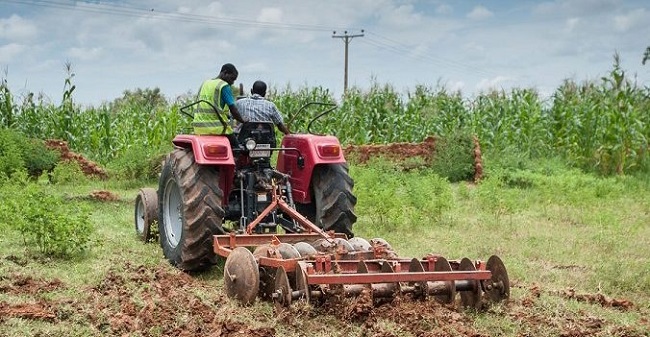
Agriculture
This research debunks the long-time general assumption that
energy is the highest contributor to global warming.
Prof. Peter Ekweozoh, Director, Environmental Sciences
and Technology, Federal Ministry of Science and Technology, made this known in
an interview with the News Agency of Nigeria (NAN) in Lagos on Monday, February
4, 2019.
He spoke with NAN at a workshop with theme: “Green Economy
Capacity Assessment Workshop” at the Federal Institute of Industrial Research
Oshodi (FIIRO), Lagos.
The workshop was a partnership between the University of
Reading, U.K, and FIIRO to brainstorm on how to improve the Green Economy and
mitigate environmental degradation.
“A recent research by our ministry shows that the
agriculture sector is the highest contributor to global warming in Nigeria and
also the use of land, contrary to what we believed.
“Research has proven that it is not energy, and so, if we
are able to stop the use of chemical fertilisers, burning of agricultural waste
and turn them into usable products, our society will be better.
“The Federal Government is already making efforts at having
low carbon development programmes. The President has signed the Paris Agreement
that took place in 2015.
“With this development, Nigeria will be able to enforce its
own policy called the `National Determined Contribution on Sea Waste Road Map
2030,’’ he said.
Ekweozoh said that the country was not deficient in having a
policy framework that could attract donors to help in realising the Green Agenda
policy but rather, the country needs personnel to carry out its policy.
“We are not bereft of a framework that can help us with the
Green Economy; what we need is to put our policy framework together in order to
attract foreign donors. We have up-to-date climate change policies and
roadmaps.
“In the implementation of the Green Economy policy
framework, we need to coordinate the skills. We also need to close those gaps
and then we will have a good shot at implementation of the policy.
At the end of this programme we will start massive capacity
building programme as a result of the gaps to fill,” he said.
Ekweozoh said that Nigeria had inaugurated a National Waste
to Wealth Programme in 2015, which was aimed at addressing environmental degradation.
“In 2015, Nigeria signed National Waste to Wealth
Programme to law. This programme is an inter-ministerial mission that seeks to
address some attitudes which we need to change.
“We also need to educate our people to know how to treat
waste and stop throwing waste around.
“We need to put in place appropriate technology, facilities
that will undertake the processing of mix waste because that is what we have.
Just dumpsite everywhere, unlike what we have in the Europe which is
technological land fills.
“I believe once that is achieved, we will have the National Science Technology Innovation Roadmap 2030 which is supposed to drive development in all the sectors – agriculture, industry, tourism, water resources and energy,” he said.
One man’s endeavour is changing lives of many in rural
Cameroon and fighting climate change. He is tapping energy from the sun and
supplying to hospitals in “forgotten” places. Arison Tamfu reports
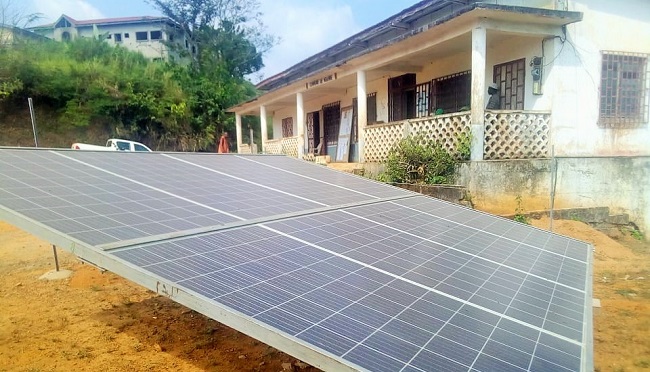
Solar panels at Ngambe Council
Ngo Bas was just 14 when she became
pregnant. And now, she is 15 and is due at any moment. Literally.
“I’m past nine months pregnant,” she says
with a grin.
She lives with her grandmother in Ngambe, a
remote, forested community in Cameroon’s Littoral Region. Things are hard, her
granny says, disturbed that the life of the unborn child is in danger because
Bas does not feed well. But that is the least of her worries. Bas is supposed
to give birth at Ngambe District Hospital where there is no electricity.
“We have been without electricity for like…
I can’t even remember. The hospital and by extension patients are the most
affected,” says Dr. Daniel Telep Yede, director of Ngambe District Hospital.
“We use traditional African bush lamps and
torches during delivery at night. This is a very, very risky venture. Anything
can happen to the child and the mother because we don’t usually see what we are
doing. We refer worst cases to other hospitals, but they are very far away,” he
adds.
That is what worries Bas and her granny
most.
But Bas’ worries might soon be over. There
is good news. Gaston Claude Songo is about providing the hospital with solar
energy.
Songo, 40, is soft-spoken, but he is sure
of what he’s doing, and has proved a rare skill for seeing the obvious. The
idea of supplying renewable energy to remote communities in Cameroon has become
a passion for him.
One afternoon in early 2018 while driving
in the hot sun in Douala traffic, Songo was struck by the obvious.
“Broadly available technology, plummeting
cost of solar panels, and free, unlimited sunshine. I realised that this was a
gift from Mother Nature. Why should my people suffer when energy is almost free
and clean?” Songo says with a sense of pride and fulfillment.
Eleven months later, Songo is fully-engaged
in a project to supply solar power to hospitals in rural Cameroon.
“It is purely a personal initiative. I
provide the energy free of charge. I have been raising some funds for the
project through social media campaigns especially on Facebook. People of good of
will who believe in helping others and making the world a better place have
been of great assistance” he says.
Today, Songo has come to install solar
panels in the Ngambe District Hospital.
He is a native of Ngambe and understands
better that anyone else what his people are going through.
“As a child I witnessed the suffering my
people were experiencing because there was no electricity. It was horrible
especially in the hospitals in rural areas or forgotten places. Hospitals are very
sensitive, and patients need hope. Darkness in hospitals kills that hope” he
says while placing two solar panels on the rooftop of the hospital building. “I
want to show to the world that without being rich, we can still help others
through our skills and knowledge,” he adds.
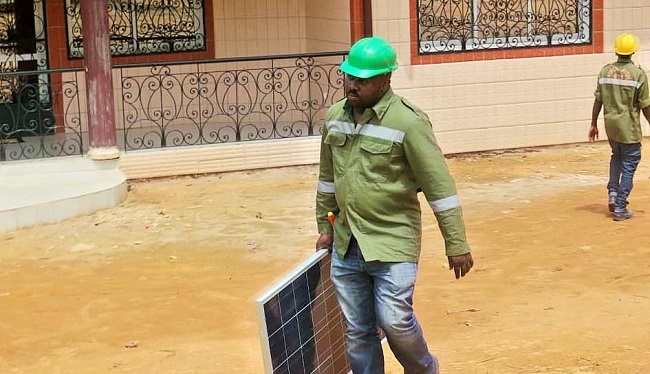
Gaston Claude Songo about to install solar panels
Night is falling and Songo is done with the
installation. To the amazement and joy of the villagers, the bulb is switched
on and…voila… there is light.
“This is a miracle. Just like that and
there is light in the hospital,” exclaimed a patient in the hospital.
That evening by 8:00 pm, coincidentally,
Bas in critical labour arrives the hospital. She is breathless as nurses rush
her to delivery room. Things move faster than usual. With ease and comfort of
the light, Dr. Yede and his team start the delivery process and few hours
later, the cry of a baby is heard. She is delivered of a healthy boy and she is
doing well.
“This delivery would have been risky and
almost impossible yesterday. At last darkness has been defeated in this
hospital,” says Dr. Tede breathing a sigh of relief. “We will now be able to
work 24hrs, admit patients, perform operations and store some hospital material
in the refrigerator,” he adds.
“My baby has brought light here. Thanks a
lot to technology. Can you imagine what I would have gone through if there was
no light,” says Bas joyfully.
Local authorities are confident that the
advent of light in the community will significantly change the lives of the
people.
“Development has been retarded here for
long because of electricity. We did not know that the sun can provide energy.
Songo has opened our eyes. I am now making it an official policy for Ngambe to
tap light from the sun and wherever possible. I can guarantee you that this is
going to significantly alleviate poverty in this community,” says Gilbert Yede,
mayor of Ngambe rural council inhabited by approximately 10,000 people.
Curing
climate change
Songo’s success story is a real booster to
the fight against climate change that has taken its toll on the livelihoods of
people especially in Africa where droughts, erratic rainfall, floods have
become the new normal.
Scientists agree that renewable energy is
one of the major ways of mitigating the adverse impacts of climate change
because it is clean and does not emit dangerous greenhouse gases into
atmosphere.
Renewable energy is energy generated from
natural resources such as sunlight, wind, rain, tides and geothermal heat which
are naturally replenished.
“A switch to renewable energy is what we
need now. Times have changed,” says Emmanuel Tabot, an environmentalist.
Songo has decided to move with the times by
making renewable energy available to people.
“Renewable energy is by action not talking.
Africa has sunlight, wind, tides, and rains in abundance. Why don’t we just
abandon our old ways of supplying energy and act now to save the world from the
dangerous consequences of climate change?” says Songo adding that energy
deficiency is a major setback to development in Cameroon in particular and
Africa in general.
And he’s right.
Most of Cameroon lives in the dark.
Cameroon suffers from outages: about 10 electrical outages per month, which
last an average of two hours each.
Despite the impressive hydroelectric
capabilities of the country, only approximately 20% of the population have
access to the national grid, with 80 percent of the supply concentrated in
urban areas and just 17 percent in rural areas according to the Ministry of
Water Resources and Energy. Apart from hydro power, Cameroon is well endowed
with sunshine, and various sources of biomass and natural gas, yet little
effort has been put into the development of these energy sources. Renewable
energy currently contributes about 1% towards Cameroon’s energy mix according
to 2018 government figures.
“One of the factors contributing to the
slow implementation of renewable energy in the country is the lack of a defined
renewable energy government policy. Government commitment and enthusiasm are
essential for promoting renewable energy efforts by both foreign and private
sector investors,” says Dr. Edouard Mboumboue of the University of Yaounde 1.
Cameroonian President, Paul Biya has placed
renewable energy high on his list of national goals, however, Cameroon’s first
large-scale wind and solar farms are still being developed.
Songo’s achievement is a fascinating
eye-opener to the government and now, the government plans to boost Cameroon’s
electricity access in rural areas as part of its “Vision 2035” development
plan, aimed at expanding the economy and slashing poverty to 10 percent.
“What he is doing is a great personal
endeavour. It’s encouraging and we will now intensify efforts to supply
renewable energy to rural areas in the country,” says Joseph Tabe of the
Ministry of Water Resources and Energy.
Government intends to supply solar power to
approximately 250,000 people in 1,000 rural communities of the country by 2020.
“This will change lives and notably
alleviate poverty in rural areas. People like Songo should play a key role,”
says Tabe.
One of Songo’s personal goals is to meet
government officials, entrepreneurs and people of good will to seek for
partnership or support that will enable him to expand his project that he now
calls “Solar Energy for my people”.
“What we have done in Ngambe and other
places, we can share with local entrepreneurs across Africa and beyond,” he
says. “We have the local know-how and engineering, but no means. Now, we are
working and learning how to master technologies on our own and start to invest
more in our own confidence to produce local wealth and put a smile on people in
rural communities,” he adds.
As long as sunlight is free, Songo wants to
supply green energy to “every rural hospital” in Cameroon.
“This energy will not only help the hospitals
but will keep local businesses in business, and even provide basic services to
villages that have been socially off-the-grid as well,” he says.
Courtesy of the Health of Mother Earth
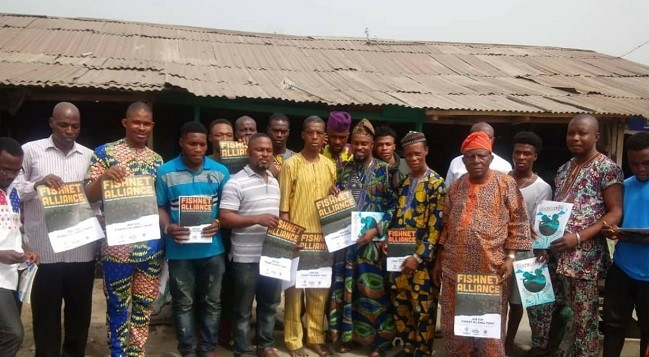
Foundation (HOMEF) fishers in Nigeria and Togo met on December 28, 2018 in
Makoko community, Lagos State, Nigeria. The meeting reportedly created space
for exchange of information and ideas to ensure sustainable fishing and ensure
that fishers’ rights are upheld and respected by policy makers.
Adam Derman (second left) with fishers from Makoko
The meeting hosted Adam Muhamadou Derman, the
Secretary General of Fishermen Trade Union in Togo; who also doubles as the
chairman of FishNet Alliance, Togo and leaders of fishing associations in
Makoko. Apostle Akintimehin, one of the leaders of fishing associations in
Makoko, thanked HOMEF for being always committed to the cause of fishers in
Makoko and Nigeria at large.
While narrating the fishing practices in
Togo, Adam said that there are federations of fishers in Togo which include: continental
fishers (folks that fish in rivers, creek and other inland water) and oceanic
fishers (folks that fish in seas, oceans etc.). He added that, at a time, a new
fishing port was constructed in Lome by the Chinese without due consultations
with the fishers – so the fishers were not involved in the construction. He
stated that it would have been better if the fishers were consulted so they can
decide how the port would be operated.
According to him, a time came when the
fishers and trade union of fishers raised their voices because the construction
activities were negatively impacting their fishing activities. A management
committee was set up and fishers were incorporated into the management of the
port, affording them the opportunities to be involved in decision making for
the port operations and fishing in their region.
He added that monitoring of fishing
activities was done by the government in the past, but now that there are
professional fishing association associations.
“We are part of the monitoring and control
team with government public administration. With the fishers’ involvement, they
have put in place good fishing practices like fishing with small nets, fishing
with generator, in which they go for fishing with generator and put light
inside the water to attract fish,” he said.
While reiterating the stance of FishNet
Alliance, he said that there is a sensitisation going on now to discourage
fishers from using chemicals because some fishermen go to the sea with some
chemicals and put them in the water to catch more fishes to have more money.
“We are currently dialoguing with them and
informing them about the harm (both to the marine environment and to humans that
consume the fishes and also our livelihoods) of using chemicals to fish, informing
them that the chemical kills the fish, their eggs and other aquatic organisms.
When this happen, they will not be able to reproduce and if this continues over
some years; there will be no more fish in our water.”
He informed that they have gone a step
ahead to ensure that the local knowledge is preserved for now and the future –
so they organise workshops to train community fishers (both young and old) on
sustainable local fishing techniques and resource management as a way of
continuous reminder about their traditional methods of fishing that respects
nature. He believes that by so doing, they are transferring the local knowledge
to the future.
They expressed their readiness to uphold
the tenets of the FishNet Alliance stating that the FishNet Alliance is the way
to go and that it will help unite fishers in Africa and in other parts of the
world.
The fishers from Makoko thanked him from
coming all the way from Togo for a knowledge exchange and solidarity visit,
stating that they face threats of displacement from their coastal environment
due to dredging activities by the government, and that, secondly, fishing gears
are expensive, and they do not enjoy any assistance from the government.
Participants opined that the problems faced
by coastal communities are similar in nature, yet the authorities involved are
not taking the plight of the fishers in coastal areas into consideration, even
when the fact is clear that the sector employs more people than the oil and
mining sectors.
With the FishNet Alliance, the fishers in
coastal regions in Nigeria, Togo and Ghana believe that they now have leverage
and a platform to express themselves and share their experiences and issues
with other fisher folks across the coast of West Africa.
The platform brings about collective
efforts in putting a stop to the activities of the explorative and extractive
industries across Nigeria and the coast of West Africa, the fishers stressed.
The fishers from Lome and Makoko agreed that since exploration for hydrocarbons is ongoing along the entire coastline of West Africa, it is essential that the FishNet network expands to more countries and that fishers are trained to monitor the marine ecosystem in their territories.
By Stephen Oduware (Project Officer, Sustainability Academy, HOMEF)
The world has been trying for decades to curb deforestation
but continues to fail. Forests are still being cleared at high rates despite
efforts by forested and supportive countries alike. A new study by researchers has found that there is no “one
size fits all” solution: every agent of deforestation is different and requires
specialised efforts to reduce their impact.
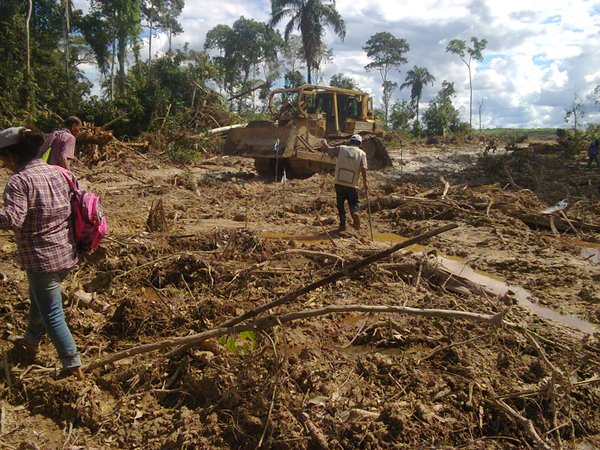
Deforestation in Peru
The researchers – from World Agroforestry, ASB
Partnership for the Tropical Forest Margins, African Centre for Technology
Studies, Ethiopian Environment and Forest Research Institute, and the Norwegian
Institute of Bioeconomy Research – highlighted three main typologies of
deforestation, and forest degradation: 1) smallholding farmers, usually very
localised; 2) large-scale commercial agriculture involving legal or illegal
allocation of forested areas to establish commercial farms; and 3) natural
factors, such as fire, insect attack and landslides.
Each of these three forms of deforestation need to be
addressed differently if the rate of deforestation is to decrease
substantially. In their study, the researchers focused on the first category – smallholding
farmers – in two forested areas: Menagesha Suba in Ethiopia; and Masaai Mau in
Kenya.
“We applied behavioral science theories to understand the
in-depth contexts among smallholders in relation to deforestation and forest
degradation,” said Lalisa Duguma, the lead author of the paper and a researcher
at World Agroforestry. “In the past, the search for solutions to curb
deforestation largely focused on technical solutions without unearthing the
underlying behavioral logic of smallholders as it relates to deforestation.
Such an approach misses its target widely.”
They found that the factors forcing smallholders to engage
in deforestation and forest degradation were largely contextual, that is,
socio-demographics, production constraints, policies and governance issues,
with some influence from routine practices, such as timber extraction for
fuelwood and construction. These factors can be broadly aggregated as
necessity-driven, market-driven, and governance-driven.
“In the forests studied, deforestation and forest
degradation were mostly caused by farmers meeting their needs for subsistence,
supported by weak governance. Though most factors were intrinsic to
smallholders’ contexts, the extent of deforestation and degradation was
aggravated to a great extent by factors external to the communities living
close to the forested area.
There was also an observed strong interdependence between
the various key factors, which demands a systemic approach for dealing with the
drivers of deforestation and degradation. Therefore, when policies are being
developed, there should be scrutiny of the contexts, the factors aggravating
destructive behavior, and the associated enablers, to reduce forest losses
under varying socioeconomic, biophysical, and governance conditions.
The researchers recommend that REDD+ should use the
typologies of deforestation and forest degradation and the context in which
they occur to identify targeted measures that could enhance effective control
of loss of forests.
“With REDD+ moving into implementation after the
Paris agreement,” said Peter Minang, a co-author and leader of the Landscapes
Governance research unit at World Agroforestry, “a search for innovative ways
of understanding the drivers of deforestation and finding corresponding
relevant solutions is critical to save forests.”
The University of Reading in the United Kingdom says it is
partnering with the Federal Institute of Industrial Research Oshodi (FIIRO) to
achieve green economy transition in Nigeria.
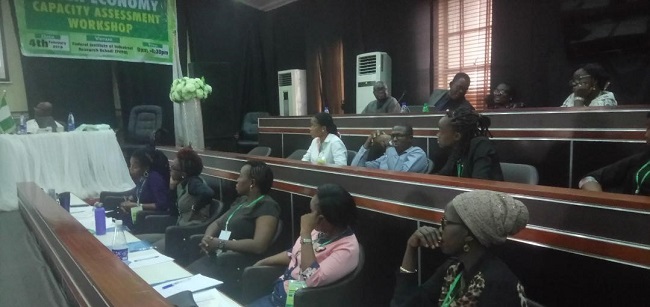
Cross section of participants at the workshop
Prof. Chuks Okereke of the university made this known on
Monday, February 4, 2019 at a forum held in Lagos. The theme of the workshop
was: “Green Economy Capacity Assessment Workshop’’.
Okereke said that the project, which included four other
agencies under the Federal Ministry of Science and Technology, was designed to
engender Green Economy decisions in Nigeria.
Green Economy is an economy that aims at reducing
environmental risks and ecological scarcities. It also aims for sustainable
development without degrading the environment.
Okereke said: “This project is aimed at knowing the
gaps in the partner agencies, so that an effective training programme will be
implemented to equip them on how to facilitate green economy transition.
“Our research shows that there are lots of gap in African
Government systems, which include low technical skills in the area of life
cycle assessment, renewable technologies and even in terms of policy designs
mainstream.
“However, the extent of these gaps has not been really
identified in a systematic way.
“Our focus now is to have a systematic identification for
these loopholes, so that we can know for certain where those gaps exist and
work on them.
“This research will help us to facilitate low-carbon
development in Africa, which is currently the poorest and most vulnerable
continent to climate change.’’
Prof. Gloria Elemo, the Director-General, FIIRO, said that
the workshop was aimed at sensitising participants on the latest developments
in green economy around the world.
Elemo explained that the workshop would point out the set of
skills required by the Federal Ministry of Science and its agencies to
effectively facilitate green economy transition in Nigeria.
The director-general, represented by Dr Yemisi Asagbra, the
Director of Production, Analytical and Laboratory
Management, said that the workshop would help participants to become
part of the resource persons within the ministry.
Elemo said that they would help to galvanise Nigeria’s
efforts at climate mitigation and adaptation, particularly in the food and
agro-allied industry.
The Economic Community of West African States (ECOWAS) and
the African Development Bank (AfDB), on Monday, February 4, 2019 signed a $22
million agreement for the technical design to develop the Abidjan-Lagos Road.
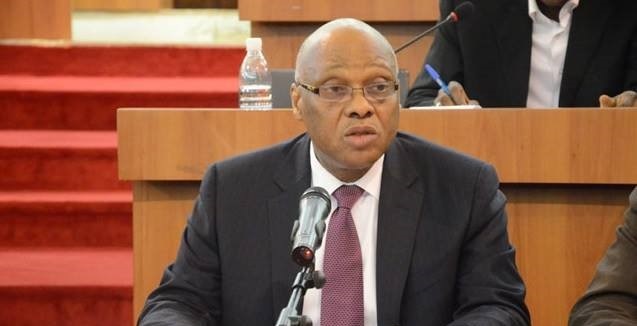
ECOWAS Commission President, Jean-Claude Brou
The signing of the Grant Retrocession Agreement between
ECOWAS and AfDB and the contracts for the feasibility, environmental,
socio-economic and detailed engineering designs was done at the ECOWAS
Commission in Abuja.
ECOWAS Commission President, Jean-Claude Brou, said that the
signing was in recognition of the decision of the Presidents of Nigeria, Ghana,
Cote d’Ivoire, Togo and Benin in 2014 on the construction of the highway.
“With the approval of the member states, the ECOWAS Commission forwarded financing requests of approximately $89 million to several development partners, including AfDB and European Union, to fund the technical and project preparation studies.
“We thank the AfDB for their swift response and subsequent
identification mission undertaken in Dec. 2018 for possible financing.
“The EU contribution of €9.13 million was mobilised through
the African Development Bank who also contributed approximately $11.06 million
making it a total of $22.72 million for the project.”
The commission’s president added that contracts were also
signed with three major consulting firms to undertake feasibility,
environmental, socio-economic and detailed engineering designs for the six-lane
highway.
He said the 1,080 km Abidjan-Lagos corridor would connect
some of the largest and economically dynamic cities in Africa and also link
vibrant seaports which served landlocked countries of the region.
The Senior Director, AfDB, Mr Ebrima Faal, said West Africa
needed deeper market integration to promote industrialisation for the economic
development of the region.
Faal reiterated that the total intra-regional trade stood at
15 per cent, adding that the project would facilitate trade within the region.
“Promoting regional trade is enshrined in articles
establishing AfDB and is a key pillar in the High Five priorities of the bank.
“That is why the bank is investing heavily in high quality
regional transport infrastructure throughout the continent.”
The AfDB representative said the objective of the
Abidjan-Lagos Corridor Highway Study was to undertake all the needed technical
studies for the effective implementation, operations and economic development
of the highway.
Mr Mayne David-West, Pearl Consultants and Civil and
Structural Engineers, who spoke on behalf of the other consultants, said the
project design would take two years and would connect to the planned East-West
coastal road.
“The project design life span will take two years before
construction; we will provide bid documents for the construction itself.
“The beauty of this road is that there is already an
existing East-West coastal road design which starts from Lagos to Calabar and
from there, goes to Cameroon.
“When this road is done, it will be connected to the
East-West coastal road.”
The EU representative, Mr Kurt Cornelis, said the project
fitted in the framework of the cooperation of the EU with the continent and the
region.
Cornelis said the project would strengthen the competitiveness of the territories, stimulate investments, encourage regional integration for development growth and job creation.”
The Kaduna State Emergency Management Agency (SEMA) with
support of an NGO, Christian Aid, on Monday, February 4, 2019 sensitised a
community in the state on appropriate response during fire and flood
emergencies.
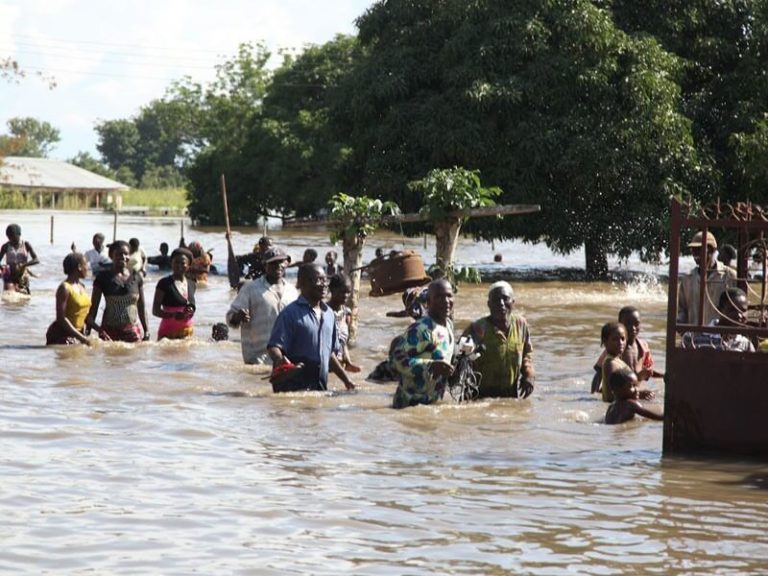
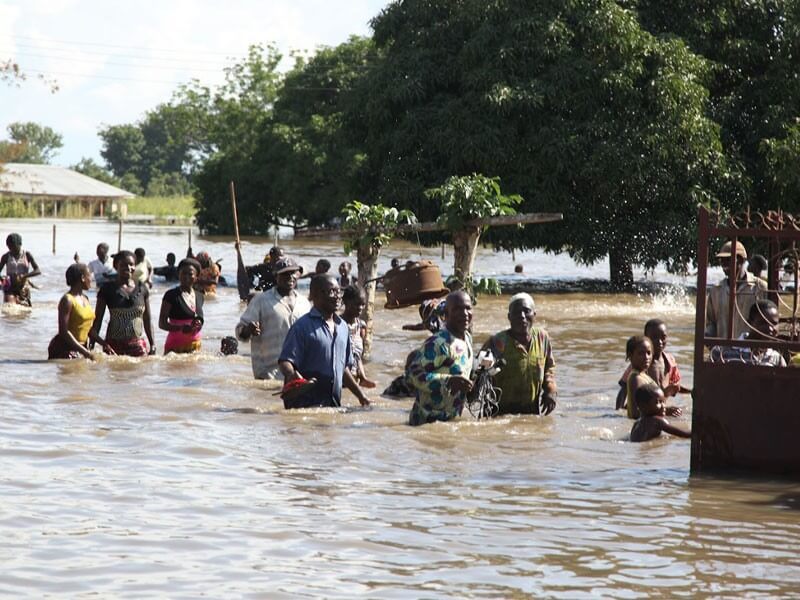
A flood ravaged community
During the event held within Bashama community in
Kaduna, Executive Secretary of the agency, Ben Kure, said the aim was to
develop local disaster response capacity.
Kure, who was represented by Mubarak Ibrahim of Relief
and Disaster Management unit of the agency, said that the simulation exercise
was in line with the agency’s preparedness and response strategies.
He said that the exercise was also aimed at increasing
synergy among response agencies in the state.
He said that the objective was to ensure that communities,
especially first responders are fit, ready and able to provide prompt
professional services meant to reduce casualties during fire incidents.
“We know that disaster management is demanding and requires
a lot of determination and commitment to accomplish.
“Therefore, we must understand the various roles support
agencies ought to play in managing disaster and building community resilience,”
he said.
Emmanuel Danjuma, Programme Officer Disaster Management and
Peace Building, Christian Aid, said the exercise would create required skills
and resilience for people of the community to provide rescue in emergencies.
He said the exercise was targeted at nine communities in
three Local governments Area’s of Kaduna North, South and Chikun.
He listed the communities to include Ungwar Rimi, Malali,
Rafinguza and Haliru Dantoro community in Kaduna North; Romi, Nasarawa in
Chikun, and Baranawa and Tudun wada in Kaduna South.
Danjuma said the sensitisation and simulation exercise was
in line with the European Commission Humanitarian Office (ECHO) as part project
of early Warning for Early Response (EWER) initiative.
He assured that the centre would continue to sensitise
communities to ensure that safety becomes a culture among residents, adding
that this will, in turn, reduce to the barest minimum accidents at home.
The event was graced by the National Emergency Management
Agency (NEMA), Kaduna State Fire Service, Red Cross, NGOs, and traditional
rulers, among others.
The National Commission for Refugees, Migrants and
Internally Displaced Persons has expressed concern over Cameroonian
authorities’ decision to deny entry to 35,000 displaced persons from
Nigeria’s state of Borno.
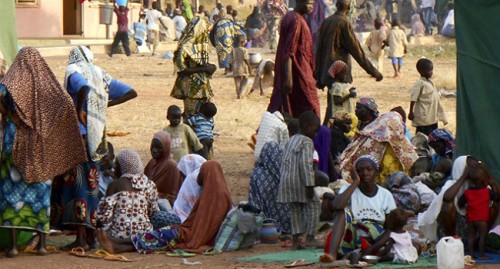
Women and children in a IDPs camp. The displacement was informed by the Boko Haram insurgency. Photo credit: channelstv.com
Head of the commissioner, Sadiya Farouq, said while presenting
relief items for the affected displaced persons at the Government House,
Maiduguri, that the refugees were left stranded at the border.
Farouq disclosed that the refugees were those displaced in
attacks coordinated by Boko Haram insurgents on January 14, 2019 at Rann
community in Kala Balge Local Government Area of Borno State.
He explained that the displaced persons who fled the
conflict were stranded at the Nigeria-Cameroun border, sequel to the decision
of the Cameroonian authorities to deny them entry.
Farouq said: “The displaced persons ran for safety but were denied
entry into Cameroon. They are stranded along the border as they could not go
back to their communities for fear of renewed attacks.
“The trend left us devastated; hence, my visit to Borno to
attend to the immediate needs of the displaced persons.
“The commission, in line with its mandate, will provide
durable solutions to persons of concern. We handed over relief items to Borno
government for distribution to the affected persons.”
Farouq added that the gesture was aimed at improving the
living conditions of persons recently displaced due to insurgents’ attacks in
the state.
According to her, the commission is monitoring the situation
to facilitate implementation of durable solution, including possible relocation
and resettlement of the IDPs.
Farouq added that the commission had liaised with the
Ministry of Foreign Affairs to initiate negotiations with Cameroonian
authorities with a view to finding solution to the impasse in accordance with
the United Nations Convention on Refugees.
She quoted sections of the UN charter, affirming that “no
contracting state shall expel or return a refugee in any manner whatsoever to
frontiers of territories where his or her life or freedom will be threatened on
account of his or her race, religion, nationality, membership of a particular
social group or political opinion.”
The commissioner urged the Cameroonian authorities to
rescind its decision and take necessary steps to support the displaced persons.
Farouq recalled that over 40, 000 Cameroonian refugees were
allowed into the Nigeria since October 2017, adding that the commission
provided support to the affected persons of concern.
“They are currently camped in Cross River, Benue, Akwa Ibom,
and Taraba states, as well as the Federal Capital Territory (FCT). This is a
clear demonstration of Nigeria’s commitments to the international humanitarian
obligation and spirit of good brotherhood.
“It will also interest you to know that the federal
government has given the go ahead, including funding for Technical Working
Group of the Tripartite Commission for safe and dignifying return of
Nigerian refugees in Cameroon to other stable areas in the country.
“The movement will be done in a safe and dignifying manner
as clearly spelt out in the Tripartite Agreement between the Federal Republic
of Nigeria, Republic of Cameroon and United Nations High Commissioner for
Refugees (UNHCR),” she added.By Hamza Suleiman
A coalition of civil society organisations (CSOs) and
farmers has denounced the recent approval for release of Bt cowpea
(beans) for cultivation in Nigeria. The group is also demanding a rejection of
the application for field trials of a cassava clone, asserting that the
processes of making and approving these artificial crops present enormous
threat to human and environmental health.
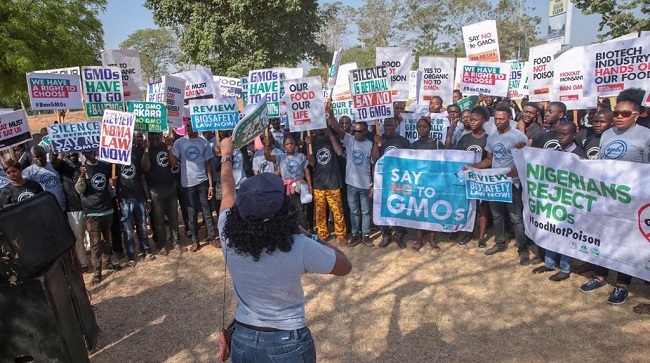
A recent anti-GMO public rally in Abuja
On Monday, January 28, 2019, the National Biosafety Management Agency (NBMA) issued permits to the Institute of Agricultural Research, Zaria for the commercial release of a genetically modified cowpea said to be resistant to the Maruca vitrata virus.
The coalition in response to this stated that the release of
the genetically modified beans will contaminate indigenous varieties, place
them at risk and expose farmers and people to avoidable risks.
They referred to a study of pollinator characteristics of
the natural West African wild cowpea populations which reveals that the Bt-gene
will move from the genetically modified lines to non-modified lines of both
cultivated and wild relatives, resulting to other plants gaining the resistance
trait that will cause an alteration in ecological balance and present adverse
effects.
“It is worth nothing that this cowpea containing the transgene Cry1Ab, has not been approved for commercial use anywhere else in the world. Use of this Bt gene was discontinued in South Africa where the cultivation of maize modified (with the gene) led to enormous pest resistance and infestation. Current research has revealed that protein produced by this transgene has toxic effects on human liver cells and induces alterations in immune systems of laboratory animals,” the coalition stated in a statement made available to EnviroNews on Sunday, February 3, 2019.
The statement was endorsed by Nnimmo Bassey (Director,
Health of Mother Earth Foundation), Gbadebo Rhodes-Vivour (Coordinator,
GMO-Free Nigeria Alliance), Mariann Bassey-Orovwuje (Chairperson, Alliance for
Food Sovereignty in Africa) and Jackie Iketuonye (Country Representative, Bio-Integrity
and Natural Food Awareness Initiative).
The coalition added that the projection that the GM beans
will increase yield by 20% above current levels is a “paltry reason” for
exposing the nation to risks as the challenges of agriculture in Nigeria are
complex and cannot be solved by one genetic engineering silver bullet.
Bassey said: “It is clearly impossible to label genetically
engineered beans and its products in Nigeria. Our socio-cultural setting makes
it impossible to give Nigerians the right of choice through labeling of GMOs.
This is one reason why the rush into GMO approvals is extremely perplexing.
Where is the push coming from and why this reckless rush?”
He further added: “Within just a couple of years of Nigeria
having a GMO regulatory agency, all we see are permits and propaganda, while
the task of protecting the Nigerian people and our environment is being
forgotten due to the blatant incestuous relationship with developers, promoters
and merchants of these risky technologies.”
The group calls on the Nigerian Seeds Council or the
Varietal Release Committee not to endorse recommendations from NBMA as doing so
will dash the hopes of Nigerian farmers to preserve natural varieties, expose
consumers to unnecessary risks and place the nation on an irreversible road to
ecological disaster.
The group condemned a new application for a genetically
modified cassava which is engineered to yield more starch than normal, stating
that the application seeks to address a non-existent problem and appears to be
promoted by industrial starch producers or by speculators who see genetic
engineering as a means of making profit and serving industry needs to the
detriment of lives and food system.
It also stated that Nigeria already has varieties of cassava
which give sufficient starch and that the people are not complaining. They
insisted that Nigeria must not be a test ground for dangerous food technologies
as has already been recorded with a novel variety of cassava field-tested by
the International Institute of Tropical Agriculture (IITA) in 2018 (and which
may already be in the environment) despite protests and objections.
The coalition also decried the flooding of the Nigerian
market with illegally imported genetically modified food products (as revealed
in a recent market survey by HOMEF) and advised NBMA to invest time in
regulating and protecting foods and promoting biosafety rather than parading
itself as a permitting or revenue generating agency.
The body noted that the clamour by the Nigerian government
officials for genetically modified food crops goes against the precautionary
principle (a major principle of the Cartagena Protocol to which Nigeria is
signatory) which advises governments to take precaution in the face of
uncertainty of safety of GMOs in terms of human and environmental health.
In conclusion, the coalition advised that in place of the
genetically engineered solution and modern agricultural biotechnology
in general which requires a significant increase in input costs and could
disrupt socio-ecosystems, Nigeria should instead focus on biological control as
solution to pests invasion and augment with provision of needed infrastructure
and other necessities such as credit schemes, access to land and extension
services to farmers for enhanced productivity and food sovereignty.
They demanded that the National Biosafety Management Agency
Act be critically reviewed to ensure that it protects the interests of the
people, for example to include strict provision on Liability and Redress,
emphasis on the precautionary principle and on public consultation.
The Nigerian Institute of Town Planners (NITP) has called on
the Federal Government to domesticate the components of the New Urban Agenda.
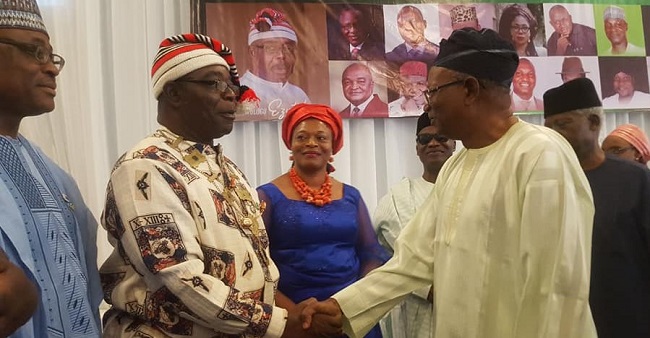
The 23rd National President of NITP, Mr Lekwa Ezutah (second left), being congratulated after the investiture
The 23rd National President of NITP, Mr Lekwa Ezutah, made
the call while delivering an assurance speech at his investiture on Saturday,
January 2, 2019 in Abuja.
The New Urban Agenda was adopted at the UN Conference on
Housing and Sustainable Urban Development (Habitat III) in Quito Ecuador, on
Oct. 20, 2016.
It was endorsed by the UN General Assembly at its 68th
plenary meeting of the 71st session in December 2016 to respond to challenges
being faced by cities.
The agenda will guide the efforts of nations, cities and
regional leaders, funders of international development and UN programmes for
the next 20 years to achieve sustainable urban development.
Ezutah said that, if well planned and managed, urbanisation
could be a powerful tool for sustainable development for both developing and
developed countries.
“I call on the Federal Government to specially and urgently
pay attention to making efforts at the domestication of the components of the
agenda,’’ the new NITP boss said.
Ezutah, who is also a Special Assistant to the Abia State
Governor on Urban Development, urged the Federal Government to adopt the
content of the Earth Charter.
The Earth Charter is an ethical framework for building a
just sustainable and peaceful global society in the 21st century inspiring in
people a new sense of global interdependence and shared responsibility for the
wellbeing of human family.
According to the expert, government should ensure that the
town planners are an integral part of its political agenda to enhance the
chances of success.
He promised that the new management would reform the
national secretariat of the institute, grow membership, improve and strengthen
the professional competence of members and increase awareness.
“No form of growth, including the recently inaugurated
economic growth and recovery programme of the Federal Government is sustainable
in the absence of physical planning.
“This is because all economic investments depend on land to
produce and when such thoughts are not located rationally in harmony with one
another, chaos and anarchy become the order,’’ he noted.
He further said that from experience, countries with robust
physical planning programmes had grown faster and developed more sustainably.
According to him, the most outstanding of such experience is
Singapore.
Also, Dr Omede Idris, Chairman of the occasion, in a remark
urged professionals to rise to occasions in the political field and facilitate
in the process of redirecting the economy, national engagement and development
of our collective good.
“Professionals have a responsibility to stimulate the growth
of the economy and productivity in the right direction.
“Government on her part should value professionals as
partners in progress for the common good of the people,’’ he added.