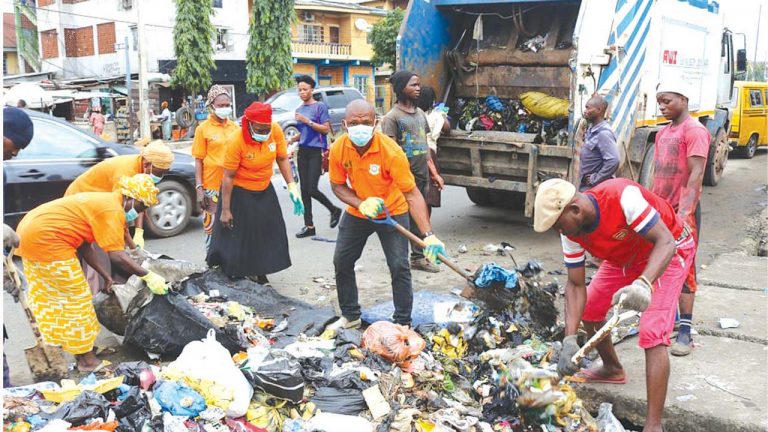
Lagos residents are not happy over what they termed “failure of waste management authorities in the state to live up to their responsibility” thereby resulting in them celebrating the Yuletide season in a filthy environment.
Correspondent Innocent Onoh captured their mood in parts of the metropolis.
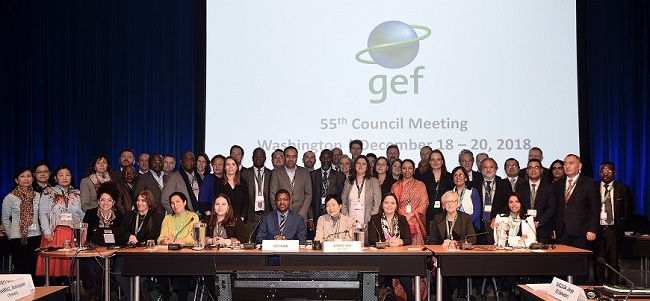
The 55th meeting of the Global Environment Facility (GEF)
Council convened in Washington, DC, US, from December 18 to 20, 2018 at World
Bank headquarters. Representatives of governments, international organisations,
and civil society organisations (CSOs) attended the three-day meeting, which
also included the 25th meeting of the Council for the Least Developed Countries
Fund (LDCF) and Special Climate Change Fund (SCCF). The meetings were preceded
by a consultation with CSOs on December 17.
Delegates at the 55th Global Environment Facility (GEF) Council meeting
Naoko Ishii, GEF Chief Executive Officer (CEO) and
Chairperson, and Abdul Bakarr Salim, Sierra Leone, served as Co-Chairs for the
meetings.
The GEF Council adopted the first Work Programme since the
approval of the seventh replenishment of the GEF Trust Fund (GEF-7). The Work
Programme comprised 18 projects in 25 recipient countries, and amounted to $157.8
million, including GEF project financing and Agency fees, and is expected to
leverage $819.7 million in co-financing. In addition, the Council of the
LDCF/SCCF adopted a Work Programme comprising six project concepts, with
resources amounting to $45.85 million for the LDCF, including project grants
and Agency fees.
The Council also discussed and approved several policies,
guidelines and safeguards on measures aimed at enhancing the efficiency,
accountability and transparency of the GEF. These measures included new policy
procedures to speed up the preparation, endorsement, implementation, and
closure of projects. A policy regarding improved access to information and
revised environmental and social safeguards throughout the GEF project and
programme cycle were also adopted.
The Council heard updates from representatives of the
Conventions for which the GEF serves as a financial mechanism regarding recent
and upcoming meetings, decisions and other relevant activities. The
presentations by the Minamata Convention on Mercury, Stockholm Convention on
Persistent Organic Pollutants (POPs), UN Convention to Combat Desertification
(UNCCD), UN Framework Convention on Climate Change (UNFCCC), Convention on
Biological Diversity (CBD), and Montreal Protocol prompted Council Members to
reflect on the GEF’s unique role in integrating issues and generating
synergies.
At the conclusion of the meetings, Council Members reviewed
and approved the Joint Summaries of the Chairs for the GEF Council and
LDCF/SCCF Council meetings.
The GEF was created in 1991 to formulate financing responses
to the mounting concern in the preceding decade over global environmental
problems. The GEF operated in a pilot phase until mid-1994. Negotiations to
restructure the organisation were concluded at a GEF participants’ meeting in
Geneva, Switzerland, in March 1994, where representatives of 73 countries
agreed to adopt the GEF Instrument.
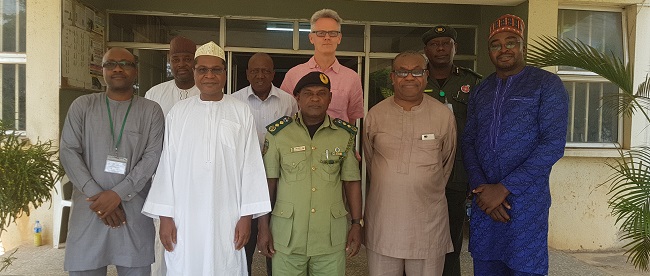
Nigeria’s National Coordination Group (NCG) for Key
Biodiversity Areas (KBAs) was inaugurated at the National Parks Service headquarters
in Abuja on Tuesday, December 18, 2018.
Members of Nigeria’s National Coordination Group for Key Biodiversity Areas: L-R (front row): Mr. Ayo Olomo, representative Federal Department of Forestry of the Ministry of Environment; Dr. Muhtari Aminu-Kano, D-G Nigerian Conservation Foundation (NCF); Alhaji Ibrahim Goni, Conservator General, National Parks Service; Prof. Augustine Ezealor, Federal University of Agriculture, Umudike; Dr. Joseph Onoja, Director of Technical Programmes, NCF.
L-R (back row): Mr. Mohammed Boyi, Head of Abuja office, NCF; Prof. Shiiwua Manu, Director, A. P. Leventis Ornithological Research Institute; Andrew Dunn, Country Director, Wildlife Conservation Society (WCS); and Mr. Joseph Ntui, National Parks Service
The core members of the KBA Partnership at global level are
Birdlife International, Global Environment Facility (GEF), Wildlife
Conservation Society (WCS), International Union for Conservation of Nature
(IUCN), Royal Society for the Preservation of Birds (RSPB), Worldwide Fund for
Nature (WWF), Nature Serve, Conservation International, Amphibian Survival
Alliance, Critical Ecosystem Partnership Fund (CEPF), Global Wildlife
Conservation and Rainforest Trust.
Key Biodiversity Areas (KBAs) have been recognised by 12 of
the world’s leading conservation organisations as the currency for biodiversity
conservation across the globe in an ambitious new partnership for nature. These
sites include important habitats for plants and animal species in terrestrial,
freshwater and marine ecosystems. This feat was accomplished in September 2016.
Nigeria’s NCG is consists of the Nigerian Conservation
Foundation (NCF) as its Secretariat, Wildlife Conservation Society (WCS), A. P.
Leventis Ornithological Research Institute (APLORI), Federal Department of Forestry
of the Ministry of Environment and the National Parks Service.
National Coordination Groups (NCGs) for KBAs are to
primarily, coordinate the process to identify, document and delineate KBAs at
the national level. Other responsibilities include promoting the conservation,
management and protection of KBAs in Nigeria.
The Global Standard for the Identification of Key
Biodiversity Areas (IUCN 2016) sets out globally standardised criteria for the
identification of KBAs worldwide. The KBA Partnership and globally standardised
criteria, will promote global conservation efforts by mapping internationally
important sites and ensuring that scarce resources are directed to the most
important places for nature. The impact of this vital conservation work will be
improved by promoting targeted investment in conservation action at priority
sites.
The partnership will work with governments, national and
international agencies, organisations and individuals to implement the global
KBA programme in a transparent and inclusive way.
New forestry data released recently shows that, in 2018,
Brazil has already met – albeit through actions in its forestry sector alone –
its overall pre-2020 commitment to reduce emissions by 36-38% nationally. These
actions are said to have delivered a dramatic 1.2-billion-ton emissions
reduction in 2018 alone.
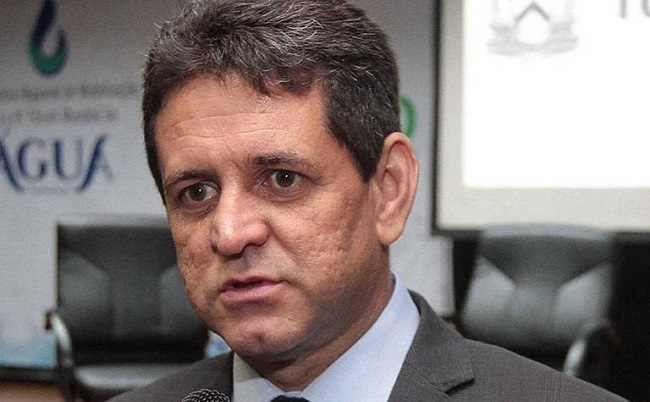
Brazil’s Minister of the Environment, Edson Duarte
The data, which was released on Tuesday, December 11, 2018
in Katowice, Poland during the UN Climate Change Conference (COP24), also shows
Brazil in 2018 has met its pre-2020 commitment to reduce CO2 emissions from
forestry by 60%.
“This result is a powerful and timely reminder that even
developing countries facing economic and social challenges can still deliver on
their pre-2020 commitments through strong and targeted actions,” Brazil’s
Minister of the Environment, Edson Duarte, said in Katowice.
The data – based on a conservative calculation of carbon
absorption by Brazilian forests – shows a remarkable turnaround for the role of
the Brazilian forestry sector, which in the 14 years to 2004 accounted for 75%
of Brazil’s overall CO2 emissions in the country to now absorbing 538 million
tons of CO2 from the atmosphere in 2018.
The 1.28-billion-ton reduction in CO2 emissions in the
Brazilian forestry sector between August 2017 and July 2018 (relative to its
2020 emissions projections set in 2009, which formed the basis of its pre-2020
commitment on forestry), consists of:
Emissions reductions of 564 million tons of CO2
due to the reduction of deforestation in the Amazon, whose emissions totalled 364
million tons in the 2018 period
Emissions reductions of 186 million tons of CO2 due
to the reduction of deforestation in the Cerrado, whose emissions totalled 136
million tons in the 2018 period
The absorption of 538 million tons of CO2 from
the atmosphere through land management measures across three land categories:
179 million tons absorbed in Brazil’s Indigenous Territories, 220 million tons
absorbed in Federal Protected Areas, and 139 million tons absorbed in Permanent
Preservation Areas and Legal Reserves on private land.
The above data for removal of CO2 through land management
measures are said to be conservative because, according to the Brazil
government, they exclude a significant amount of Brazilian forests which falls
outside of the three land categories, as well as significant areas of planted
forests and recovery of native vegetation.
Nigeria now has in place a plan to promote its REDD+ agenda,
thanks to a World Bank and Forest Carbon Partnership Facility (FCPF)
promoted initiative that was officially rounded up a couple of weeks ago.
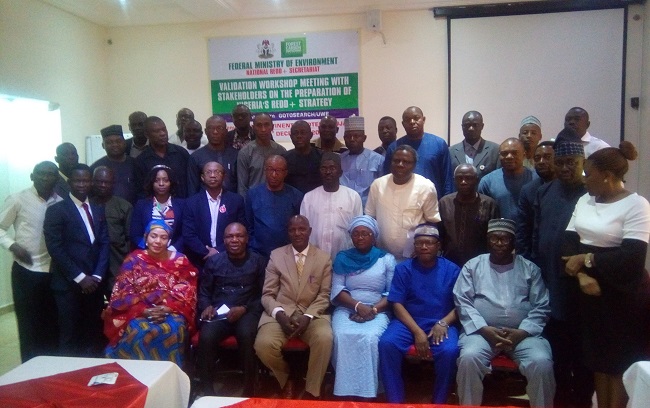
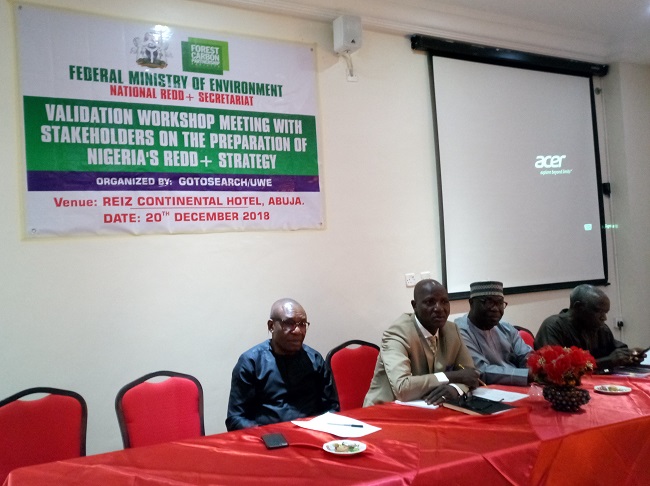
L-R: Dr. Moses Ama, National Coordinator, Nigeria REDD+ Programme; David Andrew-Adejo, Director of Forestry in the Federal Ministry of Environment; Prof Olukayode Oladipo, Team Leader, Gotosearch.com; and Philip Bankole, former Director of Forestry, during the opening of the Validation Workshop for Nigeria’s REDD+ Strategy in Abuja
REDD+ implies reducing emissions from deforestation and
forest degradation and the role of conservation, sustainable management of
forests and enhancement of forest carbon stocks in developing countries.
At a daylong event held in Abuja on Thursday, December 20,
2018, a cross section of stakeholders gathered to discuss and validate a draft
report on Nigeria’s REDD+ Strategy prepared by Messrs. Gotosearch.com Ltd. and
University of the West England (UWE), the consortium that was engaged to carry
out the assignment.
The validation workshop was also held to enrich the
technical contents of the report and give it a national outlook and
acceptability.
“This is a document that Nigeria will be using to engage with the international community for the purposes of how to bring benefits that are linked to our efforts in emissions reduction, as well as our sustainable forest management approach. If this strategy is not very well crafted and we don’t capture the elements and the options that we intend to use in engaging, then we are taking a wrong step,” submitted Dr. Moses Ama, National Coordinator, Nigeria REDD+ Programme, during the official opening of the meeting.
Former Director of Forestry in the Federal Ministry of
Environment, Philip Bankole, said: “We all know the problems in our forest
reserves. So, whatever is written here are common issues familiar to us.
“It is a good development that the REDD+ Programme has
gotten to this stage. It started some years ago and, despite a change of
leadership, it is still going very strong because we have competent hands in
place. Whatever comes out here today is to our own benefit. It is a national
service. This is a policy document and thus it has a lot of bearing on what happens
to our forest and government policies in the future.
Prof Olukayode Oladipo, Team Leader, Gotosearch.com, urged
participants to feel free to criticise the document as, according to him, there
is always a room for improvement on every document notwithstanding its quality.
Director of Forestry, David Andrew-Adejo, while declaring
open the event, congratulated the REDD+ team “which includes the secretariat
and the team that works with them on the field because all of you collectively
have been contributing to the successes achieved by the REDD+ secretariat.”
He added: “Nigeria should start assessing the financing
incentives that the REDD+ is trying to achieve as its end point. The benefit
will only come if we have a good strategy developed by REDD. It takes care of
how the villager that you asked not to cut his tree because of X-metric tonnes
of carbon that it stores, and the villager does not eat X-metric tonnes. He
just wants to cut it and use to cook or sell it. So, your strategy will be able
to give that man an assurance that if he leaves that tree alone, he will be
able to do something else that will enable him live the normal life he was
living to the extent that he would be the one that will be your champion.”
Participants at the validation workshop
The REDD+ Strategy report has sections like “Nigeria’s REDD+
Strategic Directions”, “Basis for Nigeria’s REDD+ Programme”, “Analysis of
Strategic Options”, “Governance of REDD+ in Nigeria”, “Monitoring and Reporting
of Nigeria’s REDD+ Implementation”, and “Action Plan for the Implementation of
the Strategy”.
At the close of the day, the report was eventually approved
for validation subject to the reflection of observered inputs and corrections by
participants who delibrated in groups.
REDD+ is a voluntary initiative established under the United
Nations Framework Convention of Climate Change (UNFCCC) with several
operationally significant but non-legally binding decisions adopted by the
Conference of the Parties. Other relevant initiatives include the UNREDD
Programme, the Forest Carbon Partnership Facility (FCPF), and the Forest
Investment Programme (FIP), each of which has its own requirements.
The Forest Carbon Partnership Facility (FCPF) is a
global partnership focused on reducing emissions from deforestation
and forest degradation, forest carbon stock conservation,
sustainable management of forests, and enhancement of forest carbon sotcks
(REDD+).
FCPF is made up of two separate, but complementary, funds
that support countries in their REDD+ preparations – the Readiness Fund and Carbon
Fund. The Readiness fund assists participant countries prepare for REDD+ by
developing policies and systems, in particular national REDD+ strategies;
developing reference emission levels (RELs); designing measurement, reporting
and verification (MRV) systems; and establishing national management
arrangements, including safeguards, for REDD+.
The Forest Investment Programme (FIP) is a targeted programme
of the Strategic Climate Fund (SCF), which is one of two funds within the
framework of the Climate Investment Funds (CIF).
The FIP supports developing countries’ efforts to
reduce deforestation and forest degradation (REDD) and promotes sustainable
forest management that leads to emission reductions and the protection of
carbon reservoirs.
Nigeria needs not less than $337 billion to implement the
Sustainable Development Goals (SDGs) from 2019 to 2022, the UN Support Plan for
the Sahel has estimated.
Sustainable Development Goals (SDGs)
The cost of implementing the SDGs in Nigeria, according to
the plan is $80.65 billion in 2019, $82.83 billion in 2020, $85.07 billion in
2021 and $87.37 billion in 2022.
On the investment needs in the Sahel, the plan reported the
cost of implementing the SDGs in the Sahel is projected to be between $140.25
billion and $157.39 billion per year between 2019 and 2022 in the 10 Sahelian
countries.
The plan said the 10 countries under the UN Integrated
Strategy for the Sahel (UNISS) needed an average of $148.7 billion annually to
implement the SDGs or $594.8 billion from 2018 to 2022.
The overarching goal of the Plan, targeting 10 countries;
namely Nigeria, Burkina Faso, Cameroon, Chad, The Gambia, Guinea, Mali,
Mauritania, Niger and Senegal, is to scale up efforts to accelerate shared prosperity
and lasting peace in the region.
The Plan covering the period of 2098 to 2030, would help
implement identified priorities to achieve the 2030 Agenda for Sustainable
Development and the African Union Agenda 2063, the report said.
The plan, however, stated that public-sector funding gap, on
average, remained at 36.2 per cent of the required resources. UNISS was
approved by the Security Council in 2013 and is a part of a preventive and
integrated approach to strengthening governance, security and development in
the region.
The plan noted that the Sahel is as much a land of
opportunities as it is of challenges, and it is blessed with abundant human,
cultural and natural resources, offering tremendous potential for rapid growth.
The plan aims at mobilising public resources and triggering
private investments in the 10 countries in support of ongoing efforts and
initiatives by governments, international and regional organisations, among
other partners.
It said in terms of natural resources, the Sahel is one of
the richest regions in the world and is abundant with oil, natural gas, gold,
phosphates, diamonds, copper, iron ore, bauxite, biological diversity and
precious woods, among many other assets.
These natural endowments offer immense value for economic
diversification, value-chain development and livelihoods, the UN plan said.
The Sahel is also endowed with more potential for renewable
energy such as solar and wind than other regions of the world, the UN plan
showed.
Its solar energy potential translates to about 13.9 billion kilowatt
hours per year compared to the world’s electricity consumption of 20 million kilowatt
hours per year, according to 2016 data.
The Sahel is also the most youthful region of the world with
64.5 per cent of youth aged less than 25 years, meaning investments in
education and vocational training could yield a demographic dividend.
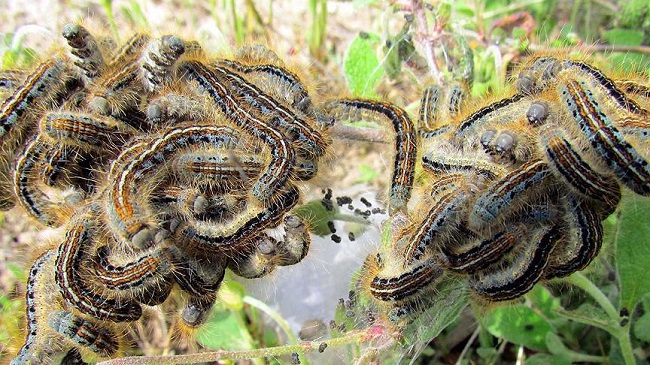
The International Centre for Insect
Physiology and Ecology (ICIPE) has secured a €7 million funding from the European
Union (EU) towards the fight against Fall Armyworms (FAW) in the Eastern Africa
region.
Armyworm invasion
Through the European Commission Directorate
for International Cooperation and Development (DEVCO), the EU said that the
money would be used in the management of FAW in Kenya, Ethiopia, Rwanda,
Tanzania and Uganda.
“Over the past 10 years, the EU and ICIPE have
formed a solid partnership towards strengthening agriculture as a core and
effective component in Africa’s development,” Myra Bernardi, Head of Section
Agriculture, Job Creation and Resilience Delegation of the EU to Kenya, said.
She said that the new initiative would
enhance livelihoods, resilience and food and nutritional security of
smallholder maize growers in eastern Africa through better preparedness and
eco-friendly management of the fall armyworm specifically, and invasive species
in general.
“We are delighted for this latest support,
which will enable us to build on our early results to create a comprehensive
package on fall armyworm management, and to work with a range of partners to
ensure that the solutions are delivered to communities, to avert the very real
threat posed by the pest,” Segenet Kelemu, Director General of ICIPE, said
during the ceremony.
Kelemu noted that ICIPE and the EU
have enjoyed a productive and strategic partnership on various critical issues
relevant to Africa such as bees, animal health and food and nutritional
security in general over the past 10 years.
She said that, globally, invasive species
are now considered the second most important threat to nature, due to their
severe and cross cutting impact on ecosystems, human and animal health,
infrastructure, economic and cultural resources.
Such species threaten food and nutritional
security by colonising valuable land, negatively impacting agricultural and
livestock systems thus reducing domestic supply and restricting international
trade as a result of quarantine issues.
They also place human, animal and
environmental health at risk through food-borne and vector-transmitted
diseases, as well as the effects of often harmful chemical pesticides used in
their control.
Further, invasive species destabilise
ecosystems, for instance by displacing beneficial local species, and by causing
irreparable damage to biodiversity, and contributing to habitat loss.
Economies also suffer due to the
significant financial investments required to respond to invasions, and to
conduct inspection, monitoring, prevention, control or eradication of invasive
pests.
In sub-Saharan Africa (SSA), one of the
most susceptible regions, the list of invasive species is long and diverse;
their destruction often horrendous.
Since January 2016, the fall armyworm (Spodoptera frugiperda), a very
destructive pest that is endemic to the Americas, has been devastating maize
and other crops in at least 43 African countries, placing at risk the food and
nutrition security, and indeed the very livelihoods, of more than 300 million
people.
The larval stage of the fall armyworm feeds
on more than 80 plant species, including maize, sorghum, rice, wheat,
sugarcane, as well as a variety of horticultural crops thus threatening food
and nutritional security, trade, household incomes and overall economies.
ICIPE is promoting the use of push and pull
technology that they have been using over the years in controlling stem borers,
that is a key pest of cereal crops across most of Africa, and the
parasitic striga weeds.
Push-pull involves intercropping cereal
crops with insect repellent legumes such as Desmodium genus and planting
an attractive forage plant such as Napier or Brachiaria grasses as a
border around this intercrop.
The intercrop emits a blend of compounds
that repel (push) away stem borer moths, while the border plants emit
semi-chemicals that are attractive (pull) to the pests.
DEVCO’s support includes 20 percent contribution
from the Centre’s core funds by the Swiss Agency for Development and
Cooperation (SDC), Swedish International Development Cooperation Agency
(SIDA).
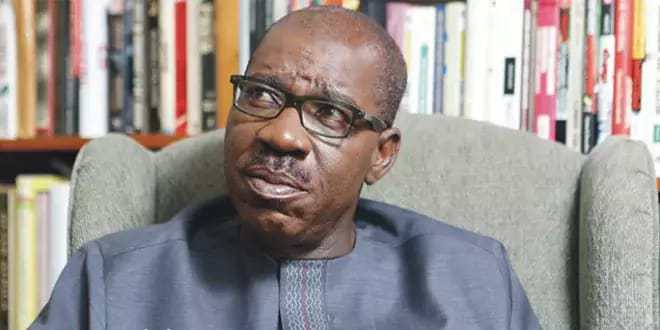
Edo State governor, Mr. Godwin Obaseki, has been tasked to bring the Okomu Oil Palm Company to the book over the allegation of land grabbing, environmental violation and livelihood destruction by the forest-bearing communities of Okpamakhin, located across Uhunmwode, Ovia North East and Owan West local government areas (LGAs) of the state.
Governor Godwin Obaseki of Edo State
The call was made at Sabongida-Ora, the headquarters of Owan
West LGA, by the Women Wing of the Coalition Against Landgrabbing and
Deforestation (CALD) during a recent street protest, which for hours hindered
vehicular movement in the town.
In a letter dated December 10, 2018 to Governor Obaseki and
jointly signed by Mrs. Joan Obazee and Mrs. Bose Eruaga, Coordinator and Deputy
Coordinator of the group respectively, with three others, the civil society
group said to be propelled by the Environmental Rights Action/Friends of the
Earth Nigeria (ERA/FoEN) stated: “We are also, once more, registering our
displeasure about the shoddy and lukewarm ways your government has been
handling the affront by Okomu PLC in its slipshod operation in Edo communities,
particularly the disrespect for the revocation order by the Edo State
Government on most of our forest land and the flouting of a mandatory directive
from the Federal Ministry of Environment to the company to carry out an
all-inclusive Environmental Impact Assessment (EIA) study before the land could
be given to it.
“And where the said revocation order of about 8,000 hectares
of the land render Okomu PLC’s grabbing illegal, the EIA directives by the
Federal Ministry of Environment also invalidate the already revoked land and
others outside of it, which the company has grabbed and more that it is bent of
acquiring illegally.”
The women protesters, who were mostly cladded in black
attires, also alleged that the Okomu multinational company, while wresting
their land, brought the bulldozers to clear the over 14,000 hectares of the
high forest, crops belonging to poor farmers, their environment, sources of water
and worship and their entire livelihood. The letter also accused the company of
bringing men in soldier and police uniforms to enforce the bulldozing, in a
threat to maim or kill them, should they oppose the forceful takeover of their
landed inheritance.
Whilst reminding Governor Obaseki that it was the Executive
Council of the immediate past government under ex-Governor Adams Oshiomhole
inheritance, in which Mr. Obaseki served as Economic Adviser, and an integral
part of it, the protesters said that they are at a loss that the Governor went on
to officially commission the same project premised on a land that has been
declared illegal by a subsisting revocation order. They also frowned at the
Governor’s hesitation to respond to series of protest and petition letters
brought to him on the issue by the 35 communities across the three local
governments, who are dependent on the rainforest land.
The group further alleged that the 8,000 hectares alleged
land was published in the Edo State Government of Nigeria Official Gazette of November
5, 2015 (page 48-50). Reasons for revocation were backed with an empowering
State Forestry Law, that the land meant for regeneration was commercialised
(sold) to second and third parties and not in the public’s interests. The
illegal transaction, it also alleged, was between the Iyayi Group of Companies,
who had gainfully logged the land for 50 years and it was thereafter given to
Iyayi freely for regeneration. Iyayi was the middleman that sold to A & Hatman
Ltd and to Okomu PLC, with billions of Naira exchanging hands.
“On May 14, 2016 after the revocation and refusal of Okomu
PLC to vacate the forestland, ex-Governor Adams Oshiomhole again made a
confirmation press statement that the land stood revoked and Okomu PLC should
vacate the it. Governor Oshiomhole also issued a follow-up letter dated April
18, 2016 (Ref: GH/COS.58/156) to the Okomu PLC, warning the firm to vacate the
land” It further alleged.
Okomu Oil Company was also alleged to have abandoned the
directives of the Environment Minister’s, via a letter dated September 22,
2015, (Ref: No. FMEnv/EA/ 123:271? Vol.1/28) stating that the “Interim EIA
Approval” for three months validity for preliminary development activities on
the project only; and that the EIA should be carried out to its logical
conclusion, and with continuous consultation with relevant stakeholders.
“Whereas the company had started bulldozing our forest land
in January 2014 barely three years after destroying the land upon which the EIA
was to be based. Incredibly, the same company had belated in December 2016
emerged with a concocted EIA draft report, which was conducted behind our
communities, the primary stakeholder,” said, the Women Wing of the group.
“But we have been pushed to a despairing living by an
overbearing multinational company, whose obnoxious operational policies has
seemingly arrogated to itself a sovereignty within a nationhood that is
supposedly independent. And we are determined to regain our possession, only along
the principles of constructive engagement and non-violence”.
Nevertheless, the group made what is called its renewed call
on the Edo State Government to “summarily quit the blundering Okomu PLC from
our land and get it to book for violating the Nigerian laws”.
The International Fund for Agricultural Development
(IFAD)-assisted Value Chain Development Programme (VCDP) says it will sustain
its campaign for Ebonyi State farmers to engage in dry season farming.
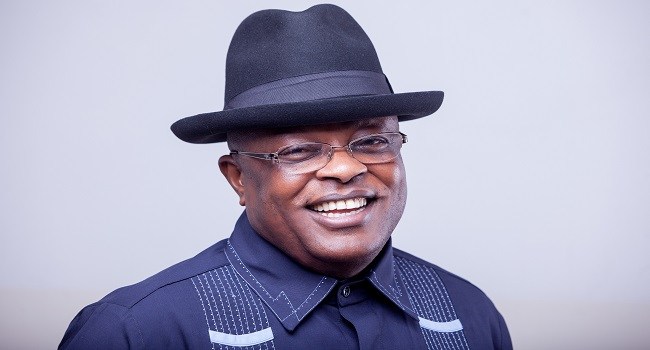
Governor David Umahi of Ebonyi State
Mr Sunday Ituma, the State Programme Coordinator (SPC) of IFAD-VCDP,
made this known on Friday, December 28, 2018 in Abakaliki, the state capital, during
a knowledge-sharing forum with benefitting farmers to evaluate the programme’s
activities in the state in 2018.
Ituma said that one-season farming practice was no longer in
vogue and profitable, stressing that dry season farming had commenced in some
areas in the state with encouraging results.
“Dry season farming is practiced in areas surrounded by
water bodies, especially those along the Cross River axis in Ikwo, Izzi among
others,” he said.
According to the SPC, the programme is working well to
provide irrigation facilities for farmers despite being capital-intensive.
“We are still with the design of the irrigation
infrastructure to be cited at Ezillo, Ishiellu Local Government Area though the
cost is not what the programme can handle.
“We, however, have other options which include sharing the
cost with the state government or funding it in the additional phase of the
project which we are hopeful will come,” he said.
He said that the programme was however still exploring other
areas to ensure that adequate water was provided for farmers to embark on dry
season farming.
“The water-level in Ebonyi is low in contrast to some areas
such as Niger where one can drill less-than 10 metres and source water to
sustain his agricultural productions.
“We intend to test-run this tube-well technology because the
usage of boreholes is hard for farming,” he said.
Ituma said that the various interventions of IFAD-VCDP in
the state such as the establishment of a seed laboratory for improved yield of
farmers’ crops.
“This seed laboratory will ensure that farmers stop
recycling their harvests as seeds because it continues to diminish their yields
instead of increasing it.
“We have also intervened in areas of infrastructures such as
roads and market stalls, processing centres, aggregation centres and provision
of inputs.
“We have also directly supported farmers with matching
grants and provision of solar powered boreholes in six locations,” he said.
Mrs Cynthia Edeze, the best IFAD-VCDP youth farmer in
Ebonyi, said that she greatly benefited from IFAD-VCDP’s interventions which
improved her farming practices.
“In 2017, I harvested 2, 000 bundles of cassava from an
average of two hectares and sold 1, 500 bundles of which I sold 1,200 bundles
to IFAD-VCDP.
“I cultivated three hectares in 2018 but sold each of the 1,
500 bundles for N1, 300 and realised a total of N1.9 million,” she said.
The other beneficiaries of IFAD-VCDP intervention also
shared their success stories as the participants highlighted areas the
programme should improve upon.
The participants also received tutorials from top IFAD-VDCP
officials, insurance and other financial institutions, among others.
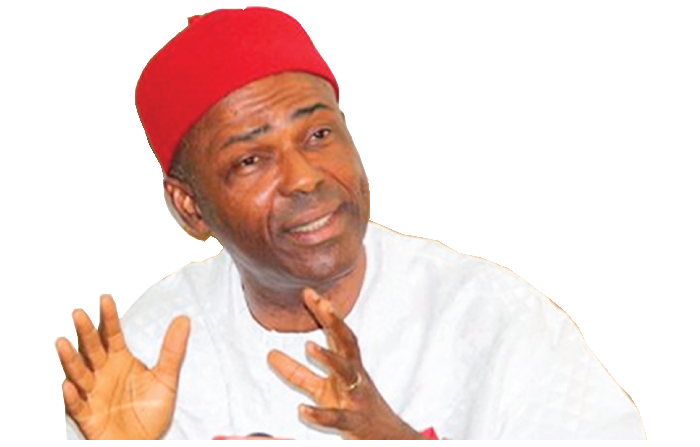
One of the inspiring and promising remarks of Dr Ogbonnaya
Onu, the Minister of Science and Technology at the end of 2018 get-together in
Abuja recently, was that the Federal Government would intensify efforts at
strengthening home-grown technology for the purpose of making the country
self-reliant.
Dr. Ogbonnaya Onu, Minister of Science and Technology
Further to his remarks, he restated that the ministry had
inaugurated National Strategy for Competitiveness in Raw Materials, Products
and Services, to ensure sustainability.
He said that Nigeria would save N3.6 trillion from overall
import in five years and create more than four million jobs with the
implementation of the strategy.
“It is our intention to ensure national capacity to
locally-produced acceptable high-quality raw materials, products and services.
“We have successfully formulated Nigeria’s new National
Policy on Leather Production; the first of its kind in the history of our
nation since independence in 1960.
“This will fast track sustainable development of leather
technology that will help to boost industrialisation and enhance growth in our
domestic economy.
“By deploying resources to commercialise research findings,
new products and service will be created for new jobs, it will reduce poverty
and improve the quality of lives of Nigerians.
“It will also help in building strong and resilient domestic
economy that is competitive and sustainable’’, Onu said.
Onu also observed that the Presidential Order Number 5 had
opened new opportunities for Nigerian professionals to arrest capital flight,
strengthen local capacity and promote local manpower development for the good
the nation.
“The ministry successfully formulated high nutrient density
biscuit for the children to complement school feeding programme of the
President Muhammadu Buhari’s administration.
“This will further nurture our young ones with adequate
nutritional requirements that will enable them to become productive citizens
for sustainable development,’’ he said.
He said the ministry had created a strong platform for the
development of indigenous technology, noting that the number of patents secured
with the assistance of the National Office for Technology Acquisition and
Promotion (NOTAP), had risen to 54 as against six in 2015 when he became the
minister.
He also said that the ministry had progressed to an advanced
stage on the local production of solar power electronic-voting solution with
cloud-based collection of election results capability.
“Solar electronic voting solution will further enhance
e-voting and help Nigeria in the conduct of free, fair and credible elections.
“The ministry had also recorded a breakthrough by
successfully deploying genetic engineering technique in production of two
varieties of cotton that are high-yielding and resistant to devastating attack
of worms.
“The technique will increase cotton production in the
country, as well as reactivate textile industries that used to be the second
largest employer of labour in the 1960s and 1970s,’’ he said.
In the light of the government’s commitment to growing and
sustaining home-grown technology for self-reliance, the Nigerian Academy of
Science, called on the Federal Government to allocate one per cent of the
annual budget to Research and Development.
Prof. Oye Ibidapo-Obe, the former president of the academy,
observed that no nation could attain greatness without science, technology and
innovation.
“Increase in financial support towards research activities
will advance the nation in a sustainable manner.
“Investing in human resources is also essential to expand
the knowledge frontier to move the nation forward.
“Human resources development is the aggregate value of
comfort to life, through agriculture and food security, rural development,
water and environment, education, health, transportation and economy, among
others.
“Researchers in developing countries should therefore focus
primarily on aspects of knowledge expansion that relate to human welfare.
“The purpose of research, especially in science and
technology, is to expand the knowledge frontier through investment in human
capital and thereby innovating research for technology innovations is
essential,’’ he said.
Further to this advice, Mr Bitrus Nabasu, the Permanent
Secretary, Ministry of Science and Technology, urged relevant stakeholders to
continue their support to the government to ensure that various research
findings were converted into products and services.
He observed that there were strong signs that technology
could do for Nigeria what it had done for China, South Korea, India and the
U.S., among other countries.
“I will like to appreciate the minister for his effort at
repositioning the ministry to serve as the bedrock of economic growth in the
nation’’, Nabasu said.
Similarly, some scientists called on the Federal Government
to redouble its efforts in using science, technology and innovation for
accelerated industrialisation for national development.
Dr Adeneye Talabi, the former Director, Technology
Acquisition and Adaption, Federal Ministry of Science and Technology, said that
there should be constant improved financing of scientific research works for
advancement of indigenous technology.
He said that such efforts would make the nation to be
less-dependent on the developed countries in many sectors of the economy.
According to him, human resources and the abundant natural
resources of the country ought to be properly harnessed for development.
Dr Femi Aluko of Department of Community Health, Obafemi
Awolowo University, Ile-Ife, said that proper spending on research would
enhance home-grown technology to a reasonable level.
According to him, such effort will advance Nigeria to become
a crucial global competitor in science and technology among developing
countries.
Insisting that the nation needed technological inputs to
really excel, Aluko said that Nigeria ought to deepen efforts in research and
development to catch up with some Asian countries that were once in the same
level of technology.
“The Asian Tigers such as Indonesia, India, Singapore,
Thailand, Taiwan, Malaysia and China among, others were once on the same level
of technology development with Nigeria.
“But these countries have been making progress since 1960s
in an impressive manner while Nigeria has remained stagnant,’’ he said.