Officials have announced that they are closing sections of
Sequoia and Kings Canyon National Parks because of the partial shutdown of the
Federal Government.
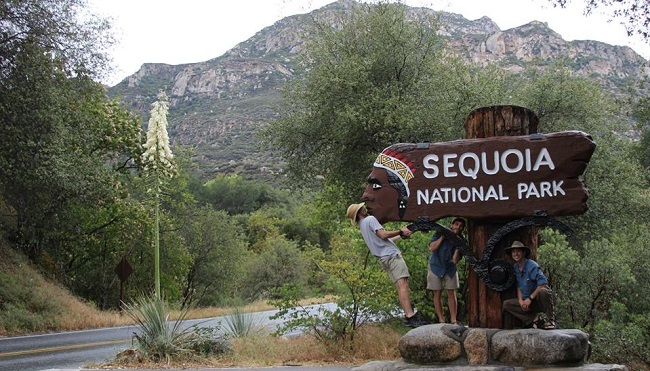
The Sequoia National Park
The announcement, made earlier, follows a similar closure
announced for Joshua Tree National Park.
In both cases, park officials said the government shutdown
has prevented them from maintaining conditions that are safe for park visitors.
In Sequoia and Kings Canyon, about 250 miles North of Los
Angeles, furloughed park employees have been unable to maintain the safety of
roads and certain walking paths in winter conditions.
In Joshua Tree, 209 kilometres east of Los Angeles, workers
have been unable to empty vault toilets, which are near capacity.
Sequoia and Kings Canyon officials said that they had closed
the Generals Highway at Hospital Rock.
The closure extends through Giant Forest and Lodge pole,
through to Lost Grove.
“Trash receptacles are overflowing, resulting in litter
dispersal throughout the area and a threat to wildlife,’’ the park service said
in a news release.
“Vehicular congestion, motor vehicle accidents, and icy
roadways have led to up to three-hour delays on the Generals Highway.’’
Popular walking paths have also become more hazardous: “The
Grant Tree Trail, normally minimally maintained by sanding, has become
extraordinarily slick.
The ice and snow have become compressed, glazed because of
heavy traffic, causing multiple falls and at least one injury.’’
The park service said some privately-operated facilities in
these areas would also have to close.
“It is likely these closures will remain in effect for the
duration of the government shutdown,’’ the agency said in a release.
To be sure, areas of the parks would be closed anyway
because of winter weather conditions.
Cedar Grove Lodge and Bearpaw High Sierra Camp fall into
this category, as does the mountain road linking the two parks.
The lodges that would normally remain open have tried to
remain so.
Their employees are not directly affected by the government
shutdown because they work for a private company.
But visitor centres are closed, and roadside facilities are
not being maintained.
At the privately run Wuksachi Lodge, a manager of the
off-site reservation centre said that the park service was allowing guests to
stay at the lodge through Tuesday, January 1, 2019 but on Wednesday the lodge
would close.
In the meantime, guests were not allowed to hike on nearby
trails.
As of Tuesday, John Muir Lodge and some of the Grant Grove
cabins in Kings Canyon were to remain open.
The status of all facilities would be reviewed on a
day-to-day basis, said the manager, who requested anonymity because the person
was not authorised to speak on behalf of the park or the private operator.
The partial shutdown is the result of a standoff between
President Trump and Congress over the federal budget.
The bad political weather in Washington has wreaked havoc in
the economy surrounding the parks, said Nicky French, owner of Buckaroo Diner and
the Ol’ Buckaroo food truck in nearby Three Rivers. She called the situation
“chaos.’’
“All of the services that go into maintaining public land
are not being done,’’ French said.
Some tourists who were unaware of the shutdown have tried
driving into the park on icy roads and quickly turned around.
Others are canceling Airbnb reservations and other
accommodations.
“The town has lost thousands and thousands of dollars. “It’s
a very small economy, and it’s an economy that relies on tourism,’’ French
said.
To the south, in Joshua Tree, campgrounds will close at noon
on Wednesday.
Officials say they are basing the closure on health and
safety concerns.
The park’s vault toilets are near capacity. Also, park
visitor centres, flush toilets, water-filling stations and dump stations are
all closed because of the shutdown.
Nigeria Erosion and Watershed Management Project (NEWMAP)
says it has spent N100 million to conserve the forest reserve in Kanawa Village
of Yamaltu-Deba Local Government Area of Gombe State.
Salisu Dahiru, National Project Coordinator of NEWMAP
Malam Mohammed Garba, Project Coordinator NEWMAP, disclosed
this in an interview with the News Agency of Nigeria (NAN) in Gombe, the state
capital, on Wednesday, January 2, 2019.
He said the 64 hectares of the forest reserve was fenced and
three solar power boreholes were constructed for the purpose of water supply
into the plantation.
Garba said the forest which was gazetted by the defunct
government of northern region Kaduna in 1953 was being encroached before NEWMAP
came to conserve it.
“We have spent N100 million to fence the 64 hectares of the
forest aimed at conserving the endangered species,” he said
He said they had also employed some people, paying them to
look after the reserve.
He said higher institutions of learning in the country had
started visiting the place to conduct researches on the diversities of the trees.
For example, he said NEWMAP had collaboration with
University of Jos, with the university advising them on the kind of trees to
plant.
The coordinator said NEWMAP would be monitoring the reserve
for the next one year before handling it over to the Gombe State Ministry of
Environment for proper use.
Mr Zebulon Wasa, state Commissioner Ministry of Culture and
Tourism, said the state government had a plan of converting the forest into a
resort.
NEWMAP is a World Bank-assisted project of the Federal
Ministry of Environment.
The International Bamboo and Rattan Organisation (INBAR) has
said that bamboo has huge potential for climate change mitigation and
adaptation.
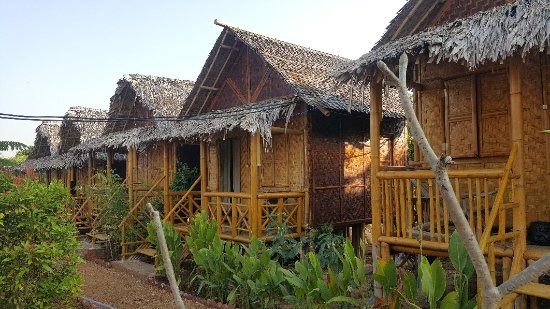
Bamboo housing
Director general of INBAR, Hans Friederich, made the
disclosure in December 2018 at the UN Climate Change Conference (COP24) in
Katowice, Poland, where the organisation promoted the use of bamboo and rattan
as existing solutions to climate change, environmental degradation and poverty.
According to INBAR, natural climate solutions can deliver over 35% of cost-effective carbon dioxide mitigation needed by 2030, but that they are a critically overlooked part of most climate change discussions.
“There are over 30 million hectares of bamboo spread across
the world – this plant is truly a source of ‘green gold’ for developing
countries, and we are urging everyone at COP24 to ‘think bamboo; in their
climate action plans,” says Friederich.
Referring to the product as “the forgotten climate solution”,
he discloses that bamboo acts as a sustainable, low-carbon alternative to
timber, PVC, aluminium and concrete. Fast growing and quick to mature, bamboo
can be used to make an increasing number of heavy-duty materials such as pipes,
scaffolding and housing.
“Bamboo plants and products can also store more carbon than certain species of tree: new research shows they can sequester up to 630 tonnes of carbon per hectare,” Friederich notes, adding that bamboo renewable energy is being used to reduce deforestation across parts of Asia and Africa.
According to him, bamboo provides a year-round, climate-resilient form of income for millions of people around the world, including almost 10 million people in China alone. Executive Secretary of the United Nations Framework Convention on Climate Change (UNFCCC), Patricia Espinosa, had earlier in 2018 spoken about the importance of bamboo for low-carbon development, saying: “Bamboo can make an important difference to the fight against climate change.”
Because they are naturally occurring and used for a wide range of durable products, Espinosa added: “Nature-based solutions like bamboo do not just contribute to sustainable development, they also help build the kind of world we want.”
The World Bank, Canada and the United Kingdom have announced
financial, technical and advisory support for developing countries that have
decided to transition away from coal and accelerate the uptake of cleaner
sources of energy.
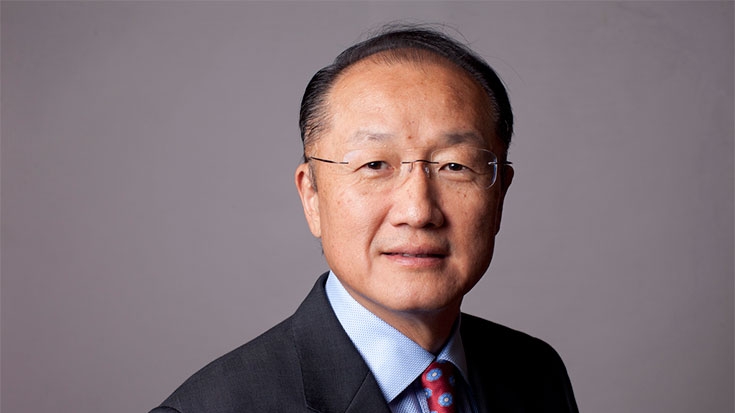
World Bank Group President, Jim Yong Kim
The disclosure was made in Katowice during the UN Climate
Change Conference (COP24) that held in December 2018 in Poland.
The Canadian government pledged up to CAD $275 million to
fund the Energy Transition and Coal Phase-Out Programme. The funding, it was
gathered, will help developing countries in Asia to slow coal production while
scaling up energy efficiency and low-carbon energy alternatives.
At the same time, the UK government pledges £20 milion to the World Bank’s Energy Sector Management Assistance Programme (ESMAP), a global knowledge and technical assistance programme administered by the World Bank to help low- and middle-income countries implement environmentally sustainable energy solutions.
Both these programmes will support the deployment of solar
and battery storage, geothermal and offshore wind development, coal plant
closure, and improvement in energy efficiency, particularly in buildings and
cooling.
With the new financial support from Canada and the UK, the World Bank will also expand its work to help countries that have made the decision to transition away from coal, close mines and address the resulting socio-economic impacts on workers and communities. This means taking steps to protect jobs and skills and preserve the environment, including through strong social safety nets for coal mine workers and the reclamation and repurposing of coal mine areas.
In conjunction with COP24 in Poland, the World Bank launched
a new report titled: “Managing Coal Mine Closure: Achieving a Just Transition
for All”, which outlines the lessons learned from coal mine closures to date,
and key steps governments can take to minimise social conflict and economic
distress.
The report shows that the socio-economic impacts of coalmine
closures are significant, with some coal-dependent regions continuing to lag
socially and economically. However, countries can achieve a “Just Transition
for All” through early engagement and dialogue and strong social assistance
programmes for workers, families and communities.
Governments, says the report, play a leading role in this
transition, bearing the cost of physical closure of mines and labour transition
programmes, even when coal mines are privately owned. It adds that while many
coal mining areas are unable to create new job opportunities, governments can
implement labour mobility schemes, enabling coal mining communities to move to
areas with strong economies and new job prospects.
Because the coal mine industry has shifted from West to
East, future coal mine closures and associated job losses will be concentrated
in Asia, with the top three global coal producers – China, India and Indonesia –
the most affected, projects the report.
Senior Director and head of the Energy and Extractives
Global Practice of the World Bank, Riccardo Puliti, says: “Our focus is on
human dimension and helping countries accelerate the energy transition. A Just
Transition for All means people’s livelihoods and communities need to be
protected and that requires a carefully managed, sustained, longterm approach.
Governments must prepare well in advance of any coal mine closures,
implementing strong safety nets for workers ahead of job losses.”
Canada’s Minister of Environment and Climate Change,
Catherine McKenna: “Countries need to phase out coal if we are to meet our
Paris Agreement targets. Pollution from coal has major repaercussions on
climate change, on our health, and on people. People need to be at the heart of
our policies to tackle climate change. We know we have to phase out coal in a
way that supports coal workers and coal communities, because the transition is
not always easy. By working together, we can cut emissions and make sure people
have good job opportunities in the future clean economy.”
The UK’s Minister for Energy and Clean Growth, Claire Perry:
“The UK and Canada have truly led the world in powering past coal, with the UK
going more than 1,700 hours without coal this year. But climate change is a
global problem, which requires a united response. This World bank fund, backed
by £20 million from the UK Government, will allow world-leading expertise to be
shared globally to encourage developing countries to move away from coal power
and embrace renewable energy, helping them to save the planet while giving
their economies a vital boost.”
The Nigeria Erosion and Watershed Management Project (NEWMAP)
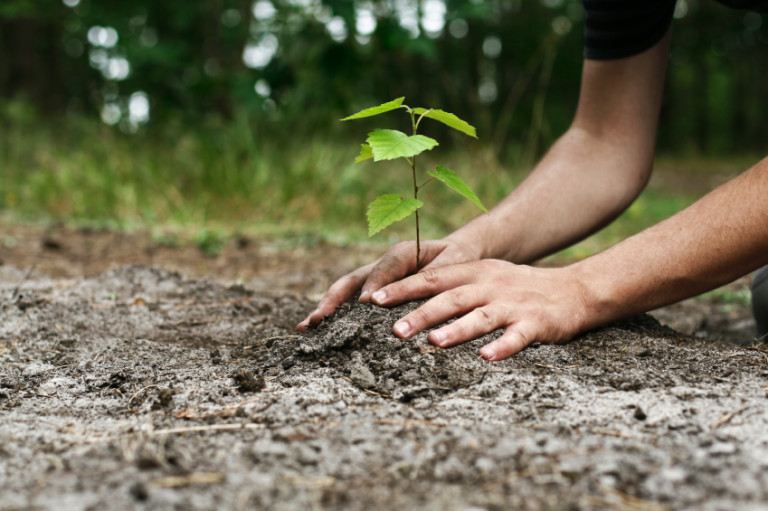
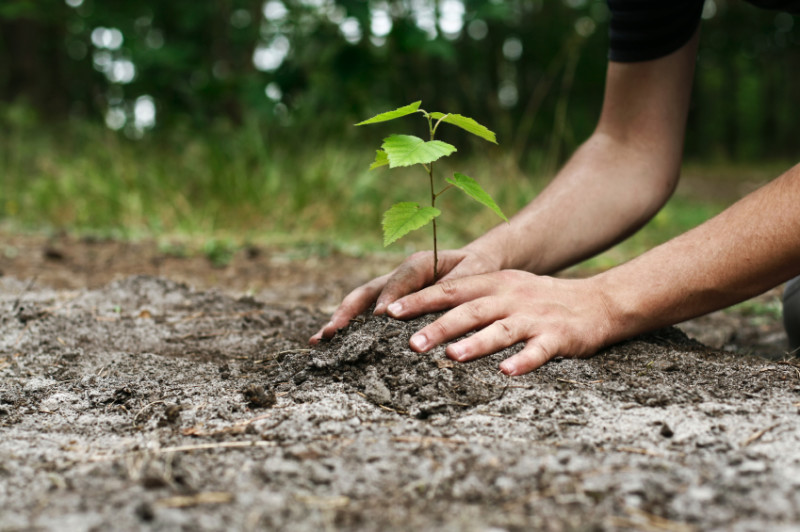
says it planted 38,000 different species of trees on 180 hectares of land in
eight local government areas of Gombe State in 2018.
Tree planting
Malam Mohammed Garba, the Project Coordinator, told the News
Agency of Nigeria (NAN) in Gombe on Wednesday, January 2, 2019 that the World
Bank assisted project of the Federal Ministry of Environment planted woodlots
and orchards in the eight LGAs.
Garba said that the objective of the project was to address
the problem of environmental degradation in the LGAs.
The project coordinator listed the eight local government
areas covered as Billiri, Kaltungo, Shongom, Kwami, Nafada, Funakaye, Dukku and
Yamaltu-Deba.
According to him, NEWMAP started with the eight local
government areas because they are the most vulnerable.
He said that the environmental degradation in the state were
mostly due to human factors and could be controlled by free planting.
“This is because if the soil is too much exposed, other
aspects of erosion can come thereby leading to environmental degradation,”
Garba said.
He said that NEWMAP had also constructed boreholes across
the local governments where the trees were planted to ensure that they thrived
and achieved the purpose for their cultivation.
The coordinator said that the agency also undertook
sensitisation of the people in the council areas on the need for appropriate
waste disposal to avert the devastating effect of flooding.
Garba said that one of the major challenges NEWMAP encountered
with execution of the project was acquisition of land in LGAs of the state.
He made an appeal to people and the authorities concerned to
cooperate with the agency in its execution and implementation of the project.
The project coordinator said that in year 2018, NEWMAP
supported Gombe State Emergency Management Agency (SEMA) with rescue materials
and organised manpower training for officials of the state Ministry of
Environment.
Stakeholders in the oil and gas industry on Wednesday,
January 2, 2019 called on the Department of Petroleum Resources (DPR) to
spearhead the establishment of a National Environmental Database for the
sector.
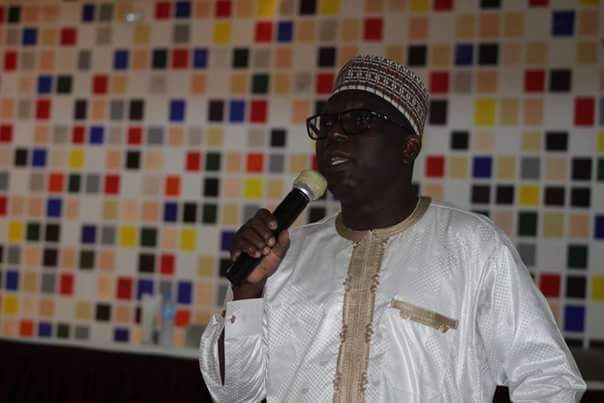
Mordecai Danteni Baba Ladan, head of DPR
The call arose from the just-concluded 18th Biennial
International Health, Safety and Environment (HSE) conference held in December
in Lagos.
The HSE conference was organised by DPR to engender HSE
awareness among stakeholders in the oil and gas industry.
They argued that the regulators should lead a paradigm shift
in the industry’s approach to bio-diversity conservation starting with
requirements for increased budgetary allocation by operators and five-yearly
check on the region’s biodiversity.
The stakeholders said in the communiqué from the conference
that sustained efforts are required to stem the pervasive mediocrity across
environmental practice in Nigeria.
“Key actions required include intervention to ensure quick
passage of the bill for an institute of environmental practitioners and a
voluntary code of ethics for environmental practitioners,” they said.
The oil and gas experts said that the practice of burning
crude oil recovered from illegal activities should be stopped forthwith,
because revenue was being lost and it causes major air, water and soil
pollution.
They were of the views that procedures, including temporary
lay down areas should be established to receive, monetise and responsibly
dispose of recovered crude oil.
They also recommended that the DPR should spearhead the establishment
of a publicly accessible accident investigation report database for the
industry.
“The DPR should progress multi-stakeholders’ engagement and
intensify its awareness campaign to mainstream the DPR-initiated, Minimum
Industry Safety Training for Downstream Operations (MISTDO), aimed at reducing
accidents and incidences in the sector.
They, however, urged operators to continue to improve on
community-operator relations through sustained social interventions in
infrastructure and human capacity.
They said that all new projects should have decommissioning
in view of the conceptual stage of the project through design and
implementation.
On safety, the stakeholders argued that the oil and gas
industry needed to include process of safety in implementing asset integrity
programnes.
They said that such process of safety activities should
include measures to prevent deterioration of Safety Critical Equipment (SCE) in
the maintenance management systems.
“Chemical risk management should form a key part of safety
assessment studies in the oil and gas industry.
“The employment conditions of workers in the downstream
sector requires intervention to improve their safety culture, performance and
motivation,” they said.
The Nigerian Institute of Building (NIOB) on Wednesday,
January 2, 2019 blamed the poor performance of the construction industry and
its low contribution to the country’s Gross Domestic Product (GDP) in 2018 on
corruption.
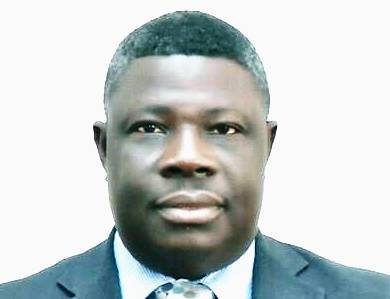
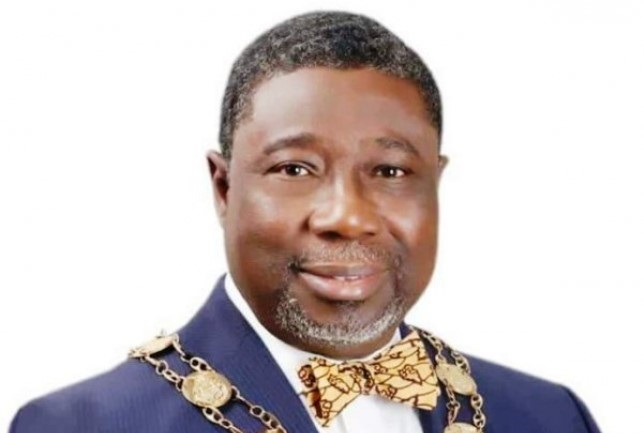
Mr Kenneth Nduka
Assessing the sector, NIOB’s President, Mr Kenneth Nduka,
told the News Agency of Nigeria (NAN) in Lagos that its performance in 2018 was
poor when compared with the preceding years, despite its potentialities in
boosting employment opportunities.
Nduka said that the construction industry should be a major
contributor to GDP and national development, but the reverse was the case in
Nigeria because the sector contributes about four per cent to the GDP.
“There is corruption in virtually every aspect of
construction industry in Nigeria, beginning from the contract awarding stage to
the implementation and maintenance stages,” he said.
Nduka said it was disheartening that a lot of contracts were
awarded to non-Nigerians, describing it as detrimental to the development of
the economy.
He said that research had shown that only five per cent of
construction works done in the country, were carried out by Nigerians.
“Unlike what obtains in other climes, where construction
sector contributes more than 15 per cent to their economies, the nation’s
construction sector could only contribute four per cent to the GDP.
“The sad thing is that most of these construction designs
are done by Nigerians.
“Nigerians are only involved at the lower level of its
execution; not even at the management level,’’ he said.
The institute’s chief said that any contract/construction
work executed by the foreigners would add little or nothing to the country’s
GDP and economic growth.
He noted that the construction industry had huge potential,
explaining that if N10 billion could be spent in the sector, the multiplier
effects would be much on the economy.
“When you talk of investment in the construction sector, it
is about to what extent your citizens are involved.
“Unlike other professions like law and medicine, Nigerians
are mere executioners in the construction industry,” he said.
Nduka, while decrying the low performance of the construction
sector in 2018, called for deliberate government’s policies and regulations
capable of re-positioning the sector for economic growth.
He, therefore, urged government at all levels to curb
corruption in the sector by involving Nigerians at the levels of project
planning, budgeting and implementation.
“The governments should complement this with a range of
other interventions such as publication of procurement documents, physical
auditing and public-private anti-corruption partnerships, among others.”
The NIOB chief said that the Local Content Act, which is
being applied in the oil and gas industry, should also be extended to the
construction industry.
The Housing Development Advocacy Network, an NGO, has called
for the restructuring of Nigerian Mortgage Refinancing Company (NMRC) to drive
needed reforms and strategies in the housing sector.
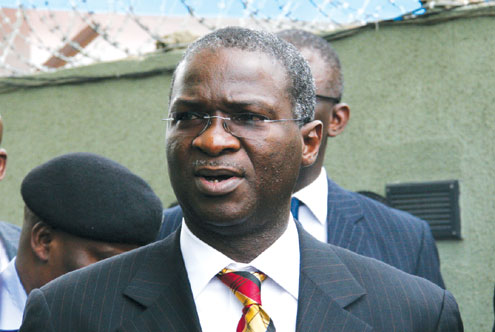
Minister of Power, Works and Housing, Babatunde Raji Fashola (SAN)
The group President, Mr Festus Adebayo, made this known in a
statement he signed on Monday, December 31, 2018 and made available to the News
Agency of Nigeria (NAN) in Abuja.
Adebayo described mortgage finance as a key component in
achieving affordable housing in the sector.
“In the face of housing challenges, and given that mortgage
finance is a key component, it has become imperative to restructure mortgage
refinancing to drive the needed reforms and strategies.
“This will expand the availability of social and affordable
mortgage and housing services to Nigerians,” he said.
He said that the industry experts believed that a new
chapter in the annals of the country’s mortgage and housing sector was created
when NMRC was unveiled in 2013 under the Nigeria Housing Finance Programme.
According to him, the establishment of the NMRC is the first
time a co-owned institution is operating with a public-private governance
structure.
He said that the basis for the mortgage refinance company,
as a secondary market institution, was to provide long term funds to mortgage
lenders and act as a mortgage liquidity facility.
“Ideally, a liquidity facility would be a stand-alone
institution with its long-term operational future in the private sector.
“In line with global prudential standards, such liquidity
facilities have financial institutions investors separate from the end users of
the liquidity service for refinancing their mortgage backed assets.
“Mortgage liquidity facilities fulfill a dual role of
providing direct funding, by buying mortgages (often with recourse) or lending
on the basis of mortgages being assigned.
“The second role is to provide a liquidity back stop to
lenders. This facilitates a much greater level of maturity transformation and
enables lenders to better leverage their deposit base for on-lending as
mortgage loans.
He, however, appealed to the Federal Government to
differentiate NMRC from an Asset Management Company and make it a purely
mortgage refinancing institution.
“This approach should be in line with its core mandate of
promoting affordable home ownership in the country.
He also advised that the NMRC should be focused and avoid
distractions that could negatively impact government programmes in the housing
sector.
Adebayo called for a multi-faceted approach by all the
players in the housing industry to bridge Nigeria’s huge housing deficit.
NMRC is a Central Bank of Nigeria licensed mortgage
liquidity facility with the core mandate of developing the primary and
secondary mortgage markets.
It does that by raising long-term funds from the capital
market, thereby promoting affordable home ownership in Nigeria.
Cameroon is melting down. A year-long war is ravaging
the nation. Investigative journalist, Arison Tamfu, recently became the first
local journalist to spend time with the fighters and victims of the war in the
troubled Anglophone regions of the country. With little International action, it
is feared that a genocide looms in the country that has just seen 85-year-old
president Paul Biya who has ruled for 36 years re-elected for another
seven-year-mandate.
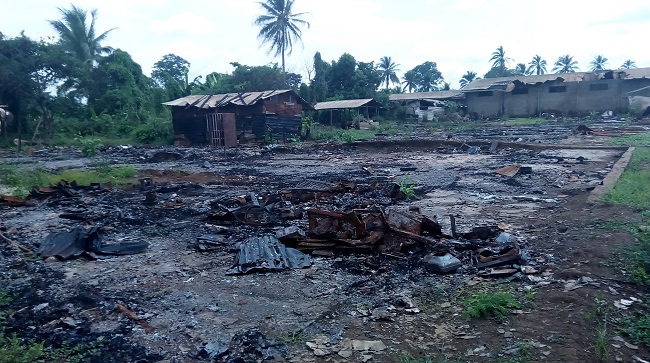
Eleven months after, Kwakwa Village is said to be still in ruins. Houses of the villagers are allegedly burnt by the Cameroonian security forces. Photo credit: Arison Tamfu
Kombone-Mission, a village in the South West region of Cameroon, was once renowned for its serenity and hospitality but one day in January everything changed. The day was Friday, January 5, 2018 and *Labata had just returned to his native village, Kwakwa, one week earlier. He escaped on October 1, 2017 after Cameroon security forces allegedly shot and killed his friend and a relative who were part of a protest against injustice on Cameroon’s anglophone minority. Labata came back with two things: a gun and revenge. In the afternoon, he took his weapon, went to Kombone-Mission, a neirghbouring village, shot a gendarmerie officer of the Cameroon security forces and left. The officer died.
There were consequences, gruesome
consequences.
Cameroon security forces came the following day, a large force strengthened by sophisticated weaponry and advanced swiftly through the village and encountered little resistance. Poorly equipped Labata and other armed separatist fighters in the area retreated in disarray, leaving civilians at the mercy of the security forces. The response of the government forces was without mercy. They were said to have shot indiscriminately, burning houses in Kwakwa, Bole, Kake, Kombone-Mission, Wone and Ekombe villages. The scene of the attack is still pure devastation. The death toll that day is still a mystery.
The attack in the little known Kombone-Mission is said to be among hundreds of others in the past 14 months (and counting) as a conflict between Cameroon security forces and armed separatist forces ripples through the heart of the nation, claiming hundreds of lives and displacing thousands of people. The attacks are haphazard but very lethal. According to a September Amnesty International report, 400 ordinary people have already died in the ongoing clashes, however, local rights groups estimate that number has now increased fourfold as the conflict escalates into a full-scare war. In late October, an American missionary, Charles Trumann Wesco was reportedly shot in a crossfire in the Northwest. The war in the Anglophone regions and its adverse impact on the civilian populations is believed to be one of the worst humanitarian crises facing the country. Its origin is deeply rooted in the mistakes of the past.
Colonial
Roots
To understand the Cameroon Anglophone
uprising, you need to understand the history of Cameroon. Most of the territory
known today as the Republic of Cameroon was a German protectorate from 1884. However,
after the defeat of Germany during the First World War, the protectorate was
divided into British and French Cameroons in 1916.
British Cameroons (known as Southern Cameroons) and French Cameroun (known as La Republique du Cameroun) were separate legal and political entities and historians have postulated that although this partition was said to be temporary, Britain and France instituted two different administrative styles and systems which were to impact on any subsequent movement towards eradicating the provisional nature of the partition and facilitating reunification. On Jan. 1, 1960, La Republique du Cameroun became independent.
In October 1961, United Nations agreed that
Southern Cameroons was qualified to achieve independence either through
association or integration which “should be on the basis of complete equality
between the peoples of the erstwhile Non-Self-Governing Territory and those of
the independent country with which it is integrated, and the peoples of both
territories should have equal status and rights”.
It was with this understanding that on February 11, 1961 British Southern Cameroons voted to join La Republique du Cameroun and the two became one country.
“The majority of Southern Cameroonians
wanted to be independent as a separate political entity, but the UN avoided
this option,” says Prof. Victor Ngoh, an historian.
Just few years into the Union, Anglophones
began to complain about marginalisation. In 1990, John Ngu Foncha, the
architect who brought Southern Cameroons into the union, said he was saddened
by the way Anglophones were being treated.
“The Anglophone Cameroonians whom I brought
into the union have been ridiculed and referred to as ‘les Biafrians’ (the Biafrans), ‘les
ennemies dans la maison’ (enemies in the house), ‘les traitres’ (traitors) etc., and the constitutional provisions
which protected this Anglophone minority have been suppressed, their voice
drowned while the rule of the gun replaced the dialogue which the Anglophones
cherish very much,” Foncha said.
That declaration marked the dawn of the
Anglophone struggle. A CIA
1986 report that was declassified in 2011 warned that “the Anglophone
minority is a potential time bomb and should the central government fail to
respect their cultural and linguistic traditions, the population may view armed
confrontations as their only alternative”.
As tension escalated, the government was
adamant and denied the existence of any such problem in the media and in public
speeches.
On a day in November 2016, more than half a
century after the union of the two Cameroons, Anglophone lawyers and teachers,
angered by government’s attempts to marginalise them by imposing the French
language on their schools and courts, began an indefinite strike action to
demand respect of their language and culture through a return to a federal
system of government. But security forces killed dozens of the demonstrators
and jailed hundreds more. Anglophone leaders were infuriated and decided in
2017 to form armed separatist groups to fight for the independence of Anglophone
Cameroon and create a new nation called “Ambazonia”.
The fighting
is escalating. The armed separatist groups are operating in all the divisions
of the two English-speaking regions of Northwest and Southwest. Villages where
fighting is fierce are deserted. Labata’s village like many other villages in
the regions is no man’s land: armed separatist groups have set up checkpoints
along the main road. Occasionally, Cameroon security forces launch strikes with
armoured, explosive-packed vehicles forcing them to abandon their posts but
return as soon as the forces leave.
Sometimes there is intense exchange of gunfire.
Civilians have fled either to the bush or
francophone side of the country that is relatively peaceful. The U.N estimates
that over 430,000
people have been displaced internally and at least 30,000 have escaped to
Nigeria where they now live in refugee camps under UN care.
Untold
Atrocities
Eleven months after the Kombone-Mission
attack, I have come to a small village called Nake in the South West region to
meet Labata and 15 other armed separatist fighters for a first-of-its-kind
encounter with a local journalist. We sit for a conversation under the shade of
forest trees. They wear assorted dresses looking shabby and some bare-footed.
Their weapons include artisanal hunting rifles and pistols, machetes and clubs.
“We never knew one day we will be soldiers
fighting against Cameroonian soldiers,” says Labata who is now referred to
among the separatists as “general”. “We never wanted to fight but now it has
come to this and we are ready. We are here to defend ourselves.”
But their activities no longer resemble
those of a self-defence group. *Wester narrates to the pleasure and amusement
of others how, one day, he surrendered a police commissioner with a gun, asked
him to lay face-down and chopped off his two legs with a machete.
“He was crying like a baby and I just shut
up him with my gun,” he says laughing hysterically.
A poker-face young man in his early 20s,
Wester has come to a radical conclusion.
“This war will only come to an end when we
kill all the soldiers and get our independence,” he says.
And it’s not just empty threats. In April 2018,
a police commissioner was beheaded, and his head displayed in front of the
frightened population in Weh, a remote locality in Northwest region of the
country. Beheading
human beings has become a new normal in the war-torn region.
“We will continue to behead them,” Labata says,
lighting a cigarette. “We don’t waste our bullets when we catch them with our
hands; we just bury them alive.”
Labata was not always like that. Villagers
testify that he was a gentle, regular student in a college before the war
started. Many of them say they were radicalised by the way the military treated
anglophone Cameroonians.
“You think am a bad man, right?” Wester asks,
looking at me unfriendly. “Do you know the soldiers killed my father and raped
my sister in front of me? Who is worse?” he asks rhetorically.
Just like the separatist forces, Cameroon security
forces have become notorious for committing atrocities
in the troubled regions. One person that has experienced the ruthlessness of the
Cameroonian soldiers is *Emmanuel Mukete, a stoic community leader of Kwakwa village
in his late 80s.
With a countenance buried in sad memories, Mukete
looks dejectedly at what remains of his house.
“This is where my house was,” he says,
pointing at the ruins of dresses, chairs, tables and all other household
utensils.
Besides a mad man that moves around naked
murmuring to himself, there is nobody left in his village, Kwakwa. Everybody
else fled one night in January when Cameroon security forces moved speedily
through the darkness burning houses and shooting indiscriminately. Many escaped
to the bush, but some weren’t quick or lucky enough to follow.
“I saw how they were raping women and
killing young men. They burned my sister alive in the house. She was laying in
her sick bed and could not escape,” Mukete says.
Everything of value was taken and the rest
was burnt.
Prison
Nightmare
Witnesses say the army moved from village
to village, town to town arresting several young males who could not escape,
and anybody suspected of allying or sympathising with the armed separatists.
All of them were taken to the prison in the capital, Yaounde.
*Ndifor was among those who were arrested.
In Yaounde, he was sent to an underground prison at the Secretary of State for
Defence (SED) security service under cruel conditions.
“There was no light underground. We could
only peep light from a tiny hole far above our heads. They were about 100 of us,
all anglophones, detained underground. It was like hell fire,” he says, adding
that they slept on a floor that, every day, warders made sure was filled with
cold water.
Their legs and hands were chained, Ndifor
says, adding that every day warders would beat them up severely using a machete
in the morning, afternoon and evening before serving food.
“There were times that all my body was
soaked in blood. I urinated blood because of the severe beatings. I was in so
much pain that at one point I asked them to kill me, so I’d stop suffering,” he
says, showing scars all over his body. “They beat one boy and he died right in
front of me.”
During the whole time he was in the
dungeon, he was not able to see his family or a lawyer.
“No one knew where I was, everyone thought
I was dead,” he says.
Ndifor told me his story at Kondengui
Prison, Cameroon’s disreputable prison, where he was eventually transferred
after spending five months in the dungeon.
At Kondengui he lived in a section called “Kosovo”
where hardened criminals are lodged.
“We are 72 in a room of 5 by 4-metre square.
Humans sleep on top of others but am happy to be here than underground. Two of
us that were transferred here have become mad”
Some of the atrocities narrated by Ndifor have
been documented
by local human rights groups.
Perhaps more painful is the frustration of
the internally displaced persons (IDPs) who seem to be the worst victims of the
war.
The
New “Home” of IDPs
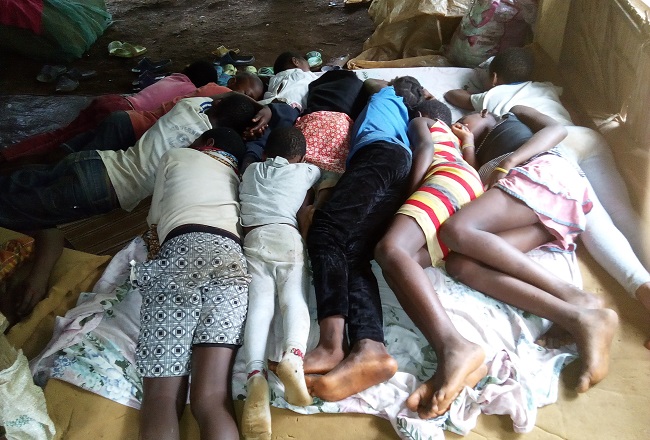
Eleven children squeeze in a mattress in a dilapidated tent of the IDP in the bush in Nake village. Photo credit: Arison Tamfu
Mary Etom is one of the IDPs. A middle-aged
woman with an easy smile, Etom recalls escaping with her children in the
darkness of the night when the military raided Nake village. Her husband, she
says, was shot in front of her. Two stray bullets landed on his right thigh and
belly. He had one last breath and used it to shout for help, but it did not
come. Villagers testify that he was a good man, well-thought-of in the area. Etom
watched helplessly as her husband died in pain but there was no time to waste,
she had to escape.
In the panic and confusion, she gathered
her children and then made a dash for the bush.
More than 200 families traced Etom’s route
to the bush, but today it offers little sanctuary. Her youngest daughter,
one-year-old Sonia, fell sick after one week of arrival but help came too late.
She died in the bush for want of food and water and was buried there.
Eleven months after, the mother of three
remains in the bush. Thousands of others do too in a sprawling mass of shelter
made of wood and roofed with tall grass. There is a mass of such shelter where
I visited, more than a hundred of them each hosting at least 10 people. Across
the troubled anglophone regions, hundreds of such shelters have been erected in
the bush. When I visited the shelters, I was welcomed by a small dog that barks
furiously when visitors arrive, then runs joyfully into the bush.
Etom told me her story outside her tent as breeze
gently brushes her hair.
“We cannot go back to the village now,
it’s not safe. Bullets will kill us. We will stay here,” she says, curling
the ring on her finger. “Where will we go to?” she asks rhetorically.
There isn’t much to go back to. The army’s
raid was dreadfully costly and Kwakwa, Bole, Kake, EKombe are now between 60 to
80 percent razed to the ground. Even buildings in less devastated quarters are
battle scarred or half collapsed.
Her two remaining daughters, Righteous, 5
and Ruth, 2 both sit beside her, gazing solemnly at my camera. She is not sure
where the children will get food from next.
“They don’t even know their father is dead,”
she says, caressing Ruth’s forehead.
Etom shares her shelter with four other
families, they are 24 of them in total.
Her neighbour, Esther Kundu, shares her
shelter with 70 others. At night 14 kids squeeze into one messy mattress,
others sleep on the cold floor.
“We have no food, we drink dirty water from
the drum. All the children you see here have not gone to school since November
2016. Most of them are orphans,” says Kundu, parading the forlorn, filthy
shelter.
Livelihoods are hard to come by in the
bush. People just loiter, a few cocoa farms are cultivated, palm wine is tapped,
and sporadic makeshift shops sell salt, palm oil, soap and palm wine.
“Life is hard,” says Samuel Asong, a
respected community leader of Nake village.
The afternoon breeze carries the sound of
insects. Asong is pensive.
“It’s difficult to explain… They destroyed
our villages and killed our relatives and friends and…” he stops talking,
looking gloomy.
Etom and Kundu are lucky: none of their
family members is dead since they came to the bush but it isn’t so for
everybody.
Increasing
death toll and no hospital for the sick
Today was not a good day in the bush. There
was deafening sound of gunshots early in the morning emanating from fighting in
a nearby village and children were crying and running further into the bush to nowhere,
but the afternoon has brought respite and serenity.
Thomas Enyong is perched on a bamboo-made
lawn chair cross-legged, relaxing over two-litre jug of palm wine. He is bare-chested.
A thin man in his late 50s, Enyong has a stern face.
A few metres from there, Michael Ebot
exclaims, “Not again”. He has just been informed that his sister who has been
sick in the bush in the last three months is dead. Crippled by grief on the
same spot for a while, he takes a deep breath holding back tears.
“What do we do now?” he eventually asks
rhetorically.
A
small boy from the next shelter sits on a bamboo chair and watches,
expressionless.
“A lot of people are dying. We don’t even
have dresses to wear …” says Enyong but he is quickly interrupted by a
middle-aged man standing just behind him.
“Children are falling sick in the bush.
There is no medicine to give them. Three days ago, we buried 11 people who died
in the bush,” the man says.
Statistics are unavailable, but the
villagers say, in this part of the anglophone region alone, they have lost at
least 90 people since they fled to the bush.
“Many people die because they cannot go to
the hospital,” says Pascal Esona who still limps with crutches. He was hit on
the leg by a stray bullet on the day the security forces raided the villages.
“I have not been able to go to the hospital
since I came here because I am afraid they will mistake me for an “amba
soldier” (armed separatist) and arrest me. Many people have been shot in the
hospital simply because they went to treat themselves,” he says.
According to witnesses, in early August, two nurses, Nancy Azah and her husband Njong Paddisco, were reportedly shot by the military while on their way to attend to people wounded in the separatist revolt. The couple’s deaths provoked outrage among medical staff who said they were being threatened by both sides of the conflict.
“They were killed just because they wanted
to save lives. Killed for treating people. Can you imagine,” says Arrey Rose, a
nurse who took part in a protest demonstration against attacks on medical staff.
Born
in the Bush
These are perilous times for nursing
mothers and pregnant women in the bush. Nadege Kundu lies exhausted on a worn-out
mattress covered with a white bed sheet that has lost its whiteness to dust and
dirt and now looks reddish brown. Beside her, lies her one-week-old baby.
“Places are too cold for the baby.
Mosquitoes are everywhere. We are just praying that the baby survives,” says
Esther Kundu, Nadege’s mother.
In the next shelter, Margaret Sakwe is
breastfeeding her two babies. On Jan. 6, when the security forces swooped her
village, she was heavily pregnant. She recalls how she struggled in pain to
escape from bullets and finally reached the bush. The following day Jan. 7, she
gave birth to triplets in the bush.
“Few days after delivery, one of the
children died due to starvation and lack of medical care. I could not go to
hospital. All of us fear to go to the hospital. Soldiers will shoot us,” says
Sakwe, putting the babies gently on a stinky mattress.
At least one out of five shelters in the
bush has a new born. Some died after delivery, some survive miraculously.
Pregnant women in the bush are worried. They don’t know if their babies will
survive.
Rose Nganya is one of them. She is seven
months pregnant. She is distressed.
“I am seven months pregnant, yet I don’t
drink clean water. I bath with water from the drum that am sure contains
bacteria. My skin is itchy. I don’t know how am going to deliver here in the
bush. I don’t feed well. I have not been to any clinic in seven months. From
every indication I might have to deliver here in the bush,” says Nganya,
wearing a nervous countenance.
For most anglophone civilians seeking
refuge in the bush, the most horrifying atrocities of the war have become
routine. A blast breaks the morning calm, echoing off the ruined buildings. No
one glances up, even the children. “Probably an armoured car,”
someone mumbles.
“No bullet has touched us in the bush yet,”
says Enyong gazing at the sunset. “They (Cameroon security forces) are still
threatening to come and kill us in the bush.”
At night, I come to meet him in his shelter
where I will spend the night. Enyong lies facing the sky.
“We live here with snakes and mosquitoes.
We can’t sleep when it rains,” he says adding that they’re in need of just
about everything. “There’s no aid at all, we need food, we need
water,” he explains, worriedly fondling his moustache.
Many like *Nelson Ambe have escaped the
crisis-hit anglophone regions and now seek refuge in cities in the Francophone
part of the country. Nelson used to live in the bush with other IDPs but
decided to travel to Douala where hundreds of other IDPs now live. Ambe is 29
but looks older than his age as a result of hardship.
In Douala, there is an abandoned
dilapidated building situated at the notorious New Bell neighbourhood where
cockroaches and rats usually rally for merriment. That is where Ambe lives with
10 other street children.
“This is worse than my village,” he says,
explaining that he eats four times in a week, sometimes two times.
“I have been begging on the street. Am
sick” he says, tears rolling down his emaciated cheeks. His mind is made up: in
the coming days, he will travel to the troubled Anglophone areas to join the
armed separatists. That is not a wise decision, I tell him. He is irritated.
“But why is the government and the world
treating Anglophones this way? Were we born to suffer, to be killed like
animals?” he asks fuming with anger. Ambe says he knows many of his friends and
relatives who have escaped from the war in Anglophone regions who are now
suffering like him in the capital Yaounde and Douala.
“Some have gone into prostitution just to survive,” he says
“40% of the IDPs in the cities have nowhere
to stay,” says Ebenezer Nkegoah. His organisation, Foundation for Inclusive
Education in collaboration with five other NGOs, recently conducted a census of
the IDPs.
A gift
from the government
The Cameroonian government has allocated a
19-million-euro humanitarian assistance for the IDPs in regions. Government has
started distributing food, mattresses to the IDPs but there is a major setback.
The IDPs especially in the bush are not
just ready to accept any gift from the government.
“They are killing us and want to give us
food? We can’t accept their gifts. They want us to go back to where? Our houses
were burned by the military, even if we receive the mattresses where will we
sleep with that,” says Magdalene Ageawu who lives with her three children in
the bush.
But governor Bernard Okalia Bilai of Southwest
region doesn’t think so.
“We are inviting the elites, traditional
rulers to come back and continue to work and sensitize their children
especially those who have been misguided and are now in the bushes for them to
return home. Let them return home and the administration is there to exchange
with them so that the situation should return to normal everywhere in the
region,” he says.
“More than 80% of the IDPs do not want to
go back home because of what they have experienced. A solution is needed
urgently not gifts. People will naturally return to their homes when things return
to normal,” says Nkegoah.
Military
option only?
The United Nations Commission on Human
Rights has accused the Cameroon military and separatists of disrespecting human
rights and committing atrocities.
“But that is not true,” says Colonel Didier
Badjeck, sitting in a well-defended office in the capital, Yaounde. A fair-skinned man in a neat army uniform,
Badjeck has an obvious military officer bearing. He is the spokesman of the
Cameroon army.
“The Cameroon army is very professional. We
don’t kill civilians,” he says, dealing with a continuous flow of subordinates delivering
messages and files. “All reports about army atrocities are lies. We will deal
with the terrorists.”
Paul Atanga Nji, Cameroon interior minister
and an Anglophone, is even more categorical.
“The terrorists will be tracked down. They
will have no hiding place. Let them surrender,” says Atanga Nji. The Cameroon
government regularly refers to the separatists as “terrorists”.
Cameroon’s president, Paul Biya, 85, who
has just
won another seven-year-mandate after spending 36 years in power, has
ignored calls from the international community and local rights groups to solve
the conflict through an “inclusive political dialogue”.
Instead, after his re-election, his first
response to solve the conflict has been the creation of a committee
to disarm and reintegrate ex-fighters of separatist armed groups, a move
that has been largely criticised by local political pundits.
“Fighting is escalating in the troubled regions
and hundreds of people have died and you create a committee to reintegrate
disarmed fighters? When and where were they disarmed and by who? This is a
joke. Government ought to begin peace measures through dialogue and after that
we can talk about disarmament and reintegration,” says Dr. Michael Mbake, a
university lecturer and political analyst.
In his inaugural
speech after the Oct. 7, 2018 presidential poll in the country, Paul Biya
promised to unleash “the full force of the law” and “the determination of our defence
and security forces” on the armed separatists.
“I am calling on them to lay down their
arms and get back on the right track,” Biya said.
Threats like this will only worsen the
situation, says Enyong. The scale of the humanitarian crisis requires an urgent
international response but the world appears to be paying very little attention
to the conflict, he adds.
“Where is the so-called United Nations to
solve this problem? This world is wicked. Where is the United Nations, France, United
States, Britain and the rest? So we will all die here before they look for a
solution?” he adds sighing. “We don’t care who looks after us, we just
want to be free, to eat and sleep comfortably”
The International community including
United Nations, European Union and African Union has demanded severally that
the Cameroonian government initiates an inclusive dialogue to end the conflict
but that has not happened and is not likely to happen soon.
As the fighting intensifies, hundreds of thousands more civilians are expected to be displaced. With few ways out that don’t involve a gauntlet of violence, the humanitarian crisis will only worsen. Tonight, Etom and hundred other IDPs go to bed hoping that one day things will return to normal and they go back home.
*The interviewees opted for anonymity for security reasons
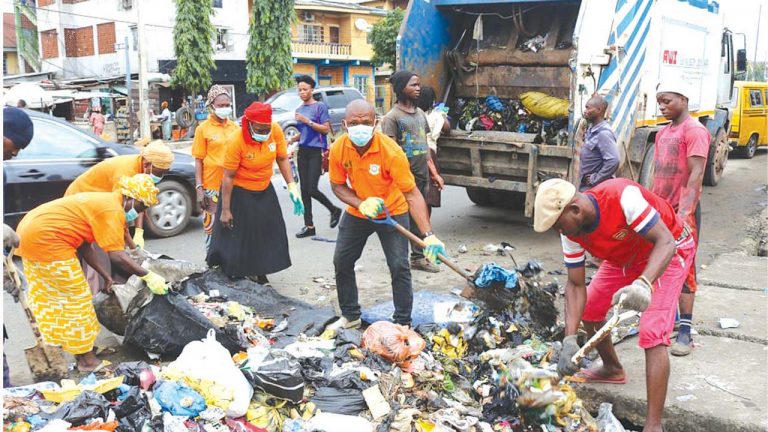
Lagos residents are not happy over what they termed “failure of waste management authorities in the state to live up to their responsibility” thereby resulting in them celebrating the Yuletide season in a filthy environment.
Correspondent Innocent Onoh captured their mood in parts of the metropolis.