Home Blog Page 1712

Environmentalist harps on carbon neutrality to mitigate climate change

0

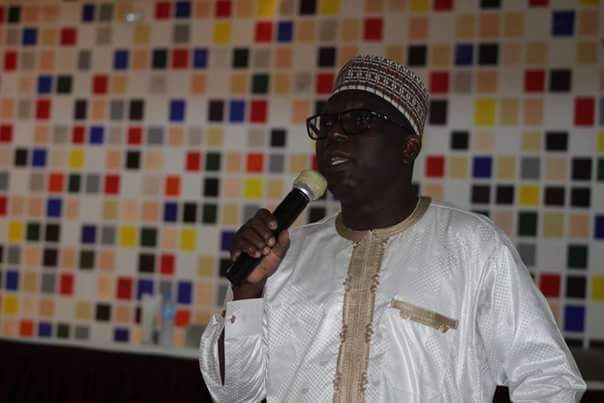
An environmentalist, Miss Gloria Bulus, has harped on the need to practice carbon neutrality to mitigate climate change issues in the country.

Gloria Bulus
Gloria Bulus

Bulus, founder of Bridge-that-Gap Initiative, disclosed this in an interview with the News Agency of Nigeria (NAN) on Thursday, January 3, 2019 in Lagos.

Carbon Neutrality is acting to reduce greenhouse gas emissions to zero, and then offsetting an equivalent amount of any remaining emissions.

It is used in the context of carbon dioxide releasing processes associated with transportation, energy production, and industrial processes such as production of carbon neutral fuel.

The environmentalist said that carbon neutral environment required concerted effort of the government and all environmental stakeholders.

“Being carbon neutral allows individuals, groups, and organisation to be actively part of climate change solution.

“If we can see and understand the need to protect our environment by changing our lifestyles by reducing our carbon footprint, then we can achieve a carbon neutral environment.

“To achieve climate neutrality there must be an understanding of what it means, its impact and solutions.

“It requires cooperation from individuals, organisations, government and even political will,” she told NAN.

Bulus also harped on the role of sensitisation and advocacy to achieve a carbon neutral environment.

“Carbon neutrality can be achieved by individual conscious of the need to mitigate climate change.

“This can be built through sensitisation, awareness, and advocacy campaigns.

“The government can also help achieve this through implementation of relevant environmental laws and policies.

“Environmental regulatory bodies still have so much to do. We still have a lot to learn in terms of environmental protection.

“The impact of such bodies needs to be felt and seen at all levels, the mass media, civil societies and the government must build a coalition for the purpose of a carbon neutral country,” Bulus said.

The environmentalist also highlighted the benefits of a carbon neutral country, adding: “Zero carbon footprint helps mitigate climate change impacts and build environmental protection.’’

“Its contribution directly to water resources will improve its quality and promoting sustainable use.

“Carbon neutrality practice will promote environmentally responsible companies, sustainable agriculture, reduction of air and land pollution and biodiversity.

“These are some of the reasons that stir up our action against climate change,” she said.

By Mercy Omoike
WFP secures $7m from China for food aid in South Sudan

0

The United Nations World Food Programme (WFP) said it has received $7 million contribution from China to bolster its food and nutrition assistance in South Sudan where some five million people are food insecure.

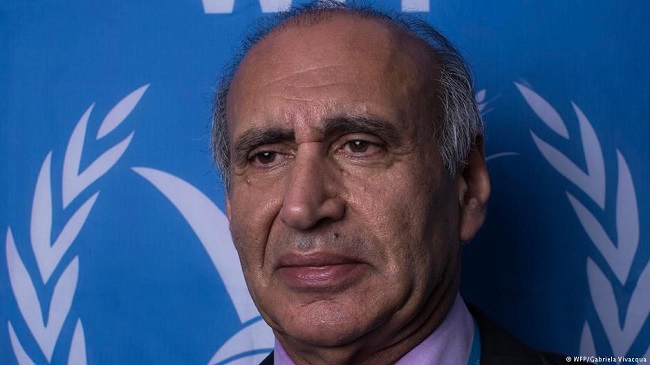
Adnan Khan
Adnan Khan, WFP country director in South Sudan

Adnan Khan, WFP country director in South Sudan, said in a statement on Thursday, January 3, 2019 that the contribution would enable UN food agency to purchase rice, pulses and other commodities.

Khan noted that it will also be used to provide school meals and general food rations to over 126,000 people in areas most affected by conflict and food insecurity.

He said the Chinese contribution came at a critical time when WFP is appealing for more resources to respond to increasing needs.

“In particular, the support to our school meals activity is an invaluable investment in the next generation and the country’s overall development,’’ he added.

WFP South Sudan said it urgently required $179 million to ensure continued assistance for the first six months of 2019 and allocate food in remote locations that are cut off during the rainy season.

“WFP notes with appreciation that China’s support to its operations has grown significantly in recent years.

“With Chinese contributions in 2015 and 2017, WFP in South Sudan was able to purchase about 4,600 metric tons of food that covered emergency food rations to about 290,000 people,’’ the UN agency said.

He Xiangdong, Chinese Ambassador to South Sudan, said Beijing would stand with the people of South Sudan at this time of food crisis.

“This new contribution is part of our commitment to support the efforts by the government of South Sudan and humanitarian agencies to provide adequate food to South Sudanese facing hunger,’’ He said.

The UN agency said it supported about five million crisis-affected and vulnerable people in South Sudan in 2018 with 259,000 metric tonnes of food and $24.5 million in cash transfers.

Mozambique launches contingency plan against water-borne diseases

0

Mozambican health authorities on Thursday, January 3, 2019 in Maputo launched a contingency plan to prevent water-borne diseases particularly cholera, by activating treatment centres and awareness campaigns as the second rainy season began in January.

Filipe Nyusi
Filipe Nyusi, President of Mozambique

Sheila Castro, the Chief Medical Officer of the Maputo City Health Directorate, made the disclosure.

“We have started with campaigns in different neighbourhoods, particularly those where cases of cholera are common, to inform community members about the need and importance to observe individual and collective hygiene practices to avoid the disease,” Castro said.

The sensitisation campaigns are a continuation of a process initiated in September 2018 before the first rainy season, and health authorities have currently activated eight health units ready to respond to water-borne diseases.

The medical officer said medical staff were fully on alert and there were enough medicines for three months in case of an outbreak.

The preventive methods are supported by international organisations such as UNICEF and WHO. 

U.S. Government shutdown closes portions of California National Parks

0

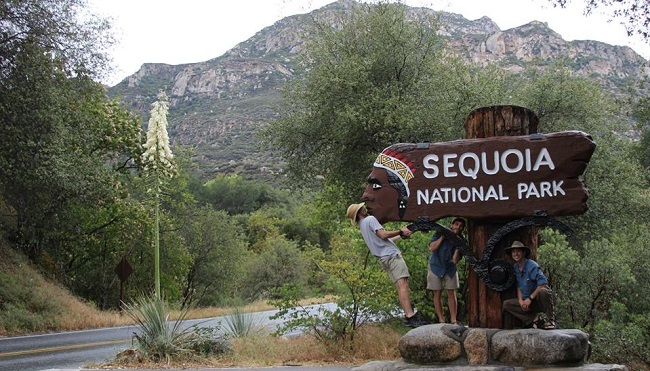
Officials have announced that they are closing sections of Sequoia and Kings Canyon National Parks because of the partial shutdown of the Federal Government.

Sequoia National Park
The Sequoia National Park

The announcement, made earlier, follows a similar closure announced for Joshua Tree National Park.

In both cases, park officials said the government shutdown has prevented them from maintaining conditions that are safe for park visitors.

In Sequoia and Kings Canyon, about 250 miles North of Los Angeles, furloughed park employees have been unable to maintain the safety of roads and certain walking paths in winter conditions.

In Joshua Tree, 209 kilometres east of Los Angeles, workers have been unable to empty vault toilets, which are near capacity.

Sequoia and Kings Canyon officials said that they had closed the Generals Highway at Hospital Rock.

The closure extends through Giant Forest and Lodge pole, through to Lost Grove.

“Trash receptacles are overflowing, resulting in litter dispersal throughout the area and a threat to wildlife,’’ the park service said in a news release.

“Vehicular congestion, motor vehicle accidents, and icy roadways have led to up to three-hour delays on the Generals Highway.’’

Popular walking paths have also become more hazardous: “The Grant Tree Trail, normally minimally maintained by sanding, has become extraordinarily slick.

The ice and snow have become compressed, glazed because of heavy traffic, causing multiple falls and at least one injury.’’

The park service said some privately-operated facilities in these areas would also have to close.

“It is likely these closures will remain in effect for the duration of the government shutdown,’’ the agency said in a release.

To be sure, areas of the parks would be closed anyway because of winter weather conditions.

Cedar Grove Lodge and Bearpaw High Sierra Camp fall into this category, as does the mountain road linking the two parks.

The lodges that would normally remain open have tried to remain so.

Their employees are not directly affected by the government shutdown because they work for a private company.

But visitor centres are closed, and roadside facilities are not being maintained.

At the privately run Wuksachi Lodge, a manager of the off-site reservation centre said that the park service was allowing guests to stay at the lodge through Tuesday, January 1, 2019 but on Wednesday the lodge would close.

In the meantime, guests were not allowed to hike on nearby trails.

As of Tuesday, John Muir Lodge and some of the Grant Grove cabins in Kings Canyon were to remain open.

The status of all facilities would be reviewed on a day-to-day basis, said the manager, who requested anonymity because the person was not authorised to speak on behalf of the park or the private operator.

The partial shutdown is the result of a standoff between President Trump and Congress over the federal budget.

The bad political weather in Washington has wreaked havoc in the economy surrounding the parks, said Nicky French, owner of Buckaroo Diner and the Ol’ Buckaroo food truck in nearby Three Rivers. She called the situation “chaos.’’

“All of the services that go into maintaining public land are not being done,’’ French said.

Some tourists who were unaware of the shutdown have tried driving into the park on icy roads and quickly turned around.

Others are canceling Airbnb reservations and other accommodations.

“The town has lost thousands and thousands of dollars. “It’s a very small economy, and it’s an economy that relies on tourism,’’ French said.

To the south, in Joshua Tree, campgrounds will close at noon on Wednesday.

Officials say they are basing the closure on health and safety concerns.

The park’s vault toilets are near capacity. Also, park visitor centres, flush toilets, water-filling stations and dump stations are all closed because of the shutdown.

NEWMAP spends N100m to conserve forest reserve in Gombe

0

Nigeria Erosion and Watershed Management Project (NEWMAP) says it has spent N100 million to conserve the forest reserve in Kanawa Village of Yamaltu-Deba Local Government Area of Gombe State.

Salisu Dahiru Newmap
Salisu Dahiru, National Project Coordinator of NEWMAP

Malam Mohammed Garba, Project Coordinator NEWMAP, disclosed this in an interview with the News Agency of Nigeria (NAN) in Gombe, the state capital, on Wednesday, January 2, 2019.

He said the 64 hectares of the forest reserve was fenced and three solar power boreholes were constructed for the purpose of water supply into the plantation.

Garba said the forest which was gazetted by the defunct government of northern region Kaduna in 1953 was being encroached before NEWMAP came to conserve it.

“We have spent N100 million to fence the 64 hectares of the forest aimed at conserving the endangered species,” he said

He said they had also employed some people, paying them to look after the reserve.

He said higher institutions of learning in the country had started visiting the place to conduct researches on the diversities of the trees.

For example, he said NEWMAP had collaboration with University of Jos, with the university advising them on the kind of trees to plant.

The coordinator said NEWMAP would be monitoring the reserve for the next one year before handling it over to the Gombe State Ministry of Environment for proper use.

Mr Zebulon Wasa, state Commissioner Ministry of Culture and Tourism, said the state government had a plan of converting the forest into a resort.

NEWMAP is a World Bank-assisted project of the Federal Ministry of Environment.

By Hajara Leman

Group tags bamboo ‘the forgotten climate solution’

0

The International Bamboo and Rattan Organisation (INBAR) has said that bamboo has huge potential for climate change mitigation and adaptation.

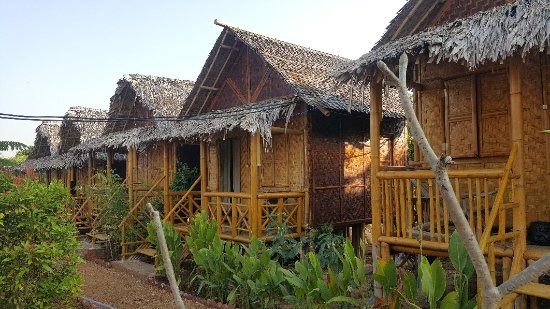
Bamboo house
Bamboo housing

Director general of INBAR, Hans Friederich, made the disclosure in December 2018 at the UN Climate Change Conference (COP24) in Katowice, Poland, where the organisation promoted the use of bamboo and rattan as existing solutions to climate change, environmental degradation and poverty.

According to INBAR, natural climate solutions can deliver over 35% of cost-effective carbon dioxide mitigation needed by 2030, but that they are a critically overlooked part of most climate change discussions.

“There are over 30 million hectares of bamboo spread across the world – this plant is truly a source of ‘green gold’ for developing countries, and we are urging everyone at COP24 to ‘think bamboo; in their climate action plans,” says Friederich.

Referring to the product as “the forgotten climate solution”, he discloses that bamboo acts as a sustainable, low-carbon alternative to timber, PVC, aluminium and concrete. Fast growing and quick to mature, bamboo can be used to make an increasing number of heavy-duty materials such as pipes, scaffolding and housing.

“Bamboo plants and products can also store more carbon than certain species of tree: new research shows they can sequester up to 630 tonnes of carbon per hectare,” Friederich notes, adding that bamboo renewable energy is being used to reduce deforestation across parts of Asia and Africa.

According to him, bamboo provides a year-round, climate-resilient form of income for millions of people around the world, including almost 10 million people in China alone. Executive Secretary of the United Nations Framework Convention on Climate Change (UNFCCC), Patricia Espinosa, had earlier in 2018 spoken about the importance of bamboo for low-carbon development, saying: “Bamboo can make an important difference to the fight against climate change.”

Because they are naturally occurring and used for a wide range of durable products, Espinosa added: “Nature-based solutions like bamboo do not just contribute to sustainable development, they also help build the kind of world we want.”

World Bank, Canada, UK to assist countries in transition from coal

0

The World Bank, Canada and the United Kingdom have announced financial, technical and advisory support for developing countries that have decided to transition away from coal and accelerate the uptake of cleaner sources of energy.

Jim Yong Kim
World Bank Group President, Jim Yong Kim

The disclosure was made in Katowice during the UN Climate Change Conference (COP24) that held in December 2018 in Poland.

The Canadian government pledged up to CAD $275 million to fund the Energy Transition and Coal Phase-Out Programme. The funding, it was gathered, will help developing countries in Asia to slow coal production while scaling up energy efficiency and low-carbon energy alternatives.

At the same time, the UK government pledges £20 milion to the World Bank’s Energy Sector Management Assistance Programme (ESMAP), a global knowledge and technical assistance programme administered by the World Bank to help low- and middle-income countries implement environmentally sustainable energy solutions.

Both these programmes will support the deployment of solar and battery storage, geothermal and offshore wind development, coal plant closure, and improvement in energy efficiency, particularly in buildings and cooling.

With the new financial support from Canada and the UK, the World Bank will also expand its work to help countries that have made the decision to transition away from coal, close mines and address the resulting socio-economic impacts on workers and communities. This means taking steps to protect jobs and skills and preserve the environment, including through strong social safety nets for coal mine workers and the reclamation and repurposing of coal mine areas.

In conjunction with COP24 in Poland, the World Bank launched a new report titled: “Managing Coal Mine Closure: Achieving a Just Transition for All”, which outlines the lessons learned from coal mine closures to date, and key steps governments can take to minimise social conflict and economic distress.

The report shows that the socio-economic impacts of coalmine closures are significant, with some coal-dependent regions continuing to lag socially and economically. However, countries can achieve a “Just Transition for All” through early engagement and dialogue and strong social assistance programmes for workers, families and communities.

Governments, says the report, play a leading role in this transition, bearing the cost of physical closure of mines and labour transition programmes, even when coal mines are privately owned. It adds that while many coal mining areas are unable to create new job opportunities, governments can implement labour mobility schemes, enabling coal mining communities to move to areas with strong economies and new job prospects.

Because the coal mine industry has shifted from West to East, future coal mine closures and associated job losses will be concentrated in Asia, with the top three global coal producers – China, India and Indonesia – the most affected, projects the report.

Senior Director and head of the Energy and Extractives Global Practice of the World Bank, Riccardo Puliti, says: “Our focus is on human dimension and helping countries accelerate the energy transition. A Just Transition for All means people’s livelihoods and communities need to be protected and that requires a carefully managed, sustained, longterm approach. Governments must prepare well in advance of any coal mine closures, implementing strong safety nets for workers ahead of job losses.”

Canada’s Minister of Environment and Climate Change, Catherine McKenna: “Countries need to phase out coal if we are to meet our Paris Agreement targets. Pollution from coal has major repaercussions on climate change, on our health, and on people. People need to be at the heart of our policies to tackle climate change. We know we have to phase out coal in a way that supports coal workers and coal communities, because the transition is not always easy. By working together, we can cut emissions and make sure people have good job opportunities in the future clean economy.”

The UK’s Minister for Energy and Clean Growth, Claire Perry: “The UK and Canada have truly led the world in powering past coal, with the UK going more than 1,700 hours without coal this year. But climate change is a global problem, which requires a united response. This World bank fund, backed by £20 million from the UK Government, will allow world-leading expertise to be shared globally to encourage developing countries to move away from coal power and embrace renewable energy, helping them to save the planet while giving their economies a vital boost.”

NEWMAP plants 38,000 species of trees in Gombe

0

The Nigeria Erosion and Watershed Management Project (NEWMAP) says it planted 38,000 different species of trees on 180 hectares of land in eight local government areas of Gombe State in 2018.

Tree-Planter
Tree planting

Malam Mohammed Garba, the Project Coordinator, told the News Agency of Nigeria (NAN) in Gombe on Wednesday, January 2, 2019 that the World Bank assisted project of the Federal Ministry of Environment planted woodlots and orchards in the eight LGAs.

Garba said that the objective of the project was to address the problem of environmental degradation in the LGAs.

The project coordinator listed the eight local government areas covered as Billiri, Kaltungo, Shongom, Kwami, Nafada, Funakaye, Dukku and Yamaltu-Deba.

According to him, NEWMAP started with the eight local government areas because they are the most vulnerable.

He said that the environmental degradation in the state were mostly due to human factors and could be controlled by free planting.

“This is because if the soil is too much exposed, other aspects of erosion can come thereby leading to environmental degradation,” Garba said.

He said that NEWMAP had also constructed boreholes across the local governments where the trees were planted to ensure that they thrived and achieved the purpose for their cultivation.

The coordinator said that the agency also undertook sensitisation of the people in the council areas on the need for appropriate waste disposal to avert the devastating effect of flooding.

Garba said that one of the major challenges NEWMAP encountered with execution of the project was acquisition of land in LGAs of the state.

He made an appeal to people and the authorities concerned to cooperate with the agency in its execution and implementation of the project.

The project coordinator said that in year 2018, NEWMAP supported Gombe State Emergency Management Agency (SEMA) with rescue materials and organised manpower training for officials of the state Ministry of Environment. 

By Hajara Leman

DPR urged to spearhead establishment of national environmental database

0

Stakeholders in the oil and gas industry on Wednesday, January 2, 2019 called on the Department of Petroleum Resources (DPR) to spearhead the establishment of a National Environmental Database for the sector.

Mordecai Danteni Baba Ladan
Mordecai Danteni Baba Ladan, head of DPR

The call arose from the just-concluded 18th Biennial International Health, Safety and Environment (HSE) conference held in December in Lagos.

The HSE conference was organised by DPR to engender HSE awareness among stakeholders in the oil and gas industry.

They argued that the regulators should lead a paradigm shift in the industry’s approach to bio-diversity conservation starting with requirements for increased budgetary allocation by operators and five-yearly check on the region’s biodiversity.

The stakeholders said in the communiqué from the conference that sustained efforts are required to stem the pervasive mediocrity across environmental practice in Nigeria.

“Key actions required include intervention to ensure quick passage of the bill for an institute of environmental practitioners and a voluntary code of ethics for environmental practitioners,” they said.

The oil and gas experts said that the practice of burning crude oil recovered from illegal activities should be stopped forthwith, because revenue was being lost and it causes major air, water and soil pollution.

They were of the views that procedures, including temporary lay down areas should be established to receive, monetise and responsibly dispose of recovered crude oil.

They also recommended that the DPR should spearhead the establishment of a publicly accessible accident investigation report database for the industry.

“The DPR should progress multi-stakeholders’ engagement and intensify its awareness campaign to mainstream the DPR-initiated, Minimum Industry Safety Training for Downstream Operations (MISTDO), aimed at reducing accidents and incidences in the sector.

They, however, urged operators to continue to improve on community-operator relations through sustained social interventions in infrastructure and human capacity.

They said that all new projects should have decommissioning in view of the conceptual stage of the project through design and implementation.

On safety, the stakeholders argued that the oil and gas industry needed to include process of safety in implementing asset integrity programnes.

They said that such process of safety activities should include measures to prevent deterioration of Safety Critical Equipment (SCE) in the maintenance management systems.

“Chemical risk management should form a key part of safety assessment studies in the oil and gas industry.

“The employment conditions of workers in the downstream sector requires intervention to improve their safety culture, performance and motivation,” they said.

By Yunus Yusuf

Why construction industry performed poorly in 2018, by builders

0

The Nigerian Institute of Building (NIOB) on Wednesday, January 2, 2019 blamed the poor performance of the construction industry and its low contribution to the country’s Gross Domestic Product (GDP) in 2018 on corruption.

Kenneth Nduka
Mr Kenneth Nduka

Assessing the sector, NIOB’s President, Mr Kenneth Nduka, told the News Agency of Nigeria (NAN) in Lagos that its performance in 2018 was poor when compared with the preceding years, despite its potentialities in boosting employment opportunities.

Nduka said that the construction industry should be a major contributor to GDP and national development, but the reverse was the case in Nigeria because the sector contributes about four per cent to the GDP.

“There is corruption in virtually every aspect of construction industry in Nigeria, beginning from the contract awarding stage to the implementation and maintenance stages,” he said.

Nduka said it was disheartening that a lot of contracts were awarded to non-Nigerians, describing it as detrimental to the development of the economy.

He said that research had shown that only five per cent of construction works done in the country, were carried out by Nigerians.

“Unlike what obtains in other climes, where construction sector contributes more than 15 per cent to their economies, the nation’s construction sector could only contribute four per cent to the GDP.

“The sad thing is that most of these construction designs are done by Nigerians.

“Nigerians are only involved at the lower level of its execution; not even at the management level,’’ he said.

The institute’s chief said that any contract/construction work executed by the foreigners would add little or nothing to the country’s GDP and economic growth.

He noted that the construction industry had huge potential, explaining that if N10 billion could be spent in the sector, the multiplier effects would be much on the economy.

“When you talk of investment in the construction sector, it is about to what extent your citizens are involved.

“Unlike other professions like law and medicine, Nigerians are mere executioners in the construction industry,” he said.

Nduka, while decrying the low performance of the construction sector in 2018, called for deliberate government’s policies and regulations capable of re-positioning the sector for economic growth.

He, therefore, urged government at all levels to curb corruption in the sector by involving Nigerians at the levels of project planning, budgeting and implementation.

“The governments should complement this with a range of other interventions such as publication of procurement documents, physical auditing and public-private anti-corruption partnerships, among others.”

The NIOB chief said that the Local Content Act, which is being applied in the oil and gas industry, should also be extended to the construction industry. 

By Lilian Okoro