Home Blog Page 1712

Greepeace kicks as Total makes South Africa oil and gas discovery

0

Total’s announcement on Thursday, February 7, 2019 that it has made a significant gas condensate discovery 175 kilometres off the southern coast of South Africa has been attracting criticisms from environmentalists.

South Africa oil drill
According to Greenpeace, deep sea drilling is far too risky, and the possibility for an oil spill always exists

The Brulpadda well (“Bullfrog well”) – located off the shore of Mossel Bay – is one of several highly anticipated exploration prospects for the company, which added that the well encountered 57 metres of net gas condensate pay in Lower Cretaceous reservoirs.

Total has previously indicated that the field could hold between 500 million to over one billion barrels of oil equivalent.

The well was deepened to a final depth of 3,633 meters and has also been successful in the Brulpadda-deep prospect.

“We are very pleased to announce the Brulpadda discovery which was drilled in a challenging Deepwater environment,” said Kevin McLachlan, senior vice president of exploration at Total.

“With this discovery, Total has opened a new world-class gas and oil play and is well positioned to test several follow-on prospects on the same block.”

However, in response to the development, Greenpeace Africa’s Senior Climate and Energy Campaign Manager, Melita Steele, said: “Greenpeace Africa strongly condemns Total’s reckless oil exploration off the coast of South Africa. Discovering yet more oil and gas is not something to celebrate when burning fossil fuels is driving potentially catastrophic climate change. This is essentially oil that we cannot afford to burn in the face of extreme weather conditions and recurrent droughts.

“Deep sea drilling is far too risky. The possibility for an oil spill always exists, and the environmental impacts of deep-sea drilling for oil and gas are too significant to be ignored, with very little benefit or job creation for South Africans. It is reckless of the South African government to allow oil and gas exploration to go ahead, and unfortunate that this was lauded as a victory at the State of the Nation Address last night.

“According to NASA, 2018 was the fourth warmest year on record, and if we are serious about stopping the worst impacts of climate change, then some fossil fuels must remain in the ground. This country is blessed with some of the best renewable energy resources in the world; it’s time to back renewable energy and stop the reckless and dangerous dash for fossil fuels.

“The drilling process also creates massive sound and light disturbances, which has been shown to be detrimental to marine life.”

Following the success of Brulpadda and confirmation of its potential, Total and its partners said that they plan to acquire a 3D seismic this year, followed by up to four exploration wells on its licence.

The Brulpadda well covers an area of 19,000 square kilometres, with water depths ranging from 200 to 1,800 metres, and is operated by Total with a 45% working interest, alongside Qatar Petroleum (25%), CNR international (20%) and Main Street, a South African consortium (10%).
AU urged to appoint envoy on climate change, security

0

Ahead of the African Union (AU) Summit holding from February 10 to 11, 2019, researchers at the Stockholm International Peace Research Institute (SIPRI) have released a new essay that gives impetus for the AU to refocus on climate-related security risks and build a broad support to appoint a dedicated AU Special Envoy for Climate Change and Security.

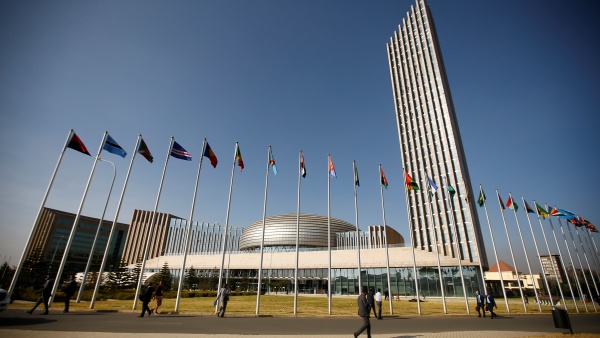
African Union (AU) building
The 32nd Summit of Heads of State of the AU is holding in Addis Ababa, Ethiopia

The 32nd Summit of Heads of State of the AU in Addis Ababa, Ethiopia has “Refugees, Returnees and Internally Displaced Persons: Towards Durable Solutions to Forced Displacement in Africa.” And observers opine that the AU aims at increasing attention to the root causes of forced displacement and bolster the capacity of AU Member States to tackle the problem and create sustainable strategies.

As SIPRI researchers point out in the essay, migration and forced displacement are only symptoms of broader social, political, economic and ecological “push” and “pull” factors.

“‘Especially in Africa, climate-related change is one of the most serious push factors,” says Dr. Florian Krampe, adding: “To address the push from climate impacts, there is a need to not only better comprehend but, to better respond to climate-related security risks.”

The AU is said to be critical in showcasing leadership and developing adequate responses to climate-related security risks.

Vane Aminga argues: “The responses will require an integrated approach that combines knowledge on climate risks and the social and political realities of the regions.”

As the SIPRI essay shows, despite rhetorical steps and statements – including the proposal of a Special Envoy for Climate and Security in May 2018 – the AU lacks a tangible policy framework that lays out specific actions on how to respond to climate security within the its peace and security framework.

Being the most vulnerable continent to climate change – inextricably linked to the continent’s peace and security – Africa is said to be in need of a clear climate security strategy and strategic leadership, the SIPRI said. It adds that part of this should be the appointment of a Special Envoy to Climate Change and Security which could help widen the understanding of climate-related security risks within the AU.

“The idea of the Special Envoy is apt and an opportunity to pre-empt migration and forced displacement,” says Krampe. “Moreover, will is provide an opportunity to ‘climate-proof’ the AU’s peace and security architecture.”

EU adopts proposal on emissions from maritime transport

0

The European Commission has adopted a proposal to revise the EU system for monitoring, reporting and verification (EU MRV) of CO2 emissions from maritime transport.

Ship
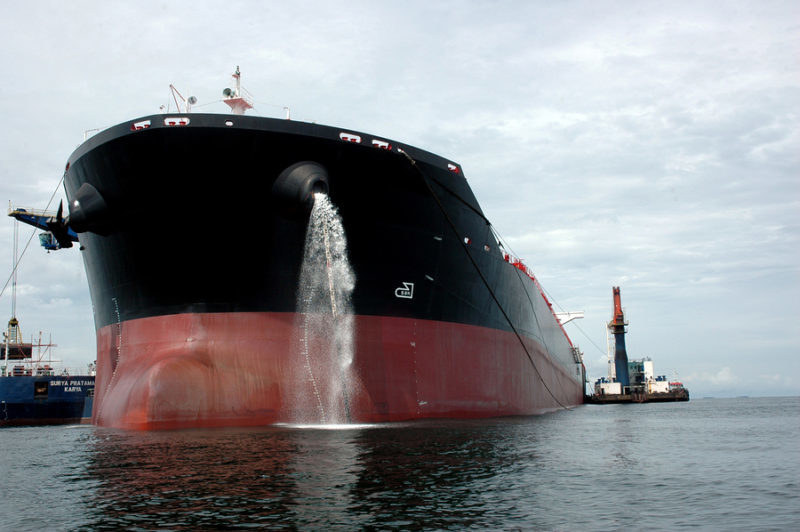
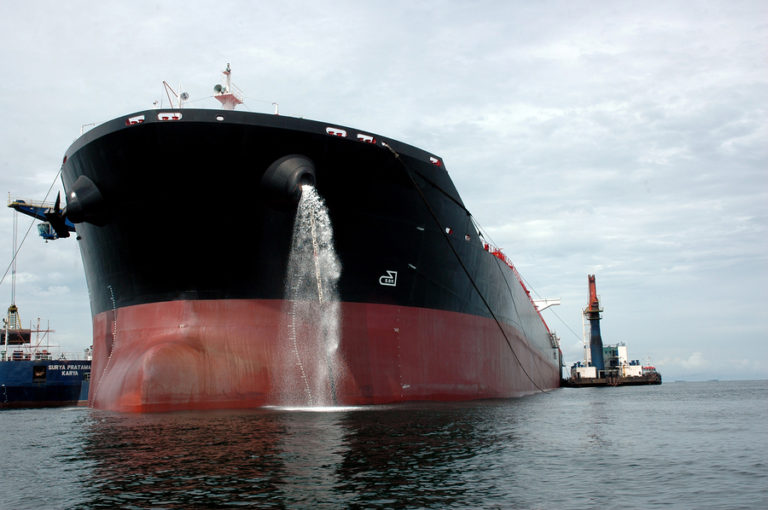
Bow of a ship

The system will be revised for the EU to take “appropriate account” of the global data collection system for fuel consumption of ships established by the International Maritime Organisation (IMO).

Specifically, the proposal aims to facilitate the harmonious implementation of the two systems while preserving the objectives of the current EU legislation. By streamlining some aspects of the two MRV systems such as specific definitions or monitoring parameters, the proposal aims at reducing the administrative burden and associated costs for ships having to report under both systems, as explained by the European Commission.

Publishing data about the emissions of all ships calling at EU ports will incentivise shipping companies to cut their CO2 while also better informing regulations to reduce emissions, the NGO Transport & Environment (T&E) believes.

By harmonising its MRV system with the IMO’s system, the EU should still require ships registered outside the EU to report their data.

In the case of publishing data on all ships, shipping customers would be able to identify the most efficient vessels, make fuel savings and reduce CO2 emissions, according to the NGO.

What is more, the transparency of the EU system, unlike the IMO’s data collection system (DCS), would prevent dirty ships to pass themselves off as efficient.

The commission’s proposal also maintains other key elements of the EU’s MRV, such as reporting data showing ships’ air pollution in ports.

“Shippers need to be able to identify the most efficient ships to cut their fuel costs and climate impact. The EU’s system provides this high-quality data which will also influence the ambition and the effectiveness of climate measures in the shipping sector. Without accurate data collection, the reduction measures won’t be worth the paper they are written on,” Faig Abbasov, Shipping Officer at Transport & Environment, commented.

However, the commission yielded to pressure to remove the obligation on ships to collect and report cargo data – essential for analysing the real-world performance of ships. The IMO system exempts shipping companies from collecting data about their cargo.

“Despite the positive decisions on flag neutrality and transparency, it is regrettable that the commission caved in to pressure to remove the collection of cargo data within the EU. Without cargo data, the market would not be able to differentiate an empty ship from an efficient one and thus there would be little incentive to improve ships’ efficiency, lower emissions and reduce transport costs,” Abbasov explained.

Shipping emits 3% of global CO2 and would be the sixth biggest emitter after Japan if it were a country. EU-related shipping is responsible for about one-fifth of global emissions.

In 2018, the IMO agreed a goal to reduce shipping emissions by at least 50% by 2050, and the IMO and EU systems are supposed to provide detailed data for policymakers to set regulatory measures that will reduce maritime greenhouse gas emissions.

Germany restricts professional fisheries in protected areas of North Sea

0

Federal Environment Ministry (BMU) and Federal Ministry of Agriculture (BMEL) in Germany have developed tangible proposals for restrictions on professional fisheries in the marine protected areas of the North Sea. These were transmitted to the EU Commission as a “joint recommendation” and concern the Natura 2000 sites in the Exclusive Economic Zone (EEZ).

Svenja Schulze
German Environment Minister, Svenja Schulze

The BMU and BMEL recommend measures to protect the threatened species and habitats occurring there. These include, for example, porpoises and seabirds, reefs and sandbars. They are expected to contribute to reaching the goal by 2020 of bringing the marine environment back to a “good state”.

Environment Minister, Svenja Schulze, said: “The endangered species and habitats of our oceans and oceans, such as porpoises, the red-throats and the red-throated divers, need better protection. For marine protected areas to live up to their name, restrictions on local fisheries are necessary. By submitting proposals for this, we have now created the prerequisite for the EU Commission to issue corresponding regulations.”

The proposed measures concern the Natura 2000 sites “Doggerbank”, “Borkum Riffgrund”, “Sylter Außenriff” and “Eastern German Bight”. These together cover about 28 percent of the area of ​​the foreign trade zone. Within these areas, certain fishing techniques in professional fisheries are to be prohibited or limited in time on part-areas. Rules are proposed for the use of gill nets and trawl nets to better protect marine mammals and seabirds, as well as reefs and sandbars and the species dependent thereon.

The submitted recommendations are coordinated with all affected EU member states, which exercise non-German flag fishing rights in the German EEZ. The next step is now for the EU Commission to make the recommendations binding in the context of a regulation.

The EEZ refers to the area beyond the territorial sea, ie the sea area at a distance of 12 to a maximum of 200 nautical miles from the coastline, where the adjoining coastal State can to a limited extent exercise sovereign rights and jurisdiction. The responsibility for these protected areas in the EEZ lies with the German government, while the territories in the territorial sea (up to 12 m) are the responsibility of the federal states.

The Natura 2000 Guidelines (the Fauna-Flora Habitat Directive and the Birds Directive) identify species and habitats for which protected areas must be designated in order to achieve an ecologically coherent network (NATURA 2000).

Germany, it was gathered, has an obligation to establish measures for the preservation or restoration of the so-called “favourable conservation status” of these species and habitats. The fisheries sector is defined under the rules of the “Common Fisheries Policy Regulation”. The “joint recommendation” should therefore be submitted to and coordinated with all economically affected EU Member States.

If an agreement has been reached with all the countries concerned, then the “joint recommendation” can be submitted to the Commission, which then binds it by a regulation. For fisheries management in the Natura 2000 sites in the EEZ of the North Sea, this agreement took place in December 2018/2019.

LAWMA threatens to close Ladipo Market over indiscriminate waste disposal

0

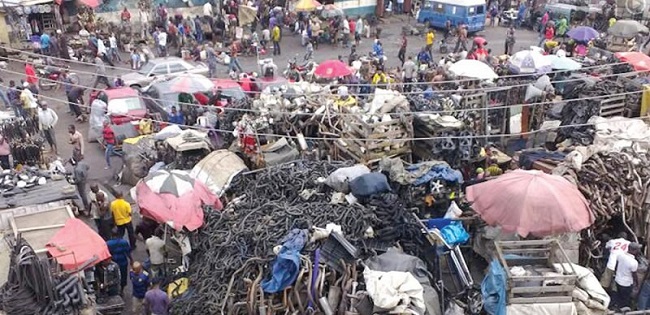
The Lagos Waste Management Authority (LAWMA) said on Friday, February 8, 2019 that it might close Ladipo Market in Mushin, till further notice, if the waste situation continued unabated.

Ladipo Market
Ladipo Market

LAWMA’s Public Relations Officer, Mr Obinna Onyenali, said that the attention of the authority had been drawn to the unwholesome environmental practices being carried out by traders at the Ladipo Market.

Onyenali said that such practices had resulted to indiscriminate dumping of waste and degradation of the environment.

He said that the authority had, in recent times, doubled its efforts to ensure that business transactions in all Lagos markets were conducted in a clean and safe environment.

According to him, the authority has doubled its efforts through timely deployment of trucks for waste evacuation and sweeping of the markets.

“However, these efforts are being tainted by the activities of mischievous persons who would rather dump their waste indiscriminately on the roads than patronise their assigned Private Sector Participation (PSP) operators.

“LAWMA condemns in strongest terms this unwholesome act, being perpetuated by the traders of Ladipo Market, as it exposes the environment and the people that do business there to various health dangers.

“The authority seizes this opportunity to urge the merchants at the market to turn a new leaf or face the consequences of the Law.

“If these heinous acts against the environment continue unabated, the market will be shut till further notice, ‘’ he said in a statement.

Onyenali said that LAWMA wanted all markets to comply with the Environmental Laws of the state, which was essential for building a cleaner and healthier environment that everyone would be proud of.

“The Authority appeals to all residents in the state to always imbibe the habit of effective waste management by bagging their waste for easy evacuation by their assigned PSPs,’’ he said.

By Florence Onuegbu

Tanzania won’t lift ban on export of live wild animals

0

The government of Tanzania on Friday, February 8, 2019 ruled out lifting its blanket ban on export of live wild animals, Ministry for Natural Resources and Tourism, told the National Assembly.

Constantine Kanyasu
Constantine Kanyasu

“We are working to review the Wildlife Conservation Act 2009 to be able to impose total ban on the export of wild animals.

“The ban which has been in place for three years will not be lifted,’’ Constantine Kanyasu, the Deputy Minister for Natural Resources and Tourism, told the House in the capital Dodoma.

The minister said the government had in 2016 imposed the ban on export of live wild animals following exporters’ violation of the Wildlife Conservation Act No. 5 of 2009. 

Past four years were warmest on record, confirms WMO

0

In a clear sign of continuing long-term climate change associated with record atmospheric concentrations of greenhouse gases, 2015, 2016, 2017 and 2018 have been confirmed as the four warmest years on record.

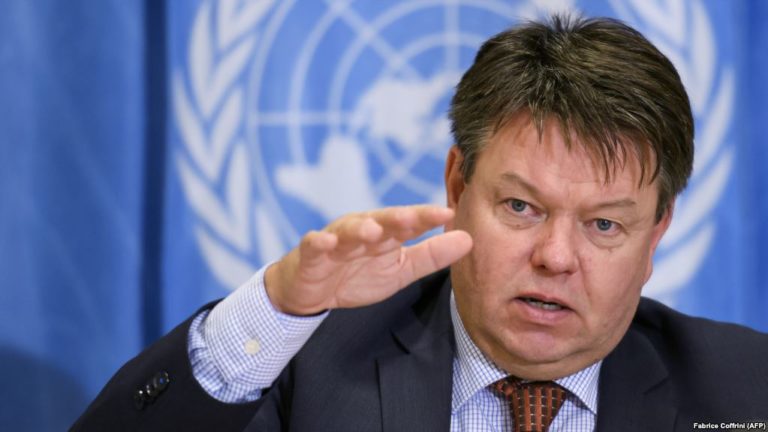
Petteri Taalas
WMO Secretary-General, Petteri Taalas

A consolidated analysis by the World Meteorological Organisation (WMO) of five leading international datasets showed that the global average surface temperature in 2018 was approximately 1.0° Celsius (with a margin of error of ±0.13°C) above the pre-industrial baseline (1850-1900). It ranks as the fourth warmest year on record.

The year 2016, which was influenced by a strong El-Niño event, remains the warmest year on record (1.2°C above preindustrial baseline). Global average temperatures in 2017 and 2015 were both 1.1°C above pre-industrial levels. The latter two years are virtually indistinguishable because the difference is less than one hundredth of a degree, which is less than the statistical margin of error.

“The long-term temperature trend is far more important than the ranking of individual years, and that trend is an upward one,” said WMO Secretary-General, Petteri Taalas. “The 20 warmest years on record have been in the past 22 years. The degree of warming during the past four years has been exceptional, both on land and in the ocean.”

“Temperatures are only part of the story. Extreme and high impact weather affected many countries and millions of people, with devastating repercussions for economies and ecosystems in 2018,” he said.

“Many of the extreme weather events are consistent with what we expect from a changing climate. This is a reality we need to face up to. Greenhouse gas emission reduction and climate adaptation measures should be a top global priority,” said Mr Taalas.

The globally averaged temperature in 2018 was about 0.38°C (±0.13°C) above the 1981-2010 long-term average (estimated at 14.3°C). This 30-year baseline is used by National Meteorological and Hydrological Services to assess the long-term averages and inter-annual variability of key climate parameters, such as temperature, precipitation and wind, which are important for climate sensitive sectors such as water management, energy, agriculture and health.

WMO will issue its full Statement on the State of the Climate in 2018 in March. This report will provide a comprehensive overview of temperature variability and trends, high-impact events, and key indicators of long-term climate change such as increasing carbon dioxide concentrations, Arctic and Antarctic sea ice, sea level rise and ocean acidification.

The final statement will include information submitted by a wide range of United Nations agencies on human, socio-economic and environmental impacts as part of an effort to provide a more comprehensive, United Nations-wide policy brief for decision makers on the interplay between weather, climate and water and United Nations global development goals.

The year 2019 has kicked in where 2018 left off

Australia had its warmest January on record, with heatwaves unprecedented in their scale and duration. Tasmania had its driest January on record, with destructive bushfires. There has been a long-term increase in extreme fire weather, and in the length of the fire season, across large parts of Australia, according to its Bureau of Meteorology.

Intense heatwaves are becoming more frequent as a result of climate change.

Extreme heat in the southern hemisphere contrasted with extreme cold in parts of North America in January. “The cold weather in the eastern United States certainly does not disprove climate change,” said Mr Taalas.

“The Arctic is warming at twice the global average. A large fraction of the ice in the region has melted. Those changes are affecting weather patterns outside the Arctic in the Northern Hemisphere. A part of the cold anomalies at lower latitudes could be linked to the dramatic changes in the Arctic. What happens at the poles does not stay at the poles but influences weather and climate conditions in lower latitudes where hundreds of millions of people live,” he added.

Group plans publication on sustainable settlements

0

The Physical Planning Renaissance Initiative (PPRI), a non-governmental organisation (NGO) established to advance urban planning agenda, is to debut its magazine in the second quarter of 2019.

Physical Planning Renaissance Initiative (PPRI)
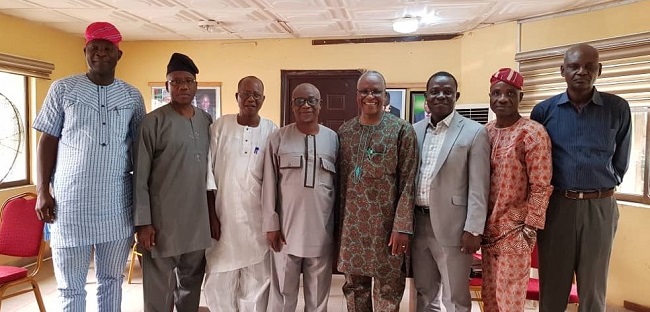
L-R: TPLs Moses Ogunleye, Tunji Odunlami, Bunmi Ajayi, Waheed Kadiri, Toyin Ayinde, Wale Alade, Ayo Adediran and Michael Simire, at the PPRI Formal Inaugural Meeting held on Thursday, January 10, 2019 at the Joseph Awogbemi House, Lagos NITP Secretariat, Alausa, Ikeja

The publication, named “Planning Renaissance”, will be an online magazine in the first instance. It is aimed at educating and informing the gamut of stakeholders in the industry on matters of human settlements development at the national, continental and global levels.

Waheed Kadiri, foremost African town planner and Chairman of the Board of Trustees of the organisation, said the publication was initiated in order to offer opportunities for dissecting issues of livability or sustainable living and proffering solutions to them.

“We are concerned with filling the gaps in the sector. We need a publication that will address matters plaguing settlements, where all angles are considered, and alternatives views offered. It will be a publication that policy makers, practitioners in the built environment sector, members of the academia, investors and others will find very stimulating,” he said.

Already, a board of editors comprising seasoned media guru and top-grade academic has been constituted to anchor the publication.

The founding members of the PPRI are Yacoob Abiodun, Bade Falade, Bunmi Ajayi, Waheed Kadiri, Toyin Ayinde, Moses Ogunleye, Tunji Odunlami, Wale Alade, Ayo Adediran and Michael Simire.

Under the aegis of the PPRI, the experts have set out to not only highlight the essence of planning and what they do as professionals, but also to galvanise the public to further stimulate their interest in participatory planning.

Experts predict Africa’s natural resources will diminish by half

0

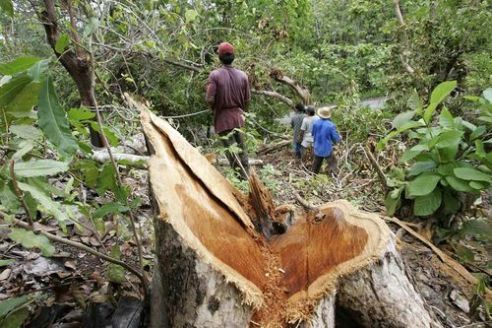
Some West African environment experts say Africa’s stock of environmental resources is expected to diminish by over half within the coming decades.

Deforestation
Deforestation

The experts said this at the maiden edition of the conference on Conservation and Environmental Management for West African NGOs on Wednesday, February 6, 2019 in Abuja.

The theme of the two-day conference is: “Conservation-Collaboration beyond National Boundaries in the Sub-region’’.

Dr Muhtari Aminu-Kano, the Director-General, Nigerian Conservation Foundation (NCF), said the conference would afford partners the opportunity to deliberate on sustainable solutions to common conservation challenges within the region.

“The region is endowed with rich biodiversity populated by numerous species of flora and fauna, unfortunately this unique range of biodiversity are now among the world most threatened.

“The consequences of such a large-scale loss of biodiversity are dire as it will ultimately affect the capacity for economic development, social advancement and exacerbate climate change.’’

Aminu-Kano said that aims of the conference included identifying priority areas requiring urgent need for conservation intervention as well as the need for technical assistance from ECOWAS Secretariat.

According to him, others are to explore areas of possible support for NGOs through closer collaboration with the ECOWAS platform.

“Meet peers and share experience about what works and what doesn’t and identify synergies and ways of working together to help in future tasks.’’

Mr Kwame Awere-Gyeke, the Technical Advisor, West Africa Biodiversity and Climate Change Programme (WABICC) under USAID, said the conference came at the right time.

“At WABICC, we work with all stakeholders to provide opportunities for cooperation and development to ensure that humans live in harmony with nature.

“We must foster closer engagement with ECOWAS environment policy development process for proper action,’’ Awere-Gyeke said.

Mrs Thandiwe Chikomo of Birdlife International, West Africa Sub-regional Office, Dakar, said Birdlife was working with people toward the sustainable use of natural resources.

“BirdLife Africa Partnership is a growing network of 24 organisations striving to conserve birds, their habitats and global biodiversity.

By Ebere Agozie

Agency lays emphasis on water safety in Sokoto

0

The Sokoto Rural Water Supply and Sanitation Agency (RUWASSA) has begun training of communities on water safety plans to protect water contamination from point of production to consumption.

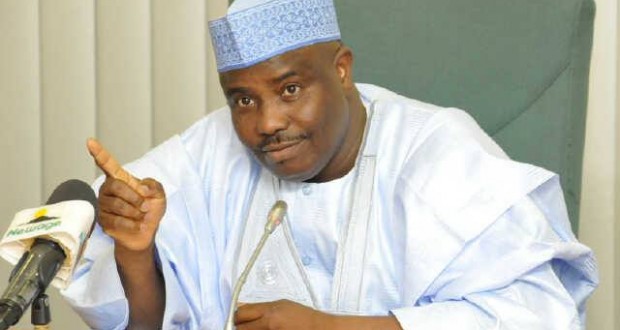
Aminu Tambuwal
Governor Aminu Tambuwal of Sokoto State

Mr Tijani Aliyu, the Head of Sanitation, Sokoto RUWASSA, said this on sidelines of the Water, Sanitation and Hygiene (WASH) in Emergency Working Group visit on Cholera Assessment and Monitoring in Sokoto on Wednesday, February 6, 2019.

He said that the agency had been working in partnership with UNICEF to expand access to potable water and sanitation, especially in rural communities, saying hygiene promotion was focused on.

“We have trained some community members to be natural leaders and WASH Committees to train their populace on how to protect their water from being contaminated from sources to point of consumption.

“We realise that most of the communities take water from hand-dug wells, without cover, so we are training them on how to lift their water sources from surface points to an acceptable standard.

“This is because it may be contaminated from run-offs as the rainy season sets in, some are open, some water points may be contaminated from waste water coming from open defecation sites.’’

Aliyu said that the agency was implementing the programme in two pilot local governments of Tangaza and Binji, saying with support of the state government and availability of more funds, it would be extended to eight local governments.

He said that at Dange Shuni local council, community members were being trained on community-led total sanitation to ensure people to took ownership of their hygiene by constructing and using their toilets.

He said that there was the need to promote behaviour change to ensure that communities would begin to see the need to stop open defecation practice and resort to toilet use.

He said that this would go a long way to meet the open defecation-free target by 2025.

Aliyu said that the team was working with other stakeholders to intervene to forestall outbreak of cholera, saying this was evident with the provision of hand-pump boreholes, hygiene promotion materials.

He said that some water sources had also been reactivated with testing of some unimproved water sources to see what could be done to rehabilitate them to further improve water supply and reduce outbreak of cholera.

The WASH in Emergency Working Group was established in 2012 when the country experienced serious devastating flood that affected 85 milion people in 14 states.

The group has since remained active, especially in the North-East where IDPs exist and have responded immediately on outbreaks.

The group membership cuts across WASH sector players from Institutions, Development Partners, International and Local NGOs, CSOs responding to WASH issues in the North East, with UNICEF as its co-lead.

By Tosin Kolade