The UN Refugee Agency in Uganda says it plans to plant 20
million trees in 2019 to plug the deforestation by Refugees in the East African
Country.
Tree planting
Joel Boutroue, representative of the United Nations High
Commissioner for Refugees (UNHCR) in Uganda, on Wednesday, February 6, 2019
told reporters that the refugees hosted by Uganda have caused massive deforestation,
noting that each refugee cuts on average about 20 trees annually.
Uganda, according to the refugee agency figures, hosts about
1.2 million refugees, with majority coming from South Sudan, Democratic
Republic of Congo, Burundi and Somalia.
Boutroue expressed optimism that over time the afforestation
measure would be able to cover up the destruction caused by the refugees.
“We would like to do more, if possible, to offset the
deforestation that has been already done,’’ he said.
Boutroue said there is tension among some refugee host
communities over the deforestation carried out by the refugees.
He said planting trees would defuse the tension and
promote the coexistence between the refugees and the host communities.
An increase in the severity and frequency of extreme weather
conditions in Australia in 2018 is “a new norm driven by climate change,” a
report said on Wednesday, February 6, 2019.
Climate Council chief executive, Amanda McKenzie
“Temperatures nudged 50 degrees Celsius, bushfires ravaged rainforests
and people were at increased risk of cardiac arrests because of heatwaves,’’
the Sydney-based environmental group Climate Council said in its report.
It comes as hundreds of people wait in evacuation centres
after 10 days of torrential rain and flooding in north-east Australia, while
month-long bushfires have ravaged almost 200,000 hectares of land in Tasmania.
The report, titled “Weather Gone Wild,” said extreme weather
events were being influenced by climate change, “as they are occurring in an
atmosphere that contains more energy than 50 years ago.”
“Heatwaves are starting earlier, becoming longer, hotter and
occurring more frequently,’’ the report said,
It added that there were twelve times more hot temperature
than cold temperature records set in Australia between 2000-14.
The report also said extreme weather events were “very
costly” as insurance companies paid out more than 1.2 billion Australian dollars
(870 million dollars) in 2018 in claims linked to them.
Climate Council chief executive Amanda McKenzie said
Australia’s conservative government, which has been in power for five years,
has obstructed action on climate change while extreme weather worsens.
“It’s unconscionable.
“We are experiencing climate change right now across
Australia, from flooding in Townsville to bushfires in Victoria and Tasmania,’’
she said.
Climate change is set to be a key political issue in
national elections scheduled to be held before May.
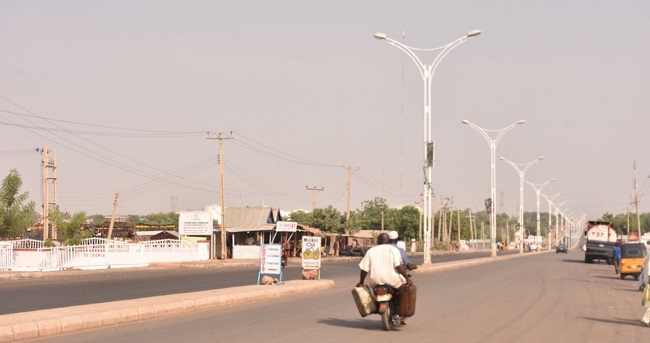
The National Environmental Standards and Regulations
Enforcement Agency (NESREA) on Wednesday, February 6, 2019 cautioned residents
of Gombe State against open burning of wastes, to protect the environment.
Gombe
Mr Daniel Wuave, the Gombe State Coordinator of NESREA, gave
the advice in an interview with the News Agency of Nigeria (NAN) in Gombe, the
state capital.
He said the burning of residential trash, which is becoming
a norm in some parts of the state, portend grave danger to the quality of air
available for human existence.
“Stop burning residential wastes. The issue of waste burning
is attitude-related. This is because in Gombe State, the government has engaged
waste management consultants to clean up the state.
“They go around to collect waste at designated locations and
keep the city centre and major streets clean. With that, the government has
done its own in providing the necessary environmental facilities.
“In spite of this arrangement, people still prefer to burn
their trash in residential areas; so, you see that it is about their attitude
and not the failure of government,” he said.
He noted that many residents burnt wastes because they did
not know that the smoke it generated was toxic to human health and the
environment.
“Carbon dioxide and other chemicals from burning pollute the
air quality in our environment, which results to serious health effects in the
long run.
“It also affects the environment negatively as the ozone
layer is being depleted, and all these consistent actions add to the issue of
climate change. The soil and underground water are also affected,” said Wuave.
He recommended the planting of trees by residents in their environment to improve the quality of air, noting that it was the cheapest method of improving air quality and reversing air pollution.
The German Federal Cabinet on Wednesday, February 6, 2019 approved the “Climate Protection Report 2018”. Accordingly, Germany is expected to emit around 32 percent less greenhouse gases in 2020 than in 1990. In comparison, in 2017 the reduction was 27.5 percent.
German Environment Minister, Svenja Schulze
Progress is expected in the energy sector by 2020, partly
because of the successful reform of EU emissions trading. However, this
progress has been partially offset by higher emissions from transport and
buildings.
Environment Minister, Svenja Schulze, said: “Despite some progress in the energy transition, Germany has not yet reached its target for climate protection in recent years. We will learn from the omissions of the past, so that Germany does not miss its climate goal again. We need more courage and commitment in climate policy.
“That is why I will present a climate protection bill that makes compliance with our climate goals more binding. The report also shows how urgent it is for the Federal Government to take new climate protection measures. For the coal exit, there is now a good plan on the table, which must now be linked to a targeted energy transition policy. The expansion of renewable energies and grids must move faster.”
In 2014, the Federal Government had for the first time
quantified a gap in the achievement of the 2020 climate protection
target. To conclude this, the “Climate Action Programme 2020”
and the “National Energy Efficiency Action Plan” (NAPE) were decided
at that time. The progress is reported in annual climate protection reports.
The “Climate Protection Report 2018” comes just
eight months after the resolution of the “Climate Protection Report
2017”. It is based partly on the same data basis and therefore draws
a similar picture. Accordingly, the approximately 110 measures adopted in
2014 yield between 43 and 56 million tonnes of CO2. Originally it had been
calculated with 62-78 million tons. As a result, without the action
programme in 2020, Germany would only get 28-29 percent instead of a 32 percent
reduction.
After successfully reforming European emissions trading,
higher allowance prices are more than expected, helping to reduce greenhouse
gas emissions. On the other hand, emissions in the building and transport
sectors are stagnating at a high level, rather than declining as originally
expected.
The federal government had originally set itself the goal
for 2020 of reducing greenhouse gas emissions by 40 percent compared with 1990
levels. Last year it became clear that this goal can not be achieved on
time. For 2030, a target of 55 percent applies. The coalition
agreement stipulates that the federal government is launching a package of
measures to ensure that the climate target for 2030 is reliably achieved and
that the gap to reach the 40 percent target is closed as soon as possible.
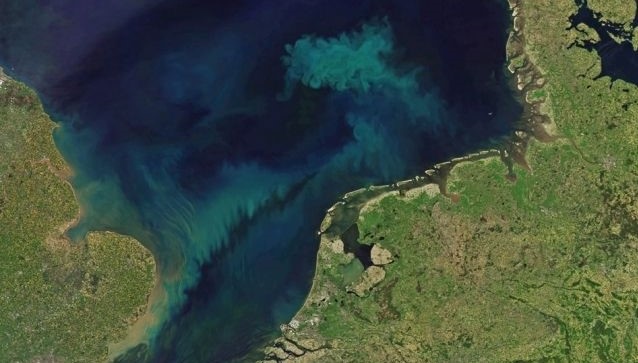
A new study by the Massachusetts Institute of Technology (MIT)
in Cambridge, Massachusetts, USA, has found that climate change could affect
the colour of the ocean, intensifying its blue and green regions.
Climate change can affect the colour of the ocean, intensifying its blue and green regions
Climate change is causing significant changes to
phytoplankton in the world’s oceans, and a new study finds this will cause a
shift of colour in the Earth’s oceans.
The study, published in the journal Nature Communications, used a global model that stimulates the
growth and interaction of different species of phytoplankton and how the mix of
species in various locations will change as temperatures rise around the world.
A
study by the University of Oxford found the ocean has absorbed
more than 90 per cent of the heat gained by the planet between 1971 and 2010.
This change in heat will mean that there will be less
phytoplankton in waters in the decades to come. As a result, the researchers
found that by 2100, more than 50 per cent of the world’s oceans will shift in
colour.
The researchers believe that the North Atlantic will be one
of the first places to show the change, followed by locations in the Southern
Ocean.
Stephanie Dutkiewicz, a principal research scientist at
MIT’s Department of Earth, Atmospheric, and Planetary Sciences, and lead
author, said: “The model suggests the changes won’t appear huge to the naked
eye, and the ocean will still look like it has blue regions in the subtropics
and greener regions near the equator and poles. That basic pattern will still
be there.”
The shift in phytoplankton in the oceans could cause much
bigger problems to the environment than just changing the colour. Phytoplankton
regulate key chemical biochemical processes such as export of carbon to the
deep ocean.
Dutkiewicz added: “There will be a noticeable difference in
the colour of 50 percent of the ocean by the end of the 21st century. It could
be potentially quite serious. Different types of phytoplankton absorb light
differently, and if climate change shifts one community of phytoplankton to
another, that will also change the types of food webs they can support. “
This follows a report that
found that warming oceans will result in sea levels rising by 30 cm by the end
of the century.
The Federal Government on Tuesday, February 5, 2019 said it
has mobilised 16 contractors to carry out environmental remediation and cleanup
of oil spill in Ogoniland.
Minister of Environment, Alhaji Suleiman Zarma, meeting a group of ambassadors interested in the remediation of the oil spill in the Niger Delta
Minister of Environment, Alhaji Suleiman Zarma, said this
when a group of ambassadors interested in the remediation of the oil spill in
the Niger Delta visited him in Abuja.
The group includes ambassadors from Norway (Jens Petter),
Netherlands (Michel Deelen), United Kingdom (Henriette Thompson), Germany (Benhard
Schlagheck), France (Jerome Pasquier), European Union (Ketil Karlsen) and
United States (David Young).
Zarma, who expressed the Federal Government’s determination
to restore land degraded by oil spill in Ogoni, said that mobilisation
fees had been paid to contractors to enable them to commence the remediation.
He said that the Hydrocarbon Pollution Remediation Project
(HYPREP), a Federal Government coordinating office saddled with
responsibility of remediation, commenced the implementation of project through
consultation and sensitisation of communities.
The minister said that the idea was to involve communities
to take ownership of the project.
According to him, all scientists driving the
remediation project in HYPREP are indigenous people.
The Project Coordinator of HYPREP, Dr Marvin Dekil, said
that HYPREP has a Board of Trusteea which determines the release of fund for
the implementation of the remediation project.
Dekil added that the Governing Council of HYPREP, chaired by
the Minister of Environment, would serve as administrative body for the project
implementation.
According to him, HYPREP also has livelihood programme aimed
at restoring livable life for people of Ogoniland.
Earlier, the group of ambassadors led by Mr Michel Deelen,
Deputy Ambassador in Charge of Affairs, Netherlands, said that the international
community is interested in the environmental remediation and cleanup of
Ogoniland oil spill.
Deelen said that the visit was to get a direct update on the cleanup project from the ministry.
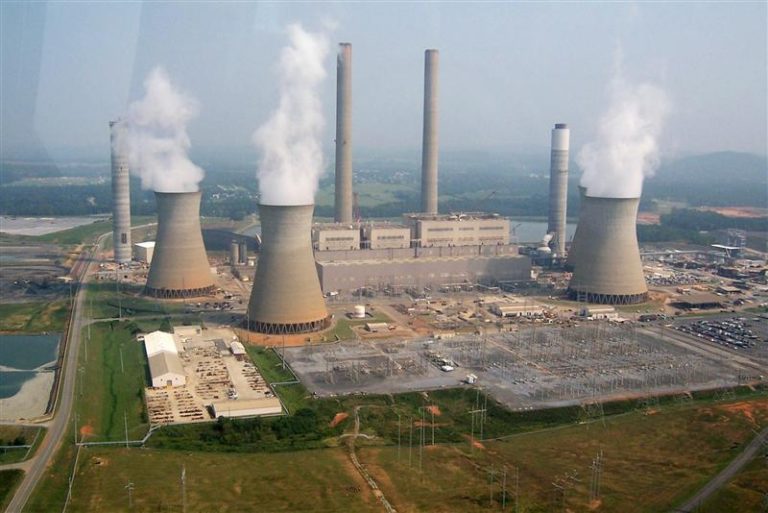
Three commercial banks – Nedbank, Standard Bank, FirstRand – have reportedly withdrawn funding of two proposed coal-fired power stations in South Africa.
A power plant fired by coal
This leaves Absa and DBSA as the remaining South African commercial banks that have not yet withdrawn from funding the Thabametsi and Khanyisa projects.
Nedbank, for instance, says the move fits with its
commitment to “green” funding, responsible lending and supporting
sustainability initiatives. The bank says its initial proposal for funding the
construction of the Thabametsi and Khanyisa independent power producers (IPPs) has
lapsed and will not be renewed.
It adds that this follows a corporate policy announcement in
early 2018 that the bank will no longer fund the construction of coal-fired
power plants beyond its existing commitments to fund Thabametsi and Khanyisa,
which were included as part of the new coal IPP programme in the department of
energy’s draft integrated resource plan for electricity (Draft IRP 2018).
Nedbank says it will prefer to offer financing for projects
in energy efficiency and renewable energy, such as landfill gas, solar, hydro
and wind projects. The bank says that in its core business of lending and
investing it has a crucial role to play in transforming the economy and
addressing climate change and that it seeks to “use (its) financial expertise
to do good for individuals, businesses and society.”
FirstRand and Nedbank’s announcements follow reports in September 2018 of Standard Bank’s withdrawal of financing for the construction of coal-fired power.
The proposed Thabametsi 557-megawatt (MW) coal-fired power
station, which would be largely owned by Japan’s Marubeni and South Korea’s
Kepco, was to be built near Lephalale in Limpopo, while the Khanyisa 306 MW
power station was to be sited near eMalahleni in Mpumalanga. The biggest
shareholder of Khanyisa would be Saudi-owned Acwa Power.
Funding is not the only challenge faced by the two new coal
IPPs. Credible high court challenges (reviews of the environmental
authorisations) are underway, and atmospheric emission licences, water-use
licences and generation licences for both projects are either outstanding or
being challenged.
Civil society organisations (CSOs) have hailed the development.
In South Africa, civil society opposition to new coal power
projects has been led by environmental activist NGOs including Earthlife
Africa, groundWork and the Centre for Environmental Rights (CER) in their Life
After Coal Campaign.
“Both projects are currently the subject of litigation and
have been shown to be unnecessary and dirty — among the highest GHG-emission
intensive plants in the world, with attendant impacts on human health and
wellbeing. They are also staggeringly expensive,” says Robyn Hugo, head of the
CER’s pollution and climate change programme.
“It’s high time that banks acknowledge that funding these
projects runs completely contrary to the climate and sustainability commitments
they have made. These developments are in line with international trends which
recognise that the reputational and other costs of being in business with coal
are unsustainable,” she adds.
350Africa campaigner, Ahmed Mokgopo, says: “We welcome the news that Nedbank, Standard Bank and FirstRand have pulled out of financing the proposed coal IPP’s. Commercial banks are recognising the fundamental risks (environmental, social and financial) of funding coal fired power plants as being a major barrier to progress, yet the Development Bank of Southern Africa (DBSA), which is mandated to drive sustainable development for a prosperous region, is still willing to fund the new coal power stations.
“The serious lack of transformation in South Africa’s energy sector will become a burden as demand for expensive, dirty energy falls worldwide. The window of opportunity for the DBSA to show real climate leadership has closed. They now need to catch up with commercial banks who are leading the charge against climate change fueled by the fossil fuel industry.”
Intergovernmental Panel on Climate Change (IPCC) authors
will meet in Cali, Colombia from February 11 to 15, 2019 to make final
preparations for the special report on “Climate Change and Land” to
be released later this year.
Around 125 authors and IPCC Bureau members from about 45
countries will come together in Cali for their Fourth Lead Author Meeting to
start work on preparing a final draft of the report for consideration by
governments from April 29 to June 23 in the light of over 14,800 government and
expert comments from the recent review of the report’s second order draft.
The report, whose full name is “Climate Change and
Land, an IPCC special report on climate change, desertification, land
degradation, sustainable land management, food security, and greenhouse gas
fluxes in terrestrial ecosystems (SRCCL)”, assesses topics around climate
change and land use.
“Governments and experts have given us valuable guidance and
insights on the second order draft of the report,” said P.R. Shukla, Co-Chair
of IPCC Working Group III. “The authors will now prepare the final draft
drawing on this expertise which reflects the importance of the review process
to the work of the IPCC.”
The report, one of three to be issued this year by the IPCC,
is being prepared under the scientific leadership of all three IPCC Working
Groups and the Task Force on National Greenhouse Gas Inventories, with support
from the Technical Support Unit of Working Group III.
The meeting in Cali is hosted by the International Centre
for Tropical Agriculture (CIAT).
“We’re honoured to be hosting this distinguished group of
authors,” said Louis Verchot, a senior scientist at CIAT and an IPCC author.
“This report will be especially relevant for stakeholders throughout the
countries where we work and provide essential information for policymakers who
are working with the myriad issues surrounding land use and climate change.”
Director-General, Nigerian Conservation Foundation (NCF), Dr
Muhtari Aminu-Kano, says the activities of forest poachers and illegal lumbers
can make the country lose its unique flora (or vegetation) and fauna (or wildlife),
if left unchecked.
Dr. Muhtari Aminu-Kano, DG of NCF
Aminu-Kano made the claim in an interview with the News
Agency of Nigeria (NAN) on Tuesday, February 5, 2019 at the Omo Elephant Forest
Initiative at Area J4 in Ijebu-East Local Government Area, Ogun State.
The five-day programme is organised by NCF on field
orientation training in conjunction with the Ogun State Ministry of Forestry
for 120 newly recruited foresters and boundary guards at the forest reserve.
According to him, the endangered species have a declining
population and very limited range aggravated by habitat loss, hunting, disease
and threats of climate change.
Aminu-Kano called for a hands-on approach where more
environmental law enforcement and manpower development through employment of
more park rangers could help salvage Nigeria’s wildlife resources.
“Poaching is a major threat in these parts due to the
culture of eating bush meat and not replenishing by rearing the meat we consume.
“We prefer just to go and harvest from the wild just to
indulge our cravings not factoring that some animals we hunt down have a slow
reproductive cycle of development.
“Some even go to the extent of bush-burning just to chase
out animals to hunt and in the process destroy delicate and peculiar flora and
fauna which are unique resources to us.
“These habitat degradations and over exploitation of
wildlife is one of the major threats to forest and wildlife in Nigeria,” he
said.
The conservation expert added that the NCF was looking to
provide more protection for the critically endangered species unique to the
country.
“Our major interest right now as an organisation is
providing protection for the critically endangered ones, which are animals and
plants that are unique to us as they can only be found in Nigeria and nowhere
else.
“These are those we refer to as the endemics, those if they
are wiped out means the world has lost the benefit of having those animals in
existence hence, they be classified as extinct,” he said.
He listed the flagship species hunted for their value in the
black market to include the West African lion, elephants, pangolins and the
apes (monkeys, chimpanzees, baboons and gorillas).
He said that these animals had species peculiar to the Nigeria
terrain and with very few populations at present, adding that they were
necessary for examining the existence of other species in the forest.
“For example, if you wipe out an elephant population from a
piece of forest, you are also wiping out a lot of other organisms because some
organisms will depend on the dung of elephants to grow and survive.
“Some plant seeds, unless they are eaten by elephants and
egested out will not germinate so those kind of key flagship species are also
some of the ones we are concerned about,” Aminu-Kano said.
The NCF boss stressed the need for more park rangers known
as forest guards in Nigeria and gave reasons why more hands needed to be
employed considering the capacity gap between retiring veterans and new
recruits.
“We have some capacity in forest management but not enough.
“We came from a period where we had highly trained foresters,
but that generation are now in very senior positions and cannot be out in the
field to do the actual work.
“Now we have more enthusiasm from youths who are embracing
forest management coming out of schools without practical field experience
hence the need to engage them.
“You need to make sure that you conserve what needs to be
conserved and manage what needs to be managed better.
“If you conserve and manage your forest well it is a gold
mine.
“The tourism aspect of it is underutilised as some countries
grow the major part of their GDP from forest and wildlife conservation,” he
said.
He described the Omo forest reserve, which links with the
Shasha and Oluwa reserves in Ondo and Osun states as “very high-value forests
because it is one of the few reserves where elephants and chimpanzees still
exist.’’
A Senior Forester from Kenya Forest Service, Mr Chando
Maghanga, who is among the facilitators of the forest management training,
highlighted the threats posed by climate change on forest reserves.
“When the rains we anticipate during the planting season
reduced or are not as frequent as we expected, this may impact the survival of
the plants.
“The issue of forest fires may be escalated by the impact of
the dry season with increase in droughts.
“The changes in weather conditions can also broaden the
scope of disease spread as more cases spill over from the forests to the living
communities,” he said.
Maghanga urged authorities to imbibe community engagement as
coping mechanisms whereby farm owners living close to forest resources would be
engaged as stakeholders in forest protection based on incentives.
“This is important as more people begin experiencing more
crop failures, they could fall back on directly exploiting forest resources as
a means of survival which could be detrimental,” he said.
Mr Dolapo Odulana, the Director, Non-Timber Forest
Products, Ogun Ministry of Forestry, said that the NCF training focused on
forest management, protection, community engagement and forest evaluation
research.
He said that the newly recruited foresters had been mandated
to enforce the law which required them to intercept or do some arrests
regarding to those violating the environmental laws.
A nutritionist, Mrs Toyin Aliu, has said that the
consumption of rotten tomatoes, popularly known as “esa”, can cause cancer.
Tomatoes. Photo credit: authorityngr.com
Aliu, who is of the College of Health Technology, Offa,
Kwara State, told the News Agency of Nigeria (NAN) on Tuesday, February 5, 2019
that maggots infested tomatoes could cause bacterial poisoning when consumed.
“The fungi in rotten tomatoes are sources of potent
mycotoxins, which can be detrimental to health.
“Rotten tomatoes can induce cancer, because once tomatoes
become rotten, they will have microorganisms, mostly fungi.
“Fungi in rotten tomatoes produce mycotoxins, which are
deadly and can induce cancer, and can cause immune deficiency in humans.
“Since tomatoes contain a large amount of fluid, mycotoxins
diffuse rapidly in rotten tomatoes, contaminating all parts and making it bad
for consumption,” Aliu said.
According to her, rotten tomatoes grow mold on their bodies
and serve as abode for worms and maggots from the common housefly.
The nutritionist added that, although the rotten tomatoes are
cheaper, it is better to eat healthy tomatoes than to consume potential poison.
“The effect of consuming such tomatoes is not immediate but
gradual.
“So, it is better to eat the one we feel is expensive that to consume the cheap one and regret later,” Aliu said.