Home Blog Page 1709

Ogoniland clean-up: Community monitors emerge, concerns over emergency measures

0

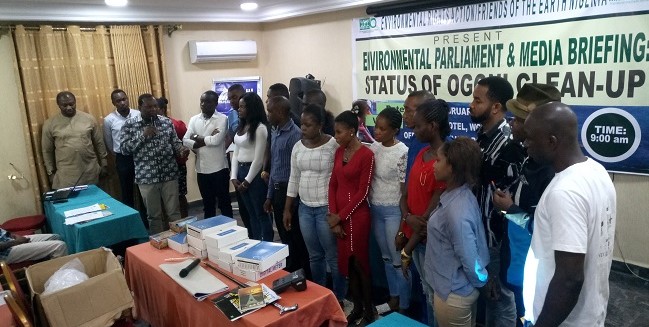
To complement the Ogoni clean-up process, the Environmental Rights Action/Friends of the Earth Nigeria (ERA/FoEN) and its allies at the local, national and international levels, on Wednesday, February 6, 2019 in Port Harcourt, Rivers State launched some 100 Community Independent Monitors (CIM) to provide qualitative and scientific progress reports on the state of the clean-up process.
ERA/FoEN
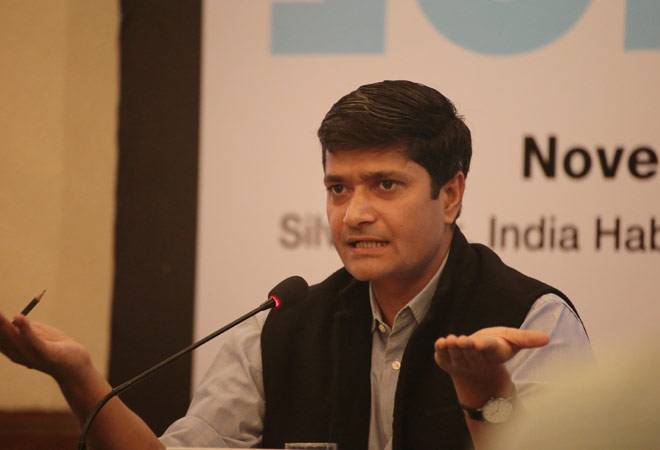
Inauguration of the Community Independent Environmental Monitors by Dr Godwin Ojo of the Environmental Rights Action/Friends of the Earth Nigeria (ERA/FoEN)

According to Dr Godwin Ojo, head of ERA/FoEN, the CIM will provide feedback to the Hydrocarbon Pollution Remediation Project (HYPREP), government agencies, media and the relevant stakeholders to ensure transparency and accountability and ensure quality clean up.

In a similar vein, the group has expressed reservations over the implementation of the emergency measures in Ogoni under the clean-up initiative.

Essentially, the Ogoni environmental remediation project as outlined in the United Nations Environmental Programme (UNEP) recommendations should be implemented in phases – the emergency measures and the full-scale remediation of polluted sites. There were eight emergency measures highlighted in the UNEP report.

But Ojo alleged that, till date, only a few measures had been partially attempted without any form of a fast-tracked implementation, while many others are yet to be conceived.

For instance, on the emergence measure that wants the authorities to ensure that all drinking water wells where hydrocarbons were detected are marked and that people are informed of the danger, the group remarked: “This emergency measure is yet to be attained. Two communities in Ogale Clan – Ekpangbala and Agbi – have contaminated water wells that are yet to be marked, and people still use water from these wells for different purposes.”

On provide adequate sources of drinking water to those households whose drinking water supply is impacted, ERA/FoEN commented: “This is one measure that is yet to be implemented. Contracts were advertised to study the water reticulation in Ogoniland and provide water. HYPREP is yet to provide potable water to any community.”

On informing all families whose rainwater samples tested positive for hydrocarbons and advise them not to consume the water, ERA/FoEN observed: “HYPREP is yet to identify these families, consult or inform. Or better still, sensitise the Ogoni population on the hazard of drinking contaminated rainwater.”

Concerning mounting a public awareness campaign to warn the individuals who are undertaking artisanal refining that such activities are damaging their health, ERA/FoEN stated: “HYPREP has undertaken strategic level consultations with ex-artisanal refiners. This approach has been ineffective and given that the real people involved in artisanal refining (‘the foot soldiers’) and suffer the impacts of the illicit and crude business are yet to be consulted.”
Top 10 animals going extinct because of climate change

0

NASA scientists have announced that 2018 was the fourth hottest year on Earth, exceeded only by 2017, 2016 and 2015. After 140 years of record-keeping, 18 out of 19 of Earth’s warmest years have occurred since 2001.

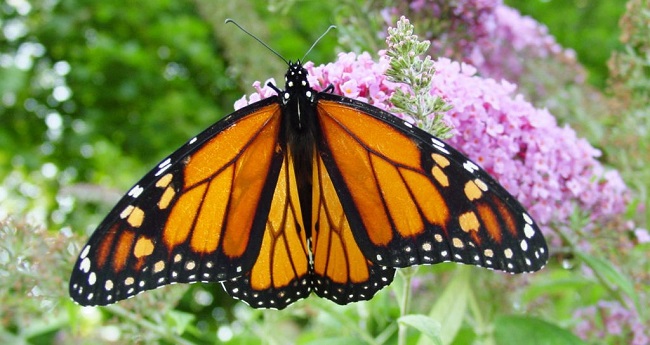
Butterflies
Milkweed, Monarch Butterflies’ favourite, are now being destroyed by hotter dryer land often damaged by pesticides

For humans, this means more destructive hurricanes, floods, forest fires, droughts, and bone-chilling Arctic blasts resulting in thousands of deaths, billions in property destruction and massive interruptions of life as we know it.

By 2100, an estimated 50% of all the world’s species could go extinct because of climate change. 

Here are 10 animals threatened with extinction because of climate change.

  1. Bumblebees: Rising temperatures force bees north, disrupting access to the nectar and pollen they need to survive.
  2. Whales: Migration, feeding, and reproduction necessary for survival are disrupted by warming waters.
  3. Asian Elephants: Habitat is disappearing due to lower rainfall and higher temperatures.
  4. Giraffes: In addition to illegal poaching, shrinking habitat and disappearing food sources threaten their survival.
  5. Insects: 18% of insect species will die off due to warming by 2100; if the planet warms 3.2°C, that number rises to 49%.
  6. Oceanic Birds: Rising waters threaten to submerge their coastal habitats and nests completely.
  7. Sharks: Difficulty hunting and lower birth rates threaten sharks as ocean temperature and acidity rise worldwide.
  8. Monarch Butterflies: Monarchs can’t survive without milkweed, now being destroyed by hotter dryer land often damaged by pesticides.
  9. Great Apes: With nearly 75% of forest cover at risk due to climate change, their habitat is disappearing.
  10. Coral: Sustained heat stress causes coral bleaching, an often-deadly occurrence in which coral starves from a loss of nutrition.

IUCN identifies tree species for climate-resilient reforestation

0

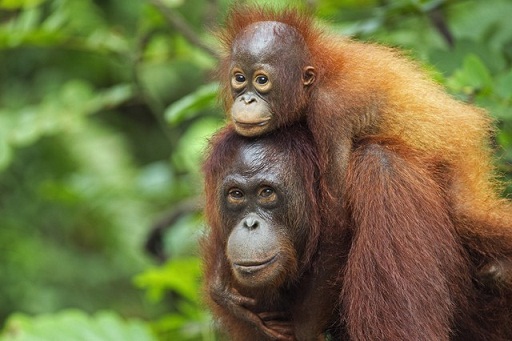
A study by the International Union for the Conservation of Nature (IUCN) has identified tree species native to Indonesia’s Kutai National Park that are resilient to climate change and support threatened East Bornean orangutan populations, recommending their use in reforestation efforts. The study was funded by the Indianapolis Zoological Society, Inc.

Orangutans
The tree species are resilient to climate change and support threatened Orangutan populations

Recognising that saplings planted today face dramatic climate changes over their 100+ year life-spans, the study, titled: “Reforesting for the climate of tomorrow”, analysed the traits of around 250 species of trees and other plants native to the rainforest of Kutai National Park. It identified species resilient to the fires and drought conditions that are expected to increase as the climate warms. The authors also identified tree species that provide food and habitat for threatened East Bornean orangutans, for which the park provides a key habitat.

“Increasing drought and fires caused by a warming climate are important emerging threats to species-rich areas such as Kutai National Park,” said Alan Lee, lead author of the study and member of the IUCN SSC Climate Change Specialist Group. “Selecting climate-resilient tree species can help protect the park and the orangutan populations it shelters from the impacts of climate change. We hope that the information in this study is taken up by all those working to restore this unique area of rainforest.”

Climate change-resilient species included those with low sensitivity to changes, high capacity to adapt to them, or both. Two tree species that were singled out for their resilience to fire – a native palm, Borassodendron borneense, and the hardwood tree Eusideroxylon zwageri, known locally as Bendang and Ulin – should be planted in buffer zones around fire-prone areas, the authors recommended. 

“This study provides valuable practical guidance as to how we can make a unique Bornean rainforest more climate-resilient. Of course, to halt the catastrophic impacts of climate change on nature we urgently need ambitious emissions cuts. But with climate change already impacting many species in alarming ways, nature needs all the help it can get in adapting to these rapid changes,” said Sandeep Sengupta, IUCN’s Climate Change Coordinator.

Seven plants that are likely to be climate resilient emerged as key food sources for East Bornean orangutans, and these should be planted alongside vines that the apes use for moving through the forest and trees which they prefer for nesting, such as the Ulin tree, according to the study. To minimise conflict with humans – a key threat to orangutans – the authors recommended planting these species in areas that humans are unlikely to access. 

“Kutai National Park was once one of the most important lowland rainforest sites in Borneo, and its degradation is a major loss not only for Indonesia but for the world,” said study co-author Douglas Sheil. “But there is a glimmer of hope in that populations of threatened East Bornean orangutans persist there, and work continues to restore forest cover in the park. Selecting which species to plant is a significant contribution to restoring the health of this ecosystem. Of course, the reasons why forest cover was lost in the first place must also be addressed for reforestation efforts to succeed.”

Biodiversity in Kutai National Park faces multiple threats, including population expansion into the protected area, hunting, forest clearing for agriculture, fire, and coal mining, with climate change an important emerging threat. Reforestation efforts in the park are being undertaken by local organisations, government, and PT. Indominco Mandiri, a coal mine operation on the edge of the park.

Key collaborators in this work included Anne Russon of York University (Ontario), the staff of Kutai National Park, the Indonesian Ministry of Environment and Forestry, the Yorkshire Wildlife Park and a range of dedicated conservationists and researchers from local and international organisations. Three members of the IUCN SSC Climate Change Specialist Group played leadership roles.

“My research team had the very telling but heart-breaking opportunity to study warming and severe drought effects on Kutai National Park first hand, via the 2015-16 El Niño drought – the most severe ever recorded.  By its end, we had seen severe drops in KNP’s wildlife numbers – from invertebrates to orangutans and other large mammals – and very high tree death rates in drier areas,” said study co-author Anne Russon of York University, Ontario. “Almost three years later it is clear that KNP’s forest and resident wildlife have recovered somewhat, but very slowly. Innovative studies like this IUCN one stand to contribute importantly to nature conservation by offering constructive methods for buffering the effects of climate change.”

“This work is among the first of its kind, in that it moves away from more common approaches to identify species that are most threatened by climate change, and instead focuses on practical ways to restore ecosystems using species that will be resilient far into the future,” said Jamie Carr, the IUCN SSC Climate Change Specialist Group member who conceived and co-led the work. “Moreover, it identifies practical and political challenges that will need to be overcome if such restoration work is to be successful.” “Kutai National Park faces many challenges in managing its area. Forest degradation is the biggest and the most pressing one. We give our utmost regard for all supporting organisations who made the Kutai National Park ecosystem restoration publication possible,” said Nur Patria Kurniawan, Head of the Kutai National Park.

“The results will guide our ecosystem restoration activities and will be implemented not only in Kutai National Park, but also in tropical forests outside the KNP. There will be immediate follow-up action related to ecosystem restoration in KNP. Moreover, we also call for continued support from IUCN and other parties in preserving the Kutai ecosystem and protecting orangutans.”

Over 100 Indian cities commit to adopt sustainable waste management practices

0

“Keeping our cities clean by only collecting and disposing wastes is not sufficient. What is required is source-segregation, proper treatment, recycle and reuse of the waste. Zero landfill should be the goal of municipal waste management in India,” said Chandra Bhushan, deputy director general, Centre for Science and Environment (CSE), at the inaugural session of the Regional Meeting for Eastern and North Eastern States under CSE’s “Forum of Cities that Segregate” initiative attended by all the urban local bodies of Bihar and major cities from eastern and north-eastern India.

Chandra Bhushan
Chandra Bhushan, Deputy Director General, Centre for Science and Environment (CSE)

CSE has been working with cities to promote and implement source-segregation and decentralised model of waste management.

“To advance this work and to create a movement in the country on source-segregation, CSE had launched the ‘Forum of Cities that Segregate’ on December 12, 2017. The Forum now has over 80-member cities from across the country including Indore, Thiruvananthapuram, Mysuru, Muzaffarpur and some municipal corporations of Delhi NCR and all the cities of Bihar,” said Swati Singh Sambyal, Programme Manager, CSE.

“Indian cities continue to struggle with waste- of the total 52 million tonnes that is generated yearly, only 21 per cent is processed and over 50 per cent is disposed in dumpsites, drains – contaminating our rivers and oceans. Also, with growing consumerism and changing lifestyles, plastics has become a huge problem especially single use plastics,” added Bhushan.

The management of municipal solid waste in eastern and north-eastern India continues to be a severe problem because of the poor management systems. From collection of wastes to disposal, these cities are struggling to manage their waste. Majority of the cities in this region have been ranked low in the Swachh Survekshan assessments in the past few years.

“It is important for cities in states like Bihar to adopt successful waste management models like the one being implemented in Muzaffarpur. The Muzaffarpur model not only manages the waste sustainably, but it also makes money out of waste,” added Bhushan.

CSE’s latest report on the need for a new policy on City compost, titled “Çharting the Future of City Compost”, was also released in the inaugural session by the Urban Development Minister of Bihar Shri Suresh Kumar Sharma. Speaking at the function, Shri Sharma emphasised the need of replication of Muzaffarpur model in cities as well as urged cities to practice composting and decentralised waste management.

“If we can return back the food waste as organic fertiliser to our farmers, it will lead to less chemical in the environment which will reduce pollution and improve our health,” said Shri Suresh Sharma at the meeting.

For the past year Muzaffarpur is said to have seen a lot of progress. The city has become a model city in eastern and north-eastern India by adopting the source segregation model of waste management.

“Over a period of two years, Muzaffarpur has become one of the cleanest cities in Bihar with all 49 wards segregating waste at source and with segregation percentage of over 80 per cent. The city has currently three processing centres which also includes Bihar’s first learning centre on composting,” said Sanjay Dubey, Municipal Commissioner of Muzaffarpur.

“However, a lot needs to be done, we have completed 50 per cent of the work in Muzaffarpur, now we need to address issues such as plastics and ensure this model becomes sustainable and self-sufficient,” added Sambyal.

At the meeting, cities like Muzaffarpur, Panchgani, Ambikapur, Gangtok, Gaya, Kakching and Munger made presentation on the models they have adopted for the waste management. The need for the solid waste management (SWM) byelaws, proper dry waste management systems and plastic management was discussed at the meeting.

The new forum cities were distributed the membership certificate to join the movement on source segregation and cleanliness in the country. A roadmap for replication of decentralised waste management models by cities of Eastern and North Eastern states was discussed and the cities pledged to practice sustainable waste management.

“We hope that the cities in the Forum would become pioneers in terms of SWM and guide other cities on technical, economic and social aspects of managing their waste,” Bhushan added.

Lake Chad Basin Commission budgets 17.67bn CFA for 2019 operations

0

The Executive Secretary, Lake Chad Basin Commission (LCBC), Amb. Mamman Nuhu, on Friday, February 8, 2019 said a budget of 17.67 billion CFA Francs has been approved for the commission’s activities in 2019.

Mamman Nuhu
Amb. Mamman Nuhu

Nuhu disclosed this in N’djamena while speaking with some Nigerian journalists on a working visit to Chad.

He said that the budget was approved by the Council of Ministers of LCBC at its 64th session in N’djamena on Thursday.

He stated that the budget comprised of 15.36 billion CFA Francs for capital development and 1.78 billion for running cost of the commission.

The executive secretary said that funding of the commission came from two sources – contribution by member-states and international partners.

He said that the countries were responsible for the cost of administration of the commission, while the partners’ contributions took care of development.

He said that Nigeria contributed the highest of 40 per cent for the running cost of the commission, followed by Cameroon with 20 per cent and 18 per cent by Libya.

“Chad contributes 11 per cent; Niger, seven per cent and four per cent by Central Africa Republic.”

Nuhu disclosed that aside from Nigeria, other countries of LCBC were in huge arrears of their annual contribution for the sustenance of administration of the commission.

He said that outstanding financial commitments of the defaulting countries was discussed at Thursday’s council of ministers’ meeting, where it was resolved that the nations would be reminded of their obligation in writing.

According to him, the council agreed that Chairman of the Summit of Heads of State and Government of LCBC states, who is currently President Muhammadu Buhari of Nigeria, will write to the countries.

He said that the commission had revived efforts on the actualization of implementation of the Inter-Basin Water Transfer Project (IBWTP) between Congo Basin and LCBC.

Nuhu said that the project, which had been on for about 40 years, had covered some distance before suffering several setbacks.

He, however, said that the process had been re-opened, with the commitment of international partners, including France, which had offered $1.5 million and Italy, €1.8 million.

He assured that the project would be realised as it was one of the core programmes for the development and management of waters of Lake Chad and the ecosystem.

By Olisa Ifeajika 

WHO increases support on Lassa fever in W/Africa

0

The World Health Organisation (WHO) on Sunday, February 10, 2019 said it has increased its efforts to support West African countries in the ongoing Lassa fever outbreak.

Dr. Matshidiso Moeti
Dr. Matshidiso Moeti, the World Health Organisation (WHO) Regional Director for Africa. Photo credit: pbs.twimg.com

This was made known in a statement by the Communications Manager, Collins Boakye-Agyemang, in Abuja.

Boakye-Agyemang said that while the outbreaks were occurring during the Lassa fever season in countries where the disease was endemic, the speed of escalation was of concern.

He said that the outbreak has affected 16 states in Nigeria, with about 213 confirmed cases, including 42 deaths, which marked a significant increase.

According to him, Nigeria experienced its worst outbreak of Lassa fever and four health workers have been infected so far in this latest outbreak.

He noted that WHO was scaling up its efforts to support federal authorities, National Council Disease Control (NCDC), and the affected Nigerian states in responding to the outbreak.

He also said that an important focus was on early detection and confirmation of suspected cases.

He said that providing optimal supportive care and ensuring infection prevention and control measures, in designated health care facilities in the affected states were also priority.

“The WHO has intensified its technical assistance and is supporting coordination, enhanced surveillance, epidemiological analysis and risk communication.

“WHO is also mobilising experts to support case management and infection prevention and control.

“A total of 12 cases have been confirmed to date in Benin, Guinea, Liberia and Togo, including two deaths, with more suspected cases being investigated.

“WHO is assisting health authorities in these countries with contact tracing and provision of medical and non-medical supplies with technical and financial resources as needed for case management, risk communication and logistics.

“We are concerned by the high number of cases so early in the Lassa fever season, which is expected to last another four more months.

“WHO is working with health authorities in the five affected countries and will ensure that health workers have the capacity to detect cases and regional spread of the disease was monitored,” he said.

He added that WHO has set up a regional coordination mechanism, for countries to report any suspected case of Lassa fever, to expedite the flow of timely information.

He said that this would assist to assess the situation, recommend actions and help organise assistance.

“WHO has also reached out to the six other at-risk countries; Burkina Faso, Cameroon, Ghana, Mali, Niger and Sierra Leone, and is supporting prevention and readiness activities as needed.

‘‘WHO will continue to advise all countries in the Lassa fever belt, to enhance their preparedness and response capacities.

“Especially for early case detection, laboratory confirmation, case management under recommended barrier nursing, risk communication and community engagement.

“Lassa fever is an acute viral haemorrhagic illness that occurs predominantly in West Africa, after human exposure to the urine or faeces of infected Mastomys rats.

“More than 80 percent of Lassa fever cases are rodent-to-human transmission. Person-to-person transmission occurs in both community and health-care settings.

“Prevention of Lassa fever is based on promoting good “community hygiene,” to discourage rodents from entering homes.

“It could also be by storing grain and other foodstuffs in rodent-proof containers, disposing of garbage far from the home.

“Also maintaining clean households, keeping cats and safe handling of anyone who may have died of the disease.

“In health care settings, health care workers should always apply standard infection prevention and control precautions when caring for patients,” he said.

By Jessica Onyegbula

UK, Europe’s worst offender, ‘illegally’ exports electronic waste to Nigeria, others

0

A new report has found that Britain is the worst offender in Europe for illegally exporting toxic electronic waste.

ewaste
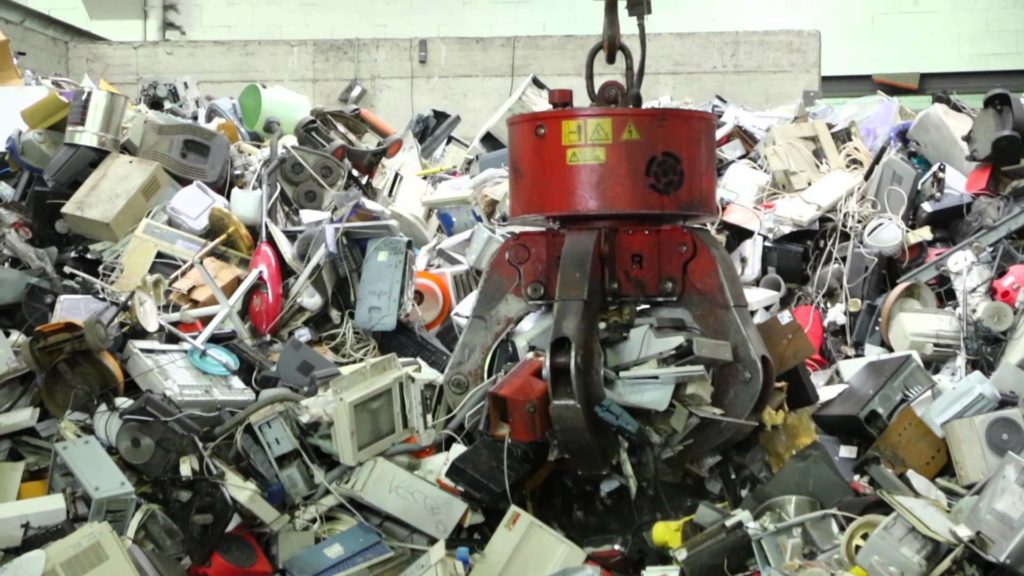
Waste of electrical and electronic equipment (WEEE) such as computers, TV-sets, fridges and cell phones is one the fastest growing waste streams in the EU

The report, commissioned by the environmental watchdog Basel Action Network (BAN), studied 10 countries, including Austria, Germany, Belgium and the UK.

The study, two-years in the making, followed 314 computers, printers and monitors in which GPS Trackers had been secretly installed. The equipment was then taken to places where consumers are expected to take their waste, most often government-approved takeback stations.

They found that 6 per cent of tracked scrap equipment was exported, including 11 very likely illegal shipments to the countries such as Ghana, Hong Kong and Nigeria, outside of the EU.

The report estimates that flows discovered with figures on electronic waste generation in Europe, if extrapolated, would total 352, 474 metric tonnes per annum moving from the EU to developing countries. This amount could fill 17,466 large-size intermodal shipping containers.

Jim Puckett, BAN Director, said: “It appears that we have discovered a very significant stream of illegal shipments of hazardous consumer electronic scrap to vulnerable populations. This flies in the face of EU claims to make continuous efforts to implement a circular economy which can only responsibly exist by eliminating externalities and leakage from the system.”

The report said that the UK was ‘clearly the worst violator’ being involved with 5 exports. Italy, Germany, Spain, Ireland and Poland were also implicated in allowing shipments to developing countries.

In these locations, BAN found that e-waste was often subjected to substandard, dangerous recycling operations involving worker exposure and community pollution.

The EU has deemed electronic waste as hazardous, due to toxic parts containing substances such as mercury, lead and flame retardants.

BAN recommends an enhanced effort in the EU to enforce its Basel Convention treaty obligations and a re-visitation of its Circular Economy policies.

Courtesy: Climate Action

How climate change is hurting Africa’s economy, by experts

0

Climate change has weakened, and it will continue weakening African economies as countries struggle to counter its impacts, experts attending an event on the sidelines of the traditional Assembly of the Heads of State and Government of the African Union for 2019 in Addis Ababa, Ethiopia, have observed.

Harsen Nyambe Nyambe

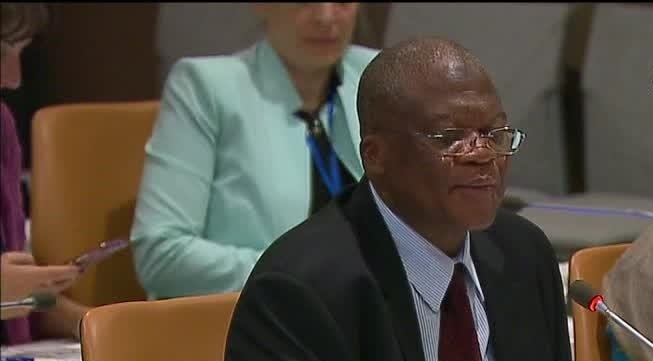
In a speech read on his behalf at an event organised by the Pan African Climate Justice Alliance in collaboration with the United Nations Economic Commission for Africa (UNECA), Harsen Nyambe Nyambe of the Department of Rural Economy and Agriculture at the AUC observed that the cost of climate change to GDP is escalating due to reduced agricultural productivity and higher costs of adaptation.

The experts, some of them drawn from the United Nations, the environmental civil society organisations, academia and African governments, observed that apart, from grappling with poor agricultural productivity due to poor climatic conditions, human displacement has had untold impacts on nearly all the African economies.

“In my country Rwanda, the government has always been forced to move hundreds of families each year to safer grounds, and these are budgets that we have not planned for,” said John Bideri, the Chair of the PACJA Board, an organisation that brings together over 1,000 climate related civil society organisations.

He observed that many other people have as well been forced to move to other continents as refugees due to climate related hostilities and phenomena. “Why are people moving away from Africa, and yet, Africa is the most endowed continent on earth?” he paused.

A World Bank Report shows that unless urgent action is taken to reduce greenhouse gas emissions, up to 143 million “internal migrants” will be forced to move within their own countries to escape the gradual effects of climate change by 2050.

Globally, the Internal Displacement Monitoring Centre (IDMC) points out that an average of 22.5 million people has been displaced each year by climate or weather-related disasters in the last seven years, equivalent to 62,000 people every day

Bideri says that the only way to reverse the situation will be by reduction of greenhouse gas emissions, but again, the developed world must provide finances to help Africa cope with the prevailing situation, given that Africa has contributed the least towards emission of greenhouse gas emissions.

“We should continue playing our roles as African countries, but also demand for our rights,” Bideri told experts in Addis Ababa.

Already, Africa is experiencing higher warming and more extreme weather events, leading to disruptions in ecosystems, economies and livelihoods. These disruptions are in turn causing new insecurities in the populations of the continent, leading to conflicts, displacements and disempowerment.

The experts from the African Climate Change community were discussing in a meeting to examine how adequate the outcomes of the COP24 – the “Katowice Climate Package” – is in driving effective actions to address climate-induced human insecurity in Africa. The outcomes will be presented to the Assembly of the Heads of State and Government of the African Union.

So far, the Global Compact for Safe, Orderly and Regular Migration (GCM), under the auspices of the United Nations, agreed on by leaders from 164 countries in December 2018 in Marrakech, Morocco, does cover “all dimensions of international migration” and aims to strengthen the international response to large movements of refugees and protracted refugee situations. It has 10 principles which address the effect of climate change on migration.

Courtesy: PAMACC News Agency

Greepeace kicks as Total makes South Africa oil and gas discovery

0

Total’s announcement on Thursday, February 7, 2019 that it has made a significant gas condensate discovery 175 kilometres off the southern coast of South Africa has been attracting criticisms from environmentalists.

South Africa oil drill
According to Greenpeace, deep sea drilling is far too risky, and the possibility for an oil spill always exists

The Brulpadda well (“Bullfrog well”) – located off the shore of Mossel Bay – is one of several highly anticipated exploration prospects for the company, which added that the well encountered 57 metres of net gas condensate pay in Lower Cretaceous reservoirs.

Total has previously indicated that the field could hold between 500 million to over one billion barrels of oil equivalent.

The well was deepened to a final depth of 3,633 meters and has also been successful in the Brulpadda-deep prospect.

“We are very pleased to announce the Brulpadda discovery which was drilled in a challenging Deepwater environment,” said Kevin McLachlan, senior vice president of exploration at Total.

“With this discovery, Total has opened a new world-class gas and oil play and is well positioned to test several follow-on prospects on the same block.”

However, in response to the development, Greenpeace Africa’s Senior Climate and Energy Campaign Manager, Melita Steele, said: “Greenpeace Africa strongly condemns Total’s reckless oil exploration off the coast of South Africa. Discovering yet more oil and gas is not something to celebrate when burning fossil fuels is driving potentially catastrophic climate change. This is essentially oil that we cannot afford to burn in the face of extreme weather conditions and recurrent droughts.

“Deep sea drilling is far too risky. The possibility for an oil spill always exists, and the environmental impacts of deep-sea drilling for oil and gas are too significant to be ignored, with very little benefit or job creation for South Africans. It is reckless of the South African government to allow oil and gas exploration to go ahead, and unfortunate that this was lauded as a victory at the State of the Nation Address last night.

“According to NASA, 2018 was the fourth warmest year on record, and if we are serious about stopping the worst impacts of climate change, then some fossil fuels must remain in the ground. This country is blessed with some of the best renewable energy resources in the world; it’s time to back renewable energy and stop the reckless and dangerous dash for fossil fuels.

“The drilling process also creates massive sound and light disturbances, which has been shown to be detrimental to marine life.”

Following the success of Brulpadda and confirmation of its potential, Total and its partners said that they plan to acquire a 3D seismic this year, followed by up to four exploration wells on its licence.

The Brulpadda well covers an area of 19,000 square kilometres, with water depths ranging from 200 to 1,800 metres, and is operated by Total with a 45% working interest, alongside Qatar Petroleum (25%), CNR international (20%) and Main Street, a South African consortium (10%).

AU urged to appoint envoy on climate change, security

0

Ahead of the African Union (AU) Summit holding from February 10 to 11, 2019, researchers at the Stockholm International Peace Research Institute (SIPRI) have released a new essay that gives impetus for the AU to refocus on climate-related security risks and build a broad support to appoint a dedicated AU Special Envoy for Climate Change and Security.

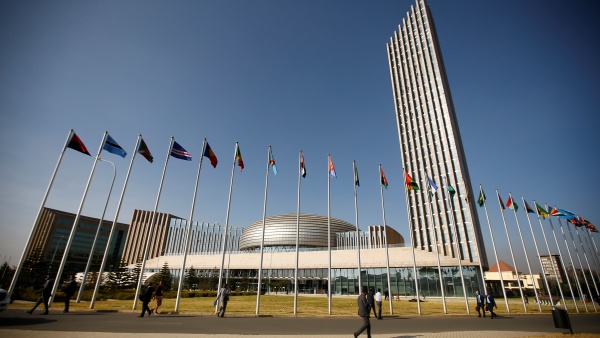
African Union (AU) building
The 32nd Summit of Heads of State of the AU is holding in Addis Ababa, Ethiopia

The 32nd Summit of Heads of State of the AU in Addis Ababa, Ethiopia has “Refugees, Returnees and Internally Displaced Persons: Towards Durable Solutions to Forced Displacement in Africa.” And observers opine that the AU aims at increasing attention to the root causes of forced displacement and bolster the capacity of AU Member States to tackle the problem and create sustainable strategies.

As SIPRI researchers point out in the essay, migration and forced displacement are only symptoms of broader social, political, economic and ecological “push” and “pull” factors.

“‘Especially in Africa, climate-related change is one of the most serious push factors,” says Dr. Florian Krampe, adding: “To address the push from climate impacts, there is a need to not only better comprehend but, to better respond to climate-related security risks.”

The AU is said to be critical in showcasing leadership and developing adequate responses to climate-related security risks.

Vane Aminga argues: “The responses will require an integrated approach that combines knowledge on climate risks and the social and political realities of the regions.”

As the SIPRI essay shows, despite rhetorical steps and statements – including the proposal of a Special Envoy for Climate and Security in May 2018 – the AU lacks a tangible policy framework that lays out specific actions on how to respond to climate security within the its peace and security framework.

Being the most vulnerable continent to climate change – inextricably linked to the continent’s peace and security – Africa is said to be in need of a clear climate security strategy and strategic leadership, the SIPRI said. It adds that part of this should be the appointment of a Special Envoy to Climate Change and Security which could help widen the understanding of climate-related security risks within the AU.

“The idea of the Special Envoy is apt and an opportunity to pre-empt migration and forced displacement,” says Krampe. “Moreover, will is provide an opportunity to ‘climate-proof’ the AU’s peace and security architecture.”