Home Blog Page 1706

Why GM beans can’t cause cancer

0

Penultimate week, an NGO went to the press with the news that the yet-to-be released genetically modified Cowpea developed by the Institute for Agricultural Research, Ahmadu Bello University, Zaria, will cause cancer among Nigerians.

Cowpea
Cowpea

Their conspiracy theory was targeted at discrediting the 10-year research work undertaken by scientists in one of Nigeria’s top universities.

Although the faces behind the NGO claimed to be scientists, their claims showed they lacked basic knowledge of biology making their claims and position not only faulty but lacking scientific basis.

Using common sense, one is even surprised that the NGO is shouting at roof top when no one has been granted access to the beans to have cooked, eaten and found it to be cancerous.

Prof Ishiyaku Mohammed, a professor of plant breeding who led the research, pointed out clearly that the rules of substantial equivalence applied in the development of the Bt. Beans.

According to Mohammed, all the research efforts that went into the production of the Cowpea (Beans) was conducted by Nigerian scientists using tax payers’ money from the university; how then will they engineer a crop to kill Nigerians?

In food safety, the concept of substantial equivalence holds that the safety of a new food, particularly one that has been genetically modified, may be assessed by comparing it with a similar traditional food that has proven safe in normal use over time.

Substantial equivalence is a concept, first described in an Organisation for Economic Co-operation and Development (OECD) publication in 1993, which stresses that an assessment of a novel food, in particular one that is genetically modified, should demonstrate that the food is as safe as its traditional counterpart.

The concept of substantial equivalence was developed proactively before any new genetically modified (GM) foods came to the market. It was first described in an OECD publication in 1992, produced by about 60 experts from 19 OECD countries, who spent more than two years discussing how to assess the safety of GM foods. Most of these experts, all nominated by governments, were regulatory scientists from government agencies and ministries responsible for consumer safety.

In 1996, participants at an expert World Health Organisation/Food and Agriculture Organisation consultation recommended that “safety assessments based upon the concept of substantial equivalence be applied in establishing the safety of foods and food components derived from genetically modified organisms”. This represented an endorsement by experts based on three years’ experience in the safety assessment of various GM foods.

According to Nature, an international journal of science, substantial equivalence is not a substitute for a safety assessment. It is a guiding principle which is a useful tool for regulatory scientists engaged in safety assessments. It stresses that an assessment should show that a GM variety is as safe as its traditional counterparts. In this approach, differences may be identified for further scrutiny, which can involve nutritional, toxicological and immunological testing.

The approach allows regulators to focus on the differences in a new variety and therefore on safety concerns of critical importance. Biochemical and toxicological tests are certainly not precluded.

Since the concept of substantial equivalence was first described, several new foods have been assessed and knowledge has accumulated on how to use the concept. In parallel, the OECD, its governments and others have continued to review its adequacy in food safety assessment and to develop supporting tools.

The OECD’s task force on the safety of novel foods and feeds, in particular, continues to focus on the application of the concept. This includes work on assessment methodologies when substantial equivalence cannot be applied, as well as efforts to identify the critical nutrients and toxicants found in major crop plants, as a focus for the demonstration of substantial equivalence.

In the case of the Bt. Cowpea developed in Nigeria by the IAR, Dr Francis Onyekachi, a plant breeder with the African Agricultural Technology Foundation, put it mildly when he said that the only person that can differentiate the Bt. Cowpea from the ordinarily beans is the Maruca pest for which the beans was engineered to withstand.

“The modification carried out on the beans has nothing to do with its looks, taste, colour, size nor its nutritional composition.  The Cowpea was only conferred with the resistance to the Maruca pest,” he added.

Dr Theodore Akpan, a food scientist, said that singling out the Bt. Cowpea as a cancer-causing agent is the highest level of ignorance, aimed at purely spreading falsehood.

“We have to understand that just because it was modified does not change it from what it was originally,” Dr Akpa said.

 The development of the Bt. Cowpea (Beans), mainly to withstand the ravaging impact of Maruca, is a great feat on the part of Nigerian scientists and they should be celebrated rather than discrediting their 10-year effort to uplift Nigeria.

Chief Audu Ogbe, Minister of Agriculture and Rural Development, said recently that Nigeria has become the dumping sites for finished goods and products from all part of the globe. He challenged Nigerian scientists to step up their game and turn around the tides and make Nigeria a proud leader in the global innovations and inventions.

Chief Ogbe lamented the situation that has turned Nigeria into a net importer of everything including toothpicks and said that with support and encouragement, Nigerian scientists can excel.

We should support our own and encourage them to do more rather than collect peanuts from foreign interest and run-down genuine efforts capable of transforming our landscape for better.

By Hannah Nnadi

Ignorance, misconception, major setbacks to adoption of renewable energy – Experts

0

Energy experts on Saturday, January 12, 2019 identified ignorance and misconception as major setbacks to the adoption of renewable energy in Nigeria.

Babatunde-Fashola
Minister of Power, Works and Housing, Babatunde Raji Fashola (SAN)

An engineer of solar energy, Ayo Adenigba, and Mrs Ruth Ifah, energy researcher at Nexgen Energy and Allied Services, disclosed this in separate interviews with the News Agency of Nigeria (NAN) in Ibadan.

Adenigba stated that the major issue that needed to be addressed in the country in terms of the deployment of renewable energy was the lack of up-to-date information on technology and its possibilities.

“Although there is a widespread awareness of the potentials of renewable energy, there are lots of misconceptions about the technologies used in harnessing this energy; photovoltaic (solar) cells are perceived to be incapable of powering industrial loads.

“That is not the case anymore, we now have large scale `multi megawatt’ solar and wind power stations across the world powering cities and industries.

“The technology in harnessing the renewable sources and particularly, solar energy itself, has improved rapidly, making the deployment very attractive.

“There is also the conservative approach to purchasing Renewable Energy (RE) products on the premise that it might not work, since they have no experience with such technology before,” he said.

Adenigba, however, said that although a lot of policies were in place to encourage private investors in the renewable energy industries, the framework was still not clear enough to guarantee return on investment, hence the little investment being made in the industry.

He said that sustainable development goals could only be achieved in Nigeria if the country embraced renewable energy solutions.

“One can only begin to consider a much more efficient and safer (green) way of energy utilisation when the energy is readily available for use and very reliable.

“In Nigeria, we have found ourselves caught in the middle of a serious quest to provide enough energy in view of the growing demand and meeting the global objectives to do so in the most climate-friendly way.

“Nexgen has provided reliable electricity by deploying solar Hybrid solutions all across Nigeria, so as to reduce the excessive pressure on the national grid and thereby increasing the reliability of power supply for end users.

“There has been a recorded increase in productivity for all users of this solution. A large proportion of the Nigerian populace are undeserved, despite the appreciable increase in the power generated through the national grid in recent times.

“The solar alternative compliments the grid supply, hence all electrically powered business operations can still continue even when the grid fails,” said Adenigba.

The solar energy expert further said the damage done by petrol/diesel generators was irrecoverable.

“If you take a close look at the noise level introduced to the environment by these generators, they reduce the innate ability to concentrate.

“This negatively affects the quality of one’s night rest and the neighborhood. But with a solar solution, you can be sure to have a sound sleep with no toxic fumes from the system.

“Lives will also be preserved through the deployment of renewable energy such as a solar generator, instead of a highly toxic ‘I better pass my neighbour’ petrol generator,” he said.

The expert, therefore, urged government at all levels to ease transportation of products for renewable energy service providers in the country.

“Government can enhance Small and Medium Scale Enterprises (SMEs) in the RE industry like Nexgen Energy, by solving the incessant problem of congestion and gridlock at the Apapa Port, Lagos State; as this will facilitate more deployment and availability of renewable energy products.

“Another innovative strategy to solve the problem of SMEs is to give tax credits to citizens who adopt any renewable energy solution.

“This would be a motivating factor for those who are indifferent about the new trends of energy utilisation,” he said.

In her submission, Ifah stated that the two main factors that people considered were the initial cost or capital and the inadequate knowledge or awareness of the value of renewable energy on the long run.

“We are solving these problems through diversification on solar range solutions to ensure several classes of persons can afford a solar solution, and we are also working in partnership with foreign bodies for Rural Electrification in Nigeria.

“We strongly believe that government could help with subsidised customs taxes so that renewable energy providers can make solar solutions available at affordable rates to the masses.

“This will in turn reduce dependence on the national grid like it is being done in other climes,” she said.

By Ibukun Emiola

Govts urged to sensitise Nigerians to effects of packaging food with plastics

0

An ecologist, Mr Richard Inyamkume, has urged government at all levels to sensitise Nigerians, particularly food handlers, to the negative effects of wrapping hot foods in nylons and plastics.

Food in plastic
Food in plastic container

Inyamkume, the Executive Director, Ambassadors of Dialogue, Climate and Reintegration, an NGO, gave the advice in an interview with the News Agency of Nigeria (NAN) in Abuja on Sunday, January 13, 2019.

According to him, one of the most serious environmental challenge of the 21st century is plastic and nylon pollution, as well as its adverse effect on health when used for packaging hot food.

“The practice of wrapping hot foods in nylons and plastics have become prevalent in urban and rural communities across Nigeria and it increases exposures to toxic and harmful chemicals which is leached into our foods.

“Nigerians need to know that plastics contain Bisphenol A (BPA), a chemical that once ingested, can mimic estrogen in our bodies, especially in adult women.

“In fact, scientific studies show that certain chemicals contained in nylons and plastics are capable of stimulating human breast cancer cell growth and can affect sperm production in adult males,” he said.
Inyamkume said that pregnant women, infants and children were not exempted from its adverse effects once they come in contact with such chemicals.

“A study conducted in the U.S in 2004 found traces of BPA in 93 per cent of urine samples that were taken from a given sample population.

“This indicates that many humans already have traces of BPA in their systems and need to limit further exposures.

“One thing is certain, the more plastics are heated and cooled, the more chemicals in such containers begin to break down into our food.

“We need to let people know that for every encounter with a plastic container or nylon, especially when such is used in packing hot foods, our health is at risk,” he said.

According to him, people need to be aware so that they can take precautionary measures when handling hot foods, aware of the adverse chemical effect of plastics when these come in contact with it.

“Though I understand that it is nearly impossible to run a fully equipped kitchen without plastics or nylons as most of the food we eat are even wrapped in nylons and plastics such as bread, peanuts, and beans.

“We could do something to limit exposures to chemicals contained in plastics by opting for products that are free from plastic and nylon.

“We need to change our consumption attitudes and engage in healthy lifestyles, and also reduce plastic waste generated in communities,” he said. 

By Deji Abdulwahab

London Underground pollution 30 times higher than busy roads – Report

0

A new report has found that spending one hour on the tube is more toxic than spending all day on above ground in ambient London air.

London Underground
The London Underground

The latest figures from the Committee on the Medical Effects of Air Pollutants show that the London Underground suffers from poor air quality, compared to others, because of its age and the depth of its tunnels.

Tests found that the Northern Line had the highest concentration PM (particulate matter) 2.5 with the air on platforms at Hampstead station. This is the deepest station, reaching 60 metres below ground level, recording an average of 492 micrograms per cubic metre of air.

This is 30 times higher than the annual average of 16 micrograms per cubic metre from a roadside monitoring site in the city.

Exposure to ambient air pollution, in particular particulate matter, increases mortality and morbidity risks. In England, the total NHS and social care cost due to PM was estimated to be over £41 million in 2017. This number could rise if air pollution is not regulated.

Peter McNaught, Director of Asset Operations at TfL, said: “It is vital that we operate with the very latest understanding of the risks arising from particles in the air, which is why we commissioned COMEAP to undertake this research. Although the report emphasises further monitoring and research is needed, it is an important contribution to the study of health effects associated with dust exposure. We are committed to maintaining the cleanest air possible for our staff and customers when using the Tube.”

In 2017, Sadiq Khan initiated a deep clean of the tube which resulted in pollution on the platforms being reduced by 44 per cent.

This news follows the Mayor of London’s new pollution charge that will be introduced at the end of April. The ultra-low emission zone will charge £12.50 to polluting vehicles that don’t comply with strict emission standards. Sadiq Khan has said that this initiative will result in fewer than 60,000 cars paying the fee per day.

Courtesy: Climate Action

Bill will promote efficient use of water, says Commission

0

The Nigeria Integrated Water Resources Management Commission says the National Water Resources Bill, if passed will ensure provision of potable water and promote its efficient use in the country.

suleiman adamu kazaure
Suleiman Adamu Kazaure, Water Resources Minister

Mr Peter Onoja, the Acting Executive Director of the commission, made this known in a report titled: “Implementation of Effective Regulations of Water Resources in Nigeria”, made available to the News Agency of Nigeria (NAN) on Friday, January 11, 2019 in Abuja.

Onoja added that the bill would also ensure the safety of drinking water and to protect public from contracting water related diseases.

He said that water regulatory systems under the bill would be catalytic to achieving the Sustainable Development Goal (SDG) 6 and achieved the universal and equitable access to safe and affordable drinking water for all.

SDG 6, which is one of the 17 SDGs established by the UN in 2015, aims at ensuring availability and sustainable management of water and sanitation for all people by 2030.

According to Onoja, the enactment of the water bill by the National Assembly and the President can fast track the achievement of the SDG 6.

He said that the regulation of water sector in the country was imminent to eliminate irregularities, stressing that the commission was duly committed to work toward it.

Onoja pointed out that the objectives of the “Water Use Regulations included protection, conservation and control of water resources for equitable and sustainable social and economic development and maintenance of environmental integrity.

He said that other objectives were to ensure allocation, supply and distribution of water resources for all users with a view to promoting global best practices.

The Minister of Water Resources, Mr Suleiman Adamu, had recently said that the bill was an amalgamation of Water Resources Laws that had been in existence as enshrined in Law of Federation 2004.

It is to promote efficient use of water resources and reduce duplication of efforts in line with international best practices.

The bill provides for professional and efficient management of all surface and ground water for the use of all people.

The bill is for both domestic and non-domestic use, irrigation, agricultural purposes, generation of hydro-electric energy, navigation, fisheries and recreation.

The Federal Government aims under the bill to protect the nation’s water resources; to use, develop, conserve, manage and control water in a sustainable manner for the benefit of all persons.

The water resources bill will also provide for the creation of an enabling environment for public and private sector investment.

It also provides for capacity-building processes to foster good governance while establishing a water use and licensing framework to ensure sustainable financing for water sector.

By Okon Okon

U.S. greenhouse gas emissions spiked in 2018

0

U.S. carbon dioxide emissions rose an estimated 3.4 percent in 2018, according to new research – a jarring increase that comes as scientists say the world needs to be aggressively cutting its emissions to avoid the most devastating effects of climate change.

Donald Trump, US president

The findings, published on Tuesday, January 8, 2019 by the independent economic research firm Rhodium Group, mean that the United States now has a diminishing chance of meeting its pledge under the 2015 Paris climate agreement to dramatically reduce its emissions by 2025.

The findings also underscore how the world’s second-largest emitter, once a global leader in pushing for climate action, has all but abandoned efforts to mitigate the effects of a warming world. President Trump has said he plans to officially withdraw the nation from the Paris climate agreement in 2020 and in the meantime has rolled back Obama-era regulations aimed at reducing the country’s carbon emissions.

“We have lost momentum. There’s no question,” Rob Jackson, a Stanford University professor who studies emissions trends, said of both U.S. and global efforts to steer the world toward a more sustainable future.

The sharp emissions rise was fueled primarily by a booming economy, researchers found. But the increase, which could prove to be the second-largest in the past 20 years, probably would not have been as stark without Trump administration rollbacks, said Trevor Houser, a partner at Rhodium.

“I don’t think you would have seen the same increase,” Houser said, referring to the electric power sector in particular.

Emissions from electric power generation rose 1.9 percent in 2018, the analysis found, driven chiefly by more demand for electricity, which was largely satisfied by more burning of natural gas. This fuel emits less greenhouse gas than coal when burned but is still a major contributor overall.

At the same time, emissions from the transportation sector rose 1 percent thanks to more airline travel and greater on-road shipping. Industrial emissions from factories and other major facilities also rose significantly in 2018, the analysis found.

The figures, based on data from the U.S. Energy Information Administration and other sources, remain an estimate because some data from last year is not finalized. But the trend line is consistent with a recent estimate from a group of academics associated with the Global Carbon Project, which found U.S. emissions likely to rise 2.5 percent in 2018.

Rising emissions are not just a U.S. problem. Global emissions also reached a record high in 2018, and the increase in the United States goes hand in hand with rising emissions in other countries, such as China and India, said Michael Mehling, deputy director of the Centre for Energy and Environmental Policy Research at the Massachusetts Institute of Technology.

“It’s not an isolated phenomenon,” Mehling said, adding that the trend makes it difficult to solely blame the Trump administration’s deregulatory push and its dismissal of climate action for the change. “Such political developments, including the rollback of domestic climate policies in the U.S., tend to have a considerable lead time before you can actually see their reflection in physical emission trends.”

Courtesy: The Washington Post

Study identifies roadmap for private sector climate investment in South Africa

0

The green energy sector, water, climate smart food systems and low carbon constructions for human settlements are some of key priority areas for private sector investments that will support South Africa’s climate change outcomes, according to new study released on Thursday, January 10, 2019 on the sidelines of the Partnership for Action on the Green Economy (PAGE) Ministerial Conference.

President Cyril Ramaphosa of South Africa

The study, released by the Southern Africa Climate Finance Partnership (SACFP) with support from the UK Department for International Development (DFID) and the Swiss Agency for Development Cooperation (SDC), further points out that investment in waste recycling and management, where the waste materials are converted into energy such as biogas, is another priority area for investment for positive climate outcomes.

“This study is important because it seeks to build on the existing body of knowledge pertaining to the mobilisation of private sector finance for climate change action,” said Mohamed Allie Ebrahim, the lead author of the study on “the potential private sector investment priorities that support South Africa’s climate change outcomes”.

“Moreover, (the study) provides broad recommendations on how to enhance efforts to mobilise private sector finance at scale through leveraging the concessionality of the Green Climate Fund’s financial instruments within South Africa,” said Ebrahim in a statement.

The importance of private sector funding in achieving national climate change response actions is further recognised in South Africa’s National Climate Change Response Policy (NCCRP).

However, appropriate and innovative climate finance mechanisms are required to catalyse and scale private sector finance for low-carbon climate-resilient development.

The 123-page document points at the use of market aggregator mechanism to create scale, pool risk, reduce costs and improve project viability as one of the selected innovative climate finance mechanisms and/or concepts that can be used.

Another innovative mechanism identified is the use of funding solutions that address the upfront infrastructure finance gap, by introducing credit-worthy third-party owners and or operators of infrastructure who, in turn, enter into long-term contracts with end-users – among many other mechanisms.

It further explored the possibility of establishing a South African Climate Finance Lab, similar to the Brazil Lab or India Lab, which serves as a mechanism for identifying and incubating standalone high-impact, transformative projects.

 It called for a sustained capacity building with respect to project development, project finance and project implementation, especially at the sub-national level (municipalities, local project developers and financial institutions), including enabling environment support, policy advocacy and technical assistance including understanding the role of Executing Entities under the Green Climate Fund (GCF).

In South Africa, the energy sector is the single largest contributor to the country’s total greenhouse gas emissions (81.7% in 2012). Despite the significant increase in renewable energy to the national energy mix from 2000 to 2012, the overall carbon intensity of the national energy system remained fairly constant.

However, the government has committed to its shared responsibility for responding to climate change, through the ratification of the United Nations Framework Convention on Climate Change (UNFCCC), the Kyoto Protocol and the Paris Agreement. In terms of South Africa’s Nationally Determined Contributions, South Africa has committed to a GHG emission trajectory that peaks between 2020 and 2025, plateau for approximately a decade (until 2035) and begin declining in absolute terms thereafter.

Ex-GCF boss Bamsey emerges new Global Water Partnership chair

0

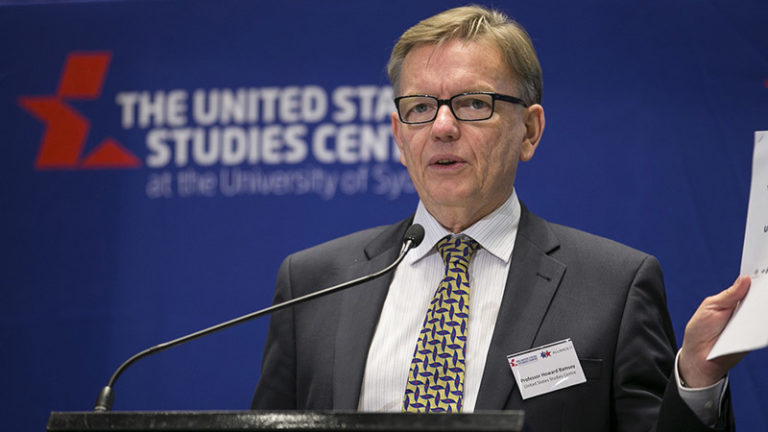
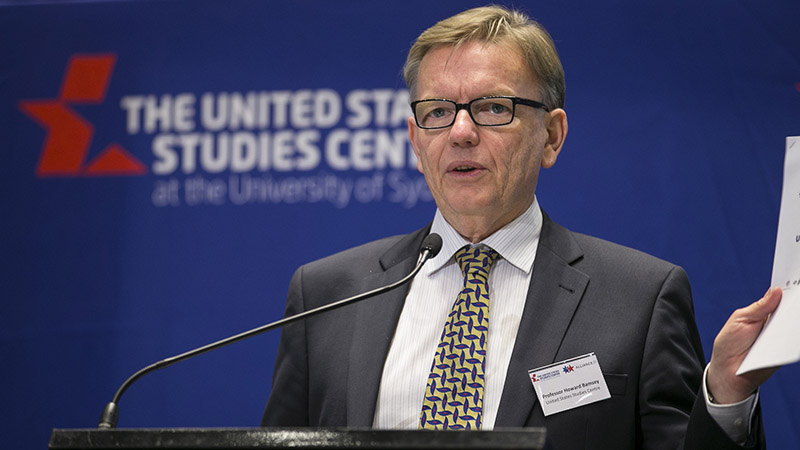
The Global Water Partnership’s (GWP) Sponsoring Partners have selected Mr. Howard Bamsey, former Executive Director of the Green Climate Fund (GCF), as the new Chair of GWP. The appointment is effective immediately.

Howard Bamsey
Howard Bamsey

Mr. Bamsey, a citizen of Australia, has been a prominent leader in public service and diplomacy in the environmental field, particularly climate change. His diplomatic career included time as Ambassador to the UN (Geneva); Chief Executive, Australian Greenhouse Office; Deputy Secretary, Department of Climate Change; and Special Envoy on Climate Change. Later, he was Director General of the Global Green Growth Institute (GGGI) and then Executive Director of the Green Climate Fund (GCF).

He resigned as executive director of the GCF with immediate effect on Wednesday, July 4, 2018 in a bombshell finish to a fraught board meeting. The Australian cited “pressing personal reasons” in his resignation letter, adding that it was best he leaves before the next round of fundraising started. It came as the four-day meeting in Songdo, South Korea collapsed with no decisions on 11 funding bids worth nearly $1 billion.

Mr. Bamsey, a graduate of the University of Queensland, is Adjunct Professor at the University of Sydney and the Australian National University, and an Honorary Professor at the Australian National University.

“Mr. Bamsey’s leadership style, as characterised by his deep strategic thinking, advocacy skills, belief in teamwork, and his extensive international network, will help GWP sail through a rapidly changing water world towards achievement of the SDGs. He will be able to build a bridge with those beyond the water sector – who need to take water into consideration as they make planning and investment decisions,” said Mr. Kenzo Hiroki, Chair of GWP’s Nomination Committee, which unanimously recommended Mr. Bamsey for approval by the Sponsoring Partners.

In accepting the position, Mr. Bamsey said, “I’m joining GWP because I have seen the network’s ability to mobilise a large and inclusive partnership that takes action on many levels to improve the way water is managed. The knowledge embedded with the network’s many partners is at the forefront of advancing water governance and a unique asset.”

Mr. Bamsey co-chaired the United Nations “Dialogue on Long-term Cooperative Action on Climate Change” from 2006 to 2007 and served as Australia’s Special Envoy on Climate Change and Deputy Secretary at the Department of Climate Change and Energy Efficiency from 2008 to 2010.

“We are excited to see Howard join GWP at a time when the network is developing its new strategy,” confirmed Monika Weber-Fahr, GWP’s Executive Secretary. “With his broad network and focus on climate change action, Howard will take us forward, enhancing our impact as we help water management and governance to serve the development agenda more broadly.”

Restaurateurs told to desist from packaging hot foods with plastics

0

An ecologist, Mr David Michael, has urged restaurateurs not to package hot foods with plastics to prevent chemicals from getting into the foods.

Food in plastic
Food in plastic container

Michael, the Executive Director, Global Initiative for Food Security and Ecosystem Preservation (GIFSEP), gave the advice in an interview with the News Agency of Nigeria (NAN) in Abuja on Friday, January 11, 2019.

“Plastics are gotten from crude oil; just like your petrol, diesel and engine oil.

“When plastics are heated, they release chemicals and these chemicals get into the food that the plastics are used to cook like the beans pudding, moi-moi for example,’’ he said.

According to him, most of these plastics contain a chemical known as Bisphenol A “BPA’’.

“Although, in advanced countries, there are BPA-free plastics being widely used because of the dangers of ordinary plastics.

“But in developing countries, people use ordinary plastics to package moi-moi because BPA-free plastic is not cheap, and you cannot buy your moi-moi for N200 and expect it to be in a BPA free plastic.

“When you heat plastic as with any stable chemical composition; it becomes unstable and releases these chemicals,’’ the executive director said.

He said that the public should be aware not to heat any plastic container with food in it through packaging, or micro waving staled foods.

“It is known that infinitesimal bits of plastic get into our food from containers. The process is called “leaching” or “migration”.

“The chemical industry acknowledges that you can’t avoid this transfer. Virtually all food packaging materials contain substances that can migrate into the food they contact.

“Migration also increases when plastic touches fatty, salty, or acidic foods,’’ he said. 

By Deji Abdulwahab

$14bn needed to fight AIDS, TB, malaria globally

0

At least $14 billion is needed to accelerate the fight against AIDS, tuberculosis, malaria and quell stubborn epidemics that still kill millions, the head of a global health fund said on Friday, January 11, 2019.

Peter Sands
Peter Sands, Director of the Global Fund to Fight AIDS, Tuberculosis and Malaria

Announcing a fundraising target for the next three-year cycle, Peter Sands, Director of the Global Fund to Fight AIDS, Tuberculosis and Malaria, said the money could help save 16 million lives, halving deaths from the three diseases.

It would also be used to build stronger health systems in poor countries ill-equipped to handle existing outbreaks and unable to cope with potential new epidemics.

“New threats mean there is no middle ground. We need to … protect and build on the gains.

“We have made, or we will see those achievements eroded, infections and deaths resurge, and the prospect of ending the epidemics disappear.”

The Global Fund is a group of governments, civil society and private sector partners which invests around 4 billion dollars a year to fight infectious diseases.

It was launched in 2002 and has since helped slash the number of people dying from AIDS, TB and malaria by around a third.

Yet the epidemics are still far from beaten.

In 2017, TB killed 1.6 million people, including 300,000 people with HIV, making it one of the top 10 causes of death worldwide.

Malaria kills almost half a million people each year, most of them babies or young children in sub-Saharan Africa.

In the AIDS pandemic, almost 37 million people worldwide are infected with the human immunodeficiency virus (HIV) and around 15 million of them do not get the antiretroviral drugs needed.

Sands acknowledged how hard it would be to encourage international donors to pledge funds towards such a high target.

But he added that with the fund’s reach and ability to elicit engagement and investment by governments in nations affected by the epidemics, he was confident it would have a major impact. “If we step up the fight now, we will save millions more lives,” he said.