Home Blog Page 1705

Boat made from plastic waste to sail along Africa’s coast, raise awareness about single-use plastic

0

A traditional dhow sailing boat made entirely from plastic trash collected from Kenya’s beaches and towns will make its maiden voyage from January 23 to February 7, 2019 from Lamu in Kenya to Zanzibar in Tanzania – a 500-kilometre expedition stopping at communities along the way to change mindsets about plastic waste.

Flipflopi
The Flipflopi

The “FlipFlopi”, as the vessel is called, is said to be a first-of-its-kind, 9-metre sailing boat made from 10 tonnes of discarded plastic. It has been built by a team calling for a #PlasticRevolution to stem the flow of up to 12 million tons of plastic waste dumped into the world’s oceans each year and to highlight the potential for plastic waste to be re-used.

The dhow was launched in late 2018 in Lamu and has now partnered with UN Environment’s “Clean Seas campaign”, which engages governments, the public and the private sector in the fight against marine plastic pollution. Nine African countries have already signed onto the campaign, promising to take action to tackle marine pollution.

“The Flipflopi is living proof that we can live differently. It is a reminder of the urgent need for us to rethink the way we manufacture, use and manage single-use plastic,” Joyce Msuya, UN Environment’s Acting Executive Director, said. “Kenya has demonstrated tremendous leadership in addressing the epidemic of single-use plastic by banning plastic bags. We are

clearly moving in the right direction but we need a drastic shift in consumption patterns and waste management practices across the world.”

Flipflopi board member, Professor Judi Wakhungu, commented: “The Flipflopi Project is playing a vital role in engaging the public at large in thinking about plastic differently. They have a colourful and innovative way of talking about the issue – and their message is really hitting home, reaching parts of the population that other initiatives seldom do.”

Only nine per cent of the nine billion tonnes of plastic the world has ever produced has been recycled, says the UN body, adding that the overwhelming majority of plastics – including plastic drinking bottles, plastic bottle caps, food wrappers, plastic grocery bags, plastic lids, straws and stirrers, and foam takeaway containers – are designed to be thrown away after a single use, ultimately ending up in landfills and the environment.

In the recently published “Legal Limits on Single-Use Plastics and Microplastics: A Global Review of National Laws and Regulations”, UN Environment found that 127 out of 192 countries reviewed (about two-thirds) have adopted some form of legislation to regulate plastic bags and 27 countries have enacted legislation banning either specific products (e.g. plates, cups, straws, packaging), materials (e.g. polystyrene) or production levels.

Nearly two years after Kenya introduced the world’s toughest laws on single-use plastic bags, the Flipflopi Project is playing a vital role in engaging the public at large in thinking about plastic differently.

The project was founded in 2016 to transmit the message about the impact that plastic is having on marine ecosystems, how this affects us, and most important of all – what we can do about it. It’s co-founder, Ben Morison, was inspired to create a visually engaging #Plasticrevolution after witnessing the shocking quantities of plastic on Kenya’s beaches, an area where he spent much of his childhood.

“The Flipflopi Project has always been about encouraging change in a positive way, making people smile first and then sharing the very simple message that single-use plastics really don’t make sense,” said Ben Morison. “To create the Flipflopi boat we used only locally available resources and low-tech solutions, enabling our techniques and ideas to be copied without any barriers. So, we hope people around the globe are inspired by our beautiful multicoloured boat and find their own ways to repurpose ‘already-used’ plastics.”

The Flipflopi project team has had to pioneer new techniques to craft the various components of the boat. The plastic waste was melted, shaped and carved by the team of traditional dhow boat builders exactly as they would do with wood. Every single element of the boat has been constructed by hand and the whole boat has been clad in colourful sheets of recycled flipflops. These flipflops have been collected on beach cleanups on Lamu’s beaches, where they are among the most prolific items found.

“We are proud to have built the world’s first sailing boat made from recycled plastic,” said Ali Skanda, the lead boat builder. “The next challenge is to set sail and inspire people up and down Africa’s coastline and beyond to look at plastic waste not as trash but as a resource that can be collected and used.

The expedition will start in Lamu on January 24. The boat is expected to arrive in Stone Town in Zanzibar on February 7, where the Flipflopi and Cleanseas teams will meet up with Conservation Music at the Busara Music Festival, engaging festival goers in the fight against marine plastic pollution through music and culture.

In Africa, marine debris represents a potential threat to food security, economic development, and the viability of the marine ecosystems. With over 12 million people on the continent engaged in fisheries, their livelihood is directly affected by marine pollution, and the proportion of protein intake from fish is high across Africa. During the Blue Economy Conference, hosted by Kenya last month, governments committed to protect oceans, seas, lakes and rivers.

The FlipFlopi-Clean Seas Expedition comes a month before the next UN Environment Assembly in which more than 150 ministers of environment will gather in Nairobi. The assembly is the world’s highest-level decision-making body on the environment. Leading up to the event, UN Environment is zeroing in on the urgent need for sustainable consumption and production and innovative solutions for environmental challenges through its #solvedifferent campaign, urging member states, the private sector and citizens to rethink the choices they make in their everyday lives.
Utilising cowpea for national nutritional enhancement

0

A recent review of the National Nutritional Report from 2003 to 2016 has shown that about 70 percent of children ages six to 23 months in Nigeria are not receiving the minimum acceptable diet as the nation’s overall child nutritional status is on a serious decline.

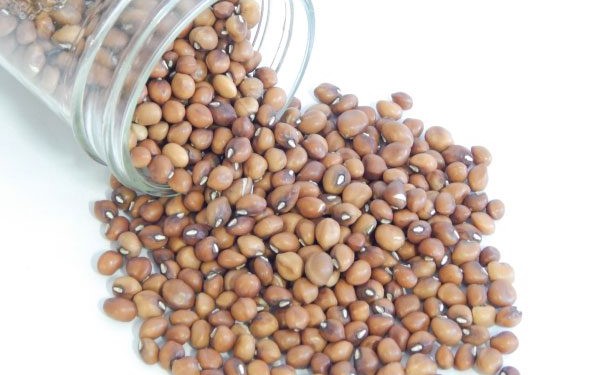
Cowpea
Cowpea

These children have severely low weight for their height and are at risk of dying unless given urgent attention.

Cases of malnutrition among Nigerian children are however not new. The problem pervades the entire country with about one million Nigerian children dying before their fifth birthday. Malnutrition contributes to nearly half of these deaths.  The reports also discovered that the rate of stunting in Nigeria has stagnated for more than a decade. About two in five Nigerian children are stunted, with rates of stunting varying throughout the country.

Almost 30 percent of Nigerian children are underweight, meaning they don’t weigh enough for their age. This is more than double the proportion of neighbouring Ghanaian children who are underweight. The percent of children in Nigeria who are wasted, or too thin for their height, has steadily increased over the last decade, rising from 11 percent in 2003 to 18 percent in 2013.

Observers have opined that these negative results indicate an alarming trend in Nigeria’s malnutrition burden which will further impede the nation’s economic development if not checked. Globally, stunting is an indicator for measuring a country’s development.

But all hope is not lost as scientists working at the federal government funded Institute for Agricultural Research; Ahmadu Bello University have been able to successfully develop a beans variety known as Bt. Cowpea that can withstand the deadly attack of Maruca virus that has over the years limited the production of this good source of vegetarian protein.

About 100 grams of dry seeds cowpea contain 336 calories, and 23.52 g or 42% of recommended daily values of protein. Cowpea which comes in various species also carries good amounts of dietary fiber; provide 10.6 g or 28% of fiber per 100 grams.

Cowpea popularly called beans in Nigeria is a legume consumed as a high-quality plant protein source in many parts of the world. High protein and carbohydrate contents with a relatively low-fat content and a complementary amino acid pattern to that of cereal grains make cowpea an important nutritional food in the human diet.

Cowpea has gained more attention recently from consumers and researchers worldwide as a result of its exerted health beneficial properties, including anti-diabetic, anti-cancer, anti-hyperlipidemic, anti-inflammatory and anti-hypertensive properties. Among the mechanisms that have been proposed in the prevention of chronic diseases, the most proven are attributed to the presence of compounds such as soluble and insoluble dietary fiber, phytochemicals, and proteins and peptides in cowpea.

Most of the children suffering from one form of nutrition deficiency or the other are those within the school age. The school feeding programme introduced by the current administration has failed in many states due to the non-availability of consistent supply of raw materials.

Introducing the Bt. Cowpea into the school feeding and making it an integral part of the food to be eaten by the children on weekly basis has a lot of nutritional potentials and advantages for Nigeria.

The recommended amount of beans to be eaten daily for optimal health, according to nutritionists, is 1/2 cup of beans or legumes.

Beans are a great source of protein at a very low cost and a great source of naturally occurring folate. It is also a good source of fibre, which improves digestive health, and antioxidants that have protective benefits from inflammation and oxidation.

Ordinarily, beans is eaten by all households in Nigeria in one form or the other and has over the years served as a vital part of the daily menu with some eating it in the morning as Akara others prefer to take it as moi moi. During the day some serve it as porridge beans for lunch, others grind it and use it as soup but above all it is popularly called the poor’s meat due to its high nutritional content.

It is grown in all the agro-ecological zones of the country and over the years it has become a very critical part of farmers’ income as it is harvested and sold to pay children’s school fees, pay medical bills and proceeds used to settle a host of other household expenses.

Beans farming is one of the most important strategies for farmers to improve their livelihoods. Young farmers and women especially invest in common beans as a way to build their assets and secure their family needs.

We must take advantage of the development of Bt. Cowpea to get right the school feeding programme as well as empower our local farmers to get their lives back on track.

Boosting agricultural production via adoption of improved seeds

0

Recent advances in biotechnology have paved way for the development of hybrid seeds which are not only high-yielding but also resistant to pests, diseases and climate change effects.

Hybrid seeds
Hybrid seeds

Some agricultural experts believe that the success of Nigeria’s efforts to boost agricultural production and attain food security would largely depend on the availability and effective use of improved seeds for cultivation.

They, therefore, underscore the need for all stakeholders in the agricultural sector to be fully conscious of the role of improved seed varieties in efforts to enhance agricultural production and facilitate the Federal Government’s plans to rely on agriculture in its economic diversification schemes.

They also call on the government to encourage large and smallholder farmers to adopt improved seed varieties in their cultivation so as to increase their harvests and nation’s agricultural output.

For instance, Dr Philip Ojo, the Director-General of the National Agricultural Seeds Council (NASC), said that the country’s farmers should use improved seed varieties to boost crop productivity, create jobs and improve their income.

Sharing similar sentiments, Chief Audu Ogbeh, the Minister of Agriculture and Rural Development, emphasised that without the existence of a sustainable seed system, the country would not be able to achieve its food sufficiency targets.

“It is crucial to note that agricultural seeds play a pivotal role in efforts to stimulate the rapid development and transformation of agriculture.

“Therefore, without a viable and sustainable seed system, we will be very far from achieving the benefits of an improved and transformed agricultural sector, which is a catalyst for economic recovery and development.

“Seeds, as we know, constitute the farmer’s most precious resource; therefore, in making sustainable progress, a catalytic innovative approach must be adopted for ensuring a sustainable seed system to drive the growing needs and concerns of Nigeria’s agricultural and economic sectors,’’ he said.

In spite of all these claims, the adoption of improved seed varieties by farmers, particularly rural and smallholder farmers, who account for a significant portion of the nation’s total agricultural output, has been somewhat low and insignificant.

For instance, Faro 60 and Faro 61 — two high-yielding rice seed varieties released by the National Agricultural Research Institute (NARI) since 2011 — have yet to gain traction among rice farmers due to several reasons.

Some of the reasons adduced for the rice farmers’ slow acceptance of the seed varieties include lack of knowledge, poor access and outright fear of change as well as indifference and high cost of procuring improved rice seed varieties.

Some rice farmers voiced these reasons when they spoke at the field demonstration of Faro 60 and Faro 61 rice seed varieties, which was organised by NASC for farmers in Egbenti, Kacha Local Government Area of Niger State, in November last year.

Sani Umar, a smallholder rice farmer in Niger, conceded that he was not even aware of the existence and benefits of the new rice seed varieties.

Umar, who was obviously excited about the improved rice seeds on display, said that prior to the introduction of the new rice seed varieties, he had been cultivating seeds which were selectively chosen from previous harvests or sourced from neighbours.

Similarly, Aliyu Wakama, another smallholder rice farmer, said that although he had heard about the high-yielding rice seeds, he was not aware of how to gain access to them.

“Even if the seeds were readily available, I would have been hesitant to procure them because of the health concerns raised by some people who believe that such seeds are treated with certain chemicals that are injurious to human health,’’ he said.

All the same, a major factor behind the slow adoption of improved seed varieties is the apparent apathy of many farmers towards the adoption of improved seeds.

A farmer, Babangida Marazu, said that he was not enthusiastic about using improved seed varieties because “crops that are produced from traditional seeds are more nutritious than crops produced from the new varieties’’.

Besides, Marazu said that it appeared more logical for him to use “tried and tested seeds’’ than to experiment with new seed varieties which he was unfamiliar with.

For Rufus Yakubu, another farmer, the main challenge is the “high cost’’ of improved seeds, which usually come in large quantities.

All the same, there are strong indications that the field demonstration of Faro 60 and Faro 61 improved rice varieties has impacted positively on the mindset of some cynical rice farmers, while sensitising most of the farmers to the benefits derivable from the utilisation of the improved seed varieties.

The farmers’ viewpoints, nonetheless, tend to reinforce the need for the government and other stakeholders to organise awareness creation campaigns for farmers on the use of modern farm inputs, while investing in the distribution of the inputs, particularly in rural communities.

In this regard, Dr Sunday Abimiku, the Director of Seed Industry Development in NASC, said that the agency had resolved to establish demonstration blocks in each of the 774 local government areas of the country for wider reach.

Abimiku said that although the council had been promoting the use of improved seeds in several areas across the country, there was a compelling need to reach more farmers.

“If you look at the population of farmers in this country, it is so huge that one demonstration block per local government is nothing to write home about, but we are largely constrained by insufficient funds.

“What we are trying to do is to collaborate with partners that also have passion for the adoption of improved seeds so that we can increase the visibility of new farming technologies across the country,’’ he said.

Judging by the excitement of rice farmers at the field demonstration of Faro 60 and Faro 61 improved rice varieties last year, experts underscore the need to step up investment in the promotion of improved seeds.

“Sustained investments in the production and acceptance of improved seed varieties for all crops will drive the country’s quest for sustainable food security and economic diversification,’’ some of the experts say.

“The Federal Government has banned the importation of rice, so the market for rice is so huge. Rice farmers should take advantage of the new varieties of rice to boost their productivity and incomes as well as feed the nation,’’ they add.

All in all, analysts say that tangible efforts should be made to improve the agricultural production of the country via increased adoption of improved seed varieties by farmers.

By Philomina Attah, News Agency of Nigeria (NAN)

Report calls for expansion of irrigation projects in Africa

0

A new report is calling on the African governments to consider expanding irrigation projects since the continent has the potential to boost agricultural productivity.

eritrea-irrigation
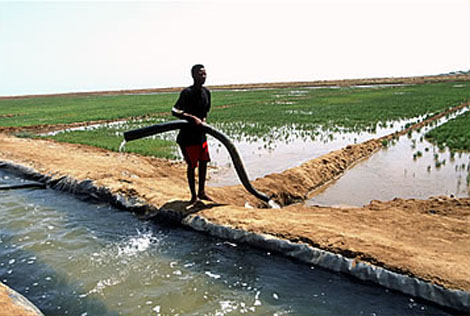
Irrigation in Eritrea. Photo credit: www.treehugger.com

The study that was done by the Malabo Montpellier Panel finds potential to expand irrigation across 47 million hectares in Africa to improve livelihoods and economic growth.

“Helping more farmers to access and use irrigation systems holds the key to African countries meeting hunger and food security targets, a new report sets out,” the report, launched on Monday, January 14, 2018, revealed.

Titled: “Water-wise: Smart irrigation strategies for Africa”, the report highlights success stories from six African countries where greater levels of irrigation have led to better and longer harvests, higher incomes and better prospects for farmers.

The report is being released at a time that food production in Africa still relies almost exclusively on rain-fed agriculture, leaving farmers and rural communities vulnerable to increasingly erratic rainfall patterns and extreme climate conditions.

“There is vast potential to scale up irrigation, particularly across sub-Saharan Africa (SSA), to increase crop yields and improve resilience to climate shocks, the report finds,” the report noted.

The study, which was conducted in Ethiopia, Kenya, Mali, Morocco, Niger and South Africa, revealed that yields from irrigated crops can be double or more of comparable rain-fed yields on the continent.

It noted that the economic benefits of expanding areas under irrigation are estimated to be double the costs under climate change.

“This report shows the great potential for irrigation to improve agricultural output across Africa,” Dr. Saulos Klaus Chilima, Vice President of Malawi and co-chair of the Malabo Montpellier Forum, said while unveiling the report in Rabat, Morocco.

Chilima observed that from the study, there are lessons to learn from the countries within the continent to help expand arable land through irrigation.

He revealed that Malawi has already seen incomes rise by up to 65 percent through the expanded areas.

The study found several common features among the countries that have made significant progress in expanding irrigation and called on other countries to embrace irrigation to improve food security and nutrition targets under the African Union’s Agenda 2063 and the Malabo Declaration.

It said that irrigated agriculture can enable farmers extend the growing season, increase productivity and incomes, and improve their livelihoods.

In Niger, up to 20 per cent of agricultural Gross Domestic Product (GDP) is generated through irrigated agriculture.

The report however calls on governments to carefully plan the expansion to avoid adverse impacts on the environment and human health.

Dr. Ousmane Badiane, Africa Director for the International Food Policy Research Institute (IFPRI), said that the expansion calls for dedicated, effective government institutions and significant increase in public investment for irrigation programs in the continent.

“Partnership with the private sector and farming communities and improved regulations for safe and sustainable use of water, are other driving factors,” he added.

Professor Joachim von Braun, Director of the Centre for Development Research at Bonn University in Germany, noted that for success to be realized there is need for robust technology that saves water and energy and can be sustained locally.

He said that the governments must also engage local organizations with women and men farmers in the lead of their irrigation.

“We must elevate irrigation to a top policy priority to bring it to scale as a key ingredient to ensure the continent’s food security in the face of more extreme weather conditions,” said Dr. Agnes Kalibata, President of Alliance of Green Revolution in Africa (AGRA).

Dr. Kalibata called for emphasis on farmer-led irrigation to scale household level resilience to shocks through new models.

She challenged governments to design irrigation projects to fit local environments and meet the needs of smallholder farmers.

In Africa, only six per cent of cultivated land is currently irrigated, compared to 14 per cent in Latin America and 37 per cent in Asia.

By Duncan Mboyah

China to collect samples from moon this year

0

China will launch an expedition to collect samples from the moon around the end of this year, a space official said on Monday, January 14, 2019, weeks after Beijing hailed the successful touch down on the far side of the moon.

Chang'e-4
An artist’s conception of the Chinese Chang’e-4 Lunar lander and rover. Photo credit: news.com.au

The Chang’e-4 lunar probe landed on Jan. 3 and transmitted the first-ever “close range” image of the far side of the moon.

China’s National Space Administration applauded the event as a first that “lifted the mysterious veil” of the far side of the moon and claimed it as a major achievement for the country’s ambitious space programme.

The tasks of the Chang’e-4 include astronomical observation, surveying the moon’s terrain and mineral makeup and measuring the neutron radiation and neutral atoms to study the environment of its far side.

“The Chang’e-5 mission, set to collect samples from the near side of the moon, will be carried out at the end of the year, while another probe will be sent to Mars by 2020,’’ Wu Yanhua, deputy head of the space administration, said at a conference.

Wu said that the Chang’e 5 mission would lay the ground work for further probes to be sent to the moon’s South Pole and possibly to return samples from the far side of the moon.

He noted that probes would depend on the results collected in the upcoming mission.

“Tests carried out by future missions could lay the groundwork for building on the moon’s surface, by testing technologies like 3D printing or the use of moon soil in construction.

“China, the United States, Russia and European nations, among others, are all exploring whether or not to build a base or research station on the moon,” Wu said.

The moon is tidally locked to Earth, rotating at the same rate as it orbits our planet, so most of the far side – or “dark side” – is never visible to us. Previous spacecraft have seen the far side, but none has landed on it.

China has made space exploration a top priority in recent years, as it races to catch up with Russia and the U.S. and become a major space power by 2030.

Beijing plans to launch construction of its own manned space station in 2020.

Agency employs 110 workers to monitor nation’s water resources

0

The Nigeria Hydrological Services Agency says the agency has employed 110 workers to execute its mandate aimed at monitoring and assessing the nation’s surface and ground water resources.

suleiman adamu kazaure
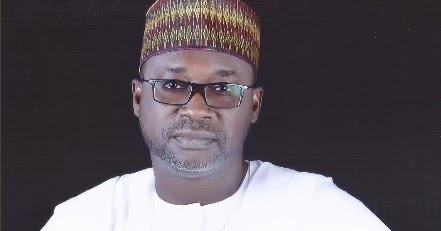
Suleiman Adamu Kazaure, Water Resources Minister

The Director-General of the agency, Mr Clement Onveasonze, made the disclosure on Monday, January 14, 2019 at a three-day induction workshop for the newly recruited staff in Abuja.

Onveasonze said that the training was in tandem with the agency’s new resolve to develop a positively motivated and skilled workforce able to adapt to growing needs of the agency.

He said that the training would build the capacity of new staff to provide the services required for assessment of the nation’s surface and ground water resources in terms of quantity, quality, distribution and availability.

“We will use three days to induct our new staff to know the reasons why they are bringing into the public service.

“They will be inducted to carry out ground water exploration and monitoring, using various scientific techniques to provide hydrological and hydro-geological data needed for planning, design, execution and management of water resources and allied projects,’’ he said.

The director-general called for construction of small dams on the routes leading to River Benue to check water released from the Lagdo Dam in Cameroon.

He said that if the dams were built and well monitored, they would go a long way in addressing flooding along the River Benue.

Onveasonze, who recalled that Lagdo Dam was built 40 years ago, said that Nigeria had signed a Memorandum of Understanding with Cameroon to notify Nigeria before releasing excess water from its dam.

By Deji Abdulwahab

Uganda intensifies Ebola screening at international airport

0

Uganda has intensified Ebola screening at Entebbe International Airport to prevent the disease from spreading from the neighbouring eastern Democratic Republic of Congo (DRC).

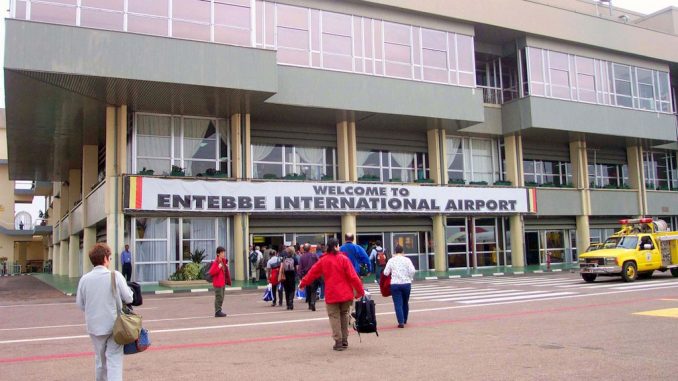
Entebbe International Airport

Emmanuel Ainebyoona, ministry of health spokesperson, told Xinhua by telephone on Monday, January 14, 2019 that all passengers arriving through Entebbe airport, about 40 km south of the capital, Kampala are screened of Ebola.

Previously, the medical people at the airport have been screening passengers on direct flights from DRC.

“We realised that some passengers from DRC were using connecting flights from other airport on their way to Entebbe,’’ Ainebyoona said.

In September 2018, the east African country installed Automated Temperature Scanners at the airport to screen passengers mainly coming from DRC.

According to Ayinebyoona, the screening at the different border entry points between Uganda and DRC is still ongoing.

Uganda is on an Ebola alert as parts of neighbouring eastern DRC are facing an outbreak of the deadly hemorrhagic fever.

According to the World Health Organisation, the highly contagious Ebola virus causes a range of symptoms including fever, vomiting, diarrhea, generalised pain or malaise and in many cases internal and external bleeding. Mortality rates of Ebola fever, according to the global health body, are extremely high, with the human case fatality rate ranging from 50 per cent to 89 per cent, depending on viral subtype.

How we’ll reforest Nigeria in 30 years, by NCF

0

The Nigerian Conservation Foundation (NCF) has said that, through its Green Recovery Nigeria (GRN) initiative, it will establish a reforestation scheme in 25% (230,942 sq. km) of Nigeria’s total landmass (923,768 sq. km) from 2017 to 2047.

Dr Onoja Joseph
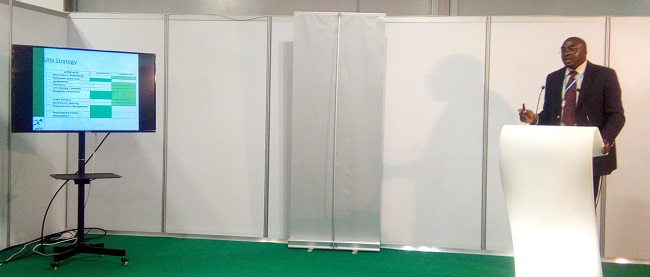
Dr Onoja Joseph of the Nigerian Conservation Foundation (NCF) making the presentation at the Nigeria Pavilion on Wednesday, December 12, 2018 during COP24 in Katowice, Poland

NCF’s Director, Technical Programmes, Dr Joseph Onoja, told delegates at a side-event during the UN Climate Change Conference (COP24) in Katowice, Poland in December 2018 that the initiative, which was informed by the alarming rate of loss of the nation’s forestry resources, would also promote actions to curb deforestation and forest degradation.

“The goal will be achieved through 75% natural regeneration (173,206.30 sq. Km) and 25% afforestation (57,735.50 sq. Km),” disclosed Dr Onoja, adding that the GRN strategies include setting up of structures and policy instrument to arrest the alarming deforestation rate in the country.

On what informed the GRN, he said: “In just about 15 years, Nigeria lost about 46,500 sq. km of forest, thus putting the annual rate of forest loss to an estimated 3096.14 sq. km. If the appalling rate continues unabated, other countries north of Nigeria in the arid zones may boast of having more forestlands than Nigeria by 2040.”

According to him, the GRN would strategise on how best to reclaim, rehabilitate and restore marginal/abandoned/degraded lands to forest cover. He added that, besides improving livelihoods, mangrove restoration and rehabilitation would equally be prioritised.

Implementation for the pilot phase of the GRN is already underway and it seeks to plant about 2.2 million trees covering 2,000 ha from 2017 to 2019. Community tree nurseries established during this period will be maintained and operated throughout the life span of GRN initiative, added the Lagos-based not-for-profit group.

But Onoja disclosed that the NCF would not solely execute the project.

His words: “The NCF recognises the fact that this is a daunting task. NCF is leading (coordinating) efforts of GRN, but certainly will not do it alone. It can only be achieved by all stakeholders in the forestry sector in Nigeria.

Stakeholders who will be key in the implementation of GRN include but not limited to: federal and state governments and their relevant agencies, local communities, national and international donor and development agencies (DfID, CIDA, USAID, ECOWAS), the private sector, and International organisations (UNEP, UNDP, etc).

“We are also harnessing the efforts of other stakeholders such as governments of Lagos (intends to plant 10 million trees by 2020), Imo (acquired about 634 hectares of land across the state in various communities for tree planting), Ekiti (intends to plant 250,000 trees in secondary schools across the state) and Kaduna (planting 1 million trees annually to combat desertification).”

Planners move to revitalise profession

0

A group of settlement development practitioners appears to have taken the bull by the horn in what looks like a spirited bid to inject a fresh lease of life in the practice of their profession.

Physical Planning Renaissance Initiative (PPRI)
L-R: TPLs Moses Ogunleye, Tunji Odunlami, Bunmi Ajayi, Waheed Kadiri, Toyin Ayinde, Wale Alade, Ayo Adediran and Michael Simire, at the PPRI Formal Inaugural Meeting held on Thursday, January 10, 2019 at the Joseph Awogbemi House, Lagos NITP Secretariat, Alausa, Ikeja

Bothered about the the somewhat unsavoury image being projected to the public, no fewer than 10 town planners have embarked on a journey to right perceived wrongs and set the path of the urban planning profession towards a prosperous future.

Under the aegis of the Physical Planning Renaissance Initiative (PPRI), a not-for-profit outfit that they recently established, the experts have set out to not only highlight the essence of planning and what they do as professionals, but also to galvanise the public to further stimulate their interest in participatory planning.

The founding members of the PPRI are Yacoob Abiodun, Bade Falade, Bunmi Ajayi, Waheed Kadiri, Toyin Ayinde, Moses Ogunleye, Tunji Odunlami, Wale Alade, Ayo Adediran and Michael Simire.

At a formal inaugural meeting held on Thursday, January 10, 2019 in Lagos, members renewed their determination to realise the set vision, mission, goals and objectives of the organisation.

They likewise underscored their resolve to:

  • harp on the roles of government, the lawmakers and Policy-makers in order to guarantee institutional and legal support for planning;
  • spotlight planning achievements and best practices for wider dissemination;
  • report the sterling achievements of the individual or corporate planners to encourage mentoring and to create a retinue of proteges; and,
  • embark on self-appraisal by starting to fix any wrong perception(s) about planning and planners in order to reassure the Nigerian public that “we care”.

Abiodun, planning advocate and convener of the PPRI, said: “The emergence of the PPRI will lead to a medium where urban planners will use to get the reading public informed about the essence of planning, what planners do, showcases planning success stories and best practices for people to know where such planning interventions exist in Nigeria. Members of the profession around the country will also have the knowledge of what their counterparts are doing in the states of the federation.

“The medium will also carry contemporary news/practices about planning beyond the shores of Nigeria that could be applicable to the country’s planning situation. In a nutshell, the PPRI platform will give a new lease of life to planning in Nigeria. The students of planning will use it as a resource material including the academics. As for the prospects, the sustainability of the platform will drive the prospect.

“Once it is introduced to the Nigerian media market and the reporting is good in contents with arrays of interesting planning topics, the demand for the magazine will be enhanced. The prospect is ‘hopefully’ good once every hand is on deck to make it a successful venture. The PPRI will be filling a vacuum created by paucity of information about planning in Nigeria and among Nigerians.”

Ogunleye stated: “The birth of the group will bring in alternative views and perspectives to the delivery of effective services in physical planning.  It will stimulate stakeholders for greater action and facilitate inclusiveness. It will be most beneficial to government at all levels as they will, among others, be able to feel or gauge the expectations including anxieties of the public.

“Ultimately, the body will become Nigeria ‘s leading group raising awareness on matters that affect human settlement development for economic growth, livelihood advancement and broad sustainable development.”

Odunlami stressed: “Things have gone so bad and the human space is not left out. Our spatial experience is stressful and accusing fingers are pointed at the managers of space – the town or urban or physical planners. Virtually everyone has abandoned his spatial responsibility. There is no longer adherence to standards and rules of building and use of space, and enforcement is comatose.

“There is need for intervention to refocus all of us to the issues, reinforce our roles and reverse the trend. This has given birth to Physical Planning Renaissance Initiative, a non-governmental group of concerned, experienced and passionate professionals with a vision to continuously interrogate physical planning and development issues, educate all actors, offer opinions and proffer realistic but simple solutions to issues of urban and rural space management in order to achieve a salutary environment for all.”

Adediran submitted: “The PPRI emerged as an outcome of the concern of some planning practitioners led by Tpl Abiodun Yacoob with respect to the negative perception of the public on physical planning activities and planners. The group concluded there must be a platform or forum for projecting positive image of planners and planning activities. It is all about continuous development of planners and public enlightenment on what planning is all about. The group is also out to rebrand planning through various channels of communication. It is aimed at complementing the activities of the NITP/TOPREC in the areas of advocacy and public policy formulation.

“The prospect of the group in achieving the fundamental objectives of planning principles and practice is high. It will give experienced members of the profession and the public opportunity to proffer wide range of solutions to challenges in the environment and physical planning because of its independence.”

Kadiri stated: “It will be recalled that, in January 2016, a group of concerned town planners held a colloquium in Lagos in reaction to a series of questions raised on various social media platforms on the position of the profession in the nation. Though the colloquium was highly successful with almost 250 urban planners in attendance, however, it was realised that the momentum achieved was not sustainable. This pushed Tpl. Yacoob Abiodun to suggest to some urban planners to come together in a formal corporate body to be at the driving seat of pushing for the visibility of the profession.

“The group, now known and registered as Physical Planning Renaissance Initiative, is an NGO with the aims of putting into public space all that physical planning stands for. The NGO has set for itself the goal of bringing up dispassionate analysis of issues related to physical planning and the built environment. With this, the NGO will become a ‘go-to’ organisation for ideas and comments on issues surrounding the built environment.

“It will also provide the forum for all to discuss issues and policies. Envisaged is a publication of a specialised medium that will not only provide information but will also be medium of dissemination of research findings.

“The NGO will also not lose sight of the need for an ombudsman in the built environment process. All these are envisaged to be achieved in collaboration with NITP, TOPREC and ATOPCON and other groups and persons wanting a livable environment for all Nigerians no matter where they are.”

Valuers clamour commitment to professional standards

0

The Abuja Branch of the Nigerian Institution of Estate Surveyors and Valuers (NIESV) has called on practitioners to commit to professional standards by ensuring that they carry out their practice in line with the ethics of the profession.

Charles Oghenero Ebiai

They were also urged to work towards ensuring that the practice is for the betterment of society and advancement of humanity through accurate valuation and timely delivery of projects.

The call was made on Monday, January 7, 2019 by the Chairman of Abuja NIESV, Charles Oghenero Ebiai, in his new year message to members.

Ebiai also called on Nigerians, especially those who engage the services of estate surveyors, to give the necessary recognition to the contributions of estate surveyors and valuers in the development of the real estate sector, while urging them to shun quacks who are desperate and out to undermine the ethics of the practice.

He said: “As committed estate valuers, we must at all times seek to uphold the ethics of our noble practice in all that we do. We must shun all forms of violations of standards. The NIESV is committed to seeing that members are well trained and equipped with modern skills through relevant trainings. I urge our members to take advantage of these trainings to the benefit of their individual practice and our collective service to our country, while I also call on all Nigerians to patronise registered estate surveyors and valuers so that sanity will be maintained.”

He added that, in order to improve the quality of manpower requirements, the Abuja NIESV Abuja would partner with the University of Abuja and other higher institutions of learning to provide professional trainings to current and future practitioners as a way to ensure that the institution is always ready with needed manpower and able to meet the demands of society.