Director-General, Forestry Research Institute of Nigeria (FRIN), Prof. Zacharia Yaduma, says Nigeria is strengthening policy and legal frameworks to promote the sustainability of biosphere reserves and support ecological research.
Yaduma, stated this while presenting the National Report on the implementation of the MAB programme in Nigeria, at the ongoing 8th AfriMAB General Assembly in Zambia.
Biosphere reserves are sites for testing interdisciplinary approaches to understanding and managing changes and interactions between social and ecological systems, including conflict prevention and management of biodiversity.
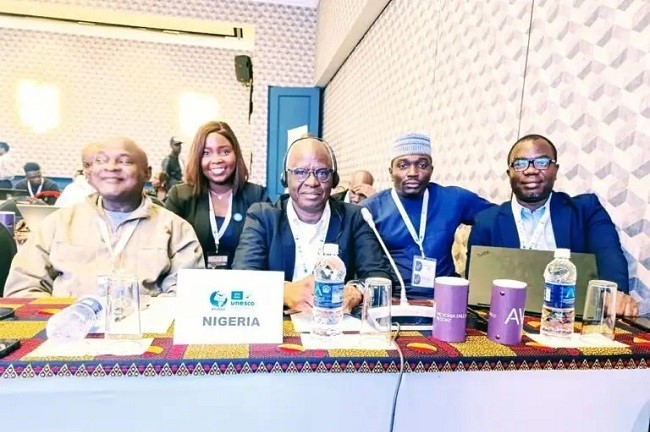
Members of the Nigerian delegation to the 8th AfriMAB General Assembly in Zambia
The 8th AfriMAB General Assembly, organised by the Government of Zambia and UNESCO, is ongoing in Zambia from March 9 to March 13, 2026.
A statement issued to newsmen in Ibadan on Thursday, March 12 by Idara Udoh, Media Aide to the director-general of FRIN, quoted Yaduma as saying that Nigeria had recorded notable achievements in biodiversity conservation.
The theme of the event is: “Harnessing Africa’s Natural Resources Through Ecosystem-Friendly Technologies.”
Yaduma said that the event aimed to explore innovative approaches to sustainable resource use, particularly in mining and quarrying activities.
It also seeks to give participants the opportunity to exchange knowledge and solutions to strengthen sustainable resource management, biodiversity conservation and community resilience across Africa’s biosphere reserves.
According to him, Nigeria’s achievements include ecological restoration of degraded areas in Omo and Oban Biosphere Reserves and biodiversity business initiatives in Omo, Oban, and Shere Hills Reserves.
“Some other notable achievements include training of 4,700 beneficiaries in green economy and biodiversity business concepts, establishing biodiversity businesses in Omo, Oban, and Shere Hills Reserves and designating Shere Hills as a Biosphere Reserve.
“MAB Youth Network has also been inaugurated. These efforts align with the Lima and Hangzhou Strategic Actions Plans respectively,” he said.
Also, Zambia’s Minister of Technology and Science, Mr. Felix Mutati, in his remarks, said that Africa’s rapidly growing population makes it increasingly important to adopt innovative approaches that support sustainable land use and ecosystem conservation.
Mutati, represented by Minister of Tourism, Rodney Sikumba, said priority should be given to responsible use of natural resources, adoption of ecosystem-friendly technologies, and efficient natural capital accounting to better understand the value of Africa’s environmental assets.
He called for stronger regional cooperation and greater involvement of young people, describing Africa’s youth as a key driver of innovation in environmental protection.
The outgoing AfriMAB Bureau Chair, Telesphore Ngonga of Rwanda, commended the Zambian Government and the Zambia National Commission for UNESCO for hosting the Assembly.
Ngonga said that since the 7th General Assembly held in Rwanda three years ago, the AfriMAB network has expanded its work from policy dialogue to practical ecosystem restoration initiatives across the continent.
“These initiatives include support for the Great Green Wall in the Sahel region, restoration of mountain ecosystems in East Africa, and mangrove rehabilitation along West Africa’s coastlines,” he said.
Ngonga added that the network has also strengthened the integration of indigenous knowledge systems in conservation programmes and promoted cooperation among transboundary biosphere reserves.
However, he cautioned that challenges remain, including limited funding for conservation activities, security concerns in protected areas, and increasing human-wildlife conflicts.
Also, Ms. Moira Ng’uni, the Senior Programme Officer for Communications at the Zambia National Commission for UNESCO, reaffirmed the government’s commitment to responsible natural resource governance.
Ng’uni highlighted several initiatives being implemented through UNESCO partnerships, including youth communication programmes, community-based environmental awareness campaigns, and projects aimed at strengthening climate resilience.
Other delegates from Nigeria include the Conservator General, National Park Service, Dr Ibrahim Musa-Goni; Prof. Tayo Oyelowo, Desk Officer, MAB Secretariat, FRIN; Mr. Bello Nuhu, National Park Service; and Ms. Ofure Blessed Aikhakhomon, UNESCO, Abuja Office.
Türkiye has decided to phase out single-use plastics in line with the European Union’s acquis, aiming to further contribute to its environmental progress.
The Ministry of Environment, Urbanisation, and Climate Change is finalising a new regulation modeled after the EU’s Single-Use Plastics (SUP) directive.
This was adopted in 2019 to prevent and reduce the impact of certain plastic products on the environment and human health.
Single-use plastics
The ban aims to significantly reduce plastic pollution by prohibiting common disposable items, such as plastic cutlery (forks, knives, spoons, and chopsticks), plates, straws, and plastic-stemmed cotton buds.
Currently in the draft stage, the regulation is expected to take effect by the end of the year following consultations with industry leaders and NGOs.
The policy encourages a shift toward sustainable alternatives made from glass, porcelain, wood, and cardboard.
The ministry estimates an annual reduction of 1.5 million tons of carbon emissions and savings of approximately $44 million in waste management costs.
Future phases of the initiative will introduce stricter labeling requirements and consumption targets for composite beverage cups, food containers, wet wipes, and all types of plastic bags used for shipping.
This follows 2022 data showing that Türkiye consumed over 700,000 tons of single-use plastics.
Public sentiment strongly supports the transition.
A joint survey by the ministry and the Turkish Statistical Institute (TurkStat) found that over 76 per cent of citizens favour restrictions on disposable plastics, while 80 per cent support a shift toward reusable materials like metal and ceramic.
This high level of public support aligns with Türkiye’s National Circular Economy Strategy and Action Plan, which was officially announced and entered into force on Oct. 20, 2025.
This roadmap specifically targets the reduction of single-use plastics, marine litter, and microplastics across the country through 2028.
In a related development, Türkiye has announced that it will release 11.6 million barrels of crude oil from its strategic reserves as part of the International Energy Agency’s largest-ever coordinated stockpile release.
The country’s Energy and Natural Resources Minister, Alparslan Bayraktar, said on Thursday.
A national oil stock committee approved the release, which will take place gradually over 90 days, Bayraktar said during a visit to a coal mine in the Black Sea province of Zonguldak.
“We decided to release 11.6 million barrels from our strategic reserves in support of the IEA’s coordinated release of 400 million barrels,” he told reporters.
IEA earlier on Wednesday recommended that members release a combined 400 million barrels from national stockpiles the largest coordinated action in the agency’s history.
According to Executive Director, Fatih Birol, IEA has 32 member countries and 13 association countries representing roughly 75 per cent of global energy demand.
The coordinated release came amid conflict in the Middle East that has drastically reduced oil flows through the Strait of Hormuz including imports from Iran.
Recycling is one answer to the growth in plastic waste but treating “wash water” used to clean recycled plastic before re-use can produce safer recycled plastics, according to a new study.
The U.S. Environmental Protection Agency (EPA) has set a goal to achieve a plastic recycling rate of up to 50% by 2030 which would involve an 8- to 10-fold increase in recycling efforts to meet the challenge.
Plastic packaging waste streams generally contain different polymers and impurities including paper, organic residues, adhesives, metals, glass and inks. The contaminants and the additives present in these polymers include plasticizers, antioxidants, colorants, light and heat stabilizers, lubricants, antistatic agents, slip compounds, heavy metals and other chemicals.
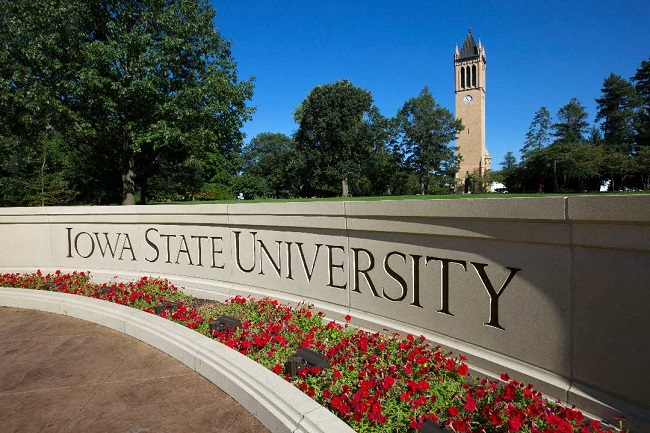
The study was prepared by Iowa State University researchers
A new study by Iowa State University researchers examines various techniques for washing post-consumer plastics before they are re-used and identifies potential chemicals of concern. The research was supported by IAFNS’ Food Packaging Safety & Sustainability Committee.
The study focuses on contaminants in post-consumer polypropylene wash water with the aim of making recycling processes more effective, sustainable and safer by lowering potential exposure to harmful chemicals. Polypropylene is a versatile plastic that is used for a wide range of applications including food packaging and consumer products.
Mechanical recycling is one of the most widely used processes for plastic waste, enabling reuse of raw materials. But this involves sorting and washing to reduce the presence of impurities. Cold water, sometimes in combination with caustic or surfactant chemicals, is used for washing off debris and residues from raw plastics slated for recycling. Hot water can be applied to remove more stubborn contaminants that stick to plastic waste.
However, during the process, wash water can become contaminated with various substances including oils, greases, suspended solids and organic pollutants. These can be potentially detrimental to human health and the environment if not treated and addressed. Effective wash water treatment can produce safer recycled plastics.
According to the paper, “there appear to be limited international or national legal quality requirements for water used in post-consumer plastic waste washing.” Polypropylene was selected for this study as it’s a material frequently used in food packages like tubs, carryout bags and stackable crates.
The study also looks at different washing methods and their potential to generate contamination in closed-loop wash water systems. Finally, it presents a framework for future research to understand potential wash water risks from recycling processes.
Results from the study indicated that DCHP (Dicyclohexyl phthalate) and DEHP (di(2-ethylhexyl) phthalate) were the most prominent high-concern contaminants in polypropylene wash water, while other phthalates and bisphenols were not detectable. The researchers also concluded that surfactant concentration changes as more material was processed indicating that monitoring is required to maintain cleaning performance and minimize potential health and environmental risks.
According to the authors, “These findings suggest that implementing surfactant-caustic washing and ultrasonication applications can bring a higher cleaning effect in recycled plastic but generate more contaminated wash water, requiring further treatment.”
Removal of contaminants from post-consumer recycling feedstocks is necessary to manufacture safe and high-quality packaging materials. This study demonstrated that some contaminants can be transferred to the wash water and mitigation strategies are needed to maintain overall sustainability of plastics recycling.
The StopEACOP Coalition is calling out TotalEnergies’ attempts to sanitise its public image through claims of an “independent assessment” of the controversial land acquisition programme linked to the Tilenga project which will rely on the East African Crude Oil Pipeline (EACOP) to transport the crude oil to the global market.
TotalEnergies reportedly commissioned the Canadian firm, Land & People Planning Ltd, to conduct the assessment in the districts of Buliisa, Hoima, and Kikuube. The independence of the report is questionable, alleges StopEACOP Campaign, adding that the assessment concludes that TotalEnergies covered all core components of the land acquisition programme and demonstrated its commitment to transparency and continuous improvement.
TotalEnergies
TotalEnergies, added the group, also mentions in passing that the original assessor withdrew for health reasons and they appointed the Canadian firm as a replacement without demonstrating how they involved key stakeholders or reassured the public of the transparency in this process, given previous accusations of undue influence over the consultants they employ.
“This report is less of an independent evaluation than it is a reputation-laundering exercise which tries to clear TotalEnergies in the face of community testimony exposing a broken livelihood restoration programme. For the company to claim the Tilenga land process is ready for closure even while project-affected people are consistently going to court over unjust compensation is outrageous. Our message to lenders, insurers and the backers of Total is that they should not mistake this sham assessment for real due diligence.” said Zaki Mamdoo, StopEACOP Campaign Coordinator.
According to him, the report fails to mention the coercion, threats, and intimidation project-affected people have been subjected to by the Ugandan government, who are partners in the project, and Total’s employees and subcontractors, to release their land for the Tilenga project. Indeed, the case of 42 families from Buliisa district who were evicted by court order before receiving compensation to make way for the Tilenga Project, has been well documented.
“Courts in Uganda are used as boogeymen when it comes to oil project-affected people. The people report that they are told by sub-contractors working on behalf of Total and its partners that they must give away their land at a pittance. The people are informed that if they refuse low and unfair compensation, they will be taken to courts where they have no chances of winning cases.
“Indeed, while the organisation I work for is supporting many oil-affected people to defend their land rights through courts, we see bias and a lack of willingness by courts to dispense justice to oil-affected people including the sick, the elderly and other vulnerable groups,” said Diana Nabiruma of Uganda’s Africa Institute for Energy Governance (AFIEGO).
“In February 2026, AFIEGO published a research report that assessed compliance to the EACOP livelihood restoration commitments. The report showed that there were major gaps in the implementation of the livelihood restoration commitments, and the affected people believe that if these are not remedied, they will not be restored to their pre-displacement socio-economic conditions. Independent assessments by civil society and other actors are necessary if credible information on Uganda’s oil industry is to be shared,” added Nabiruma.
The coalition also notes that the timing of this report is suspect, considering TotalEnergies is facing an ongoing case in a Paris Civil Court where the court ordered they release documents they had withheld, including market studies on compensation rates conducted by TotalEnergies’ subcontractors, minutes from its Human Rights Steering Committee and a report on the impact of flooding resulting from their Tilenga project.
“Analysis of the court-ordered disclosure reveals numerous instances of non-compliance with international standards, in particular IFC Performance Standard 5, despite TotalEnergies’ public claims that it aligns with it,” said Camille Grandperrin, legal officer at Friends of the Earth France.
StopEACOP Campaign added: “TotalEnergies’ assessment report action plan only mentions 4,954 project-affected-people, which is a small fraction compared to the more than 100,000 people affected across both the Tilenga Project and EACOP. Isolating Tilenga’s land acquisition from the wider oil infrastructure it feeds into, therefore, gives a misleading impression of the number of people impacted. Even if the scope of the assessment was strictly on Tilenga Project, the numbers in this report are way low and are inconsistent with other reports.
“In addition, there is no mention of how the flooding caused by the construction of the Tilenga Central Processing Facility has been captured and addressed. This report is a sham and in bad taste, considering the well documented testimonies of project-affected-people – from restrictions of their land use before compensation, which impacts their livelihood to the arrests and intimidation of activists and land defenders who speak out on their behalf. This report should be dismissed.”
The StopEACOP Coalition is an alliance of local groups, communities, and African and global organisations calling for a stop to the proposed pipeline and associated oil fields at Tilenga and Kingfisher in the Buliisa and Nwoya districts of Uganda, within the Lake Albert region.
A presentation by Prof Chinedum Nwajiuba at the Maiden National Conference of the Faculty of Social and Management Sciences, Alvan Ikoku Federal University of Education, Owerri, Imo State, on Thursday, March 12, 2026
The theme of this conference, “Rethinking Values and Priorities for Sustainable Development: Balancing Security, Economic Growth and Environmental Protection in Nigeria,” is a very powerful one, with multi-dimensional possibilities as regards conceptualization. Being asked to contribute to this via a Lead paper, I was given the freedom to interpret it as I saw fit.
I have crafted a title, posed as the question: “When the Post-WW2 Order Falls, can Peripheral States like Nigeria Survive?”
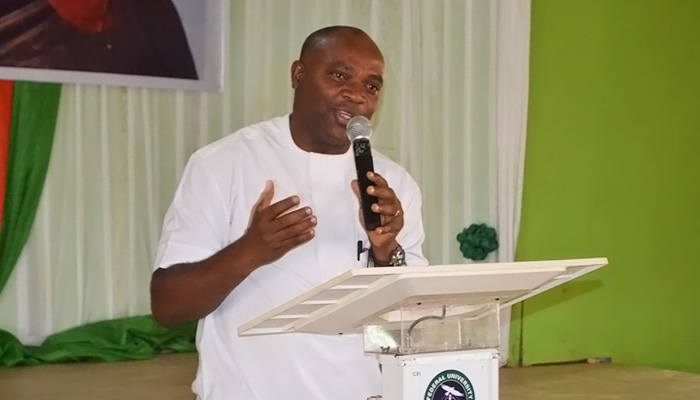
Former Vice-Chancellor, Alex Ekwueme Federal University, Ndufu Alike Ikwo (AE-FUNAI), Professor Chinedum Nwajiuba
Preamble
Before delving into the kernel of my presentation, permit me a short preamble that recognises that we are in a university, and it may have become necessary that, as often as we can, we must reflect on the conditions of our universities, and how we contribute to the evolution of society and humanity, via our triple mandate of teaching/learning, research and community service. May our universities never act
as if forgetting the meaning, the idea, and the culture of the university. May we not be anything less than institutions of excellence. May we be conscious of the ivory on the tower. May we not be collaborators in the demystification of the crimson comb on the head of the cock, the university.
Introduction
The theme of this conference, “Rethinking Values and Priorities for Sustainable Development: Balancing Security, Economic Growth and Environmental Protection in Nigeria”, has packed and woven very important keywords, which, standing alone or interrelated, are very germane. In dealing with this, a spatial component has been clearly defined, to the extent that Nigeria is specified. It does have a temporal component, but not as clearly stated. We will try doing that.
In reflecting on the theme, an imperceptible matter is the framework under which much of development has been pursued in Nigeria (and most countries in Africa) since her independence, and even the preceding colonial era. That framework is the world order that emerged after the Second World War.
That is to say that a rethinking of values and priorities for sustainable development, focused on balancing security, economic growth, and environmental protection in Nigeria, is located within a temporal framework of a world order defined following the end of the Second World War in 1945.
This framework has several components, institutions, and rules that govern world security, the economy, including financing and trade, among others. The belief is that this was designed to ensure peace, stability, and economic cooperation through a rules-based system, led by the United States. Key elements included the creation of the United Nations (UN) for collective security, the Bretton Woods institutions (IMF/World Bank) for economic stability, and the promotion of democracy.
This framework is evidently under severe threat of disintegration. This has informed the topic we have crafted, “When the Post-WW2 Order Falls, can Peripheral States like Nigeria Survive?” The central issue is, if the current stress on the world order in
which Nigeria emerged and has operated falls, can Nigeria and similar states in the peripheries of the world order survive?
Survival here has to be seen in the context of the keywords in the theme. These include Nigeria’s values, developing sustainably, security, economic growth, and protection of her environment.
Very critical is a word employed in the title, “Rethinking”. Thinking, in relation to the other words in the title, is a responsibility of the elite, as has been historically demonstrated. These ranges from the intellectual elite to the economic, spiritual, and other elites, up to the political and governing elite.
The political and governing elite appears to seat atop all other elites, and has capacity and responsibility to influence the emergence, conduct and performance of all other elites, and therefore the current situation and future of Nigeria, and indeed all other countries.
The political and governing elite may even choose to influence the reportage and interpretation of the past, and the history of the country, which begins to manifest as positive or negative socialisation of a mass of the people of the country, and therefore the future trajectory of the country. This may indeed have been the case with Nigeria and her history.
The reality is that the majority of Nigerians are mired in multidimensional poverty, so the issues of interest in this paper are not of primary interest to them; their main concern being daily survival. One illustration: a very poor person dealing with daily survival would not be interested in environmental protection, let us say forest preservation, if he needs to cut down trees to find fuel wood to cook whatever he finds to eat.
The theme of this conference seems to assume that there are persons in the business of thinking, and may then be willing to rethink. Perhaps there are persons who may be engaged with thinking, critical thinking, and not mere imagining. Ideally one group that such an assumption should stand a chance of validation should be the academia.
I give another illustration, maybe somewhat embarrassing: In many serious circles, the expectation is that university academics are elites, indeed intellectual elites who would have time to think and rethink the conduct and performance of our universities, for example, over the quality of their products in terms of their graduates and their research.
The intellectual elite in Nigeria may also have become nominal in this responsibility, not engaged in any critical thinking, whether incapable or by choice, and may have become “de-elited”, so that they may also not have the privilege of thinking and re-thinking even their own conditions. Why this has emerged is debatable.
Suffice it to add that a country without an elite consensus of national values is on shaky ground. A country without a critical, thinking, patriotic, and enlightened elite has feet of clay when action is required.
Charged with the denaturing of the intellectual elites, as represented by university academia, are the governing and political elites. As a consequence, on several parameters of development, whether sustainable or not, it is questioned whether our society is progressing or retrogressing.
An illustration: if by 1960, Owerri city and many rural communities had pipe-borne water, but today, after six decades, the children and grandchildren and great grandchildren of the generations that achieved pipe-borne water have never seen such, then it becomes clear the nature of development we have achieved, and may be asked to think and rethink to sustain.
We will now briefly look at the world order created after World War 2, and how it seems to be unravelling, after which we will examine the other parameters of development, and the peripherality of Nigeria and similar states that may seek to survive in this changing world order. In doing this, we shall acknowledge that so far this paper has been positioned at the macro level. We will also present a few micro examples of the relevance of the issues.
Historically, this dominance was political through incorporating the periphery into colonial empires, but from the second half of the 20th Century, economic factors became the key drivers. Most high-level economic activities and innovations are located in the core, with the periphery subjugated to processes conferring a lower added value, such as resource extraction and labour-intensive manufacturing.
A distinguishing characteristic of the periphery from the core is the dominance of their economies by resource extraction and export of raw materials. Nigeria has been, and remains solidly in this category.
A few countries have emerged since the 1970s into what may be described as the semi-periphery, with improvements in economic development (China, South Korea, Brazil, Malaysia, etc.). This is in line with Wallerstein’s World-Systems Theory, which classifies the world into core, semi-periphery, and periphery (https://www.researchgate.net/publication/49615339_IMMANUEL_WALLERSTEIN%27S_WORLD_SYSTEM_THEORY).
Inherent in these classifications is a consolidation into raw materials countries and industrialised countries. In many schools of thought, and fundamentally in the dealings of the Bretton woods institutions – the World Bank and the IMF – and as seen by the essentials of the policy prescriptions they had for countries in the periphery, for instance in the era of the Structural Adjustment Programmes (SAP), seem to be influenced by this classification. That is, countries in the periphery should supply produce in form of raw materials and natural resources to countries in the core, who may in return sale products from those produces to the peripheries, and may offer aides and assistance to sustain the peripheries at a stable but low-level equilibrium.
Assistance may come in the form of offer of security including military bases, intelligence, equipment and facilities, sustenance of the governing class, even if extracted wealth of the countries of the peripheries are kept in private accounts in financial platforms of the core, and if in difficulties with the public finances of the peripheries may be availed loans, grants, etc.
This classification may not be static as shifts may occur, with some countries migrating to semi-peripherals. Some recent examples of these are China, Brazil, and India. A look at these three countries shows that they are also the core of the new
economic block emerging as BRIC – Brazil, Russia, India, and China, and then with South Africa joining, metamorphosing into BRICS. Nigeria was not considered for the core of the BRICS, and even in the first wave of expansions, Nigeria is not in there. Nigeria was only admitted as a partner country in January 2025, and by this, may attend some special sessions. In effect, Nigeria is peripheral even to BRICS.
The continued peripherality of Nigeria and most African countries
Why have Nigeria and most of Africa continued to be peripheral to the world order? The answer to this is multi-dimensional. There are several long-term historical and current factors for this. Among these factors, two would seem to be more fundamental.
The first is the inherited colonial state structures, which Africans have agreed should be kept. The second is the poor-quality leadership and governance elite. On these two hang all other possible factors driving the continued pitiable conditions of development, insecurity, etc., in Nigeria and most of Africa.
Indeed, these two factors are interrelated. It is the common internal contradiction of African states, different from states in Europe, and elsewhere, that makes the emergence of a national elite consensus of values and priorities nearly impossible. These therefore festers the emergence of unpatriotic political and governing elites, and contending centripetal and centrifugal forces that sustains a low-level circle of underdevelopment and comfort in the company of periphery countries.
Similarly, poor quality political and governing elites sustain the burden of the colonial state structures, predominantly because of lack of vision, confidence, and loyalty to the choices of the core. Something the Igbo will summarize as “Anu Oke ju m akpa, kporo nne m”, transliterated as “If you give me sufficient rat meat, you may take my mother”.
These two factors – the colonial state structures, and poor quality political and governing elites, commonly unpatriotic, lacking in capacity for critical thinking, and often unenlightened – jointly create a condition in which national thinking and rethinking is alien, and therefore unable/unwilling to priorities sustainable development, balancing security, economic growth and environmental Protection.
It is against this background that Nigeria and most of Africa have to confront an emerging new world order, different from the post-World War 2 order. It is even doubtful if a significant proportion of elites of all hues in Nigeria, perceive or understand the changing global geopolitical landscape and the risks which peripheral countries like Nigeria are facing, and will face in the years ahead. Before looking at this emerging challenge, we need to see the some elements of the world order established after the Second World War, which has been the frame for the effort at development in Nigeria and most of Africa.
Key elements of the post-World War 2 order
The post-World War 2 order was primarily designed by the United States, and a few of her allies, with its most critical establishments headquartered in the United States. Among these are the United Nations (UN) for collective security, and the Bretton Woods institutions (IMF/World Bank) (https://www.sociostudies.org/almanac/articles/evolution_of_world_order).
United States leadership passed through the era of the bipolar world with a contending but less influential role by the USSR, to the era following the end of the USSR and the emergence of a world dominated by the United States. At the height of this, the United States, through its strong international engagement using multiple approaches, a key one of which is USAID, and other aide platforms, then her most strategic tool as the largest funder of the UN system, including institutions like the World Health organisation (WHO). Today, that is changing. The United States is withdrawing from these.
At the same time, the United States is manifesting tendencies that are contrary to the world’s acceptance of its leadership in global security. Among these being a seeming non-restraint in the use of her awesome military powers.
How United States military activities in Nigeria, and possibly neighbouring mineral rich countries in the Sahel, plays out for Nigeria and other countries in the periphery is not clear. How the withdrawal of the United States from the Paris Climate Agreement, and participation in the United Nations Framework Convention on Climate Change (UNFCCC) Conference of Parties (COP) on climate change is not yet understood. How these will impact on key countries such as China and Russia is not still understood.
How pressures on the global use of the US Dollar and payment platforms in response to signals form the Unted states, by her historical allies such as Canada, United Kingdom, Australia, etc. is not yet clear. How all these will impact on countries in the periphery like Nigeria and her peers is also not yet clear. We can only say that the world, and importantly the peripheries are in for uncertainties.
Key elements of the United States recent policies with implications for Nigeria
Among these would be the withdrawal of funding for programmes that have implications for Nigeria’s sustainable development and security. Specifically, the withdrawal from funding for health, education, agriculture, and climate change has serious implications for several government programmes, as well as some by non- governmental organizations.
Without these supports, the services they provide Nigerians in the concerned sectors are under several challenges. All these have adverse implications for these services, especially priorities for sustainable development and the balancing of security, economic growth, and environmental protection in Nigeria.
Pathways for Nigeria’s survival
Countries like Nigeria were shaped to operate within a system of defined global trade rules, western-led financial institutions, development loans, oil markets, and multilateral cooperation. Now there seems a shift towards power being more self- interested. Global cooperation is weaker and more focused on personal, rather than general interest.
Global trade has become more political, with the World Trade Organisation (WTO), under pressure. Debt is rising. Climate rules are not the same. The world can be said to be less stable, more divided, and has more uncertainties.
Two factors have been identified as defining the conditions of Nigeria and her inability to address the issues in the theme – Rethinking priorities for Sustainable
Development: Balancing Security, Economic Growth and Environmental Protection in Nigeria. These are the inherited state structure and the poor quality of the political and governance elite.
The first, that is inherited state structures in Africa, including Nigeria, which act as internal disturbances and distractions of both her leadership and the followership. These have led to unending decades of instability and insecurity, which are not consistent with development.
The second, that is poor quality leadership and governance, is well acknowledged. It is this that has ensured that Nigeria and other countries in most of Africa are unable to reach their potential frontiers as defined by the colonial inherited state structures.
Conclusion
With so much global uncertainties concerning the world order under which we merged as a country, and which we have been used to, what should Nigeria be doing to survive? What is a country without a patriotic, enlightened and thinking elite?
If we are to stand any chance of rethinking sustainable development and the related issues of insecurity with economic development simultaneously happening with environmental protection, we will require enlightened leadership and governance elite.
That leads me to something I have hoped would be done by researchers. Why have Nigeria and most of Africa been ruled/governed by men who manifest elements of underdeveloped minds prancing about the political space and governance? Perhaps they do not create them in the mode of Nnamdi Azikiwe and Michael Okpara anymore.
There seems to be an absence of philosopher kings and nation builders with sights set on enlightened horizons. It is justifiable to research the quality of political leadership we have seen in Nigeria, especially since 1999. Some years ago, I suggested to my wife, who is a professor of sociology of education, to do this, without success.
Take for instance the degradation of the intellectual elite as represented by the universities, by the political and governing elite. There are several hypotheses on the attitude of the political class to universities in Nigeria. Can the hypothesis that the political class is dominated by those who were weak students and have grudges against the university be validated?
Were they a priori supposed to lead society if they came mostly from the weakest of primary, secondary, and university students, those who often ran afoul of the rules, were sent away on suspension, and “ate” their school fees?
How many of those constituting the current class of political and governing elites were class monitors and prefects: an indicator of foundation for leadership? Please note that serious countries in the world understand that the leadership recruitment process is not a joke.
It may also have become necessary to revise our theories of development and emphasise quality and responsible political leadership as perhaps an overriding factor. Can we have that in the curriculum and teach our students this?
Prof Chinedum Nwajiuba is former Vice-Chancellor (February 2016 – 10 February 2021), Alex Ekwueme Federal University Ndufu-Alike; Chairman, Board of Directors, Nigerian Environmental Study/Action Team (NEST); and chair of the West African Science Service Centre on Climate Change and Adapted Land Use (WASCAL) Governing Board and Nigeria’s representative on the Board
The United Nations Convention to Combat Desertification (UNCCD) and the International Drought Resilience Alliance (IDRA) have launched the UNCCD COP17 Land and Drought Media Reporting Fellowship to support journalists covering one of the defining, yet underreported, stories of our time: the growing pressure on the world’s land and what it means for food and water security, economic stability and global resilience.
Six journalists will be selected to report from UNCCD COP17, which will convene in Ulaanbaatar, Mongolia from August 17 to 28, 2026, to advance solutions for restoring land, strengthening drought resilience and safeguarding the ecosystems that sustain livelihoods around the world.
Journalists covering an international conference
About UNCCD COP17
The only binding international treaty addressing land degradation and drought and one of the three Rio Conventions – together with biodiversity and climate – UNCCD is a multilateral commitment to advance sustainable land stewardship to provide food, water and economic opportunity to all people.
The 17th session of the Conference of the Parties (UNCCD COP17) is expected to bring together delegates from the Convention’s 197 Parties, alongside leaders from government, business, civil society, scientists, Indigenous Peoples and local communities to address the global loss of fertile lands and the intensification of droughts. These efforts are grounded in a simple recognition: restoring land and strengthening drought resilience is essential to protect societies and economies, reducing instability and preventing forced displacement in vulnerable regions.
About the fellowship
From food prices and water shortages to migration pressures and energy disruptions, many of today’s most urgent global challenges are rooted in how we manage our land. Yet the scale of the crisis often goes unnoticed: every second, the world loses the equivalent of four football fields of fertile soil, while drought could affect three in four people globally by 2050. Because these crises unfold slowly, they rarely command sustained media attention despite their systemic, long-term impacts.
The UNCCD COP17 Land and Drought Media Reporting Fellowship aims to help bridge this gap by enabling journalists to report directly from the conference and the field, engage with leading experts and communities, and explore the solutions shaping a more resilient future.
Beyond covering negotiations, fellows will be encouraged to tell stories that highlight practical responses – from ecosystem restoration to drought preparedness – that are already making a difference.
COP17 will coincide with the International Year of Rangelands and Pastoralists 2026 and highlight their role in global food security, sustainable livelihoods, biodiversity conservation and climate action.
The fellowship will cover:
Access to UNCCD experts, including pre-COP virtual briefings to deepen the understanding of the key issues related to COP17
Support for COP17 participation, including a return economy-class travel to Ulaanbaatar, Mongolia, accommodation during COP17 (August 21 to 28, 2026), and COP17 media accreditation
A field visit in Mongolia with opportunities to engage with local communities
Who should apply
The fellowship is open to professional journalists (staff or freelance) with a strong track record of reporting on environment, climate, agriculture, development, food systems, business, or related issues.
Applicants should:
Work with a recognised media outlet
Be based in countries affected by desertification, land degradation and drought
Demonstrate an interest in reporting on the intersection between environmental change and social and economic dynamics
Applicants should demonstrate a strong command of English, enabling them to follow COP17 briefings, events and expert discussions
Selected fellows will represent different regions and languages, including the six official languages of the United Nations (Arabic, Chinese, English, French, Russian and Spanish).
Selected fellows will:
Participate in pre-COP virtual briefings with experts
Attend and report from UNCCD COP17 in Ulaanbaatar
Produce independent journalistic coverage connected to the themes of the fellowship .
All fellows retain full editorial independence and journalistic integrity.
Applications open on March 16, 2026, and closes by 23:59 GMT on April 15, 2026.
Applicants are enjoined to send application materials to press@unccd.int with the subject line “COP17 Media Fellowship Application”.
To achieve sustainable waste management, the Property and Environment Writers Association of Nigeria (PEWAN) has disclosed plan to convene critical stakeholders to deliberate on effective ways in tackling the waste management challenges in Lagos State.
Statistics show that Lagos generates a staggering 5.46 million tonnes of waste yearly, with a daily average of about 13,000 tonnes but effective and efficient management of households and industrial wastes have remained a daunting issue for authorities in the value chain.
Many of these wastes are not efficiently moved to the dump sites due to operational challenges, littered the environment including clogging the drains, water bodies, portend dangers to residents and derail the goal of having an hygienic environment for all.
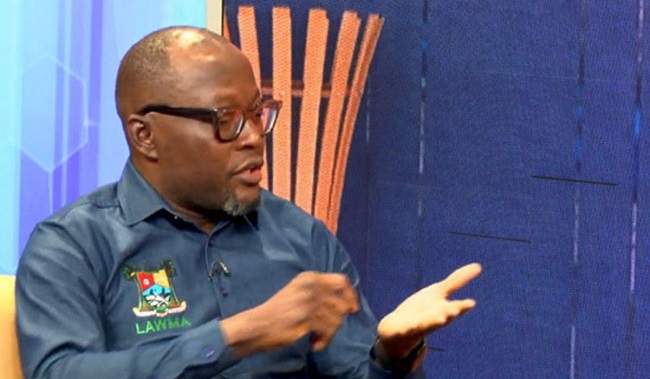
Managing Director/Chief Executive Officer of the Lagos Waste Management Authority (LAWMA), Dr. Muyiwa Gbadegesin
To this end, the theme for the forum is: “Waste Management: Challenges, Policy Framework and Solution for Sustainable Megacity” and is scheduled to hold at NECA’s House Building, located at Hakeem Balogun Street, Alausa, Ikeja in Lagos, on Wednesday March 18, 2026 at 10 a.m.
Speakers include the Managing Director/Chief Executive Officer of Lagos Waste Management Authority (LAWMA), Dr Muyiwa Gbadegesin, and the President, Association of Waste Managers of Nigeria (AWAMN), Dr. Olugbenga Adebola, among other speakers.
Dr Gbadegesin will speak on the topic: “Managing the waste of 22 million Lagosians – from linear disposal to a circular economy: role of PSP operators, other waste managers.”
LAWMA is implementing a 10-year, technology-driven waste management under the THEMES+ agenda (Health and Environment pillar), thereby transitioning from conventional dumpsites to Material Recovery Facilities (MRF) and upgrading Transfer Loading Stations (TLS) at Olusosun and Solous.
The agency had revealed that it plans to deplore no fewer than 100 CNG (Compressed Natural Gas) compactor trucks this year to enhance cleaner, eco-friendly collection, using smart bins (RFID).
It has also commenced “Trash for Cash” initiative, thereby encouraging residents to recycle and reduce landfill waste, with a goal to increase recycling rates. These and other critical areas will form part of the insights from the regulator.
The experts are expected to explore various challenges confronting waste management in Lagos metropolis particularly as regards PSP operations.
The forum will also explore solutions ranging from expanded recycling to waste-to-energy initiatives, and what the regulators and operators are doing towards achieving a clean city through actionable policy, sustained investment, and above all, a shift in public behaviour.
Chairman of PEWAN, Mrs. Okwy Iroegbu-Chikezie, said for a megacity already straining under its own success, how the state manages its waste may ultimately determine its health, longevity, and economic resilience.
According to her, it is in view of this development that the association deemed it crucial to bring together critical stakeholders in the waste management ecosystem to proffer solutions to waste management issue which is fast becoming an environmental menace in the state.
She pointed out that the forum would further help to educate and create more awareness about government’s initiatives in ensuring a sustainable and cleaner environment in Lagos State.
The Chairman noted that majority of Lagos residents are yet to embrace the key initiatives of regulators, hence the indiscriminate dumping of refuse in unauthorised locations across the metropolis.
“We’ve also observed that the waste managers – the PSP Operators and Street Sweepers – are yet to catch the bug of technology-driven waste management in Lagos State,” she said.
PEWAN is an association of dedicated property and environment journalists from both the print, online and broadcast media organisations in Nigeria.
More than 80 members of the National Youth Service Corps (NYSC) have been trained on how to harness digital platforms to promote wildlife conservation and elephant protection throughout Nigeria.
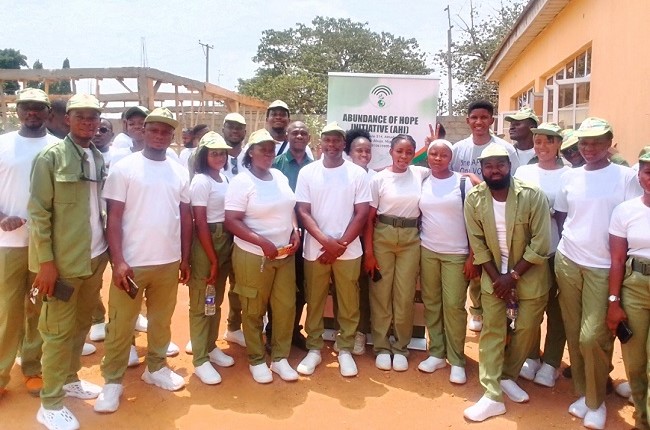
The training, held at the Karu Secretariat in Nasarawa State and hosted by the Abundance of Hope Initiative (AHI) in partnership with EnviroNews Advocacy and Campaigns for Sustainability (Endvocas) on Wednesday, March 11, 2026, is a youth-focused initiative that is aimed at amplifying environmental advocacy across global audiences.
Additionally, it is intended to advance a growing movement among young Nigerians to support global wildlife protection by combining technology, environmental awareness, and grassroots action.
Participants at the Abundance of Hope Initiative (AHI) training session, held in collaboration with EnviroNews Advocacy and Campaigns for Sustainability (Edvocas), aimed to assist National Youth Service Corps members in understanding how to utilise digital platforms for promoting environmental conservation
One of the event’s facilitators, Nsikak Ekere, Youth Ambassador with the Elephant Protection Initiative (EPI) Foundation, and Programme Officer at Endvocas, introduced the NYSC members to modern digital tools and strategies for increasing visibility of environmental campaigns on international platforms.
He encouraged them to deploy social media platforms, such as TikTok, Instagram, and LinkedIn, to amplify conversations around elephant protection and conservation.
“Digital storytelling has the power to transform how people see wildlife and conservation,” he told participants, urging them to create compelling content capable of attracting global attention to the causes of environmental degradation.
Beyond digital advocacy, Ekere also highlighted the role of government ministries, departments and agencies (MDAs) in shaping environmental policies and outlined emerging opportunities within the green economy.
The youth ambassador tasked the participants to explore career paths in sustainability, climate action and environmental protection, underscoring the significance of media on wildlife awareness.
Ekere referenced international popular animated films like Madagascar, Rio and The Lion King to emphasise the importance of animal protection and help to foster affection for wildlife and indirectly boosted tourism.
Speaking at the event, Ambassador Taiye Sasona, Executive Director of AHI, characterised the training as a “purpose-driven effort” aimed at preparing upcoming environmental professionals for chances within the quickly changing green industry.
Participants testified that the exercise broadened their understanding of global climate action and wildlife conservation.
“It was an eye-opener,” said Ms. Benny, one of the corp members who attended the training. “I learned new perspectives on international climate action and how digital platforms can support wildlife protection.”
In keeping with the programme’s environmental commitment, the organisers also revealed intentions to work with corps members to improve local conservation efforts by planting 70 trees and flowers around a recently built facility inside the Karu Secretariat.
A research report titled “Who Funds and Who Pays: the funding of solar geoengineering” and released on Tuesday, March 10, 2026, has revealed that funding for solar geoengineering has increased exponentially in the past five years, from a little less than US$6 million in 2020 to over US$60 million by September 2025.
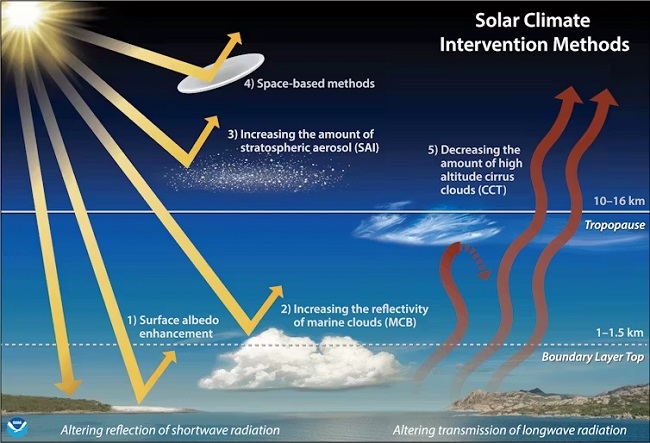
Solar geoengineering is a group of large-scale approaches to reduce global warming by increasing the amount of sunlight that is reflected away from Earth and back to outer space.
Philanthropic foundations, the UK government and tech billionaires have led the race to fund solar geoengineering, with over 80% funding coming from them. Up until 2024, private sources of funding dominated solar geoengineering funding with the UK government’s Advanced Research and Invention Agency (ARIA) trumping that in 2025.
Solar geoengineering
Funding for solar geoengineering has been spread across research, profit making and building awareness on solar geoengineering with almost exclusively private funding supporting solar geoengineering awareness and advocacy.
In the last five years, 166 organisations across the globe have received funding, with 53 based in the US, followed closely by 24 in the UK. This has been followed closely by organisations in Europe, Asia, Africa and Latin America. Out of these, nine-tenths of all funding recipients between 2020 and 2025 were universities or governmental research organisations.
Linda Schneider, Senior Programme Officer, International Climate Policy, Heinrich Böll Stiftung, said: “It is alarming to see how much money is being poured into the research and development of solar geoengineering technologies. We have seen a tenfold funding increase, with the last two years seeing unprecedented levels of funding. When it comes to investors and philanthropic funders, this push has been largely driven by actors from the tech sector, raising serious questions about whose interests these high-risk technologies would ultimately serve.”
“Powerful governments could deploy these technologies unilaterally, potentially at the expense of others, thereby further destabilising an already fragile climate system,” added Linda.
The report also highlighted that some solar geoengineering funders are putting substantial resources towards risky solar geoengineering schemes instead of trying to solve the root causes of the climate crisis. At the same time, the report also shares how language on solar geoengineering is being reframed by these groups to obfuscate its dangers – from using the term solar radiation management with the intent of sounding bureaucratic or deliberately calling it “climate intervention” in place of geoengineering.
Coraina de la Plaza, Hands Off Mother Earth Alliance, added: “At a time when the world urgently needs real climate action, it is shocking to see such an increase in funding for solar geoengineering. We call out and resist these dangerous distractions that do nothing to address the root causes of the climate crisis and merely attempt to mask warming while creating new global risks.
“These scams are being promoted as an escape hatch for those who benefit from delaying real transformation. Millions are being poured into speculative, risky techno-fixes largely backed by wealthy tech interests. Funding should be redirected to proven existing real solutions instead. There is no place for false solutions that gamble with the planet.”
This research comes on the heels of data exposing that while funding for solar geoengineering research tripled in 2025 despite huge risks and uncertainties surrounding the deployment of such risky schemes, there have been growing calls for a Solar Geoengineering Non Use Agreement backed by over 600 academics and 2000 civil society organisations. Non use calls for a ban on outdoor experiments and highlights that solar geoengineering deployment cannot be fairly governed globally and poses unacceptable risks if implemented.
This call was echoed by African environmental ministers at the AMCEN meeting last year who reaffirmed their rejection of any attempt to promote Stratospheric Aerosol Injection (SAl) or other forms of solar geoengineering technology as a climate change mitigation solution.
The African Energy Chamber (AEC) – regarded as the voice of the African energy sector – is calling for an industry-wide boycott of the upcoming Africa Energies Summit. Hosted by Frontier Energy Network in London from May 12 to 14, 2026, the event has been dubbed as “Africa’s Premier Global Upstream Conference”.
Yet, the company – led by Daniel Davidson – does not feature any Black African professionals in its leadership, according to the AEC, adding that this contrast underscores how the summit’s Africa-focused branding is not being matched by meaningful Black African representation within the organisation itself.
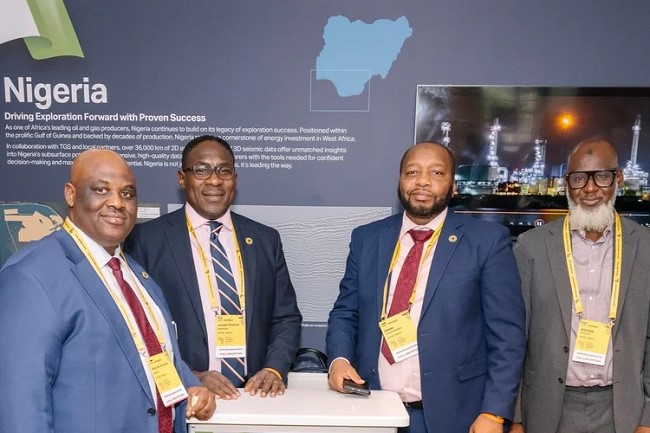
Members of the Nigerian delegate at Africa Energies Summit 2025
“It is merely a tool to make profits,” the group alleged.
For too long, African professionals and organisations such as the AEC have fought to build, defend and advance the continent’s oil and gas industry. They have stood at the frontlines of advocacy for better fiscal terms, enabling policy environments, licensing opportunities and a just energy transition that reflects Africa’s development needs. Yet companies such as Frontier Energy Network showcase how African talent is still not being meaningfully included in the very sector it has worked so hard to sustain.
Local content cannot remain a talking point reserved for conference stages and policy papers. It cannot be used as a promotional tool ahead of a London conference. It must be reflected in hiring, leadership development, supplier opportunities and access across the energy value chain. An Africa-first business model that does not create space for African professionals is one that risks losing credibility in the market it claims to serve.
“We will not accept being ‘Blacked-out’ the oil and gas industry. We want an industry that is welcoming and open, that is inclusive and supportive. People like Daniel Davidson take the opposite approach by refusing to hire black Africans. They take it one step further by even banning people from entering the room,” states NJ Ayuk, Executive Chairman, AEC.
Frontier Energy Network has many models to follow in Africa. Across the continent, companies have demonstrated that African inclusion and operational success are not competing objectives. Independent oil and gas company Africa Fortesa Corporation – led by Rogers Beall – is a strong example of a company that has prioritised African employment, placing African professionals at the forefront of their operations.
As the operator of the Gadiaga onshore gas field in Senegal, the company has served domestic energy demand decades for two decades. But it’s the company’s commitment to hiring African professionals that has truly set it apart in the industry.
“We are inspired everyday by people such as Rogers Beall. When you go to Senegal and see what he has done with Fortesa, you will be amazed. He has achieved this with majority African employees. Even in difficult circumstances such as COVID, the company stood with their employees.
“We are also passionate about companies that stood with Mozambique during difficult times and kept pushing the country’s LNG projects. We are passionate about people that invest in local talent, create policies that support capacity building and ensure African professionals are not just part of, but leading Africa’s energy discussions,” added Ayuk.
These examples reflect the kind of industry Africa needs: open, capable, investment-friendly and rooted in shared prosperity. This is increasingly important as more Black professionals enter the workforce. African students work hard to earn their qualifications. When they graduate with strong credentials, they should be judged on their talent, training and ability to contribute – not denied opportunity because of the color of their skin.
The stakes go beyond recruitment. At a time when the oil and gas sector faces intense scrutiny from anti-fossil fuel campaigners, any perception that the industry excludes Africans or fails to invest in local communities only strengthens the arguments of its critics. If the sector wants to defend its role in Africa’s economic future, it must ensure that its own practices reflect fairness and opportunity.
“When Frontier, Daniel Davidson and Africa Energies Summit engages in these discriminatory behaviors, do you know what that says? It feeds into the same narrative as the Greta Thunberg’s and all those anti-fossil fuel people that go out and say the industry doesn’t care about black people or African communities. Daniel Davidson and Frontier justify that narrative,” adds Ayuk.
The message is clear: Africa’s oil and gas future must be built not only in Africa, but with Africans at its centre. It’s time to boycott Africa Energies Summit.