Home Blog Page 12

How renewable energy auctions can distribute risks more equitably, maximise benefits

Renewable energy has seen remarkable progress over the past decade. In 2024 alone, the world added 15% more capacity than in 2023 – around 582 GW of renewables, which accounts for over 90% of total power expansion globally in 2024.

While many policies and enabling conditions – financing, industrial policy, permitting, to name a few – are responsible for this progress, much can be said about the pivotal role of auctions in the accelerated deployment of renewable energy.

Today, auctions have become the leading procurement method for renewables-based power globally. More than a way to just deploy renewable electricity, auctions determine who carries the risks, who gets paid (in which currency, when and for how long), and what benefits countries can reap beyond the megawatts generated at the lowest price.
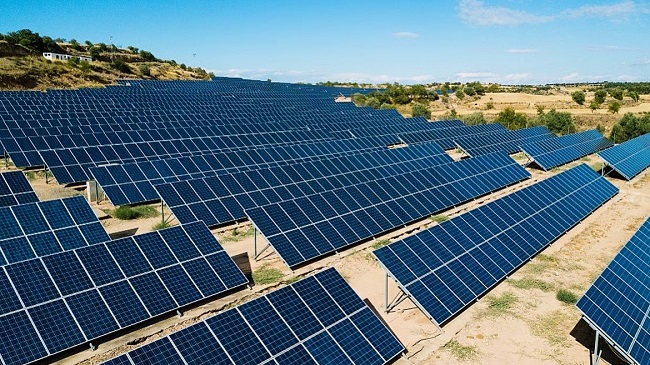
Solar panels
Solar panels

How auction design choices determine who bears the risks

By enabling competition, auctions have helped discover real prices, reduce costs and bridge information gaps between governments and market players. They also drive renewables deployment in countries or areas with high risks; real or perceived.

However, the prevailing auction model used in these contexts – mostly emerging markets and developing economies (EMDEs) – should be looked at more closely. In many EMDEs, auctions have often been implemented using a package of financial instruments that mitigate risks for investors and developers but potentially limit long-term sustainability and local value creation.

This is usually due to the following features applied in the auction model:

  • hard-currency (e.g. USD/EUR) power purchase agreements have helped to attract international lenders and developers, but they can be fiscally burdensome for host country governments in the long run due to risks such as currency depreciation. Host countries shoulder the risks of depleting currency reserves and can plunge deeper into debt.
  • sovereign guarantees formally oblige the host country government to compensate the project investors if certain risks are realised (such as currency inconvertibility). They are (or can be) treated by the International Monetary Fund (IMF) as a liability, leading to raised borrowing costs for the government.
  • award criteria weighted heavily (and in many cases, only) towards lowest price, which can favour foreign ownership and reliance on imported equipment and services, often with limited attention to local value creation.

When such design elements are applied in auctions, private actors are usually protected from the biggest uncertainties (e.g. currency risk), while governments and citizens shoulder most of the risks. For a renewables project to be sustainable and generate benefits to a country or community, auctions must be designed to distribute risks equitably, rather than being simply a procurement tool that attracts private capital.

The question now is: how should auctions be designed to avoid overburdening host country governments while supporting their socio-economic goals? The answer is not a one-size-fits-all solution, but lies in the selection of auction parameters that align with the public interest, national objectives and the country’s macroeconomic conditions.

Each design choice must serve to allocate risks: not only to make the auction succeed at attracting investors and developers to compete towards low prices, but also at assessing the public sector’s costs as well as the fiscal, social and developmental risks. The choice made for each auction design element shown below will have implications not just for auction outcomes, but also for the wider economy.

How auction design can lead to broader socio-economic outcomes

An example in Al Jouf, Saudi Arabia, shows a 2017 solar photovoltaics (PV) auction creating jobs in the region. The auction included a 30% local content requirement for services and equipment. By its completion in 2019, the Sakaka PV project achieved over 30% local content during the construction and development phases, with 90% of the workforce coming from Al Jouf.

A similar result was seen from Morocco’s Noor-Ouarzazate solar complex, where 30%-35% of the project’s components and services were sourced locally. Seventy percent of the project’s workers, which included many women, were locally hired.

Some auctions can also include other requirements which direct project benefits towards the host community, for example in the form of clean electricity, shared revenues, or social services such as school, health care, water and sanitation. In the case of El Salvador’s first solar PV auction (2012-2013), winning bidders were required to allocate 3% of profits to social development programmes in the cities where the projects were located.

The above examples show that in addition to achieving competitive prices, auctions can also be designed to address socio-economic challenges.

But this means shifting auction design from short-term profit objective to a long-term vision; to ensure risks and benefits are shared fairly, outcomes are sustainable, and projects maximise socio-economic benefits. When conditions are in place for countries to build robust legal and regulatory frameworks, sustainable balance sheets, skilled workforces, and resilient local industries, it will be easier to attract market players over time. So, it is in everyone’s interest to see auction design as a long-term strategy.

By Hannah Sofia Guinto, Associate Programme Officer – Policy and Finance, IRENA

IEA to carry out largest ever oil stock release amid market disruptions from Middle East conflict

0

The 32 Member countries of the International Energy Agency (IEA) unanimously agreed on Wednesday, March 11, 2026, to make 400 million barrels of oil from their emergency reserves available to the market to address disruptions in oil markets stemming from the war in the Middle East.

The decision to take emergency collective action was made following an extraordinary meeting of IEA Member governments on Tuesday, convened by the IEA Executive Director to assess market conditions amid the conflict in the Middle East and consider the options to address supply disruptions. 

Oil reserve
Oil reserve

“The oil market challenges we are facing are unprecedented in scale, therefore I am very glad that IEA Member countries have responded with an emergency collective action of unprecedented size,” said IEA Executive Director, Fatih Birol. “Oil markets are global so the response to major disruptions needs to be global too. Energy security is the founding mandate of the IEA, and I am pleased that IEA Members are showing strong solidarity in taking decisive action together.”

The emergency stocks will be made available to the market over a timeframe that is appropriate to the national circumstances of each Member country and will be supplemented by additional emergency measures by some countries.

IEA members hold emergency stockpiles of over 1.2 billion barrels, with a further 600 million barrels of industry stocks held under government obligation. The coordinated stock release is the sixth in the history of the IEA, which was created in 1974. Previous collective actions were taken in 1991, 2005, 2011, and twice in 2022.

The conflict in the Middle East that began on 28 February 2026 has impeded oil flows through the Strait of Hormuz, with export volumes of crude and refined products currently at less than 10% of pre-conflict levels. This is forcing operators across the region to shut in or curtail a substantial amount of production.

An average of 20 million barrels per day of crude oil and oil products transited the Strait of Hormuz in 2025, or around 25% of the world’s seaborne oil trade. Options for oil flows to bypass the Strait of Hormuz are limited.

The IEA Secretariat will provide further details of how this collective action will be implemented in due course. It will also continue to closely monitor global oil and gas markets and to provide recommendations to Member governments, as needed.

Gender equality: Why inclusion is a matter of survival in Southern Africa

0

Across Southern Africa, inequality is felt daily at a household level. The Africa Gender Index (2023) reports that women across Africa have achieved just over 50% gender parity, with the weakest outcomes in economic participation and leadership.

In agriculture, where women make up nearly 50% of the labour force, structural exclusion continues to limit access to land, finance, extension services and markets, directly undermining food security and resilience.

In a region where millions of households depend on agriculture for survival, Gender Equality and Social Inclusion (GESI) is not a “nice to have” as it can mean the difference between equitable access to resources and opportunities. Evidence from the World Bank shows that closing gender gaps in agriculture could significantly reduce hunger and poverty, improving nutrition and resilience across communities.

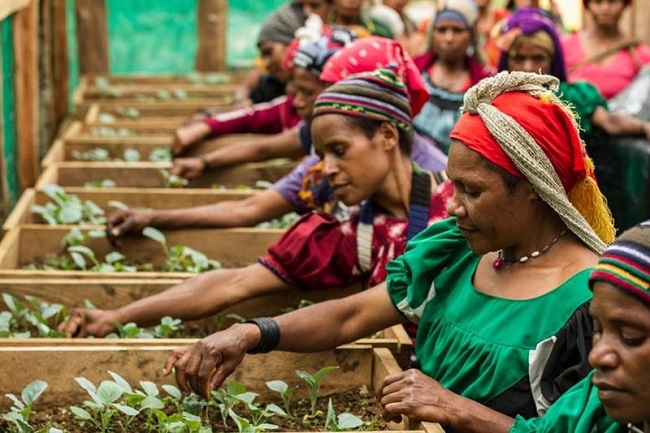
Women
Women

“When exclusion is normalised, hunger becomes generational,” says Humphrey Nxumalo, Head of Programmes at Solidaridad. “GESI dialogues help us confront the real drivers of inequality in farming communities. They raise pertinent issues like who controls land, who makes decisions, and who benefits from markets. If we want resilient food systems, inclusion must be intentional and collective.”

Creating Space for Honest Dialogue and Structural Change

In Southern Africa, Solidaridad’s Gender Equality and Social Inclusion (GESI) Dialogues are designed as safe, structured spaces where farmers, community leaders, implementers and partners critically examine how gender norms and power dynamics shape livelihoods. Using tools such as the Women’s Empowerment in Agriculture Index (WEAI), the dialogues explore access to productive resources, participation in extension services, leadership representation, and household decision-making.

“GESI is about shifting mindsets as much as systems. When women realise that deciding is not disobedience, and that learning comes through mistakes, confidence grows. We see women stepping into leadership, managing income, and investing in their farms. These changes ripple through entire households,” explains Evlizy Neves,  Acting Regional Gender and Youth Lead at Solidaridad.

According to Neves, the stories heard in these dialogues remind regional smallholder farmers that in as much as dependency is learned, autonomy can also be learned. She asserts that once women see themselves as capable decision-makers, productivity and dignity will simultaneously increase.”

When inclusion fails, it is not abstract groups that suffer, it is women-headed households, landless youth, people with disabilities, informal farm workers, and climate-exposed smallholders who pay the price first and most severely. These are the households that eat last, pull children out of school first, migrate under distress, or rely on negative coping strategies when droughts, floods, or price shocks hit. In Southern Africa, exclusion determines who has access to land titles, early warning information, climate-resilient inputs, credit, and markets. Without these, survival itself is compromised. 

Critically, GESI shifts who absorbs risk. Instead of shocks being borne by the most marginalised, inclusive systems distribute resources, information, and power more equitably improving resilience at household and community level. In this sense, GESI is not only about fairness; it is about who survives crises and who does not. When inclusion is intentional and measurable, hunger is reduced, forced migration slows, and dignity becomes a lived reality rather than a distant promise.

Learning from Women on the Ground

During a recent GESI training for a homogeneous group of women farmers in Boane, Mozambique, discussions centred on autonomy, ethical leadership and growth mindset. Many participants across Mozambique as well as several other Southern African countries, shared how decades of dependency limited their progress, until they recognised their right to make decisions about work, time and income.

GESI is not only embedded in Solidaridad’s field programmes, but also within its organisational culture. From gender-responsive labour standards to strengthened workplace policies, Solidaridad continues to align internal practice with external impact in Southern Africa.

“Inclusion starts within the organisation. When we model ethical leadership, respect and accountability internally, we are better positioned to support partners and communities to do the same. GESI strengthens teams, programmes and outcomes. By institutionalising GESI within its HR architecture, Solidaridad ensures that the same principles it advocates in farming communities are reflected in its own corridors. This internal alignment strengthens credibility, deepens trust with partners, and reinforces the organisation’s ability to drive structural change beyond its walls,” says Olivia Tanyanyiwa, Regional Human Resources Manager at Solidaridad.

This commitment is reflected in Solidaridad’s regional work on gender-responsive policies and representation, including efforts to strengthen women’s participation and leadership across agricultural sectors in Southern Africa.

“At the end of the day, the scale of gender inequality demands collective action. No single organisation can dismantle structural exclusion alone. We are calling on governments, civil society, donors and the private sector to partner with us. When we align our efforts, GESI becomes a catalyst for food security, dignity and sustainable livelihoods. That is the future we are working toward,” concludes Nxumalo.

Global Biodiversity Framework: 125 Parties submit 7th National Reports

Some 125 countries – representing nearly two-thirds of the 196 Parties to the Convention on Biological Diversity (CBD) and a large portion of the world’s biodiversity – have submitted their 7th National Reports in time for their integration in the first review of collective progress towards the implementation of the Kunming-Montreal Global Biodiversity Framework (KMGBF), which will take place at COP17 from October 19 to 30, 2026, in Yerevan, the capital of Armenia.

February 28, 2026, was the deadline that the Parties to the Convention set at COP15 for the submission of the 7th National Reports – a primary source of information for the global review. Timely submission was recognised as critical, owing to the limited time available for the preparation of the global report compiling information contained in Parties’ submissions. Owing to a technical issue, reports that need to be uploaded manually will be displayed with some delay in the online system. 

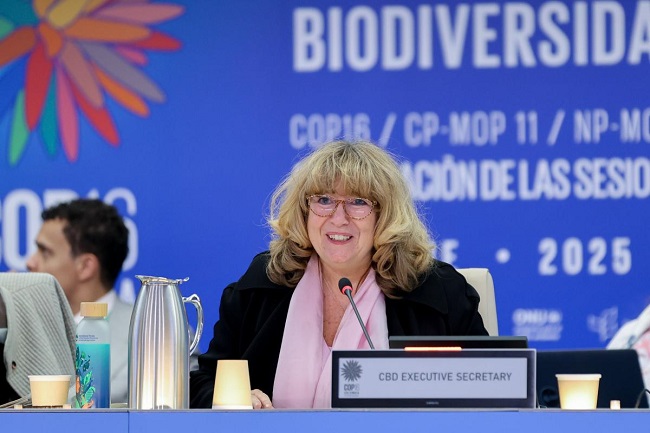
Astrid Schomaker
CBD Executive Secretary, Astrid Schomaker

February 28 was also the deadline for reports to the two Convention Protocols, with nearly three-fourths (129 out of 173) of the Parties to the Cartagena Protocol on Biosafety, and two-thirds (95 out of 142) of the Parties to the Nagoya Protocol on Access and Benefit-Sharing of Genetic Resources, submitting reports.

“The laudable efforts to meet the national reporting deadlines under the CBD and also under its Protocols, demonstrate Parties’ strong commitment to the global endeavor to halt and reverse the world’s biodiversity loss,” said Astrid Schomaker, the Executive Secretary of the CBD.

The periodic submission of national reports is part of the obligations outlined in Article 26 of the CBD. This seventh round integrates quantitative reporting tethered to the Planning, Monitoring, Reporting and Review mechanisms of the KMGBF – the commonly agreed guidelines and yardsticks designed to ensure transparency and responsibility in implementation.

To ensure coherence in the assessment of collective progress at COP17, the preparation of the 7th National Reports followed guidance and a standardised template adopted by the Conference of the Parties. Although they cannot be considered in the global report now being prepared by the Secretariat, all the seventh National Reports submitted will be made publicly available.

The global report will also include information received from actors other than national governments, including indigenous peoples and local communities, cities, businesses, financial institutions and members of civil society, who responded to the Secretariat’s call for submission of commitments reflecting the whole-of-society implementation of the KMGBF.  

“Let us leverage the global review of progress in Yerevan to make COP17 a conference of enhancing and accelerating action for nature and for people,” Ms. Schomaker said.

Navy destroys illegal crude oil storage site in Rivers

0

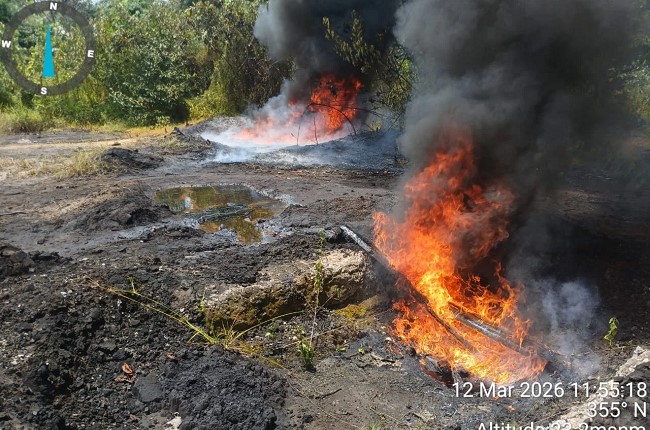
The Nigerian Navy says it has destroyed an illegal crude oil storage site containing about 17,500 litres of suspected stolen crude oil in the Bonny area of Rivers State.

The Director of Naval Information, Capt. Abiodun Folorunsho, disclosed this in a statement on Friday, March 13, 2026, noting that the operation was carried out under Operation Delta Sentinel.

Folorunsho said the action followed directives by the Chief of the Naval Staff, Vice Adm. Idi Abbas, to intensify efforts against crude oil theft and illegal bunkering across the nation’s maritime domain.

Navy
The Nigerian Navy has destroyed an illegal crude oil storage site in the Bonny area of Rivers State

He said personnel of Forward Operating Base (FOB) Bonny uncovered the illegal storage facility within the Opotumbi general area during surveillance operations.

He explained that the discovery was made possible through Navy’s maritime surveillance technology which detected concealed dugout pits hidden under thick vegetation in the creeks.

He added that “FOB Bonny elements moved swiftly to the site and discovered four dugout pits containing a cumulative 17,500 litres of products suspected to be stolen crude oil.

“The recovered products were subsequently destroyed in accordance with extant operational guidelines.”

Folorunsho said the operation demonstrated Navy’s renewed momentum in tackling crude oil theft and other maritime crimes.

He added that the service would continue to sustain patrols, enhance surveillance and strengthen inter-agency collaboration to protect critical national assets and safeguard Nigeria’s economic interests within the maritime environment.

By Sumaila Ogbaje

Lagos warns residents of possible flooding, excess rainfall in 2026

The Ministry of Environment and Water Resources has alerted residents of possible flooding and strong winds as rainy season begins, urging preparedness and compliance with environmental regulations.

The Commissioner for Environment, Mr. Tokunbo Wahab, made this known in a news conference with journalists at the Ministry of the Environment in Lagos.

Wahab also gave the warming on Seasonal Climate Predictions and its socio-economic implications for the state.

Tokunbo Wahab
Lagos State Commissioner for the Environment and Water Resources, Tokunbo Wahab

He said the predictions were based on the forecasts released on Feb. 10, 2026, by the Nigerian Meteorological Agency (NiMet), which indicated expected rainfall patterns, temperature changes, and other weather parameters across the country.

According to him, the state conducts the briefing annually as part of efforts to inform residents and prepare them for the expected impact of the rainy season and related weather events.

The commissioner said the 2026 prediction was based on a projected weak La Nina and a neutral phase of the El Nino Southern Oscillation (ENSO), which could influence rainfall patterns.

A weak La Niña (cold phase) features slightly cooler-than-normal pacific waters, causing minor shifts in rainfall and weaker global impacts, such as reduced Atlantic hurricane activity.

An ENSO-neutral phase is the normal state with no extreme, favouring typical seasonal weather patterns.

Wahab said the forecast indicated an early to normal onset of the rainy season, normal to late cessation, and normal to above-normal rainfall across the state.

He added that temperatures were expected to be above normal between March and May.

“Year 2026 is predicted to start with a weak La Nina in January, while the neutral phase of ENSO is expected to persist within the first six to eight months of the year.

“This suggests an early onset of the rainy season, longer-than-normal duration, and delayed end of the rainy season in Lagos.

“As a result, above normal rainfall amounts are anticipated in the first peak of the rainy season, while normal rainfall amounts are expected in the second peak of the rainy season.

“The rainy season is expected to start as early as the last week of March, while the end of season is expected in the first week of December. Also, the average annual rainfall amount predicted is 1650 and 3030 mm,” he said.

The commissioner said rainfall was expected to begin on March 31 in Ikeja with a cessation date of December 2 and an estimated annual rainfall of 1,932 mm.

He added that Badagry was projected to experience rainfall from March 28 to December 3, with an annual rainfall of about 2,010 mm.

He said Ikorodu was expected to record rainfall from March 31 to December 2 with about 1,935 mm, while Lagos Island was projected to have rainfall from March 30 to December 2 with about 1,968 mm.

He added that Epe was expected to record rainfall from March 29 to December 3, with an annual rainfall of about 1,984 mm.

According to him, the average rainfall expected across the state’s 20 Local Government Areas is about 1,965 mm.

Wahab said Lagos and neighbouring Ogun State were likely to experience above-normal rainfall.

He warned that heavy rainfall could lead to flooding in some parts of the state, while strong winds at the onset and end of the rainy season could pose risks to lives and property.

He noted that thunderstorms and heavy rains might disrupt commercial activities and cause flight delays.

The commissioner said the state government had strengthened its monitoring system through its network of weather and river gauge stations to improve preparedness for weather and flood-related incidents.

He added that the ministry was collaborating with NiMet on seasonal climate predictions to provide early warning tools for farmers, planners, and businesses likely to be affected by rainfall patterns.

Wahab said the state had intensified flood control measures, including year-round drainage maintenance and sustainable solid waste management.

He said the government was also maintaining strong collaboration with the Ogun-Oshun River Basin Development Authority to regulate water release from the Oyan Dam in order to prevent flooding along downstream sections of the Ogun river.

According to him, low-lying communities such as Agiliti, Agboyi, Itowolo, and Ajegunle are closely monitored due to the possibility of flooding from the Ogun river.

Wahab also said the Lagos State Signage and Advertisement Agency had been placed on alert to ensure compliance with safety regulations for billboards and telecommunications masts in view of expected strong winds.

He added that emergency response and traffic management agencies had been placed on high alert to reduce the impact of thunderstorms and heavy rainfall.

The commissioner appealed to residents to desist from indiscriminate dumping of refuse and construction on drainage channels, noting that such practices contribute significantly to flooding.

He urged residents living along flood plains in areas such as Owode, Iwaya, Makoko, Badia, Ijora, Isaalu, Pota, and Shibiri to remain vigilant and be prepared to relocate to safer areas if necessary.

Wahab also urged motorists to observe speed limits during the rainy season to avoid accidents.

He also appealed to residents to regularly clear drains around their homes to ensure the free flow of storm water and support government efforts to prevent flooding across the state.

By Olaitan Idris

Yaoundé 2026: UCLG Africa Central Africa Caucus remobilises to uplift group

0

From March 9 to 10, 2026, the city of Yaoundé in Cameroon hosted the Central Africa regional caucus of the pan-African organisation, United Cities and Local Governments of Africa (UCLG Africa). The meeting was organised by The United Councils and Cities of Cameroon (CVUC/UCCC), under the auspices of the Ministry of Decentralisation and Local Development (MINDDEVEL).

The opening of the proceedings was presided over by Georges Elanga Obam, Minister of Decentralisation and Local Development. Delegates from Chad, Gabon, Congo, Sao Tome and Principe, and Cameroon took part in the discussions, both in person and online.

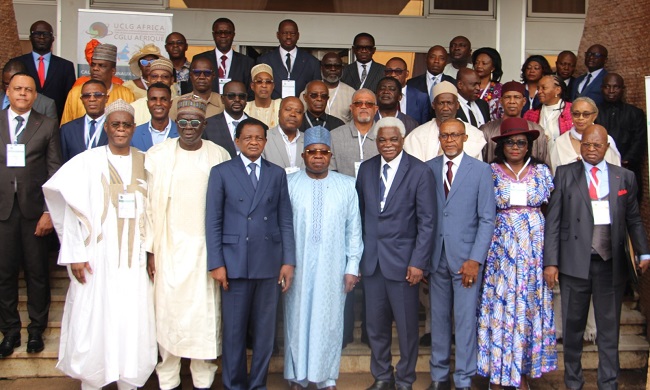
UCLG Africa
Participants at the Central Africa regional caucus of the United Cities and Local Governments of Africa (UCLG Africa).

The Network of Local Elected Women of Africa (REFELA), the Network of Young Elected Local Officials of Africa (YELO), the Forum of African Regions (FORAF) via the Association of Regions of Cameroon, and the Special Fund for Equipment and Inter-municipal Intervention (FEICOM) also made essential contributions to the discussions.

Regional caucuses are strategic platforms for reflection on the positioning of UCLG Africa and its members. These meetings are key stages in the electoral process of UCLG Africa and UCLG World, and aim to: analyse regional issues and Africa’s contribution to global local governance; define a common political position on the implementation of the African Union’s Agenda 2063 and the United Nations’ global agendas; designate candidates from each region to the various governing bodies of the two organisations.

In his opening speech, Mr. Obam, urged the Central Africa caucus to harmonise its positions ahead of the organisation’s next General Assembly.

“The items on the agenda of the UCLG Africa Elective General Assembly, scheduled for 23 to 25 March in Nouakchott, are of the utmost importance. It is therefore imperative that Central Africa harmonise its views on issues relating to: the organisation’s general secretariat; updating the priorities of the 2021-2030 strategic plan; redefining the expectations of local authorities in Central Africa; and strengthening their role as credible interlocutors for States, international institutions and technical and financial partners,” he stated.

The Minister also paid a glowing tribute to Mr. Jean Pierre Elong Mbassi, outgoing Secretary General of UCLG Africa.

“On behalf of the highest authorities of the State, I would like to pay him a profound tribute for his unparalleled commitment to the development of local areas. Mr. ELONG MBASSI, son of Cameroon, you have become the adopted son of the 54 African states, or at least of all African countries that promote local democracy, bottom-up territorial development and citizen participation. You leave a lasting mark on the continent, whose territories and elected officials you know almost entirely.”

The Minister then offered warm congratulations to the incoming Secretary General of UCLG Africa.

“To you, Mr. François Menguele, the next Secretary General, please accept the congratulations of the Cameroonian decentralisation family on your appointment. You have a great mission ahead of you, as you are succeeding a giant, but we know you are capable. You can count on your country to support you,” he said.

In his welcome address, read by his representative, the Mayor of Yaoundé,Mr. Luc Messi Atangana, expressed the honour and privilege of hosting the Central Africa Regional Caucus in Cameroon’s political capital. He emphasised that Yaoundé is now establishing itself as a “major centre for deliberation” on decentralisation, offering a conducive environment for strategic reflection and the sharing of experiences between local authorities.

Proceedings

The proceedings were chaired by Mr. Augustin Tamba, President of CVUC/UCCC, who was appointed by the Mayor of Libreville, Mr. Pierre Mathieu Obame Etoughe, Vice-President of UCLG Africa for the Central Africa region.

Delegates from Central Africa reviewed the situation, challenges and prospects for UCLG Africa. A historical overview highlighted the region’s leading role in the organisation’s origins. It was during the Africities 2003 summit in Yaoundé that the ambition to bring together the continent’s local government associations so that they could speak with one voice was born. After consolidating this unity, UCLG Africa played a decisive role in the drafting of the African Charter on the Values and Principles of Decentralisation, Local Governance and Local Development, which was adopted by the Heads of State of the African Union at their Summit held on 27 June 2014 in Malabo, Equatorial Guinea.

This Charter will become a legal instrument of the AU after ratification by 15 member states. The incoming Secretary General of UCLG Africa has committed to stepping up the advocacy needed to obtain the seven remaining ratifications for the Charter to enter into force as a legal instrument of the AU.

Caucus participants actively advocated for the systemic territorialisation of national, regional and continental public policies. They called for placing local and regional authorities in Central Africa at the heart of the implementation of major international agendas, including the United Nations 2030 Agenda for Sustainable Development Goals (SDGs), the Paris Agreement on climate change and the African Union’s Agenda 2063.

Considering the challenges, issues and prospects facing UCLG Africa, the caucus made recommendations, particularly in the areas of climate resilience, financing and access to basic services.

The caucus proposed, in particular, that UCLG Africa should promote closer ties between local and regional authorities in the region and regional economic communities (CEMAC and ECCAS) so that the latter takes into account the concerns of local and regional authorities in defining and implementing their policies and strategies.

Members expressed strong expectations for intra-regional decentralised cooperation, with a view to creating twinning arrangements, technical partnerships, peer reviews and learning opportunities, and thematic alliances between cities, municipalities and regions in Central Africa. They welcomed the establishment by the Kingdom of Morocco of the African Fund for Support to International Decentralised Cooperation (FACDI) and praised its positive impact on accelerating South-South decentralised cooperation between Moroccan local authorities and their counterparts in other African countries, including those in Central Africa.

The caucus requested that the concept of ‘production commune’ initiated by CVUC/UCCC in Cameroon be developed throughout the region and beyond, with the aim of making local authorities key economic players, contributing to the establishment of the conditions necessary for the creation and development of productive activities based on the potential of the territories, the creation and diversification of value chains for these productive activities, the creation of sustainable jobs, and the reduction of dependence on imports. The caucus emphasised the need to roll out training programmes for urban and local government professions, making more effective use of UCLG Africa’s African Local Government Academy (ALGA).

The Caucus called for the immediate operationalisation of the UCLG Africa Regional Office for the Central Africa Region. In this regard, the Caucus renewed its confidence in the city of Libreville (Gabon) to host this office and requested that the necessary steps in this regard be communicated as soon as possible to the UCLG Africa General Secretariat.

The second day of the caucus was devoted to electoral processes, with the nomination of candidates from Central Africa to the governing bodies of UCLG Africa and UCLG World. The United Councils and Cities of Cameroon (CVUC/UCCC) have been appointed as Vice-Presidents of UCLG Africa for the Central Africa region.

The caucus did not propose any candidates for the positions open at UCLG World level.

In his closing remarks, Mr Augustin Tamba, President of CVUC/UCCC, expressed his satisfaction with the smooth running of the proceedings.

“This caucus provided an opportunity to revitalise the governing bodies of UCLG Africa in order to secure a prominent place for Central Africa within the organisation and the global organisation UCLG World. In a rather turbulent political and economic world, we must position ourselves, and local authorities must take responsibility for acting and acting together,” he said.

Shell resumes production at Bonga, completes turnaround maintenance on FPSO

0

Shell Nigeria Exploration and Production Company Limited (SNEPCo) has completed the turnaround maintenance on the Bonga Floating, Production Storage and Offloading (FPSO) vessel, leading to resumption of production at Nigeria’s premier deepwater field on March 6, 2026. 

According to the organisation, the project was delivered 11 days ahead of schedule and without any safety incident. SNEPCo’s described the development as a reflection of “longstanding commitment to operational excellence and asset integrity”.

Bonga FPSO
Bonga Floating Production Storage and Offloading (FPSO)

“Completing the turnaround safely and ahead of schedule is a testament to the dedication and professionalism of our Nigerian workforce and the helpful support of our partners,” SNEPCo Managing Director, Ronald Adams, said. “The achievement not only secures the long‑term integrity of the Bonga FPSO but also positions us strongly for the successful delivery of the Bonga North project, which will leverage the improved reliability of the FPSO.”

The exercise, which began on February 1, 2026, is said to highlight SNEPCo’s leading role in advancing deep‑water expertise in Nigeria. Of the 55 companies involved in the execution, 43 were wholly Nigerian. Additionally, eight of the 12 international service providers maintain operational bases in Nigeria, contributing to knowledge transfer and increased local investments.

More than 1,000 personnel worked offshore during the turnaround, with over 95% being Nigerians involved in maintenance, engineering, operations, inspection and construction. Thousands more supported activities from onshore locations, reflecting the depth of Nigerian capability in offshore oil and gas operations.

Adams added: “We acknowledge the support of several stakeholders towards the successful execution of the exercise, including the NNPC Upstream Investment Management Services (NUIMS), the Nigerian Upstream Petroleum Regulatory Commission (NUPRC), the Nigerian Content Development and Monitoring Board (NCDMB) and our partners.”

Cross River Assembly passes open defecation prohibition bill, Lagos apprehends five offenders

0

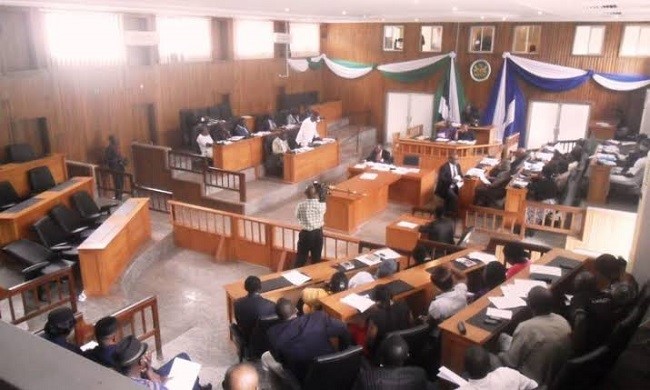
The Cross River State House of Assembly has passed a bill prohibiting open defecation.

The bill aims to outlaw open defecation in public places and encourage the use of proper toilet facilities statewide with a view to improve sanitation and protect public health across the state.

The lawmakers approved the bill after considering a report by the House Committee on Water Resources and Sanitation presented by its Chairman, Kingsley Ntui, representing Etung State Constituency on Thursday, March 12, 2026.

Cross River State House of Assembly

Ntui said that about 47 million Nigerians still practiced open defecation, adding that the practice contributed to water-borne diseases such as cholera, diarrhoea and typhoid.

He commended the state government’s efforts in ending open defecation and urged lawmakers to support sanitation initiatives in their constituencies.

According to him, with support from United Nations International Children’s Emergency Fund (UNICEF) and Self Help Africa, eight Local Government Areas (LGAs) in the state have been declared open defecation-free.

“However, some key challenges to achieving full open defecation-free status include poor sanitation infrastructure, limited access to clean water, poverty and low public awareness.”

Contributing, lawmakers said the bill aligned with national and global initiatives aimed at eliminating open defecation.

They said that the law would improve environmental cleanliness and promote the overall well-being of residents of the state.

On his part, Speaker, of the house, Mr. Elvert Ayambem, commended the committee for its work and expressed satisfaction with the bill’s passage.

Ayambem said the law would help create a cleaner environment and reaffirmed the Assembly’s commitment to people-oriented legislation that would improve resident’s welfare.

The bill is in line with the Federal Government’s Water, Sanitation and Hygiene (WASH) programmes aimed at safe water, sanitation and hygiene services by 2030.

It is also aimed at making communities Open Defecation Free (ODF).

In a related development, the Lagos State Government, through its Anti-Open Defecation Squad, apprehended five individuals on Thursday during an early morning enforcement operation at Ebute Ero and surrounding areas of Lagos Island.

The Commissioner for Environment and Water Resources, Mr. Tokunbo Wahab, confirmed this in a post shared on his X handle: @tokunbo_wahab.

Wahab said that the operation was carried out to curb open defecation and other environmental nuisances, adding that the squad targeted locations identified as hotspots for environmental violations within the area.

“The enforcement team arrested five defaulters during the exercise.

“The suspects were taken to the enforcement office at Sura-Simpson for further investigation,’’ he said.

The commissioner said that the offenders would subsequently be transferred to the headquarters of the Lagos State Environmental Sanitation Corps (LAGESC) in Oshodi for prosecution in accordance with existing environmental laws in the state.

He reiterated the state government’s commitment to maintaining environmental sanitation, and urged residents to comply with sanitation regulations to promote a cleaner and healthier environment.

By Christian Njoku and Deborah Akpede

Lagos launches online system for building permit

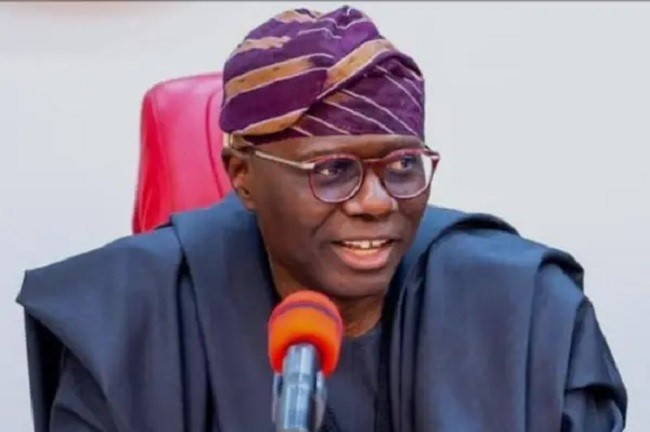
Gov. Babajide Sanwo-Olu of Lagos State has launched an electronic system that will simplify the process of obtaining physical planning permits in the state.

Mr. Kehinde Osinaike, General Manager, Lagos State Physical Planning Permit Authority (LASPPPA), said this in a statement issued by the ministry’s Director, Public Affairs, Mrs. Abimbola Emdin-Umeh, on Thursday, March 12, 2026.

He said the new platform, known as the Electronic Physical Planning Permit Processing System (EPPPS), was introduced by LASPPPA to modernise and speed up the approval of building permits in the state.

Babajide Sanwo-Olu
Gov. Babajide Sanwo-Olu of Lagos State

He said the system would allow residents, property developers and other stakeholders to apply for planning permits and process their applications online from any location.

According to him, the digital platform is expected to make the permit approval process faster and easier, while reducing delays often associated with manual processing.

Osinaike noted that the iniitative was also designed to improve transparency, efficiency and accountability in physical planning administration.

He added that it would ensure building developments comply with approved regulations and planning standards.

The general manager said the platform was a reflection of the administration’s commitment to using technology to improve service delivery.

Osinaike urged residents, developers and investors to take advantage of the system by submitting their planning permit applications through the online platform.

He added that the initiative was part of efforts by the state government to build a smart and digitally driven governance system capable of meeting the needs of the state’s growing population.

By Lydia Chigozie-Ngwakwe