Parties to the Convention on the Conservation of Migratory Species of Wild Animals (CMS) have submitted proposals to add 42 new migratory species to the Convention’s appendices as needing international conservation. Due to its increasing population, one species – the Bukhara deer – is proposed to be removed from the list requiring the highest protection.
An environmental treaty of the United Nations, CMS convenes governments and stakeholders to address the conservation of migratory species and their habitats. The legally binding Convention has two appendices: Appendix I, which is aimed at species that are endangered, and the Appendix II, which is aimed at species that warrant international cooperation.
The proposed amendments to the appendices of CMS will be considered at the upcoming 15th Meeting of the Conference of the Parties (COP15), to be held in Campo Grande, Brazil, from March 23 to 29, 2026.
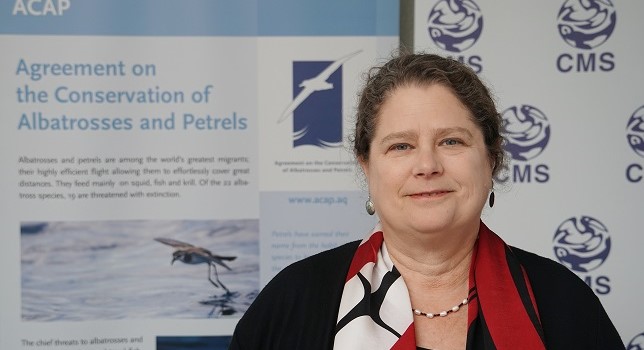
“As the pressures on our planet’s migratory species intensify, international commitment to take effective measures has never been more essential. The proposals to list 42 new species on the CMS appendices, including iconic animals like the snowy owl and the hammerhead shark, reflect the urgent need for coordinated global action. At COP15, governments have an opportunity to strengthen efforts to safeguard these species,” said Amy Fraenkel, CMS Executive Secretary.
From antelopes and whales to bats, birds and sea turtles, migratory species addressed by the Treaty are those species of wild animals that need to travel regularly, often seasonally, as part of their natural life cycles, and which cross at least one national border. They are vital for healthy, well-functioning ecosystems. They provide crucial services like pollination, seed dispersal, carbon storage and pest control, and benefit communities that rely on them as a source of food and income.
Yet many such species are in decline due to pressures including habitat loss and fragmentation, overexploitation, climate change and pollution.
Among the 42 species proposed for listing under the Convention, several illustrate the urgent challenges facing migratory wildlife. The striped hyena (Hyaena hyaena), for example, occupies a broad but increasingly fragmented range across Asia and Africa. With a global population estimated at fewer than 10,000 mature individuals, it is threatened by habitat loss and fragmentation due to agriculture, urbanisation and infrastructure development; diminished prey caused by declines in other large carnivores and shifts in livestock practices; and illegal hunting and trade.
Widespread persecution, often stemming from human-wildlife conflict and negative perceptions, further endangers this vital scavenger, which helps recycle nutrients and prevent disease through carrion consumption.
Similarly, the snowy owl (Bubo scandiacus) has become widely recognised in recent years through popular culture, but its status is increasingly precarious. Over the past three decades, the species has lost a third of its global population; the international conservation organisation BirdLife International recently declared it extinct in Sweden.
As a top predator and an avian icon of the Arctic tundra, the snowy owl is a key indicator of the health of this fragile ecosystem. Climate change and overexploitation are among the primary drivers of its population decline, underscoring the species’ vulnerability despite its iconic status.
Marine species also face grave risks, as seen in the plight of the great hammerhead shark (Sphyrna mokarran). Overexploitation in fisheries, both as a targeted catch and as bycatch, has led to steep population declines, driven by the high market value of its fins and the demand for its meat. This overfishing affects the shark at all life stages in both nearshore and offshore waters. As an apex predator, the loss of the great hammerhead threatens to destabilise the marine food web and compromise the overall health of ocean ecosystems.
The 42 species proposed for listing on CMS appendices:
Terrestrial mammals
- Cheetah (Acinonyx jubatus) – proposal to include the cheetah populations of Zimbabwe on Appendices I and II. Other populations apart those from Botswana and Namibia are already listed on Appendix I. The proposal was submitted by the Government of Zimbabwe.
- Striped hyena (Hyaena hyaena) – proposal to include on Appendices I and II, submitted by the Governments of Tajikistan and Uzbekistan.
Avian species
- Snowy owl (Bubo scandiacus) – proposal to include on Appendix II, submitted by the Government of Norway.
- Gadfly petrels (26 species of the genera Pterodroma and Pseudobulweria) – proposal to include 9 taxa of gadfly petrels on Appendix I and 17 taxa on Appendix II, submitted by the Governments of Australia, Brazil, Chile, Cook Islands, Dominican Republic, Fiji and New Zealand.
- Flesh-footed shearwater (Ardenna carneipes) – proposal to include on Appendix II, submitted by the Governments of Australia, France and New Zealand.
- Hudsonian whimbrel (Numenius phaeopus hudsonicus) – proposal to include on Appendix I, submitted by the Governments of Brazil and Chile.
- Hudsonian godwit (Limosa haemastica) – proposal to include on Appendix I, submitted by the Governments of Brazil and Chile.
- Lesser yellowlegs (Tringa flavipes) – proposal to include on Appendix I, submitted by the Government of Uruguay.
- Iberá seedeater (Sporophila iberaensis) – proposal to include on Appendix II, submitted by the Governments of Argentina and Brazil.
Aquatic species
- Giant otter (Pteronura brasiliensis) – proposal to include on Appendices I and II, submitted by the Government of France.
- Pelagic thresher shark, bigeye thresher shark and common thresher shark (Alopias pelagicus, Alopias superciliosus, Alopias vulpinus) – proposal to include all three thresher shark species on Appendix I while maintaining their status under Appendix II, submitted by the Government of Panama.
- Patagonian narrownose smoothhound (Mustelus schmitti) – proposal to include on Appendix II, submitted by the Government of Brazil.
- Scalloped hammerhead shark (Sphyrna lewini) – proposal to include on Appendix I while maintaining its status under Appendix II, submitted by the Government of Ecuador.
- Great hammerhead shark (Sphyrna mokarran) – proposal to include on Appendix I while maintaining its status under Appendix II, submitted by the Government of Ecuador.
- Angular angelshark (Squatina guggenheim) – proposal to include on Appendix II, submitted by the Government of Brazil.
- Spotted sorubim (Pseudoplatystoma corruscans) – proposal to include on Appendix II, submitted by the Government of Brazil.
Species proposed for removal from CMS Appendix I:
- Bukhara deer (Cervus elaphus yarkandensis) – proposal to remove from Appendix I, submitted by the Government of Uzbekistan.
The proposal to remove this species from Appendix I reflects successful long-term conservation action and the sustained recovery of this subspecies, according to the CMS, adding that the subspecies would remain under Appendix II and national protection, with Range States committed to maintaining and further consolidating these gains.
Many migratory species not yet listed under CMS
The CMS flagship report, State of the World’s Migratory Species, released at CMS COP14 in Uzbekistan, found that 399 globally Threatened and Near Threatened migratory species (mainly birds and fish) are not listed on the CMS appendices and may benefit from being included to receive higher protection or strengthened coordinated conservation measures.
The report also found that while climate change, pollution and invasive species are having profound effects on migratory species, the two greatest threats are overexploitation and habitat loss, which are also the main concerns for most of the proposed species for listing.
It also highlighted that although nearly half of CMS-listed species (44 per cent) are showing population declines, 12 per cent are increasing and another 31 per cent are stable, underscoring the importance of listing species and the value of the conservation work carried out under the Convention.
Scientific Council to advise COP15
The proposed amendments to the appendices were first reviewed and commented on by the Convention’s scientific experts this week from December 15 to 18, 2025, at the 8th Meeting of the Sessional Committee of the CMS Scientific Council (ScC-SC8), prior to their formal consideration at COP15 by CMS Parties.
Concluding on Thursday, December 18, the ScC-SC8 is the last meeting of the Convention’s scientific advisory body before COP15, providing scientific and technical advice on an extensive conservation agenda including items related to illegal and unsustainable taking of species, ecological connectivity, infrastructure and renewable energy impacts on migratory species, and climate change, as well as a wide range of taxa-specific and cross-cutting conservation issues, all of which will be considered by COP15.
Upcoming scientific assessments and reports, including the first interim report of the State of the World’s Migratory Species report and a global assessment of migratory freshwater fish to be officially presented at COP15 next year, were also on the agenda of the experts.
Looking ahead to Campo Grande, gateway to the Pantanal
The 15th Meeting of the Conference of the Parties to CMS (COP15) will be hosted by the Government of Brazil in Campo Grande, in the state of Mato Grosso do Sul, from March 23 to 29, 2026, with associated events taking place in the preceding days.
This UN wildlife conservation meeting will bring together governments, scientists, conservation organizations, Indigenous peoples, local communities and other stakeholders to address the growing pressures on migratory species and their habitats. It is expected to adopt numerous new mandates to strengthen actions for the conservation of migratory species around the world.