Retired employees of Shell Nigeria celebrated a reunion at an annual golf tournament held in their honour by Shell Exploration and Production Company Limited (SNEPCo) at the picturesque Lakowe Golf Course in Lekki, Lagos. A total of 47 former employees teed off at the 4th annual golf tournament and were joined by SNEPCo leadership led by Managing Director, Ronald Adams, and his wife, Pleashette Adams.
The tee-off was jointly performed by Ehis Uzenabor, Managing Director of the Shell Closed Pension Fund, alongside former Shell leaders: Egbert Imomoh, former Deputy Managing Director of SPDC; Jimmy Ahmed, former Business and Government Director; and Simbi Wabote, former Shell Director and immediate past Executive Secretary of the Nigerian Content Development and Monitoring Board (NCDMB).
A group section of the winners with the Vice President Deepwater and Managing Director of SNEPCo, Ronald Adams and Mutiu Sunmonu, former Managing Director of SPDC and Country Chairman of Shell Companies in Nigeria both in the middle
On the course, competitive spirit met seasoned skill. Dr Okuns Ohiosimuan emerged as the Overall Male Winner, playing off a handicap of 35 to return an impressive net score of 63 (-9). In the ladies’ category, Justina Dibua claimed the Overall Female Winner title with a handicap of 31 and a net score of 77 (+5). These awards were presented by Ron.
The Male and Female Runner-up prizes went to Claude Esekody and Kate Iyamu respectively, presented by Mutiu Sunmonu, former Managing Director of SPDC and Country Chair, Shell Companies in Nigeria.
“This event is not just about golf; it’s about celebrating the people who laid the foundation of our success,” Ron said. “Our retirees remain an integral part of the Shell family, and initiatives like this reflect our commitment to wellness, inclusion, and enduring relationships.”
Mutiu Sunmonu described the tournament as “awesome and refreshing,” praising the opportunity for retirees to reconnect. “It was heartwarming to see former colleagues share memories and enjoy healthy competition. The bonds built over decades clearly endure,” he noted.
In his closing remarks, retiree Rowland Ukpedor said: “Even in retirement, the spirit of golf and the friendships it fosters never fade,” and thanked Shell “for creating such a memorable experience and continued support in promoting wellbeing of retirees, sportsmanship and comradeship”.
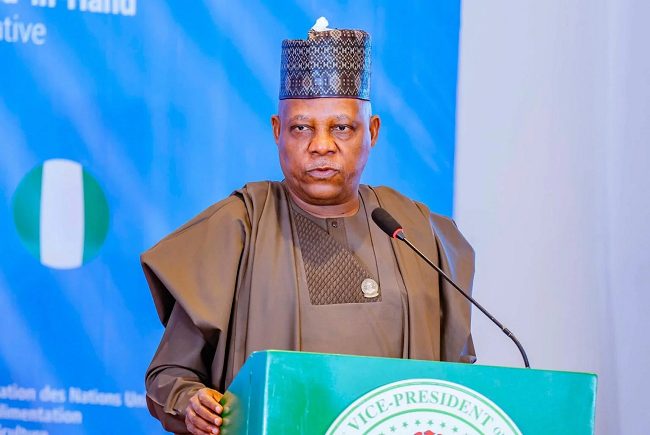
Vice-President Kashim Shettima has charged Niger Delta Power Holding Company (NDPHC) to align with Nigeria’s energy development goals under President Bola Tinubu’s Renewed Hope Agenda.
Shettima, who is the Chairman of the Board of NDPHC, made the call during the company’s 20th anniversary celebration held at the Presidential Villa, Abuja.
He implored the management and members of staff of the power firm to remain operationally reliable in order to play a positive role in the country’s development journey.
Vice-President Kashim Shettima
The Vice-President recalled that the enactment of the Electricity Act 2023 marked a defining turning point for Nigeria’s power sector and for NDPHC.
He said for the first time, the company now operates within a framework that offers clearer legal authority, greater commercial flexibility, and stronger institutional footing to compete, partner, and grow within a more open and dynamic electricity market.
“The Board views this moment as an opportunity for evolution, an opportunity to transition from an intervention-driven institution into a commercially disciplined and performance-focused enterprise.
“The company must also remain faithful to its national mandate,” he added.
The Vice-President assured that the board would remain fully committed to its responsibilities to the company.
“We will continue to provide strategic direction, uphold the highest standards of governance, support management in taking sound and accountable decisions
“We will also protect shareholders’ value on behalf of the Nigerian people, and keep NDPHC aligned with national energy and development goals.
“We recognise that the road ahead will demand discipline, courage, and partnership, and we stand ready for that task,” he added.
Shettima noted that the board has already prioritised extracting greater value from existing power sector assets.
He explained that the energy needs of a nation are not a technical footnote to its history but a fundamental dilemma that shapes the rhythm of its economy, the dignity of its people, and the credibility of its future.
“Power is the difference between promise and paralysis. It is the quiet force that animates industry, lights homes, and anchors hope.
“Any person or institution that steps forward to fill a critical gap in a nation’s search for stability earns a place in its collective memory.
“This is one such day – a day to pause, a day to reflect, and a day to celebrate the enduring promise that this institution represents,” he said.
Earlier, the Minister of Power, Dr Adebayo Adelabu, commended NDPHC for its successes to the sector, particularly in ensuring relative stability and attracting investments over the years.
Adelabu expressed confidence in the company’s ability to deepen partnerships with stakeholders for improved service delivery, noting that it is well positioned to play a greater role in Nigeria’s power sector.
The Minister of State for Petroleum Resources (Gas), Ekperikpe Ekpo, said the leadership of NDPHC has performed commendably.
Ekpo advised the management to continue aligning with President Tinubu’s Renewed Hope Agenda reforms for the progress of the energy sector.
The Federal Government on Thursday, December 18, 2025, in Abuja unveiled the first Polychlorinated Biphenyls (PCBs) treatment centres as part of a national project to eliminate the harmful chemicals and protect public health and the environment.
Malam Balarabe Lawal, the Minister of Environment, said the unveiling of the facility was a clear demonstration of Nigeria’s commitment to environmental sustainability and public health protection, in line with our national development priorities and global obligations.
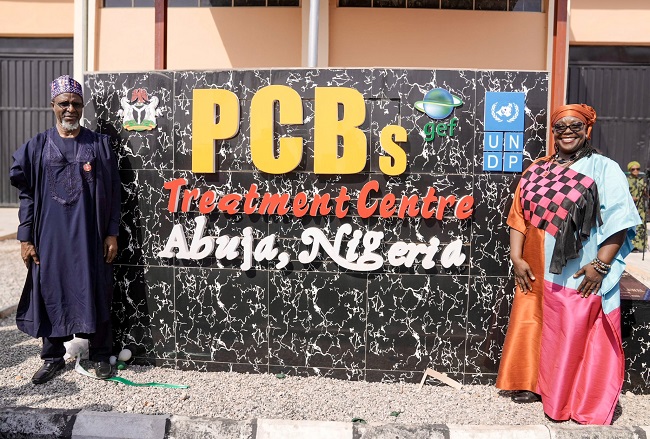
The PCBs Treatment Facility is situated in Sheda Science and Technology Complex (SHESTCO), Abuja.
Malam Balarabe Lawal, Minister of Environment (left) with Mrs Elsie Attafuah, Resident Representative United Nations Development Programme (UNDP), at the opening of the PCBs Treatment Facility, situated in Sheda Science and Technology Complex (SHESTCO), Abuja
It was established under Federal Ministry of Environment in collaboration with the Global Environment Facility (GEF) and the United Nations Development Programme (UNDP), and support from the Environmentally Sound Management and Disposal of PCBs Project in Nigeria.
The minister said the centre would strengthen national capacity for the management and environmentally sound disposal of PCBs and other Persistent Organic Pollutants (POPs).
PCBs are man-made while the POPs, once widely used in electrical equipment (transformers, capacitors) and other products (paints, plastics, carbon paper) for their fire-resistant and cooling properties.
However, it was banned in the 70s due to their toxicity and long-term environmental persistence.
“PCBs are highly hazardous pollutants that poses serious risks to human health, biodiversity, and the entire environment.
“When improperly handled or disposed of, they can cause severe illnesses such as cancer and reproductive disorders, as well as long-term damage to ecosystems.
“They are also a major cause of soil, water, and food contamination, which threatens the well-being of present and future generations.
“Nigeria is a committed Party to the Stockholm Convention on POPs; we are therefore obligated to eliminate and manage PCBs in an environmentally friendly manner.
“This treatment facility is a direct demonstration of our dedication to meeting these obligations and building lasting institutional capacity,” the minister said.
Lawal said that the facility was more than a technical installation; it represents a major advancement in Nigeria’s capacity to manage hazardous materials domestically.
He added that, by enabling the decontamination and environmentally sound treatment of PCBs, it will prevent further contamination of our environment and food systems, thereby reducing health risks to workers and surrounding communities.
“This facility is a direct pathway to generating more green jobs, driving Nigeria’s broader transition towards a circular economy, enhancing resource efficiency, and promoting sustainable development for the benefit of all,” the minister explained.
Mrs. Elsie Attafuah, the Resident Representative United Nations Development Programme, said that the facility is Nigeria’s first and West Africa’s first ever PCBs treatment facility.
“PCBs project is a powerful demonstration of Nigeria’s leadership and commitment to environmental sustainability, public health protection, and global compliance under the Stockholm Convention.
“Today’s commissioning is more than an environmental achievement. It is a strategic investment in Nigeria’s future.
The State of the Art Facility positions Nigeria as a regional leader in hazardous waste management, while opening new opportunities for job creation .
“I can only say that by investing in this facility, Nigeria is protecting its people and environment while safeguarding the productivity of its workforce and reducing future public health burdens,” Attafuah said.
Dr Osu Inya Otu, the National Programme Officer for the United Nations Industrial Development Organisation (UNIDO) in Nigeria, stated that PCBs cause health risks, such as liver damage, immune systems, chronic conditions and other problems.
“We are all aware that PCBs are a group of toxic, man-made organic chemicals used for their stability and electrical insulation properties in conformance to our particular potential needs.
“We have been working in Nigeria with private sector, various partners and stakeholders, state and federal government. Currently UNIDO signed its programme for country partnership from 2024 to 2028 with the federal government of Nigeria,” he said.
Dr Abayomi Orishadipe, Acting Director General, SHESTCO, said that the facility would make Nigeria’s environment safe.
“We have a lot of capability for proper maintenance of the facility, so we are ready to continue to collaborate with the project, with this, we know that definitely we’re going to mitigate the effect of harmful practices on our society,” he assured.
Prof. Muhammad Pate, the Minister of Health and Social Welfare, said the PCBs are well known for their toxic, parasitic and viral accumulating properties which documented links to cancer, endocrine disruption, neurodevelopmental disorders and other adverse health outcomes.
Pate was represented by Mrs Adeola Olufowobi Director Food, Chemical, Cosmetics and Water Safety Division (Food & Drugs Services Department) in the Ministry.
He said that the facility marked a significant milestone in Nigeria’s commitment to sound chemical and waste management, environmental protection and public health security.
“The establishment of these PCBs treatment activities demonstrate our collective resource to eliminate persistent organic pollutants and to reduce health and environmental risks associated with astronauts’ aircraft.
“Their improper handling or disposal poses serious risk not only to the ecosystems but also to inherent health, particularly among vulnerable populations such as children, pregnant women and frontline workers,” Pate stated.
Mrs Bahijjahtu Abubakar, the Director, Department of Pollution and Control in the Ministry of Environment assured that the ministry would replicate the facility in the six geo-political zones of the country because the present facility cannot take care of unused oils and the transformers in the country.
Mrs Agnes Aneke. Operational Focal Point (GEF) said that climate change is real and that whether we like it or not we must manage the situation, however expressed satisfaction with the facility saying it will restore Nigeria’s ecosystem.
Etsu Kwali, Luka Ayedo Nizassan III, expressed satisfaction with the project and assured the maintenance and sustenance of the facility in the area.
The Independent Petroleum Marketers Association of Nigeria (IPMAN) has called on all its members nationwide to patronise the Dangote Refinery in their purchase of PMS products, noting that the refinery already offers the best affordable price for all marketers, even as free delivery commences in January 2026.
The association also expressed delight over a recent agreement by the Dangote Petroleum Refinery to begin the supply of Premium Motor Spirit (PMS) – also known as petroleum – products directly to registered IPMAN members, in a statement signed and issued by the IPMAN National President, Alhaji Abubakar Maigandi Shettima.
IPMAN National President, Alhaji Abubakar Maigandi Shettima
At a press conference held in Abuja on Wednesday, December 17, 2025, on recent happenings in the oil & gas sector, IPMAN also applauded the support of the Chairman of Dangote Petroleum Refinery, Aliko Dangote, towards the Federal Government, which it noted has become evident in the regular reduction of the petroleum pump price.
According to Shettima, “the association has the highest percentage of the supply chain of the PMS downstream sector, controlling over 80% of the PMS retail market. We therefore declare that there will be no gap or scarcity in PMS supply to Nigerians.
“We are also excited at the recent agreement by the Dangote Refinery to begin the supply of PMS products directly to registered IPMAN members, and its free delivery to our filling stations anywhere and everywhere in Nigeria which will commence in January 2026.
“This will again, certainly lead to further decrease in the pump price of the products at our filing stations. Therefore, I am calling on all IPMAN members nationwide to prioritise patronising the Dangote Refinery in their purchase of PMS products, as they already offer the best affordable prize for all marketers today”, the statement added.
The IPMAN boss noted that “At IPMAN we have no doubt as to the viability of the oil and gas policies being initiated by the Federal Government, and we have ceaselessly called and sought for enhanced cooperation across all levels of governance in the oil and gas sector. Hence our repeated persuasion to always partner the Dangote refinery, to ensure the steady availability of PMS products.
“The focus of the Dangote & IPMAN partnership, has always been geared towards making life better for Nigerians. And of course, this blooming partnership would never have been possible without the pragmatic leadership of President Bola Ahmed Tinubu, and his sound judgment in readjusting the leadership of the NMDPRA and the NUPRC.
Our position has always been to deepen domestic refining in order to eradicate imports of petroleum products. Continuous import is NOT an acceptable parallel business model, because issuing import licenses recklessly distorts market dynamics, drains foreign exchange, enthrones poverty, destroys jobs, and scares potential investors away,” Shettima added.
The association congratulated the new heads of the oil & gas regulatory bodies and reminded them of the long outstanding bridging claims owed its members totalling over N190 billion. “We specifically call on the NMPDRA new leadership to immediately make this debt a cause for serious concern as he assumes his new position”, the statement added.
In 2025, transparency under the Paris Agreement became firmly embedded in climate action across Parties and non-Party stakeholders.
The year marked the completion of the first Enhanced Transparency Framework (ETF) cycle for an initial set of Parties, including the submission of their first Biennial Transparency Reports (BTRs), followed by Technical Expert Reviews (TERs) and the Facilitative Multilateral Consideration of Progress (FMCP).
Together, these milestones confirm transparency as a core driver of implementation, grounding climate action in clear and credible climate data.
Transparency under the Paris Agreement. Photo credit: Zô Guimarães / UN Climate Change
Political momentum and global milestones
At the Global Transparency Forum, hosted in September by the Government of the Republic of Korea, countries underscored the growing recognition of transparency as a vital enabling tool, beyond its technical and reporting dimensions.
That message was reinforced at the COP30 High-Level Ministerial Dialogue on Transparency, convened with the COP29 and COP30 Presidencies, where Ministers and Heads of Delegation highlighted transparency as the foundation of trust and effective multilateralism.
A major milestone in 2025 was the release of the first BTR Synthesis Report, which shows that Parties having submitted their first BTRs have taken tangible steps to meet their climate commitments – from establishing new legal and institutional systems to track emissions and adapt to climate impacts, to mobilising finance for resilience and clean energy transitions. These measures are strengthening countries’ capacity to design and implement more ambitious climate plans.
“More nations now have climate plans covering their entire economies, linked to long-term net-zero goals, and integrating adaptation, gender equality, and just transitions. This is how climate cooperation works: progress measured, transparency strengthened, impact deepened,” said UN Climate Change Executive-Secretary, Simon Stiell, at COP30.
This year countries also agreed to continue the term of the Consultative Group of Experts (CGE) indefinitely as a constituted body. The CGE remains the main channel for technical assistance and support to developing countries in meeting their reporting requirements, including preparing national communications, BTRs, and engaging in TERs – reinforcing long-term support for transparency implementation.
Moreover, at COP30, UN Climate Change and China’s Ministry of Ecology and Environment signed a Letter of Intent to strengthen collaboration with developing countries to support implementation of the Convention and the Paris Agreement, with a focus on transparency through capacity-building and South-South cooperation.
Learning and improvement
The submission of 120 BTRs over the last year represents a major milestone in implementing the Paris Agreement’s ETF. But transparency does not end with submissions.
The completion of the first ETF cycle marks the start of an ongoing process of review, learning, and continuous improvement. As highlighted in the first TER Annual Report, Parties and technical experts have identified both successes and challenges, offering clear insights into where additional support and improvements are needed.
Expanding transparency beyond governments
At COP30, UN Climate Change officially launched the Climate Data Hub, developed in partnership with Microsoft, EY and NEDAMCO Africa. This platform brings together information submitted by Parties under the Convention in one accessible space – providing all users with a reliable source of information, and making climate data easier to find, use and understand.
The Non-State Actor Zone for Climate Action (NAZCA) portal is also entering a new phase. During a high-level session at COP30 in Belém, UN Climate Change presented the NAZCA Redevelopment and Engagement Roadmap, outlining plans for a modern, data-driven platform that strengthens the role of the UNFCCC secretariat as the custodian of credible climate action data from non-Party stakeholders. The redeveloped NAZCA will consolidate information on mitigation, adaptation, resilience, and means of implementation.
Throughout 2025, the UN Climate Change #Together4Transparency initiative strengthened partnerships with non-Party stakeholders. A collaboration with CDP resulted in the report Data as the Catalyst, highlighting how corporate and subnational data can track progress on national climate plans (NDCs) and unlock climate finance.
In addition, a joint case study, Unlocking Climate Finance through Transparency, was developed with the Centre for Clean Air Policy, featuring Panama’s National Climate Transparency Platform and showcasing how transparency can serve as a strategic tool to mobilize public and private finance.
As implementation continues, transparency remains central to strengthening ambition, guiding support, and delivering climate action under the Paris Agreement.
The World Health Organisation (WHO) has validated Brazil for the elimination of mother-to-child transmission (EMTCT) of HIV, making it the most populous country in the Americas to achieve this historic milestone.
This accomplishment, according to the UN body, reflects Brazil’s long-standing commitment to universal and free access to health services through its Unified Health System (SUS), anchored in a strong primary health-care system and respect for human rights.
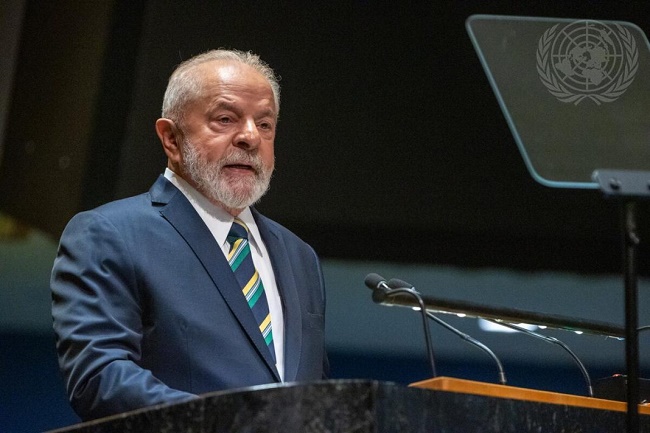
Lula da Silva, President of Brazil
“Eliminating mother-to-child transmission of HIV is a major public health achievement for any country, especially for a country as large and complex as Brazil,” said Dr Tedros Adhanom Ghebreyesus, WHO Director-General. “Brazil has shown that with sustained political commitment and equitable access to quality health services, every country can ensure that every child is born free of HIV and every mother receives the care she deserves.”
The milestone was marked during a ceremony in Brasília, attended by President Luiz Inácio Lula da Silva, Brazil’s Minister of HealthAlexandre Padilha, and the Director of the Pan American Health Organisation (PAHO) Dr Jarbas Barbosa, along with representatives from UNAIDS.
Meeting validation criteria
Brazil met all the criteria for EMTCT validation, including reducing vertical transmission of HIV to below 2% and achieving over 95% coverage for prenatal care, routine HIV testing, and timely treatment for pregnant women living with HIV. In addition to meeting the targets of the validation, Brazil demonstrated the delivery of quality services for mothers and their infants, robust data and laboratory systems, and a strong commitment to human rights, gender equality and community engagement.
The country implemented a progressive, subnational approach by first certifying states and municipalities with over 100,000 inhabitants, adapting the PAHO/WHO validation methodology to its national context while maintaining coherence across the country.
The evaluation, supported by PAHO, was conducted by independent experts who reviewed data, documentation, and health facility operations. Findings were then assessed by WHO’s Global Validation Advisory Committee, which formally recommended Brazil’s validation for elimination.
“This achievement shows that eliminating vertical transmission of HIV is possible when pregnant women know their HIV status, receive timely treatment, and have access to maternal health services and safe delivery,” said Dr Jarbas Barbosa, Director of PAHO. “It is also the result of the tireless dedication of thousands of health professionals, community health workers, and civil society organisations. Every day, they sustain the continuity of care, identify obstacles, and work to overcome them, ensuring that even the most vulnerable populations can access essential health services.”
Part of a broader initiative
Over the past decade (2015-2024), more than 50,000 pediatric HIV infections have been averted in the Region of the Americas as a result of the implementation of the initiative to eliminate mother-to-child transmission of HIV.
Brazil’s success is part of the broader EMTCT Plus Initiative, which seeks to eliminate mother-to-child transmission of HIV, syphilis, hepatitis B, and congenital Chagas, in collaboration with UNICEF and UNAIDS. It is embedded within PAHO’s Elimination Initiative, a regional effort to eliminate more than 30 communicable diseases and related conditions in the Americas by 2030.
“I am delighted that Brazil has just been certified by WHO/PAHO for eliminating vertical transmission – the first country of more than 100 million people to do so,” said Winnie Byanyima, UNAIDS Executive Director. “And they did it by doing what we know works –prioritising universal health care, tackling the social determinants that drive the epidemic, protecting human rights, and even – when necessary – breaking monopolies to secure access to medicines.”
Global context
Brazil is one of 19 countries and territories worldwide that have been validated by WHO for EMTCT. Twelve of these are in the Region of the Americas. In 2015, Cuba became the first country in the world to be validated for EMTCT of HIV and the elimination of congenital syphilis.
Other countries in the Region include Anguilla, Antigua and Barbuda, Bermuda, Cayman Islands, Montserrat, and Saint Kitts and Nevis in 2017; Dominica in 2020; Belize in 2023; and Jamaica and Saint Vincent and the Grenadines in 2024.
Outside the Americas, countries validated for EMTCT of HIV include Armenia, Belarus, Malaysia, Maldives, Oman, Sri Lanka, and Thailand.
The Nigeria Extractive Industries Transparency Initiative (NEITI) has reaffirmed the country’s commitment to achieving improved performance in its 2026 validation under the global Extractive Industries Transparency Initiative (EITI).
NEITI gave the assurance on Wednesday, December 17, 2025, in Abuja at the opening of its Advocacy Dialogue for Stakeholders on Nigeria’s 2026 EITI Validation, organised with support of the Rule of Law and Anti-Corruption (RoLAC) programme.
EITI Validation is the quality assurance process, an impartial assessment to check if a country’s implementation of the EITI Standard on improved governance and transparency in oil, gas, and mining is effective, driving learning and accountability.
Sen. George Akume, Secretary to the Government of the Federation and Chairman, NEITI National Stakeholders Working Group (NSWG)
Speaking at the event, Sen. George Akume, Secretary to the Government of the Federation and Chairman, NEITI National Stakeholders Working Group (NSWG), said the dialogue was paramount as Nigeria grappled with complex economic reforms.
Akume, represented by Mr. Dele Ayanleke, National President, Miners Association of Nigeria, said the dialogue was coming at a critical moment as Nigeria was navigating fiscal pressures and rising public expectations for accountability in the management of natural resources.
“The extractive sector remains central to Nigeria’s economic stability, revenue mobilisation and long-term development aspirations.
“Yet governance gaps, inefficiencies and transparency deficits have historically limited its full potential,” Akume said.
He said that findings and recommendations from NEITI reports had become important tools driving ongoing reforms in Nigeria’s oil, gas and mining sectors.
He said that the 2023 EITI Standard required countries to go beyond disclosure and use transparency to deliver real reforms and tangible benefits to citizens.
“For Nigeria, this means moving beyound compliance and deploying EITI as a reform instrument to support domestic revenue mobilisation, prudent fiscal management and inclusive governance,” he said.
He also acknowledged the support of development partners, particularly the European Union-International Institute for Democracy and Electoral Assistance (EU-IDEA) Programme and the EITI International Secretariat, for their continued collaboration in deepening transparency reforms.
In his remarks, Musa Sarkin-Adar, Executive Secretary, NEITI, said Nigeria was determined to improve on its 2023 EITI Validation score of 72 out of 100 points.
Sarkin-Adar, represented by Dieter Bassi, Director, Policy, Planning and Strategy, NEITI, said that the EITI had evolved into an outcome-driven credibility test focused on demonstrable reforms and measurable impact on governance.
“The EITI is no longer a narrow checklist. It now demands meaningful stakeholder engagement and tangible reforms that strengthen national governance.
“Nigeria’s next assessment would be conducted using the EITI 2023 Standard, which places strong emphasis on the independent and effective participation of civil society organisations, the media and sub-national actors.
“Nigeria’s 2023 Validation identified gaps requiring urgent action, including strengthening multi-stakeholder engagement, providing structured and safe spaces for civil society participation, improving access to extractive sector data and clearly demonstrating how EITI implementation drives policy and sector reforms.
“NEITI had initiated corrective actions, EITI implementation remained a shared responsibility among government, companies and civil society,” the executive secretary said.
He outlined the dialogue’s objectives to include reviewing progress on corrective actions, identifying outstanding gaps, developing an implementable framework to address challenges and strengthening the role of non-state and sub-national actors in extractive sector governance.
The highlight of the event was the unveiling of the NEITI’s latest Policy Brief titled “Beyond Assent: Pathways for Implementing Nigeria’s New Tax and Revenue Framework” by the NEITI Executive Secretary.
The policy brief aimed at bridging the gap between the passage of tax laws and effective implementation.
The Federal Government of Nigeria has renewed its commitment to confront the interconnected challenges of climate change, biodiversity loss and pollution.
The federal government made the commitment at the closing of the 18th National Council on Environment (NCE) meeting, hosted by the Federal Ministry of Environment in Katsina State.
The three-day meeting, which held at the Katsina State Secretariat, brought together commissioners, environmental experts, policymakers, and development partners from across the country.
Minister of Environment, Malam Balarabe Lawal
With the theme “Tackling the Triple Planetary Crises of Climate Change, Biodiversity Loss, and Pollution for Sustainable Development in Nigeria,” the council meeting served as a high-level platform for discussions on strengthening environmental governance and promoting sustainable development nationwide.
Speaking, Malam Balarabe Lawal, Minister of Environment, described the theme as timely and imperative.
“This is collectively known as the triple planetary crisis recognised as critical to Nigeria’s sustainable development, economic resilience, and environmental security.
Lawal warned that rising temperatures, desertification, flooding, pollution, and ecosystem degradation are already undermining livelihoods across the country, stressing that the crises are deeply interlinked and require an integrated, science-driven, and multi-sectoral response.
The minister commended Katsina State for its exemplary leadership in climate governance, noting its second place ranking in the 2025 Subnational Climate Governance Performance Ranking.
He highlighted the state’s Green Economy Roadmap, which prioritises renewable energy, dryland agriculture, eco-tourism, waste-to-energy solutions, and climate-smart development, alongside plans to establish a Green Investment Fund and implement a 2025 to 2030 Climate Action Plan.
He urged other states to replicate Katsina’s approach in transforming challenges such as desertification and soil degradation into opportunities for economic growth and job creation.
Lawal cited ongoing national initiatives including the Nigeria Energy Transition Plan, the Great Green Wall Programme, the National Policy on Plastic Waste Management, and renewable energy and clean cooking policies.
He also called for innovative financing mechanisms such as public-private partnerships, green bonds, climate funds, and carbon markets,
The minister urged stronger private-sector engagement, identifying corporate actors such as the Dangote Group and Nigeria Bottling Company as potential partners in environmental restoration and sustainability efforts.
Earlier, Gov. Dikko Radda, reaffirmed the state’s strong commitment to environmental sustainability.
Radda, who was represented by Malam Faruk Jobe, the Deputy Governor, highlighted the government’s early approval of funding and sustained support that ensured the successful hosting of the Council.
He described the NCE as a vital platform for policy harmonisation, collaboration, and coordinated action in addressing Nigeria’s pressing environmental challenges.
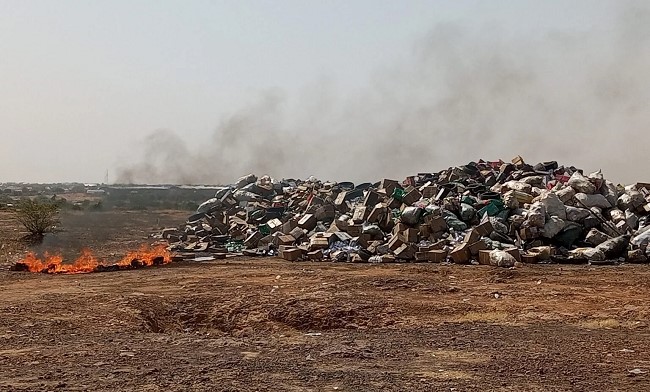
The National Agency for Food and Drug Administration and Control (NAFDAC) on Thursday, December 18, 2025, destroyed 618 tonnes of fake, counterfeit, substandard, expired and unwholesome regulated products worth over N10.19 billion in Kano.
The Director-General of NAFDAC, Prof. Mojisola Adeyeye, made this known during the burning exercise in Kano.
She said the exercise marked a major milestone in Nigeria’s commitment to safeguarding public health.
The destruction of substandard products in Kano
Adeyeye, who was represented by the NAFDAC Director, North-West Zone, Mr. Fraden Nantim-Mullah, said the destruction was not merely an enforcement action, but a clear statement that the era of impunity for those endangering lives through fake and dangerous products is ending.
She explained that NAFDAC, established under Act Cap N1, Laws of the Federation of Nigeria 2004, was empowered to regulate and control foods, drugs, cosmetics, medical devices, chemicals and related products to ensure their safety, quality and efficacy.
“Our mandate is unequivocal: to ensure that every regulated product available to Nigerians meets stringent standards of safety and quality.
“Today’s exercise demonstrates our unwavering commitment to executing this mandate without compromise,” Adeyeye said.
The NAFDAC boss warned manufacturers, importers, distributors and retailers involved in the production and sale of counterfeit and substandard products that the agency’s surveillance and enforcement mechanisms were robust and that offenders would face legal consequences.
According to her, the products destroyed were seized from unscrupulous operators across the pharmaceutical, food, cosmetic and chemical sectors.
She listed the destroyed items to include counterfeit medicines such as antibiotics, anti-malarials, antihypertensives, analgesics, herbal remedies and controlled psychoactive substances.
Other items included adulterated vegetable oils, contaminated beverages, unsafe sachet water, substandard condiments and falsified tomato paste, as well as hazardous cosmetic products containing dangerous chemical compounds.
Adeyeye said fake agrochemicals, including insecticides and pesticides that threatened food security, and counterfeit medical devices such as diagnostic kits and compromised infusion equipment were also destroyed.
“Each of these categories represents a deliberate assault on public health. Those involved are not just breaking regulations; they are endangering lives and undermining Nigeria’s health security,” she said.
Adeyeye also highlighted Nigeria’s recent attainment of the World Health Organisation (WHO) Maturity Level 3 status, describing it as evidence of a stable and well-functioning regulatory system.
She said the agency was working towards achieving WHO Maturity Level 4 status, which would position NAFDAC as a world-class regulatory authority, with the support of President Bola Tinubu’s administration.
On the economic benefits of quality assurance, Adeyeye said removing substandard and falsified products from circulation would reduce healthcare costs, improve productivity and enhance national economic growth.
She acknowledged the support of stakeholders, including compliant pharmaceutical companies that surrendered expired products and the Nigeria Customs Service, Kano/Jigawa Command.
She listed other critical stakeholders as the Nigeria Police Force, the Kano State Government, the Pharmaceutical Society of Nigeria (PSN), the National Association of Proprietary and Patent Medicine Dealers (NAPPMED), NGOs and trade unions.
Adeyeye reiterated the agency’s zero-tolerance policy towards regulatory violations.
“The citizens must exercise vigilance, refuse to purchase medicines from unlicensed hawkers and street vendors; report suspicious products through NAFDAC’s reporting mechanisms,” she warned.
Gov. Abba Yusuf of Kano State, represented by the Director of Pharmaceutical Services, State Ministry of Health, Mr. Kamilu Yakasai, commended NAFDAC for the exercise.
He said the destruction of seized and expired products was necessary to prevent them from re-entering society and causing harm to unsuspecting citizens and assured that the Kano State Government would continue to support such initiatives.
He reaffirmed the commitment of the state government to collaborating with NAFDAC to protect public health and improve healthcare delivery.
Representatives of the Nigeria Customs Service, Nigeria Police Force, National Drug Law Enforcement Agency (NDLEA), Department of State Services (DSS) and other stakeholders were present at the destruction exercise.
Similarly, the Lagos State of NAFDAC on Thursday began the destruction of unwholesome, banned, expired, fake and substandard products worth N55.4 billion in Ibadan.
The exercise took place at the Moniya dumpsite in Ibadan, the Oyo State capital.
Speaking during the exercise, the Director-General of NAFDAC, Prof. Christiana Adeyeye, said the products destroyed included damaged and expired items.
She added that the items were voluntarily handed over to the agency by no fewer than seventy compliant companies, non-governmental organisations (NGOs) and trade unions.
Adeyeye was represented by Mrs Florence Uba, the agency’s Deputy Director, Pharmaceutical Division, Investigation and Enforcement, Apapa, Lagos.
According to her, the estimated street value of the products destroyed is N55,436,844,470 (Fifty-five billion, four hundred thirty-six million, eight hundred forty-four thousand, four hundred seventy naira only).
She said the exercise aimed to prevent dangerous products from re-entering the market and causing public harm.
“The products destroyed included substandard and falsified medical products, unwholesome processed food products and food additives, unsafe cosmetics, and other expired items,” she added.
She stated that the agency seized the products from manufacturers, importers, and distributors.
“NAFDAC has been charged with the responsibility of safeguarding the health of the nation, and as such, it is committed to achieving its mandate,” she said.
Adeyeye urged community leaders, health professionals, religious figures, and journalists to educate the public on the dangers of patronising unlicensed drug sellers and unregistered pharmaceutical outlets.
NAFDAC also called for public participation in the fight against substandard products and urged Nigerians to report suspicious drug activities to help protect lives and strengthen the nation’s regulatory system.
She expressed gratitude to the Nigeria Customs Service (NCS), the Police, the Army, the Department of State Security Service (DSS), the Pharmacists Council of Nigeria, and other stakeholders for supporting NAFDAC’s mission.
“Together, we can protect the health and safety of all Nigerians,” she said.
Greenpeace Africa, together with Magamba Network and partners in the Kick Polluters Out Network, have launched a new satirical video exposing TotalEnergies’ sponsorship of the Africa Cup of Nations (AFCON) as a deliberate attempt to greenwash its controversial environmental and human rights record across the continent.
A second satirical video produced by Journal Rappe, members of the Kick Polluters Out network, will be released on Friday, December 19, 2025, extending the campaign’s reach across Francophone Africa and reinforcing the call to end TotalEnergies’ greenwashing of African football.
TotalEnergies
These videos challenge TotalEnergies’ efforts to associate itself with African pride, culture, and football, while the company continues to expand fossil fuel projects that drive climate breakdown, displace communities, and undermine human rights from Mozambique to Tanzania, including through the controversial East African Crude Oil Pipeline (EACOP).
The English version features BAFTA-award-winning UK comedian, Jolyon Rubinstein, alongside Zimbabwean comedian, Munashe Chirisa. The film delivers a sharp and accessible critique of what campaigners describe as TotalEnergies’ neo-colonial business model, using humour to expose the gap between the company’s public image and the real impacts of its operations on African communities.
“It’s a disgrace that at a time where 99% of climate scientists could not be clearer that Africa is tipping into a climate catastrophe, a neo-colonial fossil fuel giant can greenwash their image through one of the world’s most beloved football tournaments. Let’s work together to show TotalEnergies the red card,” said Jolyon Rubinstein, one of the actors/creatives who worked on the AFCON video.”
Football should unite, not greenwash pollution
TotalEnergies’ continued sponsorship of AFCON comes as the company faces growing scrutiny over fossil fuel expansion, land grabs, and displacement of communities, as well as legal and regulatory actions linked to misleading climate claims and environmental harm. From mass displacement linked to oil and gas projects to accusations of deceptive greenwashing, critics argue that the company’s branding strategy seeks to distract from mounting evidence of harm.
“TotalEnergies isn’t sponsoring AFCON to support African football; they’re using the beauty of the game to hide the ugliness of their pollution,” said Trust, campaigner with Kick Polluters Out. “They only care about their image and profits. Greenwashing is their favourite tactic, and this pretend shift into renewables is just another PR stunt. AFCON is simply another chance for them to distract Africa from the destruction they cause across our continent.”
Greenpeace Africa, Magamba Network and the Kick Polluters Out movement stress that football, one of Africa’s most powerful cultural forces, must not be exploited to legitimise companies whose core business accelerates climate catastrophe and deepens inequality. Campaigners are urging the Confederation of African Football (CAF) to adopt fossil-free sponsorship policies, similar to how tobacco sponsorships were once removed from sport.
A Call to CAF and African institutions
The video launch forms part of a wider continental mobilisation calling on sports institutions, governments, and sponsors to put people and the planet before polluters’ profits.
As Africa faces worsening floods, droughts, and heatwaves as a result of the climate crisis, allowing polluters to wrap themselves in the symbols of our unity and joy in is unacceptable when they ultimately need to be held accountable,” Sherelee Odayar, Oil and Gas Campaigner at Greenpeace Africa, said. “AFCON should inspire hope, resilience and solidarity – not serve as a billboard for climate destruction.”