

A herd of wild horses ran into the new reserve in the Sumava Protected Landscape Area in the mountain range of the same name on the borders of the Czech Republic with Germany and Austria. They came to the site on the Blanice River from the “European Serengeti” reserve of large herbivores located in the former Milovice military training area not far from Prague.
“The meadow was one of few in the area not to undergo reclamation in the 1970s and 1980s, which is why the knotweed, burnet, devil’s bit, rampion, cornflower and other plants that grow here have survived in the surrounding area mostly only at the edges of the forests. I suppose that dusky large blue and scarce large blue butterflies live in a part of the area. The corncrake nested here after a long time this year,” said Michal Horejsi, founder of the reserve, describing the new site for wild horses.
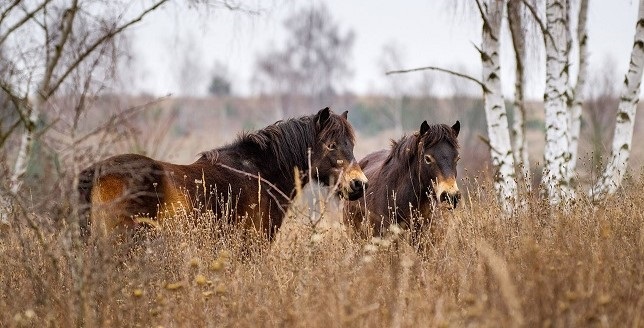
“I want to utilise horses here to boost and increase biodiversity in the location. I don’t want to use machinery, as I’m convinced that I’d damage the existing relationships,” Horejsi added.
The reserve was set up in a record-breaking short time. Its founder established the first contact with European Serengeti in October, and the territory was already ready for a group of large ungulates at the end of November.
“We managed to capture the wild horses in the European Serengeti only in late December. By then the access roads were covered in ice due to a sharp change in weather, so the carriers couldn’t reach the captured animals. They only succeeded after several weeks,” said Dalibor Dostal, director of the conservation organisation European Wildlife, which founded the Milovice reserve in cooperation with scientists in 2015, describing the complications encountered in transporting the wild horses to the new reserve.
Large ungulates are helping to restore rare types of countryside at 16 sites in the Czech Republic, with a total area of over 700 hectares. They restore biodiversity, contribute to climate protection and carbon sequestration in soil as well as soil restoration.
They also play an important role in the creation of the public’s relationship with nature and are a financially efficient tool for tending large expanses of the landscape.