

In recent years, countries that are signatory Parties to the Convention on International Trade in Endangered Species of Wild Fauna and Flora (CITES) are transitioning from paper-based permits to modern electronic permitting systems that enable instant verification, secure data exchange and improve the traceability of the trade in species covered by the Convention.
This digital shift helps to not only strengthen the traceability of international trade in wild species but also ensure this trade does not undermine the survival of the species in the wild.
Argentina reaffirmed its commitment to fully digitalise its electronic CITES permitting system (eCITES) during a national consultation workshop held on March 31, 2026, in Buenos Aires. The focus of the workshop was the implementation of eCITES integrated with the country’s Single Window for Foreign Trade (VUCE), a unique and national digital platform where traders can submit the trade documentation required for importing, exporting, and transit of goods.
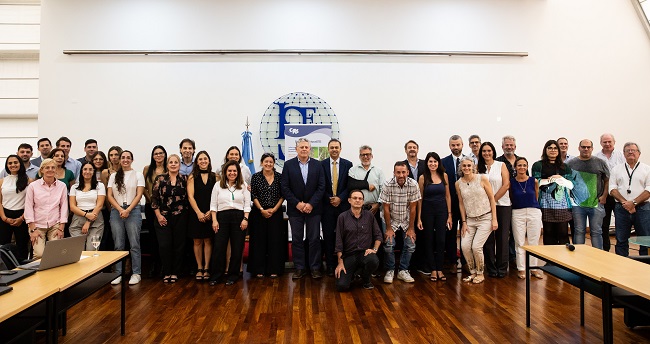
Made possible thanks to the generous financial support of Switzerland, the workshop was co-organised by the Office of the Undersecretary for the Environment of Argentina and the CITES Secretariat, hosted by the Office of Environmental Affairs (Dirección de Asuntos Ambientales, DIGMA). The main purpose of the workshop was to discuss the findings of a feasibility assessment, receive feedback and agree on recommendations for the implementation of the eCITES permit system in Argentina.
To support Argentina’s transition ahead of the workshop, the CITES Secretariat commissioned a feasibility assessment for planning and deploying an eCITES system, including a detailed Business Process Analysis (BPA) of current “as is” permitting procedures and a proposed future “to be” digital model aligned with CITES and national regulatory requirements.
The assessment highlighted that Argentina has a solid legal basis for national digital platforms, but still faces institutional, procedural and technological challenges across the application, evaluation, issuance, inspection and control of CITES permits and certificates. Key steps still rely on manual uploads, offline verification and limited human resource capacity.
The 40 workshop participants from Argentina’s CITES Management and Scientific Authorities, VUCE authority, Customs, exporters, importers and other members of the trading community agreed that integrating eCITES within the VUCE platform represents the most effective approach for this transition. The CITES Management Authority and VUCE authority decided to establish a joint project team in this regard.
Participants also remarked on the value of the workshop in kickstarting the process of deployment of the eCITES system, which is supposed to be piloted in June 2026, as well as the usefulness of the discussions for developing better understanding of the CITES permit requirements.
Acknowledging Argentina’s commitment to implement eCITES, CITES Secretary-General, Ms. Ivonne Higuero, said: “With successful eCITES implementation, Argentina’s trade in wildlife – from plants and timber to aquatic, terrestrial and bird species – will become even more transparent, sustainable, and aligned with global best practices.
“This progress reinforces our collective commitment to shared global goals for people and nature, such as the CITES Strategic Vision, Targets 5 and 9 of the Kunming–Montreal Global Biodiversity Framework on sustainable harvesting and trade of wild species and the Sustainable Development Goals, including Goal 14, Life Below Water, and Goal 15, Life on Land.”
Marking this significant next step, the Undersecretary of Environment in Argentina, Dr Fernando Jorge Brom, said: “The transition to electronic CITES permits (eCITES) represents a significant leap forward in modernising environmental management for the international trade of endangered species in Argentina. This system not only accelerates processes but also strengthens our capacity for international trade that guarantees the legal acquisition, sustainability, and traceability of traded species.”
Following the workshop, the VUCE authority, the CITES Management Authority of Argentina and the CITES Secretariat held in-depth discussions and agreed to a phased implementation approach. Argentina Customs organised a visit to Buenos Aires airport to review procedures for controlling specimens of CITES-listed species and provide valuable insight into Customs’ operational role and responsibilities.
This engagement has demonstrated that an interoperable eCITES system is feasible in Argentina and a strategic step toward enhancing inter-agency cooperation and ensuring more effective implementation of CITES regulations.