Nigeria is pushing its indigenous oil and gas firms as global partners, using the Offshore Technology Conference 2026 in Houston to attract investment and reshape industry perceptions.
The Petroleum Technology Association of Nigeria (PETAN) says its delegation is focused on converting technical capacity into bankable partnerships and long-term collaborations.
Dr Joan Faluyi, PETAN Publicity Secretary, in a statement on Thursday, April 30, 2026, said the association would anchor Nigeria’s presence at the Nigerian Pavilion with a clear investment message.
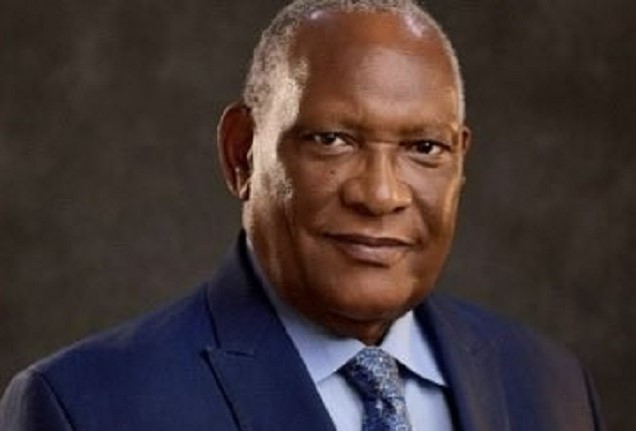
Chairman, Petroleum Technology Association of Nigeria (PETAN), Mr. Wole Ogunsanya
“Our participation goes beyond visibility; it is about demonstrating that Nigerian firms are ready for serious global partnerships,” she said.
The conference is with the theme: “Africa’s Energy Transformation: Scaling Investment, Technology, and Local Capacity for Sustainable Growth”.
Faluyi said the conference theme reinforces Africa’s need to scale investment, technology and local capacity for sustainable growth.
She noted that PETAN was advancing a narrative that places indigenous companies at the centre of energy development.
“For us, local capacity is no longer complementary; it is the foundation of Nigeria’s energy future,” she said.
PETAN Executive Secretary, Mr Eloka Ejeh, said years of investment in skills and technology were yielding competitive results.
“The capabilities we present are built on deliberate development and proven performance.
“We are engaging partners who recognise value and are willing to collaborate on equal terms,” he said.
Ejeh said the conference provided an opportunity to redefine how global investors view Nigerian firms.
He urged Original Equipment Manufacturers to move beyond transactional roles and build strategic alliances with local companies.
“As Africa expands energy access while pursuing sustainability, Nigerian firms offer both capacity and adaptability.
“Local expertise should be seen as an advantage, not a limitation,” he said
PETAN Chairman, Mr. Wole Ogunsanya, said the conference marked a decisive moment for Nigeria’s energy sector.
“OTC 2026 allows us to present Nigerian companies as leaders, not followers, in Africa’s energy transition.
“We are here to influence decisions, not merely participate,” he said.
Ogunsanya said Nigeria’s delegation would host targeted engagements designed to unlock capital and strengthen partnerships.
He listed the African Energy Forum, the NCDMB–OEM Investment Forum and a strategic networking golf event among key activities.
“These engagements bring decision-makers together to convert interest into tangible investments,” he said.
He added that PETAN members covered a wide range of services, reflecting decades of accumulated expertise.
“Our strength lies in our diversity and depth, from engineering to logistics and reservoir management,” Ogunsanya said.
A field study examining how indigenous communication influences climate change mitigation and adaptation among rural farmers in the Federal Capital Territory (FCT), Abuja – specifically in Kawu, Zuma, Igu, Dobi, Kaida, and Dota across Bwari and Gwagwalada Area Councils – provides critical insight into why climate policies underperform at the community level.
Using a sample of 348 farmers and employing both questionnaires and Focus Group Discussions, the study finds that government climate policies do not fail because they are technically deficient; they fail because they are socially disconnected from the people they are meant to serve. What is often interpreted as “policy failure” is, in reality, a deeper failure of communication, participation, and governance.
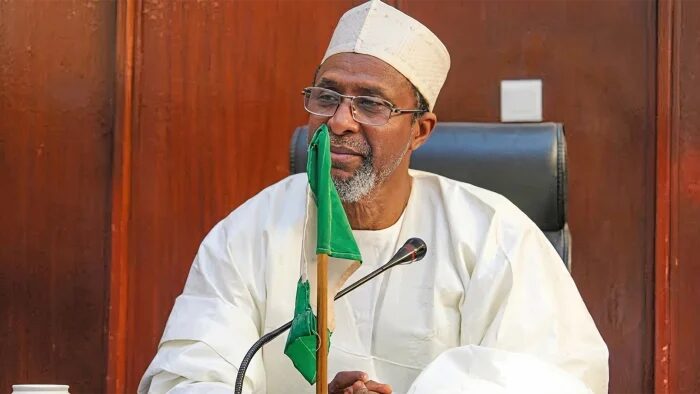
Malam Balarabe Lawal, the Minister of Environment
At the core of this disconnect is a persistent misunderstanding of what implementation means in real community contexts. Enduring communication gaps between government and communities continue to undermine the effectiveness of climate policy implementation across many developing regions.
The findings reveal that awareness and adoption of climate policies remain low due to weak community engagement mechanisms and dominant top-down communication approaches that limit local participation. A critical barrier is the use of English as the primary language of policy communication, which excludes a significant proportion of rural populations and reduces accessibility and comprehension.
More importantly, the study highlights that climate policy implementation cannot be effective without integrating indigenous communication systems. Community gatherings, storytelling, and elder-led knowledge transmission play a crucial role in shaping how rural farmers understand and respond to climate change. Farmers consistently reported higher trust in, and responsiveness to, information shared through these indigenous channels compared to conventional media.
In practice, rural communities rely on indigenous communication not only to access information but also to interpret, validate, and disseminate knowledge on climate change mitigation and adaptation. The absence of participatory communication, indigenous communication systems, and local language integration significantly weakens community ownership and sustainability of climate interventions.
The Way Forward
For climate policies to be effective and sustainable at the grassroots level, they must be grounded in participatory and indigenous communication approaches. This requires more than symbolic inclusion – it demands structural integration.
Governments and policymakers must:
(1) Recognise indigenous communication as a legitimate pillar of climate policy implementation, not a peripheral activity
(2) Institutionalise participatory communication processes that enable communities to co-create, adapt, and own climate solutions
(3) Integrate indigenous languages into policy dissemination to enhance accessibility and comprehension
(4) Foster collaboration between scientific knowledge systems and local knowledge frameworks to strengthen credibility and relevance
Development partners, including NGOs and the media, must also shift from message dissemination to community-centered engagement strategies that prioritise dialogue, trust-building, and local agency.
Conclusion
Effective climate policy implementation is not achieved through technical design alone – it is realised through socially embedded processes of communication, participation, and trust.
Until governments move from top-down dissemination to people-centered co-creation, climate policies will continue to exist in documents but fail in communities.
Real climate solutions are not delivered to people. They are built with them.
By Audu Liberty Oseni, Director, Centre for Development Communication, Email: libertydgreat@gmail.com
Chairperson of the Africa Group of Negotiators on Climate Change (AGN), Nana Dr. Antwi-Boasiako Amoah, has called for a decisive shift from climate finance pledges to implementation, urging global partners to deliver predictable and accessible funding to support Africa’s climate and development priorities.
Speaking at the opening of the 12th Session of the Africa Regional Forum on Sustainable Development (ARFSD-12) in Addis Ababa, Ethiopia, the AGN Chair emphasised that Africa’s foremost demand is not additional commitments but tangible financial flows that address adaptation, resilience, loss and damage, and green industrialisation.
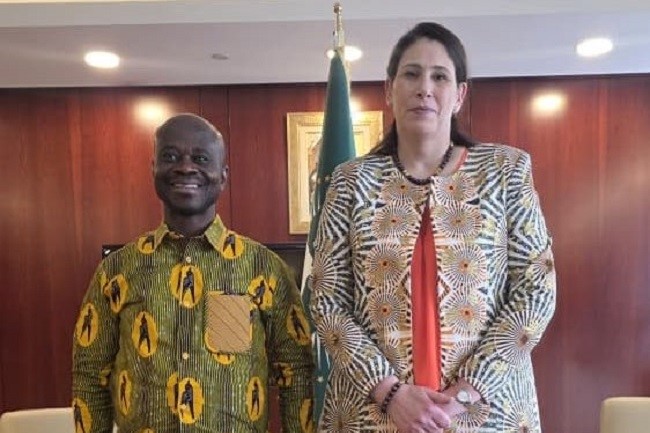
Chairperson of the Africa Group of Negotiators on Climate Change (AGN), Nana Dr. Antwi-Boasiako Amoah, with Deputy Chairperson of the African Union Commission, Selma Malika Haddadi
He underscored the need for outcomes from key global processes, including the Fourth International Conference on Financing for Development and COP30, to translate into grant-based and concessional financing mechanisms that are both predictable and accessible to African countries.
“Africa’s message is implementation finance, not more pledges,” he told delegates, stressing that climate finance must directly support national priorities such as Nationally Determined Contributions (NDCs), National Adaptation Plans (NAPs), and critical resilience infrastructure.
Dr. Amoah further highlighted the urgency of closing the widening development and climate finance gaps, referencing global commitments such as the Sevilla Commitment. He noted that, for Africa, this must result in expanded fiscal space, reduced debt burdens, and lower costs of capital to unlock large-scale investments.
On the roadmap to COP30, he called for a “delivery agenda” anchored in clear milestones and accountability mechanisms, particularly in efforts to mobilise at least $300 billion annually by 2035 and scale climate finance to $1.3 trillion within the same timeframe.
He stressed that adaptation finance should be treated as development finance, given its direct impact on food systems, water security, health, infrastructure, and economic stability across the continent.
“Climate resilience is not a peripheral issue—it sits at the core of Africa’s development,” he noted, adding that the quality of finance is as critical as its volume.
The AGN Chair cautioned against financing models that exacerbate debt vulnerabilities, advocating instead for grants, highly concessional funding, non-debt instruments, and innovative solutions such as debt swaps and local currency financing.
He also called for simplified access to climate funds and stronger support for project preparation, particularly for Least Developed Countries (LDCs) and fragile states.
He urged a shift in approach where Africa leads in shaping its investment agenda, rather than being a passive recipient of fragmented projects. According to him, financing should align with national and regional development frameworks, including Agenda 2063 and the Sustainable Development Goals (SDGs).
As part of his key recommendations, Dr. Amoah proposed the establishment of a climate finance delivery compact for Africa to track progress, ensure transparency, and guarantee equitable distribution of resources.
He also called for reforms to the global financial architecture to reduce vulnerability, lower borrowing costs, and prioritise grant-based support for adaptation and resilience.
In addition, he advocated for increased investment in sectors such as renewable energy, climate-smart agriculture, water systems, and resilient urban development, describing these as strategic drivers of sustainable growth and global stability.
Meanwhile, Deputy Chairperson of the African Union Commission, Selma Malika Haddadi, reaffirmed the Commission’s commitment to supporting the AGN in advancing Africa’s climate action agenda.
She assured the AGN Chair of continued collaboration to strengthen the continent’s negotiating position and mobilise the resources required to meet its climate goals.
In conclusion, Dr. Amoah stressed that climate finance for Africa must be viewed through the lens of equity and accountability.
“For Africa, unlocking climate finance is not about charity; it is about justice, implementation and trust,” he said, warning that the credibility of global climate processes will ultimately be judged by their impact on vulnerable communities, economies, and ecosystems across the continent.
The Elephant Protection Initiative (EPI Foundation’s Friend of the Month is Dan Yessa, an artist and documentary filmmaker based in Goma, in the eastern Democratic Republic of Congo. His work focuses on telling human and environmental stories through film, art, and immersive media, particularly around conservation, resilience, and the complex realities of living in regions affected by human conflict
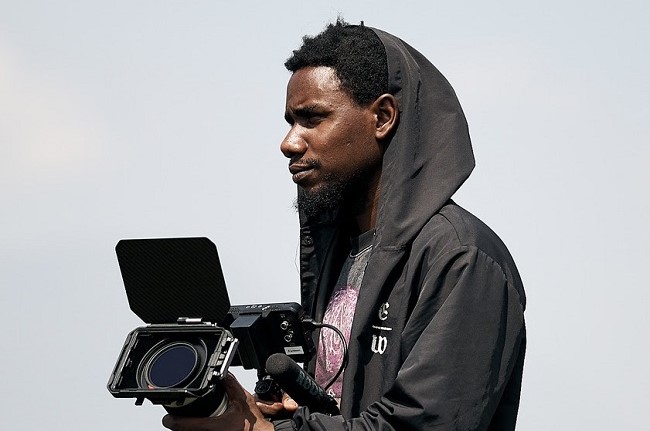
Dan Yessa
Tell us a bit about how you grew up, especially when your passion for nature and wildlife conservation started.
I grew up in Goma, in a large family where life became challenging quite early, especially after losing both my parents at sixteen. That period forced me to become independent quickly and to explore different creative paths to move forward. Living so close to extraordinary natural landscapes like Virunga National Park, I was always aware of the beauty of our environment, but my deeper connection to nature and wildlife conservation developed later through storytelling.
As I started working in art and then in film, I became more and more interested in the stories of rangers, communities, and animals that are in danger of extinction. That’s when I realised that conservation was not just about protecting wildlife but also about people, resilience, and identity, and that I could use my creative skills to document and amplify those stories.
How did you become involved in conservation?
As an artist and later a filmmaker, I was initially focused on visual creation, but that shifted when I began working on projects that brought me closer to the field, especially around Virunga National Park. Meeting rangers, researchers, and local communities exposed me to the realities behind conservation: the risks, the dedication, and the deep connection between people and nature.
A turning point came when I participated in workshops and collaborations, including those supported by organisations like the Pulitzer Center, which helped me understand the broader environmental and climate context of the stories I was telling. From there, conservation became central to my work. I began making documentaries and visual projects that show how important biodiversity is, the problems that protected areas face, and the people who live there. Today, I see my role as a bridge, using storytelling to connect audiences to conservation issues and inspire engagement, especially among young Africans.
What was the inspiration behind your becoming a co-founder of Congo Youth and Wildlife?
Congo Youth and Wildlife was created to address a critical challenge, giving young Congolese access to conservation stories in order to ignite their interest in protecting the incredible biodiversity of the DRC. We do this by producing content specifically for youth, while also equipping them with the tools, skills, and opportunities to tell their own stories about Congo’s conservation landscape. The goal is to foster a sense of ownership, break the cycle of poaching that has been passed down through generations, and showcase Congolese biodiversity to the world, empowering the next generation to become both storytellers and guardians of their natural heritage.
Do you feel that the media has been winning the battles for the hearts and minds of the communities you work with?
The media has made progress, but I wouldn’t say it’s fully winning the battle yet, especially in the communities I work with. In many cases, conservation messaging still feels distant or abstract compared to the immediate realities people face, like insecurity, unemployment, or access to basic needs. When the media is disconnected from those lived experiences, there is a struggle in resonance.
That said, I’ve seen how powerful media can be when it’s done right, when stories are local, human-centred, and told in a language and format people relate to. In those moments, the media contributes to the communal building of pride, shifting perceptions, and creating a sense of ownership around conservation. We need more stories that come from within the communities themselves, not just about them. That’s where I believe the real impact lies, and that’s the direction I’m committed to pushing through my work.
What about the youth in DRC? Do you feel attitudes towards the environment are changing in your country?
Among the youth in the DRC, I do see a shift happening, but it’s gradual and still fragile. There’s a growing awareness around environmental issues, especially in urban centres like Goma, where young people are increasingly exposed to global conversations on climate change, biodiversity, and sustainability. You now find more youth-led initiatives, creatives, and activists using art, social media, and community projects to speak about the environment in ways that feel relevant to their generation.
However, this change exists alongside very real economic and social pressures. For many young people, survival comes first, so environmental concerns can feel secondary unless they are directly connected to livelihoods or daily life. That’s why the most effective shift in attitudes happens when conservation is framed not just as protection of nature but as an opportunity for employment, innovation, identity, and future stability.
So yes, attitudes are evolving, but the key is to keep making conservation tangible and accessible. If young people can see themselves in the solution, not just as beneficiaries but as actors, then that change becomes much more durable and impactful.
If I were lucky enough to visit the DRC, what would you recommend as sights that have to be seen?
The DRC is a true jewel, with an immense diversity of landscapes and experiences to explore. But if I had to choose one place, one that could profoundly reshape how you see both nature and Congo, I would invite you into the heart of the equatorial forest, somewhere like Salonga National Park.
There, you encounter a level of wilderness that is increasingly rare in the world: vast, intact ecosystems where nature still operates on its own terms. It’s not just about what you see, but also what you feel, stepping into an environment where human presence has barely altered the balance and witnessing how wildlife exists and evolves without outside intervention.
UN Climate Change’s Regional Collaboration Centres (RCCs) strengthened country-driven climate action in 2025, supporting governments across regions to translate national climate plans into practical actions, according to the newly released RCCs Annual Report 2025.
In 2025, RCCs focused on mitigation, adaptation, carbon markets and carbon pricing, providing tailored technical and advisory support to help countries develop and implement their Nationally Determined Contributions (NDCs), long-term strategies, National Adaptation Plans (NAPs) and Article 6 readiness.
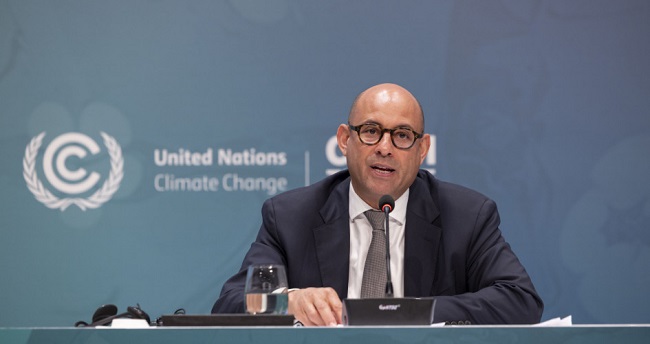
UN Climate Change Executive Secretary, Simon Stiell
“In the era of implementation, RCCs are essential across all of UN Climate Change’s core mandates, whether as convenor bringing more partners together, as custodian of the Paris Agreement, or as catalysts supporting governments and others to boost their climate actions,” said Simon Stiell, Executive Secretary of UN Climate Change. “RCCs are supporting countries in every region to realize their climate ambitions and bring the immense benefits of climate action to many millions of people across the globe.”
“In 2025 they sharpened their offer, focusing on nations’ individual needs and priorities,” added Stiell. “And they’ll continue that approach in the coming year, as they work with countries to turn plans into projects and secure finance. In doing so, RCCs are helping connect the COP process to stronger real-world outcomes at local, national and regional levels.”
RCCs directly supported 83 countries across six regions in 2025, delivering technical assistance, convening partners, and strengthening institutional capacity. Throughout the year, they contributed to global events, including Climate Weeks and NDC Clinics, regional technical dialogues, and national workshops, helping connect global negotiations with country-level implementation.
The report also highlights RCCs’ growing role in supporting access to finance, strengthening coordination across the UN system, and facilitating collaboration with development banks, regional organizations, and private sector partners to accelerate delivery of climate action.
The report highlights a shift from broad regional engagement to a more targeted, country-driven support, informed by a comprehensive needs assessment conducted throughout the year.
The report notes that the RCCs are a bridge between global climate agreements and real-world implementation, underscoring their support in building national capacity, coordinating stakeholders, and supporting countries in turning commitments into projects and investment-ready pipelines.
Looking ahead, RCCs will continue to prioritize implementation support in 2026, with a strong focus on helping countries turn NDCs and NAPs into investable projects, improving access to climate finance, and strengthening capacity for countries to participate fully in UNFCCC processes.
Operating in partnership with regional host institutions, the RCCs support 143 countries across six regions, providing capacity-building, technical, policy and coordination support, aligned with UN Climate Change mandates.
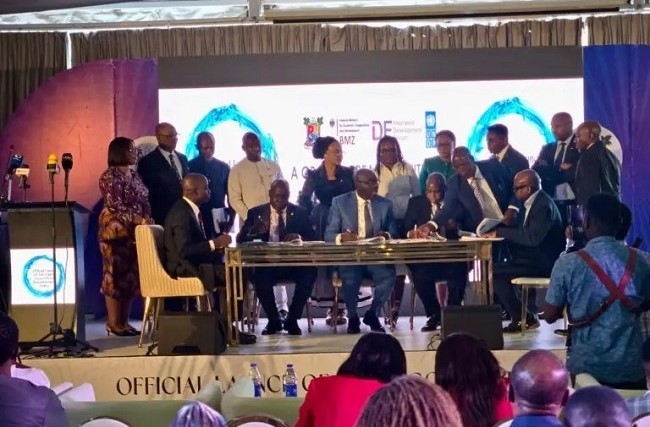
The Lagos State Government has launched a flood risk insurance policy aimed at providing rapid financial relief to vulnerable residents affected by flooding.
Development partners, insurers and multilateral institutions attended the launch, where agreements were signed with the state government.
Gov. Babajide Sanwo-Olu said the initiative represents a shift from delayed disaster response to a proactive system that enables immediate fund disbursement once flood thresholds are triggered.
Delegates at the launch of the flood risk insurance policy in Lagos
Sanwo-Olu, represented by Mrs. Bimbola Salu-Hundeyin, Secretary to the State Government, said the parametric insurance model allows automatic payouts based on verified satellite data and flood modelling, eliminating lengthy claims processes.
He said the policy would enable the government to provide direct cash transfers and emergency support to affected communities promptly.
According to him, about four million vulnerable residents across seven local government areas will benefit in the initial phase.
The governor added that the policy provides up to 7.5 million dollars in coverage per flood event, creating a financial safety net for high-risk communities.
He explained that beneficiaries would not need to apply or pay premiums, as the scheme is structured as a state-backed community protection system.
Sanwo-Olu said the government would leverage residents’ registration and social databases to identify and reach persons quickly during emergencies.
He urged residents, particularly traders and artisans, to update their registration details to ensure seamless access to relief.
The governor disclosed that the InsuResilience Solutions Fund is co-funding 90 per cent of the first-year premium, while the state government provides the remaining 10 per cent.
He said the state would gradually increase its contribution to ensure sustainability.
Sanwo-Olu noted that the initiative positions Lagos among global leaders adopting innovative climate finance solutions to address extreme weather risks.
He warned that climate inaction could cost the state about 40 billion dollars by 2050.
Sanwo-Olu called on the Federal Government to consider scaling the model nationwide.
The Commissioner for Finance, Mr. Abayomi Oluyomi, said the policy enhances financial preparedness and shields public finances from climate shocks.
Oluyomi said the parametric model ensures immediate payouts based on flood magnitude, enabling faster relief and reconstruction without conventional loss assessments.
He said the pilot would cover up to 1.7 million households with access to 7.5 million dollars in rapid response support.
Also speaking, Ms. Elsie Attafuah, Resident Representative of the United Nations Development Programme (UNDP), described the policy as a “game changer” for disaster preparedness and climate resilience.
Attafuah, represented by Mr. Blessed Chirimota, Deputy Resident Representative (Operations), said flooding has caused significant economic losses in Lagos, affecting livelihoods and infrastructure.
She said the scheme would provide timely financial support to about four million residents for recovery and rebuilding.
Mr. Kunle Ahmed, Chief Executive Officer of AXA Mansard Insurance Plc, speaking for the underwriting consortium, said the model guarantees swift payouts once flood thresholds are met.
Ahmed said it eliminates delays associated with traditional insurance claims processes and commended the collaboration among government, partners and regulators.
Dr Oreoluwa Finnih, Special Adviser on Sustainable Development, said the initiative strengthens fiscal resilience and protects vulnerable communities through a data-driven disaster management approach.
Also, Ms. Ekhosuehi Iyamen, Secretary-General of the Insurance Development Forum, described the policy as a landmark in climate risk financing.
She said it enables rapid satellite-triggered payouts and provides a model for climate adaptation across Africa.
The policy is being implemented with support from the UNDP, the German Federal Ministry for Economic Cooperation and Development (BMZ), and the Insurance Development Forum.
The pilot phase will cover Ajeromi-Ifelodun, Shomolu, Alimosho, Amuwo-Odofin, Apapa, Kosofe and Ojo Local Government Areas.
President Bola Tinubu has approved the removal of Mr. Saidu Mohammed as the Authority Chief Executive of the Nigerian Midstream and Downstream Petroleum Regulatory Authority (NMDPRA).
The President also approved the nomination of Mr. Rabiu Umar as the new Chief Executive of the authority, subject to Senate confirmation.
This is contained in a statement issued by Presidential Spokesperson, Mr. Bayo Onanuga, on Wednesday, April 29, 2026, in Abuja.
Rabiu Umar
The Presidency said the decision was made pursuant to the Petroleum Industry Act 2021.
The move was aimed at strengthening regulatory effectiveness in the midstream and downstream petroleum sector, in line with the Renewed Hope Agenda.
Umar is an experienced executive with over 25 years of service across the energy, manufacturing and infrastructure sectors.
He is also credited with a track record in strategic leadership, operational transformation and large-scale project delivery.
Umar studied Accounting at Bayero University and is an alumnus of Harvard Business School.
Pending senate confirmation of the nominee, the most senior official of the authority will oversee operations in acting capacity.
Tinubu thanked the outgoing chief executive for his service and wished him success in future endeavours.
The President reaffirmed commitment to capable leadership in key regulatory institutions to advance energy security, sector reforms and sustainable economic growth.
As heat intensifies across Nigeria, a new cohort of ventures is developing solutions to protect crops, reduce food spoilage and livestock losses, and equip hospitals and outdoor workers to anticipate and withstand extreme conditions.
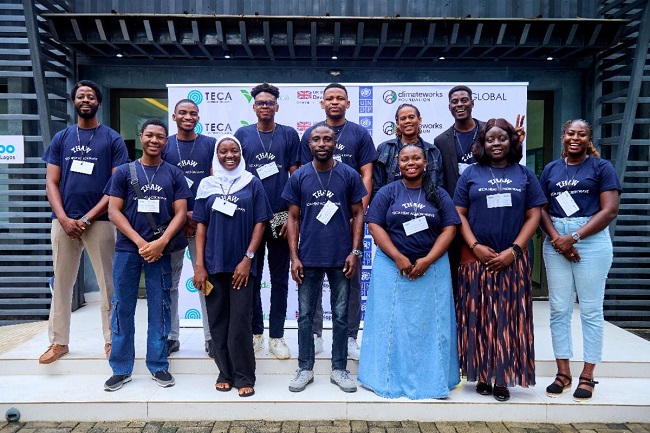
BFA Global, FSD Africa, ClimateWorks Foundation, and the UK’s Foreign, Commonwealth & Development Office (FCDO) Nigeria have selected 10 early-stage ventures to join the inaugural cohort of the TECA Heat Action Wave (THAW) program focused on accelerating solutions to extreme heat.
Representatives of the new cohort of 10 selected ventures
The 10 selected ventures are:
Ofemini Global Limited provides a heat-resilient logistics platform that helps farmers transport perishable goods efficiently, reducing spoilage caused by extreme temperatures through optimised routing and heat monitoring.
Agiletech Operations Consulting Limited provides a hyperlocal early-warning system that delivers climate and heat alerts through accessible channels, enabling farmers and micro-entrepreneurs to anticipate risks and take preventive action.
Emplaris develops a predictive energy and heat-risk intelligence system for healthcare facilities, helping hospitals anticipate outages and manage equipment stress during extreme heat events.
Doorcas Africa delivers an AI-powered livestock health and co-ownership platform that enables early disease detection and prevention, helping farmers reduce heat-related livestock mortality and improve productivity.
Farmxic offers an AI-driven soil and crop diagnostics platform that helps farmers adapt to heat-induced soil degradation and crop stress through real-time insights and personalised recommendations.
Farm Fresh Grocery Ltd. builds a climate-resilient agricultural system combining heat-adaptive beekeeping, herb production, and consumer products to stabilise yields and supply under rising temperatures.
Farmslate Technologies Limited provides a climate intelligence platform that translates satellite and weather data into actionable insights, enabling farmers and financial institutions to manage heat-related risks and improve decision-making.
Let-It-Cold offers a solar-powered, portable cooling solution that helps small businesses and households preserve perishable goods during extreme heat and power outages.
Pod develops a climate-resilient sanitation system that prevents failure and contamination in heat- and flood-prone environments through on-site treatment and water reuse.
TheHyWing Ltd provides a climate-smart digital health platform that combines heat alerts, AI diagnostics, and telemedicine to prevent heat-related health risks among outdoor workers and vulnerable populations.
Together, the ventures address some of the most immediate and under-addressed impacts of extreme heat across Nigeria, including food spoilage and cold chain gaps, heat-induced soil degradation and crop stress, livestock disease and productivity loss, health risks for outdoor workers, and system failures in energy, healthcare, and sanitation infrastructure.
They range from early-stage concepts to minimum viable products, reflecting both the urgency of the problem and the early development of solutions in this emerging space.
The cohort reflects a growing innovation ecosystem across Nigeria, with ventures operating in multiple regions. The companies are based in Lagos, Kaduna, and Edo states. This geographic spread underscores the breadth of climate innovation emerging across the country and reinforces TECA’s commitment to supporting founders building locally relevant solutions nationwide.
Selected from a competitive pool, the ventures will each receive $56,000 in funding along with hands-on venture-acceleration support, including user validation, product development, business model design, and investor readiness. Each team will work with embedded venture builders and technical experts to accelerate their path to scale. Six of the 10 selected ventures have a female co-founder.
“Extreme heat is rapidly becoming one of the biggest operational risks facing African economies, yet it remains dramatically underinvested,” said Tyler Ferdinand, TECA Director at BFA Global. “Through TECA’s Heat Action Wave, we’re backing entrepreneurs building the tools, services, and financial products that will allow people, businesses, and cities to function in a hotter world. Our goal is not only to support these ventures but to prove that climate adaptation can become a powerful new investment frontier.”
Juliet Munro, Director, Early Stage Finance, at FSD Africa, said: “If climate adaptation finance is going to scale in Africa, it has to be grounded in real, investable solutions. This group of innovators tackling extreme heat is important because it shows what those solutions look like in practice, and that’s what gives markets the confidence to follow. At FSD Africa, our role is to help turn early innovation like this into something markets can actually back.”
“The cost of inaction on climate change is growing, as over 70% of workers around the world are at risk from deadly extreme heat. At the same time, momentum for adaptation is growing, as we see both more funding and more innovation. These new business ventures are strong, community-led solutions that can accelerate resilience in Nigeria and more broadly in the West African region,” said Jessica Brown, Senior Director of Adaptation and Resilience at ClimateWorks Foundation.
“Responding to climate change is central to Nigeria’s future growth and resilience. The UK is excited to support this cohort of ambitious Nigerian businesses developing transformative solutions to extreme heat. TECA’s Heat Action Wave is part of a broader UK partnership with Nigeria that backs private sector–led innovation, creates jobs, and drives shared prosperity for both our countries as we transition to a greener economy,” said Temi Akinrinade, Foreign, Commonwealth & Development Office, Nigeria.
The programme will run through 2026, culminating in demo days and investor engagement opportunities, with follow-on support available for top-performing ventures.
Tropical rainforest loss fell 36% in 2025 from the record high of 2024, according to new data from the University of Maryland’s GLAD Lab, available on World Resources Institute’s Global Forest Watch platform and Global Nature Watch.
The findings suggest that strong policies and enforcement can curb forest loss. However, climate-driven fires are a dangerous new normal, threatening to reverse recent gains.
In 2025, the world lost 4.3 million hectares (10.6 million acres) of tropical primary rainforest, an area roughly the size of Denmark. Despite the decline, loss remains 46% higher than a decade ago, with primary forests disappearing at a rate of 11 football (soccer) fields every minute.
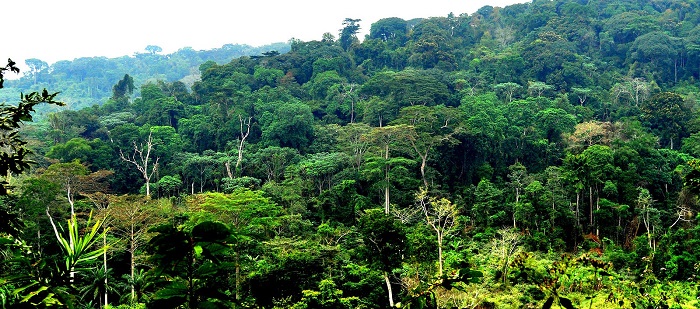
Congo Basin rainforest
“A drop of this scale in a single year is encouraging — it shows what decisive government action can achieve,” said Elizabeth Goldman, Co-Director of Global Forest Watch, World Resources Institute. “But part of the decline reflects a lull after an extreme fire year. Fires and climate change are feeding off each other, and with El Niño on the horizon for 2026, investments in prevention and response will be critical as extreme fire conditions become the norm.”
Despite recent progress, global forest loss remains far above the level required to meet the 2030 goal of halting and reversing forest loss, a commitment made by more than 140 countries under the Glasgow Leaders’ Declaration. Current levels are about 70% too high.
Tropical primary forests are vital for climate stability, biodiversity and the millions who depend on them for food, income and protection from extreme weather. Their loss releases vast amounts of carbon and weakens one of the planet’s most important natural defenses against climate change.
Policy Progress Drives Declines in Key Countries
Much of the global reduction was driven by Brazil, home to the world’s largest rainforest. In 2025, Brazil cut non-fire primary forest loss by 41% compared to 2024, reaching its lowest level on record.
The decline coincides with stronger environmental policies and enforcement under President Luiz Inácio Lula da Silva, including the relaunch of the PPCDAm federal anti-deforestation plan and increased penalties for environmental crimes.
Although Brazil still has the largest absolute area of primary forest loss due to its size, its rate relative to forest area (0.5%) is now lower than several other tropical countries.
“Brazil’s progress shows what’s possible when forest protection is treated as a national priority,” said Mirela Sandrini, Executive Director, WRI Brasil. “But Brazil’s landscape is becoming more flammable, and growing fire risk means enforcement alone won’t be enough. Protecting these gains will require scaling community-led prevention and building an economy that rewards standing forests.”
Other countries also showed progress. Indonesia and Malaysia maintained relatively low rates of primary forest loss, while Colombia reversed a spike seen in 2024. Progress in these countries reflected improved governance, recognition of Indigenous land rights and corporate commitments to deforestation-free production.
“Indonesia managed to keep forest loss largely under control in recent years, supported by policies that limit new forest clearing and give communities greater rights to manage forests,” said Arief Wijaya, Managing Director, WRI Indonesia. “That shows a strong commitment to more sustainable land use. But rising economic pressures could test that progress – and whether it can hold under pressure will depend on how well growth is balanced with climate and nature.”
“Colombia’s story is one of fragile progress: deforestation slowed not because pressure eased, but because governance held the line,” said Joaquín Carrizosa, Senior Advisor, WRI Colombia. “2026 will be the real test – without sustained enforcement and economic alternatives to clearing forests, this progress could quickly reverse. There’s a credible path to lasting change: increase investment in protecting the Amazon, back Indigenous leadership and build local economies that rely on forests staying intact.”
Fires Emerge as a Growing Global Threat
While agricultural expansion remains the leading driver of tree cover loss overall, fires were a major contributor in 2025, accounting for 42% of the 25.5 million hectares (63.1 million acres) of tree cover loss worldwide, an area slightly larger than the United Kingdom.
Climate change is increasing fire risk by creating hotter, drier conditions that allow fires to spread more easily. In turn, these fires release vast amounts of stored carbon, accelerating climate change and reinforcing a dangerous feedback loop.
While fire risk is growing in the tropics – where most fires are human-caused – the most visible impacts in 2025 were in boreal and temperate regions, where climate change is intensifying naturally occurring fire cycles.
Fire-driven loss was especially severe in Canada, where wildfires burned 5.3 million hectares (13.0 million acres), making 2025 the country’s second-worst fire year on record. Significant fires were also recorded in parts of southern Europe.
“Climate change and land clearing have shortened the fuse on global forest fires,” said Matthew Hansen, Professor at the University of Maryland and GLAD Lab Director. “They are turning seasonal disturbances into a near-permanent state of emergency. Without urgent action to stop burning and manage fire more effectively, we risk pushing the world’s most important forests past recovery.”
Loss Remains High in Other Regions
Forest loss remained high in countries including Bolivia, the Democratic Republic of the Congo (DRC), Peru, Laos and Madagascar. Drivers vary by region, but include agricultural expansion, mining, fire and local reliance on forests for food and fuel.
Bolivia recorded its second-highest level of primary forest loss on record after severe fires in 2024 and now ranks second for tropical primary forest loss – surpassing the Democratic Republic of the Congo despite Bolivia having 60% less primary forest.
“In Bolivia, as in many other countries, forest loss is closely tied to agricultural expansion, with fire often used to clear and prepare land for production,” said Stasiek Czaplicki Cabezas, a Bolivian researcher and data journalist for Revista Nómadas. “Those ties keep pressure on forests persistently high. Breaking this cycle will require tighter controls on fire and hard restrictions on land conversion in forest areas.”
In the Congo Basin, primary forest loss continues in several countries. In the DRC, total loss dipped slightly in 2025, but non-fire loss hit a record high, largely linked to small-scale farming, firewood and charcoal production, conflict-related displacement, and pressure from mining.
“There’s progress in parts of the Congo Basin, but in others deforestation remains alarmingly high,” said Teodyl Nkuintchua, Congo Basin Strategy and Engagement Lead, WRI Africa. “Mining is a far greater indirect driver of deforestation than previously recognised, and forest loss is happening even in community-managed areas. Support and investment are essential to making community forest management viable and enabling Indigenous Peoples and local communities to meet their basic needs.”
Scaling Action to Get on Track for 2030
Meeting global forest goals will depend not only on sustained political leadership and investment, but also on how key policy and financial developments unfold – including whether the Tropical Forest Forever Facility (TFFF) secures sufficient funding and how effectively regulations such as the EU Deforestation Regulation (EUDR) are implemented and enforced.
“The progress we’re seeing in countries like Brazil and Colombia is heartening – but far from assured,” said Rod Taylor, Global Director of Forests, World Resources Institute. “These are inspiring examples of what can be done to curb deforestation, but also a reminder of how much the fate of our forests hinges on political will and the resilience that can be built now in the face of a changing climate.”
2026 will put that to the test – with El Niño likely to intensify fire risk and national elections in several forest countries poised to shape whether progress continues.
Technological Innovation on the Horizon
Next year, the release of the tree cover loss data will be fully integrated into Global Nature Watch, WRI’s AI-powered platform built on peer-reviewed research from Global Forest Watch and Land & Carbon Lab. With a simple, chat-style interface, it makes complex land data easy to explore.
Over the coming year, Global Nature Watch will expand to deliver the full depth of analysis and country-level insight that users rely on today from Global Forest Watch, making vast amounts of data more accessible, timely and actionable than ever before.
“Last year’s progress in reducing forest loss shows what’s possible, but with El Niño set to raise the stakes, now is the moment to double down and turn gains into lasting protection,” said Dr. Kelly Levin, Chief of Science, Data and Systems Change at the Bezos Earth Fund, a founding partner of Global Nature Watch. “With tree cover loss data available through Global Nature Watch, it will be easier for people working to protect and restore nature to spot change earlier and respond with confidence.”
About the annual Tree Cover Loss data analysis
World Resource Institute’s Global Forest Watch provides annual analysis of global tree cover loss, showing when and where forests are disappearing. The data – produced by the GLAD (Global Land Analysis & Discovery) Lab at the University of Maryland – captures changes at approximately 30 × 30-metre resolution across all global land areas, except Antarctica and other Arctic islands.
TotalEnergies has announced the completion of the acquisition agreed on November 16, 2025, of 50% of EPH’s flexible power generation platform in Western Europe. Approved by all competent authorities and by the Boards of Directors of both TotalEnergies and EPH, this transaction leads to the creation of TTEP, the 2nd largest flexgen player in Europe, headquartered in Amsterdam.
The company, TTEP, owns and operates, through its subsidiaries, flexible natural gas and biomass-based power plants and BESS assets across Italy, the United Kingdom, Ireland, the Netherlands and France, for a total capacity of 14 GW installed or in construction. Its production reached close to 30 TWh of electricity in 2025.
EPH’s power generation platform
TotalEnergies and EPH have agreed on tolling contracts with TTEP, allowing both partners to market their own share of production. Furthermore, TTEP has a 5 GW projects portfolio and will serve as the preferred investment vehicle for both shareholders to develop their flexible power generation activities and large-scale battery storage solutions across the five countries concerned.
The transaction becomes effective on April 29, 2026. Pursuant to the powers delegated to it by the Shareholders’ Meeting of May 24, 2024, the TotalEnergies SE Board of Directors has approved the issuance of around 95.4 million shares to EPH, representing approximately 4.2% of TotalEnergies’ share capital, making EPH one of the Company’s main shareholders.
In a related development, 350.org campaigners in France and Africa on Wednesday, April 29, 2026, called for a permanent windfall tax on fossil fuel profits, as French oil giant TotalEnergies announced “indecent” first quarter profits, and new analysis by 350.org reveals that oil and gas price spikes have cost ordinary people and businesses in France over €2 billion (€1.97bn – €2.29 billion) since the start of the Iran war.
Around 30 activists from 350.org, Action Justice Climat, Attac France, Greenpeace France and Extinction Rebellion unfurled a banner reading “TotalEnergies profits, we foot the bill” outside one of the multinational’s petrol stations in north-east Paris, as TotalEnergies published its first-quarter 2026 financial results in the morning, amounting to $5.4 billion.
The groups urged the French government to “show political courage” and introduce a tax on the excess profits of fossil fuel giants, whose revenues can be used to protect households in France from soaring energy bills and fund the transition to affordable clean energy and climate finance for the most vulnerable countries.
Fanny Petitbon, 350.org France Country Manager, said: “While families watch their bills skyrocket, TotalEnergies posts some of its best financial results without even paying its fair share of taxes. We are witnessing an obscene transfer of wealth: the war enriches shareholders as it impoverishes citizens. This dependency is a political choice but the antidote exists. We demand that France stop yielding to oil lobbyists and introduce without delay a permanent and ambitious tax on fossil fuel profits. Every day of inaction is a deliberate political choice in favour of shareholders and against citizens.”
Campaigners say that while the EU’s crisis response package stopped short of including a windfall tax, France has upcoming opportunities to advance the measure, including a National Assembly deliberation in early June on a proposed law targeting the super-profits of oil and gas companies, and UN tax negotiations in August in New York.
350.org campaigners in East Africa also condemned TotalEnergies’ massive profits, which were made on the back of the suffering of communities displaced by the East African Crude Oil Pipeline, one of the French oil giant’s major investments in the region that is set to begin operating this year.
Rukiya Khamis, 350.org East Africa Country Manager, said: “It is a staggering injustice that fossil fuel corporations are once again posting record-breaking profits while families struggle to keep the lights on. Right now, power is concentrated in the hands of those who thrive on crisis and scarcity. We need to put that power back where it belongs: with the people. It’s time to end our forced dependence on fossil fuels, tax the profiteers who benefit from our hardship, and redirect that wealth into building a fair, clean energy system. We aren’t just asking for a lower bill; we are demanding a system that values human dignity over corporate greed.”
350.org campaigners also pointed out the contradiction in France’s fossil fuel phase-out roadmap, published in time for the First Conference on Transitioning Away from Fossil Fuels in Santa Marta, Colombia where more than 50 countries are presently gathered.
Clémence Dubois, 350.org Global Campaigns Manager, said: “France arrived in Santa Marta with a phase-out roadmap in one hand – and in the other, a quiet veto on making polluters pay for it. While Germany, Italy, Spain, Portugal and Austria jointly called on the EU to tax the windfall profits of energy companies cashing in on the Southwest Asia war, France was absent. PM Lecornu is asking French households to carry the cost of the transition, while TotalEnergies posts war profits untaxed. A phase-out roadmap without a funding mechanism isn’t climate leadership. That gap is a political choice, not an oversight.”