Home Blog Page 1919

Nigeria commits $300m to eliminate malaria

0

The Federal Government has committed to secure $300 million from the World Bank, Islamic Development Bank and African Development Bank to eliminate malaria in the country.

Malaria-anopheles
The malaria-causing anopheles mosquito feeding on a victim

This is contained in a statement issued by the African Leaders Malaria Alliance (ALMA) on the Commonwealth Heads of Government Meeting 2018 just ended in London.

The government said in the statement that it would elevate malaria on the national priority list and finance its national malaria elimination strategy.

The statement said Nigeria also pledged an additional $18.7 million to leverage $37 million from the Global Fund to distribute 15 million mosquito nets and to support the local manufacture of essential malaria commodities.

It said that ALMA applauds the commitment by 53 Commonwealth leaders to halve malaria across the Commonwealth nations within the next five years.

It said the game-changing commitment followed the Malaria Summit, where leaders from malaria-affected countries, businesses, donors and Commonwealth leaders to get ready to beat the scourge of malaria.

The statement said the commitment from the Commonwealth has the potential to prevent 350 million malaria cases and save 650,000 lives.

It added 90 per cent of global malaria cases and deaths occur on the African continent and the impact of this renewed focus to eliminate malaria will be felt across the continent.

The statement noted that apart from the commitment from Nigeria, 11 African countries in the Commonwealth announced new commitment and affirmed their determination to eliminate malaria.

It enumerated the countries to include Ghana, Kenya, Malawi, Mozambique, Namibia, United Republic of Tanzania, The Gambia, Uganda, Rwanda and Zambia.

The statement added that ALMA further committed to the African Union’s (AU) Catalytic Framework to end AIDS, TB and Eliminate Malaria by 2030.

Besides, it said that the AU was also committed to supporting member countries to introduce and strengthen the use of national and sub-national malaria scorecards and action trackers, with robust community engagement to support increased domestic funding.

According to the statement, AU will continue its work with Heads of State and Government in Africa to monitor progress towards this goal.

“Additional commitments from the international community include the UK Government’s commitment to spend £500 million a year through 2020-2021 and an extra £100 million commitment to the Global Fund.

“The Bill and Melinda Gates Foundation also announced an additional $1 billion through 2023 to fund research and development to reduce the burden of malaria.

“In addition, the Bill and Melinda Gates Foundation pledged £50 million in matching funds against the UK Government’s additional £100 commitment to the Global Fund,’’ it said.

The statement said the commitments made would be vital for re-energising the global community’s fight to end malaria.

By Mustapha Yauri
Government to begin Ogoniland clean-up in August

0

The Federal Government of Nigeria is to begin the remediation phase of oil impacted sites in Ogoniland in August 2018, Dr Marvin Dekil, the Coordinator of the Hydrocarbon Pollution and Remediation Project (HYPREP), has said.

Ogoniland-Spill
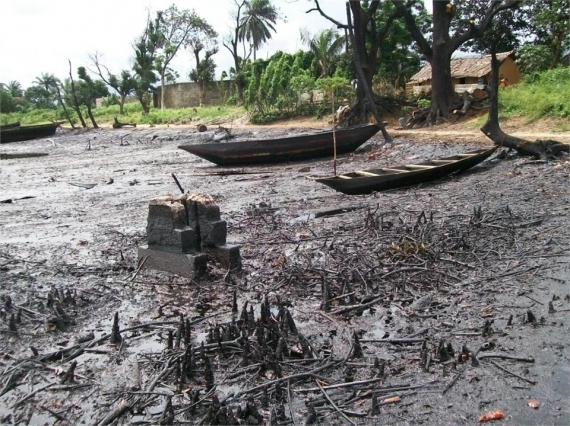
Land degradation from oil spill in Ogoniland, Nigeria

Dekil made the disclosure on the sidelines of a medical outreach organised by HYPREP in Nonwa-Tai, Rivers State, on Friday, April 20.

He said that government had begun placing advertisement in national and international newspapers inviting contractors to apply for remediation of 26 hydrocarbon impacted sites in Ogoniland.

According to him, the invitation is open to both local and foreign companies with requisite expertise and experience in the business.

“The delay in the take-off of the clean-up was as a result of contracting process as enshrined in the Procurement Act that is procedural.

“The exercise will involve all the processes that we have put in place right from inception of the project coordination office in March 2017.

“Already, invitation for pre-qualification of contractors has been sent to local and foreign concerns. The remediation will be done only by experienced and best hands, both locally and internationally.

“We believe that engaging the best hands will enable us achieve the desired result of restoring the environment back to an acceptable standard,” he said.

Dekil added that advertisement had also been made for the reconstruction of existing water facilities and construction of gas facilities in the affected communities.

He said HYPREP had earlier invited companies to the impacted sites to demonstrate their expertise, technology and suitability for the clean-up.

The HYPREP boss pointed out that the demonstration exercise by the local and foreign companies was at no cost to government.

“We did not pay the companies or offer advantage to any of them that participated in the exercise. The demonstration exercise is for them to show their capacity.

“We are now in the contracting process where companies would be selected from those that participated in the demonstration exercise and those that did not.

“At the end, we will choose the best companies for the remediation,” he said.

Dekil added that HYPREP was targeting to treat about 20,000 indigent Ogonis of different ailment in the second phase of its medical outreach in four local government areas.

He also said that 100 surgeries would be performed on victims of hydrocarbon pollution in Ogoniland in line with the recommendations of the United Nations Environment Programme (UNEP) Report.

The Ogoniland is made up of four local government areas consisting of Eleme, Gokana, Khana and Tai.

By Desmond Ejibas

Lagos plans 57 collection centres to reduce plastic pollution

0

The Lagos State Government says it will establish collection centres in 57 council areas to reduce plastic pollution across the state.

Akinwunmi-Ambode
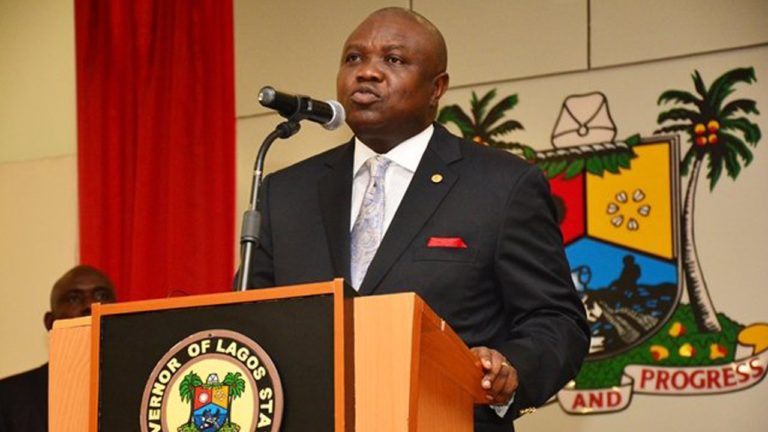
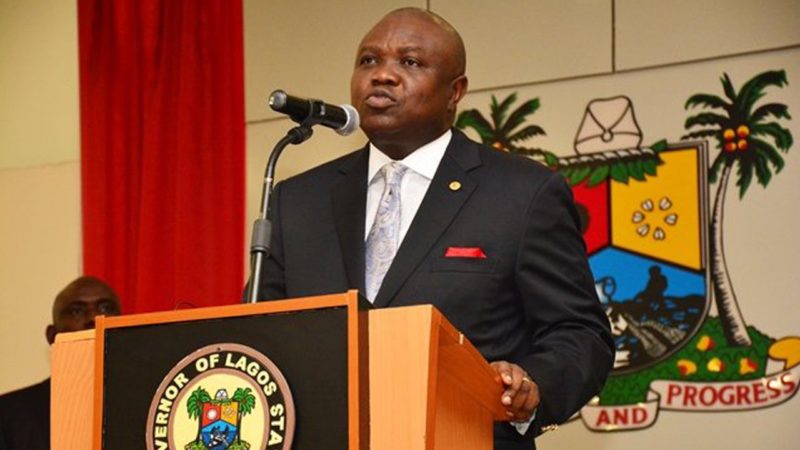
Akinwunmi Ambode, Governor of Lagos State

Adebola Shabi, Special Adviser to the Governor on the Cleaner Lagos Initiative (CLI), made this known during a news briefing on Friday, April 20, 2018 in Lagos.

Shabi said that the plastic collection centres would be established in conjunction with Visionscape Sanitation Solution.

According to him, the scheme will be a form of job creation as youths will be encouraged to bring plastics to the centres in return for stipends.

”The theme of the World Environment Day this year is plastic pollution, and that is one of the biggest menace in the state today.

”So we are going to have 57 collection centres in the state, we are going to encourage youths to bring plastic to the centres and you are given something in return. Then the plastics will be sold to the public for reuse.

”At the end of the day, this initiative is going to help clean up the environment, because we consume a lot of bottled water on daily basis in the state.

”So this will reduce the amount of plastics in our drainages, it will reduce the amount of plastic in our canals and other places,” he said.

The Special Adviser said that government came up with the strategy to ensure that waste was being evacuated from streets and residences.

”We have been engaging different stakeholders, the waste collection operators, the community development committees, the market women, the civil societies, landlords and tenants associations and various NGOs in the state to assess how we have performed in the last one year.

”There are still ongoing discussions with the waste collection operators, the former PSP operators and the state government, in conjunction with Visionscape to have as many Transfer Loading Stations, to ease the disposal of waste in the state.

”Olusosun dumpsite has been shut down by His Excellency because of the safety of the people working there and public health.

”And we have been asking the trucks to be going down to Ewe Elepe and Epe and we are looking at the distance, as most of the waste collectors’ trucks cannot go far distance.

”So, that is why we have resolved to have more transfer loading stations within the state and at night, Visionscape will evacuate all the waste from the stations to the Engineered Sanitary Landfill sites,” Shabi said.

He said that the state generated 20,000 tonnes of waste daily which would be treated and sorted at the transfer loading stations before being taken to the Engineered Sanitary Landfills.

Shabi said that 60 per cent of the segregated waste would end up in the landfills while 40 per cent would be recycled and reused for other purposes.

”In the next few days, all the wastes we have been seeing on our roads will be evacuated.

”In the next few months, Visionscape will take stock of more trucks to enhance performance in waste collection,” he said.

According to him, Visionscape has distributed over eight million garbage bags and over 400,000 garbage bins in the last two months.

”What we want from people living in Lagos is to generate your waste, bag your waste and drop them in front of the houses, for effective cleaning and preventive blockage of our drainages and canals.

”The garbage bags and bins are meant for the waste generated, so please ensure that the wastes are being packaged and kept at the front of the houses,” he said.

By Florence Onuegbu

AU says off-grid systems can trigger Africa’s energy transition

0

Experts at a panel discussion on off-grid systems at the 2018 Berlin Energy Transition Dialogue (BETD) have identified off-grid systems as the way out Africa’s rural electrification challenges.

energy
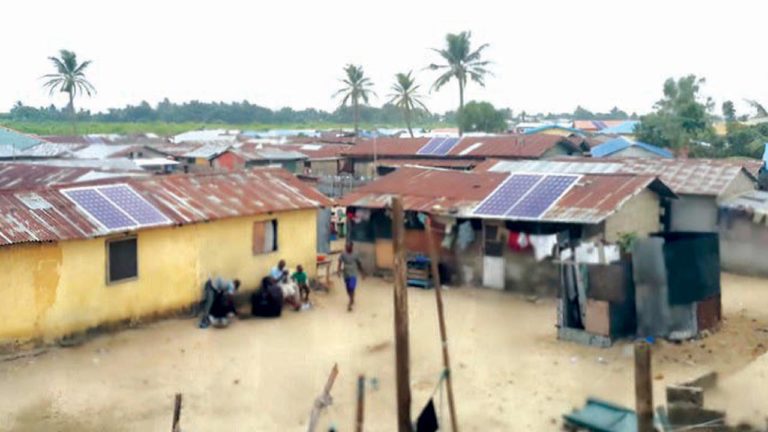
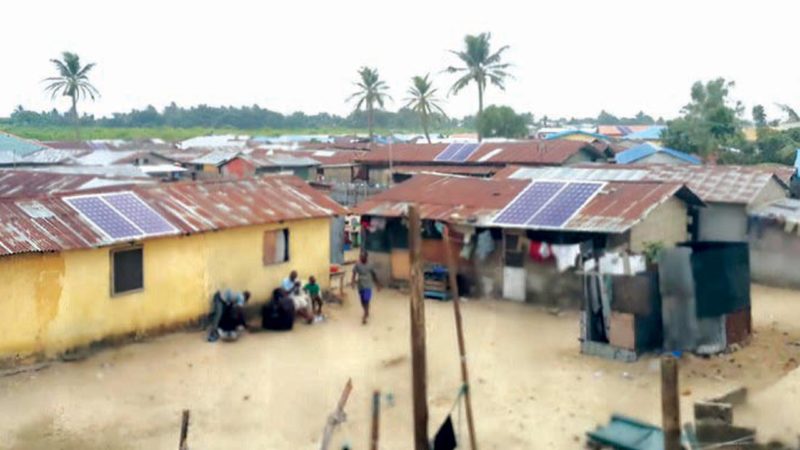
Off-grid energy: A rural community lighted by solar power

This is coming on the heels of the report that about 40% of new connections required to achieve universal energy access will come from off-grid solutions with 35% being mini-grid solutions and 5% as standalone systems

The panel, which comprised Dr Amani Abou-Zeid, Commissioner for infrastructure, energy, ICT and tourism at the African Union Commission, agreed that off-grid power generation can take place in Africa in various forms starting from the simplest systems consisting of a PV-panel and a battery to high installed power isolated grids.

“With off-grid systems, Africa stands a better chance of leapfrogging other regions of the world in Energiewende (energy transition),” Dr Abou-Zeid said.

Other panellists which included Seleshi Bekele Awulachew, Ethiopian water, irrigation and electricity minister; Mamisoa Rakotoarimanana, executive secretary of the Rural Electrification Agency in Madagascar; as well as Thomas Duveau, Molly Webb, and Eckard Wolf, however cautioned that, for off-grid systems to succeed in Africa, it is essential to have a good regulatory framework that can anticipate and accommodate various implementation structures including business operation models that encourage private sector investment.

It is important, panellists say, for Africa to deploy innovative methods in addressing the persistent challenges in the region’s energy sector.

Acknowledging Africa’s lack of strong institutional capacity as a major drawback of the region’s aspirations for clean energy transition, the energy commissioner declared AU’s readiness to provide member states “with policy solutions including regulations and standards towards an affordable, faster and more beneficial transition across all sectors of our economies.”

“We are committed to a cleaner, more secure and sustainable energy supply. Realizing this would require joint effort with all our partners in coordinating initiatives and sharing best practices to realise decisive and effective steps towards energy transition,” Dr Abou-Zeid added

Peter Altmeier, German energy minister at the dialogue, said: “It is possible to create prosperity, peace and security through Energiewende. Energy transition can provide more opportunities to this end for Africa and other regions of the world.”

African non-state actors were not left out of the global energy meet as they underlined the need for the Berlin dialogue to recognise and apply the principle of common but differentiated responsibilities (CBDR) in their quest to liberate Africa from energy poverty.

The CBDR principle recognises historical differences in the contribution of developed and developing states to global environmental problems as well as differences in their respective economic and technical capacity to tackle these problems.

Augustine B Njamnshi, Coordinator, of the African Coalition for Sustainable Energy and Access (ACSEA), called on the German government and other developed countries “to draw parallel between those who have the luxury and option of transitioning from fossil-based energy to clean energy and those who do not have access to any form of energy at all and are in urgent need of energy.”

“For Energiewende to succeed in Africa, developed countries must recognise their historic responsibility and prioritise Africa’s needs through innovative financing and technology,” Njamshi added.

Courtesy: PAMACC News Agency

Erosion: Communities want Buhari to declare state of emergency in Anambra

0

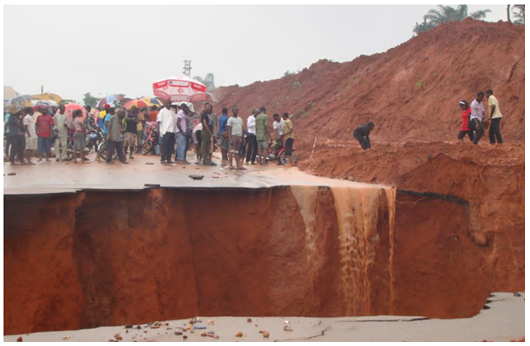
The people of Orumba North and Orumba South in Anambra State have urged President Muhammadu Buhari to declare a state of emergency to the unending erosion disaster in the federal constituency.

Gully erosion
Gully erosion in southeast Nigeria

They made the request in Abuja on Friday, April 20, 2018 when the traditional and town union leaders, led by the member representing the federal constituency in the House of Representatives, Rep Ben Nwankwo, visited Vice President Yemi Osinbajo.

The lawmaker told State House Correspondents after the meeting that the disaster was beyond the capacity of the affected communities and the state to handle.

He said that the disaster required urgent intervention of both the federal government and international agencies.

“We are here on a triple mission; the first is to commend the federal government of Nigeria through the Vice President on their very gargantuan input toward the burial of (late) Dr Alex Ekwueme.

“The second mission is to notify them of the war going on in Orumba North and South between erosion and the people as to who owns the land.

“While there is Boko Haram in the North East there is `erosion Haram’ in the South East particularly in Anambra state.

“The Agulu-Oko-Nanka, down to Umunze is the deepest gully erosion in the country and we have notified the Vice President of this situation; about 100 houses have caved in and hundreds of people rendered homeless.

“They are squatting at various places and we are asking for international intervention especially in the area of survey, risk assessment, mapping and ecological engineering.

“But most importantly, the site in-toto should be declared ecological emergency to give it the attention it rightly deserves so that the international community should be able to come into it, otherwise the next two years there will be more disaster.’’

Nwankwo said that the third plea was to ask the Federal Government to upgrade the two federal institutions in the area to degree-awarding institutions.

They are the Federal Polytechnic, Oko in Orumba North and the Federal College of Education, Technical, Umunze in Orumba South.

He explained that the request was to ensure that both institutions did not continue to produce manpower that would not be utilised by the industry.

The lawmaker stated that the request was trendy and international, adding that more than 13 countries had such polytechnic universities.

Nwankwo commended the President in the onerous task of fixing Nigeria.

The Rep said that the declaration of the erosion emergency was not essentially a legislative process but one that could be started by the executive.

He said the communities had properly situated it with the executive domain and promised that when the leadership tabled it before the National Assembly, it would receive positive attention.

Nwankwo said that the legislative instrument that would back the request was already before the National Assembly.

The traditional ruler of Oko, Prof. Laz Ekwueme, added that the erosion situation in the region had continued to grow worse with every rain and called for urgent help by the federal government.

“We are pleading and praying and urging the government to do everything possible to start work on it with international help.

“It is beyond the community, beyond the state even beyond the federal government but it can initiate the process of getting outside bodies to assist.

“We are in the great danger of losing the whole communities and beyond; whatever the media can do to help to urge everybody to come to assist and to save our souls we will appreciate it,’’ the monarch said.

IRENA calls for six-fold increase in renewable energy adoption

0

Increasing the speed of global renewable energy adoption by at least a factor of six – critical to meeting energy-related emission reduction needs of the Paris Climate Agreement – can limit global temperature rise to two degrees, according to the latest edition of the International Renewable Energy Agency’s (IRENA) long-term renewable energy outlook.

Adnan Z. Amin
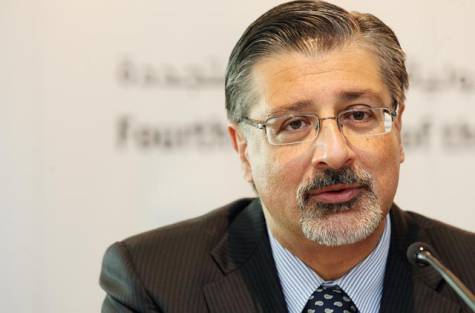
Director-General, International Renewable Energy Agency, Adnan Z. Amin

At the same time, the report finds that, by 2050, the global economy would grow by one per cent and global welfare, including benefits not captured by GDP, such as health benefits from reduced air pollution and reduced climate impacts, among others, would improve by 15 per cent, compared to the current trajectory.

Global Energy Transformation: A Roadmap to 2050”, launched on Tuesday, April 17, 2018 at the Berlin Energy Transition Dialogue, also finds that increasing cumulative energy system investment by 30 per cent to 2050 in favour of renewable energy and energy efficiency, can create over 11 million additional energy-sector jobs, completely offsetting job losses in the fossil fuel industry. Immediate action will also reduce the scale and value of stranded energy-related assets in the future. The roadmap currently anticipates up to USD 11 trillion of stranded energy assets by 2050 – a value that could double if action is further delayed.

“Renewable energy and energy efficiency together form the cornerstone of the world’s solution to energy-related CO2 emissions, and can provide over 90 per cent of the energy-related CO2 emission reductions required to keep global temperature rise to two degrees Celsius,” said IRENA Director General Adnan Z. Amin. “If we are to decarbonise global energy fast enough to avoid the most sever impacts of climate change, renewables must account for at least two-thirds of total energy by 2050.

“Transformation will not only support climate objectives, it will support positive social and economic outcomes all over the world, lifting millions out of energy poverty, increasing energy independence and stimulating sustainable job growth,” continued Mr. Amin. “An opportunity exists to ramp up investment in low-carbon technologies, and shift the global development paradigm from one of scarcity, inequality and competition to one of shared prosperity – in our lifetimes. That is an opportunity we must rally behind by adopting strong policies, mobilising capital and driving innovation across the energy system.”

Current government plans fall short of emission reduction needs. At today’s trajectory, the world would exhaust its energy-related “carbon budget” (CO2) for 2oC in under 20 years, despite continued strong growth in renewable capacity additions. By the end of 2017, global renewable generation capacity increased by 167 GW and reached 2,179 GW worldwide – yearly growth of 8.3 per cent.

However, without an increase in deployment, fossil fuels such as oil, natural gas and coal would continue to dominate the global energy mix by 2050. The roadmap analysis outlines an energy system in which renewables account for up two-thirds of total final energy consumption, and 85 per cent of power generation by 2050 – up from 18 per cent and 25 per cent respectively today.

To achieve this, at least a six-fold acceleration of renewable energy is needed, both through increased electrification of transport and heat, and more direct use of renewables. Electrification, and renewable power are key drivers outlined in the report, with solar and wind capacity leading the energy transformation.

Flooding: Oyo commences rehabilitation of Eleyele Dam

0

To check the perennial flooding in Ibadan and its environs, the Oyo State Government has commenced the rehabilitation of the Eleyele Dam.

Eleyele Dam
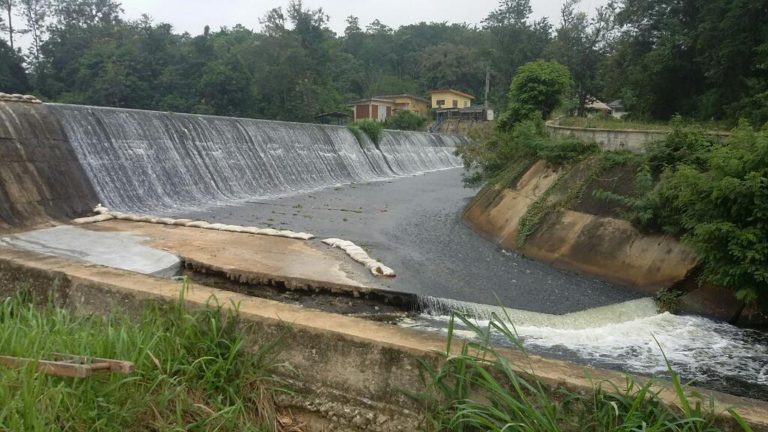
The Eleyele Dam is designed to mitigate flood in Ibadan

Speaking at the flagging off of the rehabilitation initiative on Friday, April 20, 2018, Gov. Abiola Ajimobi said the exercise would help prevent dam failure and overflow as well as  loss of lives and property.

The News Agency of Nigeria (NAN) reports that Eleyele Dam, which has a total length of 244 meters, was constructed on the Ona River at Eleyele in I942.

NAN also reports that the rehabilitation work aimed at enhancing domestic water supply and flood control is expected to be completed in 24 months.

The initiative, a World Bank Assisted Ibadan Urban Flood Management Project (IUFMP), is being handled by CGC-CHNE Joint Venture and TRACTEBEL ENGIE.

Ajimobi, represented by Mr Isaac Ishola, the State Commissioner for Environment and Water Resources, recalled that the emergent Ajimobi administration had been confronted with the challenge of flooding on assuming office in 2011.

“Our administration on assumption of office in 2011 was first confronted with a devastating flood event on Aug. 26 of the same year.

“The unfortunate incident ravaged many parts of Ibadan, consuming hundreds of human lives and several million worth of property.

“The dam had earlier been threatened by two major floods in 1963 and 1980.

“The implication is that, one of the two functional valves of the dam which was to help flood control during high flow period had been compromised,” he said.

He said government would not relent in ensuring the dam was put in good shape to prevent future occurrence.

The governor stated that the benefits accruable from a rehabilitated and modernised Eleyele dam were enormous, noting that it would contain flooding and boost the supply of treated water to Ibadan.

Ajimobi called on the contractors to ensure quality and timely delivery to make the facility a reference point.

“Our government has continued to enjoy untainted support from the World Bank in this far-reaching mandate of improving the state’s capacity to effectively manage flood risk in the city of Ibadan,’’ he said.

Mr Abimbola Adekanmbi, the State Commissioner for Finance and Budget, said that the major thrust of the work was the modernisation of a historical hydrological edifice to make it more functionally efficient in serving the people.

Adekanmbi, who is also the Chairman, IUFMP Steering Committee, assured the governor that they would ensure qualitative and timely delivery of the rehabilitation work.

Fan Xiaojing, representative of CGC-CHNE Joint Venture, assured that the contractors would ensure timely delivery of quality project to government.

NAN reports that the ceremony was attended by representatives of the World Bank as well as members of the State Executive Council and host community.

By Akeem Abas

SDGs: ARDN, partners take advocacy to West Africa

0

African Renaissance and Diaspora Network (ARDN) is set to lead a high-level delegation of political, business and media leaders on study tour to popularise the UN Sustainable Development Goals (SDGs) in West Africa.

Dr. Djibril Diallo
Dr. Djibril Diallo

Dr Djibril Diallo, the Chief Executive Officer of the group, made this known in a statement on Friday, April 20, 2018.

He noted that the delegation would be in Senegal and Gambia from April 22 to April 28.

He stated that the mission was supported by Ford Foundation, InterContinental Hotels Group and Michel Sidibe, Executive Director of Joint UN Programme on HIV/AIDS (UNAIDS).

He added that the mission was part of ARDN’s “Pathway to Solutions” initiative aimed at
popularising the UN SDGs.

The CEO noted that “ARDN is committed to working with stakeholders to achieve the 17 development goals by 2030.

“The goals are critical to ending poverty, protecting the planet and ensuring that all people enjoy peace and prosperity.”

Diallo stated that the mission was also an important education campaign, adding that the goal of the tour was to use education as entry point in achieving other SDGs.

He stressed that the mission was collaborating with the office of the UN Deputy Secretary-General, the UN Senior Africans Group, and Sustainable Development Solutions Network at Columbia University, U.S.

The high level delegation comprised of the CEO of ARDN, Joe Davidson, Founder, National Association of Black Journalists U.S.A. and a columnist with The Washington Post.

Other delegates include Cloves Campbell, publisher of Arizona Informant and former chairman of National Newspaper Publishers Association; Mayor Eugene Grant of Seat Pleasant, Maryland; Dr Gloria Herndon, CEO, GB Global Group among others.

Diallo disclosed that the delegation will meet with educators, journalists, civil society and senior government officials in Senegal and The Gambia.

He added that the delegation would participate in field visits to various projects supported by the UN and other agencies.

Diallo, former Regional Director for West and Central Africa, Joint UN Programme on HIV/AIDS (UNAIDS) was appointed as President and Chief Executive Officer of ARDN on March 25.

“The international project — Pathway to Solutions — has its genesis in the collective hope and vision of the office of UN Deputy-Secretary-General, Amina Mohammed, and ARDN,’’ he said.

By Mustapha Yauri

Ecosystem degradation, biodiversity loss cause of farmers-herders clash

0

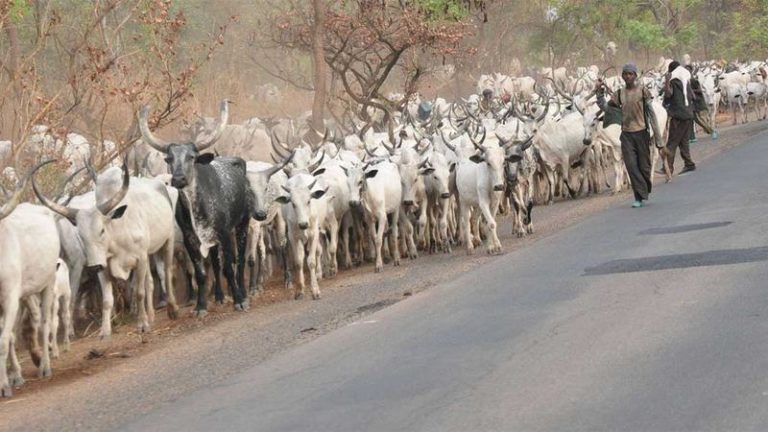
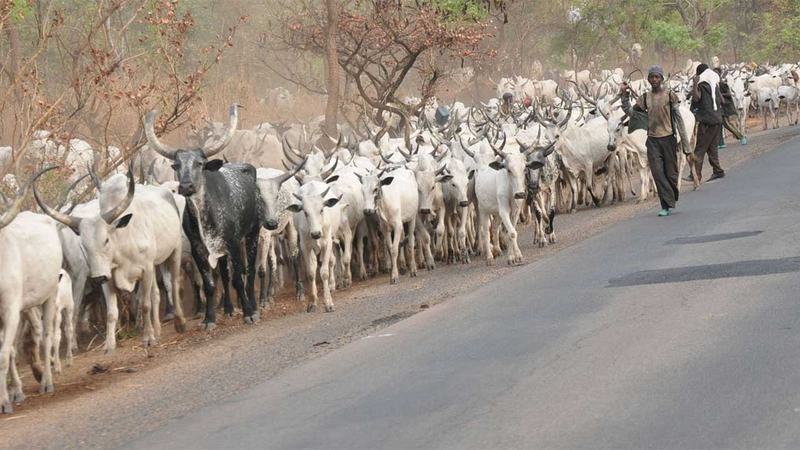
The President, Global Legislators Organisation for a Balanced Environment (GLOBE), Nigerian Chapter, Sen. Bukar Ibrahim, said ecosystem degradation and biodiversity loss were part of reasons for recurrent farmers-herders clash in Nigeria.

Herdsmen
Herdsmen

He made this known at the second stakeholders meeting of GLOBE-United Nations Environmental Programme (UNEP)-Global Environment Facility (GEF) Natural Capital Legislation Project on Friday, April 20, 2018 in Abuja.

Ibrahim, who is also Chairman, Senate Committee on Ecology and Climate Change, said over-extraction of forest and mineral resources was a common problem for African countries and most visibly, Nigeria.

According to him, the development has resulted in violent responses by herdsmen and farmers in some states of Nigeria among other challenges, and must be tackled.

“The global conversation on policy and legislative responses to address deforestation and forest degradation as well as the net depletion of natural resources and loss of biodiversity and ecosystem services, is well articulated.

“However, the proposed responses to these issues often require a fundamental re-direction of existing economic and social development models to a more sustainable path.

“This requires robust political ownership and steering at national level through a multi-stakeholder engagement strategy.

“The parliamentary powers of national legislators in budgeting and law-making towards the advancement of environmental governance are also paramount.

“Equally, delivery on commitments under international environmental laws makes the integration of environmental governance into development and economic decision-making paramount,’’ he said.

On poor parliamentary response to tackling environmental challenges in Nigeria and other African countries, the lawmaker said it was due largely to limited technical knowledge and limited data on natural resources, ecosystem processes, among others.

Ibrahim assured that GLOBE-UNEP-GEF Natural Capital Legislation project would foster sustainable solution to the challenges and called for a holistic approach to solving the problems.

In his remarks, GEF Task Officer of UNEP, Mr Ersin Esen, assured that the project would contribute to achieving sustainable development goals in all partner-countries.

Esen said that part of the objectives of the project was to enable legislators evolve laws that would help tackle environmental problems in various countries.

“The legislators’ role in this project from our past experiences is very important towards achieving environmental goals.

“The parliaments enable a diverse number of issues on environmental issues by providing a representative of voices of the locals and bringing the diverse local voices to the regional and global stage.

“The parliaments play critical role in turning the challenges into manageable and solvable problems. The parliaments also provide us with the needed legislation to overcome the various challenges,’’ he said.

He charged legislators on oversight functions, saying that there was a need to take oversight seriously to ensure that agencies charged with environmental matters were held accountable.

GLOBE is a non-party parliamentary organisation that supports legislators through national chapters to develop and advance laws in support of sustainable development, including climate change, natural capital accounting and forests.

The organisation has established chapters in over 60 parliaments across the globe.

By Cecilia Ijuo

UNICEF identifies 240,000 out-of-school children in Zamfara

0

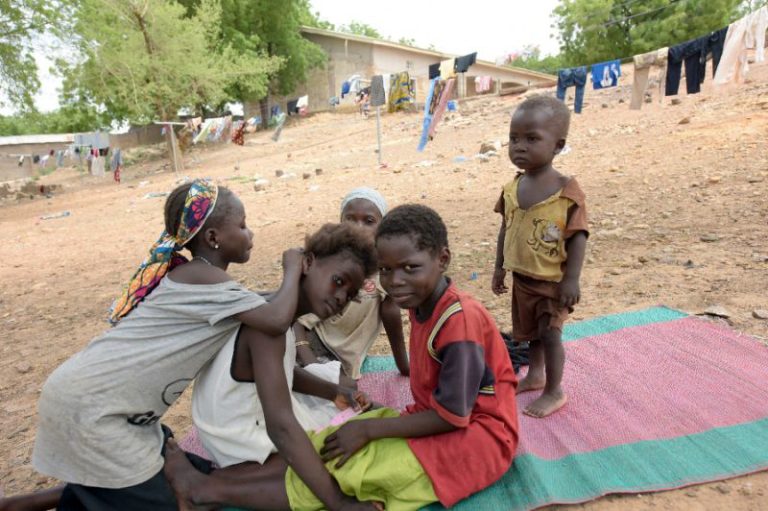
The United Nations Children Education Fund (UNICEF) said it had identified 240,560 out-of-school children in three Local Government Areas (LGAs) of Zamfara State.

Children
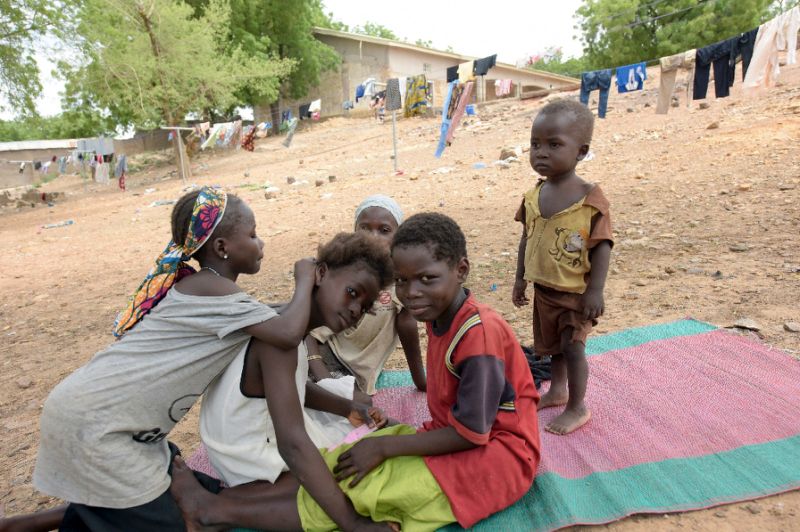
Displaced children in a camp in Nigeria. Photo credit: Yahoo News

The affected LGAs are Bukkuyum, Maradun and Zurmi

The Chief of UNICEF in charge of Sokoto Field office, Mohameden Fall, disclosed this on Friday, April 20, 2018 in Zurmi at the launching of cash transfer disbursement to parents of affected children under the UNICEF’s Educate A Child (EAC) project.

He said the number was derived from the household mapping and listing of out-of-school children conducted in 2016 through the state Universal Basic Education Board when the number of out-of-school children was identified in the three LGAs.

“In Bukkuyum, a total of 93,849 out-of-school children were identified with 41,134 males while 52,715 were females.

“In Maradun 63,943 were identified with 28,963 males and 34,980 females while Zurmi has a total of 82,768 children with 38,286 males and 82,768 females,” he said.

Fall also noted that the EAC project was bring funded by Qatar Foundation as personal initiative of Sheikh Nasser of Qatar and implemented by UNICEF in collaboration with Sokoto, Kebbi, Katsina and Zamfara state governments.

According to him, the overall aim of the EAC was to extend the access to quality of basic education for 501, 749 out-of-school children across the four states by 2020.

“We are targeting to reach out 10,347 in the first phase in Zamfara State, considering the alarming number of out-of-school children in the state.

“We are calling on the state government to extend this programme to other local government areas,” he said.

The project was initiated to assist households in sending their children and keeping them in school, in the benefiting communities who will receive an unconditional cash transfer of N8,000 per child that falls between six and 11 years for the period of two years.

“Cash transfer is one of the seven strategic interventions under the EAC to enable the government of the target states and UNICEF to reach more out-of-school children,” he said.

He thanked the state government for the recent award of N1billion contract for school renovation and the release of over N1 billion UBE counterpart funding on UNICEF intervention.

In his remark, the state Commissioner of Budget and Economic Planning, Alhaji Ibrahim Birnin-Magaji thanked the UNICEF and Qatar Foundation for initiating the project.

Birnin-Magaji said that the project was complementing the state government policy of promoting pupils enrollment and enhancement of basic education in the state.

He said the state government was ready to continue to partner with the UNICEF and other development partners to improve quality education in the state.

“The state government is committed to enhance teaching and learning in the state, from 2011 to date, we have renovated over 4,000 classrooms to reduce congestion of pupils.

“We trained over 8,000 teachers and established 50 ICT centers across the primary and junior secondary schools in the state.

“These efforts have increased our enrollment drive from 283,000 in 2012 to 600,000 as of now”, he said.

Birnin-Magaji said the plan was one the ways to recruit more teachers and implement N18,000 minimum wage for primary and junior secondary school teachers in the state.

Earlier, the state SUBEB Chairman, Murtala Jangebe, Commended the State Government and UNICEF for the project, saying that it would increase the pupils’ enrolment in the state.

Jangebe said 3,449 children have been selected from the 14 communities to benefit from the assistance of N8,000 under the project per term, per child.

“We are disbursing N27 million as first phase to beneficiaries from Alawa, Kadage, and Doka communities from the three LGAs of Bukkuyum, Maradun and Zurmi respectively.

”In each of the selected LGA, one community was chosen for the flag-off as first phase and we are going to continue with the remaining 11 communities,” he said.

By Abubakar Ahmed