Home Blog Page 1880

Charlevoix 2018: LDC group urges G7 ambitious climate action

0

As leaders from the world’s largest advanced economies prepare to meet in Charlevoix, Canada from June 8 to 9, 2018 for the annual G7 Summit, the Least Developed Countries (LDC) Group is calling on the G7 to demonstrate that they are moving forward with ambitious climate action and stand in solidarity with the developing world.
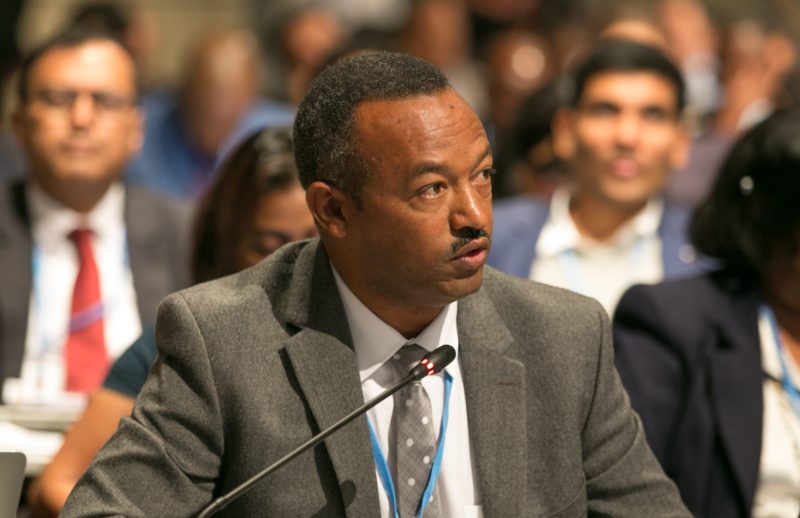
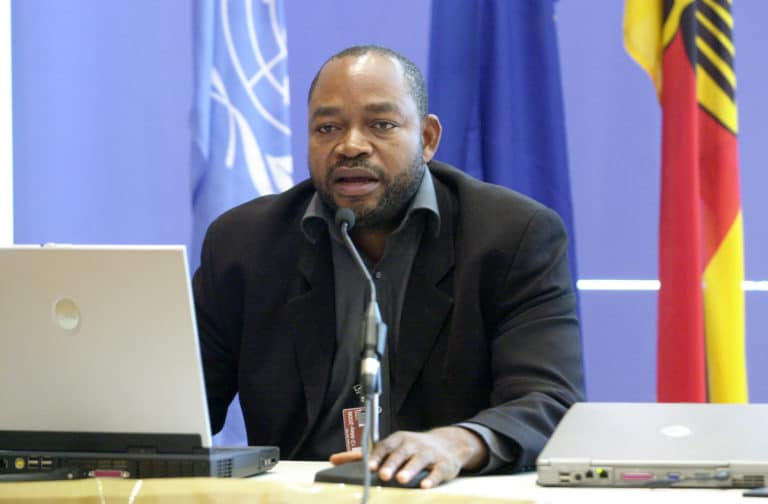
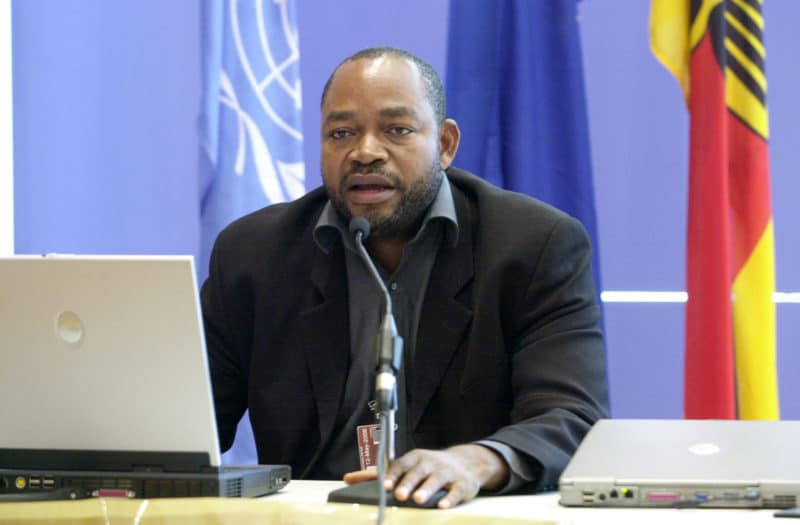
Gebru Jember Endalew
Chair of the Least Developed Countries (LDC) group, Gebru Jember Endalew

A key focus area of Canada’s G7 Presidency is working together on climate change, oceans and clean energy. Addressing climate change is also essential to effective outcomes across the other themes of investing in growth that works for everyone; preparing for jobs of the future; advancing gender equality and women’s empowerment; and building a more peaceful and secure world.

Mr. Gebru Jember Endalew, Chair of the LDC Group, said: “G7 countries need to take the lead in driving ambitious action against climate change. The Earth’s carbon budget is rapidly dwindling, and the existing pledges made by the international community do not add up to the emission reductions necessary to limit global temperature increase to 1.5 degrees and protect present and future generations. This is despite many LDCs and other developing countries committing to actions exceeding their fair share of the effort.

“While the G7 continue to benefit from economies and infrastructure built on fossil fuels, climate change is having devastating impacts across the world. The G7 needs to begin taking action consistent with their responsibility for the climate crisis and with their capability to respond. This includes fulfilling pre-2020 commitments on climate action and support, and moving forward with more ambitious nationally determined contributions that are in line with the long-term goals under the Paris Agreement and will enable the Sustainable Development Goals to be met.”

Endalew noted that climate finance remains well below the $100 billion that developed countries committed to providing annually by 2020.

He explained: “Finance is key to enabling an effective global response to climate change so that all countries have the tools to limit greenhouse gas emissions and protect their citizens from its impacts. The G7 must honour their promises to scale up the financial, technology and capacity support they provide, and must also seriously consider how they can enhance transparency, reliability and predictability of that support.

“The G7 should prioritise investing in a low carbon, climate resilient future, both domestically and abroad. This should include a commitment from the G7 to present a roadmap to phase out fossil fuel subsidies that are hindering efforts to combat climate change. The G7 should build and promote economies that support the needs of all and that do not impinge on the ability of others to live a safe and dignified life.”

The LDC Group chair reflected on the significant impact of severe weather events on economic development, food security, health and migration, saying:  “The LDCs are particularly vulnerable to climate change and increasingly suffer loss and damage from climate impacts. The G7 needs to step up and work constructively to establish a concrete plan to protect people and the planet.”

Endalew also welcomed the G7’s focus on advancing gender equality and women’s empowerment, and said: “The empowerment of women, youth, indigenous peoples and local communities is a catalyst for climate action, and should be at the forefront of the international community’s response.”

Looking forward in 2018, Endalew said: “The LDC Group looks forward to constructive conversations in June at the Petersberg Climate Dialogue and the Ministerial on Climate Action. A great deal of work needs to be done in 2018 ahead of COP24, which will be the key moment to finalise the guidelines for implementing the Paris Agreement. We need to see ambitious outcomes this year, with scaled up commitments by the G7 and other countries that are not shouldering their fair share of the international climate effort, informed by the outcomes of the IPCC special report on 1.5 degrees and the Talanoa Dialogue.”

Work on N493m Sokoto erosion control project completed

0

The N493 million erosion control project being undertaken by the Federal Government in Tambuwal Local Government in Sokoto State has been completed.

Aminu-Tambuwal
Governor Aminu Tambuwal of Sokoto State

The News Agency of Nigeria (NAN) reports that the project was flagged-off on June 4, 2017 by Minister of State for Labour and Productivity, Prof. Stephen Ocheni, who represented President Muhammadu Buhari.

The project involved road improvement at Dogon Daji, erosion control works at Bashire and works on man-made gully erosion at Jabo community.

Residents said the speed with which the work was completed was commendable, adding that it would help ease threats of erosion and flooding in the affected communities.

Some of the residents, Malam Chika Malami, Abubakar Muhammad and Aishatu Jabo, said they had suffered the problem of erosion which has devastated their farmlands, roads and residents.

They expressed the hope that, with the completion of the project, the threat has been permanently contained.

The residents said they would remain grateful to President Buhari for coming to their aid after years of complaints to previous administrations without positive response.

Managing Director of the contracting firm, Alhaji Muhammad Bello, assured that the project was executed within specifications and would pass all integrity tests.

He urged the affected communities to take ownership of the project to ensure that it served them for long.

By Habibu Harisu

Orelope-Adefulire charges stakeholders to beat plastic pollution

0

The Senior Special Assistant to the President on Sustainable Development Goals (SDGs), Princess Adejoke Orelope-Adefulire, has called on stakeholders to support the drive to beat the unending pollution caused by inappropriate disposal of plastic materials.

Adejoke Orelope-Adefulire
Senior Special Assistant to the President on Sustainable Development Goals (SDGs), Princess Adejoke Orelope-Adefulire

Princess Orelope-Adefulire gave this charge in a statement issued in commemoration of the 2018 World Environment Day celebration with the theme: “Beat Plastic Pollution”. She added that plastic pollution has become an epidemic in the Nigerian society and indeed across the world.

The Presidential Aide aligned with reports by UN Environment, which shows that “we throw away enough plastic to circle the Earth four times every year. Much of that waste doesn’t make it into a landfill, but instead ends up in our oceans, where it’s responsible for killing one million seabirds and 100,000 marine mammals every year, and it can persist for up to 1,000 years before it fully disintegrates. For the good of the planet, it’s time to rethink how we use plastic.”

“Every year, 500 billion plastic bags are used around the world; 13 million tonnes of plastic leak into the ocean, 17 million barrels of oil are used on plastic production; 100,000 marine animals are killed by plastics; and 83% of tap water are found to contain plastic particles. This is alarming and dangerous to the environment. In particular, it’s impacting the ocean, which is the lungs of our planet, providing most of the oxygen we breathe, major source of food and medicines and a critical part of the biosphere,” adds the UN body.

Orelope-Adefulire maintained that there is need for the public to help beat plastic pollution by switching to materials that are easily reusable as alternative to plastic, adding that as the planet continues to grow relentlessly in population, a corresponding growth in waste products also occurs. She noted that though the society has an etiquette that separates waste products from the immediate living areas, the waste however creates huge environmental problems and impacts the entire planet. She therefore advocated for continuous recycling as a method to deal responsibly with the plastic problem.

The goal of recycling is to separate waste products into two major categories, Biodegradable and Non-biodegradable, with plastic constituting a larger part of the non-biodegradable waste component.

“Beat Plastic Pollution” is a call to action for everyone to come together to combat one of the great environmental challenges of our time. It also invites all to consider how they can make changes in their everyday lives to reduce the heavy burden of plastic pollution on the environment, wildlife and the health of the people.

While plastic has many valuable uses, people have become over reliant on single-use or disposable plastic – with severe environmental consequences. Around the world, one million plastic drinking bottles are purchased every minute. Every year, up to five trillion disposable plastic bags are used, with 50 per cent of the total plastic in single use.

Ogun cautions residents against plastic pollution

0

The Ogun State Commissioner for Environment, Mr. Bolaji Oyeleye, has cautioned the residents of the state against dumping used plastic sachet and bottles into the waterways across the state, as it posed a threat to the drainage and society at large.

Bolaji-Oyeleye
Ogun State Commissioner for Environment, Bolaji Oyeleye

Oyeleye, in a state made available by his media Aide, Mr. Goke Gbadamosi, stated this while joining the world to celebrate the 2018 World Environment Day with the theme “Beat Plastic Pollution.”

While stressing the need for concerted efforts towards eliminating plastic pollution in the country, Oyeleye described plastic pollution as one the great environmental challenges being faced today across the country. He however suggested of recycling of the plastic waste into another product.

He added that man’s over reliance on plastic products has resulted into severe pollution of the oceans and seas, thereby endangering marine life and posing a threat to human health.

He noted that the condition of the environment is declining due to rapid industrialisation, deforestation, global warming, pollution and changing of lifestyle, saying that there was urgent need to for sustained awareness towards addressing these challenges.

Oyeleye said the plastic pollution could be minimised by recycling used plastic products, adding that to effectively clean up and discontinue plastic production, the public must embrace alternatives, such as paper bags and recyclable bags.

In a speech, titled “Beating Plastic Pollution”, an environmental expert and don at the Federal University of Agriculture, Abeokuta, Prof. Toyin Arowolo, identified government intervention through taxes and levies on the use of plastic as a vital solution to the challenge. He added that Rwanda, China, Kenya, and several other countries had implemented policies towards reducing plastic pollution.

He then advocated segregation of waste from homes in order to reduce the volume of plastic that end up in water bodies, saying that Nigerians should also consciously find other alternatives to plastic products that they use on daily basis.

Meanwhile, the consultant to Ginger Burgeap and French Agency for Development (AFD), Karine Escande, during her presentation on the feasibility study of the Solid Waste Management Project in Abeokuta, the state capital, noted that Ogun State must improve its capacity for solid waste collection and reduce waste-to-landfill in order to have an integrated and sustainable waste management in the state.

She commended the state government’s desire to develop sustainable waste management in all its municipalities, expressing optimism that its partnership with development partners would yield positive results.

WED 2018: Youths give deteriorating Isolo estate environment a facelift

0

The Conservative Environmental Growth and Development Centre (CEGDEC), in collaboration with a group of youths called Estate Youth Parliament (EYP) in the Low-Cost Housing Estate, Oke-Afa, Isolo in Lagos, commemorated the World Environment Day (WED) 2018 by contributing significantly to the cleaning up of the environment.

Estate Youth Parliament
Members of Conservative Environmental Growth and Development Centre (CEGDEC) and Estate Youth Parliament (EYP) during the exercise

The group, led by Mr. Yusuff Adeyemi, is said to passionate about the state of the environment of the estate, which has been deteriorating. To this effect, members took the bull by the horn and joined force with CEGDEC to actualise positive change in the disorderly residential environment.

Over the years, the campaign for the 3Rs of waste management (reduce, reuse and recycle) had been ongoing in schools and amongst residents by CEGDEC. However, this year’s campaign is marked with the practical demonstration of cleaning up exercise, meant to continue beyond WED 2018, according to CEGDEC officials.

The cleaning up began with the manual fixing of major potholes on the roads with rubbles, especially as the road conditions have become unmotorable. Gutters were cleaned of filth, while wastes including plastics were cleared to give way to grounds for tree planting. Indeed, the wastes were cleared for the propagation of green environment, says CEGDEC.

The host local government, Ejigbo Local Council Development Authority, has also been called upon to sustain the somewhat laudable green initiative by the amiable youths. A courtesy visit was made prior to the exercise to reiterate the need for the local council’s intervention. The host community thanked the untiring hands of the groups that contributed to the cleaning up exercise, while the residents at large were urged to be responsible for the wastes they generate.

The promotion of Reuse, Reduce and Recycle is the best solution by individuals to curb the menace of plastic wastes in our society, Mrs. Maryam Olayeni, CEGDEC’s representative, emphasised.

“All hand must be on deck to continue the race to beat Plastic Pollution, though the bulk control lies with the necessary authority to put in place a policy that discourages the propagation of plastics in our society. Biodegradable materials should replace plastics which are non-degradable, besides plastics disadvantages outweigh its advantages,” Mrs. Olayeni closed on this note.

Good pricing will reduce plastic materials’ use – FADE

0

The Programme Manager, Fight Against Desert Encroachment (FADE) Africa, Bunmi Obanawu, has canvassed good price on plastic materials to discourage Nigerians from using them.

Ayoola Olukanni
Amb. Ayoola Olukanni of NACCIMA making a presentation at the forum. Founder of FADE Africa, Newton Jibunoh, and others in rapt attention

Speaking in Lagos on Tuesday, June 5, 2018, during an art exhibition tagged “Art Goes Green” to mark the World Environment Day (WED), Obanawu said: “When we are made to pay for plastics, we learn to make less use of them.”

With the theme “Beat Plastic Pollution”, the 2018 WED is urging humanity to refuse any plastic material that cannot be reused, with the slogan “if you can’t reuse it, refuse it”. This is a clever phrase reminding people to be conscious of their plastic usage and to try as much as possible to reuse their plastic.

The United Nations is teaming up with organisations and individuals around the world to raise awareness on the issue of plastic pollution and also promote a reduction in the single use of plastic.

According to Obanawu, we should learn to go shopping with our old bags; that way, we would be saving humanity from danger by reducing the amount of plastic in circulation.

She noted that Nigerians were very dependent on plastics, hence the materials can’t be eliminated completely, but “we can reduce the problem.”

FADE Africa is a non-government organisation founded by Newton Jibunoh, the famed explorer and adventurer. The members pride themselves in environmental activism and have been involved in numerous environmental activities since inception.

“Plastic is everywhere. It is in our homes, offices, parks, cars and natural environment. More than 70 per cent of the plastic used today is used only once and discarded. Plastic materials take more than 100 years to fully decompose, but are used on a daily basis. With all the plastic in circulation, it forces us to ask ‘where is our plastic going?’” she said.

The exhibition is FADE Africa’s bid to answer the question and many more bordering on the future of the environment.

The event was not only to enlighten the guests on other ways of reusing their plastic waste artistically; it was also an avenue for the participants to learn about the increasing danger of plastic pollution with the intention of changing mindsets for the better.

To get the young minds involved in such a positive event, FADE Africa invited students from four secondary schools: Victoria Island Senior Secondary School, Kuramo Senior College, Government Senior Secondary School and Parenthood Foundational International College to be a part of the event. Some of the schools displayed arts and crafts, while others gave short intelligent speeches. Rosemary Adibe spoke on behalf of Victoria Island Senior Secondary School.

Wale Adebiyi, co-founder of Wecyclers, a recycling company, talked about the dangers of plastic pollution, the need to imbibe the culture of recycling and how his company used incentive-based strategy to encourage people to recycle.

Wecyclers says it has over the years worked to raise awareness on the issue of recycling waste.

He urged Nigerians to imbibe the 3Rs of plastic use: reduce usage, reuse or recycle.

Asserting that recycle should be the last resort, he urged the participants to teach others to manage plastic.

The artists who showcased their art made statements with their thought-provoking pieces of art.

Yelloseesee Uwaoma, who makes classic art with regular pens, displayed beautiful pieces created from plastic. The idea behind his work was recreating art from trash.

Odunayo Ajayi, a photographer and concept artist, illustrated how the society is drowning in plastic.

Olusola Ajagbonna, an upcycling professional from My Craft Life In Lagos, also graced the occasion with her incredible artefacts made from recycled plastic.

She engaged the participants in a short session of upcycling plastic. This proved to be very engaging and interesting as people left with light bulb ideas for other uses of their plastics instead of disposing after a single use.

Amb. Ayoola Olukanni, the newly appointed director-general of Nigerian Association of Chambers of Commerce, Industry, Mines and Agriculture (NACCIMA), at the event, stated that going plastic-free was possible, as Kenya, African country, had successfully banned plastic.

The environmentalist canvassed inter-generational trust, where the older generation would save the environment for coming generations. “One generation must treat the environment in such a way that coming generations will find it conducive.”

Jibunoh encouraged everyone present to care a bit more about the environment. He addressed the youth especially because of his belief that the youth were indeed the future.

Olukanni left the audience with the catch sentence: environment is the heart of the matter; let us make it matter of the heart.

Music video highlights health hazards, sufferings associated with unclean cooking

0

The Nigerian Alliance for Clean Cookstoves, in partnership with the International Centre for Energy Environment and Development and Heinrich Boell Foundation, launched the “No Smoke” Music Video on Tuesday, June 5, 2018 in Abuja to commemorate the World Environment Day. The event had in attendance over 100 stakeholders from government, private sector, NGOs/CSOs, the international community as well as the media.

Ewah Eleri
National Coordinator of Nigerian Alliance for Clean Cookstoves, Ewah Eleri

The song in the music video is rendered by the duo, Tai n Kenny, in support of clean cooking solutions especially for the Internally Displaced Persons (IDPs) in the North East Nigeria. It highlights the health hazards and sufferings of millions of people (especially women) cooking with open fire using firewood.  About 95% of IDPs, host communities and returnees in the Northeast depends on firewood and charcoal for cooking and 85% of these households face protection risks when collecting firewood. Women and the girl child walk long distances and spend hours a week in search of firewood. This also contributes to deforestation and the effects of climate change.

In Nigeria, more than 120 million cook over an open fire and, according to World Health Organisation (WHO), smoke from open fire causes more than 95,000 deaths annually in Nigeria. After malaria and HIV/Aids, this is the third highest killer, mostly of women and children.

Clean cooking saves lives, empowers women, improves livelihood and combats climate change.  It is a priority area in energy access that is central in achieving the goals of the country’s commitment to mitigate as well as adapt to the effects of climate change. Cooking should not kill and clean cooking energy for all is not only possible but a right for our citizens.

The National Coordinator of Nigerian Alliance for Clean Cookstoves, Ewah Eleri, in his welcome address, acknowledged the efforts of various partners and stakeholders from government, private sector, NGOs/CSOs and the international community in moving the clean cooking industry forward. He stated that he is glad the issue of clean cooking is being raised at the policy level. He hopes that the music video will contribute to raising awareness about the need for clean cooking.

Senator Oluremi Tinubu, Chairman, Senate Committee on Environment, in her keynote address recognised the challenges of using firewood for cooking and noted that women and children in rural and urban areas deserve a better life.

She said: “Our mothers can stay healthier and our environment better if we are determined to switch to clean cooking solutions. I am proud to be associated with this event that the Nigerian Alliance for Clean Cookstoves has put together. It is my hope that ‘No Smoke’ will get a lot of airplay and the video being launched will be a feature on our television screens.”

She stated further that the music video would create awareness about the dangers of air pollution and encourage everyone to switch to cleaner methods of cooking.

Her words: “It is my hope that, beyond today’s celebration, the advocacy for cleaner and safer cooking methods will be intensified and the message taken to rural communities that may not see the video.”

She ended her address by reaffirming that the Nigerian Senate remains committed to ensuring that the most vulnerable amongst us are protected. The Senate Committee on Environment will not wane in its commitment towards achieving a healthier environment, she added.

Representative of the Food and Agricultural Organisation (FAO), Jonas Bervoets, commended the efforts of the Nigerian Alliance for Clean Cookstoves and other stakeholders in promoting clean cooking solutions. He underscored the need for safe and environment friendly access to fuels and energy for the Internally Displaced Persons (IDP).

He noted that the FAO, in collaboration with other partners including ICEED, is facilitating a coordinated and effective response to the fuel and energy needs of crisis-affected communities in Northeast Nigeria through the Safe Access to Fuels and Energy (SAFE) workgroup. He further noted that an FAO-ICEED partnership has set up three clean cookstoves production training centres in Maiduguri, the capital of Borno State.

Dr. Yerima Peter Tarfa, Director, Department of Climate Change, Federal Ministry of Environment, noted that the Federal Government is committed to promoting the issue of clean cooking which has the potential to help Nigeria meet its obligations in the National Determined Contributions (NDCs) agreed upon at the Paris climate summit.

He remarked that the music video would play an important role in raising awareness about the need for clean cooking among policy makers and private sector as well as contribute to behavioural change on how we cook.

The Head of Missions Spouses Association (HOMSA) also sent a goodwill message on the occasion.

Osinbajo wants big firms to localise international plastic recycling policy

0

Vice President Yemi Osinbajo on Tuesday, June 5, 2018 requested foreign consumer goods giants operating in the country to maintain their global recycling policy in the country to eliminate indiscriminate disposal of plastics.

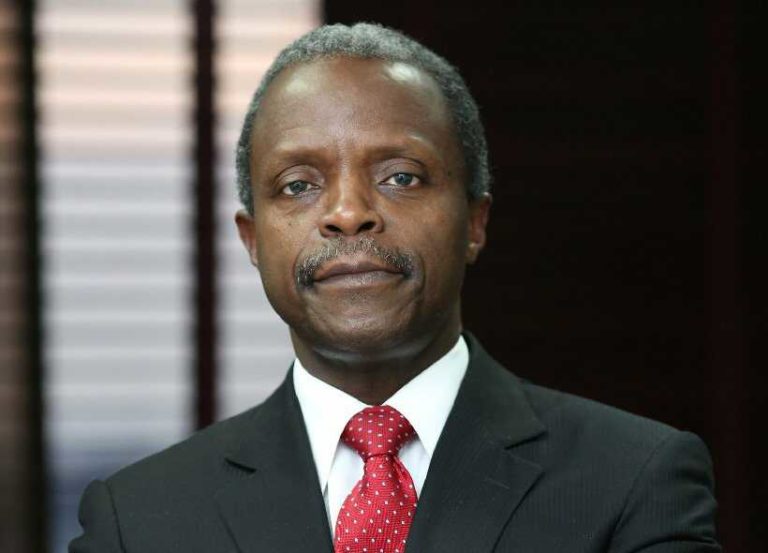
Osinbajo
Vice President of Nigeria, Prof Yemi Osinbajo

The Vice President gave the advice during the 2018 World Environment Day with the theme: “Beat Plastic Pollution” in Abuja.

Osinbajo said Coca Cola had committed to collecting and recycling the equivalent of all drink containers and chips every year, amounting to about 110 billion plastic bottles, while other consumer goods giants had begun to utilise more recycled plastics.

“We expect that the consumer giants will make and fulfil the same pledges in Nigeria and also partner governments including states and local governments to ensure that we maintain a critical balance between economic growth and a safe and liveable environment.

“It is my view that for controlling the proliferation of plastic sachets, we must go back to the major producers of fast foods and goods to put in place recycling programmes that could effectively ensure that while we seek environmentally friendly options for packaging, we are keeping the environment  as free of plastics as possible.’’

The vice president noted that the country was in a good position to lead Africa and the rest of the world in beating plastic pollution.

He added that there was no need to reinvent the wheel as there were effective initiatives being considered in policy formulation.

According to him, aside from the responsibilities of government, there are also corporate and individual responsibilities.

“We can beat the plastics pollution, we can beat this epidemic but certainly will achieve our objectives much faster if all work together,’’ he said.

He said that the reflection of the day was on what to do with plastic pollution which had become an environmental epidemic created daily and relentlessly by the consumption habits that favour the one-off use of plastics, plastic bags and bottles, sweet wrappers and toys.

He said that scientists had said that such plastics would take between 500 years and 1,000 years to degrade, noting that much of un-recycled plastics were in excess of  4.5 billion tonnes and a lot ended up in the oceans.

He noted that salt and sunlight broke down such plastics into micro plastics eaten by fishes and other marine creatures which could be consumed by humans.

Osinbajo said that the cost to fisheries, tourism and biodiversity was much and that government had tried to remain ahead in planning, policy and reform.

“The Ministry of Environment in collaboration with stakeholders has developed a national strategy for the phasing out of non-biodegradable plastics.

“The ministry is also developing a national plastic waste recycling programme involving the establishment of waste recycling plants across the country in partnership with state governments.

“A total of eight plants have already been completed and handed over to the states while 18 others are at various stages of completion,’’ he said.

Osinbajo added that the Federal Government was partnering state governments to establish waste recycling plant under the community-based waste management programme in the ministry.

He explained that two of such plants were completed in Ilorin, Kwara, one in Lokoja, Kogi, while one was ongoing in Karu, Nasarawa, adding that two privately run programmes also existed in Gombe and Kano states respectively.

The vice president also highlighted the marketing options for cheap packaging of foods and drinks where consumers were relatively poor.

“The micro-marketing methods of fast moving consumer goods such as drinking water in sachets and the retailing of detergents, sugar and milk in sachets have been an effective means of selling these foods and beverages in affordable potions to millions of consumers.

“Sale of items in cellophane bags may be easier to deal with; Uganda, Kenya and Bangladesh amongst others have banned the use of cellophane bags with considerable success,’’ he noted.

By Donald Ugwu

Mexican, Spanish firms go climate neutral

0

Two companies in the business of helping others reduce their climate impact have now taken the Climate Neutral Now pledge, which will help guide and make public their own efforts to go climate neutral.

Daniel Lazaro
Ecoterrae CEO, Daniel Lazaro

The two companies, MEXICO2, an initiative of the Mexican Stock Exchange, and Ecoterrae Global Solutions, headquartered in Seville, Spain, will measure their emissions, reduce what they can, and offset the rest using Certified Emission Reductions from projects registered under the UN’s Clean Development Mechanism.

The Mexican Stock Exchange and British embassy in Mexico collaborated to form MEXICO2, which supports the transition to a green economy in Latin American countries through offerings on its carbon trading platform and work on green bonds.

“The construction of the Mexican carbon market is an endeavour that requires all parties to commit for a better tomorrow,” said Mariana Ayala, commercial coordinator of MEXICO2.

“There is no way we can achieve the (Paris Agreement) 1.5º (Celsius) target without an emissions trading scheme in Mexico and in several countries in the region,” added MEXICO2’s Eduardo Piquero.

Ecoterrae Global Solutions supports efforts by companies and organisations to reduce greenhouse gas emissions in alignment with the Spain’s climate change objectives. Since 2012, the company has been providing expert technical support, helping companies and organisations identify opportunities, implement projects and locate financing.

“Our commitment to the Climate Neutral Now initiative reflects a forward step in our global strategy as a company dedicated to the fight against climate change by means of the offsetting of our clients’ carbon footprint as well as ours,” said Ecoterrae CEO, Daniel Lazaro.

As part of its work, Ecoterrae has identified, promoted and led the implementation of more than 160 project activities under the Spanish Ministry of Environment’s Climate Projects (Proyectos Clima) initiative, which supports emission reduction projects in the country. The projects generate carbon units that are purchased at a pre-agreed price by the Ministry.

“We are proud to count MEXICO2 and Ecoterrae as signatories of the Climate Neutral Now pledge,” said Niclas Svenningsen, Manager of Global Climate Action at UN Climate Change. “We need companies with expertise in climate action to help us promote and catalyse further action by all organisations.”

Lagos urges residents to control plastic pollution

0

The Lagos State Government on Tuesday, June 5, 2018 urged the residents to support its efforts to control plastic pollution in the state.

Babatunde Durosinmi-Etti
The Lagos State Commissioner for Environment, Mr Babatunde Durosinmi-Etti

Commissioner for the Environment, Mr Babatunde Durosinmi-Etti, gave the advice during the commemoration of the World Environment Day (WED) in Lagos.

Durosinmi-Etti, who was represented by Mr Babatunde Hunpe, the Special Adviser to Gov. Akinwunmi Ambode on Environment, stressed the need to tackle plastic pollution because of its effects on humans and aquatic life.

He said that plastic pollution created serious environmental and health hazards by threatening the marine life.

”As stakeholders, we all have a role to play in attaining a cleaner and healthier environment.

”We need to encourage bagging of wastes to prevent indiscriminate dumping and cooperate with the government in its efforts to make Lagos a cleaner state,’’ Durosinmi-Etti said.

He urged the residents to exhibit their actions in line with the 2018 WED theme: “Beat Plastic Pollution” aimed at reducing, reusing and recycling.

The commissioner said that WED, which was recommended by the United Nations to propel nations and humanity for the conservation of the environment, was observed in over 100 countries of the world.

He said that the celebration underscored the need in Lagos State to rededicate national efforts for sustainable development by putting environmental concerns at the centre of all developmental plans.

According to him, this year’s WED is a day set aside to address numerous environmental concerns and problems that threaten not just the human race, but planet as a whole.

He said it was a day that simply provided the opportunity to put the environment first and review the existing and emerging environmental problems with a view to creating awareness and proffering solutions.

According to him, the World Economic Forum, in its recent review, puts plastic wastes ending up in the ocean at 80 per cent.

”The World Economic Forum’s review reported the possibility of the ocean containing more plastics than fish by 2050, if problems associated with plastic pollutants are not adequately addressed.

”It is already a well-known fact that marine life is threatened by plastic pollution.

”Aquatic animals are hurt when they get trapped in the web of plastic wastes or feed on these wastes, which often lead to their death.

”Furthermore, degraded bio-products have also been proven to have negative effects on the reproductive capabilities of fishes.

”For the avoidance of doubts, established plastic pollution facts stated that the world uses 500 billion plastic bags in a year,” he said.

According to him, facts have it that eight million tonnes of plastics end up in the oceans.

He said that people had not reused or recycled plastics appropriately and that they bought more plastics than they needed.

The commissioner said that there was need to find alternatives to eradicate the menace caused by these products to help sustain and save our environment.
‘We have only this planet to call our home, let us make it livable for all and for future generations.

”The responsibility to save and sustain our environment begins with us as individuals, communities, governments and industries,” he said.

By Okuanwan Offiong and Florence Onuegbu