Home Blog Page 1859

Regulate, not ban tobacco harm reduction products

0

Tobacco harm reduction products are facing opposition from many quarters in Africa, despite sufficient and mounting evidence that they are far safer alternative to smoking combustible cigarettes. Being a developing continent with a struggling public healthcare system and massive tobacco health burden of over half a million tobacco-related deaths every year, Africa could do well to adopt preventive measures in the form of tobacco harm reduction.

Cigarette-smoking
According to scientists, tobacco smoking is dangerous to health

However, a deadly combination of misinformation and vested interests is pulling countries in Africa towards prohibition. Several African countries have banned electronic cigarettes under state laws, while the more African governments have publicly declared their intention to follow suit with national bans.

While it is a fact that smoking declines where harm reduction products are made legal, African governments are banning tobacco harm products while cigarettes remain legal. This is a worrying trend for a region where smoking rates are on the increase. In sub-Saharan Africa, consumption increased by 52% between 1980 and 2016, or 164 billion cigarettes to 250 billion. Lesotho has seen a significant spike in smoking from 15% of its population in 2004 to 54% in 2015.

Low- and middle-income countries represent over 80% of tobacco users and tobacco-related deaths, according to the American Cancer Society and vital strategies. While governments have made appreciable efforts to discourage smokers through taxation and tobacco control measures, the impact has been inadequate for the approximately 80Million Smokers in Africa.

Bottom line is we have conclusive scientific evidence that smoking kills, yet cigarettes are not banned! Harm reduction products like e-cigarettes have been banned in Mauritania for example, a country where, every year, more than 900 of its people are killed by tobacco-caused disease. Still, more than 5,000 children (10-14 years old) and 24,4000 adults (15+ years old) continue to use tobacco each day. Complacency in the face of the tobacco epidemic insulates the tobacco industry in Mauritania and ensures that tobacco’s death toll will grow every year.

Since e-cigarettes are a safer alternative, African government should make informed decisions when it comes to these harm reduction products. They should regulate, not ban! Because there is no combustion, using these devices (“vaping”) is intrinsically less dangerous than cigarettes — 95 percent less harmful, according to Public Health England — and they can help adults to quit smoking.

England’s Royal College of Physicians urged doctors last year to “promote the use of e-cigarettes, NRT [nicotine replacement therapy] and other non-tobacco nicotine products as widely as possible as a substitute for smoking in the UK,” because they provide “nicotine without the smoke.” And Professor Michael Russell, whose research was the foundation for the 1988 U.S. Surgeon General’s report on nicotine addiction, said simply: “People smoke for nicotine but they die from the tar.”

In order for us to witness a significant decline in smoking rates in Africa, as witnessed in many European countries, harm reduction products should not be banned by the Governments, but rather regulated.

By Joseph Magero
Nigeria joins ‘Clean Seas’ campaign as UN lauds waste management scheme

0

As nations commit to healthy, thriving oceans and seas free from plastic pollution, Nigeria on Friday, June 8, 2018 joined the Clean Seas campaign. An initiative of the UN Environment, Clean Seas is considered the largest global compact for combatting marine litter, with commitments from 51 nations covering 62% of the world’s coastlines.

Nigeria Clean Seas
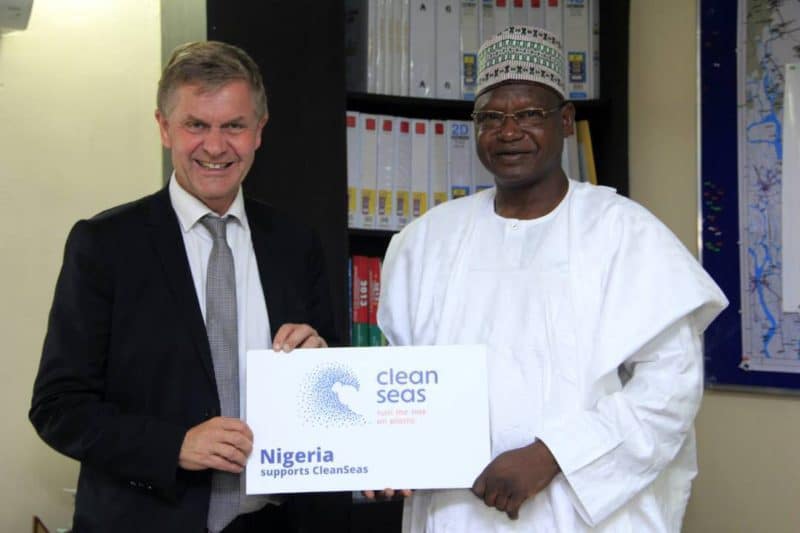
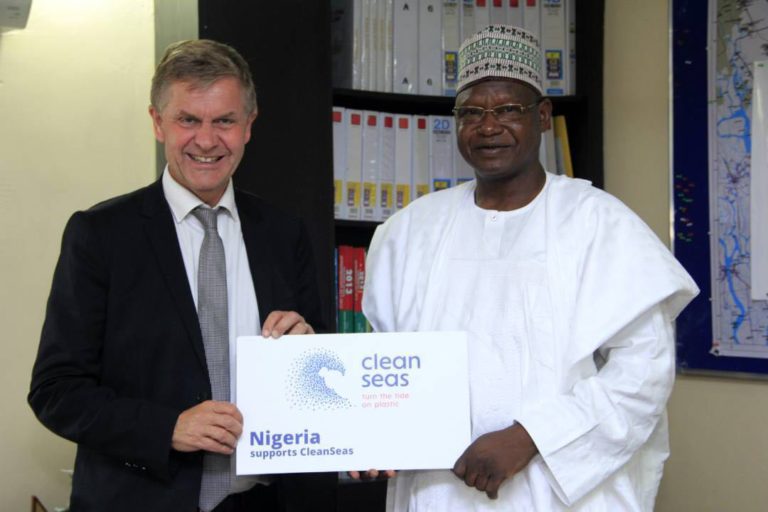
Executive Director of the UN Environment, Erik Solheim, with Environment Minister of State, Mallam Ibrahim Usman Jibril, as Nigeria officially joins the Clean Seas campaign

Visiting Executive Director of the UN Environment, Erik Solheim, met on the World Ocean Day in Abuja with Environment Minister of State, Mallam Ibrahim Usman Jibril, wherein the scope of Nigeria’s collaboration with Clean Seas was discussed.

“There is now more momentum than ever before to beat plastic pollution and protect the oceans that we all share from the tide of disposable plastic,” Solheim said. “Seeing so many countries rise to the occasion by joining the Clean Seas campaign means we are all moving towards healthier oceans that are free from pollution and full of life.”

Nigeria is currently in the UN’s list of top-10 of biggest plastic polluters, even as 26 major plastic waste recycling plants will be opened as part of the country’s commitment to the campaign.

Jibril said: “Nigeria is developing a national plastic waste recycling programme, as well as establishing plastic waste recycling plants across the country in partnership with state governments. At present, a total of eight plants have been completed and handed over to the states while 18 others are at various stages of completion. The Federal Government is also collaborating with state governments to establish plastic waste recycling plants under the community-based waste management programme in the ministry.

“Two plants have been completed in Ilorin, Kwara State, one in Lokoja, Kogi State, while work on another is ongoing in Karu Local Government Area of Nasarawa State. The plants are located at Bola Jari in Gombe State and Leda Jari in Kano State. The establishment of the plants would assist to turn waste to wealth and ensure the sustainability of the environment.”

Now fewer than eight new countries had joined the Clean Seas Campaign in the past week.

India – which joined the campaign on June 5, the World Environment Day – made a bold commitment to address plastic pollution upstream by banning all single-use plastics by 2022. The country further pledged to address the problem downstream, with its full coastal audit, developed in partnership with the Clean Seas campaign.

Other countries who pledged this week to step up their protection of the ocean and their coastlines include Argentina, Cote d’Ivoire, United Arab Emirates, Honduras, Guyana and Vanuatu.

In Abuja, Solheim during the visit disclosed that the UN Environment would support Nigeria’s waste management initiatives aimed at reducing, reusing and recycling plastics in the country.

He expressed happiness over the way the private sector in the waste management sector organised itself to provide technical solutions for effective collection and recycling of bottles in the country.

The director said that beverages companies should devise ways to ensure that consumers return the used bottles to prevent littering the environment.

He also urged the Federal Government to fast-track the clean-up of oil spill in Ogoni land.

Solheim, who recalled that the UNEP report on Ogoni clean-up was launched by former President Olusegun Obasanjo led administration, noted that people were interested to see physical development in the land.

He added that $1 billion counterpart fund set aside by the UN would have addressed the clean-up project if Nigeria showed the commitment by contributing its own fund.

Earlier, Jibril said that the Federal Government, oil companies and other relevant stakeholders in the oil sector had opened explorer account for the Ogoni clean-up project.

He said that, by this week, money would begin to go into the account, adding that out of 400 contractors that bided for the project, 150 were pre-qualified.

The minister said that every section of the country had its own environmental challenges, and that the government, in partnership with relevant stakeholders, was addressing the problems in all the six geopolitical zones of the country.

After Nigeria, Solheim would be visiting Benin, Togo, Ghana and Sierra Leone in the bid to explore how the UN body can strengthen cooperation with these countries.

Group takes ‘Beat Plastic Pollution’ campaign to Lagos markets

0

A non-governmental organisation (NGO), Environment Watch Initiative (EWI), has taken the Beat Plastic Pollution campaign to Lagos markets.

Lagos-market
A Lagos market

The campaigners organised a rally on Saturday, June 9, 2018 at the popular Iyana-Iba Market to educate traders on the dangers of indiscriminate disposal of plastic waste.

The 2018 World Environment Day celebrated on Tuesday, June 5 had the theme: “Beat Plastic Pollution”. In line with World Environment Day, the theme of the World Oceans Day (celebrated on Friday, June 8) centres around preventing plastic pollution – eight million tonnes of which ends up in the world’s ocean’s every year.

Convener of the Lagos rally and Director of EWI, Dr Cyril Amadi, said: “The earlier people come to terms with the inherent dangers of plastic pollution, the better for the society.

“We are talking of a sustainable environment; this campaign did not come out of wishful thinking; the problem is staring us all on the face.

“It is, therefore, pertinent for the government to create a means of recycling plastics.”

Amadi also called for attitudinal change by the state residents toward plastic waste disposal.

He hoped that EWI would soon take the rally to more markets in the state for greater impact.

An environmentalist, Mr Peter Obot, said at the rally that the world was contending with the menace posed by unwholesome disposal of plastic waste.

According to him, a tonne of plastic can cause a huge social problem.

”Since it seems we cannot do without plastic, we should endeavour to dispose of them properly.

“Its health hazard to human being especially when it is used to block drains causes monumental epidemics to the society.

“It also causes flooding that result in building collapse, disruption of farms and the ecosystem,” Obot said.

The rally was attended by hundreds of traders.

By Uche Eletuo

Green economy surpassing fossil fuel industry, says report

0

According to a report by FTSE Russell, a key provider of stock market indices and associated data, the green economy is now worth as much as the fossil fuel sector and offers more significant and safe investment opportunities, pointing towards even more significant growth in the future.

Green Economy
Green economy

The green economy is defined as an economy that aims at reducing environmental risks and ecological scarcities, and that aims for sustainable development without degrading the environment.

The green economy is also characterised by being efficient, clean, circular, collaborative and low carbon. It is thus said to be central to achieving the key objective of the Paris Agreement on climate action.

Presently, the green economy is worth as much as the fossil fuel sector with 6% of the global stock market, roughly $4 trillion, coming from the clean energy, energy efficiency, water, waste and pollution services.

If the sustainable economy maintains its current course, it could represent as much as 10% of the global market value by 2030, assuming around $90 trillion in green investment have been made by then.

FTSE Russel found that, over the last five years, green companies generated higher returns than the broader stock market. The report finds large investment opportunity, backed by global efforts to combat climate change and broader environmental challenges.

“Climate change is the death of progress and prosperity. Doing nothing about it is simply a bad investment in the future,” said UN Climate Chief, Patricia Espinosa, in a message to the World Manufacturing Convention in China earlier this year. “The shape of the new economy is clear: it’s clean, green and prosperous, and I encourage all of you to get on board,” she added.

The FTSE Russel report finds the green economy has spread across companies of various size, nature, and geographical range in contrast to fossil fuels which has shrunk. Still, more work is required to keep the global economy on track to meet the Paris agreement goals.

The report analyses a broad range of products and services from different sectors. Findings were based on the impact of these factors on climate change mitigation and adaptation, water, resource use, pollution, and agricultural efficiency.

In terms of diversification, large companies lead the way by representing roughly two-thirds of the total green market value. Similarly, small and medium sized firms now represent a larger number of green companies.

The energy industry, a very diverse segment ranging from building insulation to cloud technology, makes up more than half of the green economy with food, agriculture, water and transport being other important sectors.

Specifically, the build-up of cloud infrastructure technology is a focus for industry leaders such as Microsoft and Amazon. According to a recent Accenture report, companies can reduce carbon emissions by up to 90% by switching to cloud computing technology.

Alternative energy also plays a significant role in with rapidly growing and diversifying solar and more established technologies, such as large hydroelectric. Resources such as lithium for batteries, lightweight materials, organic foods or seeds developed to boost agricultural yields are also a key area of the green economy.

Moreover, the study found approximately 3,000 globally listed companies with exposure to the green economy. This number has risen by approximately 20% since 2009 and covers 30% of global, listed market value.

The largest companies in the green economy are a mix of both companies where the majority of their revenue is green, such as Tesla or Waste Management Inc, and large companies where a segment is green, such as Microsoft or Siemens.

The report allows investors to understand their interactions with the green economy while developing investment strategies by quantitatively measuring the world’s transition to sustainability.

Transformational decarbonisation is happening across the world in all sectors resulting from technological innovation, new and creative policies and political will at all levels.

The Global Climate Action Summit, which will take place from September 12-14, 2018 in California, is considered the next big opportunity for businesses to provide confidence to governments to “step up” ambition to achieve the goals of the Paris Agreement. The world expects a further strengthening of the green economy at the event.

Images: Green Bonds Week holds in Lagos, Abuja

0

The Nigeria Green Bonds Week held in Lagos and Abuja from Monday, June 4 to Thursday, June 7, 2018.

The event started with the Training Day with regulators in Abuja on Monday, on to the Roundtables discussing climate and investment, and was rounded up with Thursday’s formal launch of Green Bond Market Development in Lagos.

Ibrahim Usman Jibri
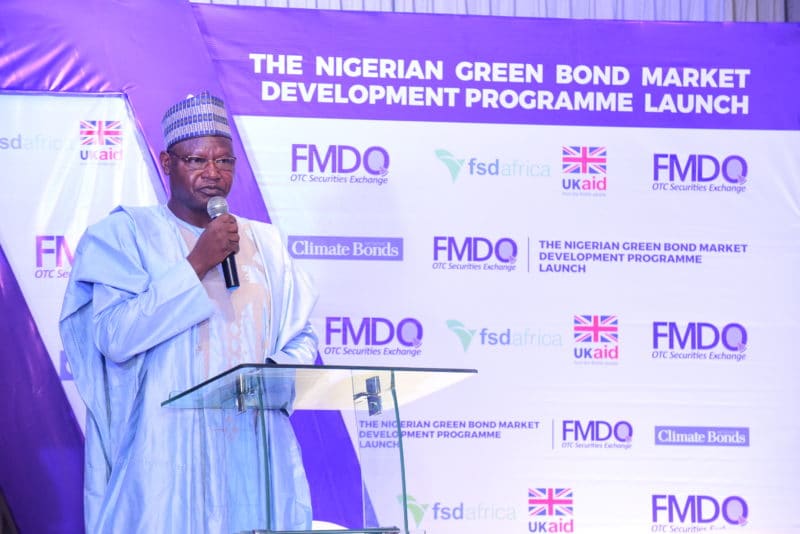
Minister of State for Environment, Mallam Ibrahim Usman Jibri
Nigerian Green Bond Market Development Programme
Minister of State for Environment, Mallam Ibrahim Usman Jibril, being presented the Leadership and Innovation in Capital Market Award on behalf of the Board of FMDQ OTC Securities Exchange by Mr. Bola Onadele Koko, Managing Director/Chief Executive Officer, FMDQ OTC Securities Exchange
Nigerian Green Bond Market Development Programme
Dr. Evans Osano, Director, Capital Markets Development, Financial Sector Deepening (FSD) Africa; Mallam Ibrahim Usman Jibril, Minister of State for Environment; and Mr. Bola Onadele Koko, Managing Director/Chief Executive Officer, FMDQ OTC Securities Exchange; and Ms. Justine Leigh-Bell, Director, Market Development, Climate Bonds Initiative
Nigerian Green Bond Market Development Programme
L-R: Senator Foster Ogola, Vice Chairman, Senate Committee on Capital Markets; Mr. Roosevelt Ogbonna, Group Deputy MD, Access Bank PLC; Dr. Evans Osano, Director, Capital Markets Development, Financial Sector Deepening (FSD) Africa; Ms. Laure Beaufils, British Deputy High Commissioner to Nigeria; Mallam Ibrahim Usman Jibril, Minister of State for Environment; Mr. Bola Onadele Koko, Managing Director/Chief Executive Officer, FMDQ OTC Securities Exchange; Ms. Justine Leigh-Bell, Director of Market Development, Climate Bonds Initiative; Mr. Bolaji Balogun, Chairman, FMDQ Debt Capital Market Development Project 2020/25; Mr. Oladele Afolabi, Director, Portfolio Management, Debt Management Office Nigeria; and Mr. Akinyemi Ashade, Commissioner for Finance, Lagos State


Images: When Shell delegation visited NGPTC

0

The Shell Nigeria Gas leadership team recently paid a visit to the Nigeria Gas Processing and Transport Company (NGPTC) in Warri, Delta State, South-South Nigeria.

Shell Gas
Managing Director, Shell Nigeria Gas, Ed Ubong (left); with the Managing Director, Nigeria Gas Processing; and Transport Company (NGPTC), Babatunde Bakare, during a recent visit to the NGPTC in Warri, Delta State, to discuss opportunities to further improve Nigeria’s domestic gas utilisation to industries and manufacturing clusters
Shell Gas
L-R: General Manager, Commercial, Nigeria Gas Processing and Transport Company (NGPTC), Justin Ezeala; Business Development Manager, Shell Nigeria Gas (SNG), James Makinde; Managing Director SNG, Ed Ubong; Managing Director NGPTC, Babatunde Bakare; Social Performance Discipline Adviser, SNG, Babatunde Olaleke; and General Manager, NGPTC, Nnamdi Nwachukwu, during a recent visit to the NGPTC in Warri, Delta State, to discuss opportunities to further improve Nigeria’s domestic gas utilisation to industries and manufacturing clusters

Adamawa cholera outbreak may spread to Cameroon, WHO warns

0

The World Health Organisation (WHO) has warned that if the outbreak of cholera in parts of Adamawa State in Nigeria continues it may spread to other areas and across the border to Cameroon, and thus posing a major public health threat.

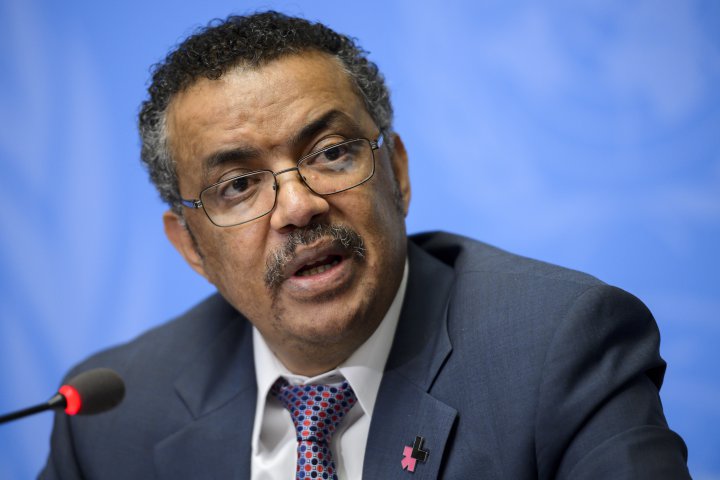
Dr Tedros Adhanom Ghebreyesus
Dr Tedros Adhanom Ghebreyesus, Director General of the World Health Organisation (WHO). Photo credit: FABRICE COFFRINI/AFP/Getty Images

The organisation on its Twitter Handle @WHONigeria on Saturday, June 9, 2019 said that a month into the outbreak, it had recorded 1,168 cases and 20 deaths in Mubi North and Mubi South Local Government Areas (LGAs) of the state.

The News Agency of Nigeria (NAN) recalls that during its first report of cholera outbreak in the state in May the organisation said that it recorded 434 cases of the disease and 13 deaths as at May 26.

WHO, however, reassured that it was carrying out continuous disease surveillance activities in Mubi North and Mubi South LGAs and managing a cholera treatment centre in collaboration with state health authorities.

It said that it has also ensured the chlorination of commercial sources of water and was presently conducting house-to-house active case search to prevent any spread of the disease.

WHO assured that it was leaving “no stone unturned” to ensure that the outbreak does not spread beyond the immediate vicinities of the two councils.

“Disease surveillance in emergencies can be tasking especially where insecurity, difficult terrain and frequent displacements hamper accessibility to the affected populations.

“Robust surveillance characterised by early detection, rapid and coordinated response are, however, critical in bringing outbreaks under control and reducing threat of further spread.

“New cases are being reported every day due to an active house-to-house surveillance led and coordinated by WHO.

“The case fatality ratio was 17 per cent as at May 12, but dropped to 1.7 per cent as at June 7, an indication that cases are being detected and reported early by the surveillance team.”

The organisation said that it has so far visited at least 3,141 households, disinfected up to 893 of these households including their neighbours and sensitised up to 7,199 persons in the community.

By Yashim Katurak

Don’t politicise National Water Bill, says government

0

The Federal Ministry of Water Resources says that the National Water Resources Bill is consistent with the Constitution of the Federal Republic of Nigeria and the Land Use Act, and should not be politicised.

suleiman adamu kazaure
Suleiman Adamu Kazaure, Water Resources Minister

The ministry also on Friday, June 8, 2018 urged Nigerians to disregard misleading allegations, which were evident from the various commentaries noticed from those opposing the Bill.

The minister, Mr Suleiman Adamu, in a statement, noted that the bill was not a new law; rather an amalgamation of Water Resources Laws that have been in existence as enshrined in LFN 2004.

He said reports in the media appear to have neglected the provisions of the bill which was for the development, management and efficient use of the Nation’s water resources in line with global best practices.

The minister further appealed to stakeholders and Nigerians in general to have faith in the bill as it was for the good of the nation.

“It is in the overall best interest of every citizen of the country that the process of its passage is not politicised.

“The general public is invited to note that this National Water Resources Bill when passed into Law will better serve and provide for the enhancement of the Nigeria Water Sector in line with global best practices.”

He said the attention of the ministry was drawn to the erroneous and distorted analysis of the National Water Resources Bill, which was currently before the Senate having already been passed by the House of Representatives.

He noted that the overall objective was geared towards efficient management of the Water Resources Sector for the economic development of Nigeria and the well-being of its citizens.

“These Laws are: Water Resources Act, Cap W2 LFN 2004, the River Basin Development Authority Act, Cap R9 LFN 2004, the Nigeria Hydrological Services Agency (Establishment) Act, Cap N1100A.LFN, 2004 and National Water Resources Institute Act, Cap N83 LFN 2004.

“These Laws are being re-enacted with necessary modifications in the new bill to actualise current global trends and best practices in Integrated Water Resources Management (IWRM). “

He added that that the bill, drafted in 2006 had passed through series of consultations among stakeholders up to 2008, since which time it received no priority attention by successive administrations until now.

The News Agency of Nigeria reports that the bill provides for professional and efficient management of all surface and ground water for the use of all people.

It provides for domestic and non-domestic use, irrigation, agricultural purposes, generation of hydro-electric energy, navigation, fisheries and recreation.

The Federal Government intends to ensure through the provisions of the law that “the water resources of the Nation are protected, used, developed, conserved, managed and controlled in a sustainable manner for the benefit of all persons in accordance with its constitutional mandate’’.

It is noteworthy that the Water Resources Bill provides for the creation of an enabling environment for public and private sector investment.

The bill also provides for capacity building processes to foster good governance whilst establishing a water use and licensing framework to ensure sustainable financing for Water Sector

By Tosin Kolade

World Oceans Day: Institute seeks safety of marine lives

0

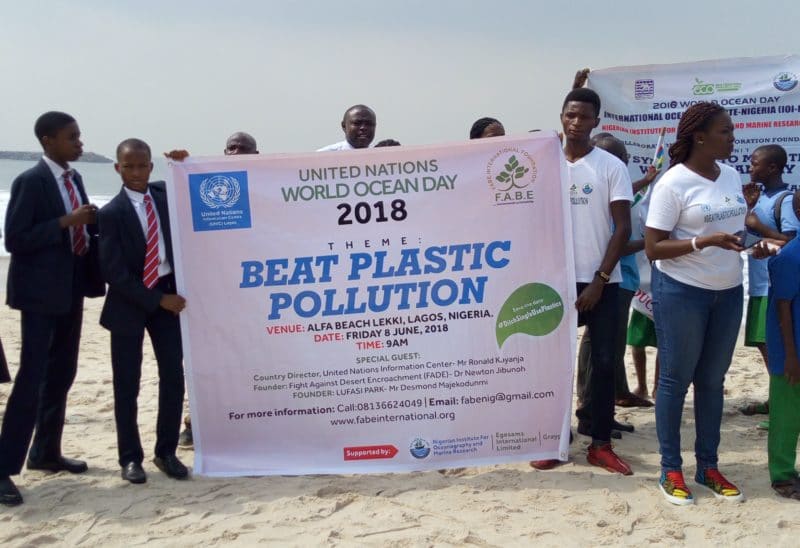
The Nigerian Institute for Oceanography and Marine Research (NIOMR) on Friday, June 8, 2018 called on Nigerians to do more to ensure safety of marine lives.

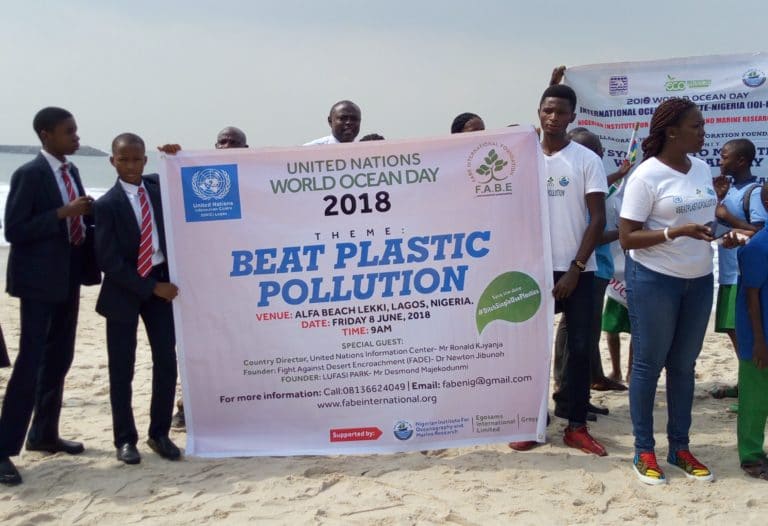
NIOMR World Oceans Day
Participants at the NIOMR event

NIOMR’s Assistant Director, Dr Mabel Yarhere, made the call in Lagos during the “Alfa Beach Clean-up and Up Cycle Training” to mark the 2018 World Oceans Day.

The institute organised the event in collaboration with the United Nations Information Centre (UNIC), Lagos, and FABE International Foundation.

Yarhere said that there was the need to save aquatic lives because they were source of food for humans.

She said that oceans must be devoid of plastic pollution in order to save marine lives.

She noted the United Nations declared June 8 World Ocean Day, adding that the year 2018 had the theme: “Preventing Plastic Pollution and Encouraging Solutions for a Healthy ocean”.

She said: `’Plastic prevents the dissolved oxygen that is supposed to penetrate the ocean and marine resources are affected.

“Plastic also affects our fisheries; when plastics enter the tracks of fishes, they (fishes) die.

“The endangered species in our water, especially the turtles, are killed by plastics, and they are supposed to produce minerals into the ocean for fishes to reproduce.

“Plastics also affect the navigation of vessels in oceans and prevent the productivity of the oceans,” she said.

The assistant director noted that the Sustainable Development Goal 14 aimed at making marine productive.

She said that this would make the world to feed well and have oceans devoid of plastics that cause casinogene in the body.

“In clearing the oceans, let us start from our homes. We have to properly dispose of plastics; we have to reuse them by recycling them.

“Avoid buying bags that are disposable.

“When you dispose of plastics properly, they will not block the terrestrial realm,” Yarhere said.

Mrs Temitope Okunnu, the Founder of FADE International Foundation, said that plastic pollution had become critical because of the menace of plastics in the oceans.

Okunnu said that there was the need to properly dispose of every kind of waste so that it would not enter oceans.

“We should recycle and upcycle wastes.”

She said that plastics were a menace because they would not degrade.

She, however, noted that plastics had a long-term value and could be harnessed to make beautiful things.

According to her, the foundation engages in using plastic waste generated from oceans and drainage systems to build decorative materials.

She said that the foundation also engaged in training people, including students, on how to utilise plastic waste to make money.

Okunnu said that the foundation would use plastics picked up from the Beach clean-up, such as plastic spoons, plates, disposable cups, table water containers and sweet wrappers, to produce fancy household products.

Mr Olumide Ajayi, Representative of Environment Department, Nigerian Ports Authority (NPA), said that there had been many efforts to protect the marine environment from plastic pollution.

According to him, the cause of deaths of many fishes in the ocean has been recently linked to eating of micro plastics.

”These are the same fishes we bought every day and use in making different kinds of dishes we consume,” he said.

Ajayi said that promoting lifestyles that could rid the oceans of plastic pollution would make the oceans safe and reduce costs and delay in shipping goods and clearing them.

Dr Desmond Majekodunmi, the Founder of LUFASI Natural Parks, said that oceans needed to be protected by ensuring that plastics were not dumped there.

He said that celebration of Ocean Day should remind Nigerian Government and people of their responsibilities of clearing the ocean of all types of waste.

According to him, the earth is the ultimate for our life support system, with the ocean as an important part of the system.

Miss Miracle Emefiele, a JSS2 student of Linsy High School, Lekki, Lagos, one of the schools that participated in the beach clean-up, said that everybody should be involved in checking pollution of oceans with plastics.

She said that those going to beaches for relaxation should learn to carry back home, any waste they could generate while at the beach, for proper disposal

By Florence Onuegbu and Chidinma Agu

World Ocean Day: Groups clean up Elegushi beach

0

An environmental group, Let’s Do It Campaign Nigeria, and the Junior Chamber International (JCI) Lagos Metropolitan, on Saturday cleaned-up the Elegushi beach to mark the World Ocean Day.

Elegushi beach
Elegushi beach

The Elegushi Beach is a private beach located at Lekki in Lagos State. The beach is owned by the Elegushi Royal family of Lagos.

World Oceans Day is observed yearly on June 8. It has been celebrated unofficially since its original proposal in 1992 by Canada’s International Centre for Ocean Development (ICOD) and the Ocean Institute of Canada (OIC) at the Earth Summit — UN Conference on Environment and Development (UNCED) in Rio de Janeiro, Brazil.

The Campaign Manager of Let’s Do It Nigeria, Mr Gafar Odubote, said that the clean-up was to take a stand against plastic pollution in the waterways.

“Let’s Do it Nigeria and partners took a stand against Plastic Pollution today with a massive cleanup project at the Elegushi beach to commemorate the World Oceans Day.

“The World Ocean Day is an opportunity to further emphasise the need to bring people’s attention to the increasing rate of plastic pollution in Nigeria both on the lands and beaches,’’ Odubote said.

The environmentalist said the exercise was possible due to the concerted efforts of volunteers and environmental enthusiasts to pollution in the oceans.

“The Elegushi Beach Cleanup project is largely inspired by concerned members of the society who wanted to take action to reduce the amount of trash and plastic that enters the ocean.

“With 51 volunteers, we were able to bagged 107 wastes sorted into plastic bottles, glass bottles, rubber slippers, polythene nylons and food wastes.

“There are many things we can do as individuals to reduce our plastic consumption. Individuals must control their consumption pattern, stop patronising single-use plastics and develop a positive attitude towards waste disposal,’’ he said.

Odubote called on the Federal Government to enact and enforce policies and regulations to quell plastic pollution in the waterways.

“There are many things we can do as individuals to reduce our plastic consumption but the government must come up with enforceable regulations on plastic bags and bottles.

“These laws should regulate the production, importation, sale and use of plastic bags and bottles in Nigeria,’’ he told NAN.

Adeyanju Adeonipekun, the President, JCI Lagos Metropolitan, said the cleanup at the beach was an attempt to enlighten people on the risks of an unclean ocean.

“This Beach cleanup project at Elegushi is to enlighten the people on the risk of unclean oceans and its hazards to health.

“The World Oceans Day is a wakeup call for everyone in Nigeria to ensure their environment is clean and healthy.

“Our planet is dying gradually of wastes and as active citizens, the responsibility is on us to act fast to save the planet,’’ Adeonipekun said.

By Mercy Okhiade