26.1 C
Lagos
Friday, March 6, 2026
Home Blog Page 98

COP30: Africa urges world leaders to turn pledges into action

0

Africa has called on the world leaders to turn their pledges into action regarding the Paris Agreement on Climate Change.

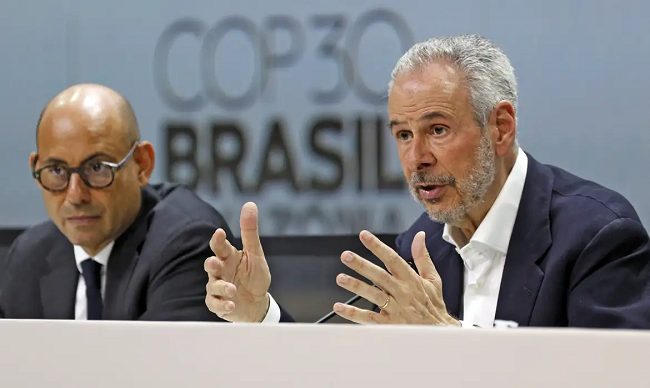
The Africa Group of Negotiators (AGN), chaired by Dr Richard Muyungi, and the COP30 Special Envoy for Africa, Prof. Carlos Lopes, made the call on Saturday, November 15, 2025, at the 30th United Nations Climate Change Conference of the Parties in Belém, Brazil.

Speaking at a joint media briefing, they  outlined the continent’s priorities for COP30.

Dr. Richard Muyungi
Chair the African Group of Negotiators (AGN), Dr. Richard Muyungi

They called for scaled-up climate finance, a strong global goal on adaptation, and fair global trade rules that uphold multilateralism and deliver development for all.

They explained that Africa’s determination to secure concrete outcomes that match the ambition and scale needed to tackle the climate crisis already devastating the continent.

According to them, Climate finance Article 9.1- the legal obligation of developed countries to provide climate finance to developing countries is critical to African countries implementing their NDCs.

“On Article 9.1, the issue is simple, developing countries cannot rely on vague assurances. We need clear, concrete commitments from developed countries, yet few have put forward new finance pledges.

“For Africa, Article 9.1 must be fully implemented, just like every other part of the Paris Agreement. It is an obligation, not an option.

“Without it, adaptation finance will be replaced by loans, leaving vulnerable countries to pay for impacts they did not cause,” they said.

According to them, resource mobilisation under Article 9.3 is valuable for mitigation, but it cannot be a substitute for guaranteed provision of finance required under Article 9.1 as adaptation depends on it.

They issued a stark warning about global finance models that increasingly burden developing countries with commercial debt.

“Blended and hybrid finance often camouflage the fact that commercial conditions are expanding. These instruments are not multiplying finance, they are simply bringing in more commercial money.

“We must pay attention when practice does not match the promise,” he said.

Muyungi further criticised Just Energy Transition Partnerships (JET-Ps) for shifting away from grant-based support toward loan-heavy arrangements.

The AGN chair emphasised that indicators must track global support, not to impose new obligations on developing countries.

Indicators under the Global Goal on Adaptation are essential, we need a clear way to measure progress, just as we do for mitigation and the 1.5°C goal.

“But the issue is which indicators are being chosen. Some of them expect developing countries to do more with less, adding responsibilities without the means to deliver.

“Our concern is not with indicators themselves, but with ensuring they reflect real adaptation needs and come with the support required to achieve them,” he said.

According to him, recognising Africa’s special needs is rooted not in politics, but in science, geography and history as Africa’s case makes this even more urgent.

“Scientifically, countries along the equator, many of them in Africa, are warming faster and face harsher impacts.

“Under Article 4.8, Africa also falls within several categories of highly vulnerable countries. And our historical and developmental context compounds these challenges.

“All of this makes Africa’s special needs and circumstances undeniable. They must be fully recognised if the global goal on adaptation is to be meaningful,”  he said.

He noted that negotiators had reduced the list of proposed indicators from over 10,000 to around 100 to align with the means of implementation including finance, technology, and capacity-building commitments.

He said regarding Baku–Belém Roadmap, unlocking the 1.3 trillion dollar underscored Africa’s concern about slow progress on climate finance following the COP29 decision on the New Collective Quantified Goal(NCQG) to mobilise 300 billion dollars annually by 2035.

“And also, to design a roadmap towards $1.3 trillion in the post-2035 period.

“From Baku to Belém, the core issue is simple, we now have a commitment to mobilise at least 300 billion dollars a year up to 2035, and to build a pathway towards $1.3 trillion.

“But instead of negotiations, we were given consultations, and the roadmap was published without the final round of discussions we expected,” he said.

According to him, the roadmap is not closed, but only to keep pushing to strengthen it. Now, how do we unlock the $300 billion that must now replace the old 100 billion benchmark?

He added that delivering the $300 billion annually would be a challenge for Africa as the world entered the new phase.

He reiterated that despite consultations in Bonn and additional ministerial discussions, African countries had expected a more inclusive process before the roadmap was published.

He said the AGN welcomed the operationalisation of the loss and damage fund through the Barbados Implementation modalities.

He, however, stated the initial $250 million allocation fell short of the scale of needs.

“Under the Barbados implementation modalities, loss and damage support is made up of pure grants, not loans, and countries can access them through four clear channels.

“These are directly through their national focal points, through existing direct-access entities, through international entities like UNDP or the World Bank, or through regional institutions.

“This is the first time we have a fund that delivers only grants, and that’s a major step forward.”

According to him, the amounts are still small, 800 million dollars in the fund with 250 million allocated for 2025–2026, but it builds momentum as we expect more pledges at COP30.

He said Africa negotiators were also pushing to secure new resources through the adaptation fund as it transitioned from Kyoto to Article 6 of the Paris Agreement.

“The principle is simple: those who caused the problem must support those living with the impacts. But for 30 years, this principle has been contested. We’re trying to uphold multilateralism while ensuring these core obligations are honoured.

“These are the difficult choices before us. With Africa requiring over $3 trillion for adaptation alone, we significantly call for increased pledges at COP30,” he said.

On trade, he stated that those calling for the discussions to be moved to the World Trade Organisation were the same actors not respecting it as the normative space for the concerned issues.

“We see this in examples such as CBAM, new forest-related clauses from Europe, recent tariff increases, and a growing list of protectionist measures that invoke climate concerns while penalising countries that contribute least to climate crisis.

“It is a clear paradox, what we need instead are incentives for countries that are not contributing to the problem. Some may emit in specific industries or exports, but the overall picture is what matters.

“Africa emits the least globally. You cannot penalise isolated sectors without considering the continent’s full development spectrum.”

Muyungi demanded if Africa truly cherished multilateralism or unilateralism.

“At times we all call for multilateralism, yet in practice, we defend our own territories and businesses.

“As negotiators, this contradiction puzzles us. We believed all countries would work together without putting up new borders, especially when facing a shared global challenge.

“Yet a number of countries have introduced trade-restrictive measures and justify them as WTO-related, whether on patent rights or other issues,” he said.

According to him, if unilateral measures continue, many countries will be disadvantaged and restricted from trading goods or services deemed to have an “unacceptable” carbon footprint.

“But how does a product acquire that carbon footprint? Often through technologies and services that originate from the very countries imposing these restrictions.

“This is not the right way forward if we want to protect multilateralism. Without clear guardrails, these actions will undermine the development and trade opportunities we are trying to build.”

By Gabriel Agbeja

UNDP, REA, GEF commission Plateau solar mini-grid to power agricultural value chains, empower rural communities

0

The United Nations Development Programme (UNDP), in partnership with the Rural Electrification Agency (REA) and the Global Environment Facility (GEF), has commissioned a transformative 50kWp solar mini-grid in Namu, Quanpan LGA, Plateau State, under the Africa Minigrids Programme (AMP).

The milestone, according to the promoters, marks a significant step in Nigeria’s journey toward inclusive, sustainable energy access and rural industrialisation.

The mini-grid will provide clean, reliable electricity to over 1,555 direct beneficiaries, including 180 women rice processors, 15 male equipment operators, and 100 households, powering schools, health centres, and small businesses. It is designed to catalyse agricultural productivity by supporting cassava grating, rice milling, and other value-added processes.

Elsie Attafuah
Ms. Elsie Attafuah, UNDP Nigeria Resident Representative

“This is not just about electrifying a community; it is about energizing lives, livelihoods, and local economies,” said Ms. Elsie Attafuah, UNDP Nigeria Resident Representative. “The Namu mini-grid is a beacon of hope for rural development and a model for inclusive, sustainable electrification.”

The AMP initiative aligns with Nigeria’s Electricity Act 2023, Energy Transition Plan, and National Electrification Strategy, and contributes to the country’s climate commitments under the Paris Agreement. The project is expected to mitigate up to 22,000 metric tons of CO₂ monthly, replacing diesel and fuelwood with solar energy.

The commissioning event featured remarks from key stakeholders including the Executive Governor of Plateau State, Barr. Caleb Mutfwang; REA CEO, Dr. Abba Aliyu; and Elsie Attafuah, UNDP Resident Representative, and the Federal Ministry of Environment, and the Namu community.

The AMP programme aims to deploy 25 solar mini-grids across Nigeria, demonstrating scalable models for productive-use electrification, gender-responsive enterprise hubs, and climate-smart rural development.

We are being ‘locked out’ of climate finance – Fragile states at COP30

0

COP30 President, André Corrêa do Lago, has said this year’s conference must put “people at the centre” of climate action. But a network of fragile states says more than one billion of the world’s most at-risk people are still being left out of the conversation.

In a statement released on Tuesday, November 11, 2025, the Improved and Equitable Access to Climate Finance Network said that countries affected by conflict and fragility are being “locked out” of funding to adapt to climate impacts.

The Network – which is made up of 10 countries affected by fragile governance and conflict, including Burundi, Mauritania, Somalia and Papua New Guinea – is calling for climate funds and COP30 to do more to address “this urgent blind spot at the heart of climate finance.”

André Corrêa do Lago
André Corrêa do Lago, COP30 President

A Conflict Bling Spot in Climate Finance

More than one billion people live in countries affected by conflict, violence and fragile governance. Yet in 2022 these countries received just 10% of global climate finance, despite being some of the most vulnerable to climate impacts.

Countries face several issues in accessing finance, including long timeframes and demanding application requirements. According to Yemen’s minister or water and environment, Tawfiq Al-Sharjabi, speaking at a UNFCCC side event on Tuesday: “Complex procedures, limited technical capacities, and the absence of flexible financial instruments – all these things constrain our ability to secure climate finance.”

As a result, it can often be easier for countries to access humanitarian aid than climate finance, according to Somalia’s minister of environment and climate change, Bashir Mohamed Jama. “Somalia receives just over $300 million in climate-related funding each year, or less than 1% percent of the amount we need to adapt”, Jama said. “By contrast, each year Somalia receives $1.1 billion in humanitarian aid funding.”

Jama said this discrepancy highlights “a damning failure at the heart of the global development system: it is easier to unlock finance in the aftermath of disasters than it is to invest in preventing them.”

Negotiations at COP30 to increase climate finance flows only lend fresh urgency to the issue. “While the ambition to unlock an additional $1.3 trillion in Belem is admirable, we need to see equal ambition in ensuring that existing funds reach the people who need it most,” said Mauricio Vazquez, head of policy for risks and resilience at think tank ODI Global.

A Growing Push for Change

The Improved and Equitable Access to Climate Finance Network was formed in 2024 to call for more attention to the blind spot in climate finance.

On Tuesday, three new members joined the Network: Mauritania, Papua New Guinea and South Sudan.

In its statement, the Network calls for climate funds and development banks to continue reforming how they allocate climate finance, to make sure it reaches people in places affected by conflict and humanitarian crisis. The Network is also pushing for funding to be spent on long-term projects which build countries’ climate resilience, rather than support in the aftermath of disasters.

The Stakes Are High

Climate adaptation is high on the agenda at COP30. In Belém, governments will seek to finalise a comprehensive set of indicators for the Global Goal on Adaptation – a collective commitment within the UNFCCC to define and track how the world strengthens resilience and reduces climate vulnerability.

But experts say that unless more is done to include fragile and conflict-affected countries, climate change impacts will only continue to worsen lives, livelihoods and entire economies for the furthest behind. “We see the impacts of these linkages (between climate change and conflict) first-hand,” said Asif R. Khan, director of the policy and mediation division within the UN Department of Political and Peacebuilding Affairs, which currently chairs the Climate Security Mechanism.

Most of the UN’s peace operations are deployed in climate-stressed regions that are among the least equipped to manage climate shocks.

Khan said: “Climate change is amplifying the pressures that fuel conflict and displacement. For example, lack of access to water has accentuated tensions between herder and more sedentary communities in parts of West Africa.”

The most effective way to support fragile countries is to make them more stable and peaceful.

Khan said: “For us, helping countries manage climate risks is part of a broader effort to prevent crisis. And that means more than planting trees or installing solar panels. It’s also involving all parts of society to pull in the same direction to build resilience and foster peace. That also means, in turn, joined-up risk analysis, sustained partnerships, and financing that reflects realities on the ground”.

This emphasis on collaboration – across peacebuilding, development and climate adaptation – is also a focus of several donor governments.

Neale Richmond, Ireland’s Minister of State at the Department of Foreign Affairs, said: “Ireland’s international development policy is centred on reaching the furthest behind first. Adopting a comprehensive and inclusive approach that prioritises peace and reduces humanitarian needs, we recognise the need to forge a future where peace and security thrive alongside a sustainable and resilient planet.”  

COP30 agenda standoff stalls climate talks as finance debate deepens

0

A procedural impasse is threatening to derail the COP30 climate summit holding in Belem, Brazil, five days into negotiations, with disagreements over which issues deserve priority attention preventing substantive talks from advancing.

At the conference’s opening, delegates moved four contentious topics into a separate “consultation track” after failing to reach consensus on the full agenda. None has progressed since, leaving the summit in limbo as the clock ticks toward its conclusion.

The European Union and Small Island States want formal discussions on the mitigation gap – the shortfall between countries’ current climate plans and what scientists say is needed to limit global warming to 1.5 degrees Celsius above preindustrial levels.

COP30
COP30

Developing nations are demanding that talks focus instead on climate finance commitments from wealthy countries, a discussion richer nations want to avoid.

“Both the mitigation gap and the finance gap must be addressed,” said Mattias Söderberg, global climate lead at DanChurchAid.

“Parties should move out of their fixed positions to unlock this stalemate.”

The standoff comes as climate impacts intensify worldwide and scientists warn time for meaningful action is narrowing rapidly.

Some progress emerged around adaptation finance, with growing support for a proposal from least developed countries to triple current funding commitments. Söderberg called the momentum “great news,” noting adaptation support is crucial for vulnerable communities already experiencing climate damage.

“I do hope that COP30 can deliver an adaptation finance target,” he said.

Separately, attention is turning to Saturday’s scheduled discussion of the Baku-Belém Roadmap, unveiled before the summit as a framework for mobilising $1.3 trillion annually to address climate change. Söderberg said the roadmap “must become a concrete plan to scale up funding in the coming year.”

“Without climate finance, there will be no climate action,” he said.

By Winston Mwale, AfricaBrief

Climate finance is the lifeblood of climate action – Simon Stiell at COP30

0

Remarks delivered by UN Climate Change Executive Secretary, Simon Stiell, at the third High-Level Ministerial Dialogue on climate finance under the CMA at COP30 in Belém, Brazil, on Saturday, November 15, 2025

Climate finance is the lifeblood of climate action.

It is what turns plans into progress, and ambition into implementation.

And nowhere is its importance clearer than at this meeting, which is not a procedural formality. It is designed to build trust – by providing clarity and predictability about the resources that developing countries can count on to deliver their national climate and adaptation plans.

Simon Stiell
UN Climate Change Executive Secretary, Simon Stiell. Photo credit: Kiara Worth | UN Climate Change

That trust remains essential.

Without it, implementation slows, ambition falters, and progress for all becomes much, much harder.

Since Paris, we have come a long way.

Climate cooperation is working.

Public and private flows of climate finance are growing.

New partnerships are being forged.

And we are seeing billions of dollars flowing into clean energy, resilience, and just transitions across the world.

But the truth is, we are not far enough down that road – climate finance is not yet sufficient or reliable enough, and it is not shared widely or fairly enough.

We know the scale of the challenge: climate impacts are growing – but the adaptation finance gap remains far too wide.

At the same time, debt burdens are rising; and far too many of the most vulnerable countries still struggle to access even the resources that have already been pledged.

So, this is an important moment. Developed country Parties were urged to have at least doubled their collective adaptation finance from 2019 levels by this year.

A good way to meet this target and those we agreed in Baku last year is to triple outflows from UNFCCC climate funds by 2030.

The Adaptation Fund, Least Developed Countries Fund and Special Climate Fund are key as they play an important role in scaling up finance for least developed countries and small island developing states.

Ultimately, these are not abstract numbers. They are lifelines.

They determine whether small island states can protect their coastlines.

Whether least developed countries can adapt their agriculture to survive drought.

Whether emerging economies can transition away from fossil fuels without creating new inequalities.

This dialogue can send the clearest signal: that Parties are committed not only to scaling up finance, but to making it more accessible, more predictable, and more aligned with national priorities.

That means stepping up public finance – through grants, concessional resources, and non-debt-creating instruments.

It means simplifying access and reducing transaction costs so that finance reaches those who need it the most.

It means coordinated action to address systemic challenges – high debt, high costs of capital, limited fiscal space – and to make innovative use of equity, guarantees, and debt-for-climate swaps.

And it means expanding blended finance and risk-sharing mechanisms that can multiply private investment for climate-resilient, low-emission growth.

I know that resources are constrained in every part of the world, and delivery isn’t easy.

But climate finance is not charity – it’s smart economics.

Because climate action, underpinned by climate finance, is the growth story of the 21st century.

And as you prepare for your next phase of Article 9.5 work, I urge you to make the outcomes as clear and actionable as possible – so that they offer real forward visibility to developing countries, and demonstrate tangible progress on the delivery of finance.

Because good reporting builds credibility; credibility builds trust; every signal of trust builds more confidence in the process – enabling far greater implementation within the real economy.

So Honourable Ministers,

At COP30, the world is looking for proof that climate cooperation delivers.

Real finance, flowing fast and fair, is central to that proof.

Because when finance flows, ambition grows.

And when ambition grows, implementation flows – creating jobs, easing the cost of living, improving health, protecting communities, and securing a prosperous, more resilient planet for all.

So let us use this dialogue to recommit to the shared purpose that brought us to Paris a decade ago.

Let us show – through the predictability and transparency of climate finance – that we are serious about delivering for people and for the planet, unlocking the vast benefits of climate action for everyone, everywhere.

Sahara Group Foundation launches 16th Sahara Go Recycling Hub to boost environmental sustainability, economic empowerment

0

Sahara Group Foundation, the corporate social impact arm of Sahara Group, has commissioned its 16th Sahara Go-Recycling Hub in Lekki, Lagos State, reaffirming its commitment to sustainable waste management, environmental protection, and community empowerment.

The new hub, strategically located in Lekki, expands the Foundation’s recycling footprint and builds on the success of 15 existing hubs across Lagos. It is the first Sahara Go-Recycling Hub to feature a solar-powered Reverse Vending Machine (RVM), a significant step toward integrating clean energy and technology into community recycling solutions.

The Sahara Go-Recycling initiative promotes circular economy by reducing waste, enhancing resource recovery, and empowering residents with opportunities to earn income from recyclables.

Sahara Group Foundation
L-R: Foluso Sobanjo, Director Downstream Africa, Sahara Group; Chidilim Menakaya, Director, Sahara Group Foundation; Moroti Adedoyin-Adeyinka, Executive Director Sahara Group; Eniola Folami, Head Commercial, Asharami Synergy; Dr Tony Youdeowei, Board Trustee, Sahara Group Foundation and MD Sahara Power Group

Speaking at the commissioning, Chidilim Menakaya, Director, Sahara Group Foundation, said: “The launch of the Lekki Go-Recycling Hub goes beyond environmental responsibility, it represents a new path for innovation, economic opportunity, and community resilience. By integrating clean energy solutions like the solar-powered Reverse Vending Machine, we are demonstrating how innovation can strengthen environmental responsibility while improving quality of life. This hub is a testament to what is possible when we combine commitment with action, and it sets the stage for even greater impact across the communities we serve.”

The event was attended by Executive Director of Sahara Group, Director, Downstream Africa, Sahara Group, Sahara Group Foundation Board Trustees, Asharami Synergy Management team, executives and representatives of Sahara Group, Asharami Synergy, Egbin Power Plc, as well as other dignitaries, traditional leaders and community members.

Moroti Adedoyin-Adeyinka, Executive Director Sahara Group, remarked, “The success of the Lekki Sahara Go-Recycling Hub is a powerful reminder that sustainable change happens when communities, technology, and purpose come together. This hub is not just collecting recyclables, it is inspiring new habits, creating economic value, and proving that cleaner, greener cities are possible when we all play our part. We are proud of what this hub represents and even more excited about the impact it will continue to make across Lagos and beyond.”

Dr Anthony Youdeowei, Board Trustee, Sahara Group Foundation and MD Sahara Power Group, commended the collaboration between Sahara Group Foundation, Asharami Synergy, the Sahara Group 2025 Graduate Management Trainees, and Eco Barter, describing the hub as reflective of the organisation’s belief that sustainability must be practical, accessible, and community driven.

Representing the 2025 Sahara Group Graduate Management Trainees, Elushade Oluwatumininu stated: “As Graduate Management Trainees, being part of the Lekki Go-Recycling Hub project through our PSCR project has been a meaningful way to live out Sahara’s sustainability values. Seeing the hub’s impact from promoting recycling habits to empowering the community, reinforces how small actions can drive real change. We’re proud to be part of this initiative.”

Since its inception, the Sahara Go Recycling Initiative has collected over 650 tonnes of recyclable waste and facilitated payouts exceeding ₦55 million to beneficiaries.

The programme has positively impacted more than 1,200 households, creating alternative income streams, supporting livelihoods, and reinforcing environmental sustainability.

Rita Idehai, CEO Eco Barter, added: “Our partnership with the Sahara Group Foundation on the Lekki Go-Recycling Hub demonstrates the power of collaboration in accelerating sustainable change. Together, we are creating a system that rewards responsible disposal, supports local livelihoods, and brings technology-driven recycling closer to the community. We are proud to work with a partner that shares our vision for a cleaner, smarter, and more circular future for Lagos.”

Reiterating Sahara Group Foundation’s vision, Chidilim Menakaya added, “The Sahara Go Recycling project is creating a ripple effect across Lagos, enabling households and communities to see value in responsible waste management. Through strategic partnerships, we are amplifying impact and building sustainable ecosystems for future generations.

”At Sahara Group Foundation, we believe in EXTRApreneurship, building sustainable ecosystems through collaborations that inspire change. With Ijede now part of our network, we are one step closer to a truly circular economy in Nigeria,” she concluded.

Sahara Group Foundation plans to expand the Go Recycling Initiative to more communities in Lagos and across Africa, reinforcing its mission of “Building Sustainable Communities through EXTRApreneurship.”

From resistance to planetary governance, Indigenous women redefine global climate action

0

While world leaders negotiate behind closed doors in the Blue Zone of COP30, Indigenous Women from across the planet are demonstrating that solutions to climate change already exist, and they are in the territories.

From the Amazon to the Arctic, from Africa to the Pacific Islands, Indigenous Women are leading initiatives for restoration, adaptation, and climate justice that are transforming the global conversation. Their message is clear: they are not victims of the crisis, but architects of structural solutions.

“For decades, Indigenous Women have sustained the systems that keep life in balance. Today, we are not asking to be included: we demand recognition that without us, no transition will be possible,” stated Lucy Mulenkei (Kenya), Vice Chair of the International Indigenous Women’s Forum (FIMI).

Indigenous women
Indigenous women are redefining global climate action: from resistance to planetary governance, with concrete solutions from their territories

Beyond Discourse: The Solution is in the Territories

Outside the negotiation halls – where the participation of Indigenous delegations remains limited – a parallel agenda of concrete action is taking shape.

At the First Global Summit of Indigenous Women and Youth Protectors of the Territory, held in Belém, hundreds of women leaders presented five routes for climate transformation that combine governance, science, spirituality, and community-based financing.

“We did not come to ask for a seat. We came to remind you that the Earth already speaks, and many of its voices are women’s,” declared Tarcila Rivera Zea (Peru), President of FIMI and founder of CHIRAPAQ.

Five Routes Where Indigenous Women are Transforming the Climate Agenda

  1. Territorial Governance and Ecological Restoration

    From the Andes to the Sahel, Indigenous Women are restoring forests, mangroves, and páramos, guided by the principle of care as a form of governance. In Mexico, Otomí women maintain a network of sacred hills where pilgrimages combine spirituality, reforestation, and the protection of water sources. In Ecuador and Brazil, networks of Amazonian women are mapping the spiritual and ecological links of their territory to guide conservation based on traditional knowledge.

    “To restore a forest is to restore the dignity of the territory,” expressed Rivera Zea.

    2. Indigenous Science and Climate Monitoring

    In the Russian Arctic, young Indigenous women scientists are combining satellite technology with ancestral observation to monitor warming and ice loss. Researcher Aivanae Emmynka explained that the stories of elder women about the cycles of walruses and birds align with scientific data showing an 89% reduction in the walrus population and an average temperature increase of 0.6°C (33.08°F) over two decades.

    “Our grandmothers watch the sky; we measure the data. It is the same knowledge translated into another language,” noted Emmynka.

    3. Water Resilience and Food Sovereignty

    In Papua New Guinea, young women are combining traditional techniques with modern rainwater harvesting systems to face water scarcity and rising sea levels. In Tanzania, Maasai leader Nidini Kimesera Sikar (Tanzania) is promoting the recovery of native seeds and the creation of community banks of medicinal and food knowledge.

    “When the forest disappears, so does our pharmacy and our history. Every tree holds a cure,” stated Sikar.

    4. Financial Justice and Sovereignty of Solutions

    Direct access to climate finance remains one of the biggest gaps. According to the UN Permanent Forum on Indigenous Issues (2024), only 1.4% of global gender funds reach Indigenous Women’s organisations.

    “The money continues to flow into colonial structures. The women who restore forests, protect rivers, and feed communities should be the flrst to receive it,” noted Joan Carling, a leader of the Indigenous Peoples Pact of Asia (AIPP).

    FIMI and its allies propose that at least 10% of the new $1.8 billion global fund for terrestrial ecosystems be channeled directly to Indigenous initiatives led by women.

    “We don’t want to be beneflciaries; we want to be the designers of climate flnance,” stressed Teresa Zapeta (Guatemala), Executive Director of FIMI.

    5. Intersectional Justice and Real Inclusion

    During the event, Olga Montúfar (Mexico) and Pratima Gurung (Nepal) reminded attendees that climate justice will only be possible if it recognizes multiple forms of discrimination.

    They demanded the effective implementation of CEDAW General Recommendation No. 39, which recognizes the rights of Indigenous Women, in accessible and culturally relevant formats.

    Its translation into more than 20 Indigenous languages, Braille, and visual materials represent a historic step toward truly inclusive climate action.

    From Resistance to Global Leadership

    During the Summit’s opening, the Brazilian Minister of Indigenous Peoples, Sônia Guajajara, highlighted the leadership of Indigenous Women in climate action and reaffrmed her support for solutions driven from the territories.

    “This moment was built with the leadership of Indigenous Women. The solutions we need cannot exist without our presence,” Guajajara pointed out.

    From Belém, these women leaders are calling for a new pact of global co-responsibility, where climate action is based on the political, territorial, and financial recognition of their leadership

    “We don’t just resist. We govern, we restore, we teach. We are not a topic at COP30: we are its answer,” declared Teresa Zapeta.

    Bayelsa: NGOs unite against oil exploration impact on Oloibiri communities

    0

    Two NGOs, the Community Environment and Development Network (CEDEN) and Media Awareness and Justice Initiative, are joining forces to combat the effects of oil exploration on Oloibiri Communities in Bayelsa State.

    This was disclosed at a capacity building workshop on effective eco-management enhancement and biodiversity promotion communication in Otuabagi, Bayelsa, on Friday, November 14, 2025.

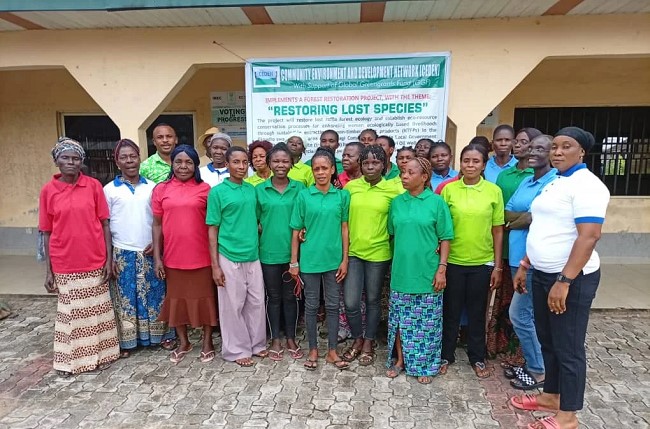
    The workshop assembled experts and stakeholders to seek strategies towards restoring lost species and promoting sustainable ecological livelihoods in Oloibiri and the Niger Delta region at large.

    Bayelsa
    Participants at the capacity building workshop on effective eco-management enhancement and biodiversity promotion communication in Otuabagi, Bayelsa

    In his presentation, Menidin Egbo, the Executive Director, CEDEN, expressed concern over the gradual extinction forest ecologies and wetlands in the Niger Delta region.

    Egbo expressed the need to restore the raffia forest ecology in Ekpadio in Otuabagi Community, Ogbia Local Government Area.

    He said that communication was critical towards ensuring biodiversity conservation and effective ecological management.

    According to him, communication is important in stimulating community responses and governance for climate adaptation and mitigation.

    “There is a crucial need for local actions to support nature conservation. We also need to link these efforts to global environmental sustainability goals.

    “We are calling for more community-based ecological management strategies  that will support forest restoration.

    “Part of it is to encourage the planting of native species and management of natural regeneration,” Egbo said.

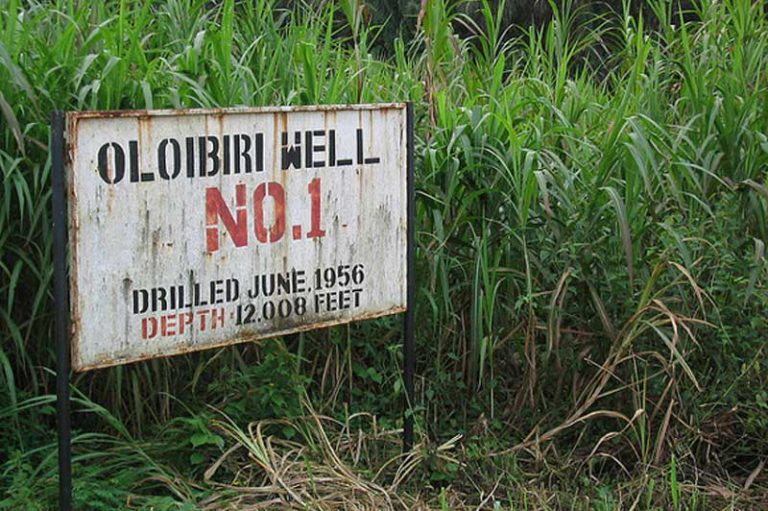
    It will be recalled that Otuabagi hosts Oloibiri Oil Well 1, where Nigeria first found oil in commercial quantities to join the league of oil producing countries.

    By Nathan Nwakamma

    COP30: WHO, Brazil urge swift action on Belém Health Action Plan

    0

    Climate change is already driving a global health emergency, with over 540,000 people dying from extreme heat each year and one in 12 hospitals worldwide at risk of climate-related shutdowns, warns a new special report, released on Friday, November 14, 2025, jointly by the World Health Organisation (WHO), the Government of Brazil (COP30 Presidency) and the Brazilian Ministry of Health.

    The “COP30 Special report on health and climate change: delivering the Belém Health Action Plan”, notes that rising temperatures and collapsing health systems are claiming more lives, and calls for immediate and coordinated action to protect health in a rapidly warming world. It follows the launch of the Belém Health Action Plan, a flagship initiative of Brazil’s COP 30 Presidency, unveiled on the dedicated Health Day of COP30 – November 13, 2025.

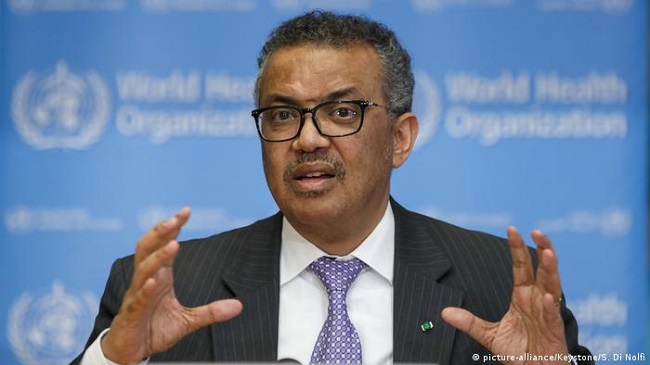
    Tedros Ghebreyesus
    Dr. Tedros Adhanom Ghebreyesus, Director-General, World Health Organisation (WHO)

    “The climate crisis is a health crisis – not in the distant future, but here and now,” said Dr Tedros Adhanom Ghebreyesus, WHO Director-General. “This special report provides evidence on the impact of climate change on individuals and health systems, and real-world examples of what countries can do – and are doing – to protect health and strengthen health systems.”

    With global temperatures now exceeding 1.5°C above pre-industrial levels, the world is already experiencing mounting health impacts. The report finds that 3.3 to 3.6 billion people already live in areas highly vulnerable to climate change, and hospitals are facing 41% higher risk of damage from extreme weather-related impact compared to 1990. This underscores the urgent need to strengthen and adapt health systems to protect communities from climate-related shocks.

    Without rapid decarbonisation, the number of health facilities at risk could double by mid-century, which stresses the critical importance of implementing adaptation measures to safeguard health infrastructure. The health sector itself contributes around 5% of global greenhouse gas emissions and needs a rapid transition to low-carbon, climate-resilient systems.

    The report identifies persistent gaps that require urgent attention. Only 54% of national health adaptation plans assess risks to health facilities, and fewer than 30% of health adaptation studies consider income, 20% consider gender, and less than 1% include people with disabilities.

    “The evidence is clear: protecting health systems is one of the smartest investments any country can make,” said Professor Nick Watts, Chair of the Expert Advisory Group and Director, NUS Centre for Sustainable Medicine. “Allocating just 7% of adaptation finance to health would safeguard billions of people and keep essential services operating during climate shocks – when our patients most need them.”

    There is progress being made; between 2015 and 2023, the number of countries with national Multi-Hazard Early Warning Systems (MHEWS) doubled to 101, now covering about two-thirds of the global population. However, only 46% of Least Developed Countries and 39% of Small Island Developing States have effective systems in place.

    The report’s central message is clear: there is now more than enough evidence to scale up action, today. Cost-effective, high-impact, and no-regret interventions exist for each component of the Belém Health Action Plan.  But adaptation strategies could ultimately fail unless they address the root causes of health inequity – both within health systems and across society.

    The report calls on governments to:

    • Integrate health objectives into Nationally Determined Contributions (NDCs) and National Adaptation Plans (NAPs);
    • Harness the financial savings from decarbonisation to fund health adaptation and workforce capacity;
    • Invest in resilient infrastructure, prioritising health facilities and essential services; and
    • Empower communities and local knowledge systems to shape responses that reflect lived realities.

    The Government of Brazil also released a companion report, “Social participation, climate and health: a special report to support implementation of the Belém Health Action Plan”, which focuses on social participation, governance, and community engagement as a critical dimension of the Belém Health Action Plan. The report highlights that climate change poses profound risks to human health, particularly for vulnerable and historically marginalised populations, and that effective adaptation requires the active involvement of communities in designing, implementing, and monitoring health policies.

    “By releasing this report, Brazil and WHO reaffirm the importance of COP30 as the COP of Truth. The report provides clear data and evidence that climate change is already directly affecting health systems around the world,” says Dr Alexandre Padilha, Minister of Health, Brazil. “Recent tragedies show that now is the time to implement policies and actions that address the impacts of climate change on health. The Belém Health Action Plan and this report offer countries the tools they need to turn scientific evidence into concrete action.”

    Together, the two reports provide complementary pathways for translating the Plan’s objectives into practice – one focused on evidence and implementation, the other on inclusive participation and leadership across societies.

    About the Belém Health Action Plan

    The Belém Health Action Plan, a flagship outcome of Brazil’s COP 30 Presidency, is structured around two cross-cutting principles and concepts: health equity and “climate justice” and leadership and governance on climate and health with social participation.

    The Plan also outlines three lines of action for climate-resilient health systems:

    • Surveillance and monitoring, focused on strengthening integrated and climate-informed health surveillance;
    • Evidence-based policies, strategies and capacity-building, aimed at enhancing the ability of national and local systems to implement effective, equity-driven solutions; and
    • Innovation, production, and digital health, which promotes research, development, and access to technologies that meet the health needs of diverse populations.

    The COP30 special report was prepared under the guidance of an Expert Advisory Group of global public health leaders, chaired by the NUS Centre for Sustainable Medicine and with the leadership of the WHO and the Brazilian Ministry of Health. Drawing on more than 70 case studies from around the world, the report identifies practical interventions already delivering results – from early warning systems and green hospital design to climate-informed health planning and sustainable financing.

    COP30 urged to raise ambition, progress plan to phase out fossil fuels

    0

    During COP30 negotiations, C40 Cities, an organisation of almost 100 global mayors, urged national governments to kick-start progress on a credible global plan to end our dependence on fossil fuels, as called for by Brazil’s President Lula, and to confront the impacts caused by the fossil-fuel-driven climate crisis – which are already being strongly felt in cities across the world.

    Building on the landmark COP28 agreement to transition away from fossil fuels while tripling renewable energy capacity and doubling energy efficiency by 2030, mayors stressed that COP30 must convert ambition into action, with a plan for a just, orderly, and equitable phase-out of fossil fuels, including through increased collaboration with local and regional governments.

    Sadiq Khan
    Sadiq Khan, Mayor of London and co-chair of C40 Cities

    C40 member cities have committed to collectively halving fossil fuel use by the end of the decade, with cities from countries most responsible for climate change going first and faster. C40 cities are moving five times faster than national governments’ current per-capita emissions reduction targets – proof that a fossil-free future is not just possible, but already taking shape on the ground.

    In Belém, city leaders joined a growing coalition of countries and subnational leaders, including the Under2 Coalition Co-Chairs, to offer their support for a fossil fuel transition Roadmap with concrete actions to accelerate the implementation of the COP28 energy agreement.

    Cities are ready and willing to contribute not only as partners in planning, but as essential drivers of delivery where it matters most. Mayors have repeatedly made clear that the era of fossil fuels must end – and that the world can only end it by working together with cities, where over 80% of energy emissions are found.

    Cities Are Already Leading the Fossil-Free Transition

    C40 cities are already taking bold, concrete action to drive down fossil fuel use and accelerate the clean energy transition. Aligned with C40’s mission to halve fossil fuel use by 2030, these actions show that cities are not just planning the transition – they are leading it in real time.

    City leaders are cutting fossil fuel demand, scaling renewable energy production, and protecting residents from volatile and inequitable energy prices. Across the network, cities are standing up to powerful fossil fuel interests, actively countering harmful disinformation, and using legal tools to hold major polluters accountable for the climate damage they have caused.

    At the same time, mayors are ensuring that the transition away from fossil fuels is fair and inclusive. Workers are being reskilled for the good green jobs of the present and future, and the economic benefits of the clean energy shift are being shared across communities.

    From electrifying municipal transport fleets and amending building codes to end the use of gas in new buildings to creating clean energy utilities, C40 cities are delivering measurable emissions reductions – showing the world that ambitious climate action is not only possible, but credible, scalable, and already underway.

    Across the globe, cities are already delivering this transition on the ground. In Rio de Janeiro, the RevoluSolar initiative created the first photovoltaic community in a favela, lowering energy costs and reinvesting profits into job training. Johannesburg installed solar minigrids and clean cooking solutions in informal settlements, providing safe electricity to over 12,000 homes. 

    Amsterdam is moving 550,000 homes off fossil gas by 2040 with neighbourhood-level planning and widespread support for clean heating. In Lagos State, measures such as food support, subsidised transport, and free maternal healthcare are protecting 500,000 vulnerable households as fuel subsidies are phased out.

    And in Bogotá, women from marginalised communities are being trained and supported to become e-bus drivers, advancing both gender equity and fleet electrification. These examples demonstrate how cities are already delivering the fossil-free, fair, and resilient future the world needs.

    Caterina Sarfatti, Managing Director of Inclusion and Global Leadership at C40 Cities, said: “Brazil is sending a powerful signal that the world must turn commitments into action and end the fossil fuel era. Cities welcome this momentum. Across our global network, mayors are already delivering the just transition to a clean energy future people deserve. As we look beyond COP30, cities stand ready to team up with national governments to co-create an ambitious and equitable roadmap to phase out fossil fuels and, crucially, to implement it where it truly matters: in our streets, in our communities, and in people’s lives. This is a key moment for our planet and cities are ready to lead.”

    Beyond Belém: a Fossil Fuel Phase-Out Roadmap

    National governments must chart a long-term path for the phase out of fossil fuels, looking far beyond this year’s COP in Belém to translate ambition to action well into the future.

    This requires clear implementation pathways to accelerate the phase-out of fossil fuels across power, transport, buildings, and industry, coupled with mechanisms to mobilise finance at scale so that cities and subnational governments can deliver on the ground. The roadmap must be collaboratively designed in a fair process, addressing the needs of countries in the Global South and ensuring cities, workers, and civil society have a seat at the table.

    A truly effective transition must also be just and inclusive, empowering workers, unions, and civil society to shape fair outcomes and share in the benefits of the clean energy shift. Central to this effort is the full integration of cities and subnational actors, whose leadership, innovation, and delivery capacity are essential to scaling solutions and ensuring the transition reaches the communities and sectors that need it most.

    Mayors are determined to be at the forefront of delivering a fossil fuel-free future. Speaking at the opening plenary of the C40 World Mayors Summit in Rio de Janeiro, the week before COP30, the Mayor of London and co-chair of C40 Cities, Sadiq Khan, said: “The climate wreckers want to chain us to the fossil fuels of the past, vandalising our planet and vandalising our homes with boiling temperatures, more pollution, and more climate-induced disasters. But the likes of the C40, the climate defenders, offer us an alternative. They offer our people freedom, dignity, and hope – freedom of lower bills and better health; the dignity of a secure and well-paid green job; the hope of a fairer, safer, cleaner, brighter, and more prosperous tomorrow.”

    ×