26.4 C
Lagos
Friday, March 6, 2026
Home Blog Page 97

Momentum surges behind fossil fuel phase-out roadmap as COP30 enters Week 2

0

In just nine days, support for a fossil fuel phase-out roadmap has jumped from one to 62 countries – across both developed and developing nations, according to new analysis from 350.org and partners.

As COP30 enters its second week, support for establishing a Transition Away from Fossil Fuels (TAFF) Roadmap is accelerating fast. What began as a single call has become a powerful push to anchor a fossil fuel phase-out at the heart of the emerging Mutirão Pact.

Savio Carvalho, Head of Regions at 350.org, said: “The world needs a credible response to the gaping hole in climate ambition. Turning the COP28 promise into real action isn’t optional, we need urgent action to keep the planet livable.”

Fossil fuel phase-out
A broad coalition is urging COP30 to adopt a concrete plan to accelerate the shift from oil, gas, and coal

The global shift is already underway: renewables are growing faster than any other energy source.

“The real question now is whether the transition will be fair. Fossil fuels are about to peak, and emissions are set to fall. Countries need a just, orderly transition that is fair, fast, and funded – not a chaotic one defined by stranded assets. A justice-centred roadmap can protect people instead of sacrificing them.”

The proposed TAFF Roadmap would be bottom-up, showcasing real transition plans and policies already underway, and strengthening cooperation aligned with equity and the Paris Agreement.

But 350.org stresses that it must come with real support; finance, technology transfer, and capacity-building or it won’t be credible. Justice, adds the group, must be the starting point.

Indeed, a major diplomatic confrontation is taking shape at the UN climate summit in Brazil, where dozens of nations are pressing for a formal roadmap to phase out oil, coal, and gas – a move fiercely opposed by powerful fossil-fuel producers and industry lobbyists.

The push comes amid record global emissions from burning fossil fuels, which scientists say are driving deadly climate impacts and destabilising ecosystems worldwide. Despite years of negotiations, it was only at COP28 in Dubai that countries formally acknowledged the need to “transition away from fossil fuels.”

This year, momentum has grown. A broad coalition – including France, Colombia, Germany, Kenya, and many Small Island Developing States – is urging COP30 to adopt a concrete plan to accelerate the shift from oil, gas, and coal, dw.com reports.

Brazil’s President Luiz Inácio Lula da Silva, who has faced criticism for authorising new oil exploration in the Amazon, has nevertheless called for ending global dependence on fossil fuels and supports developing a clear timeline for their progressive phase-out.

Environment Minister, Marina Silva, echoed the message, describing a roadmap as essential to ensuring a “fair and planned transition.”

So far, about 60 countries across Europe, Africa, Latin America, and vulnerable island nations have backed the effort, with hopes of expanding support to at least 100. A draft declaration on phasing out fossil fuels prepared by Colombia is expected to be released early next week.

Resistance from major oil producers

But the initiative faces determined resistance. Saudi Arabia and other major oil-exporting states have reportedly rejected outright any reference to a fossil fuel phase-out roadmap. One negotiator estimated that as many as 70 countries may oppose the proposal.

Oil-producing nations argue instead for reducing emissions through technologies like carbon capture and storage – an approach criticized by experts because it has never been proven at global scale.

Diplomats say the coalition must be large enough to force the issue onto the summit’s agenda, a process described as a “diplomatic puzzle” with high stakes for the outcome of COP30.

Industry lobbyists in record numbers

Complicating matters further is the unprecedented presence of fossil fuel industry representatives. According to a report by the Kick Big Polluters Out coalition, 1 in every 25 participants at COP30 is linked to the oil, gas, or coal sector – totaling more than 1,600 delegates, including representatives from ExxonMobil, Shell, and TotalEnergies.

They outnumber nearly every national delegation except Brazil’s and hold significantly more passes than the 10 most climate-vulnerable nations combined.

Critics say their influence threatens to dilute ambition. “You cannot solve a problem by giving power to those who caused it,” said Jax Bonbon, a coalition member from the Philippines, which was recently hit by a devastating typhoon.

TotalEnergies CEO, Patrick Pouyanné, who attended the summit, rejected being labeled a lobbyist and expressed skepticism about the roadmap, calling it a “European vision.”

A warming planet and stark warnings

Global emissions from oil, coal, and gas reached a new high in 2025, and the world remains on track for a catastrophic 2.6°C rise in temperatures by 2100.

Johan Rockström, director of the Potsdam Institute for Climate Impact Research, warned that progress on other COP priorities — such as forest protection or climate finance — “can only be celebrated if we also see progress on the phase-out of fossil fuels.”

With pressure mounting and negotiations intensifying, COP30 appears poised for a decisive clash over the future of the world’s energy system – and the political will to confront what scientists call the central driver of the climate crisis.

COP11: Stand up for public health, CSOs urge Nigerian delegates

0

A coalition of civil society organisations (CSOs) has urged Nigeria’s delegation to the Eleventh Session of the Conference of the Parties (COP11) to the WHO Framework Convention on Tobacco Control (WHO FCTC) to prioritise public health over tobacco industry interests.

The CSOs working in tobacco control, in a joint statement on Sunday, November 16, 2025, warned the delegate not to sell out Nigeria’s public health to tobacco industry. The WHO FCTC COP11 is holding in Geneva, Switzerland, from November 17 to 25.

The group includes Nigeria Tobacco Control Alliance (NTCA), Corporate Accountability and Public Participation Africa (CAPPA), Gatefield, Environmental Rights Action/Friends of the Earth Nigeria (ERA/FoEN) and Centre for Youth Inclusion and Development

WHO FCTC COP11
WHO FCTC COP11

They cautioned against yielding to the influence of the tobacco industry and its allies.

“We call on Nigerian delegates to stand firm with the global public health community, resist any form of industry influence, and support decisions that advance a tobacco-free future,” the CSOs said.

The WHO FCTC is the world’s coordinated response to the tobacco epidemic, while the Conference of the Parties serves as its governing body, comprising all Parties to the Convention. Currently, there are 183 Parties, covering more than 90 per cent of the world’s population.

The group and other public health advocates raised the alarm over the tobacco industry’s renewed global campaign to infiltrate COP11 discussions through proxies.

This is in a bid to sway delegates into supporting the introduction and legitimisation of nicotine-based and other novel products, including e-cigarettes, under the guise of harm reduction.

They also demanded that the Nigerian government and its delegates reject all tobacco industry-linked funding, partnerships, and influence.

The advocates said they were watching closely as global negotiations begin, stressing that Nigerians would hold the delegates fully accountable for any action that undermined the fight against tobacco and nicotine addiction.

They urged the Nigerian delegation to act in the nation’s best interest and uphold the spirit and letter of Sections 25-28, 33-34, and 38(2) of the National Tobacco Control Act, which combine to prohibit government officers and agencies from any financial and non-financial relationship with the tobacco industry and its proxies.

According to them, the delegates must also comply with obligations under the WHO FCTC, to which Nigeria is a Party.

The CSOs reminded delegates that Article 5.3 of the Convention explicitly obliges Parties to protect public health policies from the commercial and vested interests of the tobacco industry.

“We are aware that the tobacco industry and its front groups are working overtime to manipulate discussions at COP 11 through delegates, pushing narratives that normalise nicotine addiction and weaken existing tobacco control measures.

“Nigeria must not be complicit in this devious strategy.”

The group called on the Nigerian government to demonstrate leadership in protecting its citizens, especially young people, from addiction and exploitation by multinational tobacco corporations seeking to expand their markets across Africa.

“Tobacco kills over seven million people every year,” the coalition warned.

“Now the industry wants to hook a new generation on nicotine using shiny gadgets, false marketing, and the manipulation of regulatory officials.”

They described novel nicotine-based products as the “new faces of the same deadly business.”

“These nicotine-based products touted by the industry as less harmful alternatives to smoking are not solutions.

”They are traps through which the industry hopes to continue raking in profits at the expense of public health.

“The same companies that created a century of death and addiction now want to rebrand themselves as part of the solution. It is deception at its peak, and Nigeria must not fall for it.

“Nigeria’s delegates must go to Geneva to defend life, not profit.

”Nigerians are watching and will hold them accountable for any actions or positions that undermine public health or promote the interests of the tobacco industry.”

The group stressed that industry interference remained the single greatest obstacle to effective tobacco control.

It warned that the introduction of novel nicotine products will reverse public health gains made under the National Tobacco Control Act and related policies.

By Deji Abdulwahab

Shell’s Ronald Adams inducted Fellow of Nigerian Society of Chemical Engineers

0

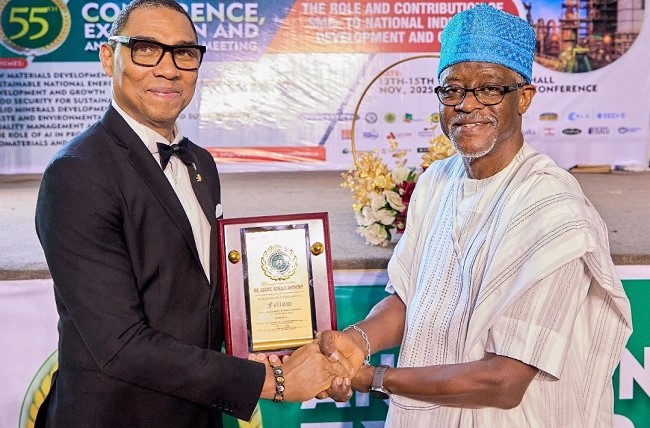
The Nigerian Society of Chemical Engineers (NSChE) at the weekend inducted the Managing Director of Shell Nigeria Exploration and Production Company Limited (SNEPCo), Ronald Adams, and 19 others as Fellows for outstanding contributions to the profession.

They were accorded the highest honour of the Society at its 55th conference and annual general meeting held on Saturday, November 15, 2025, in Enugu. NSChE National President, Bayo Olarewaju-Alo, advised them to continue “to inspire younger engineers, shape industrial polices and drive sustainable growth through innovation and ethical practice.”

Responding on behalf of the inductees, Ron expressed gratitude for the honour and pledged that they would justify the confidence reposed in them.

Ronald Adams
L-R: Managing Director, Shell Nigeria Exploration and Production Company Limited (SNEPCo), Ronald Adams, while receiving his Followship award from the National President, Nigerian Society of Chemical Engineers, Bayo Olarewaju-Alo, at the 55th Annual Conference and Annual General Meeting (AGM) of the Nigerian Society of Chemical Engineers (NSChE) in Enugu State

He said: “Chemical engineers are needed today more than ever before. As society evolves at a rapid pace, we need these professionals to make sense of it all and prepare us for challenges in the energy sector and beyond.”

He added: “SNEPCo shares the vision of the Nigerian Society of Chemical Engineers and supports members in the company through trainings and the wider body in the pursuit of its mission. The partnership will continue.”

A few months ago, the Petroleum Technology Association of Nigeria (PETAN) presented an Award of Excellence to Ron, for his visionary leadership in deep-water production.

Ron has a bachelor’s degree in chemical engineering from the University of the West Indies and an international MBA, with specialization in Strategic Planning from Herriot-Watt University, Edinburgh. He has held several leadership roles in his native Trinidad and Tobago, and made history on August 1, 2021, when he became the Chief Executive Officer of Atlantic LNG of Trinidad and Tobago, the first local to hold the position in its 25 years of operation.

In October last year, he arrived in Nigeria to open another historic chapter, becoming the first non-Nigerian to serve as Managing Director of SNEPCo; the company that had itself made history earlier on February 14, 2023, when Bonga, Nigeria’s first deep-water field, produced its one billionth barrel of oil.

Ronald is said to be repositioning SNEPCo for an even brighter future as it implements the $5 billion Bonga North project.

Ghana OFAB Media Awards 2025 celebrate champions of evidence-based reporting

0

Once again, some Ghanaian journalists have been celebrated not just for their brilliant news items, but also how through the lens of factual storytelling, they have impacted stakeholders, particularly farmers to appreciate how some modern scientific tools can enhance farming. The awards ceremony reaffirmed the growing importance of evidence-based journalism in transforming public perceptions about agricultural biotechnology and its role in Ghana’s food security journey.

The annual awards, focused on media reportage on agricultural biotechnology is organised by the 10 African countries including Ghana, with functional Chapters of the Open Forum on Agricultural Biotechnology (OFAB) under the auspices of the Kenya based African Agricultural Technology Foundation (AATF).

Ghana OMA
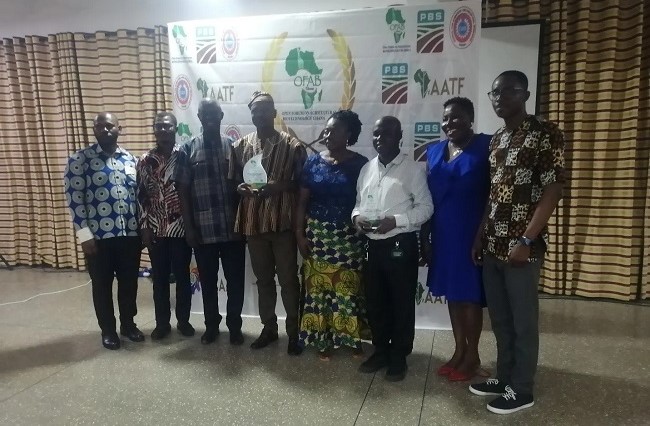
A group picture of the award winners with some previous awardees and some members of the OFAB Ghana Team

The 2025 Ghana OMA Awardees

The 2025 OFAB Media Awards (OMA) Ghana event, held in Accra about a fortnight ago, honoured two outstanding media workers who have used their platforms to demystify science and promote informed dialogue around agricultural biotechnology.

Solomon Gumah of the Tamale Office of the Ghana News Agency was one of the awardees. His story, was on the impact of the official release of the Pod Borer Resistant (PBR) Cowpea, by the Council for Scientific and Industrial Research Savannah Agricultural Research Institute (CSIR-SARI) and its partners in Nyankpala, in the Tolon District of Ghana’s Northern Region.

This variety of cowpea popularly known as the black eye beans has been genetically engineered to resist the bod borer pest, which has been a menace to farmers across the West Africa Sub-region. Gumah’s story, which won the Print/Online Category of the OMA, highlighted how the innovation was inspiring women’s access to farmlands and agricultural opportunities in the area.

Noah Nash Hoenyefia, who is the Northern Regional Correspondent of the Excellency in Broadcasting EIB) Network received the Television Category award. His story successfully captured the intersection of innovation, local realities, and scientific responsibility. It portrayed biotechnology not as a magic bullet, but as a dynamic process shaped by collaboration between researchers, regulators, and farmers.

This year’s event, was themed: “Promoting Credible and balanced Science Reporting for Quality Seed Development and Food Security.” It projected the power of evidence-based reporting in advancing biotechnology adoption, and underscored how credible journalism can build bridges between science and society; particularly in an era where misinformation can easily overshadow years of scientific research.

Each of the awardees received a plaque, a cheque for GHS 3000.00 and a hamper of assorted provisions. In addition to that, they will be sponsored to the African OMA events, which is the climax of OFAB’s Annual Review and Planning Meeting (ARPM) in Nairobi, Kenya.

The weeklong meeting opened on Monday, November 17 and ends on Friday, November 21, 2025.

A Growing Movement for Science-Focused Journalism

Former Director of the Biotechnology and Nuclear Agriculture Research Institute (BNARI) of the Ghana Atomic Energy Commission (GAEC), Professor Kenneth Danso, who chaired the event, praised the OFAB initiative for nurturing a new generation of science communicators.

“The quality of media stories has greatly improved and reflects the growing interest of the Ghanaian journalists in science and biotechnology reporting, and helping the public see the benefits rather than the fears,” adding: “That’s how we build trust.”

Prof. Danso, who is a member of the Vetting Committee explained that the core selection criteria were: originality, creativity and ability of the journalists to communicate complex scientific concepts to the public in simple and engaging ways.

Touching on the cowpea, which is now under commercial production, he said the product is already helping farmers, particularly in northern Ghana. “This crop is climate-smart and environmentally friendly. It lowers production costs and contributes to environmental protection.”

Prof. Danso urged journalists to continue highlighting both the progress and the challenges in biotechnology adoption, including farmer education, seed regulation, and market access, to ensure that innovation translates into real benefits for society.

The Awards not just an honour but an opportunity to shape Africa’s agricultural future

In a stirring goodwill message, Gloria Anderson of the Radio News Division of the Ghana Broadcasting Corporation (GBC) and a former OFAB Award winner, stated: “Tonight, we are not simply giving awards, we are recognising impact. We are acknowledging individuals and institutions who are pushing forward Africa’s dream of food security, sustainability, and agricultural innovation.

She reminded recipients that their recognition marked the beginning of a new chapter of responsibility. “This award is not an end – it’s a platform, a microphone, a doorway,” and urged them “to use your voice to speak boldly to policymakers, farmers, and communities. Build partnerships, mentor others, and stay engaged.”

Anderson highlighted how winning the OFAB Award opens doors for visibility, partnerships, and influence in policy circles, noting that “these are benefits that ultimately enhance public understanding of science and technology.

She also encouraged young journalists to see the awards not only as an honour but also as an opportunity to shape Africa’s agricultural future. “The OFAB network is a family,” she said “and solutions scale, when we collaborate.”

Celebrating the partnership between science and journalism

The Public Affairs Officer of the Ghana Journalists Association (GJA), Zadok Kwame Gyesi, described science and journalism as “two forces that, when brought together, help society make sense of complex realities.”

He underscored that both disciplines are indispensable to national development. “We cannot take science out of our lives, just as we cannot take journalism out of our lives,” he said. “When the two come together, society benefits immensely.”

Zadok commended Ghanaian scientists for achieving a historic milestone with the PBR Cowpea – the country’s first genetically modified (GM) crop approved for commercial cultivation in 2024. He noted that “the crop, offers farmers protection against the destructive Maruca vitrata pest, reduces pesticide use, and ensures higher yields.”

However, he observed that this scientific breakthrough had been accompanied by waves of misinformation, a challenge that underscores the importance of responsible media coverage. “The same media that can spread misinformation also has the power to correct it,” he emphasised. “Evidence-based reporting is our best defence against propaganda and fear.”

Zadok outlined that evidence-based reporting relies on verifiable data, peer-reviewed research, and credible sources. Such reporting, he explained, strengthens public trust, empowers farmers and consumers, and helps policymakers make informed decisions about technologies such as biotechnology. He also urged both scientists and journalists to build a “mutually beneficial relationship” anchored in transparency and trust.

OFAB Ghana: A decade of fostering informed dialogue

In a statement, OFAB Ghana’s Coordinator, Dr. Richard Ampadu, recounted how since its establishment in 2011 and hosted by the CSIR, how the initiative has fostered understanding of agricultural biotechnology and bridged communication gaps between scientists, policymakers, and the public.

His statement, read on his behalf by OFAB Ghana’s Project Manager, Enoch Ilori, explained how the group does its work: “OFAB Ghana facilitates informed decision-making through conferences, workshops, and stakeholder engagements.” This is in line with its mission: “to educate and update the public about the role of biotechnology in addressing Ghana’s food and agricultural challenges.”

On the OMA, the statement said, the award scheme was instituted to celebrate journalists who report on agricultural biotechnology with balance, accuracy, and depth, noting that over the years, the awards have become a flagship platform for promoting science journalism in Ghana.

“Despite misinformation and fear, biotechnology holds transformative potential for addressing food security, climate change, and declining yields,” the statement said, and emphasised that “the media’s role in bridging this knowledge gap cannot be overemphasised.”

Dr. Ampadu, who is also a Deputy Director at the CSIR- Science Technology Policy Research Institute congratulated this year’s winners for their exemplary work in science journalism, noting that their commitment continues to inspire public confidence and shape national discourse on agricultural innovation.

Conclusion

In a world where misinformation travels faster than facts, Ghana’s growing cadre of science journalists is proving that evidence-based communication remains one of the strongest tools for national development. Through their work, they continue to build the bridge between the laboratory and the community – ensuring that innovation truly reaches the people it was designed to serve.

The 2025 OFAB Media Awards reaffirmed that when science and journalism work hand in hand, societies become more informed, policies more effective, and technologies more trusted.

By Ama Kudom-Agyemang

FCTA’s Breathe Clean Air Initiative: 5,000 households to get free cooking gas

0

No fewer than 5,000 households are set to enjoy free gas cylinders with six months free refill of their cooking gas under the Federal Capital Territory Administration’s (FCTA) “Breathe Clean Air Initiative”.

The Mandate Secretary, FCTA, Health and Environment Secretariat (FCT-HES), Dr Adedolapo Fasawe, made this known at the inauguration of the Safe Environment Renewable Project- Breathe Clean Air Abuja, on Saturday, November 15, 2025, in Abuja.

According to Fasawe, the focus of the programme is not about sharing palliatives, but to address ignorance around people’s environment and help women manage the home and health of their household better.

Gas
Free cooking gas under FCTA’s Breathe Clean Air Initiative: 5,000 households to get free cooking gas

She stated that the Renewed Hope Agenda of President Bola Tinubu had touched every area of human life with the aim of improving standards of living for all classes of people.

Fasawe stated that the FCT Minister, Nyesom Wike, had keyed into the visions of the president and had shown enough commitment towards making the FCT a better place for all.

She added, “The truth is, health is wealth. Health and environment are equal. So, the focus of this programme is not only to give out palliatives, as we have done in the past.

“The focus of the programme is to address the Renewed Hope Agenda Initiatives.

“It is to tell Nigerians that if only we can put our hands together, and not wait for governments alone, we can have a happy, peaceful, and prosperous Nigeria. Because truly, with peace and prosperity, Nigeria will be great again.”

Also speaking, Dr Babagena Adams, Permanent Secretary, Health Services and Environment Secretariat, FCTA, said that the initiative was important, as it would help to end the stress that pregnant women pass through.

Adams said, “We are also saving the pregnant women, along with their families.

“So, if they live healthy, they will be more productive, and the GDP of FCT will increase. So, a healthy community is a wealthy community, that is the benefit.”

Earlier in his speech, a partner of the initiative and the Chief Executive Officer, IHS Nigeria Limited, Mohammed Darwish, said that the initiative was designed to help stop mothers and their children from inhaling toxic gases that are injurious to their health.

Darwish said some of the hazards that followed long use of firewood, charcoals for cooking were lung cancer diseases, among other lung-related ailments.

“The six-month voucher distributed in addition to the cylinder would encourage the beneficiaries to sustain the usage of the gas cylinders.

“This programme, in a nutshell, is about helping 5,000 mothers, sisters, and daughters by not inhaling toxic gases anymore.

“It is also by really making sure that their health is better by breathing fresh air,” he added.

The Executive Vice President of HIS, Ayotade Oyinlola, who spoke on the impact of the initiative, said the distribution would significantly reduce family income spent on medical bills.

 Dr Ayuba Hannatu, a Consultant Radiation and Clinical Oncologist, National Hospital Abuja, and Secretary, Nigerian Cancer Society, FCT chapter, said the initiative was centred on health prevention, while considering lifestyle improvement.

Adding her voice, Daniela Omotola, who was one those spearheading the campaign, using Rotaract Clubs in Abuja, praised the project as a timely, life-changing intervention.

Omotola said it would help to reduce pollution-related illnesses and support a healthier FCT.

Stakeholders at the launch maintained that as more households transition to cooking gas, the pressure on surrounding ecosystems including tree losses, soil degradation and rising temperatures is expected to decline over time.

By Angela Atabo

PETAN, oil majors pledge support for Nigeria’s production target

0

The Petroleum Technology Association of Nigeria (PETAN), alongside international oil majors and leading service companies such as Shell, TotalEnergies and ExxonMobil, has pledged full support for Nigeria’s crude oil production growth plans.

The commitment was disclosed in a statement by Mr. Wole Ogunsanya, the PETAN chairman, in Lagos on Sunday, November 16, 2025.

Ogunsanya said the pledge was made during the Nigerian Upstream Petroleum Regulatory Commission (NUPRC) “Project 1MMBOPD Additional Production Investment Forum” held in London on Saturday.

Wole Ogunsanya
Chairman, Petroleum Technology Association of Nigeria (PETAN), Mr. Wole Ogunsanya

He said the event was strategically designed to attract fresh investment and raise Nigeria’s crude output by an additional one million barrels per day (bpd).

He explained that the forum brought together top industry players, investors, financiers, and regulators to explore opportunities, address funding gaps, and strengthen partnerships required to meet the production target.

Ogunsanya noted that the Chief Executive of NUPRC, Mr Gbenga Komolafe, used the platform to announce that the 2025 Oil Licensing Round will commence on Dec.1.

Ogunsanya said that the round aims to unlock undeveloped and fallow oil and gas fields across Nigeria.

He said that the event provided direct access for investors to project owners and policymakers, while showcasing bankable opportunities and facilitating partnerships grounded in transparency, efficiency and accountability.

He added that Nigerian legislators and senior government officials reassured investors of unwavering political will to remove existing bottlenecks.

They also pledged that the Petroleum Industry Act (PIA) will remain stable and free from arbitrary amendments—ensuring a predictable regulatory environment.

According to Ogunsanya,NUPRC highlighted that ongoing reforms and regulatory interventions have raised Nigeria’s crude oil production to about 1.7 million bpd, up from a low of 1.1 million bpd in 2022.

The two-day investment forum attracted major indigenous and international stakeholders.

‘Public health trumps profits’ – Groups back NAFDAC’s sachet alcohol ban

0

The Network for Health Equity and Development (NHED) and Corporate Accountability and Public Participation Africa (CAPPA) have thrown their weight behind the National Agency for Food and Drug Administration and Control (NAFDAC) over its decision to enforce the ban on the production and sale of alcoholic beverages in sachets, PET bottles, and glass bottles of 200ml and below, beginning December 2025.

In a joint statement on Sunday, November 16, 2025, the two leading public health advocacy organisations described the ban as a long-overdue public health intervention essential for safeguarding the well-being of Nigeria’s children, youths, and other vulnerable populations.

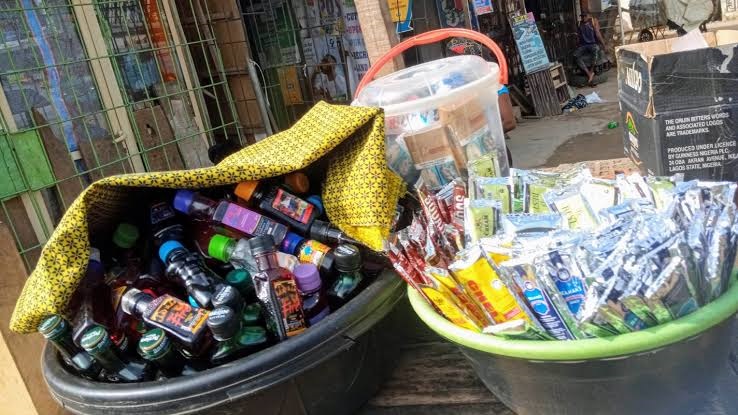
Alcoholic drinks in sachet
Alcoholic drinks in sachets and small volume bottles

They agreed with NAFDAC that the packaging, pricing, and aggressive marketing of these products had made highly potent alcohol dangerously accessible, especially to minors, and were contributing significantly to rising addiction, social disorder, road crashes, and non-communicable diseases across the country.

They noted that when NAFDAC first announced the ban in 2024, it gave manufacturers a multi-year phase-out period, which ends in December 2025, to exhaust existing stock. But some alcohol manufacturers flagrantly continued production even after the deadline.

NHED and CAPPA condemned the pushback from these manufacturers, particularly the claim by the Manufacturers Association of Nigeria (MAN) that the ban could lead to investment decline and retrenchment, saying it was a familiar scare tactic to push government to prioritise commercial greed over public health.

The manufacturing process of these products, they argued, is mostly mechanised and requires relatively limited human effort; hence, the claims about huge job losses were contrived.

“We reject in its entirety the claims by the Manufacturers Association of Nigeria (MAN) that the ban will trigger a loss of over N1.9 trillion in investment and lead to the retrenchment of over 500,000 workers,” the organisations stated.

“These figures are not only inflated and unverifiable, but they also represent a familiar scare tactic used by alcohol and tobacco corporations globally whenever governments attempt to regulate harmful products.”

Furthermore, they contended that, rather than engaging honestly with evidence-based public health policies, industry actors had chosen to weaponise economic misinformation to blackmail the Nigerian government and regulatory agencies.

“This behaviour is irresponsible, deceptive, and unbecoming of entities that claim to operate ethically,” the NHED and CAPPA added.

Dr. Jerome Mafeni, NHED’s Technical Director, emphasised that protecting lives must take precedence.

“The long-term social and economic costs of alcohol-related harm far outweigh any short-term profits that manufacturers seek to protect,” Mafeni said. “Nigeria currently bears the burden of increased alcohol-related violence, reduced productivity, escalating healthcare costs, and a rising addiction crisis among young people. These harms disproportionately affect poor and marginalised communities, who sachet alcohol products specifically target.”

He added, “It is unacceptable that children can purchase high-concentration alcoholic products for as little as ₦100. It is equally unacceptable that manufacturers have, for years, prioritised profit over the safety and well-being of Nigerians.”

For Akinbode Oluwafemi, government regulation to protect public health should not be negotiable.

Oluwafemi said: “NAFDAC’s decision aligns with global best practices and mirrors what responsible governments worldwide have done to curb harmful alcohol consumption. No credible public health agency anywhere would permit the continued marketing of such products in packaging designed to encourage unrestricted, on-the-go, and underage drinking.

“We commend NAFDAC for resisting corporate bullying and for standing firmly on the side of science, public health, and national interest. We equally call on the Federal Ministry of Health, the Ministry of Finance, the Standards Organisation of Nigeria (SON), and the National Orientation Agency (NOA) to rally behind the agency and ensure seamless implementation of the ban.”

Both organisations urged the government not to yield to corporate pressure,

“We urge President Bola Ahmed Tinubu and the National Assembly to see through the industry’s theatrics and avoid any attempt to suspend, water down, or delay this life-saving policy. The well-being of over 200 million citizens must not be sacrificed at the altar of corporate profit,” they added.

Beyond enforcing the ban, the organisations urged the government to implement additional alcohol control measures, including taxation, stricter marketing regulations to protect children, clear labelling, and nationwide sensitisation on alcohol-related harm.

They insisted that the long-term social and economic costs of alcohol misuse, including healthcare expenses, reduced productivity, family breakdowns, and premature deaths, far outweigh any economic benefits claimed by the manufacturers.

“NAFDAC’s ban is the right policy at the right time. NHED and CAPPA stand resolutely with the agency and with all Nigerians committed to a healthier, safer, and more responsible society,” the statement concluded.

Renaissance wins multiple awards at NAPE 2025

0

Renaissance Africa Energy Company Limited marked an impressive appearance at the just concluded 43rd Annual International Conference of the Nigerian Association of Petroleum Explorationists (NAPE), held at the Eko Hotel and Suites in Lagos. 

The company clinched four awards, including the coveted Overall Best Exhibitor and Best Technical Paper Presentation, at the award dinner Thursday night.

Principal Geoscientist, Owens Ovwigho Irifeta, earned the Best Technical Paper Award for his presentation titled “Safely Navigating the Dual Challenges of Depleted Reservoirs and High Pressure while Drilling”. The company also secured honours for Best Overall Exhibition, Best Exhibiting Indigenous Exploration and Production Company, and Best New Entrant.

Renaissance
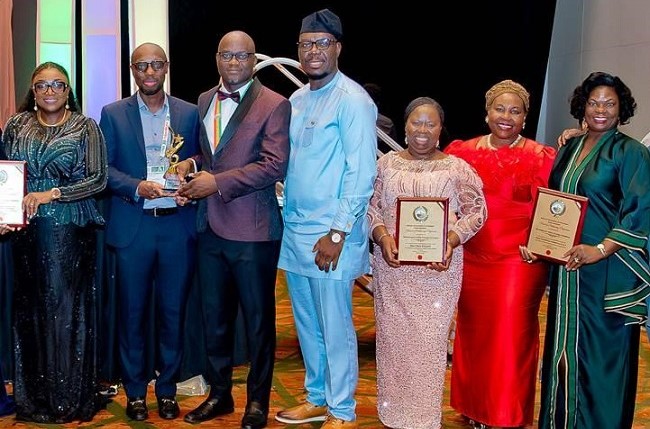
(3rd from left) President of the Nigerian Association of Petroleum Explorationists (NAPE), Mr. Johnbosco Uche, presents to representatives of Renaissance Africa Energy Company Limited awards won at the just concluded 43rd Annual International Conference of NAPE held at the Eko Hotels and Suites, Lagos. Renaissance came out tops for exhibition and technical papers. Renaissance representatives from left: Magdalene Umoh; Olatunji Bakare; Jude Osimobi; Fortuna Utomi; Bena Oyedele; and Rose Okoronkwo.

NAPE Executive Committee noted that Renaissance’s performance stood out among a record number of participating companies and technical submissions, a reflection of the company’s growing influence in Nigeria’s upstream sector.

Managing Director and Chief Executive Officer of Renaissance, Mr. Tony Attah, expressed pride in the Renaissance team for their focus, dedication and determination to keep the company ahead of the competition.

“This recognition affirms our trajectory of growth and commitment to supporting Nigeria’s energy ambitions. We remain focused on increasing oil and gas output to boost government revenues, catalyse industrialisation, and develop young energy talent,” Attah said.

He described the performance of the Renaissance team at the NAPE conference as an expression of the vision of the company to become Africa’s leading energy company, enabling energy security and industrialisation in a sustainable manner.

He dedicated the accolades to the company’s workforce, highlighting their resilience since Renaissance’s acquisition of Shell’s stake in the former SPDC earlier this year.

Renaissance previously earned similar honours in August at the Society of Petroleum Engineers’ 2025 Annual Conference. 

Renaissance is the operator of the NNPC/Renaissance/TotalEnergies/AENR JV, Nigeria’s largest oil and gas joint venture, with assets spanning onshore and shallow-water fields, the Bonny and Forcados export terminals, and the Sea Eagle Floating Production, Storage and Offloading vessel, all in the Niger Delta.

Thousands join global marches calling on govts at COP30 to deliver climate justice

0

An estimated 30,000 people marched through the Brazilian city of Belém on Saturday, November 15, 2025, to mark the Global Day of Action for Climate Justice. The mobilisation, led by the People’s Summit and supported by civil society groups attending COP30, brought together workers’ unions, Indigenous communities, international networks, youth movements, and climate defenders from across the world.

Starting at Mercado de São Brás and ending at Aldeia Amazônica, the march transformed the city into a powerful call for urgent, fair, and justice-centred climate action. Participants gathered from 8:00am to organise themselves into blocs, before setting off along the route from 9:00am to 11:00am.

Additionally, over 100 marches, demonstrations and events were held in 27 countries around the world.

Global Day of Action for Climate Justice
Activists marching through the Brazilian city of Belém to mark the Global Day of Action for Climate Justice

Demanding an end to the system that has fueled climate destruction in the Amazon to the rest of the world, the protesters condemned global economic inequality, environmental racism, and corporate impunity that have delayed action and denied justice to people in climate-vulnerable countries.

In Asia, around 10,000 people joined mobilisations in more than 40 cities and provinces in the Philippines, India, Bangladesh, Pakistan, and Nepal. In Africa, mobilisations were held in Kenya, Zambia, Benin, Nigeria, and the Democratic Republic of Congo. In the UK and Ireland, mobilisations were held in 16 cities, including London and Dublin. In Belém, around 70,000 from global and Brazilian movements participated in the Peoples’ Summit March.

Commenting on the march, Mohamed Adow, Director, Power Shift Africa, says: “Today’s march in Belém is a powerful reminder that sometimes the solutions to our biggest problems come from the most unexpected places. For too long, climate action has been shaped in closed rooms in distant capitals. But here in the Amazon, the people who have done the least to cause this crisis – Indigenous peoples, local communities, young people, and those on the frontlines – are showing the world what real climate leadership looks like.

“Their wisdom, their stewardship of nature, and their demand for justice offer the kind of solutions the world desperately needs. If governments truly want to tackle the climate crisis, they must listen to the voices from the ground and put people, not polluters, at the heart of climate action.”

Participants carried both distributed and self-made signs, with messages aligned to global climate justice demands. Visual creativity, movement solidarity, and chants for climate accountability defined the atmosphere throughout the march.

“Today’s mobilisation demonstrated the strength of global solidarity at COP30. With communities in Belém leading the way, civil society sent the strong message that climate justice is non-negotiable, and people everywhere are ready to demand it,” added Adow.

Tasneem Essop, executive director of Climate Action Network International: “We are done watching Big Polluters and the governments aligned with them decide our future. Real solutions are already alive in the territories – in the hands of Indigenous peoples, workers, women, and youth who defend land, water, and life every single day. On this Global Day of Action, we take to the streets of Belém with thousands of others to make one thing clear: the era of sacrifice zones is over. The world we need puts justice at the centre – not profit, not war, not extraction. People’s power is rising, and we are not backing down.”

Lidy Nacpil, coordinator of the Asian Peoples’ Movement on Debt and Development: “From Asia to the Amazon, we are mobilising to change the system that has kept our people hostage to climate destruction. On the streets of Belém, we are marching with thousands of allies for an end to the capitalist and imperialist order that has plundered our lands and exploited our people.

“Inside the COP, we are pushing for governments to adopt a global just transition mechanism, provide climate finance from the North to the South, and accelerate a fair transition from fossil fuels to renewable energy. Ultimately, we are fighting to end the system that has brought back-to-back typhoons to the Philippines, floods to India and Pakistan, and landslides to Nepal. System change is the only way forward – anything less is an injustice against our people.”

Leon Sealey-Huggins, senior campaigner of War on Want: “War on Want is in Belém to amplify the leadership and lived knowledge of our partners on the frontlines – those exposing false climate solutions and driving real, people-centred, just and popular transitions. We’re taking action across the UK and marching here in Belém to demand a Belém Action Mechanism for Just Transition – and to tell the UK government to stop blocking the demands of millions of workers, frontline communities, feminists and Indigenous peoples. The fight for climate justice is the fight for economic, social and racial justice. Wealth must be reclaimed from destructive industries and redirected towards life-sustaining futures. Through mass mobilisation, solidarity, and sustained organising, we are making it clear: This world is ours.”

Javier Andaluz, coordinator of Alianza por el Clima (Climate Alliance Spain): “Ten years after the Paris Agreement, we are still far from meeting the targets required by science, and our emissions continue to rise. In the face of this political inaction, we are taking to the streets once again to demand a just, urgent, and immediate transition, because if the necessary measures are not taken, it will be the most vulnerable populations who will suffer the most. Before it is too late, it is essential to establish a mechanism capable of ending fossil fuels and ensuring the financing and support needed for the energy transformation we require.”

Rachitaa Gupta, coordinator of the Global Campaign to Demand Climate Justice: “Today we marched with thousands of people because our lives, our lands, and our futures are not negotiable. We marched because we in the Global South are being sacrificed for the profit of corporations and the political convenience of powerful governments. We reject carbon markets and every false solution that lets polluters keep polluting. We demand real, public climate finance, historic reparations, and protection of Indigenous, quilombola, coastal, and forest territories. Our solutions of agroecology, food sovereignty, and community power already exist. Today people marched in Belem to show that from the Amazon to Palestine, peoples’ power is rising, and governments must follow our lead.”

COP30 Week 1: Progress hampered by Baku missteps – Mohamed Adow

0

At the close of week 1 in Belém, finance tensions from Baku are still casting a long shadow over COP30, says Mohamed Adow, Director, Power Shift Africa

COP30 is still recovering from a Baku hangover. Countries are grappling with the results of a very weak long-term finance agreement last year which was extremely vague in terms confirming the level of public, grant based climate finance. Had we got a strong public, grant-based, finance commitment in Baku, agreeing on the Global Goal on Adaptation in Belem would have been straightforward. 

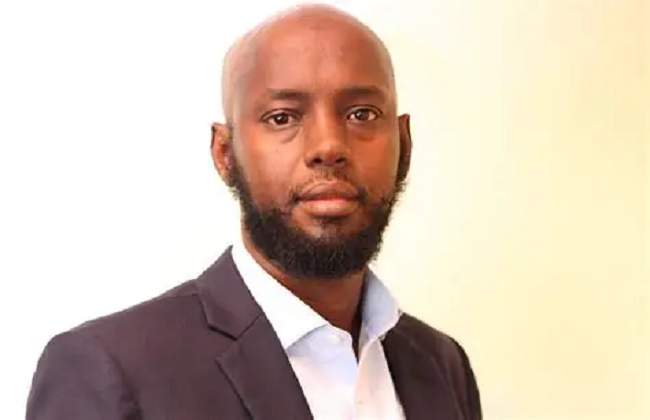
Mohamed Adow
Mohamed Adow

The lack of definition on public money last year is the reason developing countries are so passionate about formalising Article 9.1 of the Paris Agreement, which states that rich nations are responsible for providing climate finance. There’s such a big need for public adaptation funding, given the huge debt burden developing countries are facing. That is why Article 9.1 has become a rallying call for the global south. 

Global Goal on Adaptation indicators

The adaptation indicators being discussed here at COP30 are important. If done well, they will give us a common language to assess progress towards targets in vital sectors such as water access, food systems, health infrastructure, biodiversity and livelihoods. Having a clear picture on how adaptation measures impact on macroeconomic stability and development outcomes is certainly helpful when it comes to developing policies and tracking progress. 

But measurements must not be confused with delivery. Coming from a pastoralist community, I know that however many times you weigh a cow, it doesn’t make it any fatter. So before we rush to lock in indicators here, vulnerable countries need to actually receive the means to adapt, in the form of adaptation finance. Pretending we’re making progress by agreeing on a measurement system might ultimately turn into a distraction from actually securing adaptation finance, which has been sorely lacking for many years.

 The world is expectant

We are back in Brazil, where the Rio Earth Summit kicked off the UN climate process more than 30 years ago. It’s 20 years since the Kyoto Protocol and 10 years since the Paris Agreement. The world expects a strong outcome from Belem. 

Cover text inevitable 

It’s becoming clear that the COP30 Presidency will not be able to escape having a cover decision. The quicker they realise that and create formal space in the negotiations for it to be debated, the better for everyone.

×