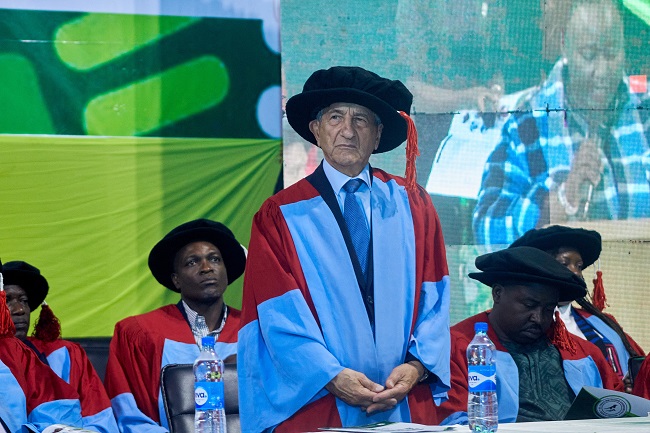
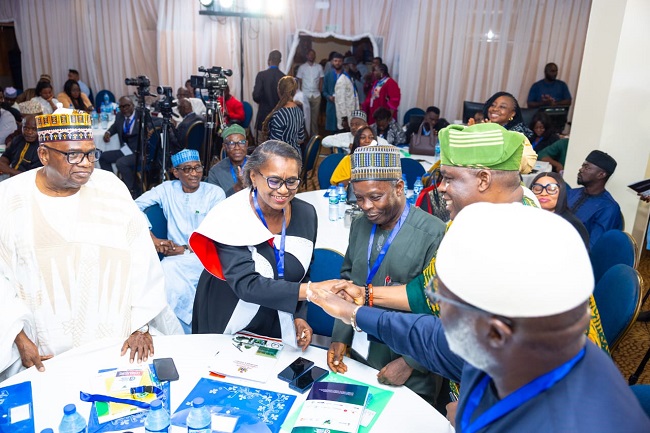
Shell Companies in Nigeria (SCiN) were rewarded for their robust participation at the 43rd International Conference and Exhibition of the Nigeria Association of Petroleum Explorationists (NAPE) with corporate and individual awards at a dinner on Thursday, November 13, 2025, which rounded off the four-day event in Lagos.
SCiN was recognised for its Titanium sponsorship of the conference (the highest category) and won 3rd Best Exhibitor out of 64 companies. SNEPCo’s Principal Exploration Geoscientist, Adesola Adesida, won 3rd place technical paper with his presentation titled: “Integrated geological framework of Nigeria’s deep-water and onshore settings: Implications for hydrocarbon prospectivity.”
A group picture of Shell participants when receiving the award from NAPE officials at the 43rd NAPE Award and Recognition Night in Lagos
In addition to being a major sponsor of the conference, SCiN mounted an exhibition on the operations and contributions of Shell Nigeria Exploration and Production Company Ltd, Shell Nigeria Gas, All On and Daystar Power Limited to the development of Nigeria.
Outgoing NAPE President, Johnbosco Uche, thanked Shell for the support.
Managing Director Shell Nigeria Exploration and Production Company Ltd (SNEPCo), Ronald Adam, commended the SCiN team in an address delivered by Deepwater Asset Development & Subsurface Manager, Chike Aginah.
He said: “As pioneer of the oil and gas industry in Nigeria, Shell has led the way in manpower development in exploration and production, and we acknowledge the roles of employees who are active members of NAPE. Our partnership with NAPE will continue.”
NAPE is 50 this year and one of the largest groupings of oil industry professionals in Africa.
SISTME, a climate change and biodiversity conservation consulting firm based in Argentina, has offered to connect, countries, institutions with international climate finance opportunities.
The Director of the firm, Mr. Martin Dellavedova made this known in an interview on Thursday, November 13, 2025, on the sidelines of the 30th United Nations Climate Change Conference of the Parties in Belém, Brazil.
According to Dellavedova, SISTME provides high quality consulting services to local and international organisations to make their projects more efficient and collaborate in promoting social, environmental, sustainable and economic change around the world.
R-L: SISTME Director, Mr. Martin Dellavedova and Partner, Mr. Eric Muller at COP30
He stated that the firm had demonstrated a solid track record in implementing projects related to climate change, biodiversity conservation, and cluster development, adapting to the specific needs of each mission and client with a comprehensive and professional approach.
“SISTME is a consulting firm with a highly skilled team specialising in the design, evaluation, and management of international cooperation projects.
“Our expertise spans the development of innovative strategies in key areas such as sustainability, natural resource management, and financial inclusion.
“Our firm provides consulting services to a variety of clients, including local and international development agencies, NGOs, multilateral institutions, and governments,“ he said.
The director said the firm had worked on managing and evaluating projects focused on climate change mitigation and adaptation and conservation of critical ecosystems, aligning firm`s strategies with regional and international sustainability goals.
He said the firm had advised multiple organisations on developing initiatives related to sustainable tourism, including creation of tourism products and development of sustainable tourism clusters, facilitating integration of ecological practices and innovative business models.
The director added that pieces of such advice had promoted economic growth and environmental preservation.
“Our consulting team has extensive experience in creating and adapting innovative financial solutions to address complex challenges in development contexts, including products tailored for emerging markets such as Amazon.
“SISTME is distinguished by its participatory and inclusive approach, involving all stakeholders in the consulting process to ensure that the results are relevant and sustainable.
“We adhere strictly to codes of conduct and confidentiality, and our practices are guided by the values of respect, listening, learning, professionalism, and confidentiality,“ he said.
He said the firm had participated in and directed more than 100 consultancies for international cooperation projects in Latin America, the Caribbean, and several countries in Africa and Asia since its establishment in 2011.
He said many of SISTME consultancy projects are financed by international organisations – GEF, GCF, Inter-American Development Bank, World Bank, UNDP, UNEP, and European Union, among others, primarily in Latin America and the Caribbean.
The director added that SISTME had worked in 36 countries, and has a proven track record of delivering over 120 projects successfully.
According to the director, the SISTME has three offices- Cordoba, Montevideo and Argentina the headquarters.
The 9th Annual Leventis Lecture organised by A.P. Leventis Ornithological Research Institute (APLORI), Centre of Excellence, University of Jos, which held on Thursday, November 13, 2025, at the Aliyu Akwe Doma Indoor Theatre, University of Jos Permanent Site, served as a profound convergence of conservation science, policy, and traditional leadership. The event honoured the Institute’s founder and provided a strategic, economic roadmap for protecting Nigeria’s natural heritage.
Tunde Morakinyo, Executive Director of the Africa Nature Investors (ANI) Foundation, delivered the core address, “Bringing Nature and People Back to Life: Gashaka Gumti and Okomu National Parks, in focus.”
Guest Lecturer: Tunde Morakinyo, Executive Director of the Africa Nature Investors (ANI) Foundation
The lecture was held to honour Dr. Anastasios Paul “Tasso” Leventis CBE, OFR, a distinguished philanthropist and conservation leader who is the Chairman of the A. G. Leventis Foundation who leads without seeking the spotlight. Dr. Leventis’s enduring legacy is defined by his significant contributions to conservation and capacity building in Nigeria:
He established the A. P. Leventis Ornithological Research Institute (APLORI) in Jos, which now serves as a Centre of Excellence for ornithological research and training and Africa’s first Centre for Species Survival under the IUCN Species Survival Commission.
APLORI has graduated more than 200 conservation professionals who are now active in government, academia, and NGOs.
Through the Leventis Foundation Nigeria agricultural youth scheme, he has trained and equipped over 30,000 youths and farmers in sustainable-farming methods over three decades.
The event opened with an official procession and drew wide representation from academia, government institutions, traditional authorities, and the private sector. The Vice-Chancellor of the University of Jos, represented by the Deputy Vice-Chancellor (Academics), Prof. Rahila P. Gowon, delivered the welcome address.
Deputy Vice-Chancellor (Academics), Prof. Rahila P. Gowon (left), with the Guest Lecture
She reaffirmed the importance of the Annual Leventis Lecture as a permanent fixture to honour the founder’s enduring legacy. The Special Guest of Honour, Cornelius Dongnaan Doeyok, Plateau State Commissioner for Tourism, Culture and Hospitality, highlighted the crucial role of ornithology in advancing practical conservation outcomes and drew attention to the pressing conservation challenges facing birds and other wildlife, including the threat of habitat loss, climate change, and escalating human–wildlife conflict. Citing the ongoing crisis at the newly designated Pandam National Park, he urged participants to translate scientific knowledge into action.
A central message of the Lecture was the need to reposition Nigeria’s National Parks as engines of rural development rather than viewing them solely as biodiversity protection areas. Morakinyo presented a compelling argument for a “win-win” strategy that secures ecological integrity while delivering tangible social and economic benefits to surrounding communities. He framed the conversation around a fundamental question:
“How do we make conservation meaningful and bring economic benefits to people in rural areas, or even to our government, so that they have a reason to protect it rather than destroy it?”
Using Gashaka Gumti National Park (GGNP) and Okomu National Park as case studies, he outlined a dual strategy centred on security and community-driven economic development. He noted that many parks had become vulnerable to illegal activities such as poaching, logging, mining, and uncontrolled pastoralism – often enabled by wider insecurity. In GGNP, for example, recurrent fires associated with illegal grazing continue to degrade savanna and montane habitats at an alarming pace.
Morakinyo described ANI’s three-phase conservation – development model, which transitions parks from donor dependency to financial sustainability through a structured Public–Private Partnership with the National Park Service.
The first phase establishes governance frameworks and delegated management systems that ensure accountability. The second phase focuses on securing the landscape through philanthropy-supported ranger training, law enforcement, community programmes, and infrastructure rehabilitation. The final phase engages the private sector through investments in ecotourism and premium carbon credit projects, including a recently registered REDD+ initiative in Gashaka Gumti.
L–R: Alhaji Ahmed Mantey (Board Chair, Leventis Foundation Nigeria); Dr. Anastasios P. Leventis (Chairman, A.G. Leventis Foundation); Louisa Agathi Leventis; Philip Hall, OBE (Chair, APLORI Board); Tunde Morakinyo (Executive Director, ANI Foundation); Prof. Adams A. Chaskda (Director, APLORI); Dr. Talatu Tende (Deputy Director, APLORI); and Dr. Ulf Uttosson (Member, APLORI Board)
Both Gashaka Gumti and Okomu National Parks remain under immense pressure despite their ecological importance. Gashaka Gumti, which spans 6,731 km², supports Critically Endangered Hooded Vultures as well as Nigeria–Cameroon Chimpanzee (EN), Giant Pangolin (EN), and Martial Eagle (EN), and African Golden Cat (VU). Okomu, covering 202 km², protects one of the last remaining lowland rainforest blocks in southern Nigeria, home to Critically Endangered African Forest Elephants and African Grey Parrot (EN).
ANI’s community programme has expanded rapidly, with over 2,000 women in 42 Savings and Loans Groups across 39 villages in Gashaka Gumti. These groups have launched small agri-processing enterprises, supported the distribution of 3,000 fuel-efficient cookstoves, and are expanding into fish farming, poultry, and agri-waste briquette production, alongside scholarship and school rehabilitation programmes that support young people.
Morakinyo emphasised that communities become defenders of the park when their livelihoods – and their children’s futures – are tied to its long-term health.
Looking ahead to 2028, ANI’s roadmap includes full implementation of Gashaka’s grazing and fire management plan, proposed species reintroductions to restore ecological balance, and the creation of a transboundary conservation complex linking Gashaka Gumti with Cameroon’s Tchabal Mbabo.
Morakinyo also challenged young conservationists to prioritize economic models that make conservation viable, integrate artificial intelligence into monitoring and protection, use mass media to build public engagement, and expand conservation efforts into urban spaces through green infrastructure design.
His message underscored the balance between rigorous protection and community empowerment, concluding that the “true win-win” emerges when communities see the park as essential to their security, livelihood, and future.
Goodwill Messages: Calls for Action and Partnership
Conservator-General, National Parks Service (represented by DCP Jonah Moses): The CG stated that the 9th Leventis Lecture is apt at this moment of global concerns regarding Protected Areas (PA) and the need for participatory management practices. He emphasised the key roles of various conservation bodies in helping PA management, and praised ANI’s effort in their 30-year agreement in protecting the park.
He called on all stakeholders in Plateau state to extend support to the newly designated Pandam National Park (protection, infrastructure, and support zone community development), and pledged support for all developmental partners, thanking APLORI for the invitation and continued partnership.
The Dean, School of Natural Science (represented by HOD, Zoology): The representative applauded the Centre’s efforts and envisioned more results from the already excellent work by APLORI in producing the best from the department.
Father of the Day (HRH. Rev. (Dr.) Isaac A. Wakili): The Paramount Ruler called the lecture timely and very apt amid environmental problems, declaring: “To destroy nature is to destroy ourselves.” He stressed the collective role of traditional rulers, policy makers, and citizens to restore harmony. He commended APLORI for its remarkable contribution to capacity building across Africa, urged everyone to translate the knowledge into action, and reaffirmed the commitment of traditional rulers to supporting APLORI’s mandate.
Prof. Adams A. Chaskda, Director of APLORI, delivered the Vote of Thanks, appreciating the Vice-Chancellor – represented by the DVC Academics – for making time to attend despite the ongoing NUGA Games. He also thanked the founder, guest speaker, guest of honour, participants, the press, and APLORI staff, noting that everyone had “done excellently well and deserves the trophy, if one existed.” He accepted responsibility for any shortcomings and wished all attendees a safe journey.
The climax of the day’s events was the official commissioning of the new PhD Conservation Biology Students’ Hostel of the A.P. Leventis Ornithological Research Institute, Centre of Excellence, University of Jos, located in the Laminga community. The facility was formally commissioned on November 13, 2025, by Louisa Agathi Leventis, assisted by the Vice-Chancellor of the University of Jos, Prof. Tanko Ishaya.
In Attendance
Dr. Anastasios Paul “Tasso” Leventis as his citation is being read
The event was attended by Dr. Anastasios P. Leventis; Alhaji Ahmed Mantey, Chairman of the Board of Directors; Dr. Hope Usieta, Executive Director of the Leventis Foundation Nigeria; Philip Hall, Board Chair of APLORI; Cornelius Dongnaan Doeyok, Commissioner for Culture, Tourism and Hospitality, Plateau State; principal officers of the University of Jos; members of the Academic Staff Union of Universities (ASUU), University of Jos Branch; senior staff from the University’s Research and Development Office; the Dean of the School of Natural Sciences; the Dean of the Postgraduate School; traditional rulers including the Agwom Izere of Izere, HRH Rev. (Dr.) Isaac A. Wakili, and the Village Head of Laminga, Adagwom Musa Arin.
Others include Dr. Ibrahim Musa Goni, Conservator-General of the National Park Service of Nigeria, represented by DCP Jonah Moses; the Curator of the Jos Museum; representatives from NESREA; Dr. Samuel Godongs, Director General for Research, Documentation and Planning in Plateau State; several commissioners; the Chairman of the Nigerian Union of Journalists, Plateau State; the Director of Press and Public Affairs to the Governor of Plateau State; the Director of Wildlife Park Service; and media partners including PRTV, NTA, Ice FM, and other press representatives.
The National Park Service (NPS) has called for urgent action to address the critical decline of the West African lion.
Dr Ibrahim Goni, Conservator-General (C-G) of the NPS, made the call in Abuja on Friday, November 14, 2025, at the “Scientific Manuscript of Investigation into the generic Provenance of a Captive Lion Population in Nigeria: Implications for Conservation and Management”.
Goni said that the NPS is focusing on urgent conservation efforts, such as securing park areas, conducting ranger patrols, and re-establishing wildlife populations,
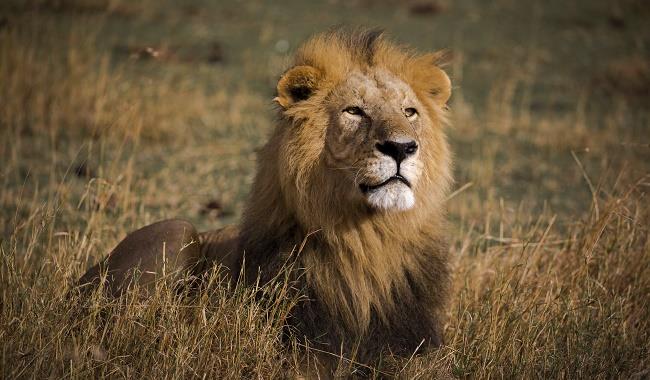
The lion
“This is a groundbreaking presentation which unveiled the findings of a critical study into the generic provenance of a captive Lion population in Nigeria, with significant implications for national and regional conservation strategies.
The research, titled “The generic Provence of a captive Lion population in Nigeria: Implications for Conservation and Management”, he said confirmed that the captive lions belonged to the endangered West African phylogenetic clade.
He underscored their irreplaceable genetic value.
The CG said that the presentation detailed the meticulous genetic analysis that established the definitive origins of the study population.
“The results are a vital contribution to the scientific understanding of lion populations in West Africa, a region where wildlife populations are critically endangered and geographically isolated.
“The presentation highlights the key implications of the scientific investigation for conservation to include prioritisation of West Africa lion lineage.
“The study provides a scientific basis for the management of these captive lions and potentially guiding future breeding programmes aimed at maintaining generic diversity within the clade,” he said.
Goni added that the study also highlighted conservation education and awareness offering a powerful tool for public education on the importance of local biodiversity conservation.
He expressed concern over the regulations of zoological gardens, wildlife parks and the zoo in the country.
He promised more collaboration with other zoos to ensure wildlife conservation and urged that a standard be put in place for the establishment of zoos.
Goni commended the Federal Government for its support on conservation efforts by the national park service.
Earlier, Mrs. Kehinde Abidemi, the Deputy Conservator of Park of the NPS, said that biodiversity, nationally is facing a decline according to genetic variation, adding that robust genetic management is indispensable.
“Aso wildlife collection captive facility in Abuja provided the impetus for investigation to ascertain whether the lions found there were pure Nigerians and where they emerged, from in Nigeria.”
International Climate Change Development Initiative Africa has officially launched its innovative Eco-Friendly Toilet at LEA Primary School, Aleyita Lugbe, Abuja – a project that showcases how community-driven innovation can transform lives and safeguard the environment.
The unique toilet facility, constructed using over 10,000 recycled PET bottles, demonstrates what is possible when creativity meets purpose. Designed to address the pressing challenge of open defecation, the initiative embodies ICCDI Africa’s mission to create practical, scalable climate solutions that uplift communities.
Beyond providing a safe and hygienic restroom for pupils, the structure also offers a powerful lesson in environmental stewardship by turning plastic waste into a life-changing resource.
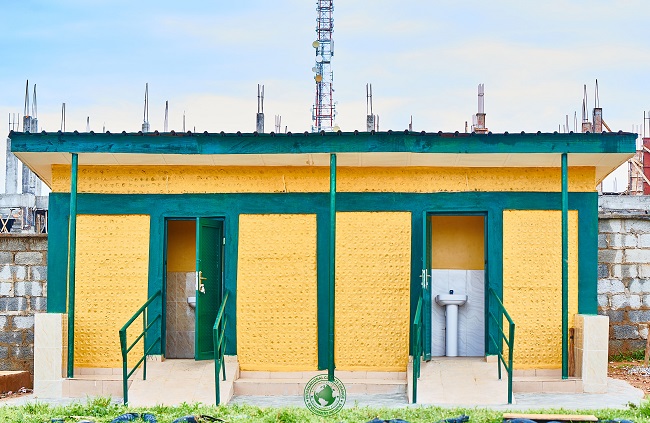
The ICCDI Africa Eco-Friendly Toilet at LEA Primary School, Aleyita Lugbe, Abuja
During the commissioning ceremony, Mrs. Abosede Orimoloye, Deputy Director of Water Quality Control & Sanitation at the Federal Ministry of Water Resources, reaffirmed the government’s unwavering commitment to achieving Open Defecation Free (ODF) zones across the country. She encouraged the school leadership and pupils to protect and maintain the facility so it can serve generations to come.
She further emphasised that access to safe sanitation is a fundamental human right, noting that every child deserves a healthy, clean, and dignified learning environment.
“At ICCDI Africa, our work has always centred on practical climate action – finding simple, innovative, and sustainable solutions to local challenges. By making use of recycled PET bottles and collaborating with key partners such as UNICEF, the Federal Ministry of Water Resources, RUWASA, and NGYouthSDGs, we are addressing two critical issues simultaneously: plastic pollution and inadequate sanitation,” disclosed Olumide Idowu, Founder and Executive Director of ICCDI Africa.
He added: “This Eco-Friendly Toilet stands as a powerful example of what can be achieved through partnership, innovation, and community engagement. Together, we are building a cleaner, greener, and healthier Nigeria – one community at a time.”
By Oloruntobi Adejare, Gender and Communication Leads, ICCDI Africa
President and Chief Executive of the Dangote Group, Aliko Dangote and his team, paid a courtesy call on Mr. Hakainde Hichilema, President of the Republic of Zambia. The visit, said the group, underscores its continued commitment to supporting Zambia’s national development agenda.
Since its establishment in Zambia, the Dangote Group has demonstrated confidence in the host economy. Dangote Cement Zambia Limited (DCZL) represents the single largest investment in the country’s manufacturing sector, with an outlay exceeding $500 million. Commissioned in 2015, the 1.5 million metric tonnes per annum (MTPA) integrated cement plant in Ndola includes a 30 MW captive power plant and a fleet of over 400 trucks to ensure efficient nationwide distribution.
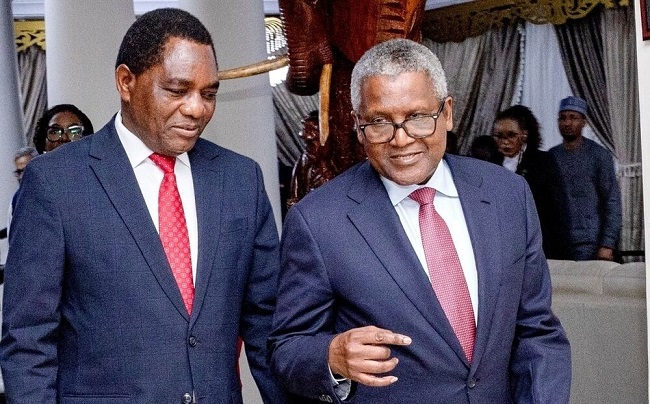
Mr. Hakainde Hichilema, President of the Republic of Zambia (left), with Alhaji Aliko Dangote, Chairman of the Dangote Group
The entry of Dangote Cement transformed Zambia from a net importer of cement into a leading exporter within the SADC region. Since commissioning, DCZL has sold more than 8 million tonnes of cement and remains the market leader for quality and reliability. In recognition of its excellence, Dangote Cement’s flagship product, Dangote 3X, was named Runner-up Product of the Year 2025 by the Zambian Association of Manufacturers (ZAM). The company has also been awarded Exporter of the Year by ZAM and the Zambia Bureau of Standards (ZABS) for three consecutive years (2021–2023), maintaining a runner-up position in 2024–2025.
Dangote Cement Zambia directly employs over 1,200 people, with an additional 5,000 benefiting indirectly through ancillary sectors such as logistics, engineering, and local supply chains. All raw materials are sourced locally, ensuring that value creation and economic benefits remain within Zambia.
As part of its sustainability strategy, Dangote Cement has made significant progress in reducing its carbon footprint by replacing over 30% of fossil fuels with alternative fuels such as used tyres, municipal waste, plastic, sawdust, and corn cobs. The company is certified by the Zambia Environmental Management Agency (ZEMA) to safely dispose of hazardous waste and has received multiple Environmental and Sustainability Awards for its leadership in green manufacturing practices.
During the visit, President Hichilema commended the Dangote Group for its continued contribution to national development and urged the company to partner the government and the private sector in addressing Zambia’s ongoing energy challenges.
In response, Dangote reaffirmed the Group’s commitment to supporting government initiatives aimed at mitigating climate change and strengthening the energy and agriculture sectors. He emphasised Zambia’s vast potential for agricultural expansion through diversification into climate-smart and irrigation-based farming, aligning with the nation’s goals for economic resilience and food security.
Dangote also pledged to explore investments in solar and thermal energy generation, leveraging the Ndola facility to help address power deficits in Zambia and the Democratic Republic of Congo (DRC). He also expressed interest in harnessing Zambia’s mineral resources, including coal, to develop sustainable power solutions for the region.
Dangote’s visionary investment in a 30 MW captive power plant has enabled self-sufficiency and allowed the company to feed 8 MW of power back into the national grid through the Copperbelt Energy Corporation (CEC), contributing to Zambia’s energy resilience.
President Hichilema welcomed Dangote’s commitment, affirming that Zambia is ready to partner the Dangote Group to unlock new opportunities for industrial growth and regional cooperation. These initiatives are aligned with the Government’s 8th National Development Plan (2022–2026), particularly in the areas of manufacturing, energy, and agriculture.
Through sustained investment, innovation, and collaboration, the Dangote Group says it has continued to position itself as a trusted strategic partner in Zambia’s industrialisation and economic transformation journey.
As the world marks World Diabetes Day on Friday, November 14, 2025, the Corporate Accountability and Public Participation Africa (CAPPA), a not-for-profit group, has backed the Diabetes Association of Nigeria (DAN) in urging the federal government to declare a national emergency on diabetes care and upwardly revise the sugar-sweetened beverages (SSBs) tax, amongst other life-saving healthy food policies.
In a statement on Friday, CAPPA described as “alarming” a recent disclosure by the association’s president that no fewer than an estimated 30,000 Nigerians die yearly from diabetes, while as many as 11.4 million others are currently living with the debilitating disease, according to a media report.
Sugar-sweetened beverages
It said this was even worse than the International Diabetes Federation (IDF) estimate, which reports a prevalence of roughly 3.0 per cent in Nigeria, with approximately 2.99 million adults living with diabetes.
The non-governmental organisation expressed dismay that the average monthly cost of diabetes management “now stands at between N100,000 and N120,000”, according to the media report. CAPPA said this had made proper management of the disease not only impossible for most patients but could spell a death sentence for many Nigerians impoverished by the poor economy.
“This is yet another troubling statistic on the state of Nigeria’s noncommunicable diseases (NCDs) burden, and the country’s public health system,” CAPPA stated. “It is no wonder that Nigeria’s life expectancy is the lowest globally, according to the latest United Nations’ (UN) global health report.”
The group said the alarming rise in diabetes cases, combined with the poor life expectancy, underscores the urgency for sweeping policy measures targeting unhealthy diets, particularly the consumption of sugar-sweetened beverages (SSBs) and other diabetes risk factors.
“In this context, we at CAPPA fully support the call by the Diabetes Association of Nigeria (DAN) for the Federal Government to declare a state of emergency on diabetes care, and to significantly raise the sugar-sweetened beverages (SSB) tax, with all proceeds channelled into strengthening the health sector,” said Akinbode Oluwafemi, Executive Director, CAPPA.
CAPPA’s support, he explained, is hinged on the facts that unhealthy diets and sugary drinks drive NCDs risk, while the aggressive marketing and wide availability of sugary drinks and highly processed foods are changing dietary environments across Nigeria.
He warned that, without decisive policy intervention, the country risks generations developing lifelong dependence on high-sugar drinks, leading to obesity, type 2 diabetes, cardiovascular disease and early mortality.
The statement argued that an effective SSB tax, sodium reduction targets, front-of-pack labelling (FOPL), restriction of ultra-processed foods marketing to kids, among other sound healthy-food policies, are proven tools to lower Nigeria’s NCDs burden. It added, however, that even the strongest prevention policies require a health system capable of supporting the millions already living with diabetes and other NCDs.
“This is why the Federal Government’s ongoing effort to channel revenues from taxes on tobacco, alcohol, and other harmful products into health financing is significant,” Oluwafemi said. “Dedicating these revenues to initiatives such as NCD prevention and management would provide the predictable funding Nigeria urgently needs, especially as the costs of treating diseases like diabetes continue to push families deeper into poverty.”
CAPPA noted that its ongoing campaigns for an SSB tax of at least N130 per litre and mandatory front-of-pack nutrition labelling align with international evidence. It emphasised that higher taxes reduce SSB consumption, encourage product reformulation, and generate revenue for health-sector investment, while front-of-pack labels empower consumers to make informed choices. Together, these measures shape healthier food environments and can shield Nigerians from the aggressive tactics of the big food industry.
This year’s World Health Organisation’s (WHO) World Diabetes Day is themed “Diabetes across life stages,” which highlights that diabetes can affect people at every moment of life, including during pregnancy.
A new analysis by Kick Big Polluters Out shows a record-breaking presence of fossil fuel lobbyists at COP30, a 12% increase from last year’s climate talks in Baku.
The news comes as a new rapid attribution study conducted by Imperial College confirms climate change, caused by fossil fuels, made deadly typhoons Fung-Wong and Kalmaegi that devastated the Philippines and Vietnam more likely and more severe, highlighting the human cost of political inaction on fossil fuels.
Anti-fossil fuel action at COP30
Norly Mercado, 350.org Asia Regional Director, said: “It’s no longer a coincidence that we’ve been battered by back-to-back typhoons right at the beginning of COP for two consecutive years now – it’s science. Typhoon Fung-Wong made landfall near my hometown, Isabela province. It was heartbreaking to see that just kilometers away, people are clinging onto their roofs for dear life or living in temporary shelters while floods wash away their homes. We have suffered incalculable losses due to greed and climate inaction.”
The 1,600 fossil fuel representatives at COP30 outnumber official delegates from the Philippines by nearly 50 to 1, and “fossil fuel lobbyists have received two thirds more passes to COP30 than all the delegates from the 10 mostclimate vulnerable nations combined”. The Philippines contributes less than 0.4% of global emissions yet faces some of the world’s most destructive climate impacts.
“We demand nothing less than an ambitious COP30 outcome that will ensure big polluters pay their climate debt –not just so we can rebuild our lives, but so we can build resilience and protect future generations from harm. We are outraged that the same climate wreckers and denialists who have profited from our misery have been invited to the negotiating table while we continue to wait for crumbs.” said Norly Mercado.
Typhoon Fung-Wong, known for its exceptional size, displaced over one million people and has so far recorded 27 deaths in the Philippines, with rescue operations still ongoing as floodwaters have yet to recede. Its impact continues to be felt in Taiwan, with thousands evacuated. The new study shows climate change increased Fung Wong’s maximum wind speed by 5%, eyewall rain by 10.5% and economic damage in the Philippines by 42%.
A week prior, Typhoon Kalmaegi killed more than 200 people in the Philippines while displacing thousands in Vietnam. Analysis of Typhoon Kalmaegi, the most powerful typhoon to make landfall in Vietnam in 2025, shows climate change increased its likelihood by 33%, increased maximum wind speed by 3%, eyewall rain by 8.6% and economic damage in Vietnam by 9%.
Civil society led by Indigenous leaders is uniting at COP30 to demand an end to climate-wrecking fossil fuels and a commitment to a just transition including finance and loss and damage. In July, the International Court of Justice ruled continued fossil fuel expansion and consumption could leave governments liable for reparations to citizens.
Amid the troubling news of the fossil fuel industry’s presence at COP30, we must continue demanding a clear roadmap for the rapid and equitable phase out of oil, gas and coal and climate finance in the form of grants so countries facing the worst climate impacts can rebuild from the devastating impacts they haven’t caused.
Despite the presence of climate wreckers whose interests include making profits for the wealthy minority while wreaking havoc on our planet, it is essential to safeguard the integrity and legitimacy of these negotiations in the name of the global majority.
A wildlife trafficker illegally selling pangolin scales in Nigeria was on November 7, 2025, convicted, the Wildlife Justice Commission (WJC) has disclosed.
The conviction, disclosed the WJC, marks another significant outcome of its partnership with the Nigeria Customs Service (NCS) to combat wildlife trafficking.
The Federal High Court in Lagos convicted Steven Chinonso (also known as Chukwunonso Stephen Obunadike), and who was operating out of Jakande Market, on three charges – conspiracy, unlawful possession, and illegal sale of pangolin scales – following a series of joint operations that disrupted a key supplier in Nigeria’s illegal wildlife trade.
Olivia Swaak-Goldman, Executive Director of the Wildlife Justice Commission
The conviction stemmed from intelligence gathered by Wildlife Justice and shared with NCS. Acting on this intelligence, NCS officers seized 1,003.9 kilograms of pangolin scales during two controlled operations in March 2025 and arrested Chinonso on April 2, 2025. He was sentenced to one year’s imprisonment on each count, to run concurrently.
“The Wildlife Justice Commission commends the Nigeria Customs Service for its decisive leadership and ongoing commitment to tackling transnational wildlife trafficking networks, setting a benchmark for effective enforcement in the region. The enforcement landscape in Nigeria has changed. Traffickers who once operated with impunity are now facing real consequences. This conviction sends a clear message that Nigeria is no longer a safe haven for wildlife crime,” said Olivia Swaak-Goldman, Executive Director of the Wildlife Justice Commission.
“Importantly, Nigeria’s newly passed Endangered Species Conservation and Protection Bill will soon allow for stronger penalties – up to 10 years in prison and fines of N12 million (approximately $8,300) – thus strengthening the fight against trafficking,” Swaak-Goldman added.
A model of intelligence-led enforcement
Since the Wildlife Justice–NCS partnership began in July 2021, it has become a model for effective, intelligence-led enforcement, it was gathered. Together, Wildlife justice and NCS have:
Conducted 18 successful operations;
Arrested 42 wildlife traffickers;
Seized over 25 tonnes of pangolin scales and 1 tonne of ivory; and
Secured 13 convictions – including the first convictions of Vietnamese nationals in Nigeria on wildlife crime charges.
The Steven Chinonso conviction marks the 13th conviction achieved under this partnership – and the 11th globally for Wildlife Justice-supported investigations in 2025, following the conviction of 10 traffickers in Madagascar earlier this year.
Stakeholders have called for accelerated policies, investments, and innovations to build climate-smart, energy-resilient, and sustainably financed health systems in Nigeria, anchored on legislative accountability and strengthened institutional partnerships.
Dr Pavel Ursu, World Health Organisation (WHO) Representative to Nigeria, made the call on Monday, November 10, 2025, in Abuja during the Pre-Summit Legislative Roundtable on Climate, Environment, and Sustainable Health.
Represented by the Deputy Country Representative, Dr Alexander Chimbaru, Ursu emphasised the urgent need to strengthen Nigeria’s health system against growing climate threats that increasingly disrupted environmental balance and population well-being.
Dignitaries at the Pre-Summit Legislative Roundtable on Climate, Environment, and Sustainable Health, in Abuja
Ursu highlighted Nigeria’s vulnerability to climate change, noting that its impacts exacerbated existing health challenges, strain infrastructure, and increased the burden of diseases in rural and urban communities alike.
“Nigeria faces severe health, social, and economic consequences from climate change, including more frequent climate-related disasters and worsening health inequalities affecting already marginalised and vulnerable groups,” he said.
He added that investing in climate-resilient healthcare was both a moral and economic imperative, as the effects of climate change were disproportionately borne by those with limited access to resources.
Ursu stressed the need for sustainable financing mechanisms to support climate-smart health systems, calling for domestic resource mobilisation, global cooperation, and innovative solutions to bridge Nigeria’s healthcare funding gaps.
He further underscored the vital role of legislation in promoting sustainable health financing and ensuring accountability frameworks that strengthened climate resilience within Nigeria’s evolving health policy landscape.
The WHO Representative commended Nigeria’s commitment to addressing health and climate challenges through initiatives such as the National Health Act and the National Climate Change Policy.
He urged policymakers to prioritise climate-health resilience in development plans and budgets, ensuring that healthcare facilities were adequately equipped to protect citizens from climate-induced health risks.
Ursu reaffirmed WHO’s continued support for Nigeria through technical assistance, capacity building, and advocacy for sustainable health financing and equitable access to essential health services nationwide.
He reiterated the organisation’s commitment to collaborate with government and development partners to fast-track progress toward universal health coverage and climate-resilient health systems.
According to him, the roundtable provided a platform for stakeholders to discuss policy priorities, share innovations, and forge partnerships to address pressing climate, environmental, and sustainable health issues.
He called for urgent, collective action to protect the health and well-being of Nigerians while promoting environmental stewardship and sustainable national development.
In her welcome address, Ms. Rita Michael-Ojo, Executive Secretary of the Nigerian Environmental Summit Group (NESUG), said addressing those challenges required courage, clarity, and unified national commitment.
Michael-Ojo noted that the roundtable was co-convened by the WHO, the Federal Ministry of Health and Social Welfare, and NESUG to foster dialogue on environmental sustainability and energy resilience.
“Nigeria is at a crossroads, and its future depends on how effectively it responds to these interconnected challenges of energy insecurity, environmental degradation, and public health,” she said.
She warned that without clean energy, hospitals could not function effectively, and without a sustainable environment, economic growth and human development would remain critically undermined.
Michael-Ojo emphasised that accountable governance was vital to ensuring Nigeria’s policies endured, evolved, and translated into tangible benefits for citizens across every region of the country.
She revealed that Nigeria loosed more than100 billion dollars annually to the impacts of climate change, including flooding, deforestation, desertification, and air pollution.
According to her, more than 150 million Nigerians live below the poverty line, enduring energy insecurity, unsafe water, and widespread environmental decline that hinder national progress.
She added that those challenges also created opportunities for Nigeria to reimagine its sustainability approach and harnessed green innovation for inclusive economic transformation.
Michael-Ojo envisioned a Nigeria where every primary healthcare centre ran on renewable energy, communities thrive under green infrastructure, and youth become innovators driving environmental sustainability.
She said the vision guided the roundtable, which united legislators, policymakers, development partners, and innovators to align investment and legal frameworks for sustainable health systems.
Michael-Ojo announced that the Nigeria Environmental Summit (NESt 2026) would be held from March 25 to 26, 2026, bringing together global stakeholders to advance Nigeria’s green agenda.
She said the summit aimed to unlock Nigeria’s 20 billion euro green economy potential, positioning the country as a leader in Africa’s sustainable energy and environmental transition efforts.
She added that NESUG remained committed to strengthening environmental governance, institutionalising sustainability culture, and building a secure, energy-efficient, and health-resilient Nigeria for future generations.