Greenpeace has called on the G20 to ramp up their plans to cut emissions and make progress on global tax reform by taxing the super-rich to unlock public finance for climate mitigation, adaptation and social justice.
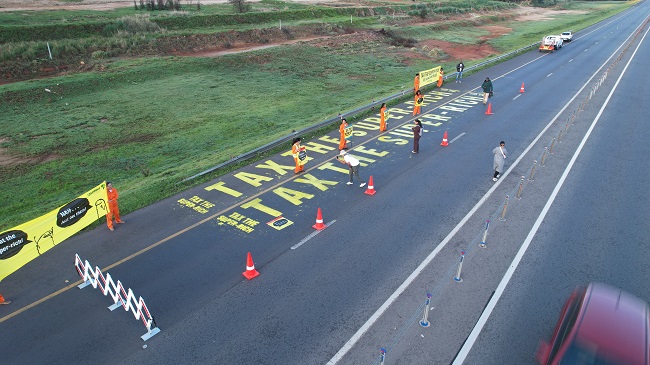
Ahead of the G20 Heads of States Summit, Greenpeace Africa activists also painted “Tax The Super-Rich” on a major road leading to the Johannesburg Expo Centre, where world leaders will be gathering.
The action comes at a pivotal moment as the UN climate conference COP30 in Belém, Brazil, winds down after difficult negotiations on efforts to transition away from fossil fuels, end forest destruction and to progress climate finance for vulnerable countries.
Greenpeace action
In Nairobi, the latest round of UN Tax Convention negotiations, which could unlock vital climate funds, have shown little interest in the proposal for a global minimum tax on the super-rich. The G20 Summit in South Africa now offers President Cyril Ramaphosa a critical opportunity to lead globally on climate justice, including advancing discussions on a wealth tax and raising ambition among G20 leaders.
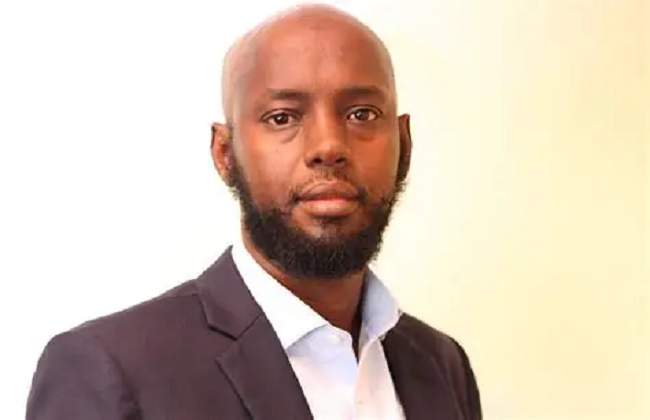
Fred Njehu, Fair Share Global Political Lead, Greenpeace Africa,said: “Public momentum to tax the super-rich is fast growing – the political will has to follow with concrete actions. Billionaires in Africa and beyond are getting wealthier by the day, while billions are struggling with rising cost of living and escalating climate crisis.
“Making the wealthiest pay their fair share is essential to fund the fight against the climate crisis, mobilise domestic revenues for public services, and advance sustainable development. The G20 Summit is President Ramaphosa’s opportunity to turn words into action and show that South Africa – and Africa – can lead the world and secure a place in history.”
New analysis published in a recently released G20 report shows that, between 2000 and 2024, the world’s wealthiest 1% captured 41% of all new wealth, while just 1% went to the 50% of humanity at the other end of the scale. An Oxfam report found that over the last five years in Africa, the five richest African billionaires have increased their wealth by 88%.
At the INC-3 of the UN Tax Conventions in Nairobi this month, Greenpeace called for stronger commitments to secure much-needed public finance for climate mitigation, nature protection, and sustainable development by ensuring the super-rich and corporate polluters pay their fair share in taxes. These measures could deliver on the COP29 finance commitment for developed countries to mobilise at least $300 billion per year by 2035, and to scale up to at least $1 trillion in public finance in line with needs.
Cynthia Moyo, Lead Campaigner, Greenpeace Africa, said: President Ramaphosa must seize this G20 moment to back a Fair Share approach that makes the super-rich and big polluters pay what they owe. We cannot keep socialising costs while privatising profits. African citizens deserve transparency and a tax system that truly serves them.
“We cannot fund a green and equal future with a broken tax system. Tax justice is climate justice and without bold action on a global wealth tax and making polluters pay, the resources needed to protect people, and the planet will remain out of reach.”
Ahead of the G20 Summit, Greenpeace International launched a new report, revealing the insufficient climate ambition in new 2035 emissions targets (Nationally Determined Contributions – NDCs) of the G20 countries. The report, 2035 Climate Ambition Gap, revealed the 2035 climate action plans of the G20 would yield just a 23-29% cut in emissions towards the 60% global reduction that is needed.
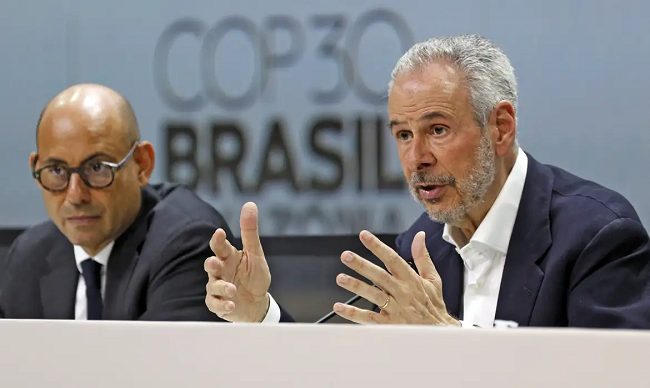
Attending COP30 in Belém, Tracy Carty, Climate Politics Expert, Greenpeace International,said: “When the G20 countries – responsible for 80% of global emissions – deliver collective climate action plans that fall dangerously short, the world has a problem. Given their historic responsibility for emissions and greater financial capacity to act, developed G20 countries should be out front, cutting emissions far in excess of the 60% global average needed. The choices of G20 countries, especially developed ones, will make or break the 1.5°C goal, and it’s time to hold them to account.”
Global climate negotiations stretched into overtime on Friday, November 21, 2025, as countries failed to agree on emission cuts and financial commitments, raising fears the summit will end without meaningful progress on limiting global warming.
Negotiators at COP30 are deadlocked over mitigation targets, adaptation funding and climate finance as the conference runs past its scheduled conclusion.
The impasse threatens to undermine international cooperation on climate action.
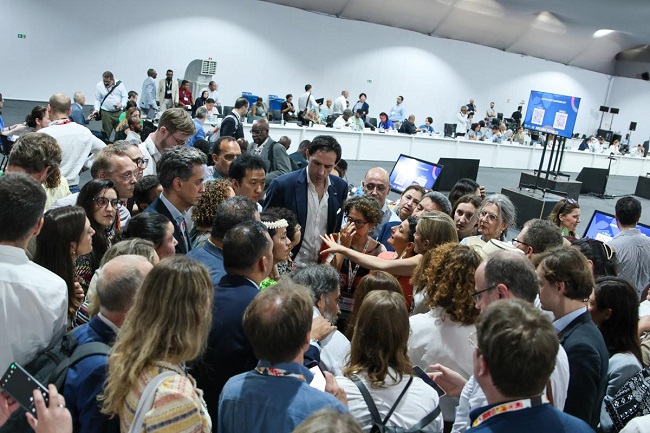
Delegates huddle during the Mutirão Mobilisation for the Belém Package
“This is not the moment for red lines – it is the moment for leadership. Parties must move out of their comfort zones and deliver a result that matches the scale of the climate crisis,” said Mattias Söderberg, global climate lead at DanChurchAid.
Draft negotiating texts released on Friday morning lack the ambition scientists say is necessary to limit warming to 1.5 degrees Celsius above pre-industrial levels, according to civil society observers.
Söderberg said countries must compromise across all major issues to produce a balanced agreement.
“The world will not accept a deal that ignores the emissions gap. We need a breakthrough on mitigation now — not next year, not in the next review cycle. Now,” he said.
He warned that adaptation assistance and finance for developing nations cannot be sacrificed in final negotiations.
“A balanced package means real progress for the communities already hit by climate change. Adaptation and finance cannot be bargaining chips – they are lifelines,” Söderberg said.
The talks have exposed familiar divisions between wealthy and developing nations over who bears responsibility for emissions reductions and climate financing.
Söderberg said all parties must make concessions to reach an agreement.
“No Party can leave Belém with everything they want—but they can leave with a deal that moves the world forward,” he said.
He said the outcome will determine whether the summit strengthens or weakens global climate cooperation.
“This summit will be judged by one metric: whether it moves us closer to solving the climate crisis. There is still time — but only if parties dare to act,” Söderberg said.
The Hands Off Mother Earth! (HOME) Alliance has described COP30 as a “profound failure” as the global summit betrayed Indigenous Peoples, climate justice movements and civil society,
The stated that, instead of bold commitments to phase out fossil fuels and protect Indigenous Peoples, ecosystems and biodiversity, governments doubled down on carbon markets, biofuels, techno-fixes, and dangerous and risky geoengineering schemes.
“Carbon markets are being used to legitimize geoengineering schemes like Bio Energy and Carbon Capture and Storage (BECCS), Direct Air Capture (DAC), marine Carbon Dioxide Removals (mCDR), which do not address root causes of the climate crisis and pose grave risks to ecosystems, Indigenous rights, fisherfolk and local communities, and biodiversity.”
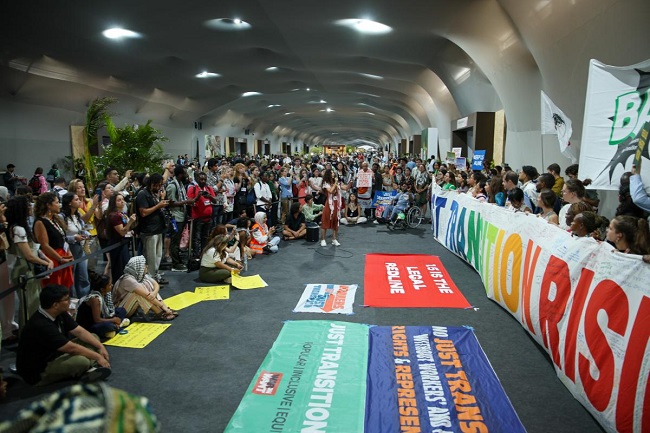
Climate action at COP30
In what has been dubbed as the “Peoples COP” and “COP of Truth”, commitments to fight the climate crisis have been wanting, and a slew of false solutions have been pushed once again as a new form of colonialism and continued extractivism, according to HOME Alliance.
“From side events to pavilions and negotiating rooms, COP30 has been entrenched with profit-driven carbon markets and their lobbyists, with at least 20 events in pavilions and side events dealing with or promoting geoengineering, be it solar radiation modification or carbon dioxide removal scams. Earlier this week CIEL released that 531 Carbon Capture and Storage lobbyists were roaming the halls of COP30 and Kick Big Polluters Out revealed that 1 in 25 attendees at COP30 was a fossil fuel lobbyist.”
HOME’s recently relaunched manifesto HOME Alliance Manifesto Against Geoengineering: Our Home Is Not a Laboratory makes it clear that Mother Earth is not a testing ground for geoengineering experiments. Launched last week, the manifesto reiterates that “we must reject geoengineering, defend mother earth, and advance real climate justice solutions”.
Aakaluk Adrienne Blatchford, Geoengineering Outreach Organizer, Indigenous Environmental Network, said: “Climate mitigation cannot be rooted in false solutions driven by extractive industries that continue to perpetuate destruction of Indigenous lands and displacement of the People who steward them. Climate solutions must be led by People that continue to live in symbiosis with our lands, water and air. In ceremony. In healing. We are demanding that our People be put in the forefront of an Indigenous led Just Transition that moves away from these colonial structures to ensure a healthy Mother Earth and Father Sky for all, for the future of our children.
“We demand our voices be heard by the United Nations, not just with performative actions by checking off boxes, but creating seats at the decision-making tables for our knowledge to be embraced as is. Geoengineering is a false solution that cannot have a seat at the table in this or any other COP.”
Jana Uemura, Climate Campaigner, Global Forest Coalition, said: “Different COP, same old story. The UNFCCC needs to be fundamentally reformed for it to retain even an illusion of legitimacy. There is no way that this process is even capable of ending deforestation, much less steering the world away from catastrophic climate change, equitably or otherwise. The corporate lobbyists must be kicked out immediately, and big polluters face up to their moral responsibilities now.”
Mohammed Usrof, Executive Director, Palestinian Institute for Climate Strategy (PICS), said: “COP30 has made one truth unmistakably clear: the same governments and corporations selling carbon markets and geoengineering as ‘solutions’ are the ones enabling climate militarism, surveillance, and environmental warfare. Our investigation into the US-Israeli firm Stardust Solutions revealed how geoengineering is already entangled with defence ministries, intelligence-linked venture capital, and technologies that can be weaponised against besieged populations like Palestinians in Gaza.
“This is not climate action — it is a dangerous extension of colonial power and a chain reaction that we cannot allow to happen. As we outline in PICS’ Recognise, Resist, Rebuild Manifesto, the struggle for climate justice is inseparable from dismantling militarism, colonial extraction, and the false solutions now dominating COP30.”
Lili Fuhr, Fossil Economy Programme Director at the Center for International Environmental Law (CIEL), said: “Fossil fuel and carbon capture lobbyists have captured and compromised the UNFCCC process, filling negotiation hallways and even taking seats on national delegations. They are delaying the phaseout of fossil fuels while pushing false solutions like Carbon Capture and Storage (CCS) and highly speculative geoengineering technologies marketed as atmospheric ‘carbon removal.’
“The world doesn’t need fossil-fueled tech fantasies that protect big polluters and Silicon Valley billionaires. It needs a future grounded in renewables, accountability, and justice, and a climate process with a robust conflict-of-interest policy that keeps polluters out.”
Nnimmo Bassey, Executive Director, Health of Mother Earth Foundation, said: “COP30 erupted with flames in the halls and fires in the streets, yet negotiators still could not confront the real inferno driving the climate crisis; fossil fuels and the dangerous false solutions built to shield them. The forceful entry of Indigenous peoples demanding lands free from agribusiness, oil extraction and mining revealed the truth the COP keeps evading; those most affected remain shut out of decisions about their own survival.
“The world cannot claim climate action while indulging carbon markets, geoengineering fantasies, and financialization schemes like the TFFF that convert forests, lands and skies into commodities for speculators; these are not solutions, they are escape routes for polluters.
“Fossil lobbyists flooded the venue and turned a critical moment into a theatre of delay; the Mutirao draft avoided the hard issues and left blank spaces where courage should stand, a troubling display of political timidity in an age of escalating fires, floods and rising authoritarianism.
“If COP30 taught us anything, it is that we cannot negotiate our way out of a burning planet while clinging to the very systems that set it ablaze; we insist on a clear global commitment to phase out fossil fuels, public and grant-based climate finance, people centered adaptation, and the rejection of geoengineering and carbon trading illusions. There can be no ‘implementation COP’ without real solutions, and no climate ambition without justice.”
Mar Zepeda Salazar, Legislative Director, Climate Justice Alliance, said: “COP30 has been captured by carbon markets and corporate lobbyists, turning what should have been a breakthrough for climate justice into a playground for carbon traders and geoengineering profiteers. Geoengineering, carbon offsets, and techno-fixes are nothing more than profit-driven scams that sacrifice Indigenous Peoples, frontline communities, and Mother Earth. We reject these dangerous and unproven experiments on our lands and insist on real climate and community-led solutions that are rooted in justice not corporate manipulation.”
Dylan Hamilton, False Solutions Coordinator, Alliance of Non-Governmental Radical Youth (ANGRY), said: “It is a myth that the climate crisis can be ‘solved’ through the exact same systems that caused it. Treating the natural world as a tradable commodity, or the laws of physics as a party we can negotiate with, is a betrayal of this process and condemns millions to not only suffer climate breakdown, but to further have their lands stolen and sacrificed.”
Coraina de la Plaza, HOME Alliance Coordinator, said: “COP30 has been, once again, a showcase of false solutions, where carbon markets and other false solutions like dangerous geoengineering schemes are paraded as climate action while real solutions, including the equitable phase out of fossil fuels, are sidelined. Instead of protecting Indigenous Peoples, ecosystems, and frontline communities, governments have handed the stage to lobbyists and profiteers.
“Communities around the world are already implementing genuine, grounded solutions. The massive march on November 15 and the powerful Peoples Summit showed where true climate leadership lies: with Indigenous Peoples, frontline movements, and civil society standing shoulder to shoulder. Climate justice and real solutions begin with people, not polluters, and with solutions rooted in care, sovereignty, and resilience.”
Gary Hughes, Co-Director / Americas Program Coordinator, Biofuelwatch, said: “Our organization has watched from a distance as grandiose statements have been made at COP 30 about the importance of responding to the climate crisis, yet it is obvious that talk remains bigger than action. As a full-spectrum paradigm of false solutions is paraded in front of the world under the auspices of global climate talks Biofuelwatch remains grateful to the international civil society community that has joined the HOME Alliance to speak out against the promotion of dangerous speculative geoengineering technologies as a response to climate change”.
Kirtana Chandrasekaran, Friends of the Earth International, said: “Multilateralism means nothing so long as corporations are rolled out the red carpet and invited to write the rules in the conference halls. 1.5 stands no chance whilst these corporations and rich governments work hand in hand to block progress on any meaningful action whilst promoting false solutions.
“We stand on the door of the Amazon and yet the response we are given to the climate and biodiversity crises is more schemes that commodify nature like the Tropical Forest Forever Facility. Instead, we need to protect forests for their intrinsic value, and centre the rights of the Indigenous Peoples and local communities that are its guardians.”
Kaveri Choudhuri, ETC Group, said: “Corporations use the language of sustainability to avoid real emissions cuts. COP30 saw these same tactics again and now, alarmingly, is being turned towards our oceans – pushing untested, high-risk technological ‘fixes’ instead of genuine climate action.
“The UN and governments should uphold the Convention on Biological Diversity (CBD) moratorium on geoengineering and apply the precautionary principle on geoengineering under the London Convention and London Protocol. We demand the exclusion of all false ‘solutions’ from the UNFCCC platforms, especially the ones developing under the Art 6 of the Paris Agreement.”
UN chief António Guterres has called on governments to have the courage to agree a balanced political package that is concrete on funding adaptation, credible on emissions cuts, and bankable on finance.
For the first time, he rallied behind a demand from the world’s poorest countries to triple finance to help them adapt to more extreme weather and rising seas to $120 billion a year by 2030.
Addressing the COP30 Climate Change talks in Belem, Brazil, he noted that communities on the frontlines are watching the UN summit for action.
UN chief António Guterres
“Counting flooded homes, failed harvests, lost livelihoods and asking ‘how much more must we suffer?’… they have heard enough excuses, they demand results,” he stated.
For Mr. Guterres, “tripling adaptation finance by 2030 is essential.” He believes it is also possible and desirable and he hoped developed countries would accept to engage in this objective at COP30 if their concerns on emissions reductions are addressed.
The Africa Day at COP30 was marked under the theme: “Africa at the Forefront of Climate Action: Sustainable Financing for Resilient and Inclusive Green Growth”, reaffirming the continent’s united call for a new era of climate finance that delivers for people, planet, and prosperity.
Discussions focused on mobilizing sustainable, equitable, and innovative finance to accelerate Africa’s green industrialization. Leaders highlighted that Africa’s future lies in leveraging its abundant natural resources for value addition and local manufacturing from processing critical minerals to scaling renewable energy solutions.
“Africa already stands at the forefront of global climate action, shaping solutions that are both locally grounded and globally relevant,” said Dr. Kevin Kariuki, Vice President for Power, Energy, Climate and Green Growth of the African Development Bank Group.
For decades, Africa’s climate narrative has been defined by contradiction. The continent hosts 20% of the world’s carbon sinks and contributes less than 4% of global greenhouse gas emissions yet receives under 10% of adaptation finance and only 3% of total climate funding, this shortfall carries existential consequences.
Developed countries have repeatedly failed to honour their financing commitments, and Africa’s adaptation needs continue to outpace the resources available.
The commitment of developed countries to double adaptation finance to at least $40 billion by 2025 already slipping away.
The latest estimate of developing countries’ annual climate adaptation needs for 2035 outstrips current funding by at least 12 times, with rich nations providing just $26 billion in 2023, according to the annual UN Adaptation Gap Report.
If current trends continue, developed countries are set to miss the 2025 target that they committed to at COP26 four years ago, UNEP’s report said.
As COP30 entered its final stretch, African Non-State Actors on climate justice, under the umbrella of the Pan-African Climate Justice Alliance, called for “an outcome that protects our societies and economies, strengthens resilience, and advances a fair and development-centred global transition”.
The group demanded for more than triple adaptation finance by 2030, with a clear public-finance pathway, and “a fully capitalised fund for responding to Loss and Damage with new, additional, predictable finance, and as a guarantee mobilized from public sources”.
Africa CSOs are seeking a fast-track support for resilient agriculture, water and health systems, coastal protection, and community adaptation complimented with early warning systems.
“For millions, adaptation is not an abstract goal. It is the difference between rebuilding and being swept away, between replanting and starving, between staying on ancestral lands or losing it forever,” said António Guterres.
The UN chief has urged wealthy governments, climate funds and development banks to step up and prevent further tragedies.
“It’s about survival, it’s about justice – and for Indigenous peoples, it is also about protecting cultures and homelands that sustain our planet’s vital ecosystems,” he noted.
He says it is the responsibility on big emitters to do more while ramping up emissions-cutting efforts.
For 70-year-old farmer Danjuma Dauda, the Yangokuchi forest is more than just another patch of land. It embodies memory, heritage, and refuge.
“I miss the bountifulness of mango trees,” he said, recalling childhood days in the forest. “We used to run into the forest for mangoes. There were countless trees heavy with fruit.”
Yangokuchi forest, also known as the Saimami forest, in the Rubochi ward of Kuje Area Council of the Federal Capital Territory (FCT), Nigeria, once provided both cultural identity and economic lifeline to nearby communities. It sheltered ancestors fleeing enemy invasions and later supported generations of farmers like Mr. Dauda.
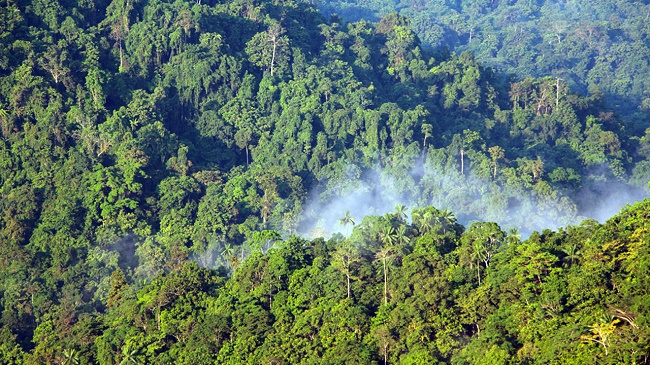
Forest
Now, the forest stands on the brink of depletion, stripped by unregulated, unchecked logging that local elders say has turned a communal sanctuary into open land.
Based on a reporting trip and interviews in September 2025, Dataphyte uncovered how poor enforcement and global timber demand are rapidly eroding one of Abuja’s few remaining natural forests, with little sign of replanting or accountability.
“When I was a child, there were countless trees, including iroko, mahogany, and others,” Mr Dauda said. “They gave shade to crops like yams. When yams are shielded, they sprout better. Now the land is bare.”
He said the deforestation has affected his yields, yet the loggers continue unchecked. “Before, they sought permission from the community, but now they just go in. If you question them, they ask if you planted the trees,” he added.
Villagers across Saimami Ubo share his frustration.
Forest losses mounting
According to data from Global Forest Watch, the FCT lost about 1,760 hectares of natural forest in 2024, part of a continuing trend driven by illegal logging, farming, and development expansion. Nationwide, annual government revenue losses from illegal logging are estimated at US$191 million to $383 million.
Illegal logging in Nigeria has grown into a profitable underground economy. Organised middlemen recruit local villagers, finance cutting operations, and move hardwoods along hidden trails toward markets or export points, often beyond the eyes of regulators.
The community lost more than its trees
Yangokuchi forest was once rich in biodiversity, with medicinal and economic species such as Gmelina arborea, Khaya ivorensis (mahogany), and Milicia excelsa (iroko). These trees provided food, medicine, and materials for building and fuel. But now, there are only stumps and farmland, Dataphyte found.
“20 to 30 years ago, we had mahogany and iroko everywhere,” Mr Dauda lamented. “Now they are gone. When you confront the operators (loggers), they ask if you’re the one who planted them.”
A logger, who declined to be named because of their illegal work, confirmed that hardwoods fetch a quick profit. “If you find iroko or mahogany, you can make up to N500,000 a day. One tree gives more than a hundred timbers,” he said.
“The mahogany tree is highly sought after, and whenever there’s a market demand, these operators pursue it relentlessly,” Ibrahim Kwali, a resident of Rubochi, told Dataphyte.
The attraction is not just local. Global demand fuels much of the exploitation. Mahogany’s market value is projected to rise from US$1.3 to 1.5 billion in 2024 to 2025 to over US$2.7 billion by 2033, driven largely by the luxury furniture and flooring industries across North America, Europe, and Asia. While there are no precise figures for iroko, it remains one of the most sought-after export species.
Even once-common species like ogbono (Irvingia gabonensis) have vanished. “We used to have ogbono trees everywhere, but there’s none left,” said another resident of Rubochi. “No replanting; once the trees mature, they cut them all.”
Laws ignored, oversight absent
Nigeria’s National Environmental (Forest Sector) Regulations of 2009 mandate reforestation and environmental rehabilitation by anyone harvesting forest resources. State forestry ministries and the National Environmental Standards and Regulations Enforcement Agency (NESREA) are also supposed to enforce compliance.
In practice, those rules are widely ignored. “No one is replanting,” admitted Danladi Appa, a self-described licensed logger. “Some of these trees take over 30 years to grow. How do you replant that?” He said his group pays N30,000 a year to unnamed government officials who issue a “receipt” to operate, but he could not produce the document when asked. Other loggers encountered during our reporting also did not present a licence when asked.
Community members say forest guards rarely visit. The nearest government forestry office is miles away, leaving only vigilante groups to monitor occasional logging trucks.
One vigilante member, who asked to remain unnamed to avoid retaliation from loggers, told Dataphyte his team lacks legal authority to act. “We only try to help the community,” he said.When contacted, NESREA spokesperson Amaka Ejiofor asked for written questions about the agency’s enforcement of forest regulations. An email was sent, but as of the pubication of this report, no response had been received.
Experts have warned that dirty toilets and poor hygiene practices can lead to serious health problems.
The warning was issued at a World Toilet Day event at the Junior Secondary School, Dutse, Abuja on Friday, November 21, 2025.
It was organised by Health Communication and Visibility in partnership with Bam Environmental Consultancy Limited and Newsbalance Media and Communication.
Prof. Joseph Utsev, Minister of Water Resources and Sanitation
The Programme Director of Health Communication and Visibility, Bukola Afeni, urged students to maintain high standards of hygiene when using toilets, both within and outside school premises.
She stressed that dirty toilets can create unsanitary conditions, leading to infections, skin irritations, and respiratory problems.
“Without proper cleaning, toilets become breeding grounds for bacteria, viruses, and other harmful pathogens. Maintaining hygiene is essential to safeguard our health,” Afeni said.
She noted that the celebration aimed to raise awareness on sanitation and hygiene, promoting collective action towards achieving Sustainable Development Goal six for clean water and sanitation for all.
Afeni encouraged students to become sanitation champions, spreading awareness and inspiring positive change in their communities.
Also speaking, Director of Bam Environmental Consultancy Limited, Bolutife Bamgbowu, called on schools, communities, and government to prioritise sanitation and hygiene to prevent disease outbreaks.
He highlighted the need for schools to provide adequate sanitation facilities, including functional toilets and handwashing stations with soap and water.
“Schools should incorporate hygiene education into their curriculum, teaching students proper handwashing, toilet hygiene, and waste management,” Bamgbowu said.
He further urged the Nigerian government to prioritise sanitation infrastructure development, particularly in rural areas with limited access to improved facilities.
The environmental expert also called on organisations to collaborate with government, schools, and communities to strengthen sanitation and hygiene practices nationwide.
World Toilet Day is observed annually on Nov. 19 to raise awareness about the global sanitation crisis and the importance of access to clean, safe toilets.
The day highlights the challenges billions of people face due to poor sanitation, unsafe hygiene, and lack of proper toilet facilities, which can lead to serious health issues such as diarrhoea, infections, and malnutrition.
It also serves to promote action towards achieving Sustainable Development Goal 6 (SDG 6): ensuring availability and sustainable management of water and sanitation for all.
Each year, World Toilet Day has a theme; often focusing on equity, hygiene, innovation, or ending open defecation to encourage governments, communities, and organisations to take collective action for better sanitation.
Africa needs a COP30 outcome that matches ambition with delivery, the Pan African Climate Justice Alliance (PACJA) has said.
According to the Kenya-based group, ambition in the context of Africa means funding, and not any other superficial rhetoric.
“Anything less would be a failure of leadership and a betrayal of the world’s most climate-vulnerable region,” PACJA declared in a position statement of African civil society ahead of the conclusion of COP30.
Dr. Mithika Mwenda, Executive Director, Pan African Climate Justice Alliance (PACJA), delivering remarks at the opening session of the Africa Day
The activists called for a final COP30 package that includes:
A strong Article 9 decision rooted in the Belém Work Programme
Scaled, predictable adaptation and loss & damage finance.
A robust Response Measures workplan that protects African economies.
A fair, equitable transition roadmap that supports energy access and industrialisation.
Full operationalisation of Africa’s Special Needs and Circumstances.
The African Non-State Actors on climate justice, under the umbrella PACJA, listed core issues, positions and demands to include: Africa’s Special Needs and Circumstances; Finance: Delivering Article 9 with Precision, Predictability, and Justice; Response Measures: Protect the Mandate, Defend Africa’s Economies; Fossil Fuels, Just Transition, and Energy Access; Adaptation, Loss & Damage, and Protection of Lives and Livelihoods; and Gender.
On Africa’s Special Needs and Circumstances, the climate activists demanded:
Explicit recognition of Africa’s special needs and circumstances across all final decisions.
Flexibility for African countries in applying global rules and reporting requirements
Priority access to finance, technology and capacity-building.
Guarantees that Africa will not be penalised economically for a crisis it did not create
On Finance: Delivering Article 9 with Precision, Predictability, and Justice, they called on Parties to:
Make Article 9.1 obligations real
Developed countries must provide predictable, public finance, primarily grants and concessional lending
Adopt a binding workplan with annual reporting and accountability.
Establish four workstreams tailored to African needs
Support Pathways: clear targets for public finance and adaptation shares.
Mobilised Finance (Art. 9.3): protect the separation between obligatory public finance and non-obligatory private mobilisation.
On Fossil Fuels, Just Transition, and Energy Access, they demanded:
A fair sequenced or differentiated, and well-financed phaseout roadmap aligned with Africa’s development needs.
Recognition of Africa’s right to transitional energy solutions, including time-bound, Paris-aligned natural gas use.
A stronger Just Transition Work Programme supporting skills, jobs, industrial policy, and diversification.
Guaranteed linkages between JT finance and priorities such as critical minerals, manufacturing, and green industrialisation.
Formal recognition of energy access as a climate goal, unlocking resources to serve households, rural economies and social services.
On Adaptation, Loss & Damage, and Protection of Lives and Livelihoods, they demanded:
More than triple adaptation finance by 2030, with a clear public-finance pathway
A fully capitalised Fund for Responding to Loss and Damage with new, additional, predictable finance, and as a guarantee mobilised from public sources.
Fast-track support for resilient agriculture, water and health systems, coastal protection, and community adaptation complimented with early warning systems.
On Gender, they demanded:
Adequate, predictable, accessible gender finance, including direct access for African women-led and feminist groups
Mandatory gender integration across mitigation, adaptation, finance, L&D, and technology, with clear indicators.
Accountability and monitoring, including reporting on gender commitments and resource allocation.
Meaningful participation, ensuring African women, especially young, frontline, and marginalised groups hold decision-making power, not token roles.
The West African Power Pool (WAPP) completed its first full regional electric system synchronisation, unifying grid operations across 15 countries with support from GE Vernova.
The synchronisation connects Nigeria, Benin, Burkina Faso, Côte d’Ivoire, The Gambia, Ghana, Guinea, Guinea-Bissau, Liberia, Mali, Niger, Senegal, Sierra Leone, Togo and Mauritania into a unified power network.
WAPP, a specialised agency of the Economic Community of West African States, coordinates power generation, transmission infrastructure and electricity exchange among member states.
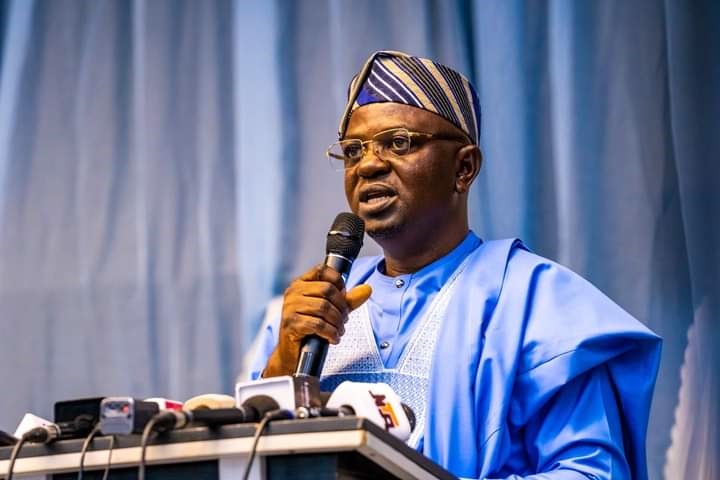
Minister of Power, Mr Adebayo Adelabu
The synchronisation offers enhanced accessibility for countries to tap regional capacity to reduce outages, expand cross-border electricity trading and better integrate renewables.
“WAPP’s historic electric system synchronisation shows what collaboration and technology can deliver,” said Roger Martella, chief corporate officer and chief sustainability officer at GE Vernova.
GE Vernova’s GridOS orchestration software, deployed last year at WAPP’s Information and Coordination Centre in Abomey-Calavi, Benin, supports dispatch, stability and energy-flow forecasting across the network.
During synchronisation, GridOS Wide Area Monitoring System tracked grid dynamics in near real time. GE Vernova’s consulting services provided technical foundation through power system stabiliser tuning, governor field testing, settings updates and coordination of network synchronisation.
GE Vernova’s grid automation telecom solution provided the communications backbone linking the coordination centre to national dispatch centers, enabling coordinated regional operations and real-time data transfer to the substation level.
The trial confirms multiple national transmission system operators can operate reliably under coordination center oversight and paves the way for an open regional electricity market to enhance cross-border power exchange.
Full permanent synchronisation is targeted for 2026.
Martella made the announcement while participating in B20 South Africa as part of the Energy Mix & Just Transition Task Force.
“At this moment, the B20 is a critical avenue to bring the private sector together with the commitments of the public sector to help lift up people through access to sustainable energy,” Martella said.
GE Vernova is advancing practical, context-specific solutions to accelerate a just and inclusive energy transition.
The company highlighted talent and skills as critical enablers of the transition. The GE Vernova Foundation is investing in technical and vocational pathways with a goal to reach 30,000 learners by 2030.
In Johannesburg, the Next Engineers programme has reached nearly 4,100 learners and awarded $36,000 in scholarships to qualifying graduates.
GE Vernova awarded $83,000 in scholarships to 10 South African graduates through its External Bursary Programme.
Since 2020, the company has provided $7.3 million in comprehensive bursaries to more than 900 beneficiaries nationwide.
GE Vernova recently convened the first Mendoza Collective Action Summit, bringing together public, private and academic leaders to expand electricity access in underserved communities and establishing the Mendoza Principles to guide future collaboration.
“The global efforts underway to electrify the planet should enable all people to share in the benefits of affordable, reliable and sustainable energy – and the economic opportunity it unlocks,” Martella said.
As COP30 negotiations draw to an end, and the most recent text released on Friday morning makes no mention of fossil fuels, the Governments of Colombia and the Netherlands show leadership by announcing they will co-host the First International Conference on the Just Transition Away from Fossil Fuels.
The announcement was made by the Minister of Environment of Colombia, Irene Vélez Torres, and the Deputy Prime Minister and Minister for Climate Policy of the Netherlands, Sophie Hermans, during a high-level press conference in Belém.
The landmark convening will take place From April 28 to 29, 2026, in the port city of Santa Marta, Colombia, which plays a significant role in coal exports. Pacific nations have committed to convening a subsequent meeting in the region to advance the outcomes.
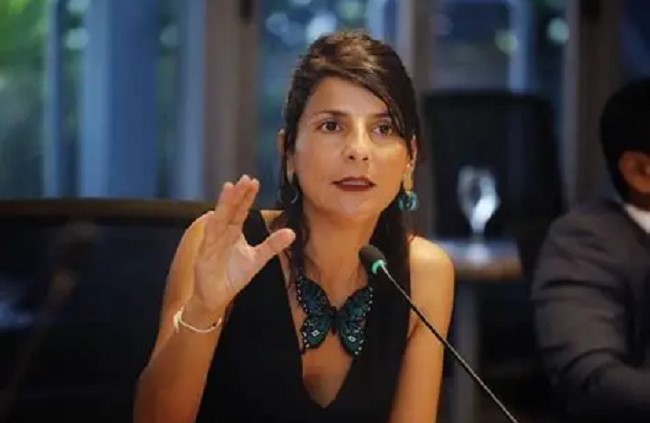
Irene Vélez Torres, Minister in Charge of Environment and Sustainable Development of Colombia
Irene Vélez Torres, Minister in Charge of Environment and Sustainable Development of Colombia, said: “From the heart of the Amazon, indigenous peoples, Afro descendant communities, campesino organizations, academia, and social movements delivered a message that we cannot ignore. This COP cannot end without a clear, just an equitable roadmap for the global phase out of fossil fuels. We are not asking for an empty document. We are not asking for an empty announcement. We must leave this COP with a global roadmap that guides us, not symbolically, but concretely, our collective efforts to phase out fossil fuels.”
“As difficult as it can be, we also know that this conversation cannot end here. We must keep the momentum, lead with bravery, rise to the challenge, and build a coalition of the willing. For that, Colombia in alliance with the government of the Netherlands announces today the first international conference on the just transition away from fossil fuels.
“We invite all willing countries, subnational actors, campesinos, afros, indigenous, NGOs to join us in Santa Marta. This will be a broad intergovernmental, multisectoral platform complementary to the UNFCCC designed to identify legal, economic, and social pathways that are necessary to make the phasing out of fossil fuels.”
Sophie Hermans, Deputy Prime Minister and Minister for Climate Policy and Green Growth, the Netherlands, said:“There is a clear momentum to phase out fossil fuels, and now is the time to capitalize on it. We must begin to materialize what this phase-out could look like and start a concrete roadmap that allows us to incorporate the new and leave the old behind,”
The conference will advance international cooperation on transitioning away from fossil fuel extraction – reinforcing the objectives of the Paris Agreement and aligning with the recent Advisory Opinion of the International Court of Justice, which confirmed that States have a legal obligation to protect the climate, including by addressing fossil fuel production, licensing and subsidies.
Hosting this summit in a major coal port, in the world’s fifth-largest coal producer, sends a powerful message: fossil-fuel-dependent nations want to end their dependence on oil, gas, and coal extraction, but doing so fairly requires unprecedented international cooperation so that no one is left behind.
Ralph Regenvanu, Minister for Climate Change, Energy, Environment and Disaster Management of Vanuatu, said: “We welcome this historic first conference as a critical step forward, recognising that this is the beginning of an ongoing and urgent process. To ensure momentum continues, Vanuatu is committed to working with our Pacific brothers and sisters to explore hosting a subsequent convening under our leadership, in partnership with other countries. This will ensure that the conversations continue and that collectively we can build the roadmap for the fossil-free future we need – one that is just, funded, and achievable.”
Maina Talia, Minister of Climate Change of Tuvalu: “As a nation facing the existential threat of sea-level rise, Tuvalu understands firsthand the devastating impacts of the fossil-fueled climate crisis. The upcoming conference offers a vital opportunity to advance our call for a binding Fossil Fuel Treaty that prioritises the needs of the most vulnerable.
“We must ensure that any transition is rooted in equity and justice, empowering nations like Tuvalu to adapt and thrive in the face of unprecedented challenges. We are committed to working with all stakeholders and bringing more countries from all regions to the table, to forge a treaty that reflects the urgency and scale of the climate emergency and secures a viable future for our people and our culture.”
This major announcement was accompanied by the launch of the “Belém Declaration on the Just Transition Away from Fossil Fuels”, supported by 24 countries, which constitutes a direct contribution to Lula’s call to develop a global roadmap – by setting out the minimum level of ambition that should guide any just and equitable transition plan at the international level.
Countries supporting the declaration are: Australia, Austria, Belgium, Cambodia, Chile, Colombia, Costa Rica, Denmark, Fiji, Finland, Ireland, Jamaica, Kenya, Luxembourg, Marshall Islands, Mexico, Micronesia, Nepal, Netherlands, Panama, Spain, Slovenia, Vanuatu and Tuvalu.
The First International Conference on the Just Transition Away from Fossil Fuels will serve as a strategic space for dialogue among a broad range of stakeholders – including government representatives, experts, rural and Indigenous Peoples, Afro-descendant communities, civil society, climate advocates, industry leaders, and academia – to explore viable, fair, and equitable pathways for transitioning to sustainable, diversified, and accessible energy.
Designed to foster robust and structural transformations, the summit aims to facilitate a planned, just, and sustainable phase-out of fossil fuels and address the need for a structural shift in our socioeconomic model.
The idea of a global conference builds upon successful examples of previous diplomatic summits that have led to increased international cooperation to address major global threats including the Ottawa Conference to address land mines; the Oslo Conference on cluster munitions and the discussions on the Prohibition of Nuclear Weapons, for which a series of three conferences, known as the Humanitarian Initiative, shifted the framing of nuclear weapons from one of security to a humanitarian discourse, leading to successful resolution within the UN General Assembly.
This announcement comes at a pivotal moment, marked by growing disconnect between global fossil fuel production plans and what is required to limit warming to 1.5°C. Government projections show fossil fuel production will exceed Paris-aligned levels by more than 120% in 2030, and by 2050, production is expected to be 4.5 times higher than what a 1.5°C pathway allows, highlighting the urgency of a coordinated global effort to phase out coal, oil, and gas.
Mohamed Adow, Founder and Director, Power Shift Africa, responds to new texts at COP30
After two weeks of talks, COP30 is drawing to a close with proposed final texts that fall dramatically short of what the world needs. What was meant to be a flexible climate agreement designed to ratchet up ambition has instead been whittled down through horse-trading to the lowest common denominator.
In the scramble to prove that multilateralism still works, negotiators have produced outcomes that do little to demonstrate that claim. The result is a package that neither reflects scientific urgency nor responds to the lived realities of vulnerable communities already contending with climate collapse.
Mohamed Adow
Finance has been among the most contentious areas. Developed countries have resisted making concrete commitments, undermining attempts to secure the resources that developing nations need to act. The Just Transition mechanism, touted early on as a cornerstone of COP30, has been pushed into future negotiations and stripped of a coordinating function that would make it meaningful.
The Presidency opened the conference by calling it a “COP of truth”, yet two weeks on, negotiations remain stuck in a deadlock that threatens any prospect of genuine progress.
For Africa and other vulnerable regions, the disappointment is acute. We arrived in Belém with priorities shaped by escalating climate impacts, ranging from droughts and cyclones to floods and food insecurity. Instead of concrete support, what we have now is watered-down language shaped more by politics than by the severity of climatic impacts.
The biggest catastrophe of our times is not waiting for governments to gather courage, and communities on the frontlines cannot afford to continue paying the price for global hesitation.
Developing countries and civil society have repeatedly pushed for decisive action across mitigation, adaptation and just transitions. Yet the draft texts on the table amount mostly to placeholders, postponing ambition to another year, another COP, another round of consultations. Until leaders listen to the increasingly urgent warnings from scientists and communities, the world will remain on a dangerous path.
Vulnerable countries came to Belém demanding an adaptation finance goal capable of meaningfully advancing delivery of the Global Goal on Adaptation (GGA). Instead, the proposed text offers diluted language that calls only for “efforts” to triple adaptation finance by 2030 relative to 2025, a baseline that is too low. It also places no obligation on developed countries, making it weaker than the Glasgow doubling pledge, which at least referenced Article 9.4 of the Paris Agreement and recognised the responsibility of wealthier nations.
The text also disconnects finance from the achievement of the GGA, fails to address the quality of finance, such as grants, and bypasses the critical need for balance between mitigation and adaptation. Without linking finance to real needs or a process to define a needs-based regime, this approach falls far short of narrowing the adaptation finance gap, projected to reach between $310 billion and $365 billion by 2035.
While the GGA indicators include some safeguards around means of implementation, but In the absence of a strong, grant-based finance goal underpinning the framework, the indicators amount to political compromises rather than instruments that can deliver resilience for the communities most at risk.
The broader finance package reveals the same pattern. We asked for commitments that matched the scale of the crisis; instead, the text skirts around responsibility. The proposed Article 9.1 text, establishing a two-year work programme on climate finance, extends beyond Article 9.1 implementation and risks devolving into yet another discussion platform without concrete delivery.
It echoes the weaknesses of the New Collective Quantified Goal negotiations at COP29 in Baku last year, offering no accountability mechanism, no specificity and no binding action plan by 2026. It reflects developed-country positions almost entirely, leaving developing countries back at the drawing board.
Although negotiators removed the most problematic GGA indicators related to national budgets and private finance, the rest of the package still lacks clarity and coherence. Without real, grant-based resources linked to the GGA, it remains a diplomatic compromise rather than a credible plan for bolstering resilience.
The outcome on Just Transition acknowledges the importance of a Just Transition Mechanism, but stops short of establishing it in Belém or assigning it the coordination function essential for implementation. Delaying its creation leaves millions of workers, especially those in Africa’s and the Global South’s informal sectors, without the support they urgently need. Also, the rremoval of references to critical minerals from the Just Transition Work Programme is another serious setback.
The deaths of more than 30 artisanal cobalt miners in the DRC earlier this week should awaken us to the dangers faced by communities who supply minerals that are indispensable to the global shift toward renewable energy. Excluding these issues from the text glosses over the human cost of mineral extraction and ignores the need for equitable value chains.
Mitigation talks have been no less fraught. Developed countries have pushed to reaffirm the commitments outlined in COP28’s Global Stocktake, despite their own Nationally Determined Contributions falling well short of what is required. They have pointed to the Like-Minded Developing Countries as the source of delays, yet it is developed countries who arrived in Belem without the finance and means of implementation necessary to enable ambition.
If they ever come forward with genuine commitments and LMDCs still obstruct progress, the criticism might be valid. Until then, the LMDCs remain convenient scapegoats for inaction by those most responsible for the crisis.
There is still a narrow window for leadership. If developed countries step forward with real, grant-based finance, credible timelines and mechanisms capable of coordinating support, COP30 could yet deliver something more than disappointment.
The world needs clear commitments, not rhetorical flourishes; coordination, not delay; solidarity, not strategic ambiguity. In the next few hours, there is still time to be ambitious and sincere, and the stakes for vulnerable communities could not be higher.