27.8 C
Lagos
Thursday, March 5, 2026
Home Blog Page 92

COP30 negotiations deadlocked, prospect of progress threatened – Mohamed Adow

0

Mohamed Adow, Founder and Director, Power Shift Africa, responds to new texts at COP30

After two weeks of talks, COP30 is drawing to a close with proposed final texts that fall dramatically short of what the world needs. What was meant to be a flexible climate agreement designed to ratchet up ambition has instead been whittled down through horse-trading to the lowest common denominator.

In the scramble to prove that multilateralism still works, negotiators have produced outcomes that do little to demonstrate that claim. The result is a package that neither reflects scientific urgency nor responds to the lived realities of vulnerable communities already contending with climate collapse.
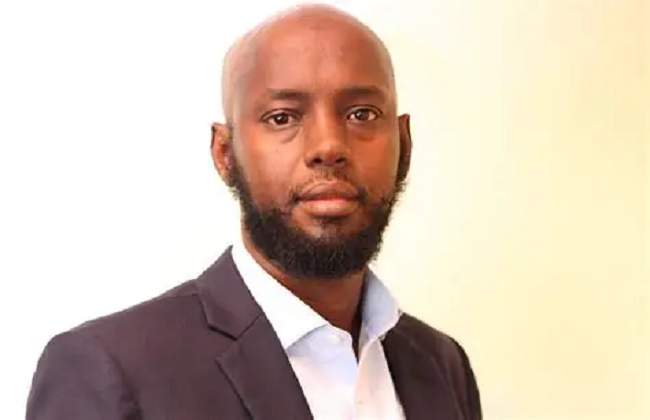
Mohamed Adow
Mohamed Adow

Finance has been among the most contentious areas. Developed countries have resisted making concrete commitments, undermining attempts to secure the resources that developing nations need to act. The Just Transition mechanism, touted early on as a cornerstone of COP30, has been pushed into future negotiations and stripped of a coordinating function that would make it meaningful.

The Presidency opened the conference by calling it a “COP of truth”, yet two weeks on, negotiations remain stuck in a deadlock that threatens any prospect of genuine progress.

For Africa and other vulnerable regions, the disappointment is acute. We arrived in Belém with priorities shaped by escalating climate impacts, ranging from droughts and cyclones to floods and food insecurity. Instead of concrete support, what we have now is watered-down language shaped more by politics than by the severity of climatic impacts.

The biggest catastrophe of our times is not waiting for governments to gather courage, and communities on the frontlines cannot afford to continue paying the price for global hesitation.

Developing countries and civil society have repeatedly pushed for decisive action across mitigation, adaptation and just transitions. Yet the draft texts on the table amount mostly to placeholders, postponing ambition to another year, another COP, another round of consultations. Until leaders listen to the increasingly urgent warnings from scientists and communities, the world will remain on a dangerous path.

Vulnerable countries came to Belém demanding an adaptation finance goal capable of meaningfully advancing delivery of the Global Goal on Adaptation (GGA). Instead, the proposed text offers diluted language that calls only for “efforts” to triple adaptation finance by 2030 relative to 2025, a baseline that is too low. It also places no obligation on developed countries, making it weaker than the Glasgow doubling pledge, which at least referenced Article 9.4 of the Paris Agreement and recognised the responsibility of wealthier nations.

The text also disconnects finance from the achievement of the GGA, fails to address the quality of finance, such as grants, and bypasses the critical need for balance between mitigation and adaptation. Without linking finance to real needs or a process to define a needs-based regime, this approach falls far short of narrowing the adaptation finance gap, projected to reach between $310 billion and $365 billion by 2035.

While the GGA indicators include some safeguards around means of implementation, but In the absence of a strong, grant-based finance goal underpinning the framework, the indicators amount to political compromises rather than instruments that can deliver resilience for the communities most at risk.

The broader finance package reveals the same pattern. We asked for commitments that matched the scale of the crisis; instead, the text skirts around responsibility. The proposed Article 9.1 text, establishing a two-year work programme on climate finance, extends beyond Article 9.1 implementation and risks devolving into yet another discussion platform without concrete delivery.

It echoes the weaknesses of the New Collective Quantified Goal negotiations at COP29 in Baku last year, offering no accountability mechanism, no specificity and no binding action plan by 2026. It reflects developed-country positions almost entirely, leaving developing countries back at the drawing board.

Although negotiators removed the most problematic GGA indicators related to national budgets and private finance, the rest of the package still lacks clarity and coherence. Without real, grant-based resources linked to the GGA, it remains a diplomatic compromise rather than a credible plan for bolstering resilience.

The outcome on Just Transition acknowledges the importance of a Just Transition Mechanism, but stops short of establishing it in Belém or assigning it the coordination function essential for implementation. Delaying its creation leaves millions of workers, especially those in Africa’s and the Global South’s informal sectors, without the support they urgently need. Also, the rremoval of references to critical minerals from the Just Transition Work Programme is another serious setback.

The deaths of more than 30 artisanal cobalt miners in the DRC earlier this week should awaken us to the dangers faced by communities who supply minerals that are indispensable to the global shift toward renewable energy. Excluding these issues from the text glosses over the human cost of mineral extraction and ignores the need for equitable value chains.

Mitigation talks have been no less fraught. Developed countries have pushed to reaffirm the commitments outlined in COP28’s Global Stocktake, despite their own Nationally Determined Contributions falling well short of what is required. They have pointed to the Like-Minded Developing Countries as the source of delays, yet it is developed countries who arrived in Belem without the finance and means of implementation necessary to enable ambition.

If they ever come forward with genuine commitments and LMDCs still obstruct progress, the criticism might be valid. Until then, the LMDCs remain convenient scapegoats for inaction by those most responsible for the crisis.

There is still a narrow window for leadership. If developed countries step forward with real, grant-based finance, credible timelines and mechanisms capable of coordinating support, COP30 could yet deliver something more than disappointment.

The world needs clear commitments, not rhetorical flourishes; coordination, not delay; solidarity, not strategic ambiguity. In the next few hours, there is still time to be ambitious and sincere, and the stakes for vulnerable communities could not be higher.
Lagos school launches ‘Environmental Bees Club’ to groom next generation of climate champions

0

The Centre for 21st Century Issues (C21st), in partnership with the Lagos State Ministry of Environment and Water Resources, has launched the Environmental Bees Club at the Apostolic Faith Secondary School – an initiative designed to equip young people with the knowledge and passion needed to tackle today’s pressing environmental challenges.

The event, held with great enthusiasm from students and staff, featured opening remarks delivered by Aminat Davies on behalf of Ms. Titilope Ngozi Akosa, Executive Director of C21st.

In her address, Davies celebrated the new club as “a platform that empowers young people to understand, protect, and advocate for the health of our planet.” She emphasised that environmental stewardship begins with knowledge, creativity, and passion – values the Environmental Bees Club is set to instill in students.

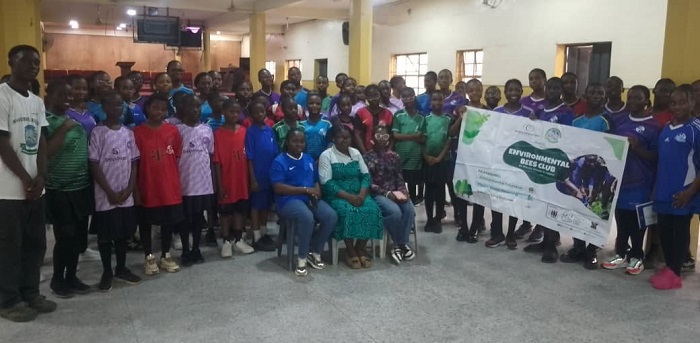
Environmental Bees Club
Participants at the launch of the Environmental Bees Club at the Apostolic Faith Secondary School, Lagos

Through the club, students will explore issues such as climate change, recycling, clean energy, and biodiversity while engaging in hands-on projects that build leadership and problem-solving skills. 

Ms. Akosa extended heartfelt appreciation to the school for embracing the initiative and encouraged students to stay curious and committed to creating sustainable change.

In his remarks, Simileoluwa Adewale, Programme Officer at C21st and Project Lead for the club, explained why the school was selected for the rollout.

“Apostolic Faith Secondary School aligns with our mission at C21st,” he stated. “The management welcomed the project wholeheartedly, and we are confident that the school will champion environmental research and sustainability efforts.”

Adewale added that expectations for the newly inducted student members are high. He hopes the club will grow, expand its impact, and help nurture a society where environmental consciousness is a core value.

C21st’s Programme Assistant, Jolaolu Opeyemi, led an engaging session on air pollution, outlining causes such as industrial emissions, vehicle fumes, generator smoke, and greenhouse gases. She highlighted health risks including asthma, heart disease, and respiratory complications.

Opeyemi also demonstrated the use of an AirBeam3 air monitor. The device recorded a moderate air quality reading of 25%, prompting discussions on practical steps students can take – such as tree planting, proper waste disposal, and the avoidance of burning refuse—to improve environmental conditions.

Speaking on behalf of the school, Mrs. Idoko Oladele, Vice Principal (Academics), praised the club’s launch as both timely and impactful.

“In Lagos, we see blocked canals, flooding, and waste challenges everywhere,” he said. “Bringing environmental awareness down to the secondary school level is a welcome idea. The students are learning lifelong lessons that go beyond the classroom.”

She expressed hope that programme organisers would continue to visit the school, monitor the club’s progress, and encourage its growth.

Students enthusiastically participated in the sessions, expressing newfound knowledge about environmental issues.

Osage Lois, one of the participants, said she learned about air pollution, climate change, and the importance of adopting cleaner energy sources such as gas and electricity instead of charcoal.

“Climate change affects the regular pattern of the earth, and change begins with us—the younger generation,” she said.

Another student, Otugo Uche, commended the organisers for expanding their understanding of waste management and pledged to be a dedicated ambassador of the Environmental Bees Club.

The launch of the Environmental Bees Club marks a significant milestone in promoting environmental literacy among young Nigerians. For C21st, this initiative is more than an extracurricular activity – it is an investment in the next generation of environmental leaders committed to sustaining the planet.

As the partnership between C21st and the Apostolic Faith Secondary School unfolds, stakeholders are optimistic that the knowledge and enthusiasm sparked today will lead to long-term environmental transformation in the community and beyond.

By Ajibola Adedoye

Food security: Ekwueme varsity, FUT Minna explore agri-food value chain management

0

The Faculty of Agriculture, Alex Ekwueme Federal University, Ndufu-Alike Ikwo (AE-FUNAI), Ebonyi State, in collaboration with the Federal University of Technology (FUT) Minna, has co-hosted a two-day conference on Agri-Food Value Chain Management aimed at providing a platform for experts, innovators, and stakeholders to shape a more resilient and competitive agri-food future in Nigeria.

The conference was held under the framework of the Cooperation of Holistic Agriculture Innovation Nests in Sub-Saharan Africa Chain Project, funded by the European Union (EU) Erasmus+ Programme.

Food security
Food security

With the theme, “Agri-Food Value Chain Management in Nigeria: Pathway to Resilient Food Systems and Sustainable Development,” the event brought together participants from academia, industry, civil society, and government.

Speaking at the opening, the Dean of the Faculty of Agriculture and Coordinator of the Chain Project, Professor Robert Onyeneke, said the conference provided opportunities for sharing experiences, presenting research findings, and strengthening collaboration across sectors. He reaffirmed AE-FUNAI’s commitment to driving agricultural transformation through research, teaching, and community engagement.

“Our shared purpose is to strengthen skills, partnerships, and innovations that enable value to be created across Nigeria’s agri-food chains,” he said.

Delivering the keynote address, Professor Saweda Onipede Liverpool-Tasie of Michigan State University (MSU) noted that agri-food value chains have expanded rapidly over the last three decades. She explained that this transformation has been driven largely by investments from numerous micro, small, and medium enterprises (MSMEs) operating in midstream and downstream segments such as wholesale, logistics, processing, and retail.

In another presentation, Professor Eric Eboh, Chief Advisor at the African Institute for Applied Economics, Abuja, spoke on the making of Delta Export Garri, highlighting experiences and lessons from market-oriented agri-food value chain modelling and experimentation in Delta State.

Goodwill messages were delivered by the Executive Director, Research Centre Abeokuta, Dr. Oluwatoyi Awoniyi; and the Executive Director, Transparency and Good Governance Initiative, Dr. Emeka Ogazi, among others.

The conference also had in attendance the State Coordinator of the Nigerian Farmers Advisory Service (NAIFAS), Mr. Okpani Ndukwe; the President of the Agricultural Society of Nigeria (ASN), Professor Jude Mbanasor; a representative of the Ebonyi State Commissioner for Agriculture; as well as staff and management of AE-FUNAI.

Nnimmo Bassey: The force and the fire at COP30

0

The opening and closing of COP30 were marked by significant events. Not about climate ambition or high sounding speeches but by unplanned events. First was the determined entry into the COP venue by indigenous protesters who felt excluded from the conference and needed to be heard. They charged through the security and raised the critical question about who is really at the table and whose cause they were negotiating on.

One of their demands was that they want their lands “free from agribusiness, oil exploration, illegal miners and illegal loggers.” The second event was the fire outbreak at one of the pavilions within the Blue Zone in the morning of 20 November, a day before the scheduled closure of the conference. As the flames leapt through the fabric of the ceiling delegates and observers scrambled for the exits.

Nnimmo Bassey
Nnimmo Bassey (left) wit Kumi Naidoo, President of the Fossil Fuel Non-Proliferation Treaty Initiative, at COP30

While the forced entry of unbadged persons into the COP venue was followed by a high level of militarization of the conference premises, it was not clear if the fire in the conference venue would make the negotiators and politicians recognize the climate emergency for what it is. Nothing could be more poignant than lapping flames at a climate conference.

As the flames leapt, and teams of volunteers fought the fire, the temperature in the already hot venue literally leapt through the roof. More than a dozen individuals were treated for smoke inhalation from the fire that was contained within minutes.

COP30 formally opened on 10 November but was preceded by a leaders conference on the 6th of November. At that conference, President Luiz Inácio Lula da Silva of Brazil laid out his key ideas and hopes regarding COP30. Two of these were the TFFF or the Tropical Forest Forever Facility, and the need for the COP to get serious about phasing out fossil fuels.  While the TFFF sounded poetic, even lyrical, it is nothing more than another variety of carbon deals or false climate solution mechanism.

It basically will not tackle the root cause of deforestation but will serve as a tool for the financialisation of Nature and may benefit carbon speculators more than forest dependent communities or even highly forested nations. It sounded new, but its antecedents date back more than a decade. It has been fiercely opposed by many.

For thirty years the Conference of Parties has skirted around recognizing the fact that the burning of fossil fuels is the major driver of the climate crisis. Call it willful denial. You would be right. Petrostates have regularly hosted the COPs and fossil lobbyists literally swarm the COP venues. Competing with the 1773 fossil fuel lobbyists that were at the COP29 in Baku, COP30 had 1,600 fossil fuel lobbyists in its halls and lobbies, with the obvious objective of erasing any mention of fossil fuels in outcome documents or demanding its phasing out as an energy source.

When fossil fuels were highlighted in the books at COP26 in Glasgow the reference was restricted to phasing down unabated coal. When it raised its head at COP28 in UAE the reference was to “transitioning from fossil fuels” in energy. A more determined effort to push for a phase out of fossil fuels got some life from President Lula’s candle even though he is reportedly keen on extending the fossil fuels frontier in his country.

As COP29 progressed more than 80 countries joined the call for transitioning from fossil fuels, while almost 30 others are strongly opposed to such a roadmap. While this could make or mar the COP outcome, a global conference on this subject will be hosted by Colombia on April 2026.

The draft outcome of COP30 was framed in a nine-page document titled Muritao Text. It recognized and celebrated the 10th anniversary of the Paris Agreement and pushed for a new season of implementation beyond wordsmithing. Suggested focus areas for implementation in the draft text got interestingly spiced with options, and even blank ones at places.

The text appeared to have carefully crafted so as not to ruffle fathers of those who hold the purse strings and power. And so rather than denouncing the slow pace of raising climate finance and condemning the lack of readiness to meet agreed targets, the text sought to accommodate everyone and even left blank options for those who care to fill.

The political correctness of climate negotiations, the deference to power and the sheer lethargy that engulfs every session are alarming considering that the voluntary actions of nations and other entities are driving the world to a heating of more than 3 degrees above the emergence of capitalism. Even if humans can survive such a furnace, should we not realize there are billions of other beings that we share the planet with?

It is not surprising that funding adaptation remains a sticky issue while more funding goes to mitigation efforts. Adaptation mostly concerns helping the vulnerable to cope with a crisis they did not create, while mitigation often offers options of investing in ideas and infrastructure that maintain current polluting paradigms and frees polluters to keep plying their trade.

The rich and powerful nations spend up to 2.7 trillion dollars on warfare annually and a fraction of that, coupled with a little shift towards peaceful coexistence would definitely reduce the impacts of the climate crisis and move the world towards resilience built on solidarity. Will the petro-military complex allow this sensible path?

While negotiators dithered, the outside spaces raised serious and fundamental solutions to the climate crisis. Such outputs include A New Pledge For Mother Nature by the Global Alliance for the Rights of Nature (GARN) and the Declaration by the People’s Summit Towards COP30 which had up to 70,000 participants.

As COP30 drew towards the finish line the key issues that would mark it out as an “implementation” COP and as a conference that showed more seriousness towards far reaching decisions, remain an agreement on phasing out fossil fuels, finance for adaptation, a truly just energy transition and a climate finance that does not come as loans and other instruments that push vulnerable nations into further debt and further exacerbate geopolitical imbalances.

Nnimmo Bassey is Director, Health of Mother Earth Foundation (HOMEF)

Costa Rica celebrated for including coastal wetlands in its Nationally Determined Contribution

0

The Pew Charitable Trusts on Friday, November 21, 2025, praised the government of Costa Rica for continuing its global leadership in environmental stewardship by committing to manage, restore, and finance coastal wetland ecosystems within its updated Nationally Determined Contribution (NDC) to the Paris Agreement.

Costa Rica joins a growing number of countries – including Belize, Jamaica, Kenya, and Panama – in safeguarding these vital blue carbon ecosystems through its national climate action plan.

Rodrigo Alberto de Jesús Chaves Robles
President Rodrigo Alberto de Jesús Chaves Robles of Costa Rica

NDCs are the cornerstone of the Paris Agreement – the legally binding international treaty adopted in 2015 by nearly 200 countries, which strengthens the global response to climate change. Each NDC – required to be revised every five years – must be more ambitious, communicating the country’s efforts to achieve the Paris Agreement goal to limit global temperature rise to 1.5 degrees Celsius above pre-industrial levels.

The conservation, restoration, and sustainable management of “blue carbon” coastal wetland ecosystems (mangroves, seagrasses, and salt marshes) are nature-based solutions to climate change, which can provide critical climate adaptation and mitigation benefits. These ecosystems stabilize sediments, reduce coastal erosion, and sequester and store carbon, and they also support coastal livelihoods by providing nursery and spawning habitats for fish.

Costa Rica’s revised NDC, recently submitted to the United Nations Framework Convention on Climate Change (UNFCCC), builds upon the bold and ambitious coastal wetland conservation targets that the country included in its 2020 NDC. Since 2020, Costa Rica has increased institutional coordination to facilitate the achievement of these goals and began efforts to develop new conservation finance strategies.

These efforts include the launch and implementation of the country’s landmark National Blue Carbon Strategy and Action Plan, and the ongoing development of a marine payment for ecosystem services programme.

In its NDC 3.0, submitted to the UNFCCC in November, Costa Rica committed to:

  • Develop a baseline inventory of the amount and condition of blue carbon coastal wetland ecosystems in the country by 2030 and classify wetland ecosystems with carbon storage potential.
  • Restore 2,000 hectares (4,900 acres) of mangroves by 2030 and an additional 1,900 hectares (4,700 acres) by 2035, for a total of 3,900 hectares (9,600 acres) of mangroves undergoing restoration in the next 10 years, drawing down measurable amounts of carbon.
  • Establish a sustainable and permanent financing mechanism for the conservation and restoration of blue carbon ecosystems by 2035.
  • Integrate measurement, reporting, and verification systems for blue carbon within its national greenhouse gas inventory.

“Costa Rica’s 2020 NDC included some of the boldest commitments to coastal wetlands of any NDC at the time. The 2025 revision, benefiting from five years of extensive implementation experience, continues that trend – further scaling the country’s ambitions to conserve and restore these incredible ecosystems,” said Tom Hickey, project director of Pew’s advancing coastal wetlands conservation project. “Pew is proud to have worked through a range of partnerships to support some of the research, financial, and technical capacities needed to make that happen.”

The new NDC was also applauded by Pew’s NGO and governmental partners in Costa Rica.

“Costa Rica is proud to have advanced the conservation of coastal wetland ecosystems through the NDC. As a country, we are committed to strengthening our institutional capacity and policy frameworks to ensure that our coastal wetlands, like mangroves, are protected and restored to strengthen the resilience of our local communities,” said Rotney Piedra Chacón, director, national wetlands programme, Costa Rica’s Ministry of Environment and Energy

“Costa Rica, in its newly launched 2025-35 NDC, again demonstrates the country’s commitment to include key goals to conserve the important benefits the ocean and wetlands provide to our biodiversity, coastal communities’ livelihoods, and climate resilience,” submitted Ana Gloria Guzmán Mora, executive director, Costa Rica program, Conservation International

G20 must choose people-powered transition over fossil fuel expansion – African activists

0

As South Africa prepares to host the G20 Summit this weekend – amidst COP30 negotiations in Belem, Brazil – African civil society is urging global leaders to commit to a rapid shift to a fossil-free future with renewable energy systems that are locally owned, community-driven, and accessible to all.

This call was amplified at The Green Connection’s G20 Civil Society Symposium on Climate Justice and the Green Economy in early November, which brought together activists, community leaders and policy experts to formulate the Cape Town Civil Society Charter.

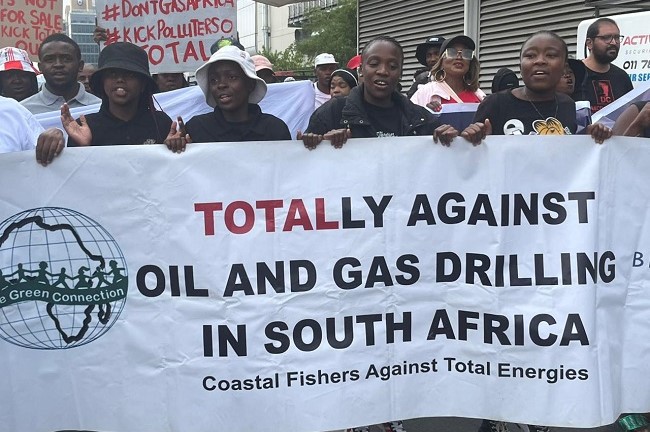
The eco-justice organisation and community partners also joined the mass march against TotalEnergies’ century of exploitation, as part of the We, the 99% People’s Summit, on Constitution Hill in Johannesburg.

G20
People took to the streets on Thursday, ahead of this weekend’s G20 Summit, urging world leaders to end fossil fuel expansion and deliver real commitments on climate justice.

“In countries like South Africa, governments must develop national and local adaptation plans that are participatory, transparent, and inclusive of those most affected – including women, youth, informal workers, and rural and informal-settlement communities. Adaptation should protect livelihoods, secure water and food sovereignty, and build grassroots climate resilience.

“This requires ending fossil fuel subsidies, stopping oil and gas expansion, and prioritising grant-based climate finance for the Global South. At the same time, the justice implications of extracting critical transition minerals must also be addressed as global demand continues to rise,” says Lisa Makaula, Advocacy Officer at The Green Connection.

“Global solidarity is critical in this moment. We are of the opinion that the current fossil-fuel economy may not only be destroying our environment but could also deepen inequality while violating human rights. As the world accelerates a ‘green’ transition, Africa must not be pushed into yet another cycle of extraction. G20 leaders must recognise that communities – not corporations – should guide Africa’s energy future.

“Public funds should shift away from oil and gas projects that risk becoming stranded assets, towards renewable energy systems that are locally owned, environmentally sustainable, and aligned with the 1.5°C limit. It makes little sense for Africa to take on more debt for outdated infrastructure while the rest of the world moves towards cleaner technologies.”

Makaula stresses that predictable, accessible, grant-based climate finance is essential for people-centred adaptation and for easing the debt burden on developing countries that have contributed least to the climate crisis but face its worst impacts.

She says, “We urge G20 leaders to honour their climate finance commitments, including the $1.3 trillion annual goal by 2035. International financial institutions also require urgent reform, as current rules penalise African economies and obstruct effective climate action. Global financial systems must serve people, not profit.”

Beyond climate finance, governments must protect human rights, civic space, and the rule of law. People must be free to organise, speak, and participate in democratic processes without fear of harassment or repression. This will become even more important as investment in critical transition minerals – such as lithium, cobalt and rare earth elements – expands.

Civil society must have fair, open, and meaningful public consultation in all policy-making processes, and communities should be able to influence decisions affecting land use, housing, energy, and environmental governance. Consultation must be genuinely accessible, inclusive, and based on mutual respect.

Community Outreach Coordinator at The Green Connection, Neville van Rooy, says, “The ethical management of Africa’s reserves of transition minerals is vital. While these minerals underpin global decarbonisation, communities must not face exploitation. Instead, they should benefit through local value-addition, decent jobs, and community ownership. This sector cannot repeat the injustices seen in the fossil fuel industry. A just transition must protect communities from harm.”

He continues, “We support a just transition that truly centres workers, communities, and marginalised groups. This requires transition policies that guarantee decent work, offer retraining where necessary, and provide strong social protection. It also means safeguarding existing sustainable livelihoods, including those of small-scale fishers and people working in eco-tourism.”

The Green Connection’s Strategic Lead, Liz McDaid, says, “South Africa has a historic opportunity to use its G20 Presidency to elevate Africa’s priorities. With the world watching, we hope to see governments act for people and planet rather than continue subsidising industries that may drive the crisis. But meaningful progress requires ethical, transparent leadership that serve the people, not corporate interests. And public funds and climate finance must be managed with integrity.”

Action exposes critical climate ambition, finance and justice gaps as COP30 nears conclusion

0

As COP30 entered its final hours, climate justice groups and frontline leaders on Thursday, November 20, 2025, staged an action inside the Blue Zone to call attention to the widening climate ambition, finance, and justice gaps blocking real climate progress.

Thursday’s action responded directly to concerns raised in civil society analysis – including an assessment of the COP30 Presidency’s latest draft – which warns that the current text still lacks: A strong commitment for a “transition away from fossil fuels” roadmap towards a fast, fair and funded phase-out of fossil fuels, the primary driver of the crisis, as well as adequate and accessible climate finance – COP30 must deliver real ambition, real finance and a real fossil-fuel phase-out – not symbolic gestures.

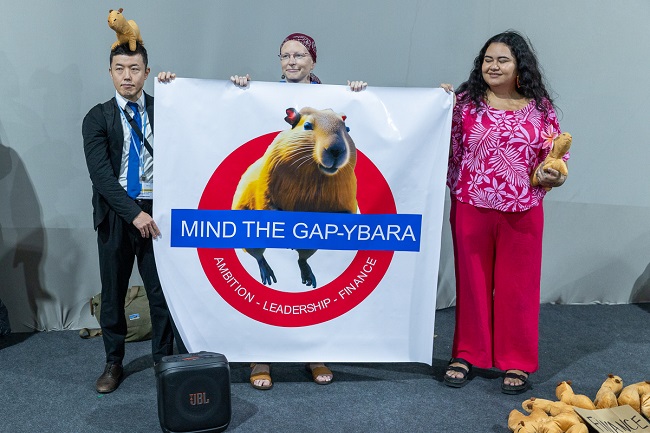
Mind the Gap-ybara
“Mind the Gap-ybara” action at COP30

The action titled “Mind the Gap-ybara” brought together 100 stuffed capybaras, capybara headpieces, banners and signs such as “Capybaras for a Fossil-Free Future”, “No oil in capybara land” and “Capybaras want rivers, not pipelines.”

Short statements were delivered by spokespeople from the Pacific, Africa and the global climate movement, highlighting the urgency of closing these gaps before the COP ends.

Johan Rockstrom, Director of the Potsdam Institute for Climate Impact Research (PIK): “The global curve of GHG emissions needs to bend next year, 2026, not at some undefined point in the future. We need to begin reducing CO₂ emissions from fossil fuels now, by at least 5% per year. This means getting as close as possible to absolute zero fossil fuel emissions by 2040 – and no later than 2045.

“It requires no new fossil fuel investments, the removal of all fossil fuel subsidies, and a global plan to phase in renewable and low-carbon energy sources in a just way while rapidly phasing out fossil fuels. Finance from rich countries to developing countries is imperative.”

Brianna Fruean, 350.org Pacific Council Elder: “This gap in ambition and action cannot be ignored. Our Pacific people are fighting tooth and nail to keep the world below 1.5 degrees and our islands above water. Why must we constantly be the bridge between the world and survival? Our elders deserve to rest and our young people deserve to thrive free from the climate crisis.”

Samuel Okulony, Director of the Environment Governance Institute (EGI) Uganda and an activist with the StopEACOP campaign: “I come from Uganda, a country on the frontlines of the climate crisis, where its impacts are part of daily life. For us, a fossil fuel phase-out is not a bargaining chip – it is the only just and central outcome we expect from this COP. I speak with the voices of thousands of frontline communities, Indigenous peoples, youth, and women who refuse to be ignored any longer. If this is truly the COP of truth, then it’s time to be honest about who caused the climate crisis and to finally put an end to fossil fuels.”

Savio Carvalho, Managing Director of Campaigns Networks, 350.org: “The Presidency’s draft text still doesn’t respond to the urgency outside these negotiating rooms. Without a strong mandate for a fast, fair and funded pathway to phase out fossil fuels, COP30 risks becoming yet another missed opportunity. People across the Amazon, the Pacific and Africa are sounding the alarm, and today’s action made that impossible to ignore. Governments must close the ambition, finance and justice gaps, because without them, there is no credible transition and no climate safety for anyone.”

Carolina Marçal, Project Coordinator at ClimaInfo Institute: “It is urgent that COP30 deliver a roadmap for the just and equitable phase-out of fossil fuels – the only real solution to contain the climate crisis. In the face of limited progress and growing distrust in multilateralism, Brazil must show leadership and rise to the level of the climate emergency. Clear, binding commitments are essential.”

Nigeria’s e-waste crisis reaches critical mass, regulators demand unified action

0

Nigeria’s spiraling electronic waste problem has reached a critical juncture, demanding immediate, unified national action from all stakeholders, from top regulators to individual digital citizens.

This urgent call resonated profoundly at the 2025 ITREALMS E-Waste Dialogue in Lagos, where the nation’s foremost environmental agency issued a stark warning, buttressed by appeals from the event’s convener for a concrete national strategy.

Delivering the keynote address, the Director General/CEO of the National Environmental Standards and Regulations Enforcement Agency (NESREA), Professor Innocent Barikor, who was represented by the Chief Scientific Officer (CSO) at the Lagos State Liaison Office, Olaide Oyedele-Taiwo, underscored that the nation’s rapidly increasing generation of electronic waste is not merely an environmental nuisance but a burgeoning health crisis and a squandered economic opportunity.

eWaste 2025
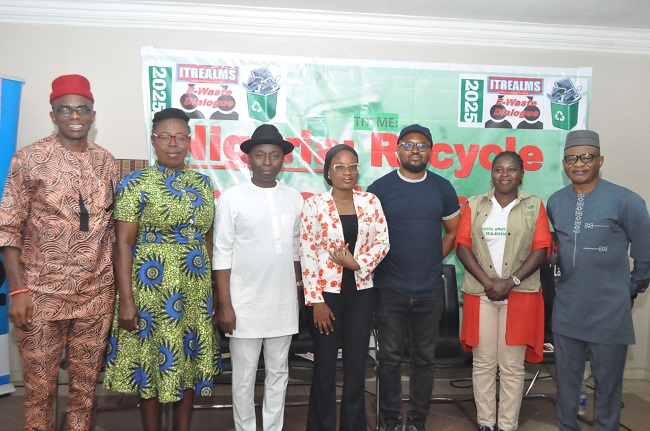
From left: Host, Editor-in-Chief ITREALMS Media, Ogbuefi Remmy Nweke; Director Operations, ITREALMS Media, Lolo Nkem Nweke; Head Environment, Nigeria LNG Limited, Mr. Weyimi Metseagharun; Executive Assistant E-Waste Producer Responsibility Organisation of Nigeria, Azeezat Alabere; Assistant General Manager, Internet Exchange Point of Nigeria, Mr. Uchechukwu Ugwuanyi; Chief Scientific Officer, NESREA Lagos Liaison Office, Olaide Ayodele-Taiwo and Publisher, Political Economist Magazine, Mr. Ken Ugechie, during the 2025 ITREALMS E-Waste Dialogue with the theme: Nigeria: Recycle Your E-Waste It’s Critical in Lagos on 20-11-2025

“The demand for critical raw materials such as lithium, cobalt, and rare earth elements, vital components in our everyday electronics, is skyrocketing globally,” Barikor stated unequivocally. “Nigeria must position itself not just as a consumer, but as a key player in the circular economy by establishing efficient systems to recover these materials from discarded electronics, rather than allowing them to poison our communities.”

He warned of the dire consequences of informal e-waste recycling, where hazardous materials like lead, mercury, and cadmium are released into the environment, posing severe health risks. “When you don’t recycle your e-waste responsibly, it’s not just clutter; it’s a silent killer lurking in our landfills and informal dumps,” he said, making a passionate plea for immediate behavioral change.

Earlier in the day, Ogbuefi Remmy Nweke, Group Executive Editor of ITREALMS Media Group and Convener of the ITREALMS E-Waste Dialogue, set the stage by extending a warm welcome to a distinguished array of guests, industry leaders, and regulators. He highlighted the significant honour of hosting representatives from key stakeholders including NESREA, the Nigerian Communications Commission (NCC), ALTON, IXPN, NLNG and EPRON, among others, emphasising that their collective presence signaled the e-waste challenge as a national priority.

Nweke traced the journey of the ITREALMS E-Waste Dialogue, noting its evolution over five years. “Five years ago, we began this Dialogue to foster awareness. Today, the conversation must evolve. We have moved beyond merely acknowledging the problem; Nigeria now generates an estimated 1.2 million tonnes of e-waste annually. This burden demands immediate, unified, and practical solutions.”

He explained that this sobering reality informed the blunt and focused theme for the year: “Nigeria: Recycle Your e-Waste … It’s Critical!”

Nweke described this theme as “A call to action. It is a demand for a concrete national strategy. It is an appeal for every digital citizen to take personal responsibility.”

He also previewed the subsequent high-powered panel session, set to dissect the roles of various stakeholders in transforming the crisis into a circular economic opportunity.

Professor Barikor, in his keynote, further cemented the federal government’s unwavering commitment to the full implementation of the Extended Producer Responsibility (EPR) programme in the Electrical and Electronics sector.

This initiative, he explained, places the onus on producers and manufacturers to manage the end-of-life cycle of their products, from collection to recycling.

“The National Environmental (Electrical and Electronics) Sector Regulations are not merely guidelines; they are enforceable laws designed to ensure accountability,” Barikor asserted, signaling a firmer stance from the regulatory body. He indicated that NESREA would intensify its efforts to ensure compliance, stressing that deliberate disregard for these regulations would face stringent enforcement.

Before concluding, Nweke underscored a crucial holistic perspective: “E-waste management is not just an environmental issue; it is a public health, economic, and national security issue.” He affirmed the Dialogue’s mission to leave the event with actionable policy recommendations that will protect Nigeria’s environment and future generations.

Professor Barikor concluded his address by challenging every attendee to become “e-waste ambassadors,” urging them to champion proper e-waste disposal and recycling, transforming it from a niche environmental concern into a daily habit for every Nigerian.

Niger seeks stronger global partnerships against escalating climate threats

0

The Niger State Government has called for stronger global commitment and coordinated action to address the escalating climate challenges threatening economies and communities across the world.

Mr. Yakubu Garba, the Deputy Governor of Niger, made the call in an interview on Thursday, November 20, 2025.

Garba stated that climate action in Niger is not only a local necessity but also a critical contribution to Africa’s global climate commitments.

Yakubu Garba
Yakubu Garba, Deputy Governor of Niger State

“Investing in Niger means investing in the resilience of over six million people, in food security, and in the protection of critical ecosystems that sustain Nigeria’s environmental balance,” Garba said.

He described Niger as a land endowed with rich natural resources, fertile agricultural landscapes, and a population determined to build a sustainable and climate-smart future.

The deputy governor highlighted the state’s Green Sustainable Agenda, stating that climate actions are embedded across governance sector; including agriculture, forestry, energy, water resources, waste management, and sustainable livelihoods.

“The roadmap aligns with Nigeria’s Nationally Determined Contributions (NDCs) and Africa’s broader call for equitable climate finance and fair partnerships.

Garba stated that inspite of the state’s proactive approach; implementing renewable energy initiatives, afforestation programmes, climate-smart agriculture, and youth-led waste-to-wealth enterprises, financial constraints have limited the scale of these efforts.

He urged development partners, climate funds, and private investors to collaborate with Niger in mobilising climate finance through concessional funding, carbon market access, and blended financing mechanisms.

Garba further emphasised the importance of technology transfer and innovation in driving low-carbon development adding that youth participation is central to the state’s green transformation.

“Niger seeks collaboration with research institutions, development partners, and climate investors to promote clean energy, digital climate information systems, and modern agricultural technologies,” he said.

According to Garba, equipping young people with the right tools, training, and technology can create jobs, foster green entrepreneurship, and sustain climate-smart value chains.

“Niger is seeking partnerships to establish green innovation hubs, renewable energy clusters, and digital monitoring systems for effective climate action tracking”.

He cited the direct impacts of climate change on local communities, including unpredictable rainfall, floods, droughts, desert encroachment, and declining crop yields.

“Niger has initiated community-based adaptation programmes that integrate indigenous knowledge with modern scientific solutions, such as land restoration projects, irrigation support, and early-warning systems for farmers,” the deputy governor explained.

By Abigael Joshua

Lagos showcased subnational climate action leadership at COP30 – Official

0

The Lagos State Government has reaffirmed its continental leadership in climate action following a series of high-level engagements at the United Nations Climate Change Conference (COP30) in São Paulo, Brazil.

In a statement on Thursday, November 20, 2025, on Lagos, the state’s Office of Climate Change and Circular Economy (OCCE) said that Lagos featured in three strategic sessions from Nov. 6 to Nov. 8 and showcased flagship programmes.

The office said that the programmes included the 80 Million Clean Cookstoves Initiative and LAMATA’s e-Mobility aimed at attracting global capital for inclusive and measurable climate progress.

Lagos COP30
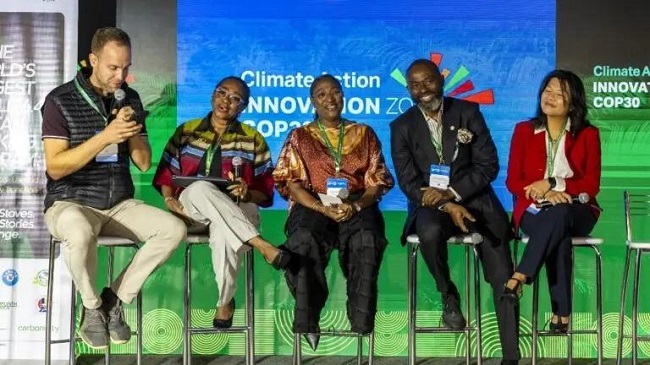
Panelists at the Lagos Private Roundtable at COP30 in Brazil

The Special Adviser to Lagos State Gov. Babajide Sanwo-Olu on Climate Change and Circular Economy, Mrs. Titi Oshodi, said that Lagos went to COP30 to demonstrate catalytic subnational leadership.

“Lagos went to COP30 to demonstrate what true subnational leadership looks like.

“We are proving that African cities can build bankable climate solutions that are inclusive, investable and capable of transforming millions of lives.

“The world is looking for climate ambition-backed by action, and Lagos is stepping forward,” she said.

The official said that active presence of Lagos at COP30 strengthened global partnerships, deepened investor confidence and positioned the state as a model for how African cities could translate climate vision into bankable, people-centred projects.

Oshodi said that the Lagos Private Roundtable with the theme: “Financing Urban Climate Solutions for a Just and Inclusive Transition” brought together development finance institutions, philanthropic organisations and private-sector investors at COP30.

She said that discussions at the roundtable focused on co-financing pathways, de-risking instruments and innovative financing structures capable of scaling green investments in Lagos.

“Key investment outcomes from Lagos’ COP30 participation include commitments to advancing feasibility and financing discussions for clean cooking projects, and interest in co-developing e-mobility pilot corridors with private investors.”

 She added that the outcomes included the need for exploratory talks with international partners on green bond issuances under the Lagos Climate Finance Framework.

“At the Africa Innovation Forum, co-curated by OCCE and Climate Action, Lagos was spotlighted as a leading voice among African cities advancing climate innovation.”

According to Oshodi, the panelists included herself; the Managing Director of the Lagos Metropolitan Area Transport Authority, Mrs. Abimbola Akinajo; the President of Oando Clean Energy, Mr. Demola Ogunbanjo; and Senior Manager, Climate Business Department, International Finance Corporation, Ms. Diep Nguyen-van Houtte.

×