An environmental expert, Hajara Danmusa, has urged households, especially women, to adopt simple organic waste recycling practices to reduce methane emissions and support climate change mitigation.
Organic waste consists of biodegradable materials from living organisms that can be recycled into valuable resources like compost and biogas.
Danmusa, a Water Resources and Environmental Engineer, made the call in an interview on Monday, February 16, 2026.
Organic waste
She explained that methane, a greenhouse gas produced during the decomposition of organic waste, contributes greatly to climate change when such waste is indiscriminately dumped.
According to her, drying, grinding and storing organic waste, or composting it, can substantially reduce methane released into the atmosphere.
“Even without drying, households can compost by putting organic waste in a bucket and mixing it with dry leaves, grasses, ash or sand,” she said.
Danmusa added that processed organic waste could be converted into briquettes; a form of charcoal made from agricultural residue or used to improve soil fertility by mixing it with clay or sandy soil to achieve a loamy texture.
She noted that the practice was simple and scalable at the household level, stressing that widespread adoption would reduce the volume of waste sent to dumpsites and cut methane emissions.
The engineer encouraged women to explore home gardening using composted waste, adding that such initiatives could also create income opportunities through the production of compost, seedlings and briquettes.
She said awareness creation remained crucial and called for collaboration among stakeholders, including the media and climate groups, to train interested women and youths on sorting and processing organic waste.
Danmusa also highlighted the role of eggshells as a catalyst in composting, noting that they help improve soil nutrients and conditioning.
She emphasised the need to move from advocacy to implementation, saying practical steps must now demonstrate that climate solutions are achievable.
The 39th Ordinary Session of the Assembly of Heads of State and Government of the African Union (AU) mapped out a path for Africa’s future to include water security, stability and global representation.
AU Commission Chairperson Mahmoud Ali Youssouf and Burundian President Evariste Ndayishimiye, who is also the current chairperson of the AU, underpinned the summit’s strategic and direction-setting deliberations.
The assembly meeting, which brought together African leaders at the AU headquarters in Ethiopia’s capital, Addis Ababa, from Saturday, February 14 to Sunday, February 15. was held under the AU’s 2026 theme: “Assuring Sustainable Water Availability and Safe Sanitation Systems to Achieve the Goals of Agenda 2063.”
President of Burundi and AU Chairperson, Evariste Ndayishimiye
Youssouf said African leaders reaffirmed their commitment to collective action and African-led solutions to a range of continental priorities.
It includes deepening constitutional governance and stability, economic integration, climate action, institutional reform of the AU, enhancing the AU’s participation in the Group of Twenty, as well as Africa’s adequate representation in the global governance architecture, among others.
“The summit pinpointed our heads of state’s zero tolerance for unconstitutional changes of government on our continent. We need peace and stability on this continent.
“The summit underscored the necessity and determination to pursue the goal of silencing the guns,” he added.
Ndayishimiye, for his part, noted the summit’s emphasis on enhancing sustainable water management to power Africa’s socio-economic development ambitions.
Describing Africa’s quest for water security as “existential” for the continent’s future, he said the choice reflects a deep conviction and that “without equitable access to water and sanitation, we cannot talk about public health or inclusive development.’’
The Federal Ministry of Environment on Monday, February 16, 2026, convened key stakeholders in Abuja to validate a landmark policy brief aimed at tackling marine litter to advance Nigeria’s transition to a circular economy.
Mrs. Falmata Bukar-Kolo, the Deputy Director, Solid Waste Management and Technology Division in the ministry, warned that plastic pollution poses serious risks to aquatic ecosystems and public health.
She stated that microplastics have already entered the food chain through fish consumption, while clogged waterways, soil contamination, and greenhouse gas emissions from burning plastics are worsening the environmental crisis.
Plastic waste pollution
Bukar-Kolo said that plastics, though widely used, are non-biodegradable and persist in the environment for years.
She called for improved waste management systems, stronger enforcement of environmental regulations, and behavioural change amongst citizens and businesses.
Mr. Clem Ugorji, Regional Coordinator of PROTEGO, emphasised the urgency of action, saying Nigeria’s marine litter crisis carries environmental, economic, and reputational costs.
He expressed optimism that the 2025 to 2040 roadmap endorsed at the workshop would shift the country from prolonged dialogue to concrete implementation.
The event was organised in collaboration with PROTEGO (Prevention of Marine Litter in the Gulf of Guinea).
Discussions centred on a draft policy input paper titled “Policies, Institutional Set-up and Financing of Marine Litter Prevention in Nigeria”.
These seek to present insightful analysis and a set of recommendations to address the structural and financing gaps that have long hindered effective waste management, particularly plastic leakage from inland communities and waterways into the Atlantic Ocean.
The PROTEGO initiative is supported by the German Federal Ministry for the Environment, Nature Conservation, Nuclear Safety and Consumer Protection and led by adelphi, with implementation in Nigeria by WASTE Africa and the Nigeria Climate Innovation Centre (NCIC).
The policy brief is a key delivery for one of the programme’s four impact areas – building capacities of public stakeholders.
In line with the presidential directive mandating the National Identity Management Commission (NIMC) to take NIN enrollment to the grassroots and wards nationwide, the NIMC has disclosed that registration and enrollment for issuance of the National Identification Number (NIN) at wards nationwide will commence on Monday, February 16, 2026.
The nationwide exercise is designed to ensure the comprehensive registration of every Nigerian citizen and legal resident, including children and adults, into the National Identity Database. The enrollment will be conducted free of charge, in furtherance of the Federal Government’s renewed hope agenda of President Bola Ahmed Tinubu, aimed at promoting inclusive governance, national development, and access to identity services.
Abisoye Coker-Odusote, Director General/CEO, National Identity Management Commission (NIMC)
The ward-level enrolment initiative represents a strategic step towards deepening identity inclusion, decentralising services, and bringing registration to the ward level (communities), thereby improving accessibility, reducing travel burden, and promoting nationwide participation. NIMC encourages all Nigerians and legal residents who are yet to enroll to take advantage of this opportunity and participate fully in the exercise.
To this end, the Commission has started engaging stakeholders at the national, state, and local government levels with sensitisation and awareness campaigns on the importance of, benefits of, and use of NIN. State governments, heads of local governments, traditional rulers, community leaders, and market associations, as well as faith-based organisations, are being consulted to ensure a smooth and seamless registration across all the wards nationwide.
Members of the public are hereby encouraged to come out en masse to take advantage of the ward-to-ward enrollment exercise to enroll their children, parents, wards, and family members within their community.
The ward enrolment schedules that will guide the rotational movement of licensed front-end partners and NIMC staff can be seen on the NIMC website: www.nimc.gov.ng.
Residents of the Federal Capital Territory (FCT) are groaning under the combined weight of intense heat and persistent power outages, saying the situation has made restful sleep almost impossible.
A cross-section of residents who spoke in Abuja on Sunday, February 15, 2026, described the current weather conditions as unbearable, noting that the epileptic power supply across many communities has worsened their plight.
In areas such as Kubwa, Orozo and Kuje, residents said electricity supply has been irregular for months, forcing families to endure long, hot nights without fans, air conditioners or other cooling devices.
Abuja
Ms. Edna Awe, a resident of Kubwa, said the unstable power supply in her area has left her exhausted and frustrated, as the intense heat has made sleeping comfortably a daily struggle.
Awe said that power has not been stable in her area for months adding that she has been unable to sleep comfortably because of the unbearable weather condition.
“I am appealing to authorities concerned with power supply that they should try and do something about this pathetic situation.
“The regulatory agencies must check the activities of the Abuja Electricity Distribution Company (AEDC) to ensure that consumers get value for their money,” she said.
Mr. Samuel Odey, also a resident of Kubwa, expressed deep concern over the persistent electricity challenges, emphasising that nearly every aspect of modern life depends on a stable power supply.
He described the situation as alarming, noting that most daily activities revolve around electricity and that its absence disrupts virtually everything.
According to him, life becomes significantly difficult without power.
He explained that even while at home, he is unable to relax or carry out basic tasks because there is no electricity.
Odey described the situation as a wake-up call to the government and other stakeholders in the power sector, urging them to take urgent and decisive action to ensure a steady and reliable electricity supply.
Similarly, Mrs. Vivian Olotu, who lives in the Orozo community, said power supply in her area is highly inconsistent.
She explained that residents sometimes go two to three days without electricity, a situation that has become particularly distressing due to the intense heat.
She lamented that children are unable to sleep comfortably at night.
“Even, when families resort to using generators, the noise makes it difficult to rest.
“I am appealing to the government to make every possible effort to address the longstanding problems facing the power sector,” she said.
Mr. Udo Asuquo, also a resident of Orozo, said the inadequate power supply is taking a toll on both his health and his small business.
He revealed that the intense heat and lack of electricity prevented him from sleeping well, which in turn affected his ability to concentrate.
Asuquo added that the little business he relied on to feed his family suffered because there of no stable electricity to run it properly.
“The situation, is deeply troubling and leaves me uncertain about what steps to take next,” he said.
In Kuje, Mrs. Angela Pam described the heat as severe and overwhelming.
She said that at times, members of her household are forced to remain in their corridor until about 1 a.m. just to get some fresh air before going indoors.
Pam noted that the practice exposed them to security risks, given the prevailing safety concerns in the country.
Like other residents, she appealed for urgent intervention to ensure a steady and reliable electricity supply.
Meanwhile, the AEDC had attributed the persistent poor power supply to low power generation currently being experienced nationwide.
The reason given by the AEDC for the power situation, notwithstanding, residents have continued to call for swift and sustainable solutions to ease their hardship.
Some lawyers in Lagos State have lauded the proposed state tenancy law, describing it as a welcome development, while calling for effective measures to ensure its proper regulation and prevent oppression.
The lawyers spoke in separate interviews in Lagos on Sunday, February 15, 2026.
According to the lawyers, when the proposed tenancy law comes into effect, it should be properly monitored to ensure that its provisions are not applied in an oppressive manner.
Gov. Babajide Sanwo-Olu of Lagos State
They emphasised that effective oversight and strict enforcement would be necessary to prevent any form of abuse and to ensure that the law achieved its intended purpose of protecting both landlords and tenants.
The Attorney General of Lagos, Mr. Lawal Pedro, said on Tuesday that the ministry had presented a bill to the State House of Assembly to reform the state’s landlord-tenant law.
Pedro explained that the reform was aimed at fast-tracking litigation in court, reducing the duration of cases to between three months and six months.
The proposed Lagos State Tenancy and Recovery of Premises Bill (2025/2026) prohibits landlords from demanding more than one year’s rent from new tenants or more than three months’ rent from monthly tenants.
The bill enforces the issuance of mandatory rent receipts, caps agent fees at 10 per cent (or five per cent, according to some reports), and introduces seven-day eviction notices for tenants who default on rent.
Reacting to the development, a Lagos-based rights activist, Mr. Spurgeon Ataene, described the move as commendable and called for regular engagement between the government, landlords, and tenants.
The lawyers said that the proposed tenancy law when made effective, should be monitored to ensure its letters were not used in an oppressive manner.
“This manner of rent control is as spurious as it is wanton; I will recommend that governments have an interface with them, to see how best to control rent.
“Imagine paying as much as five million naira for some three-bedroom flats on the Island and Mainland; what would you have left, for school fees and feeding?” he queried.
Ataene noted that these laws could only become effective, if rents were made affordable by the intervention of governments.
“What is more troubling is the enforcement.
“Who should errant agents be reported to, and how many courts do we have to cater to the population and the massive number of cases that may end up in court if a tenant does not vacate the property after seven days?
“These concerns raise questions about the capacity of the existing judicial system and whether it can effectively handle the potential surge in tenancy-related disputes.
“This law is a direct call for anarchy whichever way one looks at. Everyone cannot be on the same level and therefore, capable of paying such exorbitant rent as at when due,” he stated.
He, however, cautioned that landlords should not be allowed to use this as an excuse to engage in self-help by forcefully evicting their tenants while citing a breach of the seven-day notice.
“I must say that for this legal approach to be effective, the government must first address housing problems and make homes affordable to the masses, excluding the rich from bidding for such houses.
“Secondly, food must be affordable. These two needs, if addressed, will determine the effectiveness of the implementation of this law,” he said.
On his part, the convener of the Fight Against Corruption in the Judiciary, Mr Bayo Akinlade, noted that “as long as the recovery of premises is resolved by the courts, the mischief the law seeks to curb would still have to be addressed by the courts.”
“This will still require going to court for interpretation and enforcement,” he said.
While identifying inadequate housing as a major challenge faced by residents, he noted that private individuals often bore the burden of providing shelter, amid what he described as outrageous demands.
He urged that the law be enacted using available data on housing and tenancy disputes to guide its review and implementation.
Akinlade further stated that some landlords would always display the typical traits associated with landlords, but expressed optimism that the new law would seek to correct the imbalance.
Another Lagos-based lawyer, Dr Yemi Omodele, in his contribution, noted that the state had been an initiator of progressive policies in the country and across West Africa, but that implementation remained a major challenge.
Omodele said the state had consistently amended and updated its laws to address the evolving needs and development of its citizens.
According to him, the new tenancy law is a welcome development for the judicial system, but stakeholders must be carried along in the lawmaking process.
Omodele said, “Lawyers handling cases for landlords and tenants should be carried along so that their experiences will be tapped with a view to getting a perfect law.
“However, in the absence of that, there is bound to be a lacuna.”
“If you go to all the magistrates’ courts in the state, you will see thousands of landlord and tenancy cases.
“You will see some courts listing 30 to 40 cases in a day, which is rather sad.
“If the new law comes into force and it is able to address it, fine, but I do not know how the law is going to address this problem to the extent that people will not be filing landlord-tenancy cases in court,” he said.
A landlord, Mr. Saheed Olafimihan, said delays in tenancy litigation had negatively affected rental income and property management.
Olafimihan, however, expressed cautious optimism about the reform.
“Prolonged cases in court have seriously impacted my rental income and when matters linger, landlords bear the financial burden.
“If the proposed tenancy law is truly implemented, I believe it can create a win-win situation for both landlords and tenants,” he said.
A tenant, Mrs. Grace Chibueze, however, expressed concern that the proposed three-month timeline might weaken tenants’ ability to defend themselves adequately.
Chibueze urged the government to strengthen mediation and legal support structures, to protect vulnerable tenants.
“My worry is whether tenants will have enough time to properly present their cases before judgment is delivered.
“The Citizen Mediation Centre and other agencies must be accessible and effective, especially for indigent tenants,” Chibueze said.
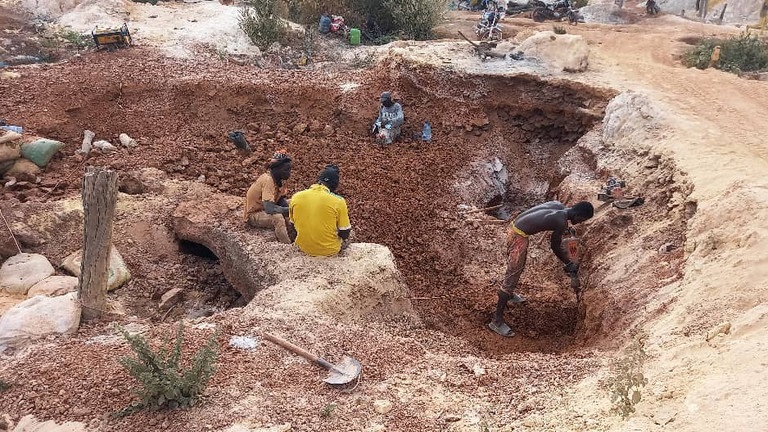
On Sunday, February 15, 2026, Women in Mining Africa (WiM-Africa) commemorated Silent 15 of Bilalikoto – Year One, honouring the over 48 women artisanal miners who lost their lives in a tragic mine collapse in Bilalikoto, Mali, on February 15, 2025.
In an address, Dr. Comfort Asokoro-Ogaji, Executive Director of WiM-Africa, reflected on the growing crisis of mine collapses and preventable deaths affecting women across Africa’s artisanal and small-scale mining sector.
From Mali to Kenya, Nigeria, Zimbabwe, the DRC, and beyond, these tragedies expose systemic failures in safety, regulation, formalisation, and accountability, she stated.
Mining in Mali
The speech has been described as a continental call to action.
Why are women disproportionately dying in mines?
What must governments, industry, the African Union, and buyers do differently?
How can communities move from mourning to protection and reform?
Silent 15 of Bilalikoto stands as a movement demanding:
Safer mining conditions
Formalisation of artisanal mining
Gender-responsive safety policies
Accountability across mineral value chain
Protection of women’s lives and livelihoods.
WiM-Africa has called on all partners, stakeholders and chapters, to dedicate this period to ensuring that these deaths do not continue in silence.
Dr Asokoro-Ogaji lamented the unsafe mining conditions while striving to provide for their families, and the lack of safety measures.
Asokoro-Ogaji also demanded accountability in the artisanal mining value chain, where many women who work in the mines are forced to sell their gold through informal networks by some unscrupulous elements, where middlemen and gold buyers exploit them with unfair prices, poor working conditions, and others.
She said: “Reports confirm that at least 48 lives were lost, the majority being women, who were engaged in mining activities as a means of livelihood. This heartbreaking incident is yet another reminder of the grave risks faced by artisanal miners, particularly women, in the absence of alternative livelihoods, and effective oversight of the artisanal mining value chain.
“This tragedy highlights the urgent need for comprehensive reforms in artisanal mining across Africa. Women are disproportionately affected by unsafe mining conditions while striving to provide for their families. The lack of safety measures, and economic alternatives leaves them with few viable choices. There must be immediate action to improve mining safety, formalize artisanal operations, and empower women with the resources and opportunities necessary to prevent such tragedies in the future.
“Beyond addressing mining safety, there is a critical need for accountability in the artisanal mining value chain. Many women working in mining are forced to sell their gold through informal networks, where middlemen and gold buyers exploit them with unfair prices, poor working conditions, and no regard for their safety. The lack of oversight in this supply chain perpetuates unsafe mining practices and economic disempowerment. The gold trade must be traceable and accountable, ensuring fair pricing, ethical sourcing, and improved working conditions for artisanal miners.
“The women lost in this tragedy were driven to the mines out of economic desperation. Without urgent policy reforms and alternative livelihood opportunities, these cycles of tragedy will continue. It is imperative for authorities to take decisive action to regulate artisanal mining, provide safer working conditions, and develop long-term economic solutions that protect women and their families.”
The greatest potential to reduce species extinction risk in the Northern Sub-catchments of San José, Costa Rica, lies in addressing habitat loss and degradation due to livestock farming and ranching, urban expansion, and the spread of non-native invasive species, according to a paper published on Friday, February 13, 2026, in Conservation Biology.
The paper is the first to apply IUCN’s Species Threat Abatement and Restoration (STAR) metric on the ground, translating estimates based on global data into findings grounded in local conditions.
The paper, “Calibration of the species threat abatement and restoration metric’s threat abatement component in a Costa Rican landscape”, presents a pilot application of IUCN’s Species Threat Abatement and Restoration (STAR) metric in the San José Northern Sub-catchments landscape in Costa Rica.
Blue-sided treefrog in San José, Costa Rica. This species is threatened with extinction, according to the IUCN Red List. Photo credit: Chris Lima / iNaturalist CC BY-NC
The authors combined specialist knowledge with geospatial analyses of habitat loss to confirm species presence, verify threats and assess the intensity of threats affecting them within the landscape, and used this information to refine the global analysis – known as Estimated STAR – so that the results reflect local conditions – known as Calibrated STAR.
STAR is designed to help set – and monitor progress towards – robust, science-based targets for species conservation, by quantifying how actions to mitigate threats in a particular place could support species extinction risk reduction.
“To achieve whole-of-society goals such as those established in Goal A of the Kunming-Montreal Global Biodiversity Framework and in Sustainable Development Goal 15, we need all actors to be able to set and measure progress towards science-based targets for biodiversity. It is critical that our measurements are accurate and useful from the local to global levels.
“This study shows how the STAR metric provides a way to reflect local realities in conservation decisions, while remaining scalable and comparable across regions, making it a key tool for achieving global goals,” said Randall Jiménez Quirós, Senior Conservation Scientist at IUCN and co-author of the paper, based in Costa Rica.
The study reveals that some threats apply to many more species in northern San José than previously understood, highlighting the need to address multiple drivers of land-use change, such as unsustainable livestock farming and ranching, housing and urban development, logging and wood harvesting, and non-timber crops. The next largest potential contribution to reducing species extinction risk in the area comes from addressing invasive non-native species and diseases, followed by droughts and other climate change impacts.
The paper also highlights that confirming the presence of Fleischmann’s robber frog (Craugastor fleischmanni) in northern San José is an urgent priority, as it is endemic to this landscape and Critically Endangered on The IUCN Red List of Threatened Species™. Just one Fleischmann’s robber frog was recorded in this area between 2000 and 2019.
“The value of local expertise in calibrating global conservation metrics to guide conservation action is demonstrated really clearly in our study. Local specialists not only provided valuable information on threats to species, but were also able to highlight the critical opportunity to prevent the global extinction of Fleischmann’s frog. It is this combination of local expertise with a global perspective that allows the implementation of STAR to support progress towards global species conservation goals,” said Dr Louise Mair, Research Fellow at Newcastle University, member of the IUCN Species Survival Commission’s Global Biodiversity Framework Taskforce and lead author of the paper.
“I am delighted to see Costa Rica – a country long-recognised as a global conservation leader – host this first-ever pilot of STAR calibration, towards delivery of Rapid, High-Integrity, Nature-positive Outcomes. Not only is it extremely important in its own right, but also as a powerful demonstration of how IUCN can advance research which is not only scientifically cutting-edge but also immediately relevant to conservation action on the ground, through collaboration between the Union’s expert Commissions and Regional and Global Programmes,” said Ursula Parrilla, IUCN’s Regional Director for Mexico, Central America and the Caribbean.
Proactive management is important to prevent threats worsening, the authors emphasise. Initial estimates made through STAR highlighted threats that in practice may already have been addressed or be subject to ongoing intervention. The study revealed that these threats have the potential to emerge or intensify, if not managed. The authors particularly recommend monitoring the threat to amphibians from chytrid fungus in northern San José.
The study also demonstrates how STAR can be applied within IUCN’s approach to supporting the delivery and measurement of Rapid High-Integrity Nature-positive Outcomes (RHINO), which is designed to connect locally grounded, credible conservation action with the delivery of the Kunming-Montreal Global Biodiversity Framework.
Through RHINO, STAR provides a practical way to translate local threat reduction into measurable and comparable contributions towards the Framework’s global goals and targets, including the aim to halt human-induced extinction of known threatened species and to reduce extinction risk across all species by 2050.
This pilot was conducted under the design of the LandScale framework, which was funded by the International Climate Initiative (IKI) of the German Federal Ministry for the Environment, Nature Conservation, Nuclear Safety and Consumer Protection (BMUV), and by the European Commission Directorate-General for International Partnerships.
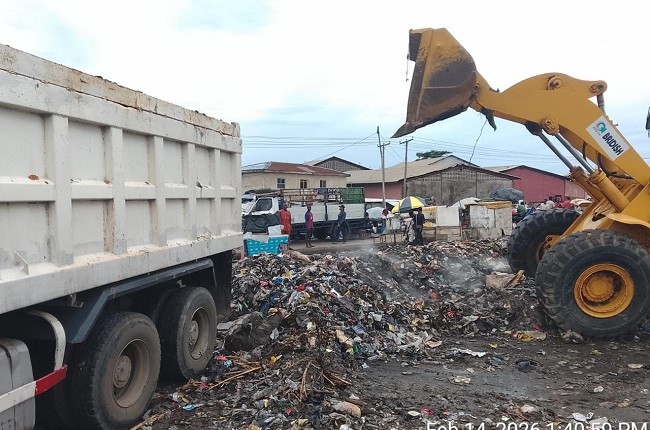
The Lagos Waste Management Authority (LAWMA) has commenced a large-scale bulk waste evacuation exercise at Alaba Rago along the Lagos-Badagry Expressway, as part of a focused environmental sanitation drive aimed at restoring cleanliness and safeguarding public health along the busy corridor.
MD CEO of LAWMA, Dr. Muyiwa Gbadegesin, disclosed on Saturday, February 14, 2026, that the authority’s Operations Team had deployed bulk waste carriers, loaders and support personnel to clear identified illegal dump sites in the area, explaining that the intervention formed part of a structured corridor-cleaning strategy designed to address recurring indiscriminate dumping and environmental degradation.
LAWMA bulk waste evacuation exercise at Alaba Rago along the Lagos–Badagry Expressway
“Following the clean-up at Alaba Rago, the exercise will extend to Okokomaiko and the median around Lagos State University (LASU), both identified as priority locations due to heavy pedestrian and vehicular activity, as well as persistent sanitation challenges,” he said.
He further disclosed that the operation would subsequently progress from Agric Bus Stop toward Mile 2, ensuring a systematic restoration of environmental standards across the entire Lagos-Badagry Expressway axis.
Dr. Gbadegesin emphasised that the ongoing evacuation exercise was not a one-off intervention but part of a sustained sanitation framework with sustainability strategy such as continuous monitoring, stakeholder engagement with traders and residents, intensified public sensitisation, and enforcement measures to prevent recurrence.
He reiterated the authority’s commitment to maintaining a cleaner Lagos and urged residents, traders and motorists to desist from indiscriminate dumping of refuse, particularly along major highways and medians while assuring that enforcement and surveillance efforts would be strengthened to sustain cleanliness along the corridor and protect public health.
The Federal Capital Territory Administration (FCTA) has signed a Memorandum of Understanding (MoU) with Suburban Broadband Ltd. and Akida Hills Ltd. for the development of Jabi Lake as a recreational hub in the FCT.
FCT Minister, Nyesom Wike, said during signing of the MoU in Abuja on Friday, February 13, 2026, that Abuja was a fast-developing city and a perfect location for recreation.
Wike, however, lamented that the pace of development had been slowed down by land speculators who held on to land without developing them.
FCT Minister, Nyesom Wike (right), with the representative of Suburban Broadband Ltd, Mr. Pankaj Khandelwal
The Minister warned that it would no longer be business as usual for those hoarding and speculating government land.
He explained that for those that have applied for land for development, they must develop it within six months of the allocation, or it would be revoked.
Representative of Suburban Broadband Ltd, Mr. Pankaj Khandelwal, said the MoU marked an important landmark for their organisation.
According to him, the project is a significant investment which would bring socioeconomic growth and create jobs in the FCT.
On his part, the representative of Akida Hills Ltd, Mr. Bamisile Olukayode, commended Wike for the ongoing infrastructural transformation in the FCT.
Olukayode described the task of developing Jabi Lake as “exciting” and promised that the project would be comparable to Times Square in New York and the Dubai Fountain Water Show.
This, according to him, would transform Abuja to a destination city.
He said that the development of Jabi Lake, which would be completed before the end of 2026, would place Abuja among world class cities.