31.9 C
Lagos
Monday, February 2, 2026
Home Blog Page 4

BURN’s carbon finance model transforming clean cooking in Nigeria

For millions of Nigerian families, cooking remains one of the most expensive and dangerous daily activities – costing money, health, and forests.

At a recent industry gathering, BURN Manufacturing made a strong case that clean cooking is no longer just an environmental conversation, but a matter of economic survival, public health, and smart policy, powered by the government.

Addressing stakeholders at the event, Chidi Ohaji, Channel Sales Manager at BURN, explained how the company is linking household cooking habits to global climate finance – turning efficient cookstoves into tools for poverty reduction and climate action.

BURN
From L-R: Chijioke Odo, Deloitte; Etulan Ikpoki, BURN Country Manager; Engr. Benedict Souarede Preake, SON; and Victoria Onuoha, MAN Head of Green Manufacturing Agenda

“At the end of the day,” Ohaji said, “this is about helping families spend less, breathe better, and live longer, while protecting our forests.”

Ohaji added: “Across the world, about 2.4 billion people still cook with biomass, relying on firewood and charcoal. In Africa, nearly 80% of charcoal is produced unsustainably, accelerating deforestation and environmental degradation. 

“For households, the impact is personal. Traditional stoves waste fuel, produce thick smoke, and expose women and children to serious respiratory illnesses. In some cases, indoor cooking with inefficient stoves has led to fatal carbon monoxide poisoning. 

“We are paying for cooking twice,” Ohaji noted. “One with money, and again with our health.” 

The Channel Sales Manager noted that BURN’s response is deceptively simple: use less fuel to cook the same food. Its improved cookstoves are designed to retain heat, reduce smoke, and cut fuel consumption dramatically.

With more than 6.3 million stoves sold globally, BURN estimates it has already saved 6.5 million tons of wood and helped households avoid $2.3 billion in energy expenses.

During its recent media roundtable, BURN revealed how some models of their stoves achieve up to 72% thermal efficiency, compared to traditional three-stone fire stoves that lose most of their heat to the air. That efficiency translates into faster cooking, cleaner kitchens, and real savings.

“If you were spending ₦10,000 on fuel,” Ohaji explained, “and now you will end up spending just ₦2,000, that’s ₦8,000 difference in life-changing costs in energy.”

Beyond households, BURN impact is being felt in Nigeria’s manufacturing sector. The company operates what is believed to be the world’s largest modern cookstove production network, producing over 250,000 units monthly and employing 3,500 people globally, half of them women.

The opening of BURN Nigerian manufacturing facility in November 2023 marked a turning point. The factory now supplies wood, charcoal, and LPG stoves across Nigeria and West Africa, employs around 700 workers, and has eliminated costly import delays.

“Local manufacturing changed everything,” said Etulan Ikpoki, Country Manager of BURN Manufacturing Nigeria. “We reduced costs, created jobs, and shortened our supply chain. What used to take 90 days now happens locally.”

One of the most striking points at the event was affordability. A high-quality cookstove that should cost around ₦58,000 is sold to low-income households for ₦15,000 or less – sometimes as low as ₦5,000.

By reducing the amount of wood and charcoal households burn, BURN prevents carbon emissions from entering the atmosphere. These avoided emissions are verified through usage tracking, household monitoring, and kitchen performance tests, then converted into carbon credits.

Investors purchase these credits, providing upfront funding that subsidises stove prices. Revenues are reinvested into research, expansion, and reaching more families.

“This only works if people actually use the stoves,” Ohaji stressed. “That’s why monitoring and long-term engagement matter.”

Independent research by the University of Pennsylvania and the University of Chicago, covering 1,000 low-income households in Kenya, confirmed BURN’s claims: “$119 in annual household savings, $1,000 return to society over three years, 98% customer satisfaction and 3.5 tons of carbon saved per stove each year.” 

Panelists agreed that Nigeria is well-positioned to scale clean cooking – but only if policy gaps are addressed.

Despite its climate commitments under the Paris Agreement and its 2030 emission-reduction targets, clean cookstoves are not classified as essential household items, limiting VAT exemptions and import duty relief. Consumer financing options also remain limited.

Equally critical is the implementation of Nigeria’s carbon market framework. While recent policy activation has sent positive signals, investors need clarity around registries, revenue flows, and enforcement.

“There must be predictability,” Ikpoki said. “Investors won’t come unless they know the system works.”

Another concern raised was the flood of counterfeit stoves in Nigerian markets, which undermines safety standards and discourages legitimate manufacturers.

“Clean cooking is one of the few climate solutions Nigeria can scale quickly, credibly, and at household level. When local manufacturing, strong standards, and carbon finance work together, the results are immediate – lower emissions, healthier families, and real economic value. We welcome the government’s leadership in putting policy frameworks in place that support credible carbon markets and clean energy investment,” said Ikpoki.

“This has to stop at the ports,” Ikpoki warned, calling for closer collaboration between the Standards Organisation of Nigeria, Customs, and market surveillance agencies.

The event closed with a panel discussion featuring Benedict Souarede Preake of the Standards Organisation of Nigeria, Mrs. Victoria Onuoha of the Manufacturers Association of Nigeria, Chijoke Odoisan of Deloitte, Olamide Fagbuji from the Office of President Bola Ahmed Tinubu, and other stakeholders.

Their message was unified: clean cooking is not a luxury – it is infrastructure.

With the right policies, carbon finance could turn everyday kitchens into engines of climate action, public health improvement, job creation, and foreign investment.

As Ohaji concluded, “When clean cooking is affordable, everyone wins – the family, the forest, and the future.”

By Ajibola Adedoye
Demolitions: Displaced Makoko residents, others protest at Lagos Assembly

0

Residents displaced by ongoing demolitions in communities in Lagos State on Wednesday, January 28, 2026, staged a protest at the Lagos State House of Assembly complex.

The protesting residents included those of Makoko, Oworonshoki, Otumara, and Baba Ijora.

The protesters carried placards with inscriptions such as “Stop the demolitions”, “Stop punishing the poor,” and “Our lives also matter”.

Makoko protest
Protesters at the Lagos State House of Assembley

Speaking on behalf of protesters, Mr. Zikora Ibeh, Assistant Executive Director, Corporate Accountability and Public Participation Africa (CAPPA), accused the state government of embarking on demolitions without resettlement plans.

Ibeh also accused the state government of extending demolitions far beyond initial safety agreements, displacing thousands and exacerbating a humanitarian crisis.

The activist accused the police of arresting scores of protesters, including a youth leader, Hassan Taiwo (Soweto).

Ibeh said the protest was to demand an immediate halt to all evictions.

He said: “We are also demanding compensation for affected families, and enforcement of the agreed 100-metre setback from high-tension power lines in Makoko and other communities,” he said.

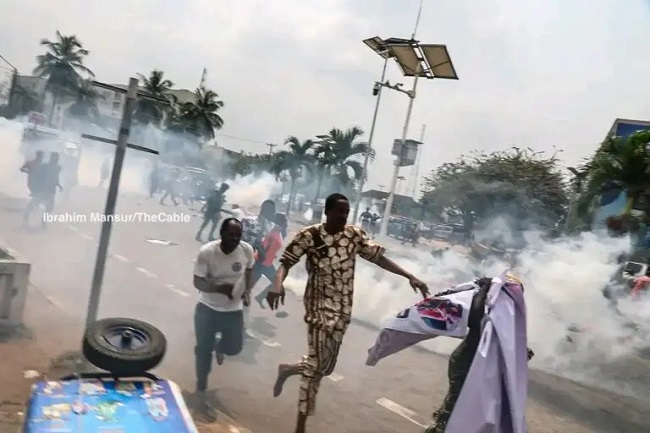
Ibeh condemned the alleged detention of some protesters by the police and firing of canisters of teargas to disperse the others.

He also alleged that lawmakers watched as protesters were dragged on the ground and maltreated by policemen at the complex.

“Those detained were allegedly dragged into the Assembly complex as police fired multiple canisters of teargas at the largely unarmed crowd, including women, who had gathered to seek dialogue with lawmakers.

“Lawmakers watched as police unleashed teargas and live ammunition on unarmed protesters, including women, whose only crime was asking to speak to their representatives,” he said.

Reacting to the incident, the Chairman, House Committee on Information, Mr. Stephen Ogundipe, said that at no point did the Lagos Assembly order the deployment of teargas, authorise arrests or direct any use of force against protesters.

Ogundipe, representing Oshodi-Isolo Constituency-01, said lawmakers withdrew from the gate when the protesters arrived and that the decision  to withdraw from the gate was taken on the advice of the Commissioner of Police to prevent physical confrontation and escalation.

He clarified that the claim that “lawmakers watched as police unleashed teargas and live ammunition” was false, sensational, and unsupported.

According to him, no lawmaker witnessed or sanctioned the use of live ammunition, and no credible evidence has been presented to substantiate the allegation.

The chairman accused the protesters of flatly rejecting dialogue at the gate, insisting on gaining access into the Assembly complex.

Ogundipe said the action of the protesters was in clear violation of established security protocols governing legislative premises.

Contrary to insinuations that lawmakers watched or ignored the situation, Ogundipe stated that the Lagos Assembly was officially on recess at the time of the incident.

“Notwithstanding this, upon receiving information about the gathering at the Assembly gate, I mobilised four other members who were present within the complex to engage the protesters in good faith,” he said.

Ogundipe said during the engagement, Hassan became openly confrontational and verbally abusive.

He alleged that he directed defamatory, and inflammatory language at lawmakers present and the Commissioner of Police, who was physically on ground solely to prevent a breakdown of law and order.

According to him, the activist went as far as publicly accusing the commissioner of murder and made allegations that are grave and reckless.

Ogundipe, however, said the Assembly remained committed to peaceful civic engagement, protection of democratic rights and orderly and respectful dialogue as the only sustainable path to conflict resolution.

The lawmaker said intimidation, verbal abuse, misinformation, and attempts to breach secured government facilities could not be justified under the guise of protest.

By Adekunle Williams

Climate change: Enhanced international collaboration accelerates global transparency efforts

0

Transparent climate action and support is a cornerstone of climate cooperation. It equips countries with an evidence base to better identify needs and prioritise actions, track progress towards national climate plans (NDCs), and refine climate policies over time, preparing and implementing increasingly ambitious NDCs. By demonstrating progress in implementing the Paris Agreement, transparency builds mutual trust among Parties.

Transparency also offers donors and support providers greater clarity on where action and support are needed. Continued support remains essential for developing countries to engage effectively in the Paris Agreement’s Enhanced Transparency Framework (ETF).

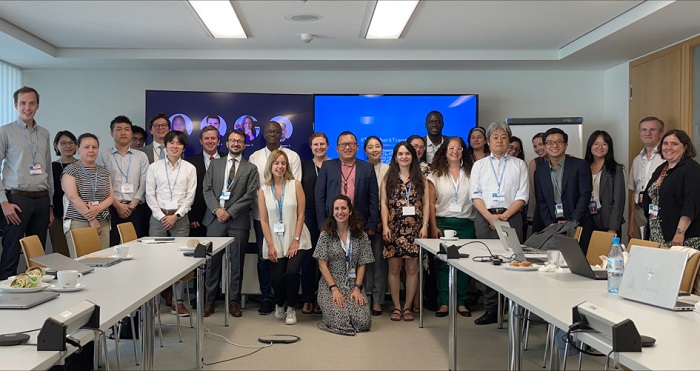
13th ETF Group of Friends meeting
Participants at the 13th ETF Group of Friends meeting. Photo credit: UN Climate Change

The timely submission of the first biennial transparency reports (BTRs) under the ETF – particularly by developing countries – has been made possible largely through sustained financial, technical and capacity-building assistance from the international community.

As developing countries continue to prepare their first and second BTRs, collaboration among supporting agencies has become increasingly critical to ensure that support is well-aligned, effective, and responsive to country-specific needs.

Joining forces for transparency

In recent years, coordination among international actors supporting transparency in developing countries has deepened significantly, resulting in more coherent approaches and delivery. This progress has been driven by the ETF Group of Friends – an informal network of around 35 organisations that serves as a central hub for communication, information-sharing, and joint activities.

“No single organisation can meet all transparency needs alone,” noted a UN Climate Change representative. By promoting inter-agency collaboration, the Group seeks to deliver support more coherently and achieve greater collective impact.

Coordination that delivers results

Since its establishment in 2016, the ETF Group of Friends has convened more than 45 coordination meetings at global, regional, and national levels – 24 of these were organised by UN Climate Change.

At the same time, regional and subgroup leads have become increasingly active. These include the Capacity-building Initiative for Transparency-Global Support Programme (CBIT-GSP), the Greenhouse Gas Management Institute (GHGMI), the Initiative for Climate Action Transparency (ICAT), the Institute for Global Environmental Strategies (IGES), the Partnership on Transparency in the Paris Agreement (PATPA), and the United Nations Development Programme (UNDP). Over the past 18 months alone, these partners have hosted 21 regional coordination meetings.

Growing regional engagement has shifted coordination from simple information exchange towards concrete joint planning and in-country collaboration. Regular exchanges enable network members to map ongoing activities, identify synergies, and avoid duplication – helping to promote coherent and complementary support at the national level.

The network also contributed to six mandated ETF support and first BTR workshops in 2024 and 2025. These workshops brought together developing countries, the Global Environment Facility (GEF), implementing agencies, and other partners to share experiences and discuss available support for preparing the first BTRs – an updated compilation of transparency support provides developing countries with an overview of assistance and guidance on how to access it.

Looking Ahead

Regional and subgroup leads are expanding engagement with regional and national actors to ensure meaningful follow-up after coordination calls, and to translate dialogue conclusions into tangible outcomes. Efforts are focused on identifying areas of overlap, promoting complementary initiatives, and strengthening collective impact at regional and country levels.

At the global level, UN Climate Change will continue to enable information-sharing, link regional outcomes with broader policy discussions, and promote coordinated planning.

By connecting support providers and responding to countries’ needs, the ETF Group of Friends promotes a coherent global approach to transparency support, strengthening collective efforts to track progress and implement the ETF under the Paris Agreement.

NUPRC assures investors of transparent, competitive licensing round for 50 oil blocks

0

The Nigerian Upstream Petroleum Regulatory Commission (NUPRC) has assured prospective investors of a transparent, merit-based and competitive process for Nigeria’s 2025 Oil and Gas Licensing Round.

The commission said that only applicants with strong technical, financial credentials, professionalism and credible plans would proceed to the critical stage of the bidding process.

The commission Chief Executive, Mrs. Oritsemeyiwa Eyesan, gave the assurance on Wednesday, January 28, 2026, while speaking at a Pre-Bid Webinar organised by the commission.

Oritsemeyiwa Eyesan
Commission Chief Executive, Nigerian Upstream Petroleum Regulatory Commission (NUPRC), Mrs. Oritsemeyiwa Eyesan

NUPRC, on Dec. 1, 2025, inaugurated Nigeria’s 2025 Licensing Bid Round, offering 50 oil and gas blocks across frontier, onshore, shallow water, and deepwater terrains for potential investors.

The basins included Niger Delta basin, with 35 blocks, Benin (Frontier) with three blocks, Anambra (Frontier), with four blocks, Benue (Frontier), with four blocks and Chad (Frontier) with four blocks on offer.

Eyesan explained that the licensing process would follow five stages: Registration and pre-qualification, data acquisition, technical bid submission, evaluation, and a commercial bid conference, with only bidders that meet strong technical and financial criteria progressing.

She said the 2025 Licensing Round represented a deliberate effort by Nigeria to reposition its upstream petroleum sector for long-term investment, transparency, and value creation, amid increasing global competition for capital.

Eyesan said that energy security and supply resilience had become key global economic and geopolitical priorities, while investment capital was increasingly selective and disciplined.

“Our national priority is clear: to attract capital, grow reserves, and improve production in a responsible and sustainable manner.

“A structured and transparent licensing round is essential to achieving these objectives.

“The NUPRC is legally mandated to conduct licensing rounds in a periodic, open, transparent, and fully competitive manner and the entire 2025 process will be governed strictly by published rules,” she said.

She disclosed that 50 oil and gas blocks across Nigeria’s major basins are on offer in the 2025 Licensing Round, providing investors with access to high-potential assets within a stable, rules-based regulatory framework.

Eyesan further revealed that, with the approval of President Bola Tinubu, signature bonuses for the 2025 round have been set within a range designed to lower entry barriers and prioritise technical capability, credible work programmes, financial strength, and speed to production.

The CCE emphasised that the bid process would fully comply with the Petroleum Industry Act (PIA) and remain open to public and institutional scrutiny through the Nigeria Extractive Industries Transparency Initiative (NEITI) and other oversight agencies.

She added that all licensing materials have been available on the Commission’s bid portal since Dec. 1, 2025, supported by dedicated help channels to assist applicants.

According to Eyesan, the 2025 Licensing Round is not merely a bidding exercise, but a signal of a re-imagined upstream sector anchored in the rule of law, driven by data, and aligned with global investment realities.

Latin America accelerates urban climate action through city-led adaptation, biodiversity projects

0

During the International Economic Forum Latin America and the Caribbean 2026, the C40 Cities Climate Leadership Group and the Development Bank of Latin America and the Caribbean (CAF) announced a new strategic partnership to accelerate urban climate finance and project delivery across Latin American cities.

The collaboration was formalised through the signing of a Memorandum of Understanding (MoU) in the presence of more than 30 local authorities from Latin American cities attending the Forum, including the mayors of Bogotá and Quito, and the deputy mayor of Fortaleza.

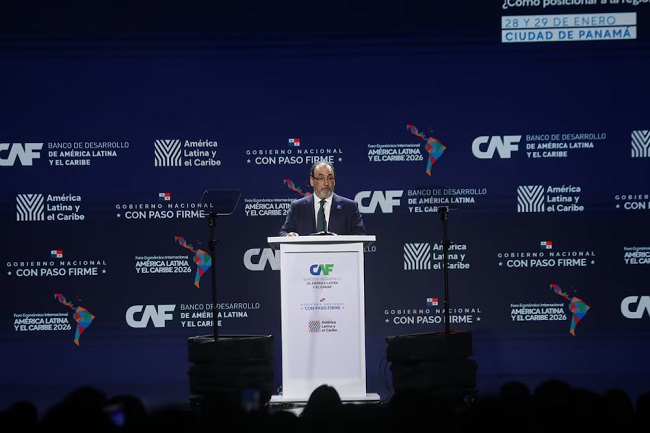
Latin America and the Caribbean (CAF)
Sergio Díaz-Granados, executive president of CAF, during the inauguration of the Latin America and Caribbean International Economic Forum 2026

The MoU establishes a framework for cooperation focused on helping cities prepare, finance and implement high-impact urban climate projects over the next five years, with support from CAF. The partnership prioritises climate adaptation; promotion of biodiversity, clean and sustainable urban mobility; sustainable urban planning; and water and sanitation systems, while strengthening cities’ access to climate finance connecting them to investment opportunities.

Federico Gutiérrez, Mayor of the city of Medellín, Colombia, and C40 Vice-Chair for Latin America, said: “Medellín has shown that cities can drive transformative change. As climate risks intensify, from extreme heat to mounting water challenges, partnerships like this are critical to strengthening urban resilience across Latin America and ensuring that climate action delivers real social and economic benefits for our citizens. Cities are already stepping up to confront the climate crisis and protect our communities, but unlocking greater access to climate finance is essential to turn ambition into action and deliver solutions that change people’s lives.”

As climate impacts intensify across the region, the partnership places a strong emphasis on climate adaptation through nature-based solutions and promotion of biodiversity, the initiative aims to support cities to address extreme climate risks, such as extreme heat, flooding, sea-level rise, droughts etc., by implementing projects that promotes urban greening, water-sensitive urban design that help cool and promote resilient cities while improving quality of life. 

Julian Suárez Migliozzi, Manager of Sustainable Territorial Development, said: “This partnership with C40 Cities represents a concrete step in CAF’s commitment to become the bank of subnational governments and the green bank of Latin America and the Caribbean. Our cities are home to 80% of the region’s population and are on the frontlines of the climate crisis – they need financing solutions that match the urgency of this challenge.

“Through this collaboration, we will work side by side with mayors to transform climate action plans into bankable projects that attract investment and deliver tangible benefits: greener neighborhoods, cleaner air, water security, and sustainable mobility.”

The partnership will align with regional initiatives such as CAF’s BiodiverCities Network and the Adapting BiodiverCities (ABC) programme, to be implemented by CAF and the Adaptation Fund between 2026 and 2028, strengthening links between biodiversity, climate resilience and urban development.

Under the MoU, C40 Cities and CAF will collaborate on sustainable urban development, climate adaptation and climate finance, supporting cities at different stages of project preparation and connecting them to the C40 City Finance Programme and associated funding initiatives such as the C40 Cities Finance Facility (CFF) and the City Climate Finance Gap Fund.

Mark Watts, Executive Director of C40 Cities, said: “Climate impacts are a daily reality for millions of people in Latin American cities, from extreme heat to floods and water stress. This partnership with CAF will scale up investment for real, on-the-ground action, supporting adaptation, resilience and low-carbon development where it matters most. We know what needs to be done; the challenge now is financing and delivering it at speed. By working with cities to turn plans into bankable projects, we can unlock the finance needed to protect communities and accelerate climate action at scale.”

Key areas of cooperation include:

  • Climate adaptation and resilience, including the integration of climate considerations into municipal budgeting and capital investment through climate budgeting approaches;
  • Clean and sustainable transport, including knowledge exchange and financing support for the electrification of public transport and other zero-emission mobility solutions;
  • Urban nature-based solutions, supporting the development and financing of green and blue infrastructure through initiatives such as the C40 Urban Nature Accelerator;
  • Water security and sanitation, strengthening resilience in the water, sanitation and solid waste sectors through programmes such as Water Safe Cities, with a focus on addressing risks from floods, heat, droughts and landslides;
  • Urban planning and circular economy approaches, supporting integrated, sustainable and inclusive urban development.

Grid connection: Govt inaugurates committee on ALSCON

In a bid to bring the Aluminium Smelter Company of Nigeria (ALSCON) into full operation, the Federal Government has inaugurated an 11- member project delivery committee.

The Committee comprises three members from ALCON, two from the Niger Delta Power Holding Company (NDPHC), two members from the Transmission Company of Nigeria (TCN), and two members each from the Nigeria Electricity Regulatory Commission (NERC) and the Federal Ministry of Power.

In its terms of reference, the committee is expected to fast-track the connection of 132 kV transmission lines, ensure the completion of the Itu-Aba 132kV line, Itu-Calabar 132kV line, produce a status report and Single Line Diagram (SLD) of the 132k V Line, conduct joint commissioning of 132kV line, including funding requirements.

ALSCON
Minister of Power, Chief Adebayo Adelabu, inaugurating the ALSCON Committee in Abuja

In addition to the 132kV project, the committee is also saddled with the connection of 330kV transmission lines to ALSCON by coming up with the funding requirements to complete the project, produce status project report and SLD of the 330k V Line, and conduct a joint commissioning of the project.

Inaugurating the committee in his office, the Minister of Power, Chief Adebayo Adelabu, emphasised the importance of the project, which he said would contribute to the economic growth and development of the country. He said it was the desire of the Federal Government to see that ALSCON begins operation.

He charged all the agencies that are involved in revamping the company to work as a team “to ensure that it comes alive within a very short time”, while urging them to set up a practical working solution.

Adelabu said if ALSCON comes back, it would impact the economy of the country very positively.

“Power is a critical enabler for continuous operation in the plant and could lead to economic growth. It will increase local capacity and create jobs for our people. So, we need to accelerate its activities and avoid delays. We need a lot of collaboration and cooperation to achieve this desired result.”

The Minister recalled visiting the company in October last year, adding that ALSCON had reached out to the ministry on several occasions regarding the importance of reliable, stable, and uninterrupted power at the plant and the need for the plant to be connected to the national grid.

The representative of UC Rusal, the majority shareholder of ALSCON, Viacheslav Krylov, said the company was ready to work and collaborate with the Federal Government in addressing the challenges facing the power sector especially in the provision of electricity.

He revealed that ALSCON has an in built 540MW installed, gas-fired turbines for power generation, primarily for operations. He however added that the excesses would be transferred to the grid.

Krylov emphasised the importance of an alternative power supply for emergency basis in order to guarantee continuous operation in the plant when gas supply line is disrupted, thus the need for grid connection.

Africa capable of extraordinary achievements, including in manufacturing, high-tech – Algerian President

0

The Executive Secretary of the United Nations Economic Commission for Africa (UNECA), Claver Gatete, met on Monday, January 26, 2026, with Algerian President, Abdelmajid Tebboune, at the start of his working visit to the country, which aims to strengthen cooperation with Algeria and identify priorities for bilateral cooperation.

During their meeting, President Tebboune expressed his strong intention to strengthen cooperation with the ECA, with particular attention to strategic priorities including statistics, monitoring the implementation of public policies, digitalisation, governance and South-South cooperation.

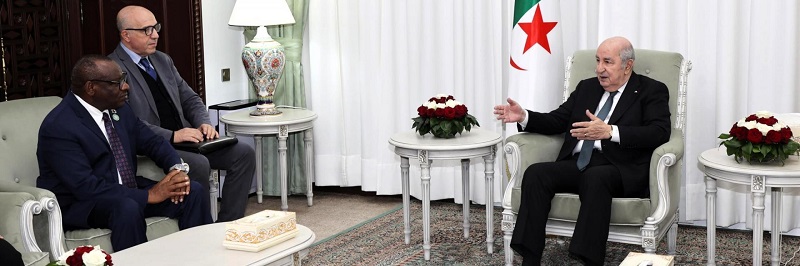
Algeria
Executive Secretary of the United Nations Economic Commission for Africa (UNECA), Claver Gatete (left) with Algerian President, Abdelmajid Tebboune

Africa is capable of extraordinary achievements, including in manufacturing and high-tech, said President Tebboune, who stressed the importance of industrialisation to create jobs and reduce dependency with regard to imports. Mr. Tebboune also stressed that development must go beyond the macro-economic dimension and take into account aspects such as human development or the redistribution of wealth.

Gatete’s visit is part of a tour covering Algeria, Mauritania and Morocco, with the aim of meeting with government officials and gaining a deeper understanding and understanding of their development priorities, needs and areas of support, and explore opportunities to strengthen South-South cooperation.

This visit by the ECA Executive Secretary also coincides with a retreat of the ECA senior management team and preparations for the 2026 Conference of African Ministers of Finance, Planning and Economic Development (COM2026), scheduled from March 28 to April 3, 2026, under the theme: “Growth through Innovation: Harnessing Data and Cutting-Edge Technologies for Africa’s Economic Transformation”.

‘Trump can’t strong-arm world into fossil fuel addiction’ – Group decries US’ second exit from Paris Agreement

0

A year after US President, Donald Trump, signed an executive order withdrawing from the Paris Agreement, the United States officially exited the pact on Tuesday, January 27, 2026, making it the only country to have quit the global climate agreement twice.

Andreas Sieber, 350.org Head of Political Strategy, said: “By leaving the Paris Agreement, President Trump might believe he can strong-arm the world into more fossil fuel addiction. But he is unintentionally making the strongest case for renewables yet. Clean, affordable energy frees countries from imported fossil fuels and the geopolitical shocks that come with it.

Donald Trump
President Donald Trump of the US

“Under Trump, the US has made the risk of fossil fuel dependence unmistakably clear. More than two-thirds of global oil now sits within a US-dominated sphere of influence where threats, sanctions, and coercive power are openly deployed. Every escalation ripples straight through global markets and into household bills. This will make more countries want to opt out of this broken system – and choose the very path that Trump has abandoned.”

Anne Jellema, 350.org Executive Director, said: “After a year of deliberate obstruction, intimidation, and climate denial from the Trump administration, one thing is clear: the rest of the world is moving on – and moving faster. Last year, renewables generated more electricity than coal for the first time. The energy transition is unstoppable, despite efforts by the US administration to derail it.

“Not only are governments choosing to remain parties to the Paris Agreement – more than 80 countries have now backed a clear roadmap to move away from fossil fuels. Cross-border cooperation is growing, not shrinking.”

Fragile frontline revealed as healthcare workers demand urgent global action to end snakebite crisis

0

To mark World Neglected Tropical Diseases Day, a new report from the Strike Out Snakebite (SOS) initiative exposes a fragile frontline – as healthcare workers are battling broken systems that jeopardise both prevention and treatment of snakebite envenoming (SBE).  

Snakebite is one of the world’s deadliest yet most overlooked Neglected Tropical Diseases (NTDs), representing nearly half of the global burden of all NTDs and causing up to 138,000 deaths and 400,000 permanent disabilities every year. Despite this, snakebite receives only a fraction of the funding it desperately needs.  

Snakebite
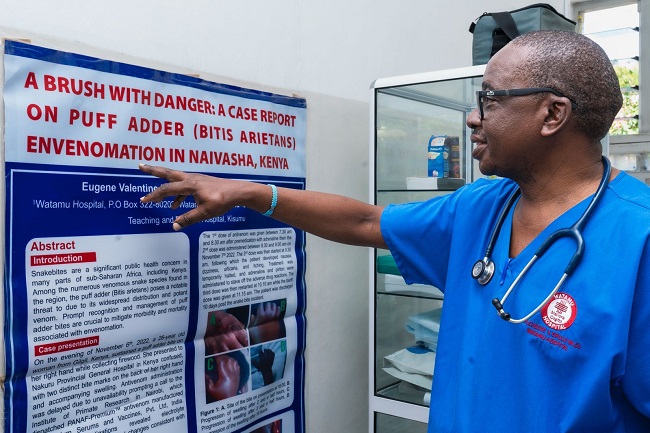
Dr. Eugene Erulu, Medical Doctor and Snakebite Specialist, Watamu Hospital, Watamu, Kenya, reviews a report highlighting the challenges of snakebite management

Snakebite envenoming is a crisis of inequality. It strikes hardest in rural communities – among children, agricultural workers, and families living far from health facilities. Victims often face long journeys to care, limited infrastructure, and costly and scarce antivenom supplies. These barriers turn a preventable and treatable condition into a life-threatening emergency. 

As part of a new survey of 904 healthcare workers across Brazil, Nigeria, India, and Indonesia, findings from Nigeria revealed:

  1. 98% report challenges administering antivenom – the only WHO1-listed essential medicine for SBE treatment.  
  2. 50% say their facilities lack full capacity to treat snakebite. 
  3. 39% face daily antivenom shortages. 
  4. 56% report poor infrastructure and inadequate equipment – raising the risk of limb loss, blindness and chronic neurological injury. 

Elhadj As Sy, Chancellor of the Liverpool School of Tropical Medicine and Co-Chair of the Global Snakebite Taskforce, said: “Too often, conversations on global health overlook those who shoulder the greatest burden: frontline healthcare workers. This report shines a light on the severe challenges they face in trying to save lives – and it is time to not just listen, but to mobilise. Many solutions exist, but we need political will and bold commitments from partners and investors to turn the tide on this preventable yet devastating Neglected Tropical Disease.  

“Snakebite must no longer be overlooked or underfunded by the international community. It is time for action – not sympathy, not statements, but action worthy of the scale of this crisis.”  

Antivenom is most effective when administered quickly – yet 82% of healthcare workers surveyed in Nigeria report life-threatening delays in seeking treatment, often due patient preference for traditional or alternative remedies (61%). Efficacy also depends on identifying the snake, but 42% report challenges administering antivenom due to uncertainty about the type of snake involved. The cost of delay is devastating: 43% reported avoidable delays ending in amputation or major surgery, potentially locking families into poverty and deepening inequality. 

Simple precautions – such as wearing protective clothing and sturdy footwear, sleeping under well‑tucked mosquito nets, carrying a torch at night, and avoiding likely snake habitats – can signficantly reduce the risk of a bite. If a bite does occur, safely taking a photograph of the snake can help with identification and confirm treatment options, but only if it can be done without putting anyone at further risk.  

To bring the report findings to life, a short film – Snakebite: from Science to Survival – has been released, featuring first-hand testimony from researchers, doctors, snake handlers, and survivors, underscoring the human toll and the urgency to act. 

Dr Eugene Erulu from Kenya, who is featured in the film, said: “A snakebite is a medical emergency, and anytime it happens it needs to be dealt with urgently and with the right treatment. However, we know 70-80% of patients first go to the traditional healers, where they receive inadequate care. If you delay, you lose the patient, but this has never really sunk into the community.

“We must continue to educate the public on the importance of seeking care, alongside investing in local health systems to ensure all facilities have access to antivenom.” 

Today, just two funders provide 65% of global investment into snakebite R&D, which is neither sustainable nor sufficient. Frontline healthcare workers in Nigeria are therefore calling for urgent investment from the international community – governments, global health leaders, multilateral agencies, philanthropists, and investors – to:

  1. Strengthen antivenom R&D (40%) and expand affordable, high‑quality manufacturing (43%); 
  2. Improve data and monitoring (31%) and protective equipment (29%); 
  3. Improve training programmes for healthcare professions (44%);  
  4. Increase access to safe, effective antivenom (32%); 
  5. Increase collaboration between governments, NGOs, and local health systems (31%) 
  6. Improve access to healthcare facilities (24%), improve healthcare system infrastructure (16%), and scale community education (48%). 

The solutions to end needless death and disability from snakebite already exist. By pooling resources to purchase antivenom and producing it in regional hubs, countries can stabilise prices and ensure a consistent supply of high-quality antivenom. Integrating snakebite prevention and treatment into national health plans will strengthen health systems and save lives.

Alongside this, investing in education, awareness programs, and preventative measures wantivenomer communities with the knowledge and tools they need to reduce risk and respond effectively when bites occur. 

Strike Out Snakebite was launched in 2025 to drive action across four fronts: R&D, antivenom access, public health, and advocacy – aligned with WHO’s goal to halve deaths and disabilities by 2030. Its Global Snakebite Taskforce unites experts, funders, and policymakers to keep this crisis on the global agenda. 

The moral imperative is clear: nobody should be dying from snakebite envenoming. This crisis is preventable, and targeted investment can catalyse significant impact. Now is the moment to act – and together, we can Strike Out Snakebite. 

Kaduna ACReSAL sensitises residents to gully erosion control project in two communities

Kaduna Agro-Climatic Resilience in Semi-Arid Landscapes (ACReSAL) on Wednesday, January 28, 2026, sensitised residents of Tudun Wada, Rigasa community, to the implementation of a gully erosion control project in the area.

Hadiza Halid, Project Coordinator ACReSAL, said the sensitisation was part of the activities under the Resettlement Action Plan (RAP) for the project.

Represented by Mr. Nuhu Satuk, Human Resource Officer, said the construction would affect some residents, including houses, farmlands and economic trees located around the gully site.

Gully erosion
Gully erosion

She said the Consultants had already conducted surveys to identify persons likely to be affected by the project.

“The sensitisation is mainly for those that will be affected by the construction. Government will compensate them for anything that will be affected during the construction,” he said.

Halid said the government would also require the cooperation of residents to ensure the successful execution of the project and improvement of the environment.

The District Head of Rigasa, Aminu Idris, described the project as a welcome development for the community.

Idris said the area had experienced serious erosion, leading to loss of farmlands, destruction of houses and loss of lives, particularly during the rainy season.

He expressed appreciation to the Agro-Climatic Resilience in Semi-Arid Landscapes (ACReSAL) project for intervening in the community.

Also speaking, a resident, Mrs. Asmau Sadiq, said the action plan would bring relief to residents affected by erosion in the area.

Sadiq said the community had lost access roads and houses to erosion over the years, adding that she was among those affected.

She expressed optimism that the new intervention would succeed, adding that previous efforts did not fully address the problem.

“We are hopeful that this intervention by the government will finally bring lasting relief and improve our lives.”

By Ezra Musa

×